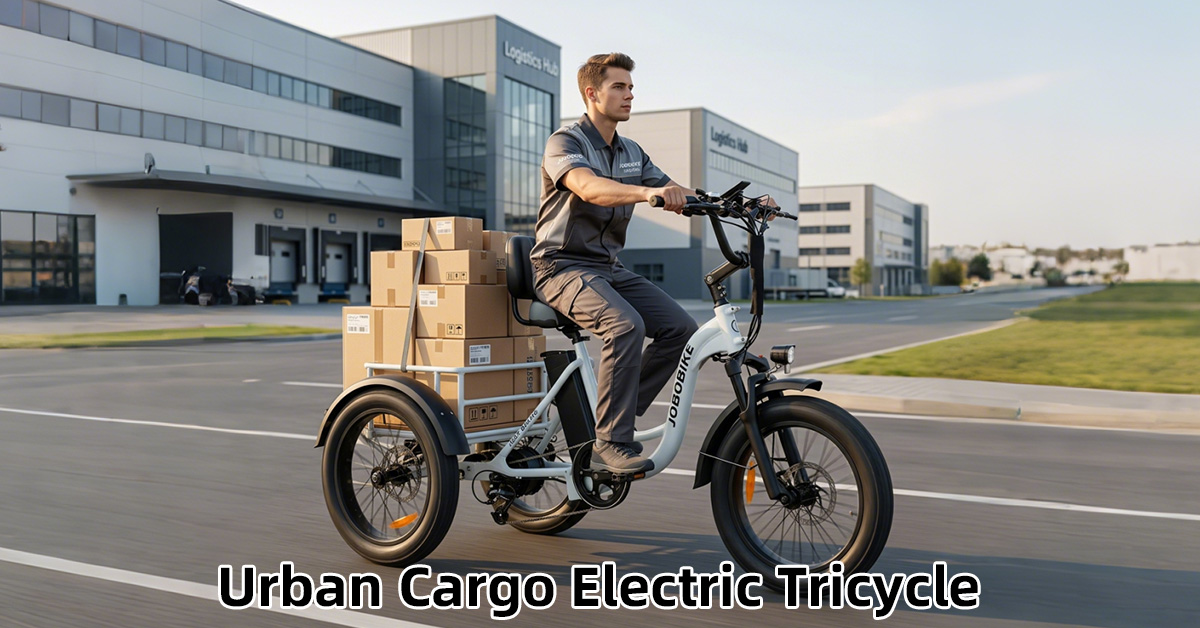
When Cargo E-Bikes Fail Under Real Delivery Conditions
In many cities, cargo e-bikes are now replacing traditional delivery vehicles for last-mile logistics. On paper, the advantages are clear—lower operating costs, easier urban navigation, and reduced emissions. But in practice, many fleet operators quickly run into problems that were not obvious during the purchasing stage.
Rear racks begin to bend under repeated heavy loads. Frames develop stress cracks after months of daily use. Battery range becomes unpredictable when carrying cargo across long delivery routes. What initially seemed like a cost-saving solution turns into a maintenance-heavy operation.
These issues are rarely caused by misuse. Instead, they often reflect limitations in how the cargo e-bike was designed and manufactured. A typical cargo e-bike supplier may focus on adapting standard e-bike frames rather than engineering a structure specifically for load-bearing applications.
At JOBO, we approach cargo e-bike design from a commercial use perspective. Every model is engineered around real delivery scenarios, where weight distribution, torque load, and daily usage cycles must be carefully balanced to ensure long-term durability.
According to urban mobility research from the European Cyclists’ Federation, cargo e-bikes used in logistics operations experience significantly higher stress cycles than standard commuter bikes, making structural design a critical factor.
https://ecf.com
Structural Materials and Reinforcement Strategies for Cargo E-Bikes
The foundation of a reliable cargo e-bike begins with its frame structure. Unlike standard electric bicycles, cargo models must withstand higher static loads and dynamic stress from acceleration, braking, and uneven road conditions.
JOBO cargo e-bikes use reinforced 6061 aluminum alloy frames, combined with additional structural support at high-load zones such as the rear carrier and bottom bracket.
Key engineering considerations
- reinforced rear triangle for cargo stability
- thicker tubing at stress concentration points
- optimized weld distribution
- corrosion-resistant surface treatment
| Structural Factor | Standard E-Bike Frame | JOBO Cargo Frame |
|---|---|---|
| Frame material | standard aluminum | reinforced 6061 aluminum |
| Load capacity | 120–140 kg | up to 200 kg |
| Reinforcement zones | minimal | cargo-specific reinforcement |
| Fatigue resistance | moderate | high-cycle durability |
According to the Aluminum Association, proper reinforcement and alloy consistency significantly improve fatigue resistance in load-bearing structures.
https://www.aluminum.org
This level of structural engineering ensures cargo e-bikes remain stable under continuous commercial use.
Why Professional Cargo E-Bike Suppliers Focus on Load Distribution
One of the most overlooked aspects of cargo e-bike design is load distribution.
In many designs, cargo weight is concentrated at the rear, which increases stress on the frame and reduces riding stability. Poor load distribution also affects braking performance and rider control.
At JOBO, engineers optimize weight distribution across the entire frame.
Design strategies include
- balanced frame geometry to distribute weight evenly
- battery placement adjustments to improve center of gravity
- reinforced connection points between cargo rack and frame
These design decisions improve both safety and durability, especially in high-frequency delivery environments.
Research in urban transport engineering shows that improper load distribution can increase structural fatigue and reduce vehicle lifespan.
https://www.iea.org
Battery Range Stability Under Commercial Delivery Conditions
Battery performance is another major concern for cargo e-bike operators. Unlike commuter bikes, cargo e-bikes often operate under heavier loads and longer daily usage cycles.
Without proper system design, battery range can fluctuate significantly depending on load weight and terrain.
JOBO addresses this through integrated battery and motor system optimization.
Key battery considerations
- higher capacity battery configurations (48V 15Ah–25Ah)
- stable discharge performance under heavy loads
- thermal management for long operating hours
- optimized controller settings for energy efficiency
| Battery Factor | Standard E-Bike | JOBO Cargo System |
|---|---|---|
| Battery capacity | 36V–48V 10Ah | 48V 15–25Ah |
| Range under load | unstable | consistent output |
| Thermal stability | limited | optimized |
| Daily usage cycles | moderate | high-frequency use |
These improvements help ensure predictable performance in delivery operations.
Case Insight: Improving Delivery Efficiency Through Frame Reinforcement
A food delivery company in an urban European market experienced repeated issues with their cargo e-bike fleet. Within six months, several bikes showed structural fatigue near the rear cargo area, leading to frequent repairs and downtime.
After switching to JOBO, the company requested a reinforced frame solution tailored to their delivery conditions.
Our engineering team implemented:
- reinforced rear frame structure
- optimized load distribution geometry
- upgraded battery configuration for longer routes
Within one operational cycle, the company reported a 35% reduction in structural maintenance issues and improved delivery efficiency due to reduced downtime.
This case highlights how proper engineering directly impacts business performance.
Why Choosing the Right Cargo E-Bike Supplier Matters for Fleet Operations
For fleet operators, cargo e-bikes are not just transportation tools—they are operational assets. Reliability directly affects delivery efficiency, maintenance costs, and customer satisfaction.
Key evaluation factors when selecting a cargo e-bike supplier include:
- frame engineering capability
- load-bearing design
- battery performance under real conditions
- manufacturing consistency
- after-sales support
Choosing a supplier that understands commercial applications helps reduce long-term operational risks.
Frequently Asked Questions
Q: What is the ideal load capacity for a cargo e-bike?
Most commercial cargo e-bikes support between 150–200 kg, depending on frame design and reinforcement.
Q: Why do cargo e-bike frames fail?
Frame failures are usually caused by insufficient reinforcement, poor load distribution, or low-quality materials.
Q: How can battery performance be stabilized in cargo e-bikes?
Through higher capacity batteries, proper thermal management, and optimized motor-controller integration.
Engineering-Driven Cargo E-Bike Supply for Commercial Logistics
As urban logistics continues to evolve, cargo e-bikes are becoming a key component of delivery infrastructure. However, their success depends heavily on engineering quality and manufacturing reliability.
JOBO focuses on reinforced frame design, balanced load distribution, and optimized battery systems to support commercial cargo e-bike applications. Our manufacturing approach ensures durability, consistency, and long-term performance for global partners.
To explore our cargo e-bike solutions, visit:
https://www.joboev.com/products
If you are planning to deploy cargo e-bikes for logistics or delivery operations, our team is available to provide technical consultation and supply solutions:
https://www.joboev.com/contact-us