Dual Battery Mid-Drive E-Bikes: Long-Range Power Meets Intelligent Control
Why Dual Battery Systems Are Changing E-Bike Design
As electric bikes evolve beyond short-distance commuting, range and reliability have become top priorities.
A dual battery mid-drive e-bike addresses both — merging efficient torque distribution from a mid-drive motor with high-capacity dual energy storage.
This configuration suits long-distance commuters, delivery fleets, and mountain riders who need continuous power throughout extended routes or high-load conditions.
Engineering Logic Behind Dual Battery Integration
The dual battery system isn’t just about more energy — it’s about smarter energy management.
Key engineering features include:
-
Parallel or sequential battery connection for optimized discharge control
-
Automatic switching BMS to ensure even power draw from both packs
-
Intelligent charge balancing that extends total battery lifespan
-
Removable modular design for fast swapping and maintenance
-
Independent voltage monitoring to prevent overload or imbalance
Combined with a mid-drive motor’s mechanical advantage, the dual battery setup guarantees smoother torque output, lower heat stress, and consistent riding performance.
Mid-Drive Power and Range Synergy
In most OEM applications, the combination of dual batteries and mid-drive motors creates a “sweet spot” between torque and endurance.
Typical specifications:
-
Motor: 250W–750W mid-drive system with torque assist (70–120 Nm)
-
Battery Capacity: 2 × 48V 15Ah or 17Ah packs (1440–1632 Wh total)
-
Range: 100–160 km per full charge, depending on load and terrain
-
Charger Setup: Smart dual-port or single-bus charging
-
Efficiency: Up to 85% conversion under dynamic loads
This makes dual-battery configurations especially suitable for professional-grade delivery services and touring models where downtime equals lost revenue.
Dual Battery vs Single Battery E-Bike
| Feature | Dual Battery Mid-Drive E-Bike | Single Battery E-Bike |
|---|---|---|
| Range | 100–160 km | 40–80 km |
| Charging System | Smart BMS sync | Standard charger |
| Weight Distribution | Center-balanced | Often rear-heavy |
| Heat Dissipation | Split load reduces heat | Higher thermal stress |
| Ideal Application | Fleets, mountain, touring | Casual commuting |
| Maintenance | Modular and scalable | Basic plug-in |
The data shows that dual systems not only extend distance but also maintain voltage stability, a critical factor for long-term reliability in commercial environments.
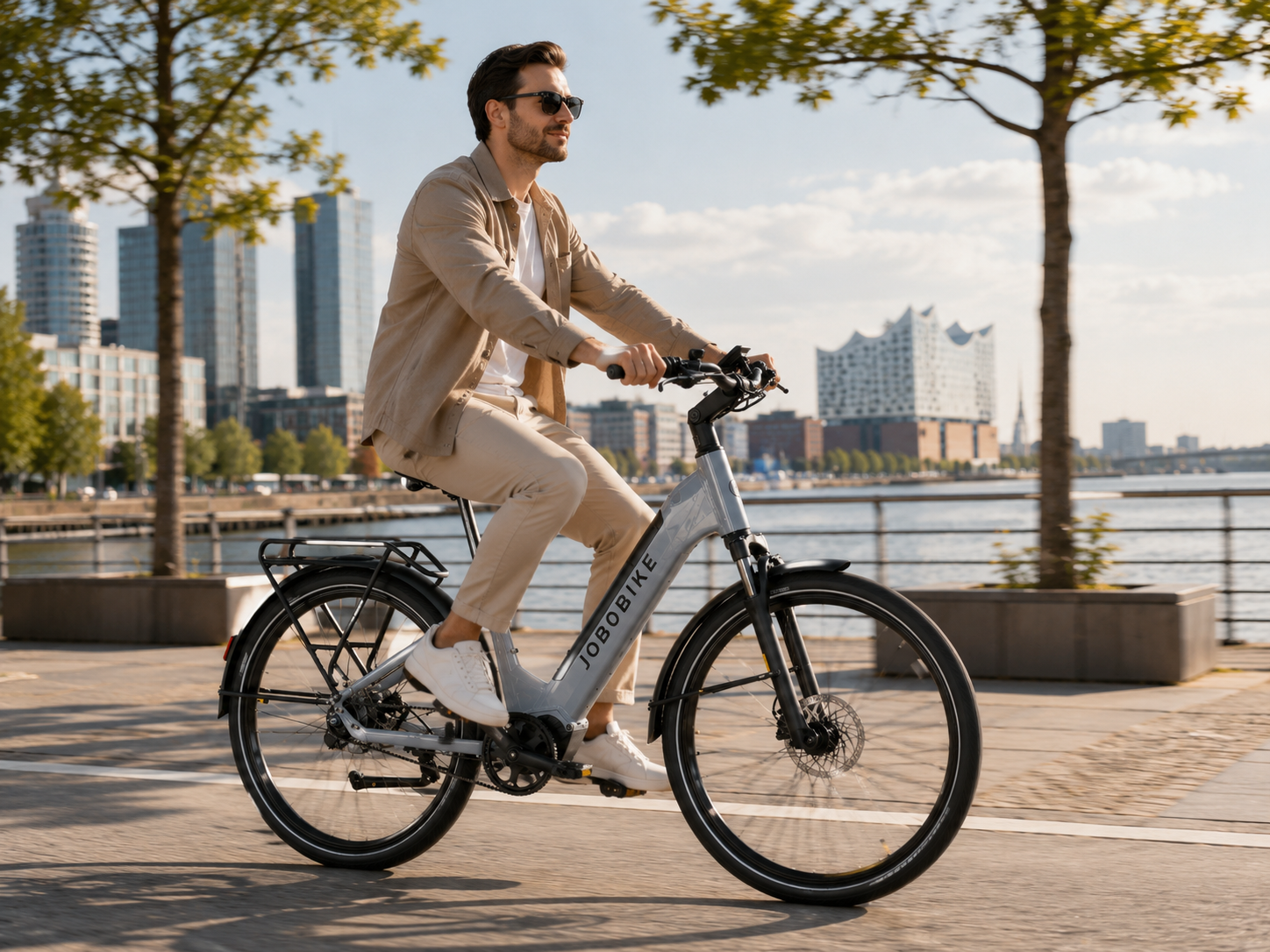
Manufacturing Insight from JOBO ebike
At JOBO ebike, our R&D team designs dual battery mid-drive platforms focused on both endurance and power control.
We integrate smart BMS communication protocols with high-efficiency mid-drive motors to ensure precise synchronization between torque demand and available voltage.
Each bike undergoes range simulation, load vibration testing, and thermal stability validation to guarantee dependable performance across daily or industrial-grade operations.
This approach helps OEM partners create reliable, high-capacity models suited for real-world logistics and long-distance mobility.
Recommended Configurations for OEM & Fleet Buyers
1. Delivery and Logistics Applications
-
48V 750W mid-drive motor
-
Dual 15Ah battery pack
-
120 km real-world range
-
Reinforced aluminum frame
2. Touring and Adventure Models
-
60–80 Nm torque mid-drive motor
-
Waterproof enclosures (IP65)
-
Regenerative braking controller
-
Dual-port smart charger
3. Urban Commuter Models
-
Compact dual 10Ah packs
-
250W motor for EU regulation compliance
-
Centralized battery mount for balance
4. Fleet Integration Systems
-
Quick-swap battery trays
-
Cloud monitoring with voltage logging
-
Easy replacement wiring harnesses
What Buyers Should Verify Before Purchasing
| Common Issue | Why It Matters | Recommendation |
|---|---|---|
| Poor BMS integration | Causes uneven discharge | Require synchronized smart BMS |
| Excessive weight | Affects handling | Keep under 30 kg total |
| Inconsistent voltage output | Reduces performance | Choose balanced dual-pack systems |
| Low-quality cells | Limits lifespan | Ensure certified cell suppliers |
| Overheating under load | Damages motor | Use mid-drive with metal heat sink |
| No certification | Restricts export | Verify EN15194, CE, UN38.3 compliance |
Frequently Asked Questions
Q1: Can both batteries charge at the same time?
Yes — with a dual-port or intelligent charging system, both packs charge simultaneously and balance automatically.
Q2: What happens if one battery depletes faster?
The BMS system automatically equalizes usage, switching to single-pack mode until recharged.
Q3: Is the dual battery setup heavier?
Only slightly (about +2–3 kg), but the balanced mid-drive placement offsets handling issues effectively.
Extending the Limits of Electric Mobility
The dual battery mid-drive e-bike isn’t just a longer-lasting vehicle — it’s a platform built for professional use, reliability, and intelligent control.
At JOBO ebike, we combine dual-power integration, torque-optimized motor design, and OEM-grade durability testing to support partners building advanced, long-range e-bike models.
To explore collaboration opportunities or request specifications, visit our homepage or contact us via the contact page.