Folding Lightweight E-Bikes: Compact Design for Modern Urban Living
Why Folding E-Bikes Are the New Urban Standard
For commuters in crowded cities, space and flexibility matter as much as speed.
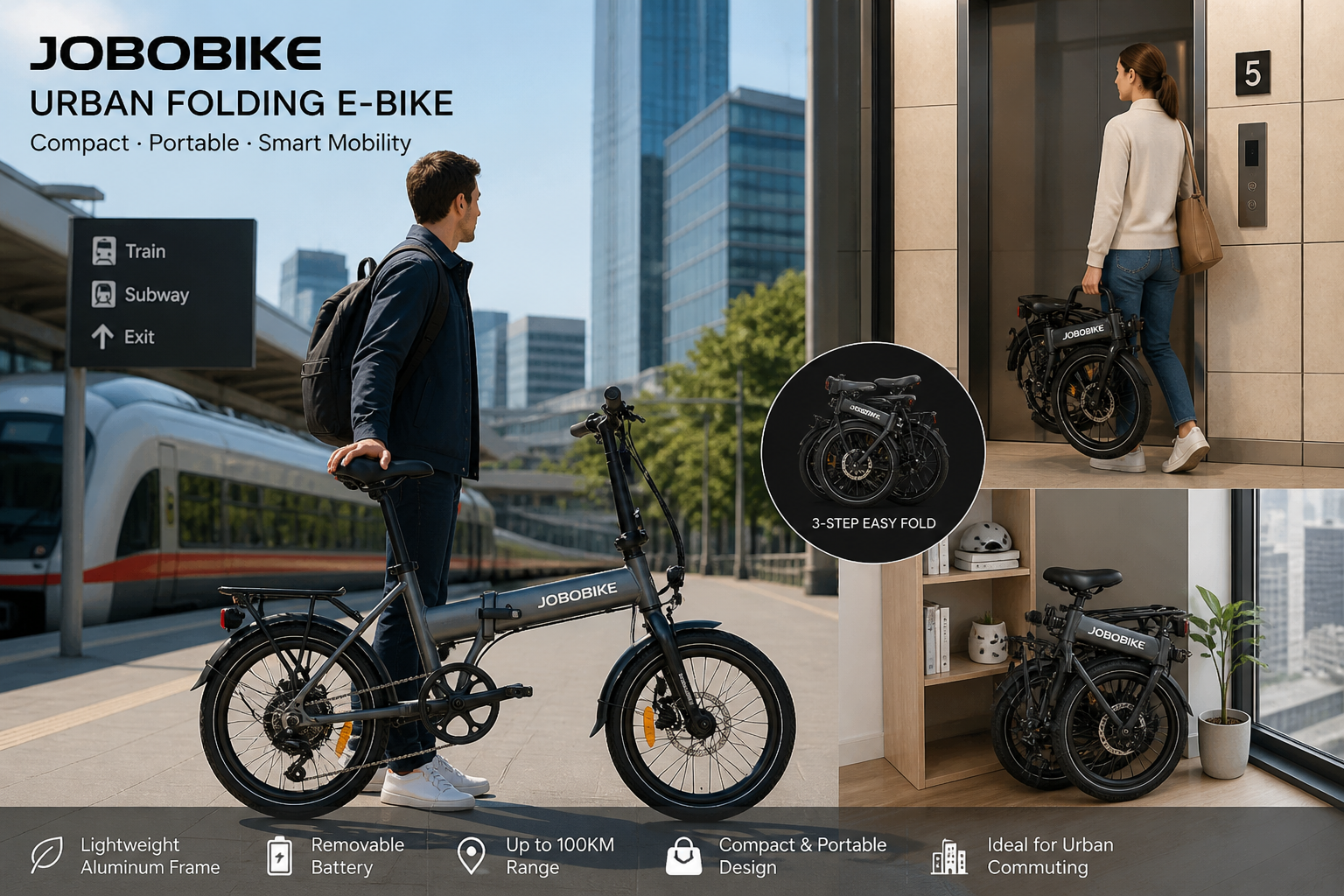
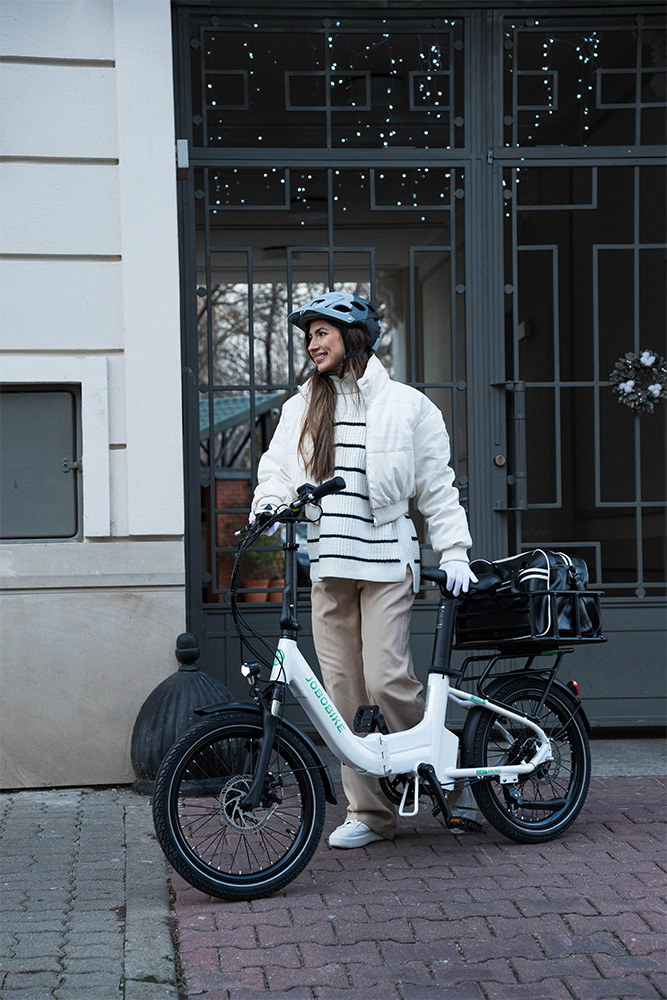
A folding lightweight e-bike offers the convenience of easy storage and transport — fitting into elevators, offices, or car trunks — while still delivering electric performance for daily rides.
For OEM brands, these models open up fast-growing markets among apartment dwellers, office commuters, and fleet operators seeking compact, low-maintenance solutions.
Engineering the Balance Between Portability and Power
Designing a lightweight folding e-bike requires precise mechanical and electrical integration.
Key engineering aspects include:
-
6061-T6 aluminum or magnesium alloy frame for low weight and durability
-
Quick-fold hinge system tested for 10,000+ folds
-
Compact hub motors (250W–350W) with smooth torque output
-
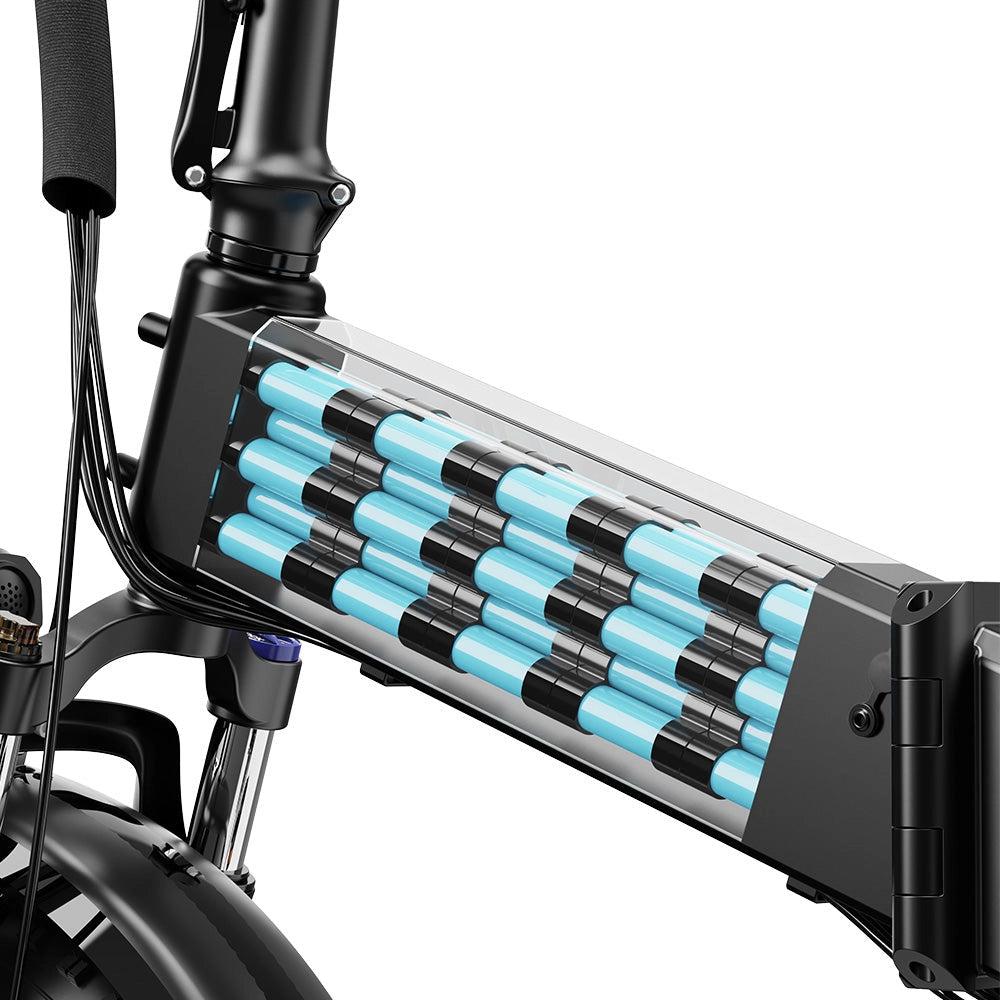
Integrated battery (36V 7–10Ah) within the main tube for stability
-
Magnetic latch system to secure folded sections
-
Ergonomic geometry maintaining comfort despite reduced frame size
Average folded dimensions: ≤ 85×40×65 cm, total weight 15–18 kg, ideal for daily commuters.
Comparison: Folding vs Standard Lightweight E-Bike
| Feature | Standard Lightweight E-Bike | Folding Lightweight E-Bike |
|---|---|---|
| Frame Type | Rigid one-piece | Multi-hinge foldable |
| Portability | Moderate | Excellent |
| Battery Access | Built-in or external | Integrated downtube or seatpost |
| Motor Output | 250–500W | 250–350W optimized |
| Storage Space | Requires stand | Fits in trunk or apartment |
| Ideal Use Case | City commuting | Multi-transport travel |
The folding design provides unparalleled convenience — especially for users who combine cycling with public transport or have limited storage.
Manufacturing Insight from JOBO ebike
At JOBO ebike, we specialize in lightweight folding e-bike platforms that merge compact geometry with high structural integrity.
Our R&D process includes finite element analysis (FEA) on fold joints, fatigue testing under load, and salt-spray resistance evaluation for long-term durability.
For OEM clients, we offer modular configurations — allowing flexibility in frame size, hinge design, and motor-battery pairing.
Each model is optimized for real-world commuting scenarios, combining aesthetics, mechanical reliability, and riding comfort.
OEM Customization Options
| Customizable Component | Available Options | OEM Value |
|---|---|---|
| Frame Material | Aluminum / Magnesium alloy | Weight reduction & strength |
| Motor Type | 250W / 350W rear hub | Compact efficiency |
| Battery System | 36V 7–10Ah integrated | Longer rides, smaller form |
| Folding Mechanism | Double hinge / mid-fold | Durability & space efficiency |
| Wheel Size | 14” / 16” / 20” | Adapts to target markets |
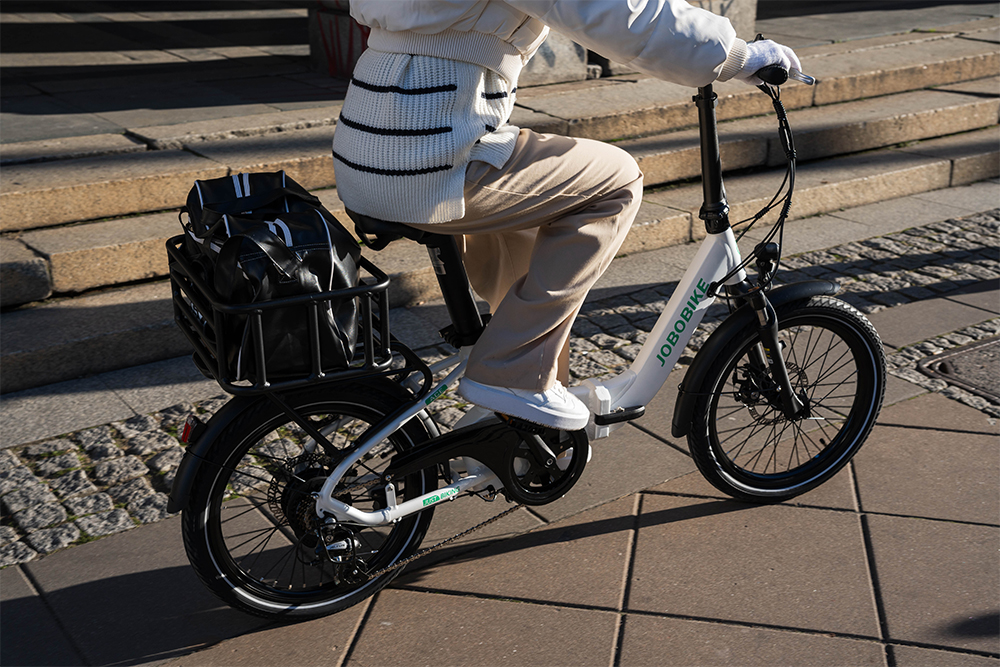
| Accessories | Rear rack / carry handle | Practical user design |
These options let OEM partners tailor products for niche consumer groups — such as corporate commuters, rental fleets, or travel retailers.
What Buyers Should Check Before Ordering
| Common Issue | Why It Matters | Recommendation |
|---|---|---|
| Weak hinge welds | Reduces frame lifespan | Request fold-cycle test data |
| Battery instability | Affects folding balance | Choose center-integrated pack |
| Poor latch design | Unsafe during rides | Use magnetic or dual-lock latch |
| Unverified motor supplier | Reduces efficiency | Select CE/EN15194 certified units |
| Incomplete waterproofing | Shortens lifespan | Ensure IP65-level protection |
| Excessive frame weight | Reduces portability | Keep under 18 kg total weight |
Frequently Asked Questions
Q1: How long does it take to fold or unfold the e-bike?
Most JOBO folding models fold in under 10 seconds, secured with magnetic latches for convenience.
Q2: Can the bike be rolled after folding?
Yes, most models include wheel alignment casters allowing the folded bike to roll like luggage.
Q3: Are folding bikes as strong as standard e-bikes?
With reinforced hinges and fatigue-tested materials, they deliver comparable structural integrity for everyday use.
Compact Power for Modern City Life
The folding lightweight e-bike combines efficiency, convenience, and modern engineering — built for riders who value simplicity without sacrificing performance.
At JOBO ebike, we help OEM partners develop portable e-bike solutions tailored for global markets, integrating comfort, reliability, and design aesthetics.
To explore our lightweight folding e-bike systems or request OEM collaboration details, visit our homepage or contact us through the contact page.