What Should a Buyer Expect From a Custom Folding E-Bike OEM Project?
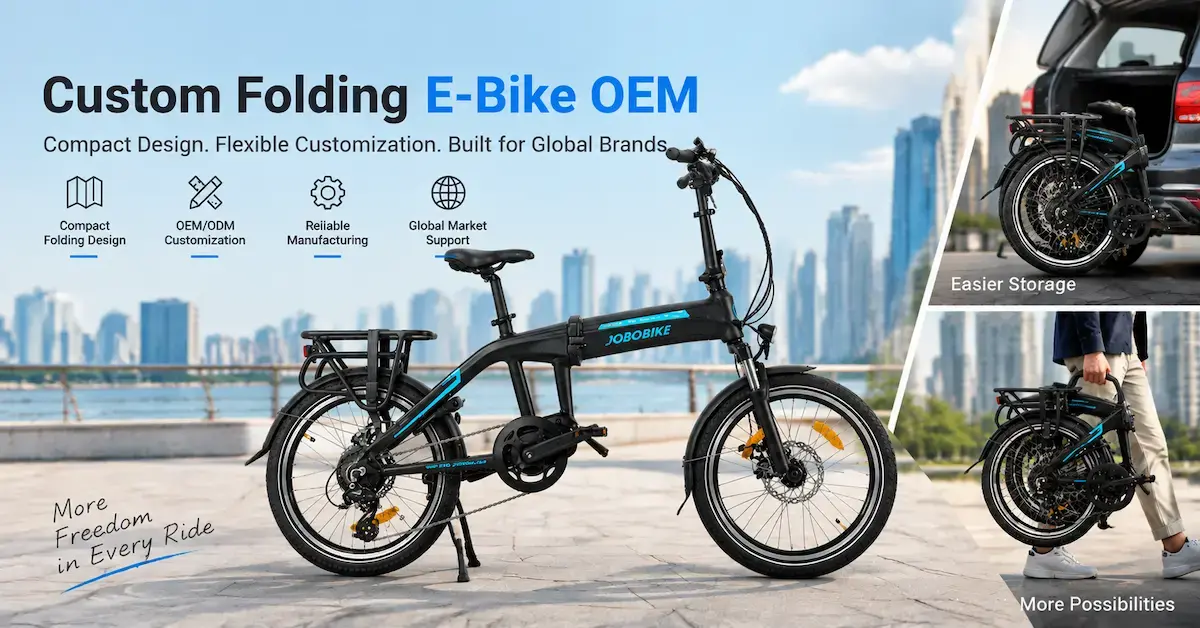
A custom folding e-bike OEM project should turn a market requirement into a repeatable production specification, not simply place a new logo on a standard bicycle. Before approving a supplier, buyers should know the finished bike's intended user, folded and unfolded dimensions, complete weight, frame and hinge configuration, motor and battery system, brake and drivetrain components, packaging requirements, applicable documentation and spare-parts plan. The supplier should then reproduce those agreed details from sample approval through bulk production. JOBO's electric folding bike range provides existing platforms that can be discussed for OEM development, while projects requiring deeper structural changes should be treated as engineering work rather than cosmetic customization.
Who Is Custom Folding E-Bike OEM Development Best Suited For?
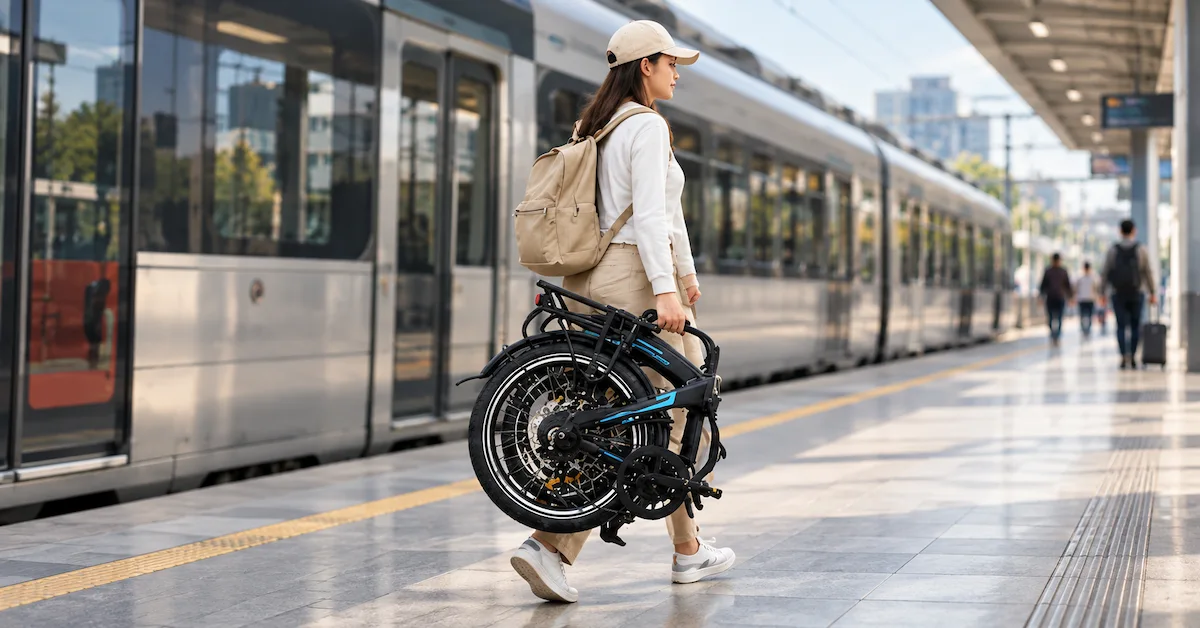
The strongest use case is a brand or importer that already understands why its customer needs a folding bicycle. An urban commuter brand may want a compact bicycle for apartment storage and mixed car-and-bike journeys; a dealer group may need an easy-to-explain model that fits a specific retail price level; an RV, camper or leisure distributor may care more about storage dimensions and handling; a private-label company may need distinctive frame graphics, component positioning and packaging; and a rental operator may focus on hinge inspection, battery charging and replacement parts. A custom folding e-bike OEM project is less suitable when the buyer has not yet defined its target customer and simply asks the factory to make something “lighter, cheaper and longer range.” Those goals often conflict. Good OEM development begins by deciding which requirements matter most and which trade-offs are acceptable.
Why Folded Size Should Be Specified Before the Component List
One of the most common mistakes in folding electric bike sourcing is discussing motor power, battery capacity and colors before anyone has defined the folding objective. “Foldable” is not a measurable product requirement. A buyer should state where the bicycle must fit and how it will be handled. If the product is intended for apartment residents, lift access and storage footprint may matter. If it will be carried in a vehicle, the folded length, height, width and loading process become more important. If customers are expected to lift it regularly, finished-bike weight deserves its own acceptance criterion. The custom electric folding bike manufacturer should therefore provide actual folded dimensions and complete-bike weight for the proposed configuration rather than relying on photographs. A frame may fold compactly while a wide handlebar, long seatpost, rack or pedal position still increases the real storage envelope.
Build the RFQ Around Measurable Product Decisions
The following specification table is a purchasing framework rather than a list of features that JOBO automatically supplies on every model. Its purpose is to make quotations comparable and prevent critical details from remaining undefined.
| Specification Area | What the Buyer Should Define | What the OEM Supplier Should Confirm |
|---|---|---|
| Intended customer | Rider profile, use frequency and selling position | Suitable base platform and limitations |
| Folded package | Maximum length, width and height | Measured folded dimensions |
| Finished weight | Target handling requirement | Complete-bike weight and measurement condition |
| Frame | Material, size, geometry and finish | Drawing/version and production method |
| Folding system | Hinge locations, locking method and user operation | Approved mechanism and inspection requirements |
| Motor system | Intended assistance and target market | Exact motor, controller and settings |
| Battery | Voltage, capacity, mounting and charging preference | Exact pack, charger and replacement solution |
| Brakes | Performance and service expectations | Calipers, rotors, pads and lever specification |
| Drivetrain | Gear range and maintenance requirement | Exact transmission components |
| Wheels and tires | Intended road conditions and packaging constraints | Exact size, model and clearance |
| Accessories | Rack, fenders, lights or other required equipment | Mounting compatibility and final BOM |
| Packaging | Shipping and dealer assembly requirements | Carton dimensions, protection and assembly state |
| After-sales | Dealer repair capability and planned market life | Spare-parts identifiers and supply arrangement |
A useful RFQ leaves little room for vague descriptions such as “high-quality brake,” “long-range battery” or “premium motor.” Every critical component should eventually become an identifiable item in the approved specification.
Treat the Folding Mechanism as a Functional System
The hinge is not merely another frame component. It changes how the bicycle is opened, closed, stored, transported and inspected throughout its life. During sample review, buyers should check whether the locking action is intuitive, whether there is excessive play after repeated operation, whether cables remain clear during folding, whether accessories interfere with the folded package and whether the user can identify when the mechanism is correctly secured. Service teams should also know which points require inspection and whether wear components are replaceable. For deeper frame customization, JOBO's frame manufacturing facility is relevant because frame geometry, machining, welding, alignment and finishing are connected to the final folding structure. A custom e-bike frame design should therefore be controlled through drawings and revisions rather than approved from appearance alone.
Battery Integration Can Make or Break a Folding Design
Battery placement has a larger influence on folding bicycles than it does on many conventional city e-bikes because usable frame space is limited. The battery may affect frame tube dimensions, folded width, center of mass, carrying comfort and access for charging or removal. Buyers should confirm the pack's exact voltage and capacity, mounting system, connector, charger and replacement specification. If the battery is removable, test whether removal is practical when the bicycle is folded and unfolded. If it is integrated into the frame, discuss service access before approving the design. Range claims also need context: voltage multiplied by ampere-hours gives nominal watt-hours, but watt-hours do not guarantee a fixed riding distance. Rider weight, assistance level, speed, temperature, tire pressure and route conditions all change energy consumption. For OEM approval, a repeatable route test is more useful than comparing two unrelated “maximum range” claims.
Choose Components for the Customer, Not for the Specification Sheet
There is a temptation in private-label sourcing to increase every visible number because the resulting specification appears stronger online. That can produce a bicycle that is more expensive, heavier or harder to service without improving the customer's main use case. A commuter-oriented product may benefit more from predictable assistance, easy braking, practical gearing and straightforward charging than from chasing the largest possible motor or battery. A travel-focused folding bicycle may place greater value on compact dimensions and manageable weight. A dealer-oriented model should consider whether common wear parts can be sourced locally. The correct OEM folding e-bike supplier should be able to discuss these trade-offs rather than automatically proposing the highest nominal specification. Exact motor, battery, display, drivetrain, brakes, fork and tire models should be locked before mass-production approval.
Compare Folding E-Bike Platforms by Use Case
JOBO's folding category includes different product directions rather than one universal folding design. For an OEM buyer, it is more useful to compare platform types by intended customer than to decide that one is “best” for everyone. The following table is a sourcing framework; exact specifications must be confirmed for the selected JOBO model and market version.
| Platform Direction | Main Purchase Reason | What the Buyer Should Prioritize | Main Trade-Off to Review |
|---|---|---|---|
| Lightweight folding e-bike | Easier storage and handling | Weight, folded dimensions, fit and battery packaging | Battery size and equipment versus total weight |
| Conventional 20-inch folding e-bike | Urban commuting and compact storage | Geometry, folding process, serviceability and price | Balance between portability and daily riding comfort |
| Fat-tire folding e-bike | Distinctive recreational positioning | Tire clearance, folded package, drive system and brakes | Larger tires can increase bulk and weight |
| Mid-drive folding e-bike | Different drive feel and product positioning | Frame integration, drivetrain and service requirements | Greater system complexity may require stronger dealer support |
| Long-range folding configuration | Longer riding requirement | Battery energy, charging and actual route testing | Larger battery can affect weight and packaging |
This platform-level comparison also helps prevent product overlap. If two models serve exactly the same buyer, price point and application, the second model may add inventory complexity without adding meaningful market coverage.
OEM and ODM Should Not Be Used as Interchangeable Labels
For many projects, OEM means beginning with an existing folding-bike platform and changing selected components, finish, logo, graphics, accessories and packaging. ODM becomes more relevant when the project requires significant frame geometry changes, a different folding architecture, new battery integration or a product structure that needs engineering development. The difference matters because development effort, tooling, testing, cost and timing may change substantially. JOBO's China manufacturing operation supports OEM/ODM discussions, but the buyer should clearly state the desired development depth before asking for a final quotation. A private label folding electric bike based largely on an existing platform should not be managed in the same way as a new structural design.
Use a Controlled Sample Approval Process
The sample should become a physical reference for production, not merely a bicycle used for photography. Before testing it, record the component list, frame version, electrical configuration, color and accessories. Then evaluate the actual use cases defined in the RFQ: folding and unfolding, lifting where relevant, storage, riding comfort, braking, shifting, assistance response, battery removal, cable clearance and routine maintenance access. If the buyer requests a change after riding, the new requirement should be written into the specification and, when necessary, retested. Once approval is complete, retain a signed BOM—bill of materials—along with the approved drawings, finish references, packaging and reference sample. This is particularly important when repeat orders may be produced months later.
Control Component Substitutions Before They Become a Production Problem
A factory may occasionally need to propose a replacement component because of availability, discontinuation or purchasing conditions. The problem is not necessarily the substitution itself; the problem is changing a controlled part without a defined approval process. A different brake, display, motor, tire or battery may alter compatibility, appearance, service procedures or documentation. Buyers should therefore divide components into controlled items and approved alternatives. When a substitution is proposed, the folding electric bike manufacturer should identify what changed, why it changed, whether fit or function is affected and whether another sample or check is necessary. Written change control is one of the simplest ways to protect consistency between the first sample and later bulk orders.
Check Manufacturing Capability Behind the OEM Proposal
Factory scale can be useful, but procurement decisions should focus on what the factory can control for the actual project. JOBO's China factory describes electric bicycle development and assembly capabilities, while its separate frame operation supports in-house frame production. During supplier evaluation, buyers should ask how incoming frames and components are identified, how the folding structure is checked during assembly, which work instructions control critical operations, how completed bicycles are linked to production records and what happens when an item fails inspection. The important evidence is not just a photograph of machinery; it is the relationship between the approved product specification and the work performed on the production floor.
Make Quality Control Specific to Folding E-Bikes
A general statement such as “100% quality inspection” does not tell a buyer what is actually checked. JOBO's QC Labs provide a useful internal link for understanding its quality-control resources, but an OEM project still needs model-specific acceptance requirements. For a folding bicycle, the QC plan can address frame and hinge operation, fasteners, wheel alignment, brake adjustment, drivetrain function, electrical assistance, battery mounting, charging, display operation, cable routing, accessories and packaging. Measurements and pass/fail limits should be defined where relevant. Buyers should also agree on how nonconforming bicycles are isolated, corrected and rechecked. This turns QC from a marketing phrase into a purchasing control.
Match Certification Documents to the Actual Product Version
Certification and compliance discussions should always refer to the supplied configuration and destination market. JOBO maintains a certifications and patents page, which can be used as the starting point for requesting applicable documentation. However, a certificate displayed at company level should not be treated as automatic evidence for every customized folding bicycle. Changes involving the motor, controller, battery, charger, speed configuration or other relevant components may affect which documentation applies. The useful procurement question is therefore not simply “Do you have certification?” but “Which document applies to this model and configuration for our target market, and what planned customization could affect its scope?”
Discuss Capacity and Lead Time Only After the Specification Is Clear
A custom folding e-bike OEM timeline depends on how much is being changed. A branding and packaging project based on an existing platform is different from a new frame or battery-integration project. Buyers should therefore request milestone dates rather than one generic delivery promise. The schedule should distinguish technical confirmation, component preparation, sample production, buyer approval, production scheduling, assembly, final inspection and shipment. Any new tooling or structural development should be shown separately. JOBO's China production capabilities can support scale, but published factory capacity is not the same as a reserved production slot for a specific purchase order. Only the project-specific schedule should be used for launch planning.
Calculate OEM Cost Beyond the Unit Price
A realistic comparison should include everything needed to turn the factory quotation into a sellable product. Unit price is only one line. Buyers may also need to account for engineering, samples, tooling where applicable, customized packaging, documentation, freight, destination charges, receiving inspection, dealer preparation and initial spare parts. Cost comparisons are meaningful only when suppliers are quoting the same configuration and delivery scope. If one quotation uses a different battery, brake system or motor, the price difference cannot automatically be treated as a manufacturing saving. For private-label programs, the buyer should also confirm who owns any paid tooling, artwork and custom design files and how they may be used in future orders.
Plan Spare Parts Before the Product Launch
A folding bike can create several model-specific service requirements. In addition to ordinary wear parts, the dealer may need information for the folding mechanism, battery mount, charger, electrical system and particular frame fittings. Ask the supplier to produce a model-linked spare-parts list with identifiers, photographs or diagrams where useful, compatibility information and ordering terms. The first parts package should reflect expected use and local service capability rather than an arbitrary percentage of the order. JOBO's European factory and regional operation may also be relevant to European customers, but the buyer should confirm which models and parts are actually supported through that operation for the specific project rather than assuming every catalog item is locally stocked.
Reduce SKU Complexity Before Bulk Production
Customization creates sales differentiation, but too many combinations can quickly make purchasing and after-sales work harder. Suppose a brand launches two folding platforms, each in two frame or size options, three colors and two battery configurations. That creates 24 combinations before accessories are considered. This is simple inventory arithmetic, not a JOBO MOQ statement, but it illustrates why product planning matters. Ask which combinations serve genuinely different customers. Standardizing chargers, displays, brakes or selected wear parts across compatible models may also simplify dealer training and spare-parts inventory, subject to engineering approval. A strong custom folding e-bike OEM program creates useful differentiation without producing unnecessary complexity.
What Should You Send the Factory Before Requesting a Quote?
A useful project brief should state the target country or region, buyer type, intended user, main riding scenario, required folded-space constraint, target finished weight if important, preferred wheel format, motor and battery expectations, mandatory accessories, branding requirements, estimated order quantity and planned launch timing. It should also distinguish “must-have” requirements from features that the factory may recommend. With this information, JOBO can evaluate a suitable platform or determine whether deeper development is necessary. Buyers ready to begin a project can use the JOBO contact page to submit their requirements rather than requesting a generic catalog price without context.
Frequently Asked Questions About Custom Folding E-Bike OEM
What Is a Custom Folding E-Bike OEM Project?
It is a manufacturing project in which a brand or importer defines a folding electric bicycle for its target market and works with a factory to produce it under an agreed specification. Depending on the project, customization can involve branding, colors, components, battery integration, accessories, packaging or deeper frame development.
What Is the Difference Between OEM and ODM Folding E-Bikes?
OEM commonly starts from an existing platform and modifies selected product or branding elements, while ODM can involve deeper engineering and structural development. The exact scope should be defined with the supplier because the terms are sometimes used differently across companies.
Can a Brand Customize the Folding Frame?
Potentially, but structural changes require engineering review. Buyers should provide the desired geometry, folded-space requirement, motor and battery interfaces and intended use. Feasibility, tooling, testing, cost and timing should be agreed before prototype production.
How Do I Choose Between a Lightweight and Fat-Tire Folding E-Bike?
Start with the customer rather than appearance. A lightweight platform may better serve frequent storage or handling, while a fat-tire configuration may support a different recreational positioning. Compare finished weight, folded volume, riding conditions, service requirements and target price rather than judging by tire size alone.
What Should Be Checked on a Folding E-Bike Sample?
Check folding and locking operation, folded dimensions, finished weight, rider fit, braking, shifting, electrical assistance, battery installation, charging, cable clearance, accessory interference and routine service access. Record the exact sample configuration before approval.
How Can Buyers Prevent Unapproved Component Changes?
Use a signed BOM and specification with revision control. Identify components that require written approval before substitution and document acceptable alternatives where appropriate. Any change that can affect compatibility, performance or documentation should be reviewed before production continues.
What Is the MOQ for a Custom Folding E-Bike OEM Order?
MOQ depends on the selected platform, customization depth and commercial arrangement. The materials supplied for this article do not establish one universal JOBO MOQ, so buyers should request the quantity requirement for the exact model, color, configuration and development scope.
How Long Does Custom Folding E-Bike Production Take?
There is no single lead time that applies to every project. Existing-platform customization and new structural development require different schedules. Buyers should request separate milestones for engineering, sampling, approval, material preparation, production, QC and shipment.
Which Spare Parts Should Be Planned Before Launch?
Start with wear items and model-specific parts such as brake components, drivetrain parts, tires, chargers, battery-related components, derailleur hangers and relevant folding-mechanism parts. Confirm identifiers, compatibility, price and expected supply arrangement for the approved version.
How Do I Start a Folding E-Bike OEM Project With JOBO?
Prepare your target market, customer profile, application, folded-size requirement, preferred configuration, customization scope, estimated quantity and planned launch timing. Review JOBO's electric folding bike products, then contact JOBO to discuss the appropriate existing platform or development route.
Conclusion
A successful custom folding e-bike OEM program is built around controlled product decisions rather than a long list of fashionable specifications. For B2B buyers, the most important questions are whether the bicycle fits the intended customer's storage and riding needs, whether the folding structure and battery system can be manufactured consistently, whether the approved components remain traceable, and whether the factory can support QC, documentation, spare parts and repeat orders. JOBO combines electric folding bike platforms, frame manufacturing, quality-control resources and OEM/ODM manufacturing support for brands and distributors. Before requesting a final quotation, define the target market, folded dimensions, component expectations, customization level and order plan; then use the JOBO contact page to turn those requirements into a model proposal, sample plan and production discussion.