What Should You Look for in a Fat Tire Electric Bike Supplier?
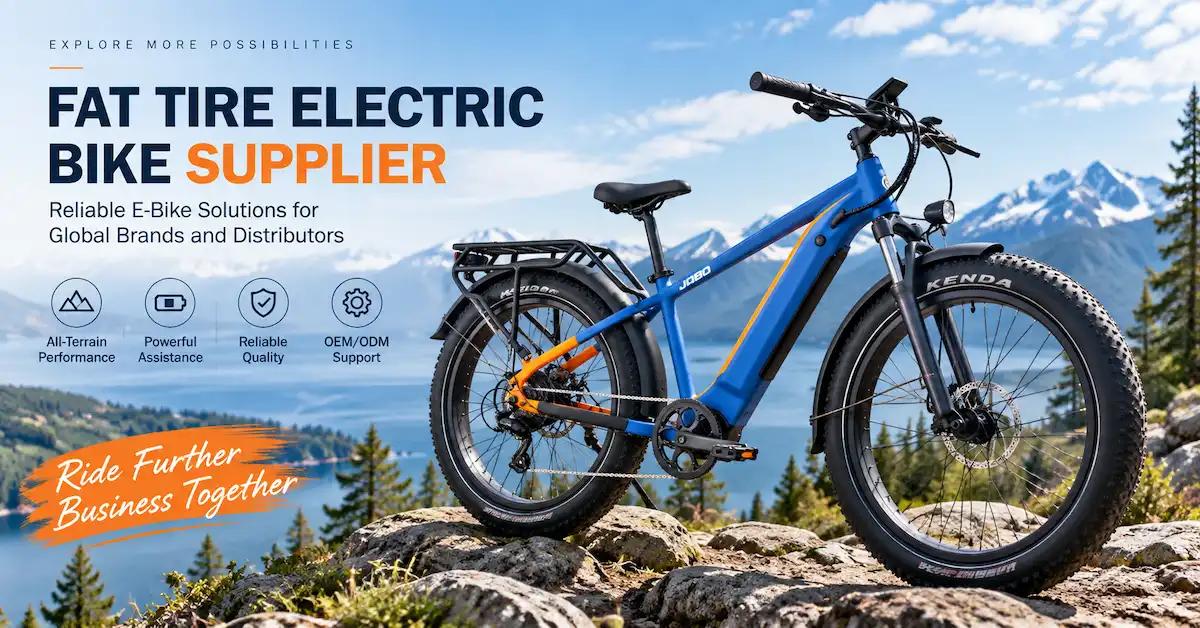
Choose a fat tire electric bike supplier that can match the bicycle to your customers, document the exact build, and explain how replacements and repeat orders will be handled. Start with the intended use, then compare configurations, manufacturing evidence, delivery terms and service arrangements. A low purchase price is not enough when the quotation leaves the battery, brake system or replacement parts undefined. JOBO supports brands, distributors and mobility operators with OEM/ODM development, frame manufacturing and assembly, providing a starting point for buyers developing a fat-tire product range.
Start With the Customer, Not the Tire Width
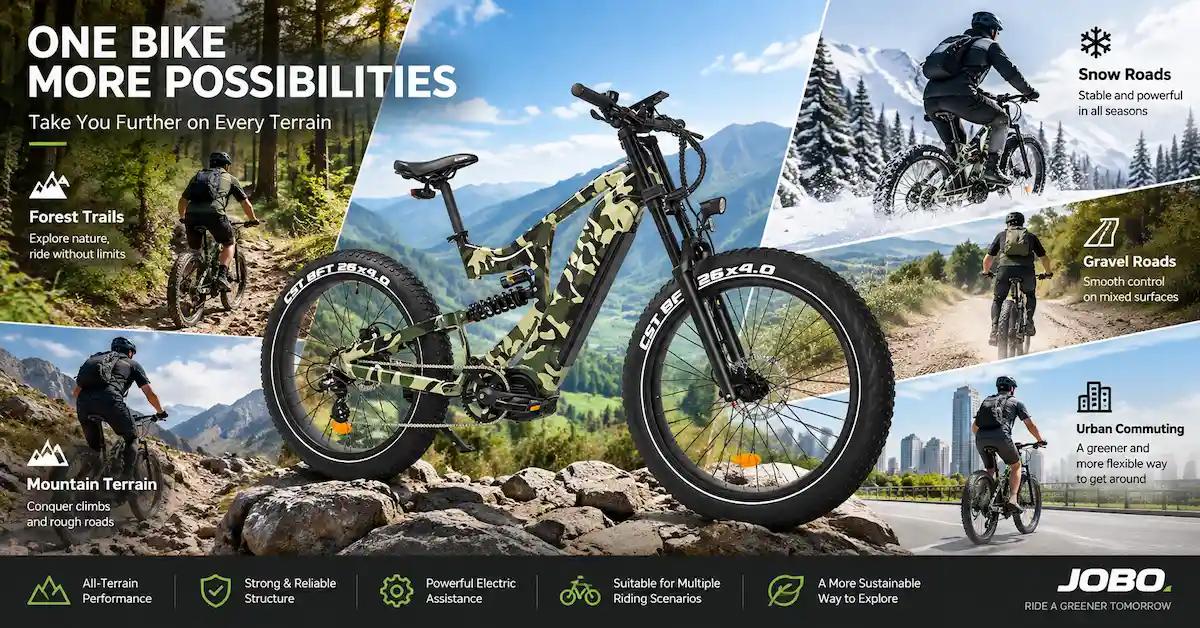
“Fat tire” does not describe one complete product specification. JOBO lists fat-tire options across adult recreational, folding and cargo formats, so the first decision is which job the bike needs to perform. Treat these as separate product propositions rather than interchangeable bicycles with similar-looking tires. A customer choosing a folding bicycle for storage has a different brief from an operator purchasing a loaded utility bike. Tire width belongs in both conversations, but it does not settle either one.
Retailers and Private-Label Brands
Define the customer, selling price position and purchase reason for each proposed model. For an outdoor leisure range, make rider fit, assistance feel and route suitability part of the selection. For a storage-focused range, measure the folded package and ask a representative user to handle it. Give each model a clear reason to exist. Stocking three nearly identical bicycles with different paint schemes is a merchandising choice, not automatically a broader solution for customers.
Rental and Utility Operators
Evaluate the bike around a working day rather than a showroom visit. For rental proposals, include rider turnover, charging arrangements, inspection time and access to replacement parts. For utility use, define the load, mounting points, parking conditions and route. Coastal projects should add moisture exposure, corrosion protection and cleaning requirements to the brief; wide tires alone do not establish suitability for salt exposure. These are proposed evaluation conditions, not claims that every listed JOBO bicycle is approved for every environment.
When Another Format Deserves Consideration
Keep alternatives open when the customer’s priority is daily carrying, minimal storage space or a use outside the proposed bike’s documented limits. Do not choose a fat-tire model solely for its appearance and then assume it will satisfy a lightweight commuting, heavy-cargo or demanding off-road brief. Ask the supplier to explain both the fit and the limitations of its recommendation.
Compare JOBO Fat-Tire Options by Their Role in Your Range
JOBO’s published catalog includes Adult Fat Tire Electric Bike, Fat Tire Electric Folding Bike and Fat Tire Cargo Ebike options. The comparison below uses those product names; the proposed sales roles are purchasing recommendations, not verified performance rankings. Exact model codes, configurations and availability should be confirmed before quotation approval.
| Published JOBO Option | Proposed Role to Evaluate | Potential Selection Value | Details to Confirm |
|---|---|---|---|
| Adult Fat Tire Electric Bike | Adult recreational product within a dealer range | A distinct leisure-oriented offer | Frame fit, intended terrain, drive system, weight and service parts |
| Fat Tire Electric Folding Bike | A storage-focused or travel-oriented product | Folding format for buyers with defined storage constraints | Folded dimensions, handling weight, hinge inspection and cable routing |
| Fat Tire Cargo Ebike | Utility or load-carrying product development | A starting point for a dedicated carrying brief | Total load, individual rack limits, attachment requirements and loaded handling |
Ask a fat tire electric bike supplier to explain the differences that matter after purchase, not only the differences visible in photographs. Do the models need separate chargers, brake pads and electrical service tools? Can a dealer identify a replacement part without dismantling the bike? The answers belong beside the product comparison.
Build a Specification Sheet That Makes Quotes Comparable
A request for quotation should identify what the supplier is pricing and what remains open for development. The following is a specification checklist, not a claim that these features or options are standard on every JOBO bike. Avoid approving a quotation that describes critical components only as “high quality” or “equivalent.”
| Specification Area | Details to Lock Before Ordering | Purpose in the Buying Decision |
|---|---|---|
| Frame and materials | Material designation, geometry, sizes, finish and approved use | Establish the physical product and intended customer |
| Wheels and tires | Exact tire model, size, rim specification and approved setup | Define fit, replacement requirements and route evaluation |
| Motor and controls | Motor model, rated-power basis, assistance settings and control configuration | Make electrical proposals comparable |
| Battery and charger | Pack model, voltage, capacity, mounting, charger and compatibility documentation | Define the supplied system and its replacement requirements |
| Transmission | Chain or belt arrangement, gearing and component identities | Establish servicing and replacement requirements |
| Brakes and suspension | Exact parts, rotor dimensions, suspension configuration and service information | Avoid broad descriptions hiding different builds |
| Weight and loading | Complete-bike weight, total permitted load and separate carrier limits | Verify customer fit and carrying requirements |
| Packaging | Carton dimensions, gross weight, protection and assembly instructions | Assess handling, delivery and receiving work |
| Product documentation | Model identification, applicable reports, labels and manuals | Keep the supplied configuration linked to its records |
Make Wheel Size a Fit, Storage and Service Question
When comparing proposals described as 20 × 4.0 or 26 × 4.0, request the exact tire and wheel specifications rather than treating the size label as the whole comparison. Measure the complete bike, folded dimensions where relevant, and the space needed for storage or vehicle transport. Include replacement tires and tubes in the parts discussion. A smaller nominal wheel label is not a measurement of the finished bicycle’s weight, rider fit or packed volume.
Compare Battery Energy Without Inventing a Range Promise
Ampere-hours alone are not enough for an energy comparison. Using hypothetical examples, 48 V × 15 Ah equals 720 Wh of nominal energy, while 36 V × 15 Ah equals 540 Wh. These calculations illustrate the comparison method; they are not JOBO model specifications or distance guarantees. For a proposed bicycle, agree on a route evaluation with recorded rider load, assistance settings, terrain and conditions. Also request confirmation of the approved replacement pack and charger rather than assuming similar-looking components are interchangeable.
Look for Manufacturing Evidence Behind the Finished Bicycle
JOBO describes an in-house aluminum frame operation with CNC machinery and robotic welding. Its frame manufacturing capabilities are relevant to buyers considering structural customization, rather than branding alone. During supplier evaluation, ask how the selected drawing revision connects to frame inspection and final assembly. For folding proposals, include the hinge, latch and service procedure in the review. For cargo proposals, include the carrier interfaces. Use samples to review finish, alignment, cable routing and access for repairs, while requesting separate evidence for structural performance. Workmanship should be assessed against agreed criteria, not merely whether the sample looks attractive.
Plan OEM Customization Without Multiplying Inventory
JOBO presents OEM/ODM development and design-confidentiality support through its company and manufacturing overview. Define whether your project concerns an existing platform, a component package or a new structural design before discussing price and timing. Then ask your fat tire electric bike supplier to separate essential changes from optional variants. As a planning example, two models offered in two sizes and three colors create twelve stock combinations if every combination is supplied. Adding another battery option would double that count. This is inventory arithmetic, not a JOBO MOQ policy. Start with the choices that serve identifiable customers, and establish which components can genuinely be shared. For new development, agree on drawings, tooling ownership, confidentiality and approval responsibilities before work begins.
Connect Quality Checks to the Actual Production Order
JOBO’s QC Labs describe incoming quality control that includes component checks and supplier review. Use that as an opening for a project-specific quality discussion. Ask the fat tire electric bike supplier what will be checked on your materials, assembled samples and shipment, with a clear method for recording and resolving defects. Include braking, electrical operation, battery retention, fastener checks, wheel clearance and packaging in the agreed inspection plan. Keep a signed component list and reference sample so production changes have a defined approval route. For documentation, use the certifications and patents page to request the reports relevant to the proposed model. Confirm the covered configuration and intended market; do not treat a company-level certificate display as proof that every customized build has the same scope.
Separate Production Lead Time From Regional Stock Availability
China Production and Repeat Orders
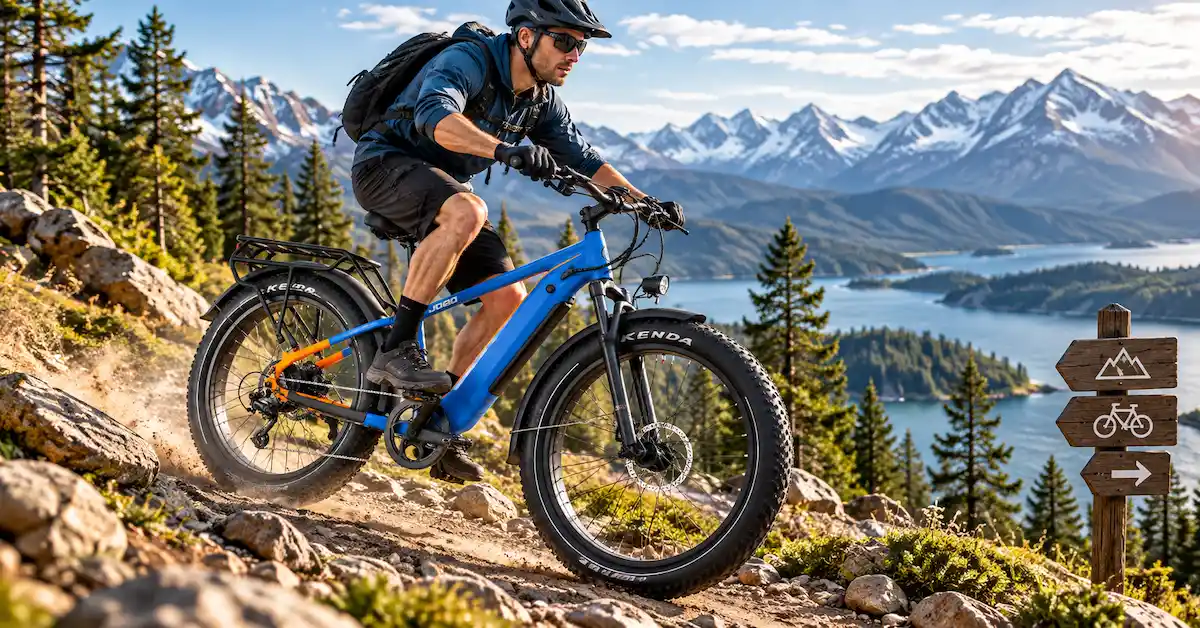
JOBO publishes a 50,000-square-meter manufacturing facility, three assembly lines and annual capacity of 300,000 bicycles. These are company-reported capacity figures, not a confirmed production slot for an individual order. When discussing China production, ask for separate milestones for specification approval, component readiness, samples, production and dispatch. A fat tire electric bike supplier should also clarify reorder quantities, component continuity and the notice given before a model changes. Forecasting is more useful when both parties understand which dates depend on buyer approval or material availability.
European Assembly and Parts Support
JOBO’s European operation in Poland describes local assembly, technical support and spare-parts inventory. Confirm which models and components are covered for your order rather than assuming the whole catalog is locally stocked. Ask where warranty parts will ship from, who handles technical questions and what delivery estimate applies to the selected items. Keep a regional in-stock offer separate from a newly configured OEM order; they need different schedules and written commitments.
Compare the Cost of a Sale-Ready Bike
For purchasing analysis, compare the cost of getting a correctly configured bicycle ready for sale, not just the supplier’s unit price. Add the relevant development allocation, packaging, freight, destination costs, receiving inspection and dealer preparation. Keep an agreed initial spare-parts package visible rather than hiding it in an unexplained allowance. Compare like-for-like quotations: changing the battery, brake package, assembly state or included accessories changes what is being purchased. A fat tire electric bike supplier should identify exclusions and optional charges before the order is signed. Do not count an advertised cost saving unless the comparison uses the same specification, delivery scope and service responsibilities.
Write the Spare-Parts Agreement Before Launch
Ask for a model-linked parts list covering wear items and proprietary components. It should identify the relevant tires, tubes, brake pads, drivetrain parts, hangers, battery mounts, chargers and electrical components, with suspension or folding parts where applicable. Request photographs or diagrams when identifiers alone would be difficult for dealers to use. Agree on prices, availability, ordering quantities and how compatibility changes are communicated. Keep warranty coverage separate from parts availability: knowing who pays for a covered repair does not answer where the correct replacement will come from.
Prepare a Bulk-Order Brief the Supplier Can Act On
Give your fat tire electric bike supplier a brief stating the destination market, sales channel, target customer, intended routes, preferred format, expected quantity and launch timing. Add required sizes, colors, electrical configuration, carrying needs and service expectations. Ask for a recommended base model, an itemized quote, proposed alternatives and a list of unresolved engineering questions. This gives the supplier a defined job instead of a request for its “best price.” Keep the same brief when comparing proposals so that attractive headline prices do not conceal different assumptions.
Frequently Asked Questions
What Is the MOQ From a Fat Tire Electric Bike Supplier?
Request the minimum order quantity for the exact model and customization package. Establish whether it applies per model, size, color or configuration. Do not treat a sample quantity or a general wholesale offer as the confirmed minimum for a private-label production order.
Can I Combine Different Fat-Tire Formats in One Order?
Ask for the permitted model mix, minimum quantity per variant, packaging plan and production schedule. Compare the value of a broader range with the additional stock and parts combinations it creates. Mixed-order availability should be confirmed in the quotation.
Does a Folding Fat-Tire Bike Have to Be Easy to Carry?
Do not infer carrying suitability from the folding feature. Request the complete-bike weight and folded dimensions, then evaluate lifting and handling with representative users. Storage convenience and comfortable carrying are separate acceptance questions.
Are Fat-Tire Electric Bikes Automatically Suitable for Sand and Snow?
No such approval should be inferred from tire width. Provide the actual surface and weather conditions and request a documented suitability review. Keep deep sand, ice, cold-weather operation and coastal exposure as separate questions rather than combining them under “all terrain.”
Does a Fat-Tire Cargo Model Automatically Meet My Loading Requirements?
No. Specify the rider, luggage or goods and their positions, then confirm the total permitted load and individual carrier limits. Request a loaded evaluation within approved limits. A cargo product name is not a substitute for a load specification.
Can JOBO Support Private-Label Fat-Tire E-Bikes?
JOBO offers OEM/ODM development and manufacturing support. Submit the proposed branding, configuration and structural changes for review, then request written confirmation of feasibility, costs and approval steps. Do not assume every customization is available on every existing platform.
Which Documents Should Accompany a Bulk Order?
Agree on the configuration record, applicable test documents, labels, operating instructions, assembly guidance and parts information before production. Have the destination requirements reviewed for the exact product rather than relying on a generic certificate list.
How Should I Plan Lead Time for a New Dealer Range?
Work backward from the required arrival date and allocate time for specification approval, samples, validation, production, transport and receiving work. Ask the supplier to identify dependencies. Do not use an in-stock delivery estimate as the schedule for new development.
Which Spare Parts Should Be Included With the First Shipment?
Build the package around the selected models, intended usage and local repair capability. Request a proposed list with part numbers, quantities and prices. Pay particular attention to model-specific components that the dealer cannot readily source through its normal repair channel.
How Can I Keep Repeat Orders Consistent?
Retain an approved specification and component list with revision numbers. Agree on advance notice and written approval for substitutions, including any additional checks they require. Keep records of which configuration was supplied in each batch so later parts requests remain traceable.
Conclusion
A dependable fat tire electric bike supplier should help you build a range that customers understand and dealers can support. Select each format for a defined use, compare complete specifications, and agree on component continuity, parts and delivery responsibilities before expanding the order. For your JOBO project, contact the sales team with the target market, preferred formats, expected quantity and service requirements. Request a model proposal and itemized quotation that covers both the first shipment and the practical needs of repeat business.