Why Property Managers Are Investing in E-Bike Fleets
Property management teams are responsible for keeping large residential communities, commercial buildings, mixed-use developments, campuses, and industrial properties operating efficiently. As property areas become larger and mobility needs become more complex, traditional transportation methods such as walking, golf carts, and fuel-powered vehicles may not always provide the best balance between flexibility, cost, and sustainability.
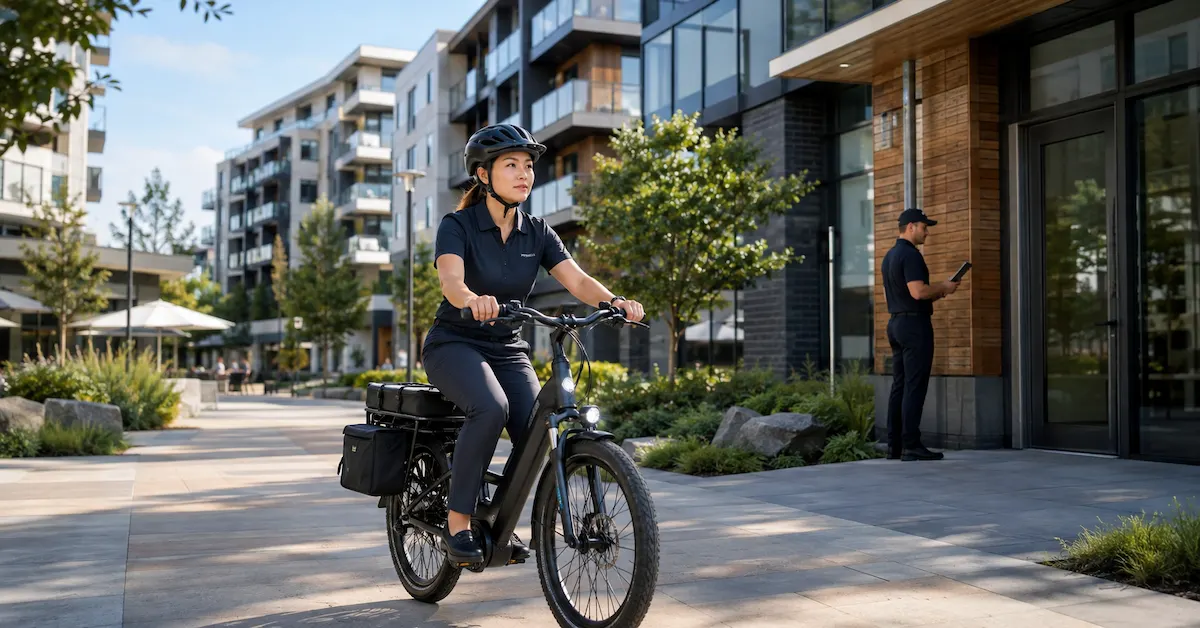
E-bike fleets for property management provide a practical mobility solution for short-distance transportation inside managed properties.
Unlike personal electric bikes, property fleet e-bikes are purchased as operational assets. They need to support repeated daily use, different riders, scheduled inspections, and long-term maintenance requirements.
For property managers, e-bike fleets can support:
- Security patrols
- Maintenance teams
- Facility inspections
- Resident services
- Guest transportation
- Internal logistics
- Large-area community mobility
- Commercial building operations
The key decision is not simply choosing an electric bike model. It is selecting a fleet system that matches the property environment, operating frequency, terrain, and service requirements.
Who Needs E-Bike Fleets for Property Management?
Property management covers many environments, and each has different mobility requirements.
Residential Communities and Apartment Complexes
Large residential communities often include:
- Multiple buildings
- Parking areas
- Gardens and recreational zones
- Security checkpoints
- Maintenance facilities
- Resident service locations
For community management teams, e-bikes can help employees move quickly between locations without using larger vehicles.
Typical applications include:
- Security patrols
- Maintenance response
- Package delivery support
- Landscaping inspections
- Resident assistance
A suitable fleet should prioritize:
- Comfortable riding position
- Easy operation
- Low maintenance
- Reliable battery performance
- Storage options
Commercial Buildings and Business Parks
Commercial property managers often oversee office parks, retail areas, and mixed-use developments.
Staff may need to regularly travel between:
- Buildings
- Parking facilities
- Loading zones
- Service areas
- Customer facilities
E-bike fleets can provide a faster alternative to walking while avoiding the cost and space requirements of larger utility vehicles.
Industrial Parks and Large Facilities
Large industrial properties often require internal transportation for:
- Security teams
- Maintenance personnel
- Supervisors
- Facility managers
For these environments, property managers should consider:
- Longer operating hours
- Higher mileage
- Different road surfaces
- Equipment carrying requirements
- Weather exposure
Cargo or utility-oriented e-bikes may provide additional value where teams need to carry tools, supplies, or equipment.
Common Applications of Property Management E-Bike Fleets
A successful fleet starts with understanding how employees and users will actually interact with the bikes.
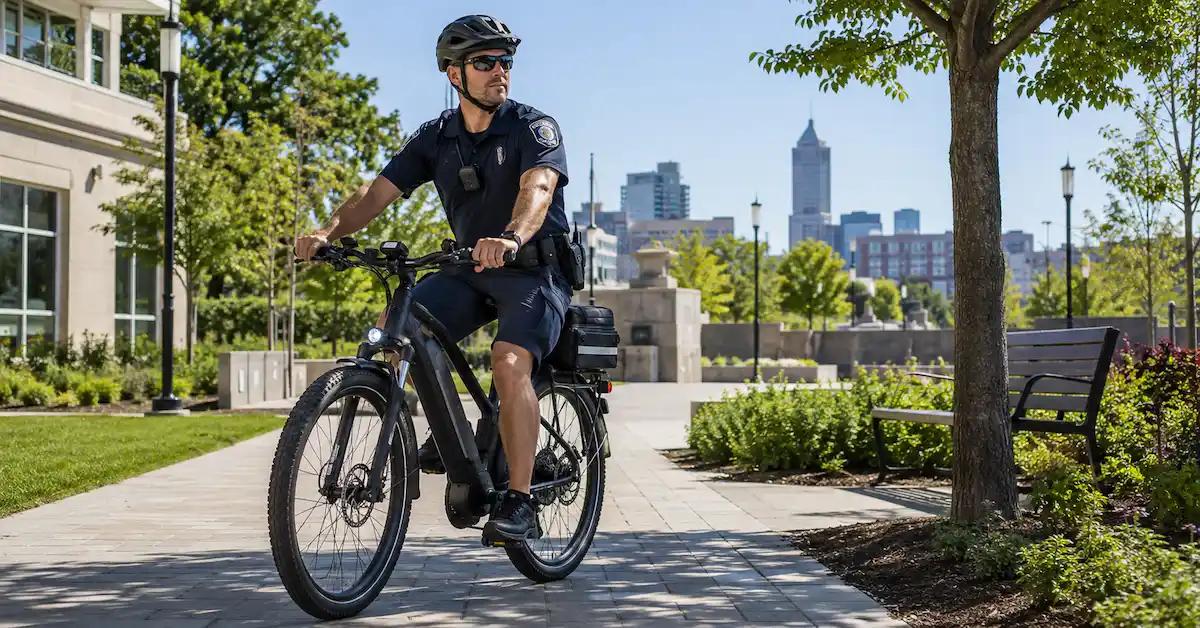
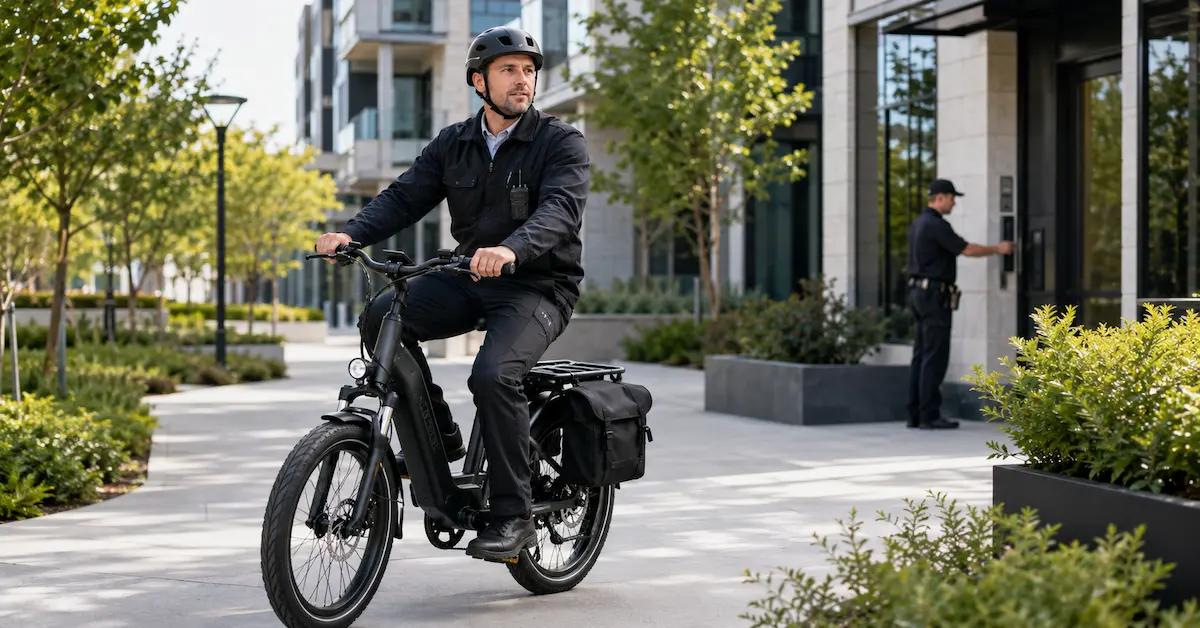
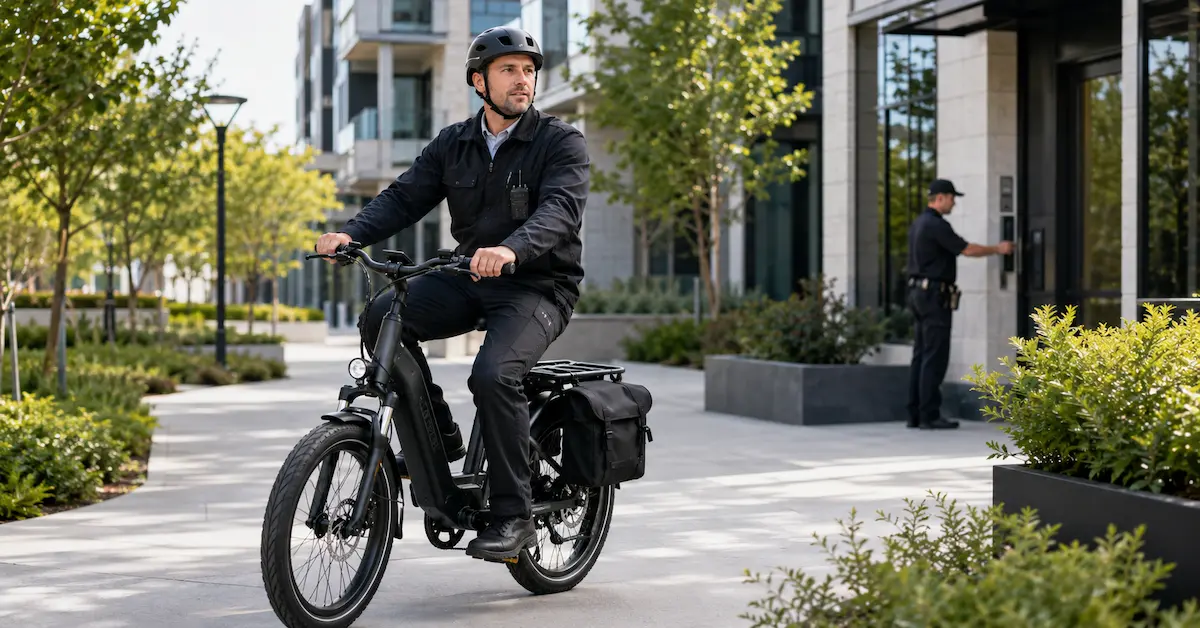
Security Patrol and Site Monitoring
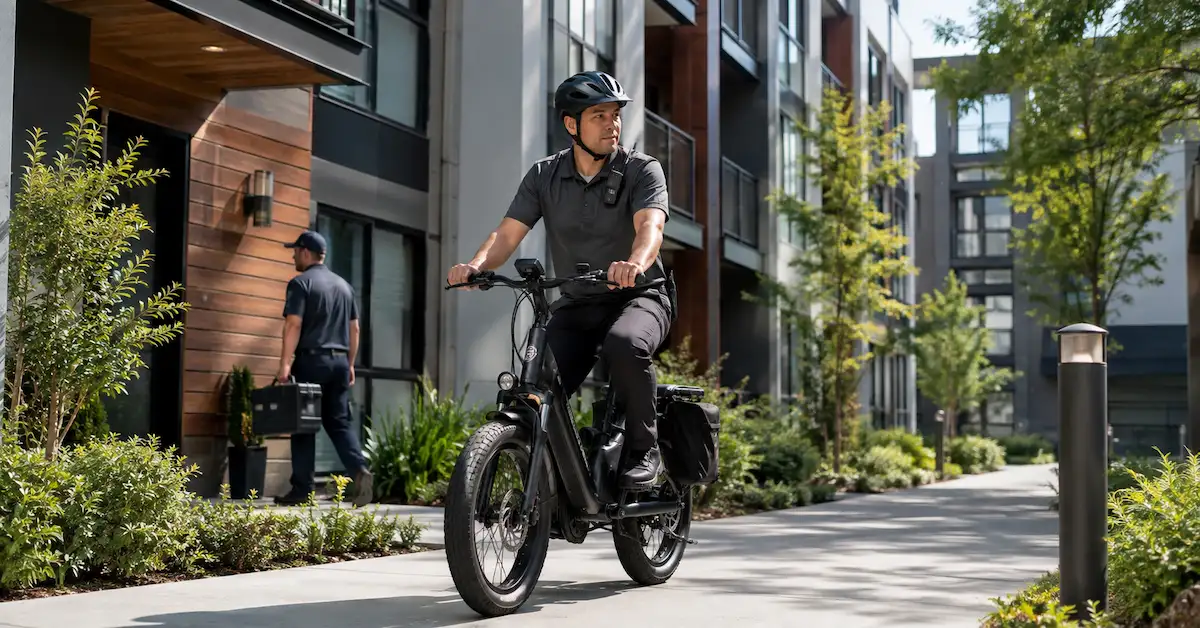
Security teams often need fast movement across large properties.
Compared with walking,e-bikes can help:
- Increase patrol coverage
- Reduce response time
- Improve employee efficiency
- Reduce fatigue during long shifts
Important specifications include:
- Reliable brakes
- Good visibility equipment
- Stable handling
- Long battery capacity
- Comfortable riding position
Facility Maintenance Transportation
Maintenance teams frequently move between buildings carrying:
- Tools
- Replacement parts
- Inspection equipment
- Cleaning supplies
A standard commuter e-bike may not always be suitable.
Property operators may consider:
- Rear racks
- Cargo accessories
- Stronger frames
- Higher payload capability
JOBO's Electric Cargo Bike category includes cargo-oriented platforms designed for transportation applications requiring additional carrying capability. (joboev.com)
Resident and Guest Mobility
Residential communities, resorts, and managed properties may use e-bikes to improve user experience.
Examples include:
- Senior-friendly communities
- Luxury residential developments
- Vacation properties
- Large private estates
For these applications, comfort and accessibility often matter more than maximum performance.
Recommended considerations:
- Step-through frame design
- Easy controls
- Adjustable components
- Comfortable seating
- Simple charging procedures
Internal Logistics and Short-Distance Delivery
Large properties may have frequent small transportation tasks:
- Moving documents
- Delivering supplies
- Carrying packages
- Supporting facility operations
Cargo e-bikes and utility configurations can help reduce unnecessary vehicle usage for short-distance tasks.
Choosing the Right E-Bike Fleet Type for Property Management
Different property environments require different e-bike platforms.
| E-Bike Type | Suitable Applications | Main Advantages |
|---|---|---|
| Electric City Bike | Residential communities, office parks, security patrols | Comfortable, efficient, easy to operate |
| Cargo E-Bike | Maintenance, logistics,supply transportation | Higher carrying capability |
| Folding E-Bike | Properties with limited storage | Easy storage and transportation |
| Mountain / Fat Tire E-Bike | Parks, outdoor properties, uneven roads | Better terrain adaptability |
| Shared Electric Bike | Large managed communities | Flexible multi-user access |
Electric City Bikes for Daily Property Operations
For many property managers, city e-bikes are the most practical starting point.
They provide:
- Comfortable commuting posture
- Efficient short-distance transportation
- Lower complexity
- Easier staff training
JOBO's Electric City Bike range includes commuter-oriented platforms designed for urban mobility applications. (joboev.com)
These models are suitable for:
- Apartment patrols
- Office parks
- Residential services
- Visitor assistance
Cargo E-Bikes for Maintenance Teams
When property staff need to transport equipment, cargo capability becomes more important.
A cargo e-bike should be evaluated based on:
- Payload requirements
- Frame strength
- Brake performance
- Tire durability
- Battery capacity
- Accessory compatibility
JOBO's cargo platforms include different configurations such as front cargo, long-tail, and delivery-focused electric bikes.
For property management buyers, the question should be:
How much operational value does carrying capability create compared with a standard bike?
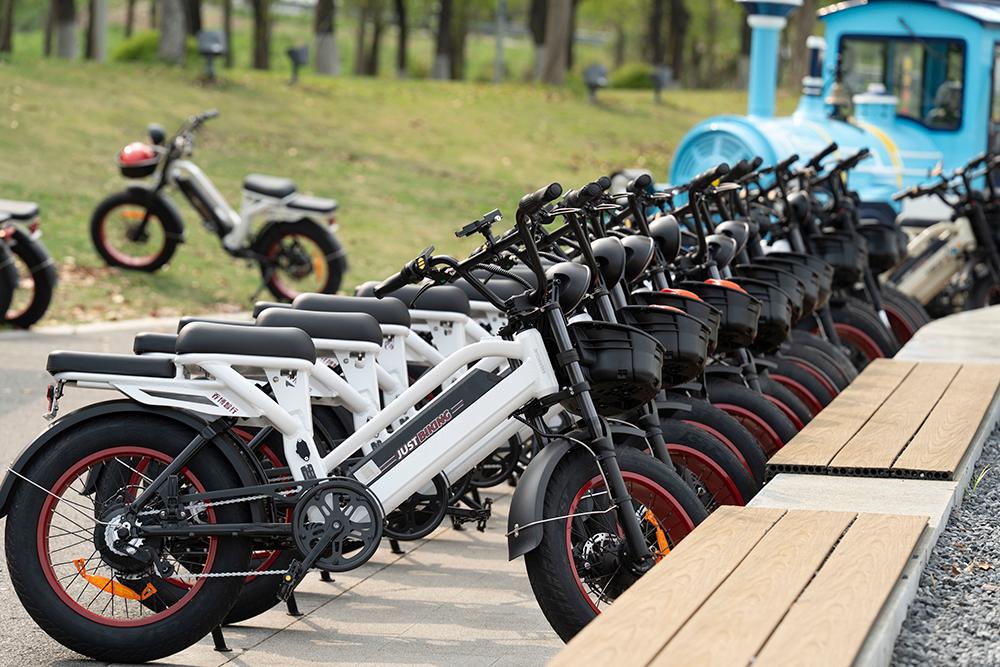
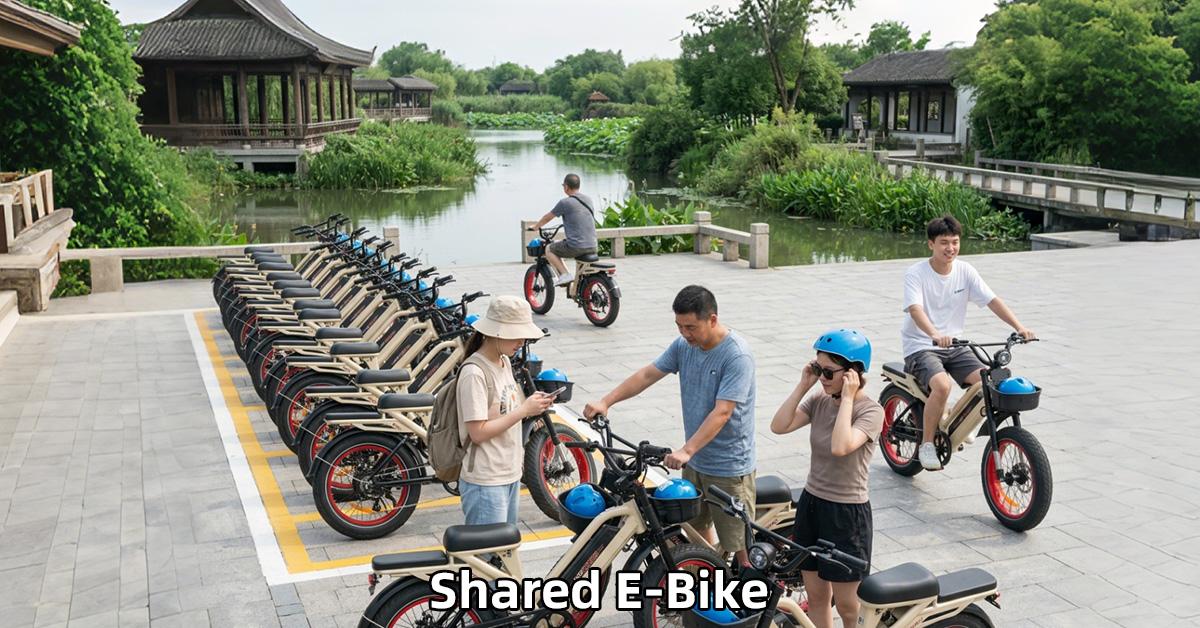
Shared E-Bike Fleets for Large Communities
Some property operators manage environments where many employees or residents may need access.
Examples:
- Large residential developments
- University-style communities
- Mixed-use projects
- Tourist properties
Shared fleet systems can improve utilization by allowing multiple users to access available bikes.
Important considerations:
- User management
- Bike availability
- Charging locations
- Maintenance tracking
- Security measures
JOBO provides Shared Electric Bike solutions for commercial mobility applications. (joboev.com)
Technical Factors Property Managers Should Evaluate
Battery Capacity and Daily Operating Distance
Fleet buyers should calculate battery requirements based on actual operations.
Consider:
- Property size
- Daily riding distance
- Number of shifts
- Rider weight
- Terrain
- Weather conditions
- Charging availability
A bike that completes the advertised maximum range may not deliver the same result in daily commercial operation.
Frame Strength and Durability
Property fleet bikes experience repeated use from multiple riders.
Important factors include:
- Frame material
- Welding quality
- Load capacity
- Component durability
- Inspection requirements
JOBO operates an in-house frame manufacturing facility with CNC processing and robotic welding capabilities, supporting customized e-bike development and structural consistency. (joboev.com)
Brake Performance
Property environments often include:
- Pedestrian areas
- Parking ramps
- Mixed traffic
- Frequent stopping
Reliable braking systems are essential for employee safety and fleet longevity.
Fleet buyers should evaluate:
- Brake type
- Maintenance frequency
- Replacement parts availability
- Performance under repeated use
Tire Selection
The correct tire depends on the property environment.
Urban properties may prefer efficient commuter tires.
Outdoor communities, parks, and mixed surfaces may benefit from wider tires with additional stability.
Factors include:
- Surface condition
- Weather exposure
- Maintenance requirements
- Rider experience
Fleet Maintenance and Management Planning
The lowest purchase price does not always create the lowest operating cost.
Property managers should consider total ownership costs.
These include:
- Purchase price
- Spare parts
- Battery replacement
- Maintenance labor
- Downtime
- Charging equipment
- Staff training
A professional fleet plan should include:
Daily Inspection
Staff should check:
- Tire condition
- Brake function
- Battery status
- Lights
- Visible damage
- Loose components
Scheduled Maintenance
Regular maintenance helps identify:
- Wear parts
- Battery issues
- Electrical problems
- Structural concerns
Spare Parts Planning
Recommended spare inventory may include:
- Brake pads
- Chargers
- Tires
- Tubes
- Controllers
- Displays
- Fast-moving components
Why Quality Control Matters for Property Fleet Buyers
Commercial fleets require consistency across multiple units.
A single well-performing sample does not guarantee long-term batch performance.
JOBO's quality system follows an IQC → IPQC → FQC → QA process and includes testing related to frame fatigue, brake components, complete bikes, batteries, and motor performance. (joboev.com)
For property managers, supplier evaluation should include:
- Product specifications
- Testing information
- Component documentation
- Quality procedures
- Replacement support
OEM Customization for Property Management Fleets
Property operators often need bikes that match their operational identity.
OEM customization options may include:
- Frame colors
- Logos
- Decals
- Accessories
- Cargo solutions
- Packaging
- Fleet-specific configurations
For example:
A luxury residential community may prefer premium appearance and comfort.
An industrial park may prioritize durability and carrying capability.
A security team may require utility accessories and longer operating range.
JOBO supports OEM and ODM electric bike projects, allowing businesses to develop configurations based on their specific application requirements.
How to Select an E-Bike Fleet Supplier
Before purchasing, property managers should evaluate suppliers based on more than product appearance.
Key questions include:
Manufacturing Capability
- Does the supplier control important production processes?
- Can they support repeat orders?
- Do they have engineering capability?
Product Support
- Are replacement parts available?
- Can technical documents be provided?
- Is after-sales support available?
Customization Ability
- Can specifications be adjusted?
- Can branding requirements be supported?
- Can fleet configurations be developed?
Quality Management
- Are inspection procedures documented?
- Are products tested before shipment?
- Can the supplier provide relevant compliance information?
Why Choose JOBO for Property Management E-Bike Fleets?
JOBO provides electric mobility solutions for commercial users requiring reliable fleet products.
The company supports:
- Electric city bikes
- Cargo e-bikes
- Folding e-bikes
- Mountain e-bikes
- Shared electric bikes
- OEM and ODM customization
With manufacturing capabilities including frame production, assembly, quality inspection, and customization support, JOBO works with businesses looking for long-term electric mobility solutions.
You can explore JOBO's complete electric bike products or contact the team through the contact page to discuss property fleet requirements.
FAQ
What are the best e-bike fleets for property management?
The best fleet depends on the property type. Residential communities often need comfortable city e-bikes, while maintenance teams may benefit from cargo models. Large properties may consider shared fleet systems.
How many e-bikes does a property management company need?
Fleet size depends on property area, staff numbers, daily usage frequency, and operating requirements. Many operators begin with a pilot fleet before expanding.
Are electric bikes suitable for security patrols?
Yes. E-bikes can help security teams cover larger areas faster while reducing fatigue compared with walking patrols.
Should property managers choose cargo e-bikes?
Cargo e-bikes are useful when staff need to transport tools, supplies, or equipment.They are especially valuable for maintenance and facility operations.
How long can property management e-bike batteries last?
Battery life depends on usage patterns, charging practices, temperature, and maintenance. Operators should follow manufacturer recommendations and plan replacement cycles.
Can property management companies customize e-bike fleets?
Yes. OEM customization may include colors, branding, accessories, configurations, and fleet-specific requirements depending on project needs.
What maintenance should property e-bike fleets include?
Regular inspection should cover brakes, tires, battery condition, electrical systems, and structural components. Scheduled maintenance helps reduce downtime.
Are e-bike fleets cheaper than using utility vehicles?
For short-distance transportation inside properties, e-bike fleets may reduce fuel, maintenance, and operational costs. The actual savings depend on usage conditions.
What certifications should property managers request?
Certification requirements depend on the market and selected model.Buyers should confirm applicable regulations and documentation for their exact configuration.
How can property managers start an e-bike fleet project?
A good starting process is defining applications, evaluating routes, selecting suitable models, testing samples, planning charging and maintenance, then expanding after operational validation.
Conclusion
E-bike fleets for property management are becoming a practical solution for communities, commercial buildings, industrial properties, and large managed spaces that need efficient internal transportation.
The most successful fleet projects begin with understanding operational needs rather than selecting bikes based only on specifications.
Property managers should evaluate:
- Application scenarios
- Property size
- Rider requirements
- Battery needs
- Maintenance capability
- Safety requirements
- Supplier support
- Long-term operating cost
With the right fleet design, electric bikes can improve mobility efficiency, support daily operations, and create a more sustainable transportation solution.
JOBO provides multiple electric bike platforms, OEM/ODM customization, manufacturing support, and quality-control capabilities for businesses developing commercial mobility projects. Contact JOBO to discuss a property management e-bike fleet solution based on your environment and operational goals.