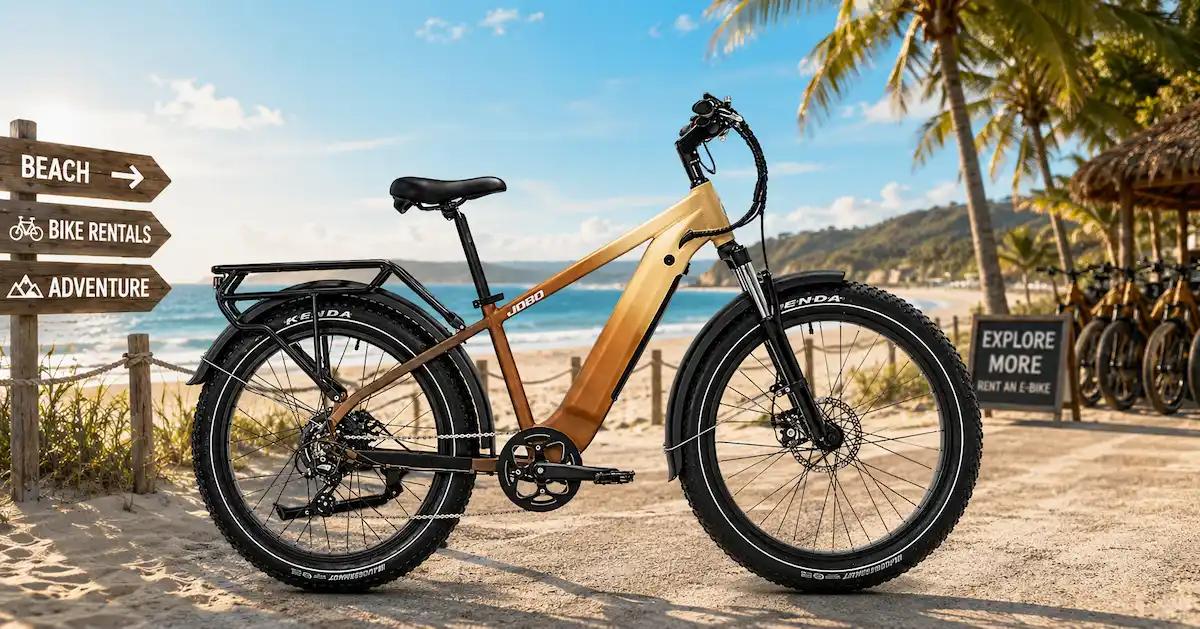
Are Fat Tire E-Bikes a Good Choice for Beach Rentals?
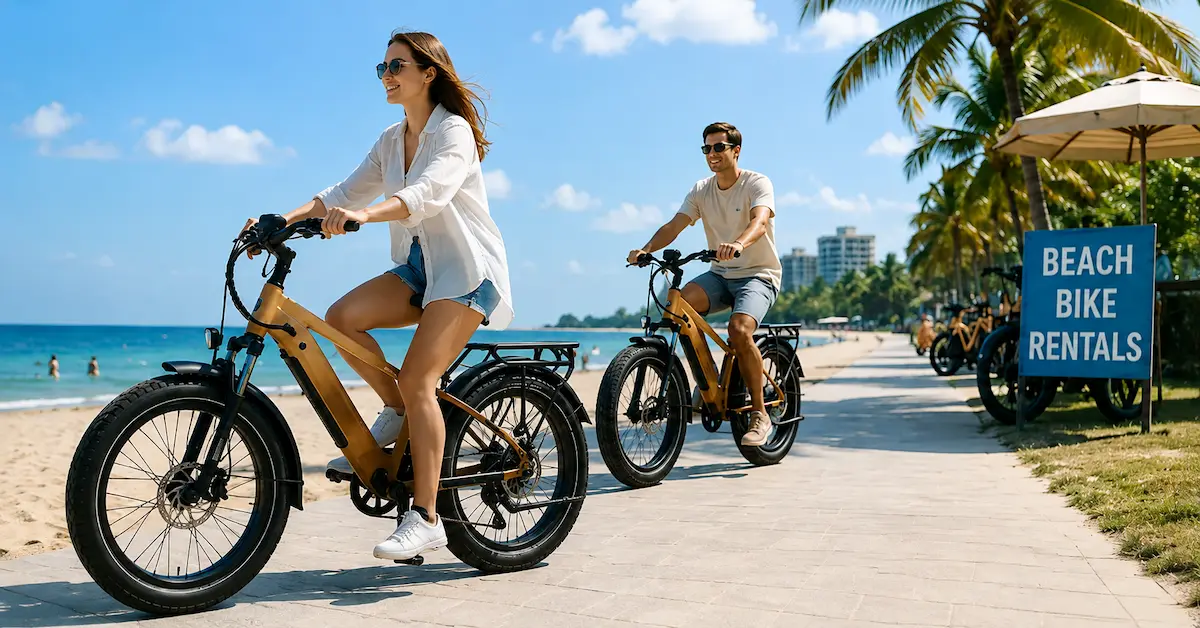
Yes, fat tire e-bikes for beach rentals can be a strong option when the rental route includes boardwalks, paved coastal paths, gravel, compacted surfaces, or suitable firm sand. Their wider tires create a larger contact area than conventional city-bike tires, which can improve stability and rider confidence on loose or uneven surfaces.
However, a fat-tire bike should not be selected simply because a rental business operates near a beach.
The better purchasing question is:
Does the bike match the actual rental route, rider profile, maintenance capacity, local regulations, and expected daily utilization?
Deep dry sand, salt exposure, inexperienced riders, frequent charging, and peak-season fleet utilization all create operating demands that are very different from casual consumer riding.
For a commercial operator, the best beach rental e-bike is therefore not necessarily the bike with the largest motor or widest tire. It is the configuration that keeps more bikes available for paying customers with manageable maintenance and predictable operating costs.
Key Takeaways for Beach Rental Operators
- Wide tires can improve stability on appropriate loose or mixed surfaces, but they do not make every type of sand suitable for riding.
- Salt, sand, moisture, and repeated rental use make cleaning, corrosion management, braking, bearings, and drivetrain care important fleet considerations.
- Rental operators should evaluate real daily range, not only the maximum advertised range of a battery.
- Standardizing motors, batteries, brakes, tires, and consumable parts can reduce repair complexity across a fleet.
- A strong OEM supplier should help you select configurations based on route conditions, rider type, fleet size, branding, maintenance strategy, and target market—not simply sell the highest-specification bike.
Who Should Consider Fat Tire E-Bikes for Beach Rentals?
This product category is particularly relevant for operators whose customers ride across more than smooth urban pavement.
Independent Beach Bike Rental Companies
These businesses often operate fleets with high daily utilization during tourist seasons.
Their key priorities normally include:
- rider-friendly handling;
- fast turnaround between rentals;
- reliable brakes;
- standardized batteries;
- easy inspection;
- replacement parts availability;
- durable tires;
- simple cleaning procedures.
A bike that looks impressive but spends too much time in the workshop can reduce rental revenue during the most profitable weeks of the year.
Resorts and Beachfront Hotels
Resorts may offer e-bikes as:
- complimentary guest transportation;
- paid leisure rentals;
- guided coastal tours;
- transportation between accommodation and attractions.
For these operators, appearance and branding matter in addition to durability.
The fleet may need:
- custom colors;
- hotel or resort logos;
- baskets;
- racks;
- lighting;
- standardized instructions;
- easy step-over or step-through access.
Island and Coastal Tourism Operators
Island destinations often combine several riding environments:
- paved resort roads;
- waterfront promenades;
- gravel access routes;
- compact coastal paths;
- short mixed-surface tours.
A wider-tire e-bike can provide more versatility than a narrow-tire commuter model, provided the configuration suits the route.
Tour Companies and Adventure Rental Businesses
Operators selling guided experiences may prioritize:
- traction;
- suspension;
- braking;
- rider confidence;
- battery reserve;
- higher component durability.
These customers may need a different configuration from a hotel offering two-hour casual rentals.
For a broader comparison of tourism fleet types, see JOBO's guide to electric bikes for tourism operators.
When Fat Tire E-Bikes Are Not the Best Rental Choice
A professional buyer should also understand when not to use a fat-tire platform.
Fat-tire e-bikes may be unnecessary when:
- 100% of the route is smooth paved promenade;
- customers mainly make very short urban trips;
- compact storage is a major priority;
- employees must frequently lift or move the bikes manually;
- transportation vehicles have limited bike capacity;
- the business prioritizes minimum rolling resistance over mixed-surface capability.
In these cases, a conventional city e-bike may provide a simpler operating model.
This is important because good fleet procurement is not about maximizing specifications. It is about eliminating specifications that do not generate operational value.
Beach Surface Matters More Than the Word "Beach"
Not every beach route is the same.
| Operating Surface | Fat-Tire Suitability | Main Buyer Consideration |
|---|---|---|
| Paved beachfront promenade | Good, but not always necessary | Comfort, efficiency, rider fit |
| Boardwalk or mixed pavement | Good | Stability, braking, tire wear |
| Hard-packed coastal trail | Good | Traction, suspension,maintenance |
| Firm compact sand where riding is permitted | Potentially suitable | Tire pressure, motor load, cleaning |
| Deep dry loose sand | Challenging | High rolling resistance and energy demand |
| Saltwater contact / wet shoreline | Avoid as routine use | Corrosion and electrical exposure |
A rental company should map the actual route before selecting the bike.
That route assessment should include:
- percentage of paved versus loose surfaces;
- hills;
- average rental distance;
- rider skill;
- allowed riding areas;
- expected weather;
- access to charging and maintenance.
What Tire Size Works for a Beach Rental Fleet?
Fat tires are commonly selected because their larger footprint can improve stability on loose surfaces.
Two common formats are:
20 × 4.0-Inch Fat Tires
A 20-inch fat-tire platform can be attractive where operators want:
- relatively compact dimensions;
- lower stand-over height;
- easier guest accessibility;
- mixed recreational riding.
JOBO currently lists a 20-inch fat-tire platform with 20×4.0 tires, a 500W rear motor and 48V15Ah battery as one example of this type of configuration. Exact suitability depends on the target market and rental operation.
View the 20-inch fat-tire e-bike platform.
26 × 4.0-Inch Fat Tires
A larger 26-inch platform may suit operators targeting:
- longer recreational routes;
- adventure tourism;
- rougher mixed terrain;
- riders looking for a more performance-oriented experience.
JOBO also offers a 26×4.0-inch fat-tire platform with full suspension and higher-output configurations. Such specifications should be evaluated against local power and speed rules before rental deployment rather than automatically selected because they offer higher performance.
View the 26×4.0 fat-tire e-bike platform.
Do Beach Rentals Need More Motor Power?
Not automatically.
Loose surfaces create greater rolling resistance, so motor assistance is important.But a rental operator must balance performance against:
- local regulations;
- inexperienced riders;
- battery consumption;
- operating speed;
- drivetrain stress;
- fleet safety.
For casual resort rentals, predictable power delivery and controllability may be more valuable than extreme peak performance.
For adventure operators, stronger assistance may make sense when routes include:
- hills;
- rough terrain;
- longer distances;
- more demanding riding.
The correct specification should follow the route rather than the marketing value of a larger motor number.
Battery Capacity Should Be Based on Rental Operations
A battery specification should be evaluated against the rental business model.
The critical question is not:
"What is the maximum range?"
It is:
"Can this bike reliably complete our longest normal rental with enough reserve to avoid customer range anxiety and operational disruption?"
Real-world energy consumption can vary with:
- rider weight;
- tire pressure;
- loose surfaces;
- wind;
- hills;
- assistance level;
- stop-and-start use;
- temperature.
A Better Fleet Battery Strategy
Operators should define:
- longest normal rental route;
- expected daily rental cycles;
- charging window;
- battery reserve requirement;
- number of spare batteries;
- battery replacement plan.
This provides a much better basis for sourcing than choosing the largest battery available.
Salt and Sand Change the Maintenance Equation
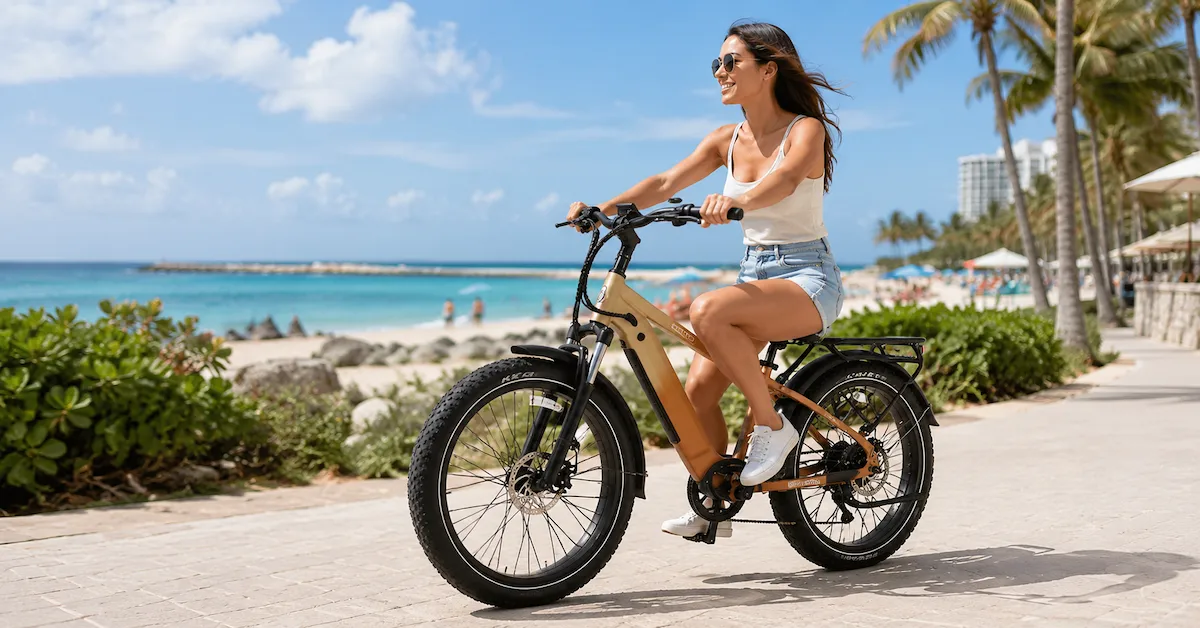
This is one of the most important differences between inland rentals and beach rental fleets.
Coastal conditions may expose bikes to:
- airborne salt;
- fine sand;
- moisture;
- sunscreen and dirt;
- repeated washing;
- higher outdoor storage exposure.
These factors can accelerate wear if maintenance routines are weak.
Areas That Need Regular Inspection
Operators should pay particular attention to:
- chain and drivetrain;
- brake rotors and pads;
- cables and connectors;
- bearings;
- fasteners;
- suspension components;
- wheel hubs;
- racks;
- kickstands.
Daily Cleaning Should Be Operational, Not Cosmetic
A bike does not need to look dirty to have sand in moving components.
A practical rental workflow may include:
After each high-exposure rental
- visual inspection;
- removal of loose sand;
- brake check;
- tire check.
At the end of the day
- appropriate cleaning;
- drivetrain inspection;
- charging;
- fault recording.
On a scheduled basis
- brake-pad inspection;
- fastener checks;
- drivetrain service;
- bearing inspection;
- electrical inspection.
This is why supplier discussions should include maintenance and spare parts before the purchase order—not after the first peak season.
What Components Matter Most for Rental Reliability?
For a commercial fleet, component consistency often matters more than premium branding.
| Component | What Rental Buyers Should Check | Why It Matters |
|---|---|---|
| Tires | Width, availability, puncture strategy | Downtime and surface capability |
| Brakes | Stopping consistency, pad availability | Safety and serviceability |
| Battery | Access, replacement supply,charging | Fleet uptime |
| Motor | Route suitability,service support | Performance and reliability |
| Drivetrain | Standardized parts | Faster repairs |
| Frame | Durability and rider fit | Long service life |
| Connectors | Protection and accessibility | Coastal reliability |
| Rack/Basket | Load and mounting stability | Guest convenience |
This kind of specification table should be discussed with the manufacturer during fleet development.
Fat Tire E-Bike vs City E-Bike for Beach Rentals
| Factor | Fat Tire E-Bike | City E-Bike |
|---|---|---|
| Mixed-surface stability | Higher | Moderate |
| Loose-surface capability | Better | Limited |
| Paved-road efficiency | Moderate | Higher |
| Weight | Usually higher | Usually lower |
| Storage efficiency | Lower | Higher |
| Adventure appeal | Strong | Moderate |
| Maintenance demand | Potentially higher | Generally simpler |
| Best use | Mixed coastal routes | Paved sightseeing routes |
For businesses still evaluating several fleet types, JOBO's bulk e-bikes for rental companies guide provides a broader rental-fleet comparison.
How to Reduce Fleet Downtime During Peak Beach Season
For rental operators, downtime is a hidden purchasing cost.
A bike unavailable during a fully booked holiday week may cost more in lost revenue than the difference between two supplier quotations.
Standardize the Fleet
Avoid unnecessary variation in:
- batteries;
- chargers;
- tires;
- brakes;
- displays;
- controllers.
Standardization makes technician training and spare-parts inventory easier.
Keep Critical Spare Parts Locally
Your list may include:
- brake pads;
- tires or tubes where applicable;
- chargers;
- displays;
- electrical connectors;
- drivetrain wear parts;
- commonly damaged accessories.
The exact kit should be agreed with the manufacturer based on the selected model.
Build Inspection Into Rental Turnaround
A short checklist between customers can help detect:
- low tire pressure;
- brake issues;
- loose accessories;
- damage;
- low battery;
- abnormal noises.
This converts maintenance from emergency repair into preventive fleet management.
How Much Should Beach Rental E-Bikes Cost?
The lowest purchase price is rarely the most useful comparison.
A rental operator should calculate total cost of ownership, including:
- purchase price;
- freight;
- duties or taxes where applicable;
- spare batteries;
- replacement parts;
- cleaning labor;
- scheduled maintenance;
- tire wear;
- battery replacement;
- fleet downtime.
A cheaper bike that experiences higher downtime may become more expensive over a full rental season.
This is why RFQs should compare equivalent specifications and service scope rather than only EXW or FOB unit prices.
What Should Be Customized for a Beach Rental Fleet?
OEM customization can improve both customer experience and operational efficiency.
Branding
Possible options include:
- frame color;
- logo;
- model name;
- decals;
- fleet numbering;
- packaging.
A resort or rental chain can use the fleet as part of its visual identity.
Functional Configuration
Depending on the platform, buyers may discuss:
- tire size;
- motor system;
- battery;
- brake configuration;
- suspension;
- saddle;
- rack;
- basket;
- lighting;
- display;
- speed settings where applicable.
Rental-Specific Details
More useful customization may include:
- simplified controls;
- standardized keys or battery systems;
- durable racks;
- fleet ID labels;
- maintenance-friendly parts.
Customization should solve an operational problem. Adding features without a clear use case can increase cost and maintenance complexity.
Why Manufacturing Capability Matters for Rental Fleet Buyers
Once a business moves from a few bikes to a branded commercial fleet, the supplier becomes part of the operating system.
JOBO's China manufacturing base covers approximately 50,000 m² and integrates frame manufacturing, painting, and three assembly lines, with stated annual capacity of up to 300,000 e-bikes. JOBO also reports 35+ R&D engineers and in-house frame manufacturing.
Its dedicated frame operation includes CNC processing, robotic welding, heat treatment, coating, and frame testing, which can support deeper OEM/ODM development.
Review JOBO manufacturing capabilities.
For a rental company, this matters when the project needs:
- repeat production;
- standardized configurations;
- custom frames or components;
- controlled branding;
- future fleet expansion.
Quality Control Questions to Ask Before Ordering
Beach rental buyers should ask a supplier more than:
"What is your price?"
Useful questions include:
- How are incoming batteries, motors, frames, and components inspected?
- How is frame durability validated?
- How are complete bikes checked before shipment?
- What records are available for the batch?
- Which spare parts should a rental operator stock?
- How are repeat-order specifications controlled?
- Which certifications apply to the exact model and target market?
JOBO describes its quality workflow as IQC → IPQC → FQC → QA, with testing that includes structural fatigue, brake, battery, wheel, complete-bike, and environmental evaluations.
Review JOBO QC Labs.
MOQ, Lead Time, and Fleet Planning
There is no responsible universal MOQ or production lead time for every beach rental project.
Both can vary according to:
- base model;
- customization level;
- fleet quantity;
- component availability;
- color requirements;
- packaging;
- certification needs;
- destination market;
- production schedule.
Buyers should therefore request a project-specific quotation instead of relying on a generic MOQ number from an unrelated model.
Prepare These Details Before Requesting a Quote
For a faster and more useful proposal, provide:
- destination country;
- expected fleet quantity;
- beach or resort location type;
- riding surfaces;
- average and maximum rental distance;
- target customer type;
- desired tire size;
- local motor/speed requirements;
- branding requirements;
- accessories;
- delivery deadline.
This information allows the supplier to recommend a configuration instead of simply sending a price list.
A Practical Beach Rental E-Bike Procurement Checklist
Before placing a bulk order, verify:
Route Fit
- Is the route paved, gravel, firm sand,or mixed?
- Are bikes allowed on every planned section?
Rider Fit
- Will the fleet serve beginners?
- Do you need step-through access?
- What rider-height range should the fleet cover?
Fleet Performance
- What is the longest rental?
- How many rentals per bike per day?
- Is battery swapping needed?
Maintenance
- Who will service the bikes?
- Which parts need to be stocked locally?
- What cleaning routine will be used?
Commercial Requirements
- What is the starting fleet quantity?
- Is branding required?
- Will the same configuration be reordered next season?
Supplier Capability
- Can the factory reproduce the approved specification?
- Can it provide test records and parts support?
- Can it support future OEM modifications?
Why JOBO for Fat Tire Beach Rental Projects?
JOBO offers multiple electric bike platforms, including fat-tire, city, folding, cargo, mountain, and fleet-oriented models.
Explore JOBO electric bike products.
For beach rental operators, JOBO can be evaluated not just as a bike seller but as an OEM/ODM manufacturing partner capable of supporting:
- model selection;
- custom configurations;
- branding;
- frame development;
- prototype validation;
- quality control;
- scalable production.
The strongest project starts with the operating scenario rather than a preset specification.
If you are planning a beach, resort, island, or coastal rental fleet, send JOBO your fleet quantity, route surface, average rental distance, destination market, target rider, branding requirements, and expected delivery date. That gives the engineering and sales team enough information to recommend a more relevant configuration.
Contact JOBO for a beach rental fleet proposal
FAQ
Are fat tire e-bikes good for beach rentals?
Yes, especially for mixed coastal routes, boardwalks, gravel, and suitable firm surfaces. Operators should still evaluate route legality, maintenance demands, rider skill, and actual sand conditions.
Can fat tire e-bikes ride directly on sand?
They may perform better than narrow tires on appropriate firm or compact sand, but deep loose sand can significantly increase rolling resistance and energy consumption. Not every beach permits bicycle access.
What tire size is best for beach rental e-bikes?
20×4.0 and 26×4.0 are common fat-tire formats. The right size depends on rider accessibility, route conditions, storage, handling, and the type of rental experience offered.
Do beach rental e-bikes need a powerful motor?
They need sufficient assistance for the route, but more power is not automatically better. Local regulations, rider experience, battery consumption, and rental safety should all be considered.
How much battery range should a beach rental bike have?
Enough to complete the longest normal rental with a practical reserve under real operating conditions. Test range with realistic rider weight, wind, surface, assistance level, and route elevation.
Does salt air damage electric bikes?
Coastal exposure can increase corrosion risk and maintenance needs. Rental operators should establish regular cleaning and inspection routines for fasteners, drivetrain parts, brakes, bearings, connectors, and other exposed components.
How often should a beach rental e-bike be serviced?
The interval depends on utilization and environment. High-use coastal fleets benefit from short daily checks plus scheduled preventive maintenance rather than waiting for a fault to occur.
Can a rental company customize fat tire e-bikes?
Yes. Depending on the project, OEM options may include branding, color, battery, motor, brakes, tires, racks, baskets, lighting, displays, and other configuration changes.
What should I ask a fat tire e-bike supplier before ordering?
Ask about model suitability, QC, certification for your target market, spare parts, battery availability, warranty terms, customization, production consistency, MOQ, and lead time.
How do I choose between fat tire and city e-bikes for a beach resort?
Choose based on the route. Fat tires are more attractive for mixed or loose surfaces, while city bikes may be lighter and more efficient when the entire guest route is paved.
Should I buy one model or several models for a beach rental business?
A standardized core fleet usually simplifies maintenance. Some operators may add a smaller number of specialty models for adventure routes or different rider needs.
Can JOBO support bulk fat tire e-bikes for beach rentals?
JOBO provides OEM/ODM manufacturing, multiple fat-tire platforms, in-house frame production, quality testing, and scalable e-bike manufacturing. The final configuration should be confirmed against the rental route, target market, quantity, and customization requirements.
Conclusion
Fat tire e-bikes for beach rentals can be a strong commercial mobility solution, but only when the bike is matched to the actual operating environment.
For rental operators, the most important purchasing factors are not simply motor wattage or battery size. They are:
- route suitability;
- rider accessibility;
- predictable real-world range;
- braking performance;
- coastal maintenance;
- spare parts;
- fleet standardization;
- supplier manufacturing capability.
A successful beach rental fleet should generate revenue while remaining easy to inspect, charge, clean, repair, and expand.
For resorts, island operators, beach rental companies, and tourism businesses planning a new fleet, JOBO can support product selection, OEM/ODM customization, quality validation, and scalable production. Start the conversation with your route conditions and operating requirements rather than only asking for a unit price; that produces a much more useful fleet proposal.