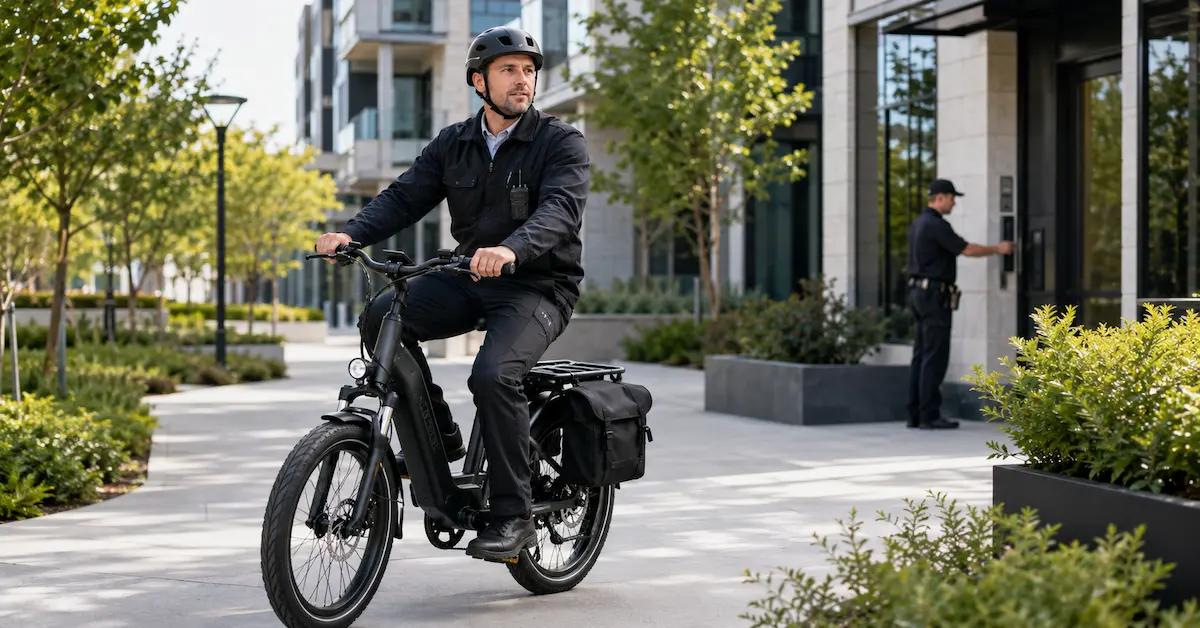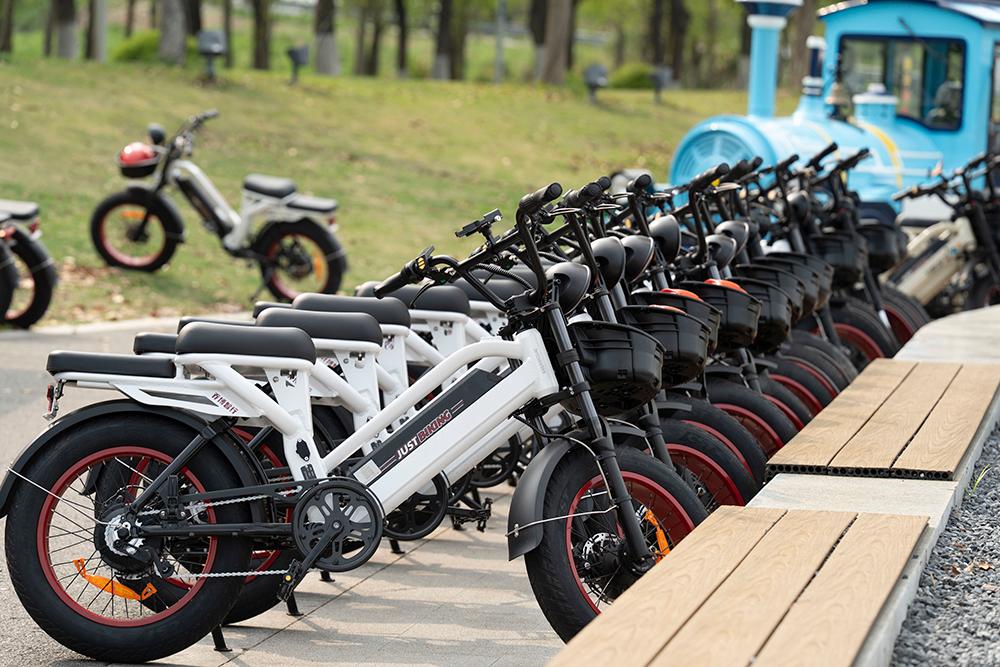
Three years ago, a shared e-bike was essentially a regular bicycle with a battery and a QR code. In 2026, it is a rolling network node — reporting its position, battery health, lock status, and riding behavior to the cloud every few seconds. This transformation is driven by one force: shared e-bike IoT, the Internet of Things.
For fleet operators, city planners, and shared mobility investors, understanding how shared e-bike IoT now underpins shared e-bike economics is no longer optional. In this article, we break down the key IoT technologies reshaping shared e-bike fleets in 2026 — and what they mean for your next hardware decision.
What Is an IoT-Connected Shared E-Bike?
An IoT-connected shared e-bike is a vehicle embedded with sensors, a positioning module, a communication unit, and a controller that continuously exchanges data with a fleet management platform. The typical architecture includes:
- Positioning module — BeiDou/GPS dual-mode receivers that report real-time location, even in dense urban "urban canyons" where single-system GPS struggles.
- Smart controller (IoT brain) — the central unit that manages the motor, reads battery data from the BMS, and executes remote commands such as unlock, lock, or speed-limit instructions.
- Communication layer — 4G Cat.1 cellular connections (increasingly complemented by Bluetooth LE for near-field operations) that keep every vehicle online.
- Smart lock and sensor suite — electronically actuated locks, plus tamper, tilt, and vibration sensors that detect misuse or theft attempts.
- Rider interface — an onboard color display showing speed, battery level, and ride data, doubling as the touchpoint for the connected experience.
The result: every bike in the fleet becomes a data source, and fleet operations shift from reactive (send a van to find broken bikes) to proactive (the platform tells you which bike needs attention before riders notice).
Real-Time Tracking: The BeiDou/GPS Revolution
The single biggest hardware-level change in shared e-bikes over recent years is the adoption of BeiDou + GPS dual-mode positioning. Modern shared e-bikes now ship with color displays that integrate BeiDou positioning as standard.
Dual-mode positioning matters for three reasons:
- Accuracy in urban environments. Tall buildings reflect satellite signals, degrading single-system accuracy. Multi-constellation receivers cut positioning error dramatically in the exact places shared fleets concentrate — city centers.
- Parking compliance. Cities increasingly demand proof that riders park inside designated zones. Centimeter-to-meter-level accuracy is what makes digital parking fences enforceable rather than advisory.
- Asset security. A bike that "disappears" between position pings triggers automatic alerts, shrinking theft response times from days to minutes.
Operator tip: when evaluating fleet hardware in 2026, treat "BeiDou/GPS dual-mode with onboard color display" as the baseline, not the premium tier. Fleets still running single-mode GPS are paying for it in parking-fine disputes and lost vehicles.
Smart Locks and the Helmet Integration Problem
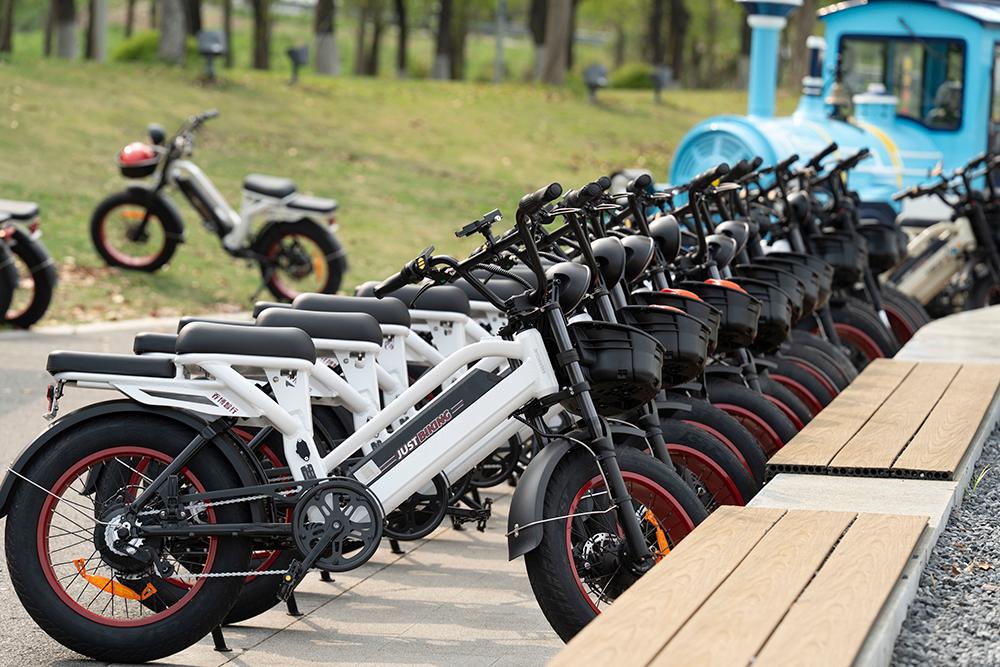
Scan-to-ride lives or dies on the lock. But 2026's more interesting development is integrated lock design — combining the front cargo basket, the smart lock, and helmet storage into a single unit.
Why does this matter? Because helmet compliance is now a regulatory requirement in a growing number of shared mobility markets, and loose helmets dangling on handlebars are the first thing to be stolen or discarded. An integrated basket-lock-helmet system:
- Keeps the helmet secured with the vehicle — unlocked only when the ride starts;
- Reduces helmet loss rates (historically one of the highest consumable costs per bike);
- Consolidates lock electronics in one weather-sealed module, lowering maintenance points.
This is a good example of how IoT requirements are now reshaping mechanical design itself, not just bolting electronics onto old frames.
Battery Telemetry and Predictive Maintenance
For e-bike fleets — as opposed to classic pedal-share bikes — the battery is the core asset and the core risk. IoT changes battery economics in three ways:
- State-of-charge visibility: the BMS streams voltage, current, and temperature data to the cloud, so operators can see every battery's live SoC on a fleet dashboard and dispatch swaps only where needed.
- Predictive maintenance: cells that degrade abnormally fast, or chargers producing anomalous temperature curves, are flagged before failure — converting emergency roadside repairs into scheduled workshop visits.
- Battery security: removable batteries paired with IoT tracking dramatically reduce battery theft, historically the largest single loss line-item for shared e-bike operators.
Fleet-grade batteries in 2026 typically offer 50–100 km of real-world range per charge (for example, 48V systems with 12Ah–20Ah packs). Combined with telemetry-driven swap routing, a single maintenance operator can now service 2–3× more vehicles per shift than in the pre-IoT era.
Geofencing: How Cities Keep Fleets in Order
Geofencing is the practice of drawing virtual boundaries that vehicles enforce themselves. When a rider approaches a no-parking zone, the display warns them; if they leave the service area, the controller can progressively reduce motor assistance. Combined with dual-mode positioning, geofencing has become the primary language of negotiation between operators and city regulators.
In 2026, mature markets use geofencing for:
- Designated parking corals with auto-lock enforcement;
- Slow-speed zones near schools and pedestrian districts;
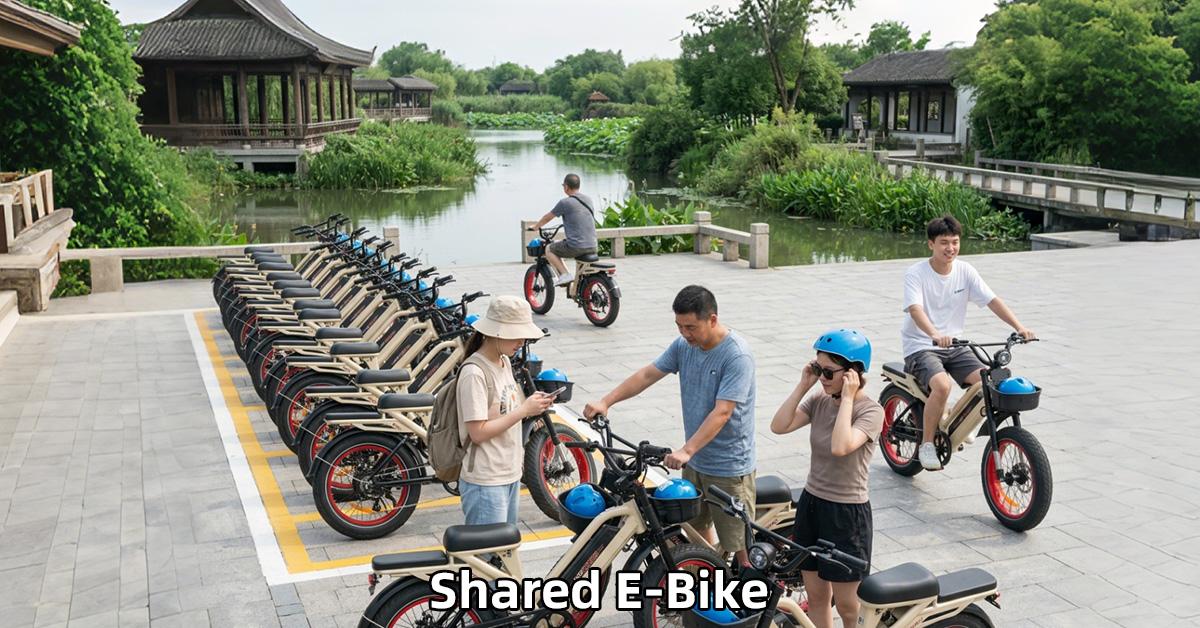
- Demand-based service zones that expand or contract with the season — critical for tourist-area fleets, where summer capacity needs differ sharply from winter.
Why Hardware Still Matters in a Software-Driven Industry
IoT gets the headlines, but fleet economics are ultimately decided on the road: range per charge, frame durability, brake performance, and tire spec determine utilization and downtime. A representative example is how shared-use e-bike platforms are configured today. The following table shows a current shared/fleet-ready e-bike lineup from a manufacturer serving shared mobility operators (specifications from the manufacturer's fleet configuration sheet):
| Model | Frame | Motor | Battery | Display & Positioning | Brakes | Tires | Range |
|---|---|---|---|---|---|---|---|
| TDN77 | 6061 aluminum alloy | 48V 250W hub motor | 48V 12Ah | BeiDou-positioning GPS color display | Front & rear disc | 20×1.95" | 80–100 km |
| TDN81 | 6061 aluminum alloy | 48V 500W Bafang motor | 48V 20Ah | BeiDou-positioning GPS color display | Front & rear disc | 20×4.0" fat tire | 80–100 km |
| TDM76 | 6061 aluminum alloy | 48V 500W Bafang motor | 48V 20Ah | BeiDou-positioning GPS color display | Front & rear disc | 20×4.0" fat tire | 80–100 km |
| TDM01 | 6061 aluminum alloy | 48V 500W motor | 48V 20Ah | BeiDou-positioning GPS color display | Front & rear disc | 20×3.0" fat tire | 80–100 km |
| TDF17 | 6061 aluminum alloy | 48V 350W motor | 48V 15Ah | BeiDou-positioning GPS color display | Front & rear disc | 26×2.35" fat tire | 50–80 km |
Several patterns in this lineup are worth noting for anyone specifying shared fleet hardware:
- BeiDou/GPS color displays are standard across every model — positioning is no longer a premium add-on, it is the fleet's nervous system.
- 6061 aluminum frames throughout — the same alloy used in premium bicycle manufacturing, chosen for the strength-to-weight ratio that survives shared-use abuse cycles.
- Dual disc brakes on every variant — non-negotiable for fleet liability and wet-weather safety.
- Front basket with integrated helmet lock — reflecting the compliance trend discussed above.
- Consistent 48V platform, tiered capacity — a single 48V electrical architecture across 12Ah/15Ah/20Ah packs lets operators standardize chargers, spares, and swap logistics while tuning range (and cost) per deployment type.
The Bottom Line
Shared e-bike IoT has not just added features to shared e-bikes — it has rewritten the operating model. Positioning modules make parking rules enforceable. Smart locks make helmet compliance practical. Battery telemetry turns maintenance from a cost center into a scheduling problem. And hardware platforms built around a consistent electrical architecture let operators scale without re-engineering their logistics every season.
For operators planning 2026–2027 deployments, the checklist is clear: dual-mode positioning, integrated smart lock design, telemetry-ready BMS, and a durable 6061-alloy frame platform. The bikes that carry these features from the factory — rather than retrofitted afterward — will define the next generation of shared mobility profitability.
FAQ
What does IoT mean in shared e-bikes?
IoT in shared e-bikes refers to the embedded positioning modules, smart controllers, communication units, and locks that connect each vehicle to a cloud fleet-management platform, enabling remote unlock, real-time tracking, battery monitoring, and geofenced operations.
Why is BeiDou + GPS dual-mode positioning important for shared fleets?
Dual-mode positioning improves accuracy in dense urban environments, enables reliable enforcement of geofenced parking and speed zones, and helps recover stolen vehicles faster — all of which directly affect regulatory compliance and operating costs.
How does IoT reduce shared e-bike maintenance costs?
IoT enables predictive maintenance: battery and motor telemetry identify abnormal degradation before failure, allowing operators to schedule workshop repairs instead of emergency roadside callouts, and to route battery swaps only to bikes that actually need them.
What range should a fleet e-bike offer in 2026?
Current fleet-grade 48V e-bikes typically deliver 50–100 km per charge depending on battery capacity (12Ah–20Ah) and riding conditions, which combined with telemetry-based swap scheduling keeps fleet uptime above 95%.
Looking for fleet-ready, IoT-connected shared e-bikes with BeiDou/GPS positioning and integrated helmet locks? Explore JOBO's shared mobility lineup at www.joboev.com — OEM/ODM manufacturing for global shared mobility partners.