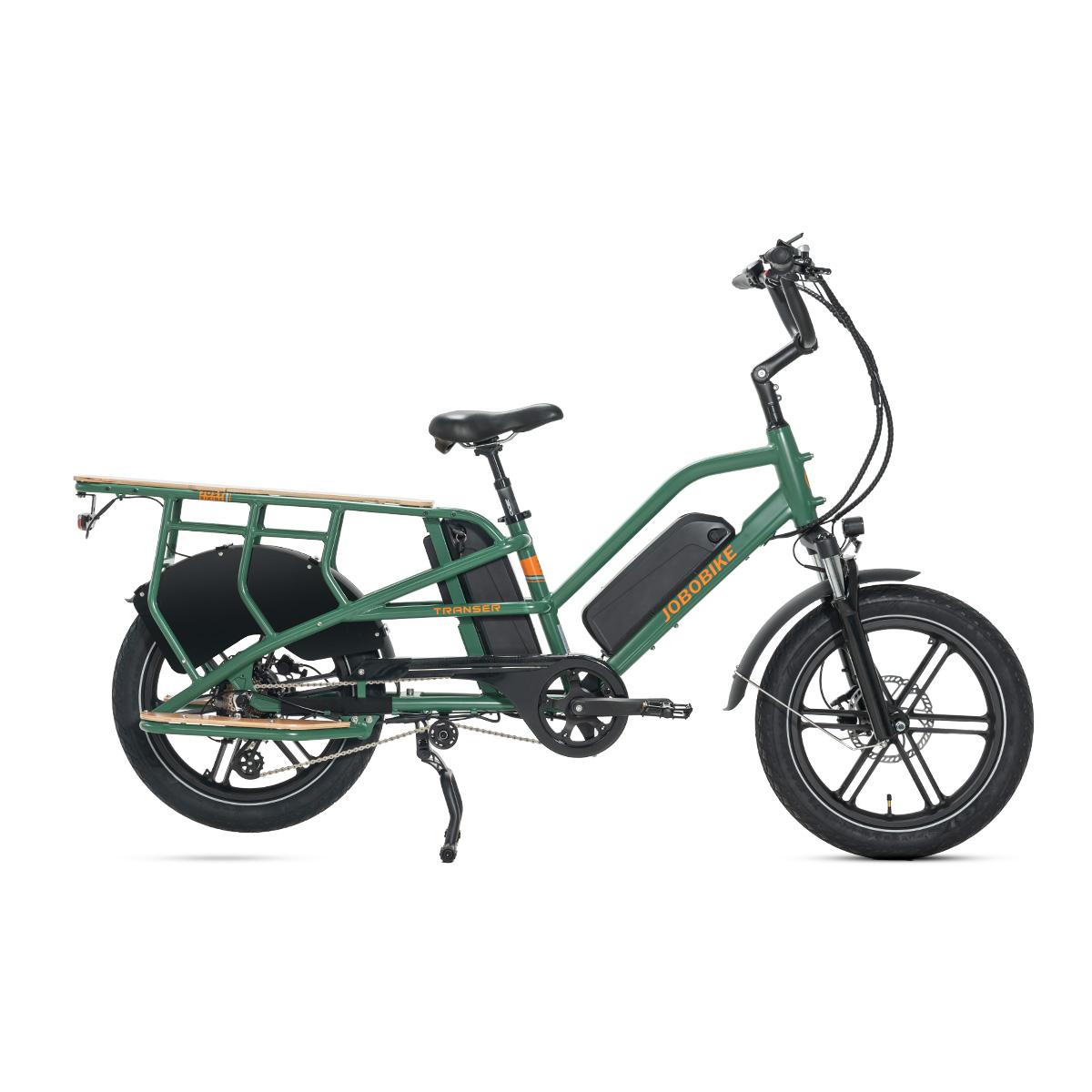
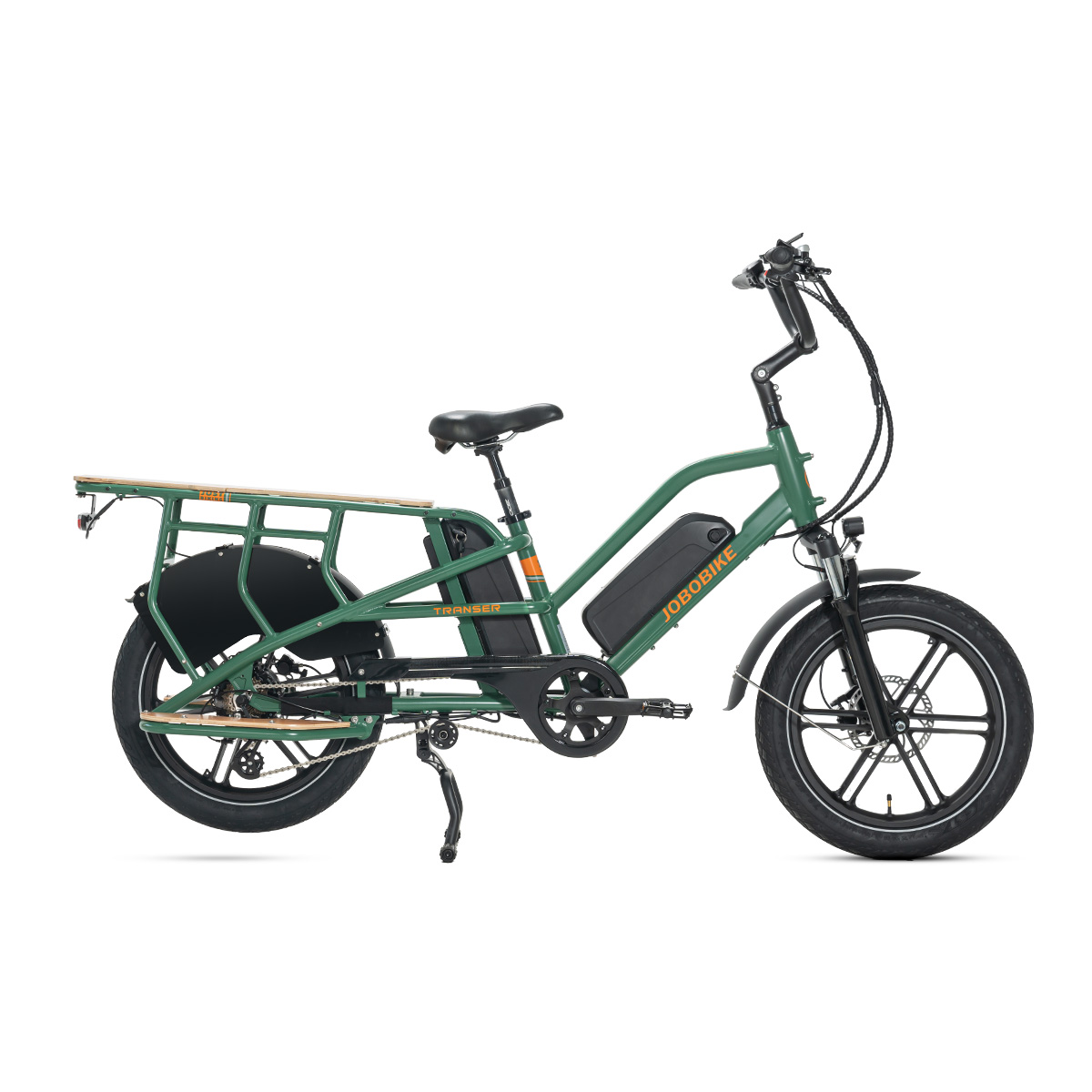
Why 48V Electric Bikes Are Ideal for City Riders and Urban Fleets

Why 48V Electric Bikes Are Ideal for City Riders and Urban Fleets

JOBO 48V electric commuter bike cruising through an urban business district

Why 48V Electric Bikes Are Ideal for City Riders and Urban Fleets

For anyone riding regularly in the city—especially with hills, cargo, or longer routes—a 48V electric bike delivers noticeable improvement over 36V models. More voltage means smoother starts, better hill support, and longer range without adding excessive weight.

At Jobo EV, we focus on smart upgrades—not overkill. Our 48V e-bikes are tuned for European city riding, balancing performance with compliance and comfort.

Who Needs a 48V E-Bike?

Daily commuters who cover more than 10–15km roundtrip will appreciate the stability and torque.
Fleet users—like delivery riders or internal mobility staff—rely on consistency across multiple trips a day.
Heavier riders or hill-zone cyclists will benefit from the improved motor output and battery efficiency.

What You Actually Get from 48V

  • Smoother acceleration from stoplights, even when loaded

  • 🔋 More usable range—typically 60–90km on standard assist modes

  • 🧠 Lower battery strain, resulting in longer cycle life

  • 🚴‍♂️ Better motor pairing with 250W and 500W hub setups

  • 🌡 Improved thermal efficiency—less heat under load, better control in summer

Whether you’re heading to work, making deliveries, or riding in a hilly part of town, 48V is a practical step up without jumping to heavy, overbuilt e-MTBs.

Tips Before You Buy (or Order in Bulk)

  • Battery placement matters: Choose between integrated downtube or rear rack depending on your load needs

  • Match your motor: 48V works best when paired with well-tuned controllers—not just raw wattage

  • Don’t forget EU compliance: All Jobo 48V bikes are CE/EN15194 ready

  • For fleets: Ask about our local service kits, spare battery packages, and lock integration

FAQs: 48V E-Bike Questions, Answered

Q1: Is 48V noticeably better than 36V?
Yes—especially during acceleration, climbing, and carrying extra weight. It’s the most popular voltage upgrade for commuter e-bikes.

Q2: Will it still be EU legal for road use?
Yes. Jobo's 48V models are capped at 25 km/h and fully CE-compliant, with integrated torque control and limited assist settings.

Q3: Can I get OEM branding on a 48V model?
Absolutely. Most of our 48V lineup supports OEM decals, packaging, and fleet configuration.

Performance That Fits the City

A 48V electric bike doesn’t just offer more power—it offers the right amount for real city life. If you're a commuter tired of sluggish starts or a business needing reliable transport with minimal downtime, a Jobo 48V e-bike is ready to ride.

View our commuter and utility lineup at products
Or contact us to spec your 48V fleet or request an OEM sample.

Related Articles

Electric Motorcycle vs. Electric Scooter: A Complete Buyer's Guide (2026)

Electric Motorcycle vs. Electric Scooter: A Complete Buyer's Guide (2026)

1.JOBO 72V 50Ah High Performance Electric Motorcycle 2.Who Should Buy an Electric Motorcycle? 3.Who Should Buy an Electric Scooter? 4.4 Things to Consider Before You Decide 5.Frequently Asked Questions (FAQ)

Top 10 FAQs About Moped-Style E-Bikes: Speed, Range, Legality, and Customization Options

Top 10 FAQs About Moped-Style E-Bikes: Speed, Range, Legality, and Customization Options

1. What Exactly Is a Moped-Style E-Bike? 2. How Fast Can a Moped-Style E-Bike Go? 3. What Is the Real-World Range on a Single Charge? 4. Are Moped-Style E-Bikes Street Legal? 5. Why Choose a 500W Rear Motor? 6. Can I Ride a Fat-Tire E-Bike in Rain or Snow? 7. What Customization Options Are Available? 8. How Do the Brakes and Suspension Perform? 9. Do I Need a License, Registration, or Insurance? 10. Who Should Buy a Moped-Style Fat-Tire E-Bike? Conclusion

Retro Fat-Tire E-Bike vs. Standard City E-Bike

Retro Fat-Tire E-Bike vs. Standard City E-Bike

1.Tire Size: The 4-Inch Advantage 2.Motor Power: 1000W vs. the Urban Standard 3.Terrain and Weather Adaptability 4.Safety Features: Beyond Basic Brakes 5.Comfort and Riding Position 6.Battery and Real-World Range 7.Who Should Choose Which? 8.Frequently Asked Questions (FAQ) 9.Final Verdict

From OEM to Shared Fleet Partner: How Factory Direct Cuts 30% Costs

From OEM to Shared Fleet Partner: How Factory Direct Cuts 30% Costs

1.Why Fleet Operators Are Reconsidering Their Procurement Model 2.The 30% Cost Breakdown: Where the Savings Come From 3.What to Look for in a Factory-Direct OEM Partner 4.Real-World Application: A 500-Bike Shared Fleet Scenario 5.Common Concerns About Factory-Direct Procurement 6.How to Transition from Distributor to Factory-Direct 7.Conclusion: Factory Direct Is a Strategic Advantage, Not Just a Cost Cut

How to Build a Smart E-Bike Rental System from Scratch

How to Build a Smart E-Bike Rental System from Scratch

1.A Complete Guide to Launching a GPS-Enabled, IoT-Powered Shared E-Bike Business 2.What Is a Smart E-Bike Rental System? 3.Core Components of a Smart E-Bike Rental System 4.How IoT Makes Smart Bike Rental More Efficient 5.Choosing the Right E-Bike for Rental Fleets 6.Ideal Locations for Smart E-Bike Rental Projects 7.Why GPS and IoT Matter for Fleet Security 8.Revenue Models for Smart E-Bike Rental Businesses 9.Why Partner with an OEM/ODM Smart E-Bike Manufacturer? 10.Future Trends in Smart E-Bike Sharing 11.Conclusion

Limited Stock Alert: High-Performance MTB E-Bikes Ready to Ship from US Warehouse

Limited Stock Alert: High-Performance MTB E-Bikes Ready to Ship from US Warehouse

1.Don't Wait Months — Get Premium 1000W Electric Bikes Delivered in Days 2.Why This Matters for Your Business 3.Product Highlights 4.Key Selling Points for Your Customers 5.Who Should Buy This? 6.Act Fast — Here's Why 7.Ready to Order?