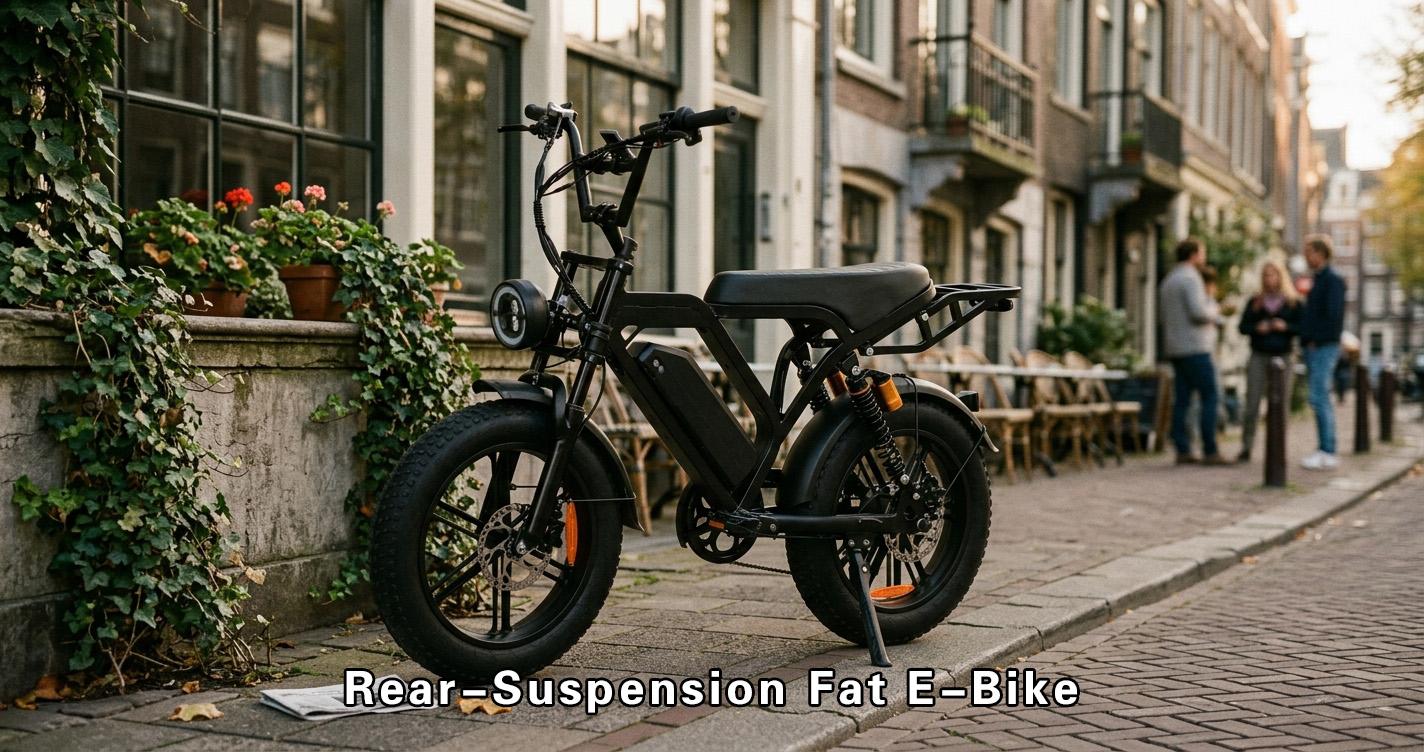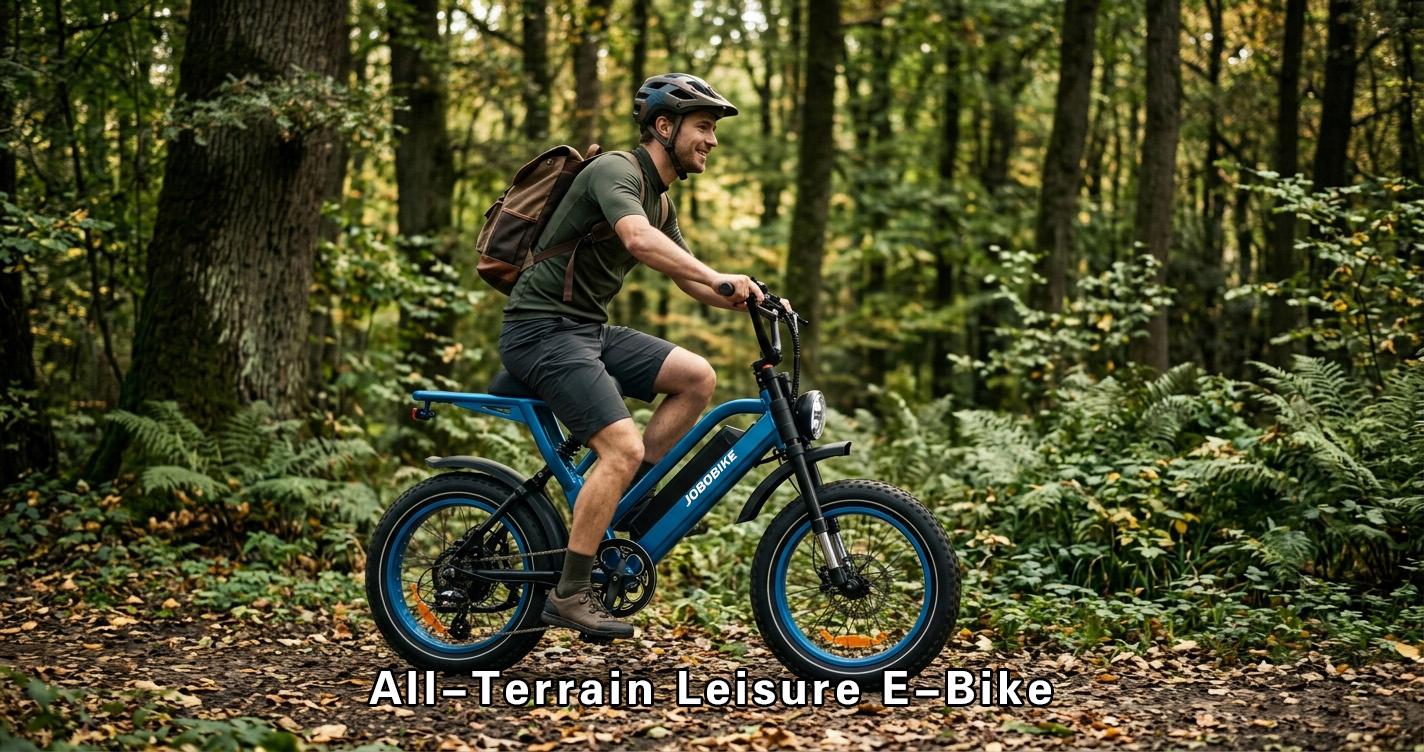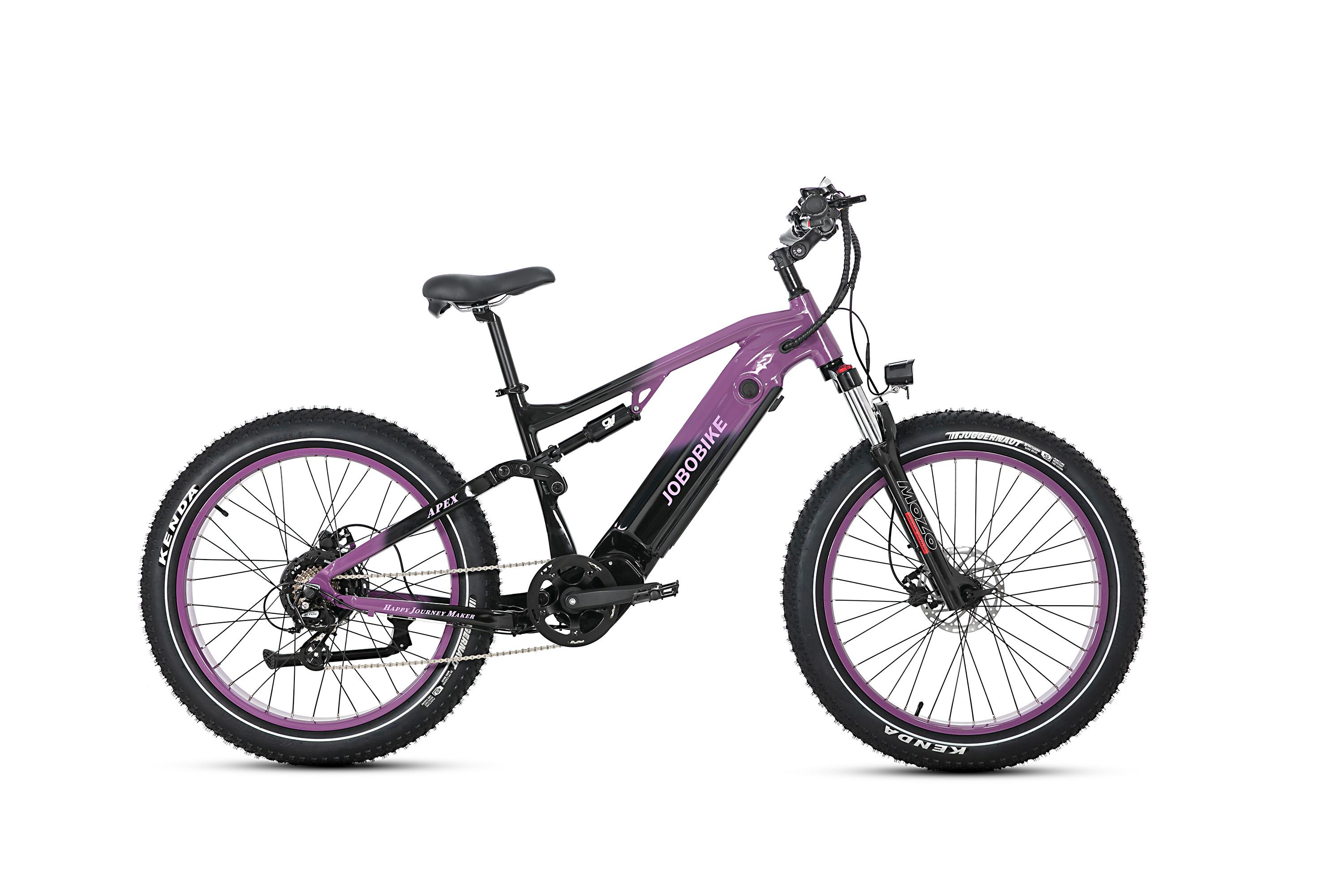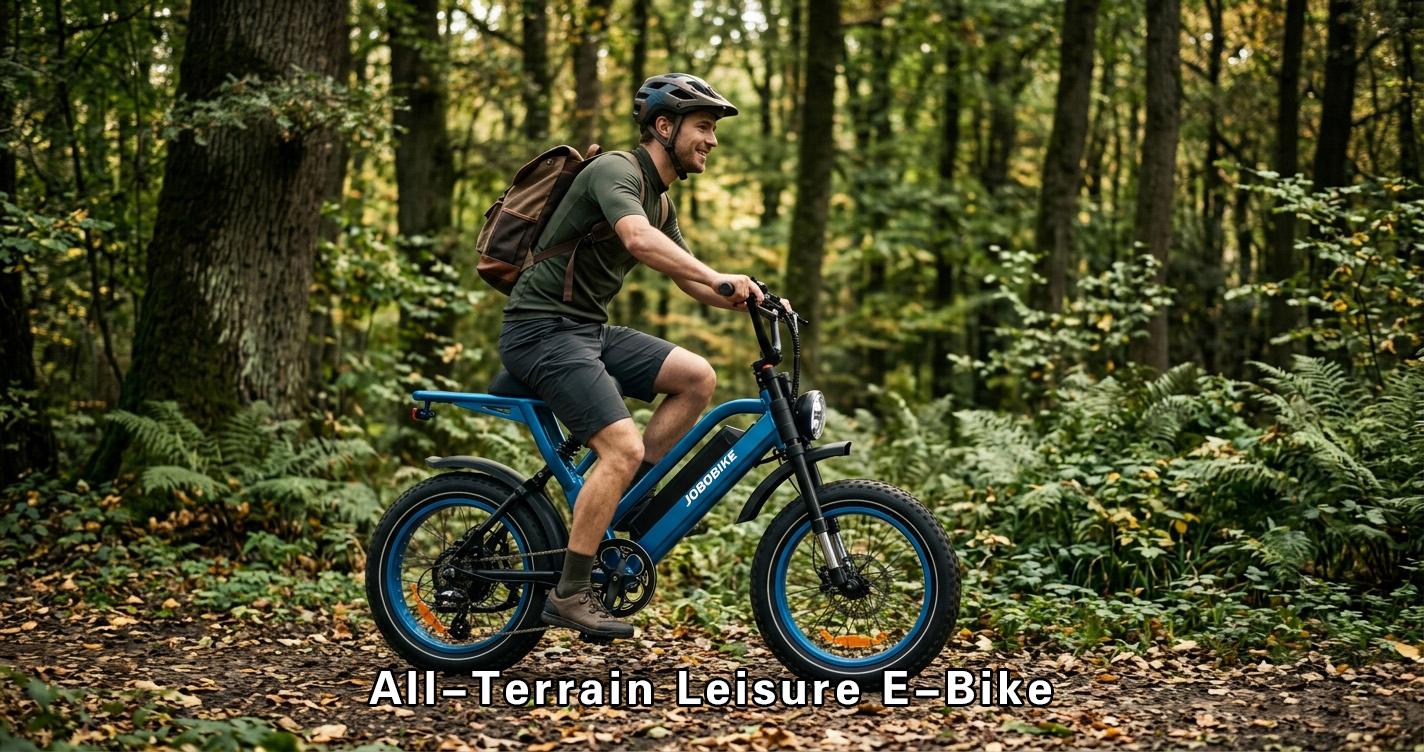
Not every electric bike is built for the same rider. A standard city e-bike handles smooth pavement and short commutes well, but it quickly reaches its limits when the road ends. A retro fat-tire e-bike with a 1000W motor and 4-inch tires bridges that gap, offering power, stability, and all-terrain freedom that urban models simply cannot match.
This guide breaks down the real differences between these two categories so you can decide which machine fits your lifestyle.
Tire Size: The 4-Inch Advantage
The most visible difference between a retro fat-tire e-bike and a standard city e-bike is the tire width.
| Feature | Retro Fat-Tire E-Bike | Standard City E-Bike |
|---|---|---|
| Tire Width | 20×4.0 inches (or similar) | 26×1.75 to 28×2.1 inches |
| Contact Patch | Large, distributes weight over soft ground | Narrow, optimized for hard pavement |
| Pressure Range | 5–20 PSI for cushion and grip | 40–65 PSI for rolling efficiency |
| Terrain Use | Sand, snow, gravel, grass, urban streets | Paved roads and bike lanes only |
Why it matters: A 4-inch fat tire acts as a natural suspension system. At low pressure, it absorbs bumps, roots, and potholes that would jar a standard city e-bike. The larger contact patch also prevents sinking on beaches or loose gravel, turning "unrideable" surfaces into casual trails.
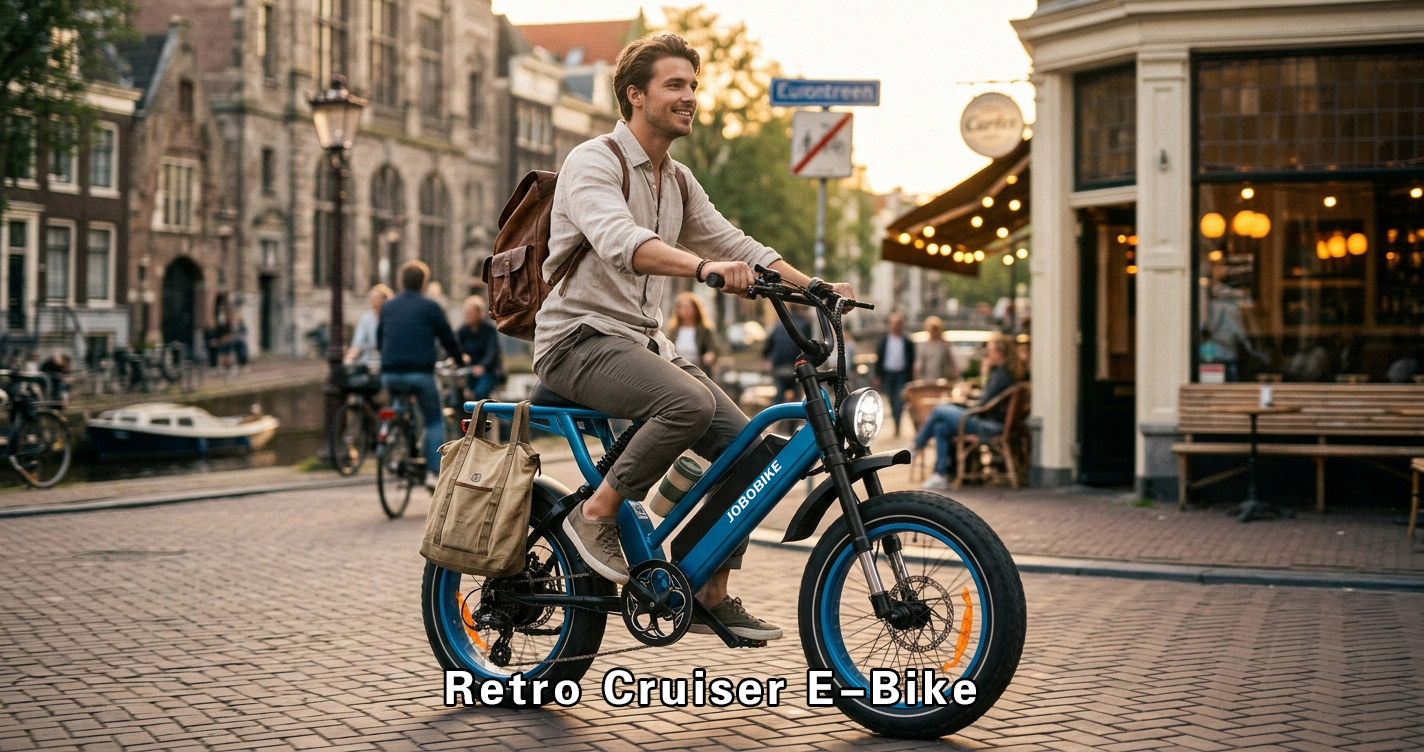
Motor Power: 1000W vs. the Urban Standard
City e-bikes typically ship with 250W to 500W motors. They are efficient and legal in most urban zones, but they struggle with steep hills, heavy cargo, and off-road torque demands.
A 1000W Bafang motor (48V system) fundamentally changes the riding experience:
-
Hill climbing: Maintains speed on 15–20% grades without pedal assist strain.
-
Acceleration: Reaches 45 km/h top speed quickly, useful for keeping pace with urban traffic or open trail cruising.
-
Load capacity: Supports up to 120 kg rider-plus-cargo weight without performance drop.
-
All-terrain torque: Powers through sand and snow where lower-wattage motors stall.
If your route includes steep bridges, unpaved shortcuts, or you simply want throttle-responsive power, 1000W makes the difference between walking the bike and riding through.
Terrain and Weather Adaptability
Standard city e-bikes are designed for dry, paved surfaces. Their narrow tires slip on wet leaves, sink in mud, and offer little grip on loose ground. Riders in regions with snow, sand, or rainy seasons often find themselves parking the bike for months.
A retro fat-tire e-bike with 4-inch tires and hydraulic disc brakes handles conditions that sideline city models:
-
Sand and beaches: Floats over soft surfaces instead of digging in.
-
Snow and ice: Lower PSI increases traction; wide tires act like snowshoes.
-
Gravel and forest trails: Absorbs vibration and maintains directional stability.
-
Wet urban roads: Hydraulic disc brakes (e.g., TEKTRO) provide consistent stopping power in rain, outperforming rim brakes found on many entry-level city bikes.
Safety Features: Beyond Basic Brakes
Modern e-bike safety is not only about stopping—it is about preventing unintended movement.Standard city e-bikes typically rely on basic brake systems and rider awareness. Retro fat-tire models in the high-performance category increasingly integrate advanced safety systems:-
Dual-lock safety system: A saddle load sensor and side-stand (kickstand) sensor work together. The motor and throttle remain disabled unless the rider is seated and the kickstand is fully retracted. This prevents accidental acceleration during mounting, dismounting, or parking.
-
Hydraulic disc brakes: Deliver stronger, more predictable stopping force with less hand fatigue than mechanical or rim brakes.
-
LED lighting: Integrated headlight and taillight improve visibility during dawn, dusk, and night rides.
For riders carrying cargo, riding with children, or operating fleet vehicles, these safety layers reduce liability and increase rider confidence.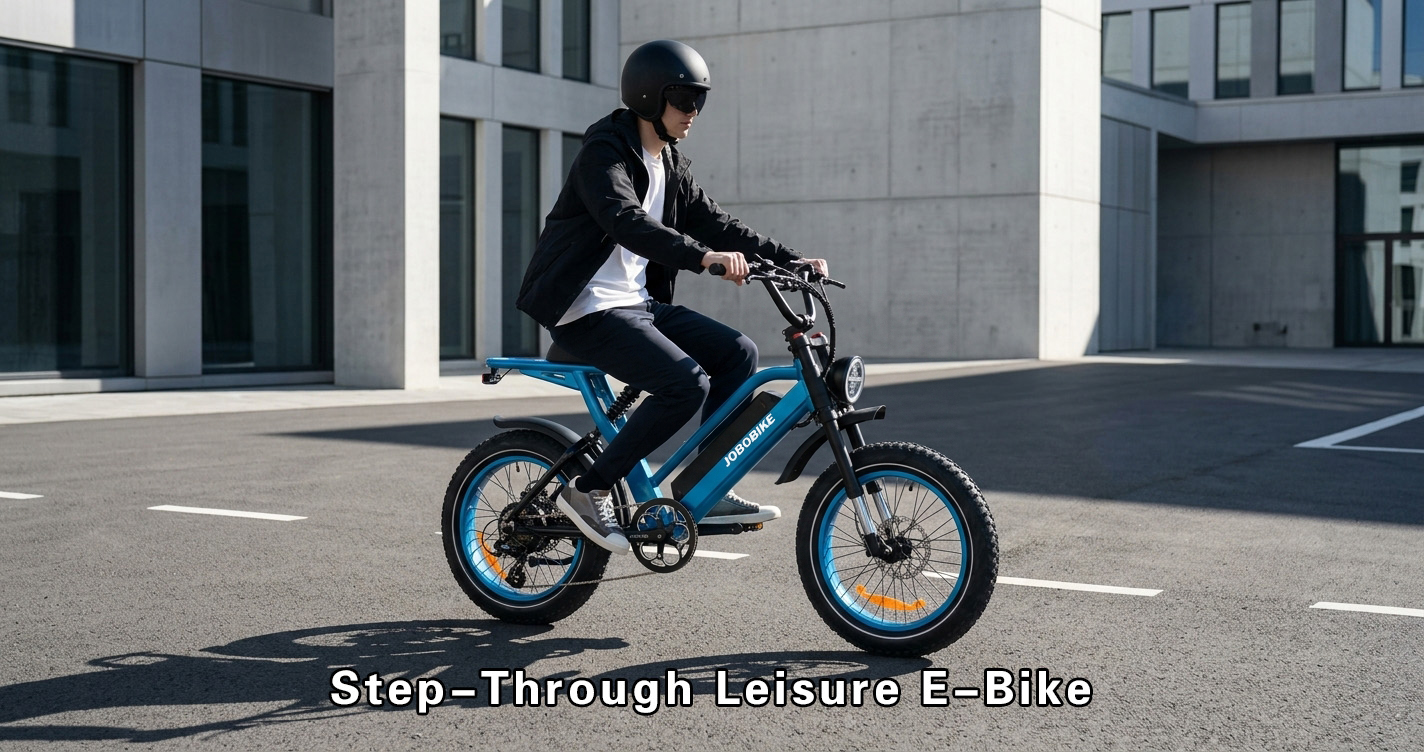
Comfort and Riding Position
Retro fat-tire e-bikes often feature a low-step aluminum alloy frame and an upright riding posture. This design reduces wrist and back strain compared to the aggressive forward-lean of many road-oriented city bikes.Additional comfort factors:-
Wide leather saddle: Distributes pressure across a broader surface area.
-
Adjustable seat post: Allows precise height tuning for riders of varying stature.
-
Natural suspension from tires: The 4-inch tire volume absorbs road vibration without needing a complex rear suspension system.
City e-bikes prioritize aerodynamics and light weight. Fat-tire retro models prioritize all-day comfort and accessibility.Battery and Real-World Range
A 48V 20Ah battery (960Wh total capacity) using LG or Samsung cells provides the energy density needed for high-wattage motors and extended rides.Scenario Estimated Range Throttle-only, flat urban roads 50–60 km Pedal Assist (PAS) mode, mixed terrain 60–80 km Hilly off-road, heavy throttle use 40–50 km Standard city e-bikes with 36V 10Ah batteries (360Wh) may offer similar range on paper, but they deplete rapidly under load or when climbing. The 48V system on a 1000W fat-tire model maintains voltage stability, meaning consistent power delivery from 100% charge to 20%.
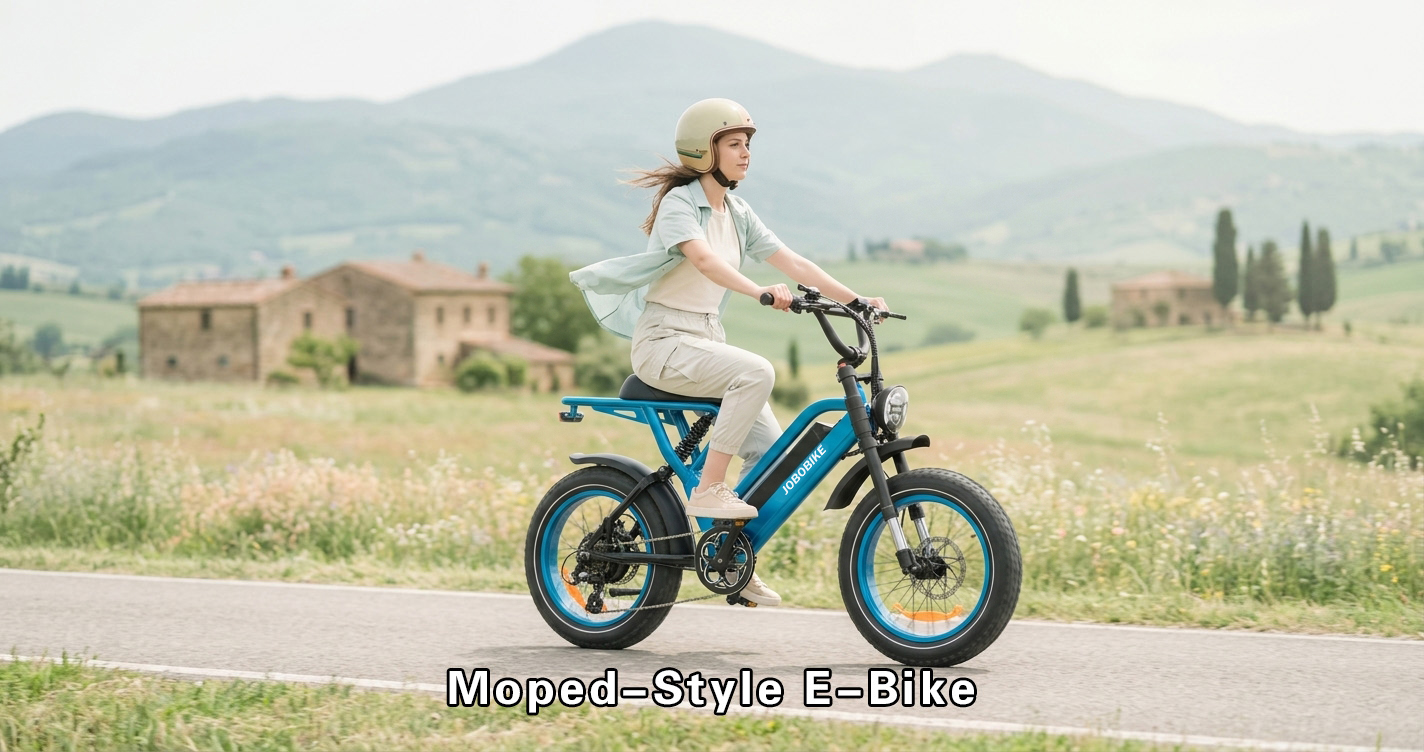
Who Should Choose Which?
Choose a standard city e-bike if:-
You ride exclusively on paved roads and bike lanes.
-
Your commute is flat and under 20 km round trip.
-
You prioritize light weight and compact storage.
-
Local regulations cap motor power at 250W–500W.
Choose a retro fat-tire e-bike with 1000W and 4-inch tires if:-
You encounter sand, gravel, snow, or rough pavement.
-
You need hill-climbing torque and cargo-hauling power.
-
You want a low-step frame for easy mounting.
-
You value integrated safety systems like dual-lock sensors.
-
You want one bike that handles weekday commutes and weekend trail adventures.
Frequently Asked Questions (FAQ)
Q: Are 4-inch fat tires slower than standard city bike tires on pavement?A: At equal pressure, fat tires create more rolling resistance. However, the 1000W motor easily compensates, allowing the bike to reach 45 km/h. For casual cruising, the speed difference is negligible, while the comfort gain is significant.Q: Is a 1000W motor legal everywhere?A: Regulations vary by country and state. Some regions classify 1000W e-bikes as Class 3 or require licensing. Always verify local laws before purchasing.Q: Can I use a fat-tire e-bike for daily city commuting?A: Yes. The low-step frame, upright position, and hydraulic brakes make it excellent for urban use. The fat tires also smooth out potholed streets better than narrow city tires.Q: How does the dual-lock safety system work?A: The motor only activates when the saddle load sensor detects a seated rider and the side-stand sensor confirms the kickstand is up. If either condition fails, the throttle is electronically disabled.Q: What maintenance do 4-inch fat tires require?A: Check pressure regularly (they lose air faster at low PSI), inspect sidewalls for cuts, and clean the tread after off-road use. Otherwise, maintenance is similar to standard tires.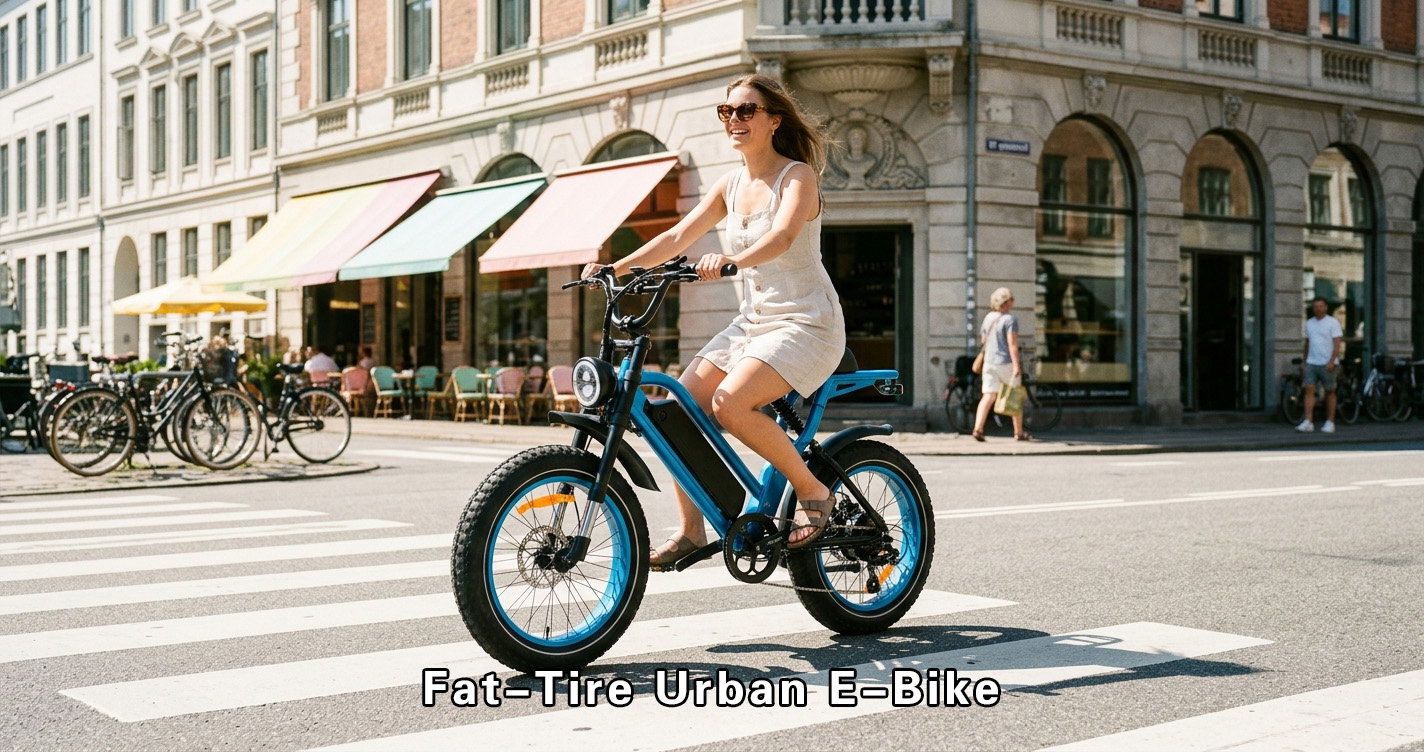
Final Verdict
A standard city e-bike is a practical tool for predictable, paved environments. But when your world includes beaches, forest trails, snowy streets, steep hills, or heavy cargo, the combination of 1000W power, 4-inch fat tires, hydraulic disc brakes, and a dual-lock safety system makes the retro fat-tire e-bike the clear winner.It is not just about looking different. It is about going where standard bikes cannot—and getting home safely. -