A procurement-ready program should have five outputs: a mission-specific request for quotation (RFQ), a signed bill of materials (BOM), a pilot-test report with agreed pass/fail rules, a production and pre-shipment acceptance plan, and a spare-parts agreement. A supplier that cannot explain how these documents connect may still sell a bicycle, but it is harder to hold that supplier accountable for fleet uptime.
This guide is written for delivery operators, fleet purchasing managers, electric cargo bike brands, importers and distributors planning repeat orders. It uses JOBO's public cargo platforms as examples. Published product configurations are starting points rather than guaranteed specifications for every market or order.
1. Start With the Delivery Mission, Not a Product Catalogue
A food-delivery operator in a dense city, a grocery company moving bulky parcels, and a municipality maintaining parks may all request an “electric cargo bike.” They do not need the same vehicle. Selecting one catalogue model for all three assignments creates unnecessary operating compromises.
Describe the job the bicycle must complete before requesting a price. Record the typical and maximum cargo mass, package dimensions, number of drops per shift, average distance between stops, parking conditions, expected gradients and available charging windows. Then document rider size range, mandatory safety equipment, vehicle storage, service locations and the route's legal classification.
A useful way to define duty cycle is to describe one complete working day. For example, a hypothetical urban courier might cover 55 km, stop 70 times, carry several loads of different weights and return to a shared depot for overnight charging. A suburban delivery route could cover a similar distance but have fewer stops, faster sections and different energy consumption. These examples are planning scenarios, not tested JOBO performance figures.
Match the platform to the cargo task
| Fleet mission | Common engineering priority | Platform direction | Frequent procurement mistake |
|---|---|---|---|
| Food and parcel delivery | Quick stops, cargo access, puncture resistance | Delivery or utility cargo e-bike | Buying for empty-bike range alone |
| Grocery and local retail distribution | Package volume, box mounting, maneuverability | Front-load or long-tail cargo e-bike | Ignoring box height and loaded center of gravity |
| Dense-city courier work | Narrow access, frequent dismounting, theft exposure | Compact delivery platform | Choosing a chassis too wide for the route |
| Longer multi-stop delivery shifts | Battery logistics, service access, rider ergonomics | Long-tail or configurable fleet platform | Assuming advertised range is guaranteed under load |
| Industrial or controlled-site transport | Stationary loading, cargo bed, turning radius | Cargo tricycle, where permitted | Assuming three wheels always improve dynamic cornering stability |
Who is this buying framework for? It is most useful for businesses launching, expanding or replacing a standardized fleet, and for importers creating a maintainable cargo-bike product line. It is less relevant to one-off personal purchases, or to projects that have not established where the vehicle may legally operate.
2. Compare Cargo Architectures Against the Same Operating Requirements
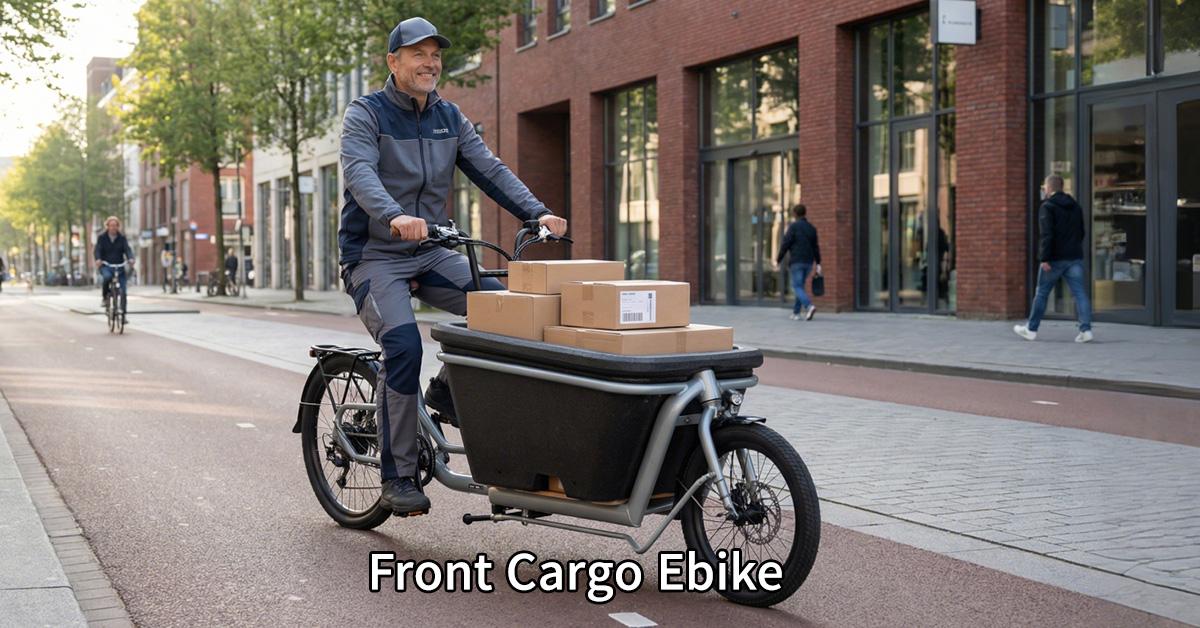
When assessing an electric cargo bike manufacturer, compare architecture decisions against your route brief instead of asking which bicycle is “best.” A front-loader keeps goods forward and visible but needs evaluation of wheelbase, front-end steering behavior and cargo-box dimensions. A long-tail places the load behind the rider and may fit familiar bicycle-style riding habits; however, its rack rating, passenger or load restraints, rear-wheel loading and overall length require specific verification. A cargo tricycle can support stationary loading workflows, but turning behavior, track width and local vehicle classification must be assessed separately.
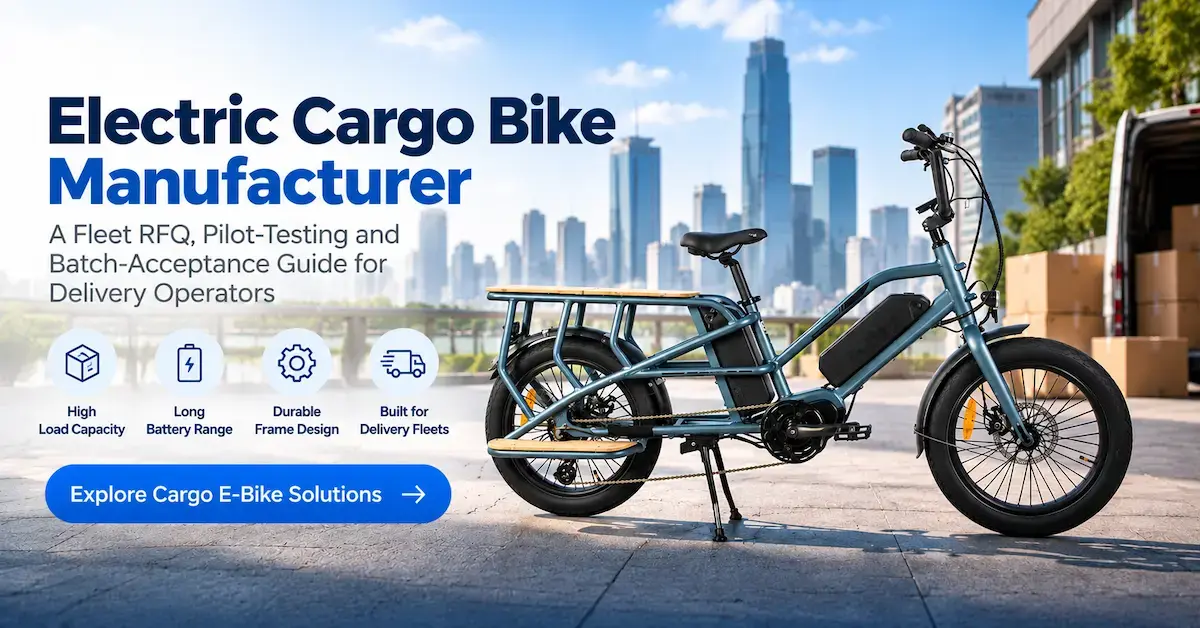
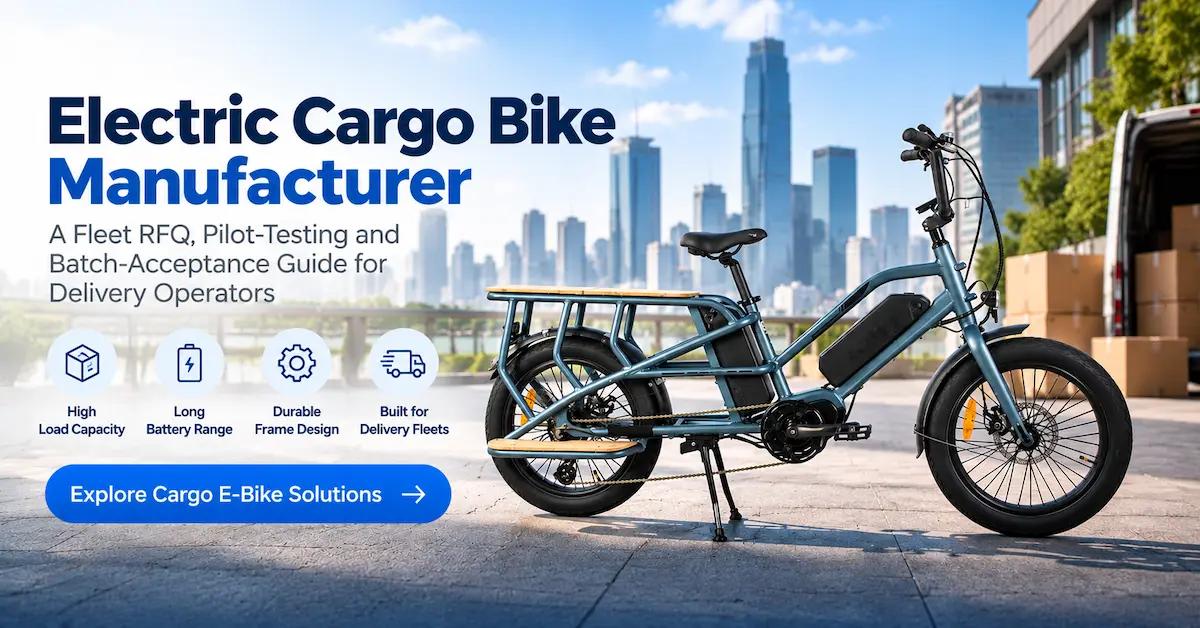
JOBO publishes several cargo-related platforms. Its cargo electric bike category is the appropriate place to begin a shortlist. For detailed discussions, the JB-TDN47Z front-load platform and JB-TDN50L delivery platform offer more useful starting points than an unspecified “500 W cargo bike.”
For a broader explanation of load-driven vehicle architecture, JOBO also has a separate cargo platform design article. This procurement guide instead concentrates on translating that choice into a purchase specification and testable acceptance plan.
JOBO platform comparison for a first RFQ
| JOBO platform | Publicly described configuration or layout | Potential mission fit | Details to reconfirm before ordering |
|---|---|---|---|
| JB-TDN47Z front-loader | Front cargo structure; product information lists a 48 V / 500 W configuration and mixed wheel sizes | Visible front cargo, local errands, last-mile carrying | Actual permissible payload, box dimensions, turning clearance, brake specification |
| JB-TDN50L delivery bike | Delivery-oriented platform; product page lists a 48 V / 350 W mid-motor, 48 V / 15 Ah battery and 20-inch format | Repeated urban delivery stops and branded service fleets | Whether single/dual-battery options apply to quoted SKU; local speed limits; rack rating |
| JB-TDN79Z long-tail | Extended rear cargo platform; JOBO blog describes a dual-battery variant | Longer delivery routes, rear-mounted goods and bags | Current product-sheet revision, battery fitment, complete gross vehicle weight and legal category |
| JB-TDT18L cargo tricycle | Three-wheel cargo configuration; JOBO blog describes a differential-drive version | Controlled-site transport or cargo-intensive tasks | Road-use classification, dimensions, payload validation and braking test scope |
Specification note: These are descriptions of JOBO's published product families, not a single certified or stocked build. Different website pages have sometimes described different component variants. Require an up-to-date model-specific specification, signed BOM and compliance evidence for the destination market before treating any figure as contractual.
Design for “not suitable,” too
A responsible supplier should explain when an architecture is inappropriate. A wide cargo tricycle might be unsuitable for narrow shared bicycle paths. A highly loaded rear rack may be unsuitable for a mission requiring frequent oversized cartons. An electric cargo bicycle that is not approved for passenger carriage must not be marketed as a child-carrying model merely because a seat can physically attach. A powerful off-road specification may not qualify for the buyer's intended public-road category.
Explore JOBO Cargo E-Bike Platforms →
3. Calculate Total System Load Before You Discuss Payload
“Maximum load” is one of the easiest specifications to misunderstand. Some suppliers publish a rack limit; others publish a cargo limit or a total permissible vehicle weight. Those figures are not interchangeable.
Gross vehicle weight (GVW) includes the bicycle itself, the rider, battery, accessories, cargo body and carried goods. Cargo payload is only the permitted carried load after other weight allowances and component limits are accounted for. A rack's local rating does not prove that the complete frame, tires, axles and brakes are rated for the same number.
Build a load sheet with at least four conditions: empty vehicle with rider, typical loaded vehicle, maximum expected load and an unevenly distributed load within the intended use. Record where mass is positioned, not only how much mass exists. Two cartons of equal weight can create different steering and stopping behavior when positioned at different heights.
Ask the manufacturer to verify the weakest relevant limit: whole-vehicle GVW, cargo rack or box mounts, front or rear wheel loading, tires, wheel assemblies, braking capacity and frame fatigue performance. The maximum approved number must be derived from the applicable configuration and evidence, not assumed from the strength of a single bracket.
Questions for the engineering team
- Is the displayed number cargo payload, rack rating or complete GVW?
- Which rider mass and accessory mass were assumed?
- Does the approved payload change with cargo-box geometry or battery location?
- Which tires, wheels, brake assemblies and rack fasteners were tested with the defined load?
- What are the permitted load positions, restraint methods and prohibited uses?
Keep the final capacity statement in the user manual and service documentation consistent with the approved test condition. Do not publish an unverified payload number simply to match a competitor's advertisement.
4. Specify the Electrical System as One Matched Package
A fleet buyer often starts with “500 W motor, 48 V battery, long range.” That statement is too broad to produce comparable quotations. Continuous power rating, motor location, controller settings, peak current, torque delivery, temperature protection and assistance behavior may matter more than a single wattage label.
For frequent stop-and-go work, ask how smoothly the bike pulls away under load, how it behaves on the steepest intended grade, and whether performance changes during a sustained climb or when the battery is partly discharged. A mid-drive, hub-drive and differential drive are different engineering solutions; none is automatically superior for every commercial assignment.
Request an electrical BOM identifying the motor, controller, display, sensor, battery pack, battery management system (BMS), connectors, charger and firmware or configuration versions. Document the installation location and how a technician will access each serviceable component. Make electrical substitutions subject to the same approval process as mechanical components.
Convert battery claims into watt-hours and test conditions
Battery energy is commonly estimated as nominal voltage × ampere-hours = nominal watt-hours (Wh). For illustration, a 48 V, 15 Ah pack represents about 720 Wh of nominal energy. Two packs of that nominal specification represent about 1,440 Wh; this does not establish a guaranteed range, compatible dual-battery operating logic or usable energy.
A hypothetical fleet consuming 18 Wh/km over a 60 km route would need about 1,080 Wh delivered during that route. With an illustrative 20% planning reserve against nominal battery energy, the initial target becomes approximately 1,080 ÷ 0.80 = 1,350 Wh nominal. This estimate is only a budgeting screen: actual pack discharge limits, aging, temperature, terrain, wind, rider effort, stops, tires and cargo can change the result significantly.
To verify a proposed configuration, test at defined loads and assistance settings, log trip distance and energy use, repeat on representative gradients and record the minimum remaining usable energy at shift end. Confirm battery replacement intervals and charging responsibilities separately from the vehicle price.
Battery and charging acceptance inputs
| Requirement | What the RFQ must state | How the buyer should validate it |
|---|---|---|
| Battery capacity | Pack voltage, Ah, Wh, cell/BMS specification | Check the approved battery label, documentation and test data |
| Range | Route, load, ambient temperature, assist mode | Repeat pilot cycles under representative conditions |
| Charging | Charger model, supply voltage, permitted location and time window | Observe the complete charge cycle and safety controls |
| Battery replacement | Access, locks, connector life and labeling | Have fleet technicians perform an actual swap or removal |
| Lifecycle support | Replacement part number, availability and warranty rules | Confirm service documentation and contractual supply terms |
For certain long-shift programs, charging infrastructure and removable batteries may deliver more operating value than simply increasing the battery mounted on every bicycle. Calculate both options against route scheduling and service capacity.
5. Engineer Braking, Frame Strength and Service Access for Commercial Duty
Cargo bikes face repeated forces from braking, road impacts, curb transitions and loading cycles. A visually strong frame cannot replace mechanical validation. Steering geometry and load placement also influence handling. Test a representative complete bike with the specific tires, brakes, wheels, cargo fixtures and rider envelope that will be sold or deployed.
JOBO describes in-house frame processes including CNC cutting, robotic welding, measurement and coating through its frame manufacturing facility. It also publishes dedicated equipment for frame fatigue, brake-related testing, complete-bike checks and electrical validation at its quality-control laboratory. Its existing cargo manufacturing overview describes the general production stages; for a buying decision, the important next step is evidence about the specific build. These capabilities make useful due-diligence questions possible: which exact test method was applied to the proposed build, what loads and cycles were used, what constitutes failure, and can the relevant report be reviewed?
Mechanical verification checklist
| System | Risk in delivery use | Evidence to request |
|---|---|---|
| Frame and fork | Fatigue, impact damage, poor alignment | Drawing revision, applicable structural test reports |
| Cargo supports | Loose attachments, local overstress, load shift | Defined load limit, fixture design and fastening specification |
| Brakes | Reduced stopping performance under load, wear | Brake system specification and loaded verification plan |
| Wheels and tires | Spoke issues, pinch damage, puncture downtime | Load suitability, tire model and pressure guidance |
| Steering and stands | Interference, instability during loading | Clearance, parking and handling test procedure |
| Cabling and electronics | Chafing, water exposure, hard-to-reach repairs | Routing review, connector protection and service-access check |
Evaluate serviceability as a design feature. Measure the time and tools required for common jobs: changing brake pads, removing a rear wheel, replacing a display, inspecting electrical connectors, servicing a cargo mount and replacing a battery. If every repair requires unusual proprietary tools or extensive disassembly, the buyer should account for that operational cost before selecting the model.
6. Write a Cargo Fleet RFQ That Produces Comparable Quotations
When working with an electric cargo bike manufacturer, the most important sourcing document is often not a glossy catalogue: it is a precise, shared RFQ. Without a common specification, the lowest quote may simply include a smaller battery, a less expensive brake, fewer accessories or no service parts.
Send the same requirement sheet to each shortlisted electric cargo bike manufacturer. Separate mandatory requirements from optional improvements. Ask for a base quote, a transparent list of alternatives, tooling or development charges, documentation scope, sample pricing, shipping terms and warranty or spare-parts arrangements.
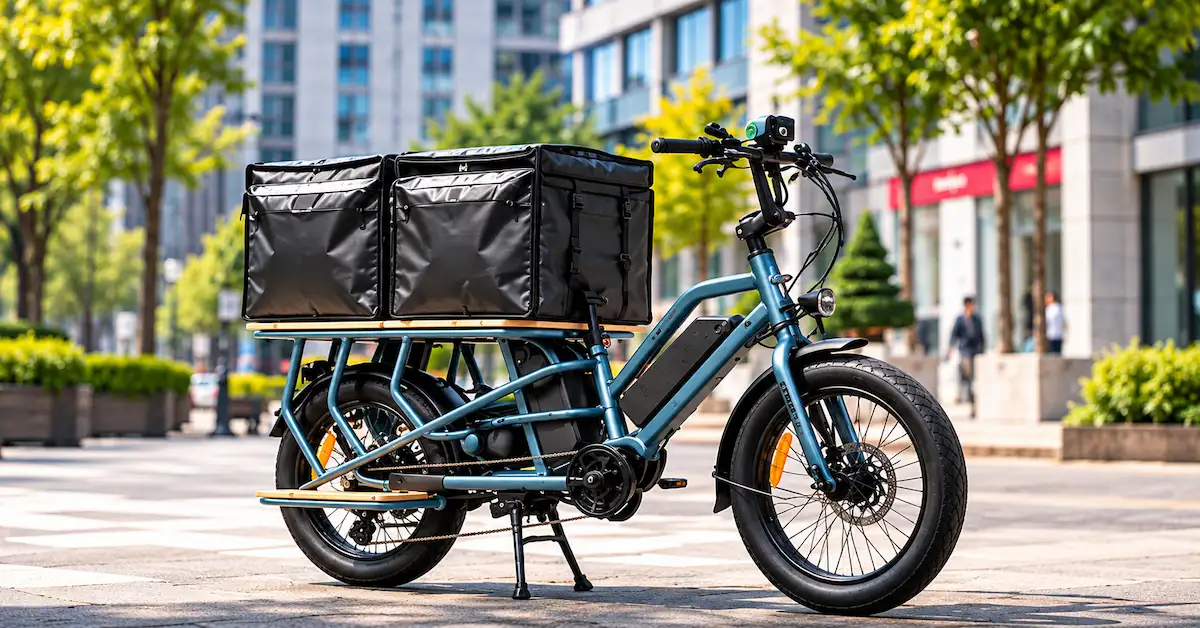
Copy-ready electric cargo bike RFQ checklist
| RFQ field | Buyer input or question to send |
|---|---|
| Buyer and market | Brand/operator, destination country and relevant vehicle category |
| Fleet mission | Delivery type, routes, daily kilometers, stops, gradients and surface conditions |
| Load definition | Rider range, typical/maximum cargo mass, package dimensions, total GVW target |
| Architecture | Front-loader, delivery utility, long-tail or tricycle; reasons for preference |
| Motor/control | Continuous rating category, assist behavior, torque requirements, speed settings |
| Battery/charger | Wh target, charging window, swap access, battery life documentation |
| Mechanical BOM | Frame, wheels, tires, brakes, drivetrain, stand, lights, carrier and fasteners |
| Branding | Frame color, logo, cargo-box graphics, labels, manuals and packaging |
| Compliance | Intended use, applicable standards and required model-specific evidence |
| Quality plan | Prototype tests, critical defects, sampling rules, inspections and traceability |
| Service | Parts list, repair tools, training, warranty process and part lead times |
| Commercial terms | Forecast, sample and batch quantities, MOQ, Incoterms, tooling, payment and dates |
Add an appendix showing the route profile and at least one sample load configuration. Attach photos or dimensions of the actual cargo box where possible. If the buyer needs integration with fleet software, specify the connectivity functions, data ownership, hardware interfaces and responsibility for software maintenance rather than simply writing “IoT included.”
A useful electric cargo bike manufacturer RFQ should produce decisions, not just prices. Ask each supplier to mark every line Compliant / Alternative proposed / Not available / Requires verification. This makes quotation gaps visible without pretending that different builds are equivalent.
Discuss Your Cargo Fleet Specification With JOBO →
7. Decide Between Private Label, Configured OEM and Full ODM
Not every fleet requires an entirely new cargo frame. Custom development can create real value, but it introduces engineering expense, new tooling, test obligations and more opportunities for specification drift. Start by testing whether an established platform can meet the mission.
Private label usually means retaining a defined product configuration while applying approved identity, colors, labels and packaging. Configured OEM may involve an existing chassis with agreed electrical, brake, battery, tire, cargo or service options. Full ODM can involve new geometry, unique cargo structures or deeper product engineering. Each route requires different investment and validation.
| Project route | Why buyers select it | Primary procurement concern | Most suitable buyer |
|---|---|---|---|
| Private label | Faster branding on an established platform | Limited differentiation, shared parts/spec control | New distributors or market-testing brands |
| Configured OEM | Tailored load, battery and service package | Revised components may require new verification | Growing delivery fleets and specialty importers |
| New ODM platform | Proprietary architecture or unusual operating task | Tooling, engineering time, test scope and IP | Multi-year fleet programs and established brands |
JOBO's published OEM and ODM service and cargo product pages describe an eight-stage development path: market brief, BOM review, engineering, frame work, prototype testing, sample approval, controlled production and final inspection. Treat that as a process structure. Confirm which engineering deliverables, sample rounds, testing costs and intellectual-property terms are included in the actual project contract.
For proprietary designs, record drawing ownership, tooling ownership, confidentiality terms, controlled access to CAD files and the process for discontinuing or revising the model. A color customization request and a newly engineered load-bearing structure should never have the same approval burden.
8. Run a Pilot That Replicates the Worst Realistic Shift
A pilot is not successful merely because a sample feels comfortable during a brief showroom ride. Commercial validation must show whether the proposed vehicle can complete the job, remain safe under the intended load and be maintained by the people who will operate the fleet.
Choose a production-representative sample with its intended cargo body, tires, motor, battery, brakes and firmware. Use a controlled test plan and competent personnel. Include realistic routes and conditions, without exceeding approved limits or performing hazardous maneuvers on public roads.
A five-part pilot acceptance plan
Pilot A — Fit, loading and daily usability. Have representative riders mount, park, load, unload and access the cargo compartment. Record handlebar and saddle fit, stand usability, clearance in corridors, box access and the time spent at a delivery stop. Ask whether the cargo layout creates unsafe lifting or awkward loading movements.
Pilot B — Route energy and charging. Run the planned distance with defined load profiles and assistance settings. Log energy consumed, battery state, ambient conditions and recharge time. Test the charger and storage workflow available at the depot rather than assuming a brochure figure describes the real operation.
Pilot C — Handling and braking. Verify controlled starts, low-speed turns, steering clearance and braking behavior within a safe, supervised test environment. Repeat with normal and maximum approved load distributions. Record rider feedback together with objective test conditions; preferences alone should not replace formal safety checks.
Pilot D — Reliability and maintenance. Across a defined duty period, log loose fasteners, wheel or tire problems, brake adjustments, controller warnings, cable damage and accessory movement. Have actual technicians perform representative service operations and record repair time and spare-part requirements.
Pilot E — Packaging and arrival condition. Request a sample in the intended commercial shipping configuration. Check packout lists, protection of the brake and display, cargo accessories, labels, battery documentation and the work required for dealer or depot commissioning.
Set pass/fail rules before riding
| Pilot measurement | Example acceptance logic — buyer to agree and validate |
|---|---|
| Shift completion | Vehicle completes defined route and planned load without unacceptable interruptions |
| Battery reserve | Remaining energy meets the buyer's documented operational reserve at shift end |
| Safety-critical defects | No unresolved critical defect permitted before launch |
| Service time | Frequent repairs can be performed within the fleet's agreed workshop capability |
| Configuration integrity | Test unit matches the signed BOM, firmware and accessories |
| Packaging | Required items arrive present and undamaged in the approved packed configuration |
These are proposed buyer acceptance criteria, not JOBO's published test thresholds or proof that a specific platform has passed them. Choose actual numeric limits with the engineering, safety and operations teams. Record deviations and repeat the affected tests after changes.
9. Lock the Golden Sample and Control Every BOM Change
Once a prototype passes, identify a golden sample or approved build record. It should capture the precise mechanical and electrical specification, not just a photo of the bicycle. Include frame revision, motor and controller identifiers, battery and charger specifications, brake and tire models, firmware, cargo attachments, label artwork, manuals and packaging drawings.
Then establish a change-control agreement. A supplier may face a battery shortage or discontinued brake model during the second production run. The correct response is not silent substitution. It is a documented proposal explaining compatibility, performance implications, test changes, price and lead-time effects, followed by buyer approval before production.
Each change request should answer: What changed? Why? Which serial numbers or batches are affected? Which tests must be repeated? Who approved the decision? Keep revision IDs connected to the production record and spare-parts list.
An acceptable substitution can still be a commercial problem if technicians need a different replacement pad, charger connector or service tool for one batch. Standardized fleets gain value from common components, predictable training and clear inventory management. Make that commonality explicit in the purchasing agreement.
10. Build an Incoming, In-Process and Final Acceptance Plan
For an electric cargo bike manufacturer, a production order is a controlled replication exercise: the manufacturer must supply bikes consistent with the approved build. Checkpoints should be defined before the first batch is produced.
JOBO describes IQC (incoming quality control), IPQC (in-process quality control), FQC (final quality control) and QA within its QC laboratories and quality process. An importer should request a project-specific control plan showing how those stages apply to the quoted cargo model, rather than assuming a general factory management-system statement confirms each shipment.
Recommended batch acceptance matrix
| Stage | Priority inspection | Evidence or record | Buyer decision |
|---|---|---|---|
| Incoming components | Battery identity, motor, brakes, tires, cargo hardware | Supplier and part-lot records | Accept, quarantine or resolve |
| Frame/structure | Geometry, welding appearance, coating, mounting dimensions | Dimensional and process inspections | Correct affected units before assembly |
| Assembly/IPQC | Fastener control, cable routing, brake setup, electrical interfaces | In-process sign-off and exceptions | Stop or correct the station if needed |
| Finished vehicle/FQC | Function, labels, configuration, safety items, visual condition | Unit-level or agreed sampled records | Accept, rework or hold lot |
| Packout | Bike protection, keys, charger, manuals, serial label, accessories | Packing checklist and shipping photos | Release only approved configuration |
| Pre-shipment | Batch identity, quantity, test pack, paperwork, agreed inspection | Inspection report and release authorization | Release, conditional release or reject |
Critical, major and minor defects must be defined in the contract. A reasonable buyer policy is to hold a lot whenever an unresolved safety-critical defect is discovered. Sampling plans and any acceptance quality limits must be agreed using the applicable product risks and inspection method; a particular AQL percentage should not be assumed from this article.
Ask for traceability of the frame serial number, battery model or lot, controller/firmware revision and key safety-related parts as appropriate. This helps identify which vehicles need investigation when a field complaint occurs, without replacing formal regulatory reporting or recall obligations.
11. Compare Landed Cost and Cost per Productive Kilometer
The most expensive fleet is not necessarily the one with the highest unit price. A lower purchase price can be offset by maintenance labor, delayed spare parts, battery downtime, damaged shipments or poor platform fit. Procurement should compare delivered operating capability, not just EXW unit cost.
Use two calculations. First, landed cost per approved bike = unit purchase price + allocated tooling/testing + freight + applicable duties/taxes + local commissioning + initial spare-parts allocation. Second, lifetime cost per productive kilometer = net fleet lifecycle cost ÷ productive kilometers actually delivered. Include energy, labor, repairs, battery provisions, downtime and a reasonable residual-value assumption; avoid counting the same expense twice.
Illustrative three-year scenario — not a JOBO quotation
| Per-bike cost element | Hypothetical amount (USD) |
|---|---|
| Bike, freight and landing | $2,400 |
| Fleet setup, training and initial parts | $200 |
| Electricity over three years | $120 |
| Planned maintenance | $650 |
| Unscheduled repairs | $430 |
| Battery replacement provision | $380 |
| Estimated downtime cost | $500 |
| Less estimated residual value | −$350 |
| Illustrative net lifecycle cost | $4,330 |
At an assumed 18,000 productive km in three years, the illustrative result is $4,330 ÷ 18,000 = about $0.24 per productive km. The price inputs, usage, residual value and repair costs are invented solely to show the calculation; they are not JOBO pricing, tested operating performance, guaranteed savings or a market benchmark. Replace them with your own contract figures and measured fleet data.
A proper supplier comparison should also show the cost of failed or delayed units, order-size price breaks, warranty exclusions, service escalation time and stockout risk. A distributor may emphasize warranty claims and sell-through; an owner-operated fleet may emphasize availability and route completion. Both should avoid choosing a higher-maintenance product merely because the invoice is lower.
12. Confirm Destination-Market Compliance Before Final Configuration
Electric cargo bicycles are not regulated identically across markets. A motor configuration allowed for a private industrial site may not qualify for public-road electric-bicycle use. Load carrying, cargo dimensions, passenger use and local pathway restrictions may introduce additional conditions beyond ordinary electric-assist classification.
For EU projects, start by checking the intended EPAC category and the applicable national use rules. Regulation (EU) No 168/2013 includes an exclusion relating to pedal-assist cycles with a maximum continuous rated motor power of 250 W and assistance cut-off before 25 km/h under the specified conditions; that exclusion is not a universal approval of all cargo builds. EN 15194 and the relevant EN 17860 carrier-cycle series may need evaluation, using the current applicable editions and the actual cycle architecture. Different parts address different technical scopes.
For US projects, consider the federal low-speed electric bicycle definition in 15 U.S.C. § 2085, the relevant consumer product requirements, state and local riding categories, and any applicable electrical-system rules or purchase specifications. UL 2849 concerns e-bike electrical systems, rather than being a complete mechanical cargo-frame approval. The battery supply and transport plan may also require UN 38.3 test-summary documentation and other mode-specific shipping records.
The correct compliance request is “Show the documents applicable to this exact configuration and market”, not “Is your factory CE certified?” Ask which motor, battery, controller, frame, cargo system, firmware and test revision were included. Reconfirm compliance if parts change during OEM development.
For EU-bound procurement, shipping or assembly in Poland does not by itself establish preferential origin, automatic exclusion from trade remedies, or a specific customs-duty outcome. JOBO describes European assembly and distribution support; buyers should obtain independent customs advice for their product and supply chain rather than make purchasing decisions based on an assumed blanket duty exemption.
13. Specify Maintenance, Parts and Warranty Support Before the First Container
A commercial cargo fleet will require wear parts and occasional repairs. Treat after-sales planning as part of product engineering, not an optional service discussed after a problem occurs. The parts agreement should cover both consumables and critical electrical components.
At minimum, request a structured replacement list for tires, tubes, brake pads, discs, brake controls, spokes or wheel assemblies, drivetrain, cargo mounting hardware, stands, lighting, displays, controllers, batteries and chargers. Identify which components are common across models, which are interchangeable, and which must be ordered by frame or firmware revision.
Define a practical service operating model: who diagnoses an issue, where parts are stored, how claims are documented, who pays labor or freight, and how a failed bike returns to service. Ask for troubleshooting diagrams and service manuals that match the actual fleet specification. If an operator runs multiple depots, document the minimum parts stock and responsible local contact at each one.
Put measurable service questions in the purchase agreement
- Which parts can be sourced independently, and which are manufacturer-specific?
- How are part numbers and replacements communicated when suppliers change?
- What warranty exclusions apply to commercial mileage, payload and working conditions?
- What is the procedure for technical escalation and safety-related field complaints?
- Which evidence must the operator provide for a warranty claim?
- Can the supplier identify a production batch from the serial number?
A product that is easy to repair and supplied with correct documentation may produce more value than a premium feature that operators rarely use. Validate this trade-off during the pilot rather than after full deployment.
14. Why Evaluate JOBO for a Cargo E-Bike OEM Program?
JOBO is a China-based electric bicycle manufacturer with a Jinhua production base, a dedicated aluminum frame manufacturing operation and a Poland-based European assembly/service presence. Its public company information describes a 50,000 m² China facility, multiple assembly lines and an advertised 300,000-unit annual capacity across the wider e-bike business—not a verified capacity committed solely to cargo products. Those scale indicators provide background; a project buyer still needs an agreed cargo production slot and realistic order schedule.
For engineering-led procurement, the relevant advantages to investigate are more specific:
- Frame-process visibility: JOBO publishes CNC, welding, coating and inspection activities at its frame factory, helping buyers ask detailed questions about a cargo chassis instead of relying on a catalogue photo.
- Quality testing infrastructure: The JOBO QC lab describes frame fatigue, electrical and finished-bike controls. Ask for reports relevant to the quoted SKU and intended load.
- Multiple cargo formats: The cargo product family lets buyers compare front-load, delivery, long-tail and other utility configurations before committing to bespoke tooling.
- A documented OEM workflow: JOBO's published product pages outline requirement review, BOM control, sample approval, mass production and shipment—useful points from which to negotiate project-specific deliverables.
- International delivery planning: China production and a Poland operation may create useful logistics and service options, subject to order availability, regulatory requirements and written commercial terms.
None of these general capabilities replaces a model-specific test file, approved BOM or contract. The strongest procurement relationship begins when the supplier welcomes detailed questions about what can actually be documented and repeated.
What to send JOBO for a meaningful first quotation
Prepare your destination country, expected annual units and first-batch quantity, intended cargo and rider loads, route profile, motor class, preferred battery and charging model, required rack or box dimensions, branding requirements, desired delivery window and any existing reference drawing. Include a note on whether you want a catalogue-based private-label bike, a configured OEM platform or new ODM engineering.
If you do not know the ideal configuration yet, send the operating mission rather than an invented specification. Ask the team to recommend one or two cargo platforms and identify the fields that still need prototype validation.
Request a Cargo OEM Quote From JOBO →
15. A Practical 30-Day Buyer-Side Sourcing Sequence
The following is a proposed procurement planning sequence, not a promised JOBO production or delivery lead time. Real engineering, testing, regulatory review and tooling can take substantially longer.
Days 1–5: Requirement definition. Map real routes, cargo profiles, rider fit, regulatory classification and service infrastructure. Approve one master RFQ and the required response format.
Days 6–10: Supplier clarification. Ask shortlisted factories to identify suitable architectures, quote comparable BOMs and flag compliance or manufacturing uncertainties. Request sample and engineering schedules rather than assuming every change is immediate.
Days 11–20: Test-plan preparation. Review drawings, proposed components, available test evidence and service documentation. Agree on the pilot's route, load, safety controls, data to capture and acceptance decisions. Physical samples might not arrive during this period; the objective is to prepare a proper validation plan.
Days 21–30: Contract and acceptance framework. Finalize provisional commercial terms, change-control rules, quality gates, serial traceability, spare-parts obligations, inspection responsibilities and the decision criteria for authorizing the eventual pilot or first production batch.
At the end of these steps the buyer should have an auditable decision file: mission brief, platform comparison, RFQ responses, risk log, test plan, draft BOM and issue owner list. These documents shorten later clarification cycles even if the product itself remains in development.
Frequently Asked Questions About Electric Cargo Bike Manufacturers
1. What should I verify before choosing an electric cargo bike manufacturer?
Verify the intended vehicle class, complete load rating, actual configuration, relevant mechanical and electrical test evidence, prototype process, written BOM, batch quality controls and service-parts plan. A low quote without those details is not yet an equivalent offer. Ask for a named engineering contact and an approval process for substitutions.
2. Can an electric cargo bike manufacturer customize a delivery fleet for my brand?
Many OEM manufacturers can provide branding, colors, cargo equipment and configuration changes. Some can support structural ODM development. The feasible options depend on the selected platform, quantity, engineering work, testing scope and market regulations. JOBO describes OEM/ODM work on its service page; request project-specific confirmation.
3. Which cargo bike is better: front-load or long-tail?
Neither is universally better. Choose by load position, box dimensions, access width, parking workflow, rider handling and service needs. Front-load layouts can keep cargo visible, while long-tail layouts support rear carriage. Test the intended load and route before standardizing a fleet.
4. How can I estimate cargo e-bike battery requirements?
Multiply measured or cautiously estimated Wh/km by required daily kilometers, then add a documented operational reserve and verify the result with loaded pilot rides. Voltage and ampere-hours produce nominal Wh but do not guarantee usable energy or range. Include charging time, replacement availability and battery aging in the decision.
5. What is the minimum order quantity for a custom cargo electric bike?
MOQ depends on whether the project is private label, configured OEM or full ODM, as well as tooling, parts selection, branding and production planning. JOBO's public cargo information does not establish one universal MOQ for all variants; request a written quotation specifying the required volume and inclusions.
6. How do fleet buyers approve a prototype before mass production?
Use a production-representative sample, agreed loaded-route and workshop tests, documented pass/fail criteria, and a signed golden-sample or build record. Re-test affected functions whenever the sample changes. Lock the BOM, firmware, cargo fixtures, instructions and packaging before authorizing bulk production.
7. Which quality inspections matter most for cargo e-bikes?
Incoming verification of critical parts, frame and cargo-mount inspections, in-process assembly controls, finished-bike functional checks, traceability and export packout inspection are all relevant. The buyer should define critical safety defects, lot-hold rules and inspection evidence contractually rather than assume a generic factory QC claim is sufficient.
8. Are EN 15194, EN 17860 and UL 2849 interchangeable?
No. They address different technical scopes and are not universal substitutes. Applicability depends on the cycle architecture, market, electrical system and current standard editions. Obtain a configuration-specific compliance matrix and appropriate supporting reports from the manufacturer or qualified assessment provider.
9. What after-sales support should a delivery fleet request?
Ask for consumable and electrical spare-parts lists, part numbers, repair instructions, warranty rules, complaint escalation, traceability and expected replenishment processes. Define who performs local repairs and how batteries, controllers or safety-related failures are handled during the contract period.
10. How do I request a useful quotation from JOBO?
Send your delivery mission, destination country, load and route requirements, annual and first-order quantities, desired battery and motor class, cargo structure, branding, regulatory needs and expected timeline. Use JOBO's contact page and ask for recommended platforms, sample/validation steps, a model-specific BOM and a breakdown of included and excluded costs.
Conclusion
Choosing an electric cargo bike manufacturer is ultimately a decision about repeatable operating performance, not a contest over catalogue claims. The right partner should help you match the cargo architecture to a real delivery mission, validate loaded range and handling, provide evidence for safety and compliance, control the approved BOM, and supply a maintainable fleet across multiple batches.
For B2B buyers, the most defensible sequence is straightforward: define the route and load; issue a comparable RFQ; select an appropriate platform; test a representative sample; lock the specification; agree on batch acceptance and service terms; then scale. This workflow does not remove every risk, but it exposes decisions early enough for engineering and procurement teams to manage them.
JOBO offers cargo-bike product platforms, in-house frame-process capabilities and a published OEM/ODM workflow that can form the starting point for this evaluation. Review its electric cargo bike range, then contact JOBO to discuss your fleet RFQ and sample requirements. Bring the operating mission and desired outcome; request a documented proposal that your fleet team can test, approve and maintain.