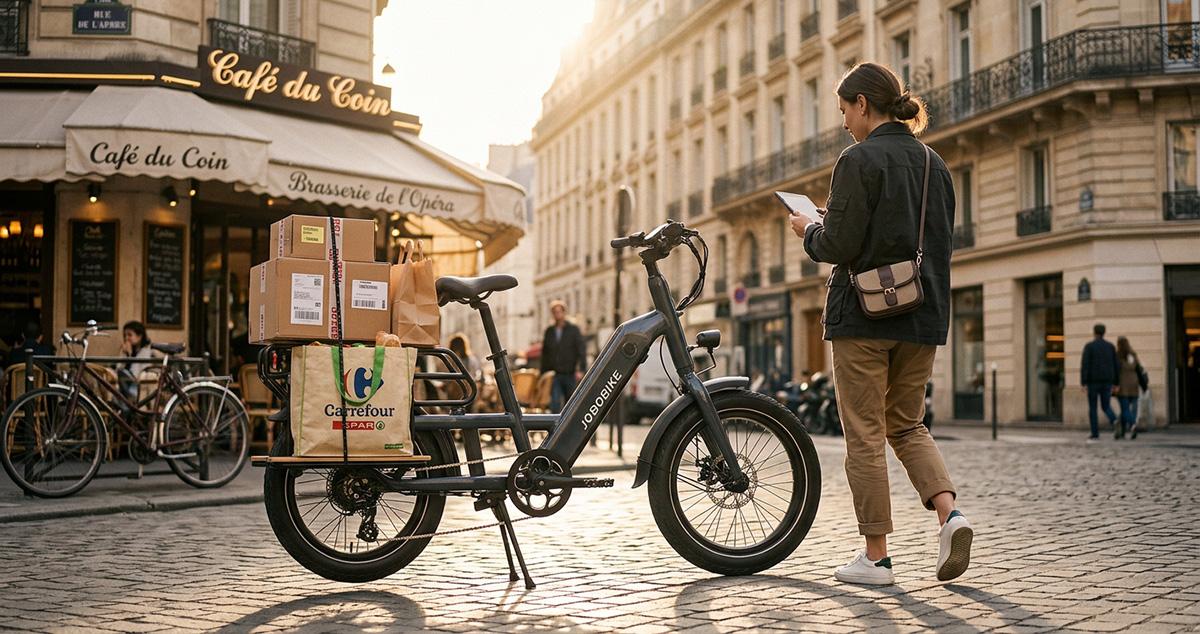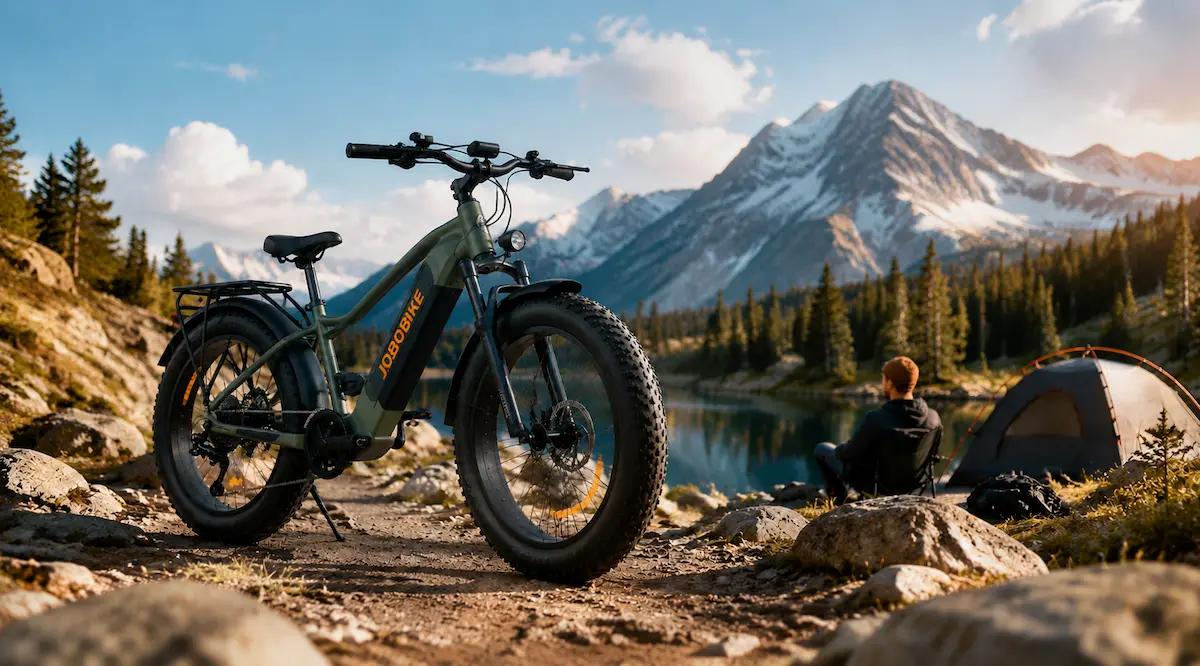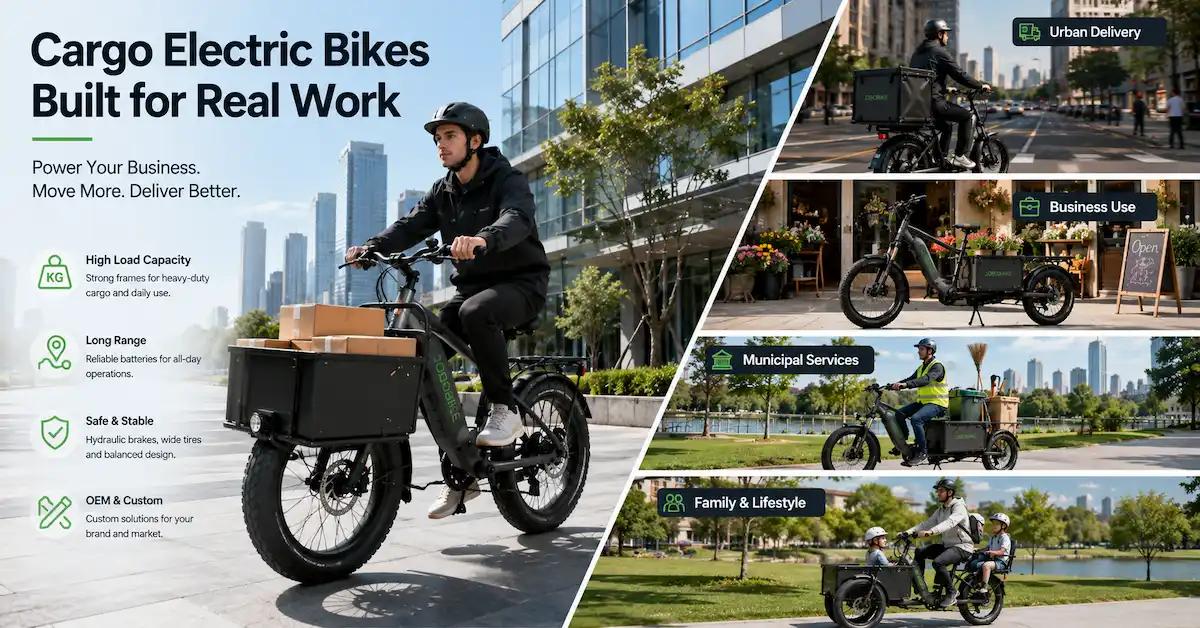
The global demand for cargo electric bikes continues to grow as businesses search for cleaner, more efficient, and flexible transportation solutions. From last-mile delivery and urban logistics to mobile services and commercial transportation, cargo e-bikes are becoming an important alternative to traditional vehicles.
However, producing a reliable cargo electric bike requires much more than installing a larger rear rack on a standard bicycle.
A professional cargo electric bike manufacturer must integrate:
- Heavy-duty frame engineering
- High-load component selection
- Battery and motor matching
- Safety-focused design
- Manufacturing consistency
- Quality inspection
- OEM customization
- Export support
In 2026, commercial buyers are paying more attention to durability, maintenance costs, battery safety, compliance, and long-term supply stability.
A reliable manufacturing partner helps businesses transform cargo e-bike concepts into scalable products for real-world applications.
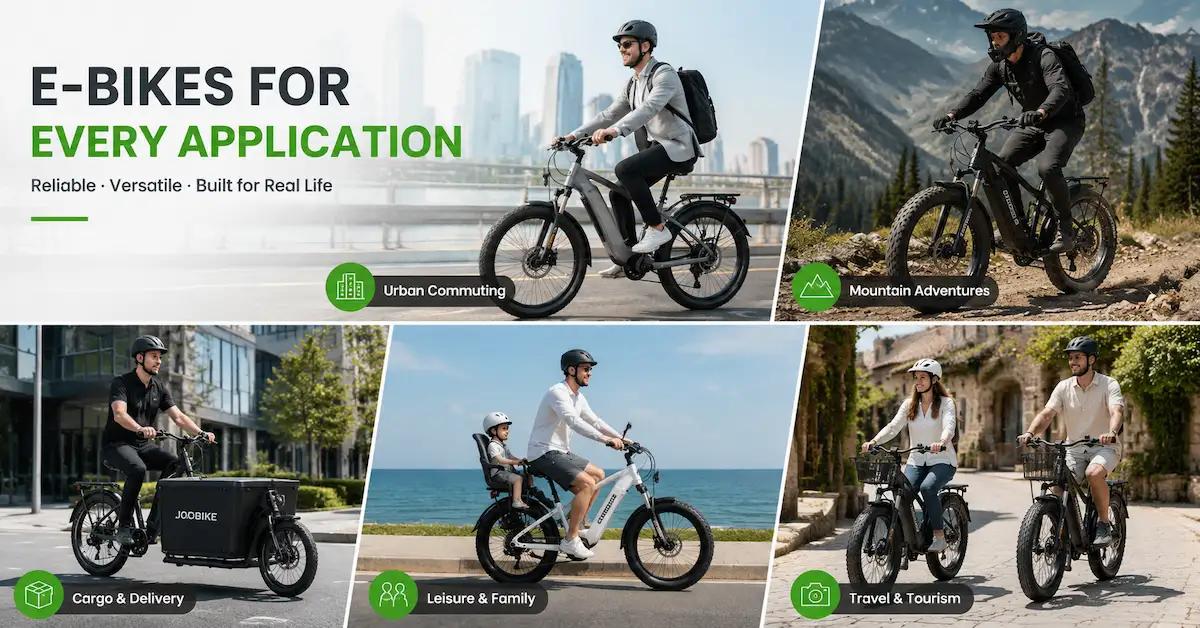
JOBOBIKE provides electric mobility solutions for global customers, including cargo electric bikes, city e-bikes, folding electric bikes, mountain e-bikes, off-road models, shared bikes, electric tricycles, electric motorcycles, kid electric bikes, and custom frames.
Explore JOBOBIKE products:
https://www.joboev.com/products
What Does a Cargo Electric Bike Manufacturer Actually Do?
A professional cargo electric bike manufacturer manages the complete development and production process.
Unlike ordinary electric bicycles, cargo e-bikes must handle:
- Higher loads
- Longer operating hours
- More frequent use
- Different road conditions
- Commercial maintenance requirements
A complete cargo bike manufacturing system includes:
| Manufacturing Stage | Main Responsibility |
|---|---|
| Product Planning | Define application and target market |
| Engineering Design | Develop frame and component solutions |
| Component Selection | Match motor, battery, brakes, and drivetrain |
| Frame Manufacturing | Build strong cargo structures |
| Assembly | Integrate mechanical and electrical systems |
| Testing | Verify safety and performance |
| Packaging | Prepare for global shipment |
The manufacturer’s ability to control these stages determines the final product reliability.
Why Cargo Electric Bikes Require Specialized Manufacturing
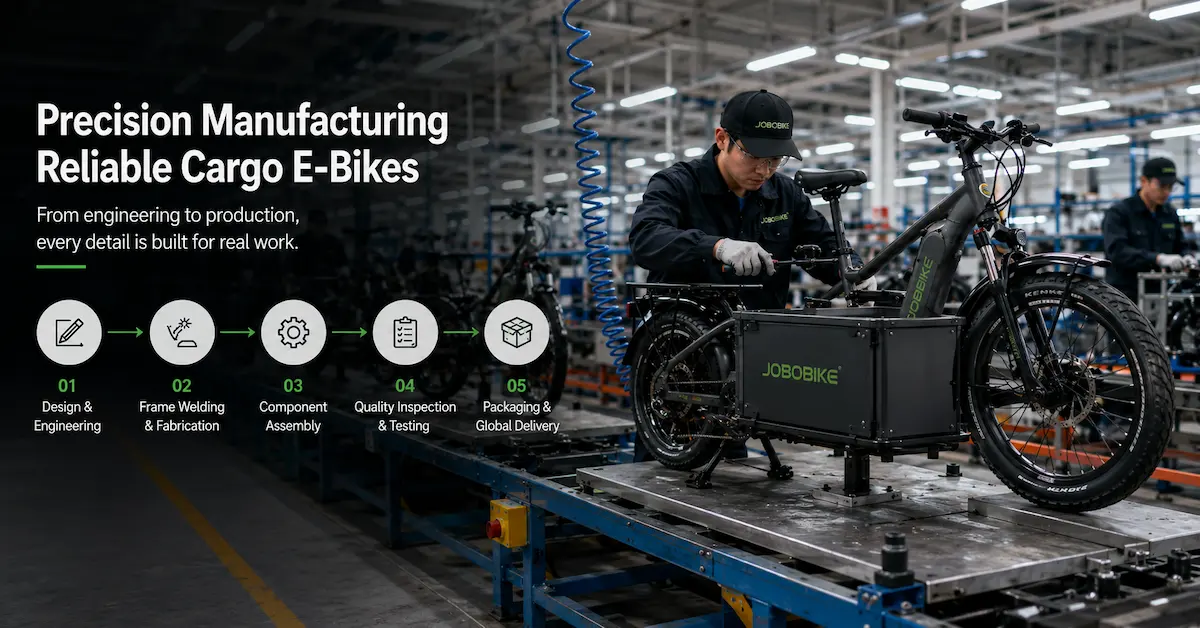
Cargo electric bikes operate under conditions that are very different from personal commuter bicycles.
A commercial cargo bike may need to carry:
- Delivery packages
- Food containers
- Business equipment
- Tools
- Passenger loads
This creates higher requirements for:
Frame Strength
The frame must support additional weight while maintaining stability.
Important considerations include:
- Tube structure
- Welding quality
- Reinforcement points
- Load distribution
- Long-term fatigue resistance
Motor Performance
Cargo applications require motors that can provide:
- Strong starting torque
- Stable climbing ability
- Consistent performance under load
Battery Capacity
Commercial users often require:
- Longer operating range
- Fast charging capability
- Reliable battery cycles
- Easy replacement
A specialized cargo electric bike manufacturer designs these systems together rather than selecting individual parts separately.
The Structure of a Modern Cargo Electric Bike Factory
A capable manufacturer usually includes several specialized departments.
Product Development Team
The engineering team evaluates:
- Customer requirements
- Market regulations
- Riding conditions
- Load requirements
They create:
- Product concepts
- Technical drawings
- Prototype solutions
Frame Manufacturing Department
The frame is the foundation of a cargo electric bike.
Production may include:
- Aluminum tube cutting
- CNC processing
- Welding
- Alignment checking
- Surface treatment
- Painting
A strong frame production process improves:
- Safety
- Durability
- Product consistency
Electrical System Integration
Cargo e-bikes depend on a coordinated electrical system.
Main components include:
- Motor
- Battery
- Controller
- Display
- Sensors
- Wiring system
The manufacturer must ensure:
- Correct compatibility
- Stable power delivery
- Safe connections
- Reliable operation
Assembly Line
A commercial cargo electric bike assembly process includes:
- Frame preparation
- Electrical installation
- Wheel assembly
- Brake adjustment
- Drivetrain installation
- Accessory installation
- Final testing
Quality Control Department
Quality control ensures every production batch matches approved standards.
Testing includes:
- Frame inspection
- Brake testing
- Battery testing
- Motor testing
- Riding testing
- Packaging inspection
How Cargo Electric Bikes Are Manufactured Step by Step
Step 1: Market Requirement Analysis
Before production begins, manufacturers analyze:
- Application
- Customer type
- Load requirements
- Target market
- Price positioning
Examples:
Delivery companies may need maximum cargo capacity.
Retail customers may prefer compact cargo solutions.
Step 2: Cargo Frame Development
Cargo frames require different engineering compared with standard bicycles.
Manufacturers evaluate:
- Wheelbase
- Cargo position
- Center of gravity
- Frame reinforcement
- Rider balance
Step 3: Component Selection
A cargo electric bike manufacturer selects suitable:
- Motor systems
- Battery packs
- Brake systems
- Tires
- Suspension
- Cargo accessories
Step 4: Prototype Testing
Prototype testing verifies:
- Riding stability
- Load performance
- Handling
- Electrical reliability
Step 5: Mass Production
After approval:
- Materials are prepared
- Frames are produced
- Components are assembled
- Quality inspections are performed
Step 6: Export Preparation
The finished cargo bikes are prepared with:
- Packaging
- Documentation
- Spare parts
- Shipping requirements
Key Components of a Commercial Cargo Electric Bike
| Component | Manufacturing Importance |
|---|---|
| Cargo Frame | Supports carrying capacity |
| Motor | Provides load assistance |
| Battery | Determines operating range |
| Brake System | Ensures safety |
| Tires | Improves stability |
| Controller | Manages electrical output |
| Cargo Accessories | Supports business applications |
OEM and Custom Cargo Electric Bike Manufacturing
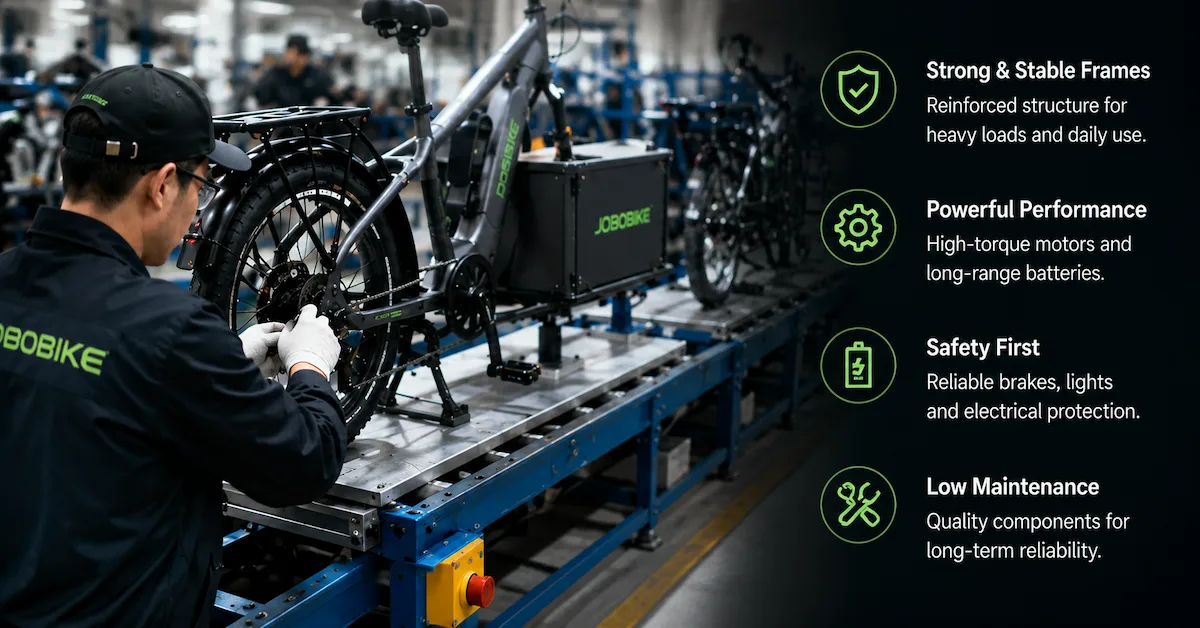
Many companies choose OEM cooperation because they need products designed for their own markets.
A cargo electric bike manufacturer can support:
Brand Customization
Including:
- Frame logo
- Battery branding
- Packaging
- Manuals
- Labels
Product Customization
Including:
- Cargo box design
- Rack structure
- Battery capacity
- Motor configuration
- Accessories
Application Customization
Solutions can be developed for:
- Food delivery
- Parcel delivery
- Mobile businesses
- Campus transportation
- Rental fleets
How to Choose the Right Cargo Electric Bike Manufacturer
Before cooperation, buyers should evaluate:
Manufacturing Capability
Questions:
- Does the factory control production?
- Can it support bulk orders?
- Does it have engineering capability?
Cargo Bike Experience
Check:
- Previous commercial projects
- Product categories
- Application experience
Quality System
Confirm:
- Incoming inspection
- Production inspection
- Final testing
OEM Ability
Evaluate:
- Custom design support
- Branding capability
- Product modification ability
Quality Control Standards for Cargo Electric Bikes
Commercial bikes require stricter testing because failures affect business operations.
A reliable manufacturer should inspect:
Frame Testing
- Welding quality
- Load strength
- Structural stability
Electrical Testing
- Battery charging
- Motor operation
- Controller response
- Wiring safety
Riding Testing
- Brake performance
- Steering stability
- Load handling
- Noise inspection
Packaging Testing
- Transport protection
- Component placement
- Shipping preparation
Cargo Electric Bike Export Considerations in 2026
Global buyers should consider:
- Destination market requirements
- Battery documentation
- Shipping regulations
- Product labels
- User manuals
- Spare parts planning
A professional export manufacturer should support:
- Commercial documents
- Packaging standards
- International communication
- After-sales solutions
Why Choose JOBOBIKE as Your Cargo Electric Bike Manufacturer?
JOBOBIKE provides cargo electric bike manufacturing solutions for global businesses.
Capabilities include:
- OEM and ODM development
- Custom cargo bike solutions
- Electric mobility manufacturing
- Frame engineering
- Quality inspection
- Global supply support
JOBOBIKE products support different applications:
- Urban delivery
- Commercial transportation
- Business logistics
- Personal cargo use
For companies searching for a reliable cargo electric bike manufacturer, JOBOBIKE provides complete support from product concept to bulk production.
Explore products:
https://www.joboev.com/products
Contact JOBOBIKE:
https://www.joboev.com/contact-us
FAQ
What is a cargo electric bike manufacturer?
A cargo electric bike manufacturer designs and produces electric bicycles specifically for transporting goods, equipment, or passengers.
What makes cargo e-bike manufacturing different?
Cargo bikes require stronger frames, higher-load components, powerful motors, larger battery capacity, and specialized testing.
Can a cargo electric bike manufacturer provide OEM services?
Yes. OEM services can include branding, frame customization, cargo accessories, battery configuration, packaging, and manuals.
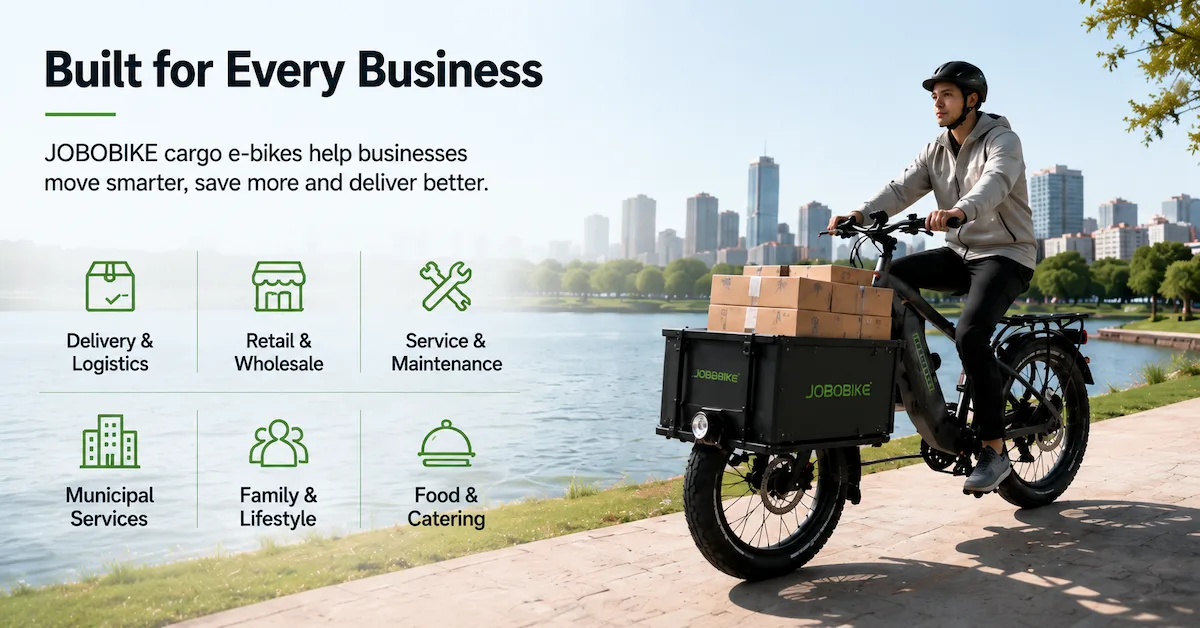
What industries use cargo electric bikes?
Common applications include:
- Delivery services
- Logistics
- Retail businesses
- Campus transportation
- Rental companies
How do I choose a cargo electric bike factory?
Evaluate production capability, engineering experience, quality control, customization ability, and export support.
What components are most important for cargo e-bikes?
Key components include:
- Frame
- Motor
- Battery
- Brakes
- Tires
- Controller
Can cargo bikes be customized for different businesses?
Yes. Manufacturers can develop solutions for delivery boxes, racks, commercial accessories, and specific applications.
How long does cargo electric bike production take?
Production time depends on customization level, quantity, component availability, and testing requirements.
Do cargo electric bike manufacturers provide spare parts?
Reliable manufacturers provide replacement components to support long-term operation.
How can I start an OEM cargo e-bike project with JOBOBIKE?
Provide your target market, application, quantity, specifications, and branding requirements through the JOBOBIKE contact page.
Conclusion
Choosing the right cargo electric bike manufacturer is essential for businesses that want reliable commercial mobility solutions.
A professional manufacturer should provide:
- Strong engineering capability
- Durable frame production
- Reliable electrical systems
- Strict quality control
- OEM customization
- Export support
In 2026, cargo electric bikes are becoming an important solution for urban logistics, delivery, and sustainable transportation.
Working with an experienced manufacturer allows businesses to create products that are not only competitive in price but also reliable in daily operation.
JOBOBIKE supports global partners with cargo electric bike development, OEM manufacturing, and long-term supply solutions.
Start your cargo e-bike project:
https://www.joboev.com/contact-us