Launching a branded electric motorcycle is not simply a matter of selecting a motor, choosing a large battery and adding a new logo to an existing vehicle. A motorcycle that looks convincing in a catalogue can fail a market-entry review because its legal category is unclear, its approval documents do not match the actual build, or a seemingly minor component change affects a certified configuration. It can also become difficult to support after launch if the importer cannot identify the controller revision, replacement battery, brake components or service procedure installed on each production batch.
For that reason, selecting an electric motorcycle OEM manufacturer should start with the evidence connecting the intended market, the approved technical specification and the reproducible motorcycle that will be delivered. The important procurement questions are not only how fast the model travels or how far it can go. They are whether the factory can document the powertrain, demonstrate the motorcycle under representative conditions, control production substitutions, and supply the information necessary for import, registration and long-term maintenance.
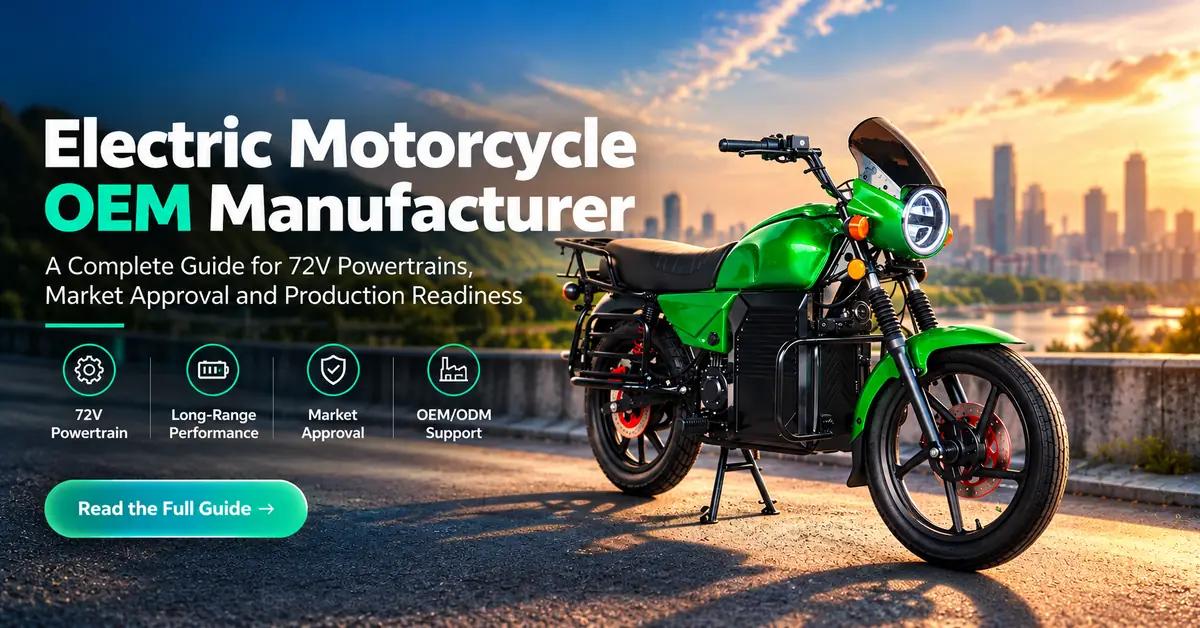
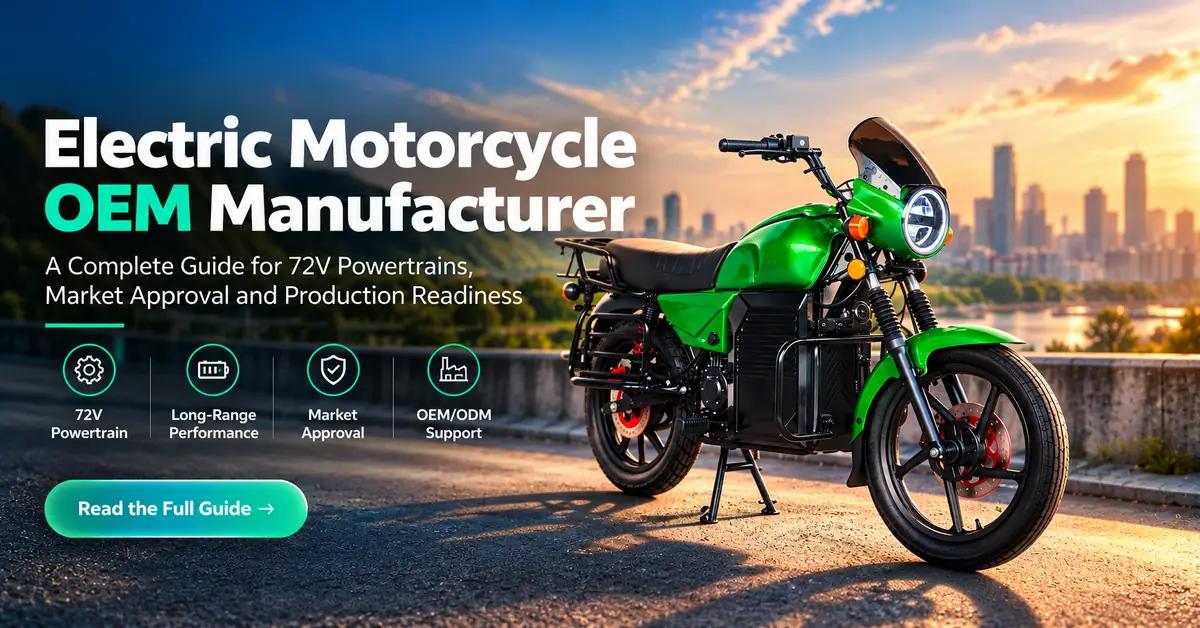
This guide is written for electric motorcycle brands, vehicle importers, specialist distributors, fleet developers and engineering procurement teams. It uses three published JOBO models—JB-TDP10, JB-TDP05L and JB-TDP04L—as starting references rather than assuming that every advertised configuration is approved for every destination. It is deliberately different from a consumer performance review: the goal is to show exactly what a buyer should request before releasing an OEM production order.
Quick Answer: What Should You Verify Before Choosing an Electric Motorcycle OEM Manufacturer?
A qualified electric motorcycle OEM manufacturer should be able to identify a specific vehicle configuration, provide matching battery–motor–controller and braking specifications, define the intended vehicle category, and support the required market-approval evidence. Before mass production, the buyer should approve a controlled bill of materials (BOM), inspect representative prototypes, agree measurable safety and performance acceptance criteria, and establish component traceability, spare-parts support and a documented change-control process.
The critical difference is between a motorcycle that works during one demonstration and a motorcycle that can be legally supplied, consistently built, registered where required and serviced across multiple batches. Ask suppliers to show how each requirement is proved—not simply to describe their manufacturing experience.
Explore JOBO Electric Motorcycles → OEM/ODM Services →
1. Define the Buyer, Rider and Market Before Selecting a Platform
A private-label street-motorcycle brand, an off-road recreation distributor and a commercial transport operator may all seek an electric motorcycle factory, but their technical and regulatory briefs should differ. A commuter-focused model requires reliable stop-and-go control, predictable charging, comfortable ergonomics, practical lighting and repairable wear components. An off-road application can prioritize suspension travel, impact protection, traction and service access in dirt or dust. A commercial fleet will care about shift duration, parts commonality, immobilized vehicle time and training requirements.
Start with the destination country and the intended category of use, then document average and maximum rider mass, typical route, road surface, hill gradients, speed expectations, temperature range, storage, charging infrastructure and expected annual distance. Clarify whether the product will be publicly registered, used only on private property, or marketed for a narrowly defined off-road activity. These distinctions affect the technical features, labeling, documentation and legal review required.
| Buyer Type | Commercial Objective | Engineering Emphasis | Primary Purchase Risk |
|---|---|---|---|
| Private-label motorcycle brand | Launch differentiated retail model | Design identity and repeatable performance | Component change invalidates documented configuration |
| Vehicle importer / distributor | Sell and register motorcycles | Type approval, labels, manuals, VIN processes | Missing market-entry evidence |
| Off-road powersports distributor | Serve permitted recreational environments | Suspension, protection and thermal performance | Confusion between off-road and road-legal status |
| Commercial fleet operator | Maintain productive daily operation | Charging, brakes, diagnostics and downtime | Low price offset by expensive repairs |
| Product development company | Build new platform or variant | CAD, BOM, interfaces and change control | Prototype cannot be reproduced consistently |
A useful RFQ identifies who should not buy the proposed configuration. A model lacking verified public-road approval should not be promoted as road-registered simply because it has headlights and turn signals. A motorcycle whose intended load or riding environment has not been validated should not be positioned for passenger carrying, high-speed highways or demanding commercial duty. Accurate limitation statements make an OEM program more credible and reduce avoidable after-sales disputes.
2. Treat Legal Classification as the First Engineering Design Input
One of the largest hidden risks in electric motorcycle sourcing is assuming that the words electric bike, electric scooter, moped and electric motorcycle have the same regulatory meaning. They do not. Marketing language is not a substitute for the vehicle category assigned under the applicable rules. A configuration with a high design speed or motor output may require motorcycle- or moped-specific approval rather than the standards commonly discussed for pedal-assist bicycles.
For the European Union, Regulation (EU) No 168/2013 provides the framework for many L-category vehicles, including relevant two-wheeled mopeds and motorcycles. The precise subcategory depends on characteristics defined by the regulation, not on the wording used in a sales listing. Electric powertrain safety may involve requirements associated with UN Regulation No. 136, while other applicable provisions cover braking, lighting, electromagnetic compatibility, vehicle identification and administrative type approval. A complete approval project must be mapped against the exact vehicle version and its intended sales market.
For the United States, an on-road motorcycle is not automatically covered by the consumer electric-bicycle regime. The importer and manufacturer must assess applicable Federal Motor Vehicle Safety Standards, vehicle identification and certification labeling, NHTSA administrative requirements, and relevant EPA provisions. State registration and rider licensing requirements are separate considerations. A motorcycle designed solely for legitimate off-road use may be treated differently, but a label claiming "off-road only" is not by itself proof of the appropriate classification.
For Great Britain, Northern Ireland or other countries, do not simply copy an EU approval assumption. Market rules, accepted approval routes and administrative steps can vary. Before ordering, obtain advice from the responsible vehicle authority, an appropriate approval specialist or an accredited technical service as needed.
Market-Approval Responsibility Matrix
| Market-Entry Question | Buyer Should Establish | Supplier Evidence |
|---|---|---|
| Legal vehicle category | Destination, use, speed and classification | Category rationale for specific model |
| Approval route | Whole-vehicle or national requirements | Exact model and variant approval records |
| Manufacturer of record | Entity responsible for certification | Manufacturer details, VIN/WMI plan, labels |
| Component evidence | Lights, tires, brakes and electrical system | Matching component documents |
| Shipment documentation | Import and registration requirements | Conformity documents and manuals |
| Design changes | Reapproval responsibility | Change-control procedure |
Important: a generic E-Mark image, ISO 9001 certificate or EN 15194 report does not prove that a particular electric motorcycle has completed the whole-vehicle approval required for its market. JOBO publishes a general certifications and patents archive, but buyers must request readable model-specific evidence and verify document scope before making legal sales claims.
3. Compare Published JOBO Platforms Without Treating the Catalogue as a Locked BOM
JOBO publicly lists several electric motorcycles, including a 72V urban-oriented model, a higher-output dual-battery off-road platform and a smaller long-range-oriented model. These provide useful starting architectures for a technical sourcing discussion. They are not interchangeable platforms, and the publicly presented values are not all internally consistent across product-page sections and older blogs. That is why JOBO's latest signed specification should govern any project decision.
| JOBO Model | Published Starting Configuration | Positioning | Confirm Before Order |
|---|---|---|---|
| JB-TDP10 | 72V 50Ah battery; 3000W mid-drive; 6.5kW peak-output claim | Urban or suburban platform, subject to approval | Speed, range, battery chemistry, controller and homologation |
| JB-TDP05L | 4000W mid-drive; two 74V 28Ah packs listed; alloy frame | Off-road platform for permitted applications | Battery architecture, thermal performance, mass, approval |
| JB-TDP04L | 3000W motor; 48V 26Ah battery; carbon-steel frame | Specification-dependent commuter platform | Range method, controller compatibility and classification |
For the JB-TDP10, the public page describes about 80 km/h and up to 65 km in its main introduction, while the specification tiles show 95 km/h and 80–100 km. Other technical text discusses still different torque and range contexts. A professional buyer should not choose the most favorable number. Request one approved test-backed performance specification that states the version, test conditions and declared values. Likewise, the JB-TDP04L's range claims should be evaluated against the battery's nominal energy and an agreed test cycle instead of reproduced without qualification.
Selection principle: identify the target classification and duty cycle first, shortlist an existing JOBO architecture second, and approve specific components, test values and documents third. This avoids the cost of developing a beautiful but commercially unusable version.
View Motorcycle Range → Explore JB-TDP10 →
4. Validate the Entire 72V Powertrain, Not Only Motor Wattage
A motor advertisement might specify a rated power, peak power, torque and maximum speed. These are different quantities measured under different conditions. A motor rated at 3000W can temporarily draw or produce a higher peak output if its controller, battery and thermal limits permit it; the time and conditions must be stated. Advertised wheel torque cannot be compared directly with motor-shaft torque unless the drivetrain ratio and measurement point are known.
For a mid-drive motorcycle, the drive system includes the motor, controller/inverter, chain or belt, reduction ratio, final drive, throttle inputs, electrical harness, sensors, display and software. Chainline, sprocket dimensions and rear-wheel torque loading must match the chassis. The motor controller also needs to operate within the approved battery current, voltage, thermal and fault-management envelope.
A robust OEM engineering release package should therefore contain a powertrain interface diagram, approved motor and controller part numbers, software/firmware revisions, declared rated and peak outputs with test conditions, drivetrain ratio, electrical limits, connectors, protections and diagnostic method. The motorcycle should be tested as a complete vehicle for predictable starting response, control transitions, sustained operation and abnormal-fault behavior under a controlled safety protocol.
Powertrain Control Checklist
| Parameter | Why It Matters | Evidence Required |
|---|---|---|
| Rated vs peak output | Continuous output differs from acceleration peak | Definitions, time limits and test results |
| Motor/controller compatibility | Substitution changes response and thermal loads | Hardware and software IDs |
| Battery discharge limits | Current affects protection and performance | Pack/BMS ratings and fault strategy |
| Throttle and ride modes | Unintended behavior creates safety risks | Functional specification and validation |
| Final drive | Impacts wheel torque and wear | Chain/belt, sprockets, ratio |
| Diagnostics | Workshops need fault identification | Codes, tools and service procedures |
| Thermal behavior | Peak output is temperature limited | Sustained-load and hot-condition tests |
The recommended approach is not to demand the highest headline figures. It is to ask whether the selected drive system can deliver the desired performance repeatedly under the intended rider, route and climate conditions without unauthorized component substitutions.
5. Make Battery Capacity, Chemistry, BMS and Packaging Traceable
A voltage and amp-hour rating is a starting point for battery comparison. Nominal energy in watt-hours is approximately nominal voltage multiplied by amp-hour capacity. Thus, a nominal 72V × 50Ah pack is about 3,600Wh (3.6kWh). A 48V × 26Ah pack is about 1,248Wh (1.248kWh). If a vehicle genuinely contains two independently rated 74V × 28Ah packs and both energy stores are available to propulsion, the arithmetic total is about 4,144Wh (4.144kWh). These are calculations from published nominal ratings, not confirmations of usable pack energy or achieved road range.
A buyer should request the actual battery chemistry, cell configuration, BMS hardware and firmware, enclosure, rated and usable energy where defined, continuous/peak discharge limits, approved charger and environmental/transport documentation. The JB-TDP10 product page calls its battery lithium; another JOBO blog describes an LiFePO4 configuration. Do not assume that every TDP10 delivered to every customer uses that chemistry unless the signed BOM and pack label confirm it.
The BMS should be assessed for its intended protection and reporting functions, including relevant voltage, temperature and current monitoring, fault recognition, charging limits and safe service procedures. The buyer needs a clear plan for identifying a faulty pack, replacing approved parts and recording its revision. Lithium-ion battery transport requires appropriate preparation, packaging, documents and logistics-provider review; an MSDS is not interchangeable with every required transport test summary or shipping document.
For a high-voltage motorcycle architecture, opening battery enclosures or troubleshooting exposed electrical conductors is work for trained personnel using the correct safety procedures. Consumer-facing manuals should distinguish permitted routine checks from restricted service operations. The OEM agreement should also identify responsibilities for field incidents, quarantine of suspect packs, battery disposal and replacement supply.
Battery and Charger Approval Data
| Required Field | Buyer Acceptance Question |
|---|---|
| Battery pack identity | Do model, supplier, serial and BOM match? |
| Chemistry and energy | Is the approved pack documented? |
| BMS revision | Is charger/controller compatibility verified? |
| Charging arrangement | What interlocks and conditions apply? |
| Electrical safety evidence | Which exact configuration was tested? |
| Transport documents | Are current required records available? |
| Service logistics | What is the replacement SKU and return process? |
A battery that looks compatible mechanically can still be electrically or administratively unsuitable for an OEM program. Integrating it into a new motorcycle variant may demand renewed testing and approval review.
6. Verify Range and Charging Using a Published, Repeatable Test Method
"Up to 120 km range" is not a procurement acceptance criterion unless the rider mass, route, speed, temperature, traffic, battery conditioning, tire pressure and other test details are specified. City start-and-stop conditions, constant higher-speed travel, steep climbs and cold weather create different energy demands. An importer should agree on one declared consumption/range measurement procedure for market materials and a second operational route, if necessary, for practical customer use.
A simplified energy-planning example illustrates the problem. If a hypothetical motorcycle has 3.6kWh of nominal pack energy and the operator assumes 80Wh/km energy consumption on its actual duty cycle, dividing 3,600Wh by 80Wh/km yields 45 km before accounting for usable-energy limits, reserve policy, aging or weather. At 45Wh/km, the same arithmetic becomes 80 km. Neither number describes verified JOBO performance. It demonstrates why an OEM buyer must request a controlled test instead of converting battery size directly into promised range.
Charging claims should likewise identify charger output, usable battery energy, charge window, input power and thermal constraints. A simple energy divided by charger power estimate omits charge taper, inefficiency and operational conditions. It is reasonable to request charging curves under defined conditions, connector safety evidence, user instructions and service equipment specifications.
For commercial fleets, compare charging scenarios as a system: depot electricity capacity, overnight dwell, electrical installation, charger losses, battery replacements and operator supervision. A product that is well suited to weekend recreation may be a poor fleet choice if its charging or warranty workflow does not fit daily service demands.
7. Check Frame Structure, Rider Fit, Braking and Suspension as One Vehicle
High-output electrical components do not make a motorcycle safe or comfortable by themselves. The chassis, tires, wheels, suspension, steering, brakes and rider ergonomics must work with the intended mass, speed and terrain. A frame used with a heavier battery or different motor position may have altered load distribution even if its silhouette remains unchanged.
Define the rider size range, seat height, wheelbase, steering characteristics and permitted gross vehicle weight in the approved configuration. If a passenger or luggage accessory is proposed, establish whether the complete vehicle is designed and approved for that load, not simply whether a rear rack is available. Brake selection must be evaluated through the relevant applicable tests and under representative loads, including thermal performance and repeated braking where appropriate.
The JB-TDP10 and JB-TDP05L product descriptions both refer to disc brakes and hydraulic suspension, but the components and operating conditions may differ significantly. A high-performance off-road application may have different impact protection, tire and fork requirements from an urban street-oriented machine. Buyers should request actual brake caliper/rotor part numbers, suspension components, tire type and load ratings, wheel sizes, steering controls and verified vehicle-mass figures.
Vehicle Engineering Review Matrix
| Area | Sample Validation | Production Control |
|---|---|---|
| Frame | Structure and mounting evidence | Critical dimensions and inspections |
| Braking | Loading and repeatability tests | Parts, torque and function |
| Tires/wheels | Speed/load rating and clearance | BOM and installation verification |
| Suspension | Travel, stability and terrain | Part identification and alignment |
| Rider controls | Throttle, braking and display behavior | End-of-line function testing |
| Lighting | Applicable market requirements | Electrical and position checks |
No supplier should replace this review with statements such as "reinforced frame" or "advanced brakes." Those are design descriptions, not measured acceptance evidence.
8. Create a Model-Specific Homologation Evidence Pack
Homologation is the process of establishing that a vehicle meets the required regulatory approval route for its intended market. It should be planned alongside engineering, not left to the importer after the motorcycles arrive. The exact package varies by country and vehicle classification, but the guiding principle is universal: the documents, physical vehicle and production records must describe the same version.
For a potential EU L-category program, ask the approval specialist to define the exact category and the requirements that apply to complete-vehicle approval, electrical powertrain safety, electromagnetic compatibility, brakes, lighting and other relevant systems. Type-approval paperwork, any required certificate of conformity, marking and conformity-of-production obligations must be mapped to the proposed variant. An UN Regulation No. 136 reference is relevant to category-L electric powertrain safety in appropriate contexts, but citing it does not by itself establish that a complete vehicle is approved.
For a potential US on-road motorcycle project, request a matrix against the applicable FMVSS, VIN/WMI obligations, manufacturer and importer administrative filings and relevant EPA requirements. A seller cannot simply state that the vehicle is "DOT approved"; the responsible manufacturer must support any required conformity certification for the actual motorcycle.
Evidence Pack Index
- Approved model, variant and version list, including market-specific equipment.
- Legal manufacturer information and responsibility assignment.
- Technical specification and controlled BOM matching the offered version.
- Applicable whole-vehicle approval and test records, if required.
- Applicable component and electrical powertrain evidence.
- VIN/identification, labels, nameplates and accompanying conformity documents as applicable.
- Manuals, warnings, charger instructions and destination-language content.
- Production conformity and engineering change-control plan.
- Record-retention, incident response and warranty escalation responsibilities.
JOBO's certification archive is a starting point for requesting records, not proof that JB-TDP10, JB-TDP05L and JB-TDP04L share a single registration or approval status. Obtain documentation for your exact market, year/model revision and configured components.
9. Ask Which OEM/ODM Changes Trigger Retesting or Reapproval
An existing motorcycle platform may provide a faster commercial starting point than a completely new design, but "customizable" does not mean every substitute is automatically validated. Cosmetic branding, battery size changes, controller firmware, motor substitutions, revised brakes and new lighting assemblies can have very different engineering and regulatory consequences.
Start the project with a classification of changes. Paint and decals may primarily require appearance and labeling approval, subject to relevant marking requirements. A different charger or battery chemistry may affect electrical safety, transport evidence and range claims. A new controller calibration may affect maximum speed, power delivery and legal vehicle category. Different tires can change speed/load suitability and handling. A changed brake system can affect applicable test evidence and service documentation.
JOBO describes OEM/ODM services covering design, component configuration, prototypes, testing and production planning. Buyers should ask which options already belong to a documented platform family and which are new development items. Also establish who owns drawings, embedded software settings, special tooling, branding assets and product documentation. A non-disclosure agreement protects information exchange but does not automatically settle ownership of every new engineering deliverable.
OEM Change-Control Table
| Proposed Change | Review Needed | Release Document |
|---|---|---|
| Color and packaging | Branding and labeling | Artwork and packaging approval |
| Battery/charger | Electrical, transport and safety | BOM and validation decision |
| Motor/controller | Performance, faults, thermal behavior | Firmware ID and test report |
| Brake/wheel/tire | Mechanical and approval scope | Updated components and tests |
| Frame geometry | Strength, handling and fit | Drawings and engineering release |
| Regional lighting | Electrical and local approval | Market-specific variant sheet |
This is how an OEM buyer prevents a convenient production substitute from becoming a legally or technically different motorcycle after approval.
10. Develop a Prototype and Pilot-Testing Program That Matches Real Usage
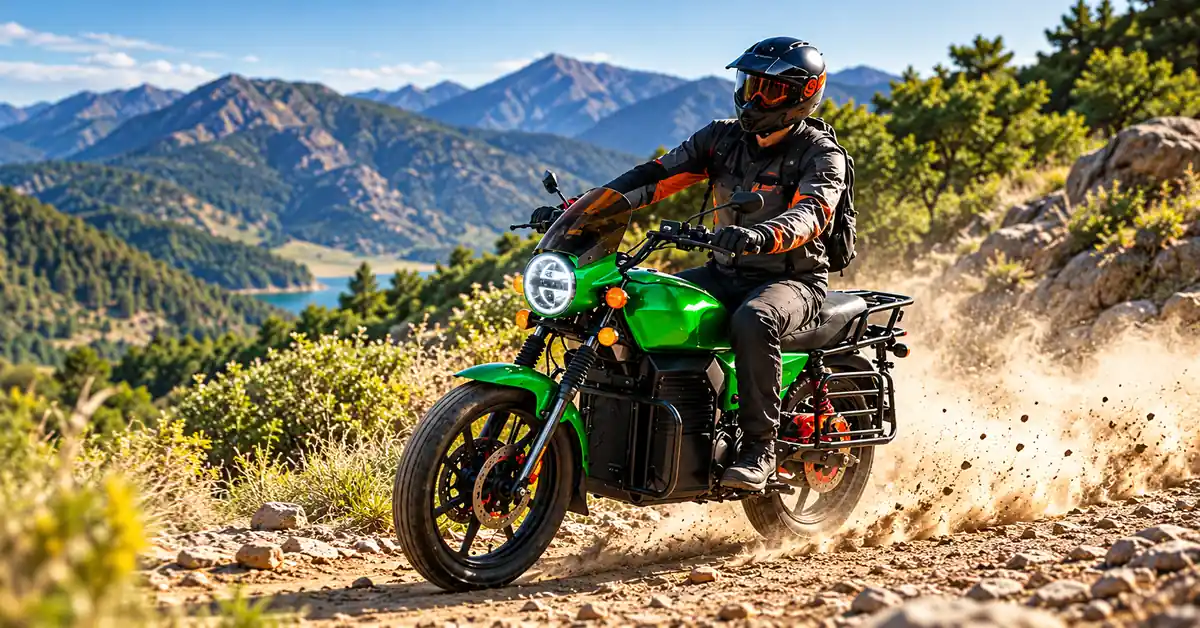
The first prototype should test integration rather than simply deliver a rideable marketing sample. The buyer and factory should agree a test matrix before the sample is built so that acceptance cannot be redefined after a disappointing result. The program should identify the model/version, installed BOM, firmware, battery pack, tire specification, rider/load conditions and controlled routes.
Stage 1 — Static engineering and safety review. Inspect frame and mount fit, connector and cable routing, battery retention, control labeling, throttle return, brake function, lighting and access for service. Record any nonconforming parts before dynamic testing begins.
Stage 2 — Controlled low-speed behavior. Evaluate predictable starting, power transitions, throttle and brake interaction, handling at low speed and safe fault indications under suitable conditions. Do not conduct unsafe or uncontrolled field tests to investigate electrical faults.
Stage 3 — Representative operational duty. Use trained riders and authorized facilities or roads. Record route distance, road grade, ambient temperature, rider/loading condition, battery start/end status, ride mode and energy/thermal data where available. Repeat tests sufficiently to distinguish a one-off run from normal variation.
Stage 4 — Service validation. Ask the importing workshop to execute approved inspection and replacement tasks using the proposed manual, diagnostic tools and spares. Note any unavailable tools, unclear steps or parts whose identification depends on informal factory messages.
Stage 5 — Corrective actions and release. Record each failure, root-cause action, re-test evidence and final decision. The buyer should sign a frozen sample and BOM only after the open issues that block release are resolved.
Pilot-Testing Acceptance Matrix
| Test Category | Evidence | Acceptance Rule |
|---|---|---|
| Configuration | Serial, BOM, firmware and battery IDs | Approved sample plan |
| Electrical function | Normal and fault behavior | Safe functional criteria |
| Range/energy | Route, load, speed and consumption | Declared test method |
| Thermal performance | Component temperatures | Approved design criteria |
| Braking | Formal tests and observations | Documented criteria |
| Charging | Charger and operating conditions | Specified safe sequence |
| Serviceability | Workshop tasks and diagnostic steps | Approved service process |
| Documentation | Reports and corrective actions | Complete before release |
The table describes a procurement method, not a claim that JOBO has already completed these specific tests for every product or that the listed criteria replace regulated approval testing.
11. Validate Factory Quality Beyond the Demonstration Motorcycle
A factory's structural equipment and general ISO management claims can be useful inputs, but each motorcycle order needs a production quality plan tied to its configuration. JOBO publishes QC laboratory capabilities including battery testing, thermal shock, motor dynamometer work, complete-bike assessment and staged incoming, in-process and final quality control. Those are capabilities to investigate; request relevant evidence for the exact motorcycle platform rather than treating equipment ownership as a pass result.
Incoming quality control (IQC) should identify motors, controllers, battery packs, tires, brakes, chargers and critical frame materials against the approved parts list. In-process quality control (IPQC) should verify important assembly stages such as connectors, fastener torque, cable routing, brake installation, electrical identifiers and firmware configuration. Final quality control (FQC) should demonstrate agreed functions, identification, labels, appearance, safety-critical checks and packaging integrity.
For motorcycle OEM projects, ensure records can connect serial or VIN identity to the production BOM and applicable tests. A strong change-control system also makes later field corrections feasible: when a controller or battery batch changes, the brand should know exactly which vehicles are affected.
Production Release Checkpoints
| Quality Gate | Supplier Deliverable | Buyer Decision |
|---|---|---|
| Approved design | Drawings, BOM, market identity | Accept or revise |
| First article | Representative build and inspection | Authorize pilot |
| Pilot production | Repeatability and corrective action | Authorize bulk production |
| Ongoing assembly | IQC/IPQC and traceability | Review stability |
| Final release | FQC, documents, packing | Release or hold shipment |
| Repeat orders | Configuration and change notices | Accept or revalidate |
Do not choose an arbitrary AQL figure to justify releasing safety-critical defects. Sampling should be aligned to characteristic risk, applicable approval obligations and contract requirements; some attributes may need full-unit verification or validated process controls.
12. Link Batch Consistency to Conformity of Production and Market Claims
For an approved motorcycle, controlling the initial sample is only the start. Production units must remain within the version represented by the relevant approval and compliance declarations. In type-approval contexts, this principle is often discussed as conformity of production (CoP). Even where a program uses a different national process, the buyer still needs configuration control and objective evidence that shipped units match the authorized design.
Create a version tree identifying base model, region, components, firmware, color/trim, required labels and approval documentation. Set a written rule for supplier-originated changes: no substituted battery, controller, lamp, brake or wheel component may be adopted merely because it fits and is cheaper. The proposed change must pass the agreed engineering, regulatory and commercial review.
Quality records should identify when any revision entered production and what was done with work-in-progress vehicles. If a shipment contains multiple versions, ensure the packing list and vehicle identities permit correct allocation to each market. Service documentation must track those same versions, otherwise warranty claims and recall responses become difficult.
In an OEM sourcing decision, a credible electric motorcycle OEM manufacturer demonstrates that the motorcycle approved on paper is the one built at the line and the one received by the importer. That consistency often matters more to a brand than small differences in peak performance advertising.
13. Estimate Landed Cost and Fleet Ownership Cost Without Inventing Factory Prices
Comparing ex-factory quotes alone can reward incomplete offers. One quote might include the correct battery documentation, charger, spare parts and market-specific lighting; another could exclude important approval work, tooling or final packaging. Place both offers on the same scope before selecting a supplier.
A complete comparison should account for engineering and tooling, prototype and test expense, whole-vehicle approval responsibilities, battery and charger, manufacturer documentation, transport, applicable duties/taxes, warranty reserves, spare-parts inventory and local technical labor. For a fleet buyer, add charging infrastructure, electricity, scheduled inspections, tire/brake/drivetrain wear, downtime and the expected replacement cycle.
Illustrative calculation — not a JOBO quotation: suppose a hypothetical fleet buys 40 motorcycles for a combined initial vehicle cost of $120,000, allocates $12,000 to deployment/training and approval-related work, budgets $6,000 for initial spare parts, and plans $18,000 for two years of routine maintenance. The simple combined budget is $156,000 before taxes, electricity, financing, unplanned failures or resale proceeds, equivalent to $3,900 per motorcycle for the items included. It does not establish JOBO prices or actual total lifetime cost; its purpose is to show the categories buyers must compare consistently.
Ask the supplier for a clear list of inclusions, exclusions, Incoterms, payment milestones, warranty policy and spare-parts pricing. If the battery pack is expensive or has a long replacement lead time, it may dominate fleet economics more than a modest discount on the complete motorcycle.
14. Build Service and Replacement Parts Into the OEM Contract
A product launch is only commercially successful when the importer can support the units that customers ride. An electric motorcycle has familiar wear items such as tires, brakes, drive chain, bearings and suspension components, plus electrical assemblies that may require controlled diagnostics. An importer should know which parts are standardized, which are proprietary and which can be replaced only by an authorized technical partner.
Request a serial-aware parts catalogue, illustrated service manuals, fault-code guide, maintenance intervals, applicable software/diagnostic permissions and a replacement process for batteries, chargers and controllers. Define warranty claim evidence, response targets, defective-part returns and reimbursement for approved local repairs. For fleet projects, agree an initial spare-parts allocation derived from expected duty and local workshop capability rather than accepting an unsupported universal percentage.
It is also important to control service changes. A redesigned connector or improved controller should not silently make earlier vehicles impossible to repair. The supplier should maintain supersession information so that a workshop can determine which current replacement fits a specific delivered version.
JOBO describes China manufacturing and Poland operations, but the availability of a specific motorcycle battery, controller, replacement pack or regional registration-support service must be confirmed for the proposed contract. Do not assume a European e-bike assembly footprint automatically means all motorcycle spare parts are locally stocked or that a given motorcycle has European type approval.
15. What an Electric Motorcycle OEM RFQ Must Contain
A strong request for quotation does not begin with "Send your cheapest 72V motorcycle." It describes the sales market, product mission, approval responsibilities, testing, after-sales requirements and expected purchasing volume. This makes the supplier's technical response more valuable and permits comparison with other factories on the same terms.
Copy-Ready Motorcycle OEM RFQ Checklist
| RFQ Item | Information to Provide or Request |
|---|---|
| Company / target region | Brand, importer, destination and intended use |
| Product class | Legal category and approval route |
| Product reference | JB-TDP10, JB-TDP05L, JB-TDP04L or new platform |
| Rider and duty | Road, mass, gradients, climate and annual distance |
| Motor/controller | Output, part IDs, software and diagnostics |
| Battery/charging | Chemistry, capacity, BMS, charger, transport evidence |
| Chassis/brakes | Frame, tires, suspension and test requirements |
| Approval package | Documents, entity and model coverage |
| Branding | Finish, logos, labels and manuals |
| Prototype | Sample quantity, test matrix, acceptance gates |
| Order forecast | Pilot quantity, annual forecast and delivery |
| Commercial | Tooling, pricing, MOQ, warranty and spare parts |
| Production QC | IQC, IPQC, FQC and configuration traceability |
Suggested buyer inquiry: "We are developing an OEM electric motorcycle for [country/region] and [road-approved or defined off-road use]. We are evaluating JOBO's [model] platform and anticipate a pilot order of [quantity] followed by [annual estimate]. Please provide a current model-specific BOM, battery/motor/controller identification, declared performance and test conditions, applicable market-approval evidence, proposed sample-validation plan, MOQ, production timing, spare-parts policy and responsibility for registration documents. Please also flag any proposed customization that requires new engineering or regulatory assessment."
Request Your JOBO Electric Motorcycle OEM Proposal →
16. Ten FAQ for Electric Motorcycle OEM Buyers
1. What makes an electric motorcycle OEM manufacturer different from an e-bike assembler?
A motorcycle OEM project may require motor-vehicle classification, applicable type approval or conformity certification, vehicle identification, legally relevant components, production conformity and a different service infrastructure from a pedal-assist bicycle. A factory's e-bike manufacturing experience is useful but does not automatically establish motorcycle market approval. Ask for evidence tied to the precise vehicle and destination.
2. Can JOBO customize a motorcycle for a private-label brand?
JOBO advertises OEM/ODM development, product configuration, branding, prototypes, testing and production services. Its electric motorcycle category contains different starting platforms. The scope of a particular motorcycle project—new styling, controller changes, battery upgrades or unique frames—must be confirmed against available engineering capacity, tooling, approval implications and commercial terms.
3. Does a 72V 50Ah battery guarantee a specific range?
No. Those nominal values yield approximately 3.6kWh of nominal energy, but range depends on usable energy, speed, rider load, gradients, temperature, riding behavior and test method. Ask the supplier for a controlled range declaration and test evidence for the exact approved pack and vehicle configuration.
4. What is the difference between 3000W rated power and higher peak output?
Rated output describes a defined continuous or specified operating condition, while peak power refers to a shorter-duration capability under particular limits. Their relationship depends on the motor/controller, battery, thermal state and measurement convention. Demand definitions and test conditions rather than comparing numbers without context.
5. Is every JOBO electric motorcycle road legal in Europe or the United States?
No such universal conclusion can be drawn from product listings. Legal sale and road use depend on the exact model, configuration, destination category and relevant approval process. Request specific documents and verify them with the competent authority or qualified adviser before marketing the motorcycle as registered or road legal.
6. Does an E-Mark or ISO 9001 certificate prove whole-motorcycle approval?
No. A component mark, vehicle approval, management-system certification and battery transport record serve different purposes. The exact applicant, component/vehicle, report scope and validity must be checked. Ask JOBO for readable model-specific records and do not transfer a document from one platform to another without a legitimate basis.
7. How should importers validate battery safety and charging compatibility?
Identify the actual battery pack and BMS, approved charger and cables, relevant electrical and transport documents, diagnostic methods and safe maintenance instructions. Test the configured system under agreed conditions. Never approve a pack solely because its nominal voltage and external shape seem compatible.
8. What quality documents should be supplied with a production order?
At minimum, agree a controlled BOM and approved sample, relevant incoming and in-process inspections, final functional checks, configuration/serial traceability, required market documents, nonconformance process and a written change-control rule. The detailed inspection frequency and acceptance limits should reflect the product and applicable regulatory requirements.
9. What spare parts should a distributor secure before launch?
Build a model-specific service list including brake and tire wear items, drive-chain components, chargers, approved electrical spares, suspension parts and diagnostic tools. Quantity should reflect forecast usage and local repair capacity. Confirm part numbers, warranties, lead times and compatibility across model revisions before placing the first order.
10. What information should I send JOBO for a motorcycle OEM quotation?
Provide your intended market, vehicle use and legal category, preferred JOBO platform, rider/load profile, motor and battery targets, customization needs, estimated pilot and annual quantities, approval requirements, warranty expectations and timeline. Include any available drawings or specification sheet, then request a written proposal through JOBO Contact Us.
Conclusion
Choosing an electric motorcycle OEM manufacturer is a decision about evidence, repeatability and long-term commercial support—not merely the number of watts printed beside a motor. OEM brands and importers need a defined market category, a validated powertrain and battery system, chassis and brake performance appropriate to the intended use, an accurate approval package, controlled prototypes, traceable production batches and service parts that can be identified after the motorcycles enter the market.
JOBO provides a relevant starting point with the JB-TDP10 72V motorcycle, the JB-TDP05L off-road platform, the JB-TDP04L long-range model, published OEM/ODM services and quality-control facilities. These resources support supplier evaluation; buyers should still confirm the exact market-specific specification, performance tests, legal approval scope, production schedule and after-sales commitment before contracting.
If your company is planning a private-label motorcycle range, distributor launch or commercial electric fleet, contact JOBO for an OEM technical review and quotation. Share your destination market, intended use, approved or desired vehicle category, estimated quantity and target launch date. A detailed technical brief makes it easier to develop a motorcycle that can be built consistently, supplied responsibly and supported after delivery.