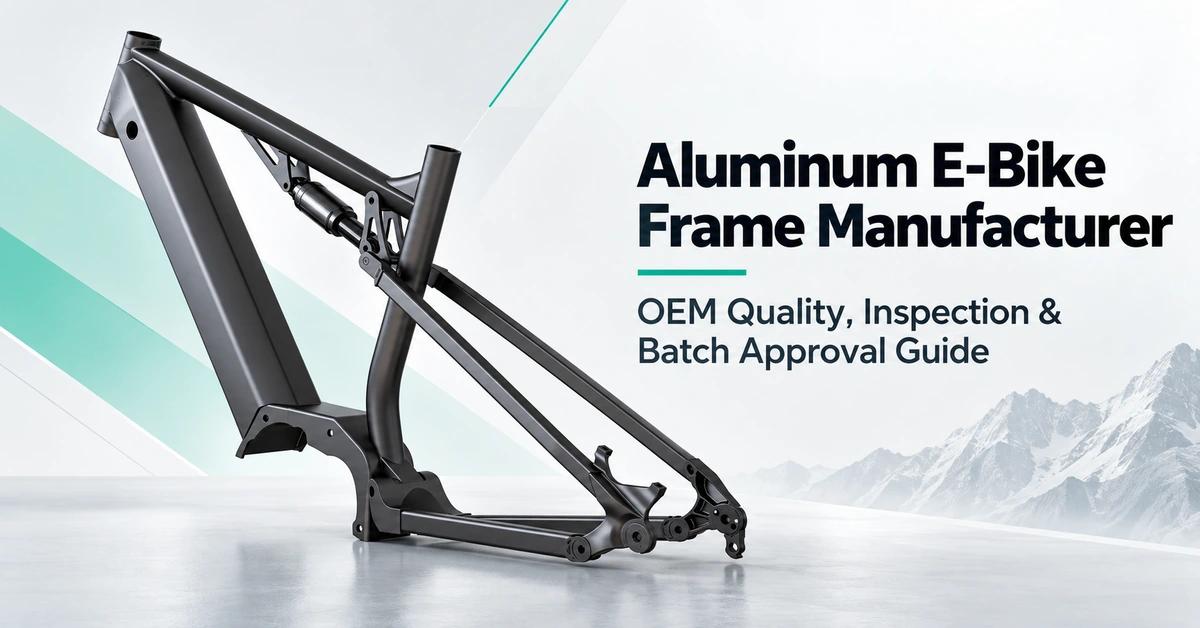
An electric bicycle frame may look excellent in a showroom and still create costly problems on an assembly line. A head tube that is slightly out of alignment can complicate steering assembly. A brake-mount face that has moved during welding can cause rotor rub. A battery aperture that varies between production batches can delay final assembly or generate warranty complaints. For an OEM buyer, those problems rarely appear in a factory price quotation.
That is why evaluating an aluminum e-bike frame manufacturer should begin with a question that goes beyond the alloy name: How will the factory prove that the first approved frame, the first production batch, and the next repeat order are functionally the same product? The answer should be a controlled package of drawings, materials, measurement methods, process approvals, test reports and documented release decisions.
This guide is for electric bicycle brands, product engineers, purchasing managers, importers, assembly factories and commercial-fleet developers. It draws on the manufacturing stages JOBO publicly describes at its frame factory, its QC laboratory, and the TDA46 all-mountain frame. It separates those published facts from the additional documents a buyer should negotiate for a particular OEM project.
Quick Answer: What Should an OEM Buyer Verify Before Approving an Aluminum E-Bike Frame Manufacturer?
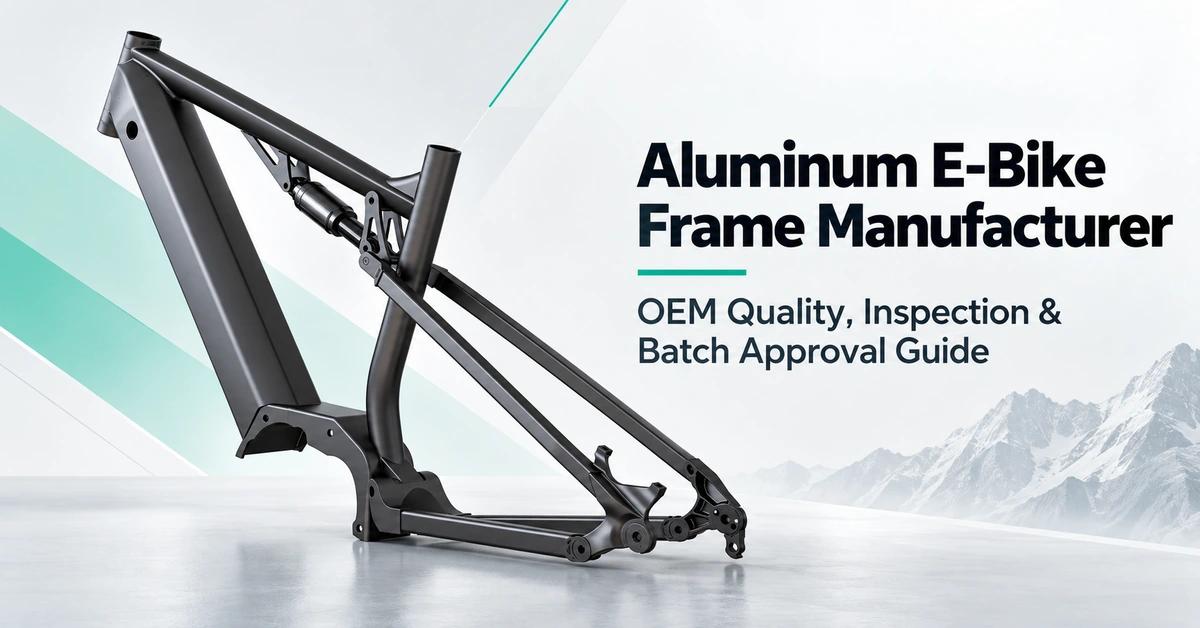
A suitable aluminum e-bike frame manufacturer should demonstrate control over material identity, welded geometry, critical assembly interfaces, model-specific heat-treatment requirements, structural testing and repeat-order consistency. Before authorizing mass production, request a revision-controlled drawing, a critical-to-quality (CTQ) measurement plan, representative first-article samples, inspection results, applicable structural test evidence, an approved bill of materials and a written process for managing changes or rejected frames.
The key purchasing decision is not whether a factory owns robotic welding equipment. It is whether the factory can show that the approved frame is repeatable, inspectable and compatible with the finished e-bike. A visual weld inspection or a generic ISO certificate cannot independently establish all three.
Explore JOBO Frame Manufacturing → View TDA46 Frame →
1. Define the Frame Application and Decide Who the Project Is For
Frame engineering starts with use conditions. A low-step commuter frame, a full-suspension mountain frame, a compact folding frame and a long-tail utility frame can all be made from aluminum, but their load paths, interference risks, geometry targets and inspection priorities are different. A frame supplier cannot approve one universal tolerance sheet for all those products without examining their interfaces and intended use.
An OEM commuter-bike brand may prioritize repeatable head-tube geometry, comfortable rider fit, a removable battery and accessory mounts. A mountain-bike developer may require accurate suspension pivots, shock clearance, motor mount alignment and rear-wheel tracking. A rental operator may place additional weight on repairability and coating durability. A cargo-oriented business must specify the actual rider-and-load arrangement and use-case-specific safety requirements.
| OEM Customer | Main Frame Requirement | Production Risk | Evidence Required |
|---|---|---|---|
| City E-Bike Brand | Stable steering geometry, battery access, rack and fender mounts | Misaligned accessory holes or battery covers | Interface drawings and first-article fit check |
| Mountain / All-Terrain Brand | Pivot alignment, wheel clearance, motor and shock fit | Weld distortion or linkage interference | Size-specific geometry and assembly report |
| Folding Mobility Brand | Repeatable hinge geometry and positive locking | Fit variation after welding and finishing | Hinge inspection and fatigue evidence |
| Fleet / Rental Operator | Service access and standardized replacement parts | Noninterchangeable battery or dropout components | Parts compatibility and revision records |
| Cargo / Utility Developer | Load distribution and support interfaces | Using rack rating as overall frame rating | Approved load case and structural test plan |
Not every project should start with a new frame. A young brand with limited development resources may be better served by an existing approved platform with confirmed branding and component options. A proprietary full-suspension geometry or specialized commercial structure requires deeper engineering work, tooling and validation. Buyers should also avoid claiming a bicycle is suitable for public roads, extreme competition or passenger transport without validating the applicable vehicle classification and intended-use tests.
2. Turn the Product Brief Into Critical-to-Quality Measurements
The first practical difference between a catalogue supplier and a process-driven aluminum frame factory is the ability to identify critical-to-quality characteristics, often abbreviated CTQs. These are the properties that must be controlled because they affect assembly, safety, fit, service or customer-visible quality. A CTQ is more useful when it includes a drawing reference, measurement method, acceptance limit and frequency than when it appears as a vague statement such as “high precision.”
For a typical e-bike frame, start with headset bearing seats and head-tube alignment; bottom-bracket or mid-drive mounting interfaces; rear-dropout alignment and axle fit; brake-mount location and flatness; seat-tube bore; battery mounting and removal envelope; and cable or hose openings. For full-suspension frames, add pivot-center relationships, shock installation dimensions and full-travel clearances. For a low-step or utility frame, evaluate specific structural junctions and accessory mounts.
An effective engineering discussion uses a common datum system. Without defined reference datums, two inspectors may measure the same frame in different orientations and reach different conclusions. A supplier should explain the inspection setup, fixture calibration and whether the reference condition is an unfinished welded frame, a post-heat-treatment frame or a coated finished frame.
Example CTQ Control Plan for an OEM Frame
| Critical Feature | Why It Matters | Verification Method | Approval |
|---|---|---|---|
| Head-tube axis | Bearing installation and steering | Datum-fixture or coordinate measurement | Buyer and frame engineer |
| Rear dropout spacing | Wheel installation and axle alignment | Dedicated gauges | Buyer and frame engineer |
| Brake-mount position | Rotor and caliper function | Functional gauge and flatness check | Design owner |
| Motor mounting interface | Assembly and chainline | Approved motor fit test | Drive-system integrator |
| Battery aperture | Retention and service access | Approved battery envelope test | Battery-system integrator |
| Suspension pivot positions | Linkage movement and wheel tracking | Multi-datum inspection | Suspension engineer |
| Surface coating | Assembly fit and corrosion protection | Masking and finish inspection | Buyer and supplier |
This is a recommended buyer control-plan template, not a statement that JOBO already publishes each record or uses these exact methods for every model. Numeric tolerances should come from the approved design, process capability and functional requirements. Do not copy an arbitrary “±0.1 mm” value from a machine advertisement and apply it to every finished-frame dimension.
3. Verify 6061 Aluminum by Material Record, Condition and Tube Specification
The TDA46 specification on JOBO's product page identifies 6061 aluminum alloy. JOBO's manufacturing materials also discuss 6061 in its frame development work. This makes 6061 a useful reference, but it does not justify assuming that every JOBO frame uses the same grade, temper, wall thickness or approved manufacturing route.
For procurement, “6061 aluminum” is incomplete. A meaningful materials specification also describes the product form, tube geometry, wall thickness and permitted variation, supplier identity, relevant condition/temper, and the required evidence of incoming inspection. Where hydroformed or specially shaped tubes are involved, ask for critical section dimensions and confirmation that the material condition is appropriate for the forming and joining sequence.
Aluminum alloys provide an attractive combination of low density, corrosion resistance and manufacturing versatility. But the properties of a welded frame cannot be inferred directly from the properties of an unwelded sample of base metal. Joint configuration, heat-affected regions, treatment condition, defects and cyclic loading all affect a finished structure. Consequently, blanket statements such as “6061-T6 is always stronger than another alloy” are not a sound basis for buying a bicycle frame.
Material Approval Data to Request
| Material Question | Procurement Evidence |
|---|---|
| Which alloy is specified? | Drawing or BOM identifying the permitted material |
| What material condition is supplied? | Approved process route and material-condition requirement |
| Can tube lots be traced? | Receiving record and traceability method |
| Are tube shapes altered? | Released tube drawing and acceptance criteria |
| What if a supplier changes? | Written deviation approval and revalidation decision |
If a proposed supplier substitutes a tube with the same outside diameter but a different wall, alloy condition or forming history, treat it as an engineering change. Weight and fit may remain similar while fatigue behavior or weld response changes. That is precisely the kind of hidden risk an OEM buyer's approval process should catch.
4. Inspect Tube Preparation and Robotic Welding Without Confusing Appearance With Strength
JOBO publicly describes a frame-production sequence that includes CNC cutting, drilling and bending, grinding, cleaning, robotic welding, measurement and subsequent finishing. Its factory pages discuss dedicated fixtures and standardized manufacturing steps. These capabilities are relevant to repeatability, but welding quality requires evidence beyond a smooth bead or a photograph of a robot.
Tube-cutting accuracy affects joint gaps and fixture loading. Incorrectly prepared edges, contamination or unstable fit-up can create weld inconsistencies even when a robot repeats the same movement. Ask the supplier how incoming parts are identified, how welding fixtures are set and maintained, and what first-off inspections are performed after tool changes or extended stops.
Aluminum conducts heat rapidly and welding can cause localized expansion and shrinkage. A frame may leave a fixture with small angular or positional changes that matter later when a headset, rear wheel or brake system is installed. Welding process approval should therefore consider both joint quality and resulting geometry. When required, inspection can combine visual acceptance, dimensional evaluation and suitable destructive or nondestructive methods for the agreed joint and risk level.
Five Welding Questions That Distinguish a Serious OEM Proposal
- Which joints are structurally significant, and how are their acceptance criteria defined?
- How is the welding procedure controlled and how is a program or fixture change authorized?
- What evidence shows that a representative production frame is within geometry limits after welding?
- How are rejected or reworked frames identified and prevented from being mixed with accepted stock?
- Which records are available to the buyer for first-article and batch acceptance?
Robotic welding can reduce operator-dependent variation, but it cannot independently guarantee fatigue life or eliminate defects. Likewise, hand finishing can improve the appearance of a bead without proving its structural performance. Procurement decisions should connect the welding route with meaningful inspections and the full-frame test plan.
5. Ask How Heat Treatment Changes Geometry and Material Properties
JOBO's published frame-manufacturing process lists T4 and T6 heat-treatment stages, correction and measurement. That describes available factory processes, not proof that every e-bike model receives an identical heat treatment. The actual requirement depends on alloy selection, forming and welding methods, frame design and the approved process route.
The buyer should request the applicable heat-treatment specification and how compliance is monitored. Depending on the chosen process, relevant records may include production-lot identification, temperature/time records, equipment checks and hardness or other verification data. Those values should be interpreted against the engineering requirement; a hardness number alone is not a substitute for structural qualification.
Thermal cycles and subsequent correction can affect frame shape. This is why a useful OEM control plan identifies which measurements are taken before and after the relevant manufacturing stages. If the supplier proposes a different process sequence to save time, the change should trigger a review of both properties and geometry.
Three-Stage Dimensional Review
Stage 1 — After fabrication: Confirm major datums and weld-induced distortion so serious problems are found before expensive finishing work.
Stage 2 — After thermal processing: Recheck critical frame geometry and determine whether correction remains within documented limits.
Stage 3 — After final machining and coating: Confirm assembly interfaces, masking and fit with actual components or approved functional gauges.
The sequence is an example of effective buyer oversight, not a universal requirement that every dimension must be measured three times. The final inspection frequency should reflect feature criticality, established process performance and contractual acceptance rules.
6. Control Post-Weld Machining, Battery Interfaces and Coating Build
Many expensive assembly problems occur at interfaces rather than in the visible main tubes. JOBO's manufacturing article describes operations such as head-tube machining, seat-tube preparation, bottom-bracket threading and brake-mount machining. After the welding and approved processing steps, these operations can help establish the finished functional geometry.
For the buyer, the key issue is what is measured after these operations. A head-tube bore must work with the selected headset. A motor mount must fit the actual motor and support the specified chainline. Brake mounts need appropriate location and finish. A battery cavity requires enough installation and removal space for the approved pack, connector routing and sealing design.
Coating must be planned as part of fit. Thick coating on bearing seats, threaded faces, motor mounting surfaces or battery-contact locations can cause assembly problems. Insufficient coating near welds, edges or openings can leave aesthetic or corrosion-protection weaknesses. Request a masking plan and a finish approval standard, not only a color code. A sample may look beautiful while the next batch has different texture, gloss or masking boundaries.
A useful final-frame fit check installs the exact approved headset, rear axle, representative motor-interface gauge, battery envelope and relevant brake mounting reference. For a full-suspension frame it also checks intended pivot hardware and shock clearances. The buyer should identify what is a production-line test and what belongs in sample or design validation; requiring every complex destructive test on every frame is neither feasible nor necessary.
7. Build a First-Article Inspection Package Before Mass Production
First-article inspection (FAI) is a structured confirmation that a representative production build meets a defined drawing and configuration. In this article it is proposed as an OEM purchasing control; the term does not mean that a specific cross-industry aerospace-style standard automatically applies to all bicycle frames.
An FAI should be conducted on a frame made by the agreed production route rather than an isolated hand-corrected concept prototype. The buyer and supplier should identify which tooling, CNC programs, welding procedures, heat treatment and finishing route produced the sample. If the project has several frame sizes, one approved size does not automatically prove the others.
The inspection package should include a drawing or characteristic register, actual measured results for the agreed CTQs, photos of key interfaces, material identification, component fit evidence, dispositions of any deviations and the final approval signatures. Where safety-critical testing is required, its reports should identify the applicable configuration and test basis. A sample that failed an essential criterion cannot be released merely because the remaining dimensions are within tolerance.
First-Article Inspection: Buyer-Ready Release Checklist
| Required Item | Acceptance Question | Release Status |
|---|---|---|
| Frame drawing and revision | Is every measured characteristic tied to the approved drawing? | Pass / Hold |
| Material and process route | Do alloy, tube and processing records match the plan? | Pass / Hold |
| Critical interfaces | Are actual measurements and gauges documented? | Pass / Hold |
| Battery and cable installation | Does approved hardware install and remain serviceable? | Pass / Hold |
| Weld and structural evidence | Are applicable requirements satisfied? | Pass / Hold |
| Coating and appearance | Is finish reproducible with interfaces protected? | Pass / Hold |
| Deviations | Is every open issue closed or formally accepted? | Pass / Hold |
| Buyer authorization | Is mass production permitted for this revision? | Approved / Not Approved |
Do not confuse dimensional first-article inspection with full safety certification. FAI confirms selected production attributes, while structural and regulatory assessment may demand other samples, tests, documentation and independent review. Both should reference the same frame configuration.
8. Tie Structural Fatigue Evidence to the Actual Frame and Intended Use
JOBO's QC Labs page identifies horizontal and vertical frame-fatigue machines, vibration testing, brake-mount fatigue equipment and complete-bike testing. That equipment indicates potentially relevant in-house test capability. The important next step for a buyer is to obtain test scope and results for the particular frame, size, load case and assembly being purchased.
For standard bicycle categories within its scope, ISO 4210-2:2023 describes safety and performance requirements, and ISO 4210-6:2023 describes associated frame and fork test methods. However, ISO 4210-2 specifically excludes certain specialized uses including delivery bicycles and severe stunt/competition applications. It is not a universal approval for every cargo, high-power or specialty e-bike. Electrical and market-specific obligations must also be reviewed for the complete bicycle.
Ask the manufacturer to identify the applicable standard edition or project-specific protocol, specimen identity, configuration, loading conditions, number of cycles where relevant, inspection findings and pass/fail basis. Review whether the tested frame has the same size, weld design, motor mount, battery cutout and structural components as the proposed order. Changes to these features can affect whether existing evidence remains applicable.
How to Read a Fatigue Report Correctly
A report stating “passed 100,000 cycles” is not meaningful without loading, constraints, configuration and acceptance criteria. A report for a small city frame may not cover the larger cargo structure you intend to purchase. And evidence for one weld design cannot be transferred automatically to a frame whose battery opening or suspension mount was modified.
For technical buyers, frame-test reports should support a risk-based engineering decision, not become a standalone marketing badge. Do not claim that every JOBO frame is certified to every standard mentioned on the corporate website. Verify document number, issuing laboratory where applicable, model or sample identification, dates and included variants.
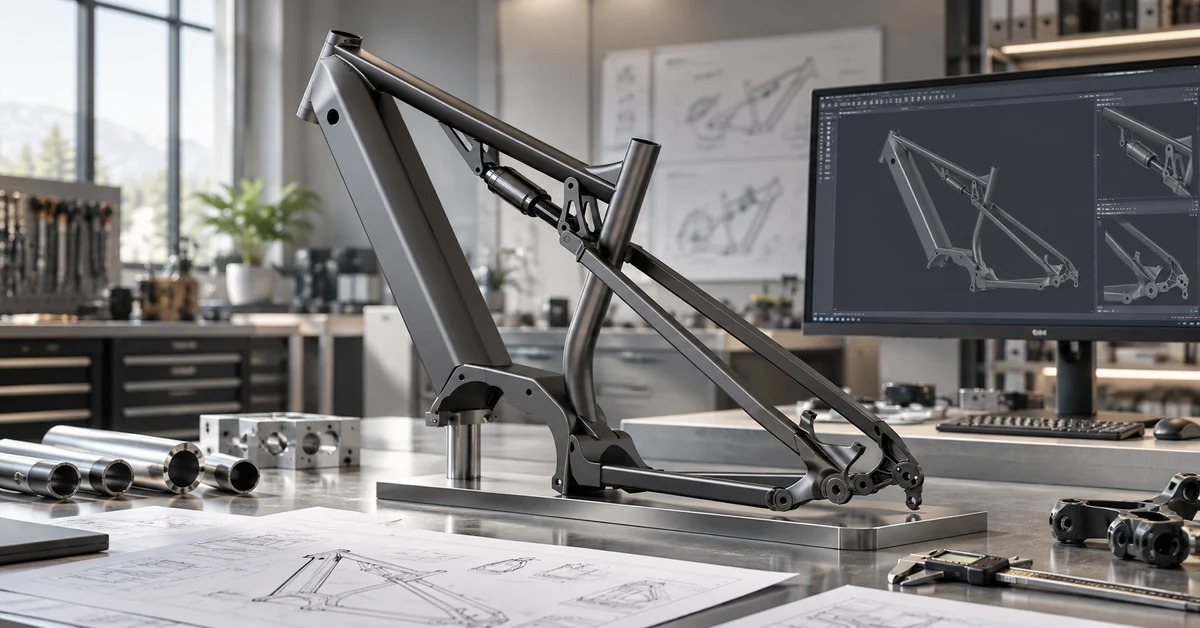
9. Understand the Difference Between Sample Approval and Batch Release
A first-article pass confirms one defined build; batch release answers whether a production lot can ship. To connect the two, create an inspection-control plan that separates 100% checks, sampled dimensions, periodic process checks and design-validation tests. The exact plan depends on criticality, process capability, the buyer's risk and the contract.
Every frame should carry sufficient identification to connect it to a model and production lot. Where feasible, records should show relevant material lots, tooling revisions, weld program or process route, inspection results and any rework. The buyer should agree how rejected frames are quarantined, repaired or scrapped and how a corrective action is verified before a lot is released.
A common mistake is to use an AQL sampling inspection for all aspects of a safety-sensitive product and assume that a good sample guarantees no defects. Sampling can support decisions on appropriate characteristics, but some safety-critical or irreversible conditions may require individual checks or process-level controls. AQL itself does not define which structural or regulatory risks are acceptable.
Proposed Batch-Release Decision Matrix
| Check Type | Example Characteristic | Control Principle |
|---|---|---|
| Identity | Model, drawing revision, lot data | Verify each shipping unit |
| Functional interfaces | Battery fit, axle, brake interfaces | Defined full or risk-based checks |
| Dimensional stability | CTQ readings across production | Trend results and react to drift |
| Weld-process stability | Programs, fixtures, weld acceptance | Monitor and investigate deviations |
| Finish | Color, masking, cosmetic defects | Approved visual and sampling rules |
| Structural verification | Fatigue or strength evidence | Qualification plus change-triggered testing |
| Documentation | Nonconformances and packing records | Release only when records are complete |
A good batch-release package prevents confusion between the engineering team, quality manager, warehouse and export department. It also makes later warranty analysis far more efficient: a field issue can be traced to the affected frame design and production lot instead of being treated as an unexplained brand problem.
10. Compare Frame Programs by Validation Complexity, Not by an Invented Price Table
A comparison between actual frame models should only use confirmed product data. JOBO publicly provides specifications for its TDA46 all-mountain electric bike frame, listing 6061 aluminum, 27.5-inch wheel suitability and 17-inch and 19-inch sizes. It describes a full-suspension application. The product page also contains different motor-related descriptions, so the precise mount and compatible drive unit must be approved from drawings rather than assumed from catalogue text.
Not every buyer needs the same level of custom development. The table below compares program types, not unverified JOBO SKU quotations.
| Program | Example Scope | Validation Focus | Suitable Buyer |
|---|---|---|---|
| Existing frame, branding change | New paint and decals | Finish, labeling and BOM | Private-label brand |
| Approved component variant | Battery, motor or accessory change | Interface fit and compliance | Distributor |
| TDA46-based OEM | 6061 all-mountain platform | Geometry, shock, wheel and motor mounts | E-MTB brand |
| New frame geometry | New sizes or battery aperture | Fixtures, FAI, structural validation | Product developer |
| Commercial cargo frame | Specialized cargo structure | Unique load cases and stability | Fleet or utility OEM |
The TDA46 is a relevant example of JOBO's published aluminum frame capabilities, not a guarantee that every desired motor, battery or shock combination is already validated. Ask JOBO to propose the closest existing platform and identify exactly which parts of your brief require fresh engineering.
View TDA46 All-Mountain Frame →
11. Validate Capacity and Lead Time for Your Frame, Not the Whole Company
A factory's published annual bicycle capacity is not the same as the available capacity for your frame's fixture, welding program, finishing color or test plan. JOBO presents large-scale manufacturing and OEM/ODM services through its company profile and OEM/ODM page. Those are useful indicators for supplier qualification, but a purchasing schedule still needs frame-specific confirmation.
Ask the manufacturer to break its quotation into engineering review, drawings and tooling, prototype fabrication, first-article inspection, required testing, corrective changes, pilot production, mass manufacture, coating, final QC and dispatch. Clarify which stage begins only after the buyer approves a drawing, sample or deposit. Be especially careful with bespoke frame sizes: a multi-size program may need separate fixtures and fit evidence even when frame colors and parts are shared.
For repeat orders, request a change-notification agreement. If a tube supplier, dropout forging, welding fixture, treatment route or battery-mount component changes, the frame manufacturer should explain whether the approved characteristics and test evidence remain valid. A promised “same model” is insufficient if key interfaces have changed behind the model name.
12. Calculate Real OEM Frame Cost, Including the Cost of Rework
Unit price is only one component of an aluminum frame program. Buyers should consider design and tooling, sample iterations, material yield, machining, welding, heat treatment where applicable, coating, inspection, packaging, transport, import expenses and field warranty exposure. A low quotation can be attractive but may become expensive if the finished frames require unexpected machining, manual correction or component replacement at the importing assembly facility.
For a meaningful comparison, request the same scope from each candidate supplier and place exclusions next to the quoted price. For example, a price that omits pivot hardware, axle parts, battery-mount fittings or first-article tests is not directly comparable to a frame kit that includes them. Ask whether tooling is owned by the brand, who pays for engineering changes and how spare frames or replacement hangers will be supplied.
Example Landed-Cost Structure
Total usable frame cost = Purchase price + Allocated tooling and validation + Shipping and import costs + Expected rework/rejection cost + Spare-parts provision.
Consider a hypothetical order of 500 frames where an omitted motor-interface operation requires $18 of local rework per frame. That alone creates $9,000 in extra direct work before accounting for production delays or warranty effects. These figures are an example to explain procurement risk, not a statement about JOBO's actual prices, defect levels or tolerances.
This is why the buyer should prioritize cost of an approved, assembly-ready frame rather than the nominal price of an unfinished structure.
13. Define OEM/ODM Ownership, Change Control and Service Responsibilities
A serious OEM relationship must identify who owns the released geometry, who approves deviations, who maintains tooling, and who supplies records when a problem is found in the field. For an existing JOBO platform, many interfaces may already be defined. For a new ODM development, the brand may need explicit agreements about CAD files, fixtures, exclusivity, confidentiality and permitted reuse.
At the first commercial meeting, agree which party is responsible for frame design validation versus complete-bicycle integration. A frame may meet dimensional requirements while the finished e-bike still needs electrical, braking, environmental and market-compliance evaluation. The agreement should state whether JOBO supplies a bare frame, a frame kit, painted frames or complete bicycles, because each scope carries different testing and support obligations.
A practical change-request rule: any proposed modification to an alloy/tube, major weld, fixture, thermal route, structural opening, motor mount, dropout, brake interface or suspension pivot must be submitted for written engineering review before adoption. Cosmetic changes can follow a separate procedure, but they still need approved color and masking references.
JOBO's own OEM and ODM service page sets out the broader engineering, production, QC and delivery service model. Use the first RFQ to establish the specific documents and decisions that will apply to your project rather than assuming every development is identical.
14. Send a Procurement-Ready RFQ Instead of Asking for Your Best Frame Price
An aluminum e-bike frame manufacturer can provide a more useful quotation when the buyer shares a focused technical brief. Even partial information is valuable, provided the missing decisions are clearly identified. A vague request for “6061 frame, good welding, lowest MOQ” will usually produce a catalogue response rather than a reliable OEM development plan.
Copy-Ready OEM Aluminum Frame RFQ Checklist
| RFQ Field | Information to Supply |
|---|---|
| Company and market | Brand, destination countries and bicycle category |
| Application | City, mountain, full-suspension, folding or utility |
| Load conditions | Rider range, cargo loads, terrain and duty cycle |
| Material | Alloy and tube specifications |
| Geometry | CAD files, dimensions and frame sizes |
| Drive system | Motor family, mount drawing and chainline |
| Battery interface | Pack dimensions, access, locking and sealing |
| Other interfaces | Fork, headset, axle, brake and suspension |
| Finish | Colors, coating, graphics and masking |
| Quality evidence | CTQ, FAI, structural tests and batch release |
| Quantity | Sample quantity, pilot quantity and forecast |
| Commercial terms | Tooling, MOQ, lead time and Incoterms |
| Support | Warranty, replacement parts and traceability |
A high-value RFQ asks the supplier to identify risks, not merely quote what is listed. For instance, “Please indicate which proposed battery-mount dimensions need engineering confirmation” is more useful than “Can you fit this battery?” If your brand expects several sizes or markets, ask how the supplier will distinguish approved configurations in drawings, labels and shipment records.
Suggested inquiry: “We are developing a city/mountain/utility e-bike for our target market, with multiple frame sizes and an estimated first-order quantity. Please review our geometry and motor/battery interfaces. We would like a quotation covering material and tooling, representative first-article samples, CTQ inspections, applicable structural validation, finishing, MOQ, lead time and batch traceability. Please identify the closest existing JOBO frame platform and the items that require custom engineering.”
Request Aluminum Frame OEM Quotation →
15. Ten Frequently Asked Questions About Aluminum E-Bike Frame Manufacturing
1. What should I check first when choosing an aluminum e-bike frame manufacturer?
Check whether the supplier can match your intended riding use with a controlled frame drawing, material specification, key component interfaces, appropriate structural tests and documented production inspections. Production machines are relevant, but evidence connecting the approved sample to repeat batches matters more than promotional descriptions.
2. Is 6061 aluminum suitable for electric bicycle frames?
6061 is widely used in bicycle structures and is identified on JOBO's TDA46 frame page. Suitability still depends on tubing, joint design, processing, loading and validation. Do not assume a finished welded frame automatically retains the properties of an unwelded 6061-T6 material sample.
3. Does robotic welding guarantee stronger e-bike frames?
No. Robotic welding can support repeatability when the process, fit-up and fixtures are controlled, but strength and fatigue performance also depend on design, material condition, weld acceptance and actual structural testing. Ask for project-specific process and inspection evidence.
4. What is first-article inspection for an OEM e-bike frame?
It is the buyer-agreed evaluation of representative production frames against approved drawings, CTQs, material and process records, interface fit and relevant test evidence. It should establish a clear baseline before full-volume manufacturing. The final acceptance package and responsibilities should be defined contractually.
5. Should every frame dimension use a tolerance of ±0.1 mm?
No. A cutting-machine capability claim is not a finished-frame tolerance standard. Each critical dimension needs a functional requirement, datum structure, realistic manufacturing tolerance and inspection method. Some characteristics require tighter controls than others.
6. Does every aluminum e-bike frame require T6 heat treatment?
No universal heat-treatment sequence should be assumed. JOBO describes T4/T6 process capability, while the applicable route for an individual frame depends on alloy, design, forming and joining requirements. Request the model-specific approved process and verification records.
7. Can I buy only a custom frame instead of a complete e-bike?
JOBO publicly describes OEM frame manufacturing and separately lists the TDA46 all-mountain frame. Ask whether your project can be supplied as a bare frame or frame kit, which hardware is included, and what drawing, test, coating and spare-part documentation accompanies it.
8. Which fatigue testing standards should I ask about?
For bicycle categories within their stated scope, ISO 4210-2:2023 and ISO 4210-6:2023 are relevant references for safety requirements and frame/fork test methods. Specialized delivery vehicles and severe-use products may fall outside that scope. Determine the actual market and vehicle classification before specifying tests; never assume a generic certificate covers a modified design.
9. How can an OEM importer prevent inconsistent frame batches?
Use revision-controlled drawings and BOMs, a signed first-article baseline, a CTQ measurement plan, batch identity and records, nonconformance controls and written approval for material or process changes. For repeat orders, reconfirm the unchanged configuration before shipment.
10. What should I send JOBO to request an aluminum e-bike frame quotation?
Send your target market, usage conditions, preferred frame category, drawings or reference model, frame sizes, required motor/battery/wheel interfaces, finish, estimated volume and timeline. Request detailed sample, validation, tooling and batch acceptance terms through JOBO's contact page.
Conclusion
Selecting an aluminum e-bike frame manufacturer is ultimately a decision about repeatable engineering and transparent quality evidence. An attractive welding sample and a compelling unit price are not enough when the frame must accept motors, batteries, brakes and wheels across hundreds or thousands of completed bicycles. The strongest OEM projects link material identity, welded geometry, post-process machining, applicable heat treatment, first-article approval, structural testing and batch release to one controlled design revision.
JOBO provides a documented starting point through its in-house frame factory, quality-control facilities, TDA46 aluminum all-mountain frame and OEM/ODM services. These resources help buyers evaluate manufacturing capability; project-specific drawings, specifications, testing and commercial commitments should still be confirmed before ordering.
If you are developing a private-label commuter bike, an all-mountain model or a specialized OEM frame platform, prepare your geometry, intended use, key interfaces and forecast quantity, then contact JOBO to request an engineering review and quotation. A technically complete inquiry is the fastest route to a frame proposal that can be built, inspected, assembled and supported reliably.