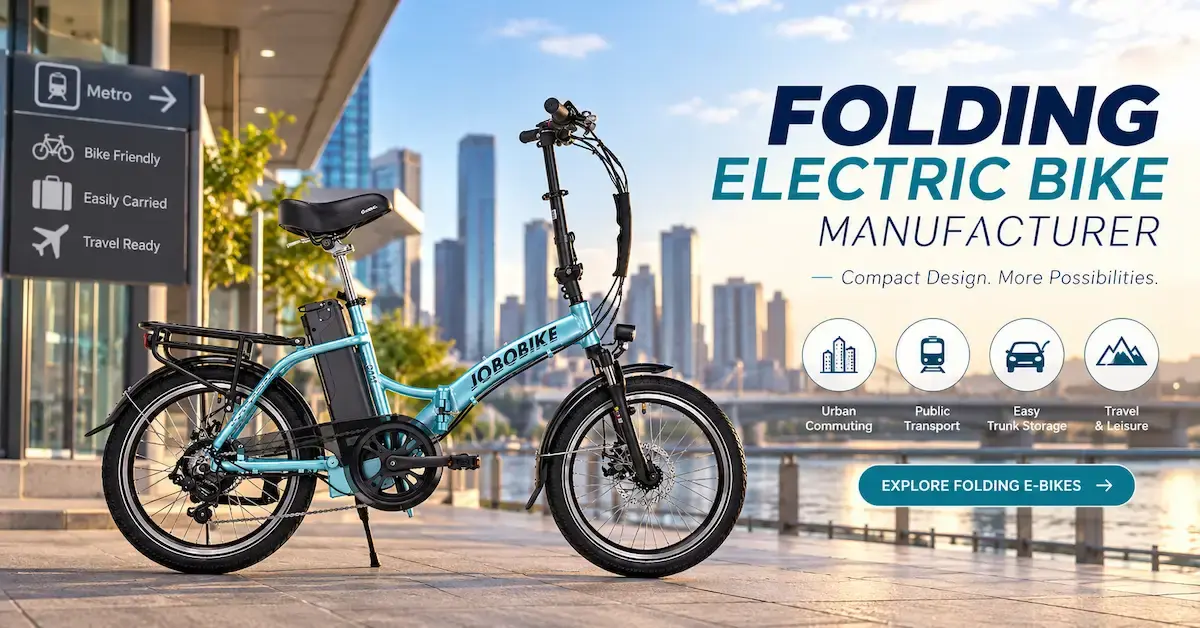
Quick answer: A folding electric bike manufacturer is ready for an overseas retail program when it can produce a consistent bicycle and demonstrate that the approved packed bike arrives intact, can be assembled or unfolded correctly, and can be supported after sale. Ask for a model-specific packing drawing, a complete packout list, transport-validation evidence, an unboxing trial and written acceptance criteria. A compact frame does not automatically produce a compact, damage-resistant shipping carton. The safest procurement decision is based on the exact production configuration and its delivery channel, not a generic factory promise.
1. Define the Delivery Channel Before You Specify the Bike
An importer shipping pallets to trained bicycle dealers faces a different problem from a direct-to-consumer brand sending one carton to a customer's front door. A rental company may receive several assembled or partly assembled bicycles at once, while an RV retailer may need products that are easy to display, fold and reload repeatedly. The bicycle can be similar; the preparation, packaging and after-sales work cannot.
Dealer distribution may allow a qualified mechanic to install pedals, align controls, inspect brakes and explain the folding latch. Direct-to-consumer delivery requires especially clear instructions, correct tools and careful protection against parcel handling. Fleet procurement may prioritize consistent serial-number records, spare-parts kits and a fast commissioning procedure. Before discussing branding or bulk prices, tell the factory exactly how the bike will move from its assembly line to the final user.
| Sales route | First receiving party | Main packout question | Recommended evidence |
|---|---|---|---|
| Bicycle dealer | Trained workshop | What assembly and inspection work remains? | Dealer build sheet and unboxing trial |
| Online / DTC retail | End customer | Can a first-time buyer set up the bike safely? | Illustrated setup guide, tool inventory and test delivery |
| Retail chain warehouse | Distribution center | Will the carton survive the agreed handling chain? | Approved pack drawing and shipment simulation record |
| Rental or tourism fleet | Operator technician | Can multiple bikes be commissioned consistently? | Batch checklist, serial list and spares schedule |
A folding bike manufacturer should ask these questions early. Otherwise a product designed for professional dealer assembly may be sold online with an instruction sheet that assumes specialist tools and experience. That mismatch leads to avoidable queries, service calls and returns even when the actual bicycle is sound.
2. Separate Folded Dimensions From Shipping Dimensions
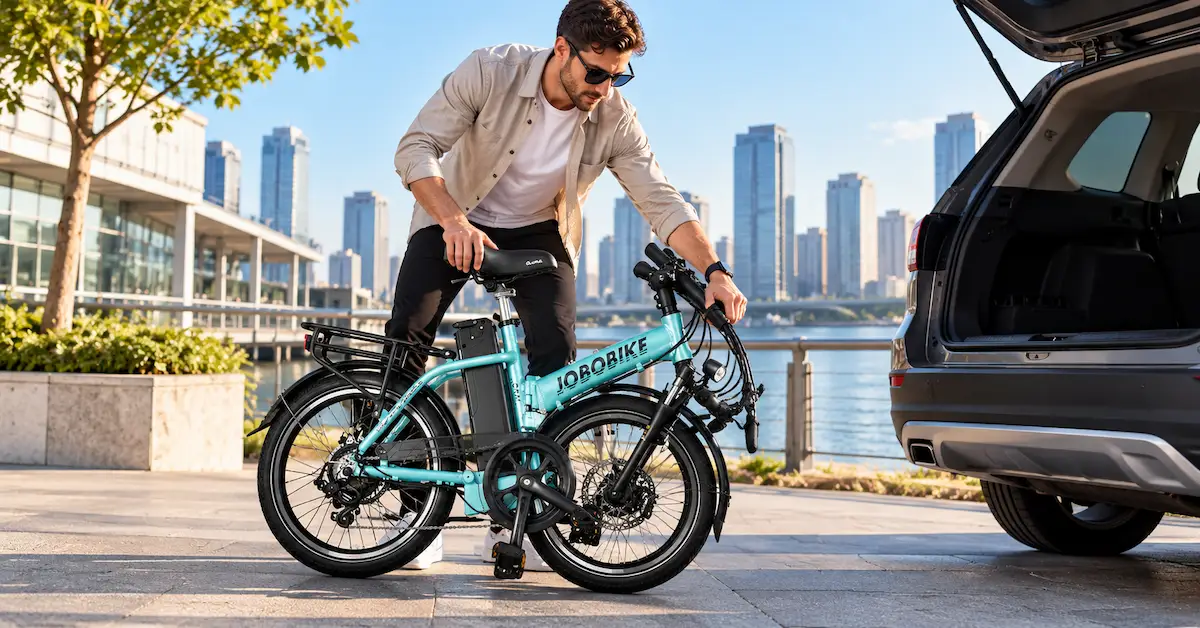
Three measurements answer three different questions. Folded dimensions describe the bike after its folding actions, usually without export protection. Shipping carton dimensions describe the external transport package with its padding, accessory boxes and necessary disassembly. Handling weight must specify whether the battery, charger, packaging and accessories are included. Mixing these figures makes quotes look comparable when they are not.
A small folded bicycle can still ship in a long carton because its handlebar orientation, wheel position, brake protection or battery arrangement creates a different transport envelope. Conversely, a compact carton may require more work during dealer setup. Neither result is inherently wrong. The right answer depends on who completes that work and how expensive a mistake would be.
Request a scale photo, an external carton measurement, the intended packing orientation and photographs of each protection point. Record the degree of pre-assembly: handlebar turned or removed, pedals detached, front wheel installed or separate, battery fitted or separate, and folding hinge secured in a defined position. The approved packing configuration needs its own revision number alongside the bike's bill of materials (BOM).
3. Compare JOBO Folding Platforms With Real Packing Questions
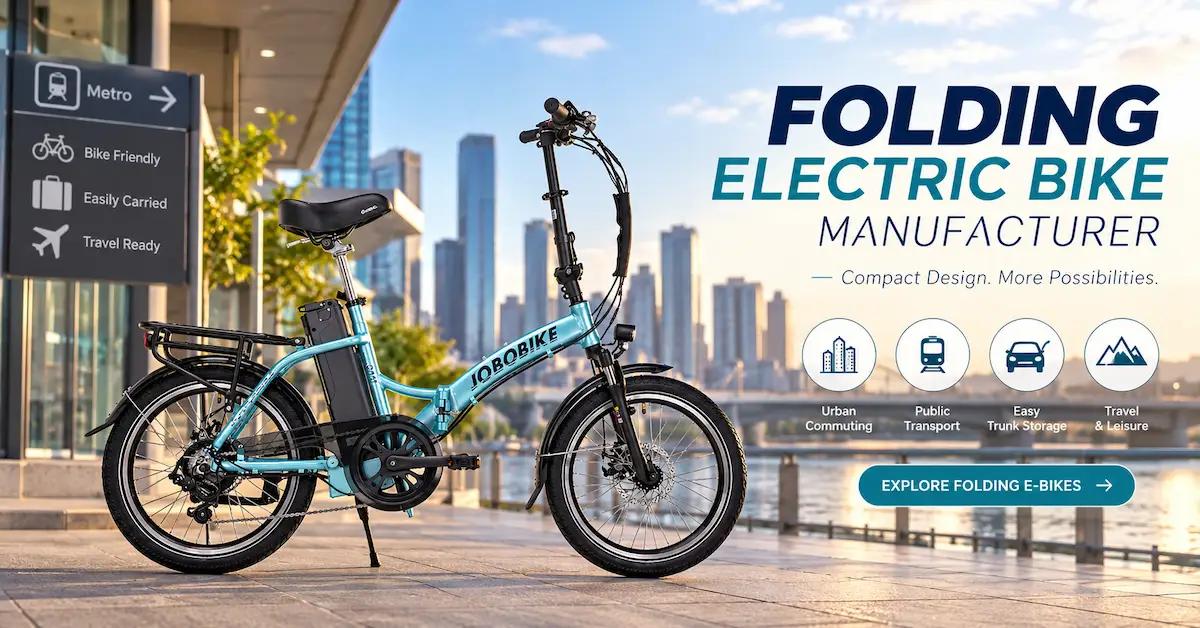
JOBO (Jinhua JOBO Technology Co., Ltd.) offers several folding electric bike configurations and OEM/ODM development support. Its published product pages provide useful starting points, but a web-page specification is not a signed production BOM, current quotation or shipment test report. The following figures are published reference builds; final market versions and dimensions require written reconfirmation.
| JOBO reference model | Published reference configuration | Listed carton / gross weight | A useful importer's question |
|---|---|---|---|
| JB-TDN11Z Small Folding E-Bike | 20-inch, 6061 alloy, 36V 250W motor, 36V 13Ah battery reference | 145 × 26 × 68 cm / 28 kg | Are battery, tool pack, pedals and fenders included in the measured carton? |
| JB-TDN48L Lightweight Foldable E-Bike | 20-inch, 36V 250W mid-drive, 36V 10.5Ah battery reference | 145 × 26 × 68 cm / 25 kg | Which mid-drive and display components need extra impact protection? |
| JB-TDN46Z-FS Long Range Folding E-Bike | 20-inch folding fat-tire platform, 48V 250W and 48V 14Ah references | 160 × 32 × 88 cm; verify gross weight for quoted build | How are the wider tires, fork, display and battery restrained in transit? |
The value of this comparison is not to declare one model the best. A dealer-friendly compact commuter and a wider-tire leisure bike solve different retail problems. For your RFQ, choose one or two base models and ask JOBO to identify the exact carton configuration, assembly state and replaceable parts. Larger tires or additional accessories can affect transport and storage even when a frame folds.
You can review JOBO's OEM and ODM services alongside these actual products before requesting a tailored packout proposal.
4. Control the Six Most Expensive Packout Failure Points
Shipping damage is not limited to a crushed outer carton. A bike can arrive with an undamaged box but a bent rotor, rubbed paint, trapped cable or missing accessory. For folding products, the relationship between movable frame sections and delicate components makes the packing layout particularly important.
| Failure mode to investigate | How it can occur | What the sample should prove |
|---|---|---|
| Brake rotor damage | Contact with carton, wheel or loose metal part | Rotor remains protected; wheel rotates without new rub |
| Hinge or latch contact | Frame moves against another component in transit | Lock operates correctly; no fresh play, marks or deformation |
| Cable or connector strain | Harness bends sharply in the folded position | No pinching; electrical functions remain normal after unpacking |
| Display and lever impact | Handlebar or controls press into package wall | Controls are undamaged, correctly positioned and operable |
| Battery or charger movement | Heavy component shifts in an unsecured cavity | Retention, packaging and documentation match the approved shipping method |
| Missing small parts | Pedals, keys or tools are packed without inventory control | Every unit has a checked accessory kit and clear identification |
For each risk, define a protective method and an inspection. Examples include purpose-designed spacers, fastened accessories, protected brake components and separators that prevent metal-to-paint contact. Packaging materials should not apply pressure to the brake hose, display or folding lever. A picture of the completed carton is not enough; ask the supplier to show the packing sequence as well.
Do not assume that a successful test on one frame color, battery or wheel configuration covers every SKU. When a new battery, suspension fork, display, rack or tire changes component position or mass, the packing plan may need reassessment. Packaging is an engineered specification, not an afterthought assigned to the shipping department.
5. Make Unboxing a Formal Sample-Acceptance Test
Before approving a trial order, obtain at least one sample in its actual intended retail shipping carton. Ideally use the same route and carrier type planned for launch, when practical. Ask someone unfamiliar with the bicycle to follow the supplied instructions while an observer records errors, missing information and required tools. This should be conducted safely, with qualified inspection before riding.
Record the sequence, not only the finished bicycle: carton opening, bike removal, handlebar positioning, hinge-lock check, pedal installation where applicable, tire inflation, brake inspection, charging instructions and first power-on. Identify any step that requires a torque specification, qualified mechanic or safety warning. The manual must say when a task is not suitable for an untrained consumer.
Observe what happens to the accessories. Are loose parts labeled by name and model? Can a customer confuse the charger with another product? Is the key easy to locate? Does the serial number remain accessible for warranty registration? These small moments influence returns and customer-support workload.
After unboxing, perform an agreed mechanical and electrical inspection, including brake operation, fold/unfold function, latch engagement, light and display function and visible damage. Document photographs and the corrective actions for failed checks. An impressive unboxing video is marketing; a dated, repeatable checklist is procurement evidence.
6. Test the Actual Transport Package—Not Just the Frame
A frame fatigue report answers structural questions about the bicycle. It does not establish whether a packed retail unit can tolerate parcel drops, repeated vibration or stacking during distribution. Package validation needs a separate plan based on shipping method, gross weight, dimensions and handling conditions.
For individually shipped parcels, test laboratories may consider ISTA procedures such as ISTA 3A, but not every large or heavy folding-bike carton automatically fits a particular procedure. For palletized freight or different distribution systems, the appropriate protocol may be different. Ask an experienced lab or packaging engineer to select the current, applicable procedure and record the actual test scope. Do not print “ISTA certified” merely because a package has survived an informal drop.
A practical packaging-validation report identifies the carton revision, loaded gross weight, bike BOM, battery and accessory placement, test procedure, sample count and post-test findings. After simulation, open the package and inspect not only exterior scratches but hinge operation, brakes, wiring, wheels, controls and missing or shifted items. The acceptance criteria should be agreed before testing, not invented after a poor result.
For production, agree when a package change requires reapproval. A thinner carton wall, a substitute foam block, a larger battery or a new handlebar may alter risk. The factory should retain approved material specifications and packing photographs, with a clear escalation route when a substitute is proposed.
7. Treat Lithium-Battery Shipping as Its Own Compliance Task
Electric bicycles bring transport obligations that non-electric folding bikes do not. Lithium-battery classification, handling marks, documents, carrier acceptance and packing instructions depend on whether batteries are installed in equipment, packed with equipment or shipped separately, as well as the applicable transport mode and rules.
Ask the manufacturer and your freight specialist to confirm the correct shipment classification, required UN 38.3 test summary or other applicable battery records, battery identification, packaging approach and documentation before pickup. Do not assume that a complete bike, spare battery and charger can use the same shipment paperwork. For air transport, carrier and aviation rules can be more restrictive than buyers expect.
This is also a retail service question. Replacement batteries sent after launch may follow different shipping arrangements from the original bicycle order. Clarify who stocks replacement packs, which exact revision fits the bike and how defective batteries are handled through approved channels. Do not instruct customers to ship damaged lithium batteries back using ordinary parcel service without specialist guidance.
Similarly, the fact that a reference model lists a 250W motor does not itself establish road-use compliance in any target country. For EU EPAC classification, the applicable requirements include the motor's maximum continuous rated power and assistance cutoff behavior. Obtain complete configuration-specific evidence, labeling and manuals for your actual sales market. Battery transport evidence and road-use compliance documents answer different questions.
8. Factory Controls That Protect Your Packaging Specification
When shortlisting a folding electric bike manufacturer, ask how the packing design is controlled between engineering, assembly, quality assurance and the final loading area. JOBO publicly describes China-based manufacturing, an in-house frame operation and a quality system that includes incoming inspection (IQC), in-process inspection (IPQC) and final quality control (FQC). Those capabilities are relevant because packaging failures often involve more than the box: a changed handlebar, brake or hinge setting can make an old protection design ineffective.
Request four connected records from the chosen production batch. First, a current BOM and signed golden sample. Second, an approved packing drawing with material list and photos. Third, a final inspection checklist including accessories, serial number and packing orientation. Fourth, the traceability and corrective-action process used when a delivery defect is reported. The value lies in how these records connect, not in the number of factory machines pictured on a website.
JOBO's frame factory describes CNC processing, welding, coating and structural inspections; its QC Labs describe incoming, in-process and finished-product checks. Buyers should use those pages to frame evidence requests and confirm the specific test and inspection scope with JOBO rather than assuming all displayed capabilities were applied to every quoted folding model.
9. Price the Return Risk Alongside Freight and Unit Cost
A lower ex-factory price is only one line in the business model. A retailer also pays to receive, store, open, assemble, explain, service and sometimes recover a bicycle. Folding bikes introduce extra parts and handling steps, so those activities deserve explicit estimates.
Build a simple decision sheet:
Supported landed cost = factory invoice + freight and import costs + packaging and receiving + dealer or customer setup + forecast service/return allowance.
Populate it with your own rates and pilot evidence; this formula does not establish any standard return rate or guaranteed savings. Compare the same sales channel and identical specification across suppliers. A protective insert that raises purchase cost may be commercially worthwhile if measured damage claims decline, but that conclusion needs your records.
Run a controlled trial with the intended package and monitor damage by location, missing accessories, first-use support contacts, dealer assembly time, and repeat complaints by batch. These records can reveal whether your priority should be more packaging protection, better user instructions, different accessory placement or a design change. A vague “returns are high” summary gives the factory little to correct.
10. Send This Folding E-Bike Packout RFQ to JOBO
A high-conversion RFQ should make the buyer's project easy to evaluate. Include the following details and ask the supplier to mark each item as included, optional or to be confirmed.
- Buyer and destination: brand, sales country, sales channel and customer segment.
- Reference bike: JOBO model or target 20-inch/other platform and intended riding use.
- Market configuration: motor, battery, assistance behavior, charger and compliance evidence required.
- Packout target: shipping channel, carton size or warehouse constraint, maximum handling weight where relevant.
- Packing state: handlebar, pedals, wheels, battery, accessories and allowed dealer/customer assembly tasks.
- Damage prevention: protection points for rotor, controls, cables, hinge and battery; required carton materials.
- Verification: packing sample, unboxing review, chosen transport test and acceptance criteria.
- Brand presentation: logo, retail carton artwork, labels, multilingual manuals and serial/barcode scheme.
- After-sales: replacement components, assembly questions, battery support and warranty workflow.
- Commercial plan: trial quantity, forecast order volumes, target launch, Incoterm and shipment destination.
Ask JOBO for a model-specific quotation, a proposed packing configuration and a realistic path to sample approval. If the project involves a new folding frame or special accessories, request separate engineering and validation steps rather than assuming a simple logo change covers them.
Ready to discuss a retail-ready folding e-bike? Send your project brief to JOBO, or first review JOBO OEM/ODM capabilities.
FAQ: Folding Electric Bike Manufacturing and Shipping
How do I choose a folding electric bike manufacturer for online sales?
Ask for the exact packed production sample, approved carton drawing, clear customer assembly instructions, relevant transport-test evidence, product-specific compliance documents and replacement-parts arrangements. Evaluate an actual shipped sample, not only a showroom bicycle.
Is the folded bike size the same as its shipping carton size?
No. The carton includes protection, components and accessories, and some bikes require parts to be repositioned or detached. Compare three separate metrics: folded bicycle dimensions, external carton dimensions and gross shipping weight.
Does a 250W folding e-bike automatically qualify as an EU EPAC?
No. The correct motor rating, pedaling and cutoff behavior, overall configuration and relevant documentation must be checked. The quoted market-specific version determines the compliance assessment.
Which folding parts need special packaging attention?
Hinges and latches, brake rotors, handlebars, displays, wiring bends and battery mounting points deserve particular attention. The required protection depends on the frame's actual folded packing orientation.
Can we customize the retail box, logo and instruction manual?
JOBO publicly offers OEM/ODM branding and packaging discussions. Confirm artwork approval, print specifications, labels, language versions, minimum quantities and whether the change affects carton validation for the selected project.
What evidence should a factory provide before a bulk order?
Request a signed BOM, golden sample, production-ready packout drawing, component traceability, appropriate transport-validation records, finished-unit checklist and sample approval notes. The agreed acceptance plan should identify who reviews failures.
How should an importer handle battery shipping documents?
Coordinate with a qualified freight partner on the battery's shipment configuration, classification, applicable test records, packaging, labels and carrier restrictions. A separately shipped replacement battery may need different arrangements from a complete bicycle.
Will better protective packaging always lower total cost?
Not necessarily. Additional materials and packing labor increase cost, while improved protection may reduce damage and support claims. Compare the options using trial-shipment results, retail handling requirements and your actual freight and return data.
Conclusion
A folding electric bike manufacturer should be assessed on the complete journey from approved factory build to the customer's first safe ride. For brands and importers, the most useful questions concern the packed configuration, protection of moving and electrical parts, transport-test evidence, assembly instructions, traceability and support after delivery. JOBO's published folding platforms and OEM/ODM manufacturing resources give buyers a practical starting point, but each project should be confirmed with a model-specific specification and packout trial.
Make the next step concrete: identify your market, preferred folding model, retail delivery route and planned quantity, then request a folding e-bike packaging and OEM quotation from JOBO.