The demand for cargo bikes is increasing as cities, families, and businesses look for more flexible and sustainable transportation solutions. Among different cargo bike designs, longtail cargo bikes have become popular because they combine carrying capacity, riding stability, and urban practicality.
For brands, distributors, importers, and mobility companies, choosing the right longtail cargo bike manufacturer is essential. A professional manufacturer does not only produce bicycles but also provides engineering support, frame development, component selection, OEM customization, quality control, and long-term supply capability.
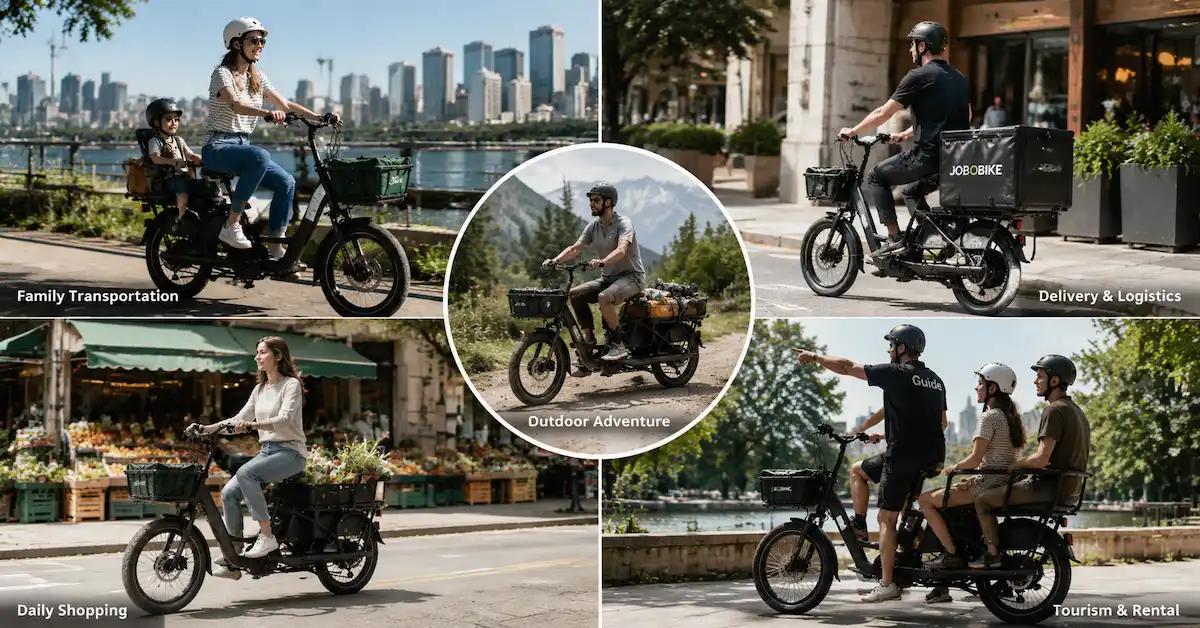
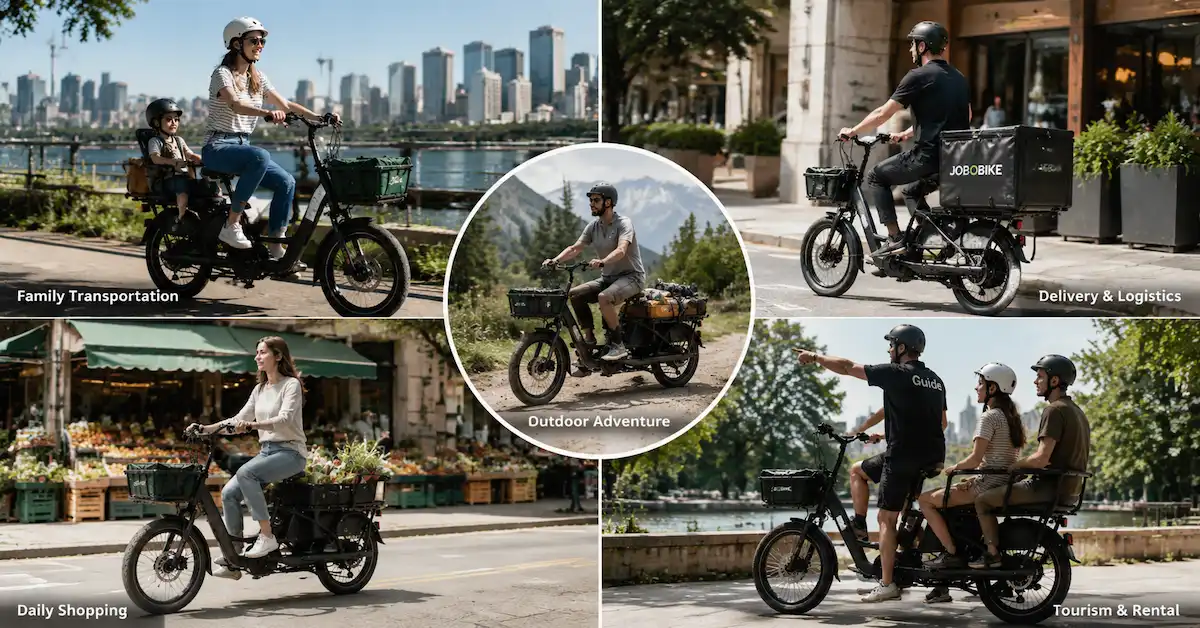
Longtail cargo bikes are used for many applications, including:
- Family transportation
- Child carrying
- Daily shopping
- Urban commuting
- Local delivery
- Rental services
- Business logistics
Compared with traditional cargo bicycles, longtail models offer better maneuverability while still providing additional carrying space.
A reliable factory helps buyers create products that match their target market, customer expectations, and business requirements.
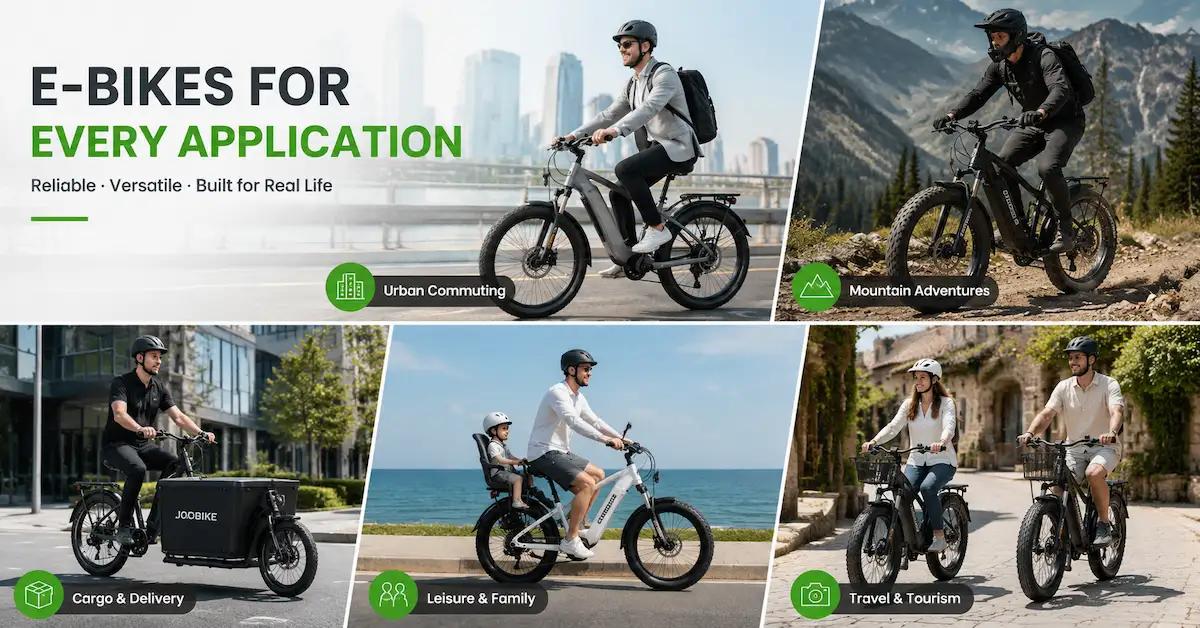
JOBOBIKE provides electric mobility solutions for global partners, including cargo electric bikes, city e-bikes, mountain e-bikes, folding electric bikes, and customized OEM electric bicycle solutions.
Explore JOBOBIKE products:
https://www.joboev.com/products
What Is a Longtail Cargo Bike?
A longtail cargo bike is a bicycle design with an extended rear frame structure that creates additional space for passengers, cargo, or accessories.
Unlike front-loader cargo bikes, where the cargo area is positioned in front of the rider, longtail cargo bikes place the additional carrying area behind the rider.
This design provides several advantages:
- Easier urban riding
- Better visibility for riders
- More familiar bicycle handling
- Flexible accessory options
- Smaller turning radius
- Easier storage
Common configurations include:
- Rear cargo racks
- Passenger seats
- Child seats
- Storage bags
- Delivery boxes
- Utility platforms
For many urban users and businesses, longtail cargo bikes offer a balance between transportation capacity and everyday usability.
Why Choose a Professional Longtail Cargo Bike Manufacturer?
Longtail cargo bikes require specialized engineering because the extended rear structure changes how the bicycle handles weight and balance.
A professional longtail cargo bike manufacturer should understand:
- Frame strength
- Load distribution
- Rider stability
- Motor performance
- Battery requirements
- Cargo accessories
- Commercial durability
Advanced Frame Engineering
The frame is the foundation of a longtail cargo bike.
A reliable manufacturer should control:
- Aluminum frame design
- Welding quality
- Rear extension structure
- Cargo mounting points
- Weight distribution
- Fatigue resistance
Because the rear section carries additional loads, poor frame design may cause:
- Reduced stability
- Frame stress
- Poor handling
- Shorter service life
Motor Performance for Heavy Loads
Longtail cargo bikes often carry:
- Children
- Shopping items
- Delivery packages
- Business equipment
Therefore, the motor system should provide:
- Strong starting torque
- Smooth acceleration
- Reliable climbing ability
- Stable performance under load
Motor selection depends on:
- Total vehicle weight
- Cargo weight
- Terrain
- Distance requirements
- Market regulations
Battery Range and Reliability
Battery performance directly affects user experience.
A professional manufacturer should evaluate:
- Battery capacity
- Range requirements
- Charging frequency
- Battery protection
- Replacement availability
For commercial users, insufficient range can reduce productivity and increase operational costs.
For family users, reliable battery performance improves daily convenience.
Main Applications of Longtail Cargo Bikes
Family Transportation
Longtail cargo bikes are increasingly popular among families because they can replace short-distance car trips.
Applications include:
- Carrying children
- School transportation
- Grocery shopping
- Weekend activities
Important features include:
- Stable rear seating
- Comfortable riding position
- Safety accessories
- Easy operation
Urban Delivery
Businesses use longtail cargo bikes for:
- Food delivery
- Small parcel transportation
- Local logistics
- Retail delivery
Advantages include:
- Lower operating costs
- Easier parking
- Access to crowded urban areas
- Reduced emissions
Delivery-focused buyers should consider:
- Cargo capacity
- Battery range
- Maintenance
- Weather protection
Commercial Utility Applications
Longtail cargo bikes can support:
- Maintenance teams
- Service companies
- Mobile businesses
- Industrial parks
Possible configurations include:
- Tool storage
- Rear platforms
- Custom racks
- Business branding
Tourism and Rental Services
Tour operators and rental businesses may choose longtail cargo bikes because they are:
- Easy to ride
- Suitable for different users
- Attractive for outdoor experiences
Rental buyers should prioritize:
- Durable components
- Simple maintenance
- Spare parts availability
Key Components of a Reliable Longtail Cargo Bike
| Component | Buyer Considerations |
|---|---|
| Frame | Strength, geometry, load capacity |
| Motor | Torque, efficiency, reliability |
| Battery | Range, safety, lifespan |
| Brakes | Stopping performance under load |
| Tires | Stability and durability |
| Rear Rack | Cargo and passenger support |
| Accessories | Application flexibility |
| Controller | Electrical stability |
How Longtail Cargo Bikes Are Manufactured
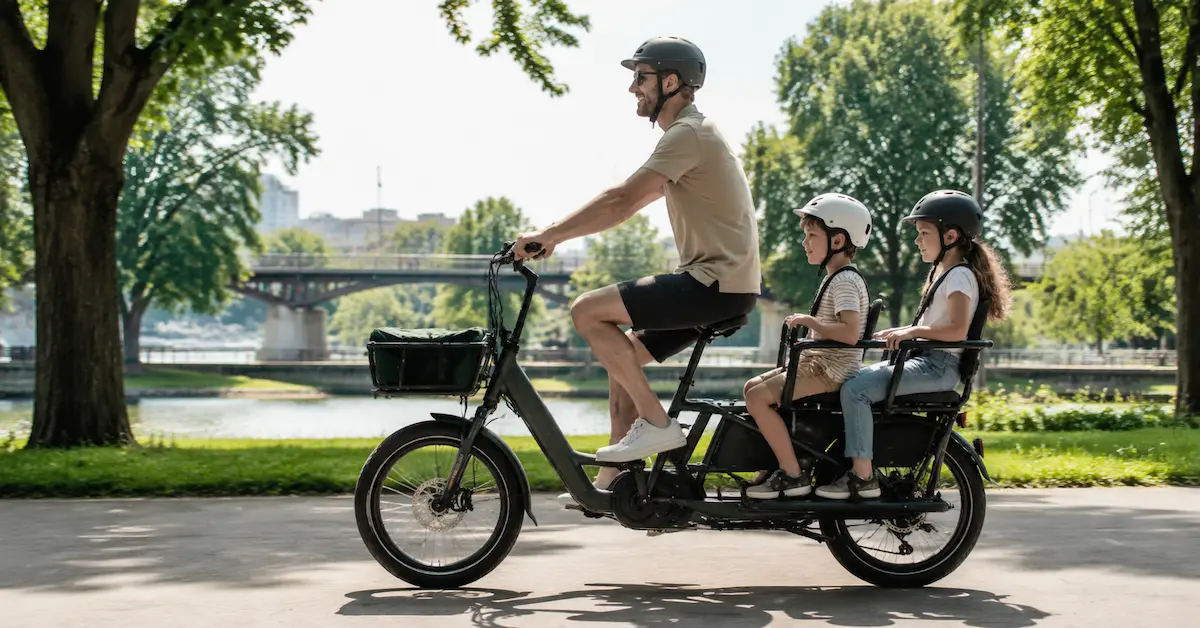
A professional manufacturing process ensures product consistency and reliability.
Step 1: Market Analysis
The manufacturer evaluates:
- Target customers
- Application requirements
- Price positioning
- Market trends
- Regulations
Step 2: Product Engineering
Engineers develop:
- Frame structure
- Rear cargo design
- Battery placement
- Motor configuration
- Accessory compatibility
Step 3: Prototype Development
Prototype testing evaluates:
- Riding stability
- Cargo balance
- Comfort
- Motor performance
- Brake response
Step 4: Component Integration
The production team assembles:
- Frame
- Wheels
- Motor system
- Battery
- Controller
- Display
- Brakes
- Accessories
Step 5: Quality Testing
Before shipment, manufacturers inspect:
- Frame quality
- Electrical systems
- Riding performance
- Safety functions
- Packaging
OEM and Private Label Longtail Cargo Bike Solutions
Many brands choose OEM manufacturing to create unique products.
A capable longtail cargo bike manufacturer can support:
Branding Customization
Including:
- Frame logo
- Battery branding
- Packaging
- Manuals
- Labels
Product Customization
Including:
- Frame colors
- Battery capacity
- Motor systems
- Rear rack design
- Passenger accessories
- Cargo solutions
Market-Specific Development
Different customers require different solutions.
Family Brands
Focus on:
- Comfort
- Safety
- Child accessories
- Easy operation
Delivery Brands
Focus on:
- Cargo capacity
- Battery range
- Durability
- Maintenance
Rental Companies
Focus on:
- Reliability
- Standardized components
- Service efficiency
Quality Control for Longtail Cargo Bikes
A reliable factory should have a complete inspection system.
Incoming Component Inspection
Check:
- Frame materials
- Motors
- Batteries
- Brakes
- Wheels
- Accessories
Assembly Inspection
Verify:
- Bolt tightening
- Electrical connections
- Brake adjustment
- Wheel alignment
- Cargo installation
Load and Riding Testing
Important tests include:
- Stability
- Steering
- Braking
- Motor assistance
- Cargo handling
Final Inspection
Confirm:
- Product appearance
- Functions
- Accessories
- Packaging
- Documentation
How to Choose the Right Longtail Cargo Bike Manufacturer
Before cooperation, buyers should evaluate:
Factory Experience
Questions:
- Does the company manufacture directly?
- Does it have cargo bike experience?
- Can it support repeat orders?
Engineering Capability
Check:
- Prototype development
- Frame design
- Custom solutions
- Technical support
OEM Ability
Evaluate:
- Branding options
- Product customization
- Packaging services
- MOQ requirements
After-Sales Support
Confirm:
- Spare parts supply
- Warranty process
- Technical assistance
- Maintenance support
Common Mistakes When Buying Longtail Cargo Bikes
Choosing Only Based on Price
Low-cost suppliers may create issues with:
- Frame quality
- Battery reliability
- Component durability
- After-sales support
Ignoring Load Testing
Longtail cargo bikes require careful evaluation of:
- Passenger weight
- Cargo weight
- Riding stability
Selecting the Wrong Configuration
Different applications require different solutions.
A family cargo bike and a delivery cargo bike should not use identical specifications.
Lack of Spare Parts Planning
Long-term operation requires:
- Batteries
- Chargers
- Controllers
- Brake parts
- Tires
Why Choose JOBOBIKE as Your Longtail Cargo Bike Manufacturer?
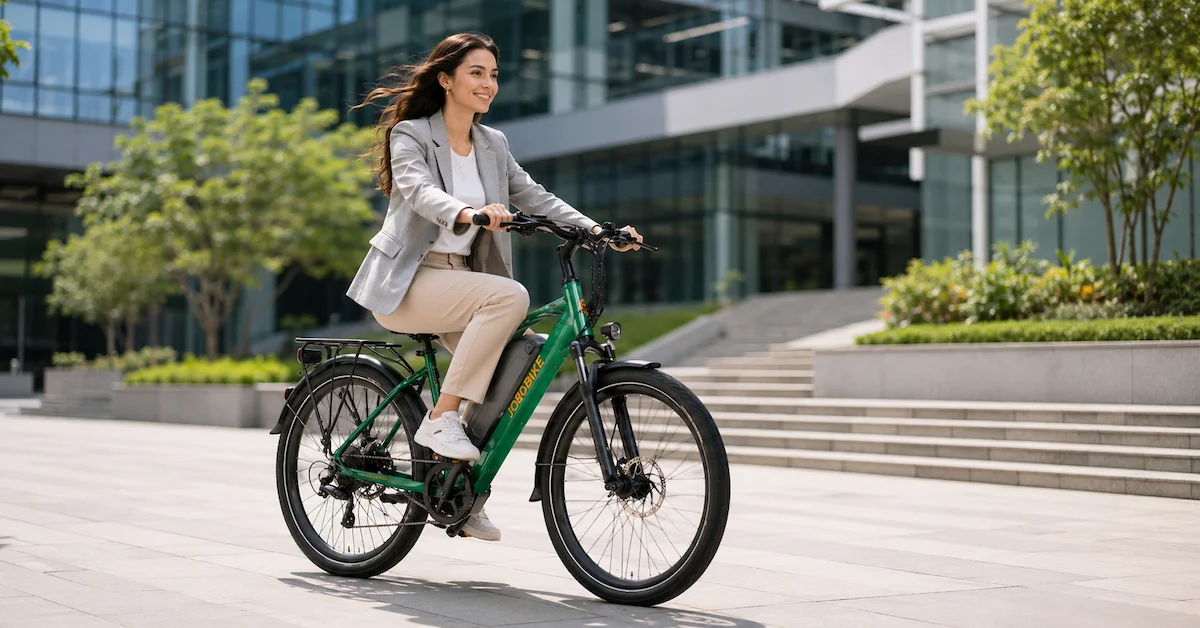
JOBOBIKE supports global distributors, importers, brands, and commercial buyers with electric mobility manufacturing solutions.
Capabilities include:
- OEM and ODM development
- Product customization
- Electric bike manufacturing
- Quality control
- Global supply support
JOBOBIKE helps partners develop products for:
- Family mobility
- Urban transportation
- Delivery businesses
- Commercial applications
- Private-label brands
Learn more about JOBOBIKE:
https://www.joboev.com/about-us
Contact JOBOBIKE for OEM cooperation:
https://www.joboev.com/contact-us
FAQ
What is a longtail cargo bike?
A longtail cargo bike is an extended-frame bicycle designed to carry passengers, cargo, or accessories behind the rider.
What industries use longtail cargo bikes?
Common applications include:
- Family transportation
- Delivery
- Retail
- Tourism
- Rental services
- Commercial mobility
Can longtail cargo bikes be customized?
Yes. Manufacturers can customize frames, colors, motors, batteries, accessories, branding, and packaging.
How is a longtail cargo bike different from a cargo bike?
Longtail cargo bikes place the carrying area behind the rider, while other cargo bikes may use front-loading designs.
What should buyers check before ordering?
Buyers should evaluate:
- Factory capability
- Frame quality
- Load capacity
- Battery system
- OEM experience
- Spare parts support
Are longtail cargo bikes suitable for delivery businesses?
Yes. They are suitable for short-distance delivery, retail logistics, and urban transportation.
Can JOBOBIKE provide OEM longtail cargo bikes?
JOBOBIKE supports OEM and ODM projects including product customization, branding, and production solutions.
How long does longtail cargo bike production take?
Production time depends on customization requirements, quantity, components, and manufacturing schedule.
Conclusion
Choosing the right longtail cargo bike manufacturer is essential for businesses that want reliable and competitive cargo mobility solutions.
A professional manufacturer should provide:
- Strong frame engineering
- Reliable components
- Stable production
- OEM customization
- Quality testing
- Long-term support
As urban transportation continues changing, longtail cargo bikes provide valuable opportunities for family mobility, delivery businesses, and commercial transportation.
JOBOBIKE supports global partners with customized electric mobility solutions from product development to bulk manufacturing.
Start your longtail cargo bike project: