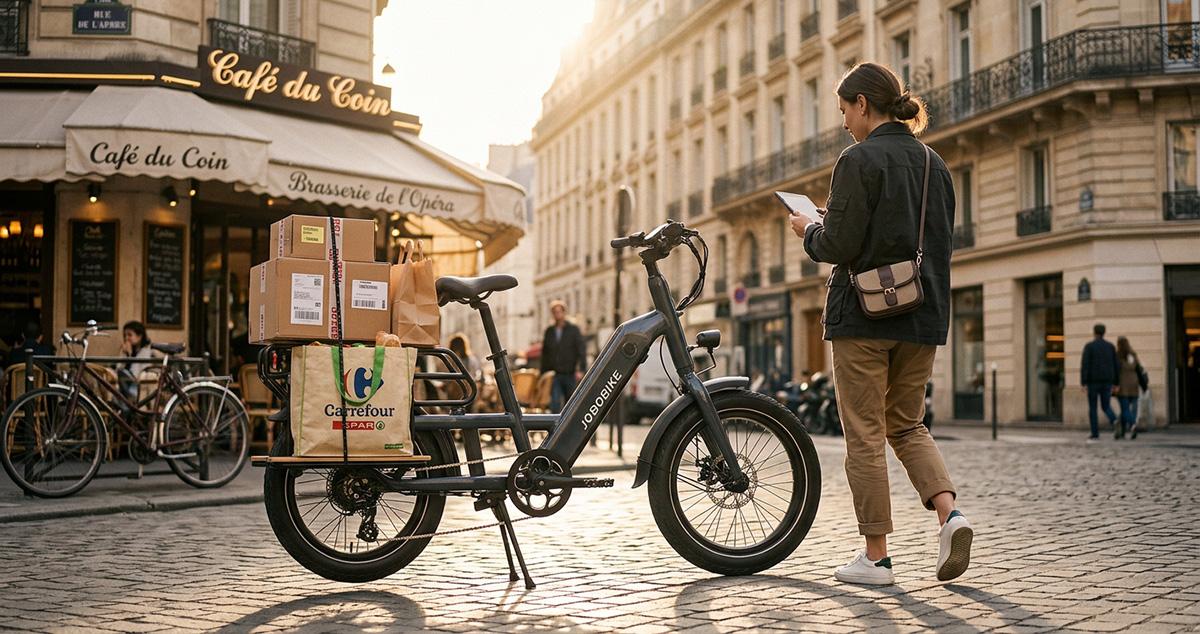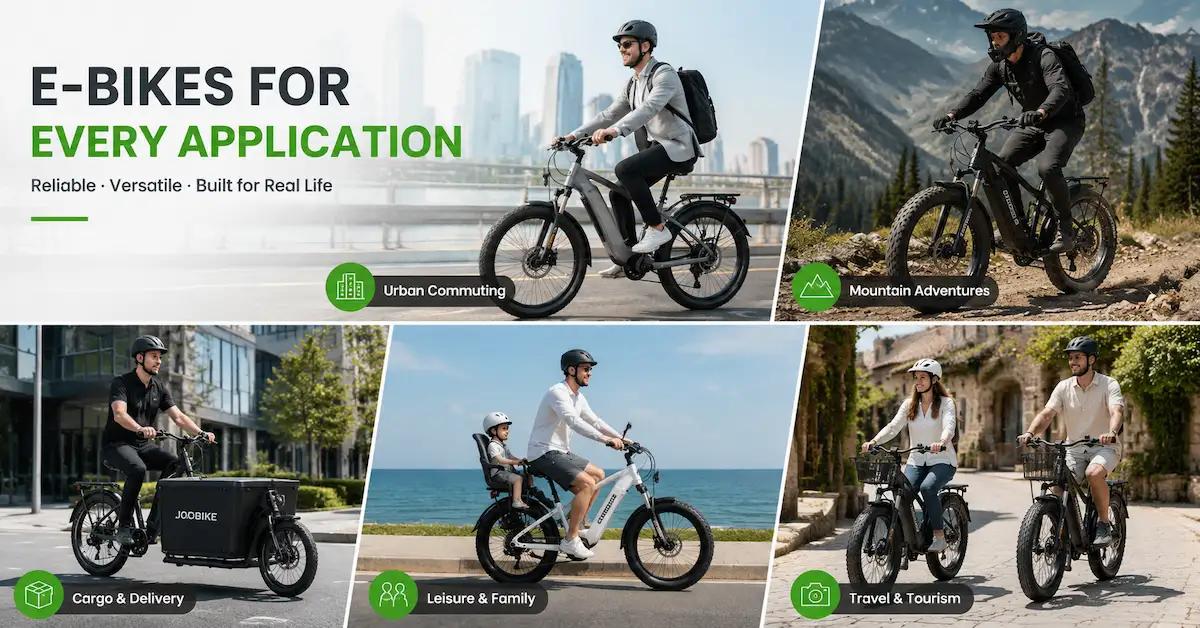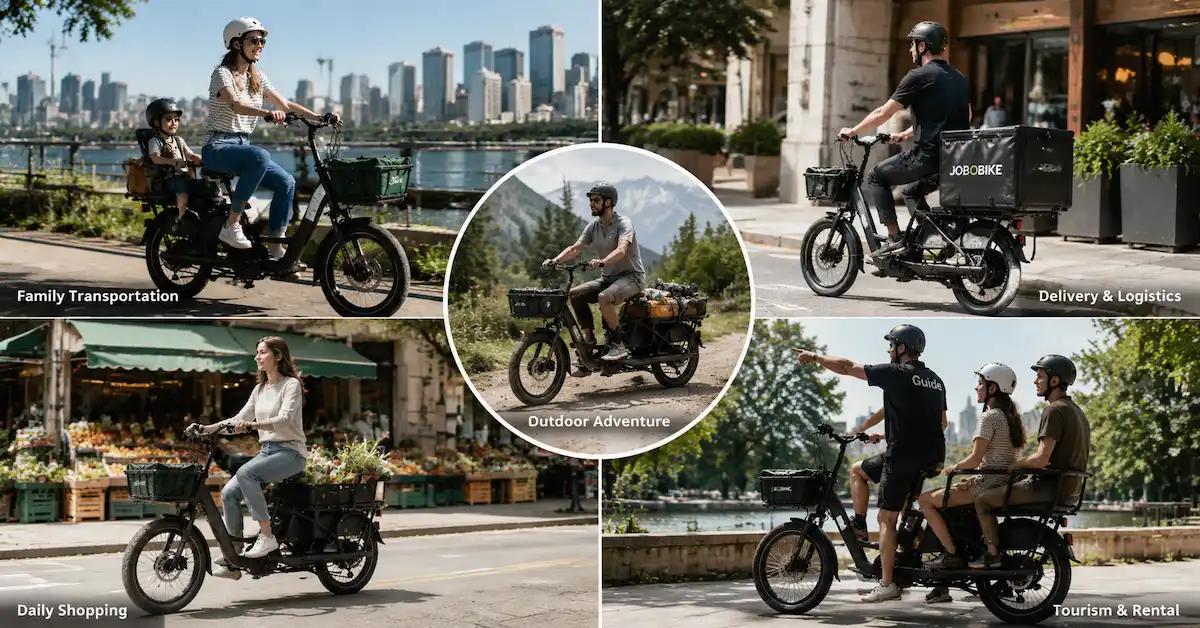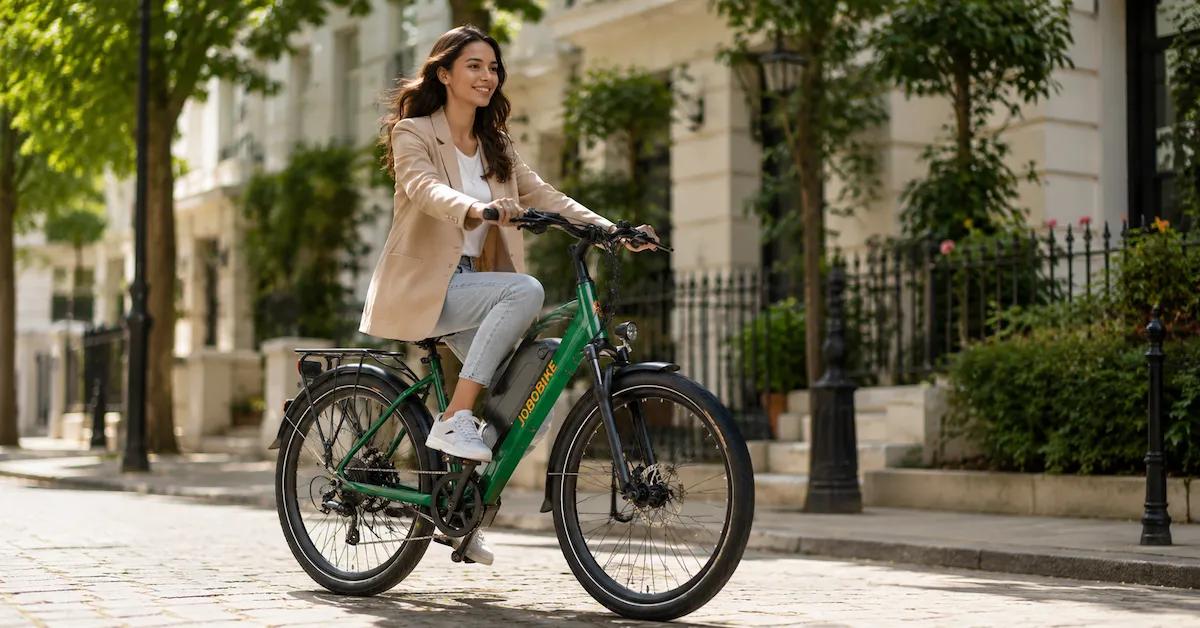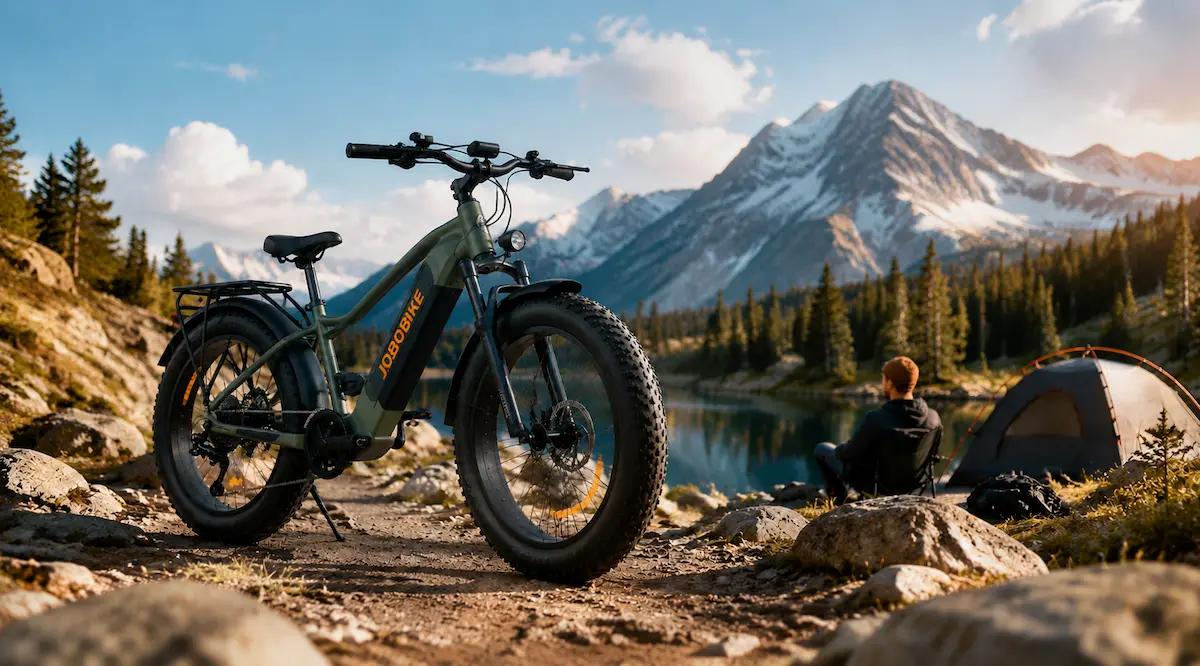
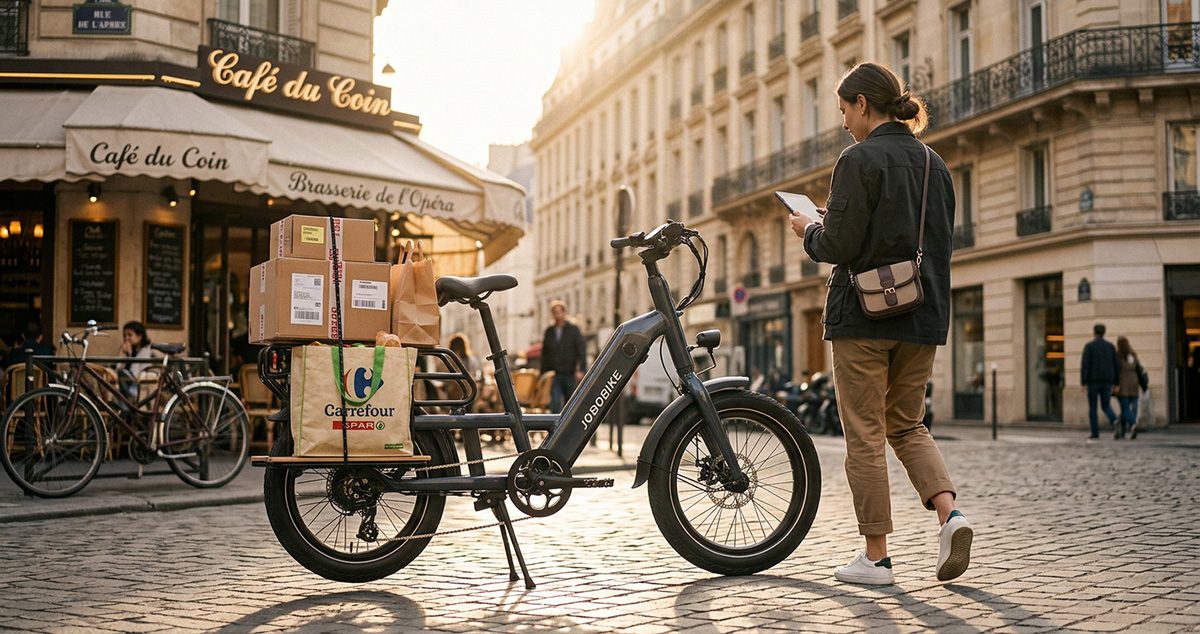
A cargo e-bike factory does not build a bicycle first and bolt a rack on afterwards. It builds the load into the vehicle from the first station. Inside JOBO's cargo e-bike factory in Jinhua, China, cargo platforms share the production system with the city, folding and mountain lineups, but every station treats them differently: frame sections are cut and welded for a rated payload, wiring looms are laid for one battery bay or two, torque sensors are calibrated to assist under weight, and finished bikes are tested while loaded before they are packed for export. This article walks the cargo e-bike factory floor station by station, using the three cargo platforms in JOBO's current quotation as working examples: the JB-TDN47Z front-loader, the JB-TDN79Z long-tail, and the TDN50 platform quoted in single-battery and dual-battery versions.
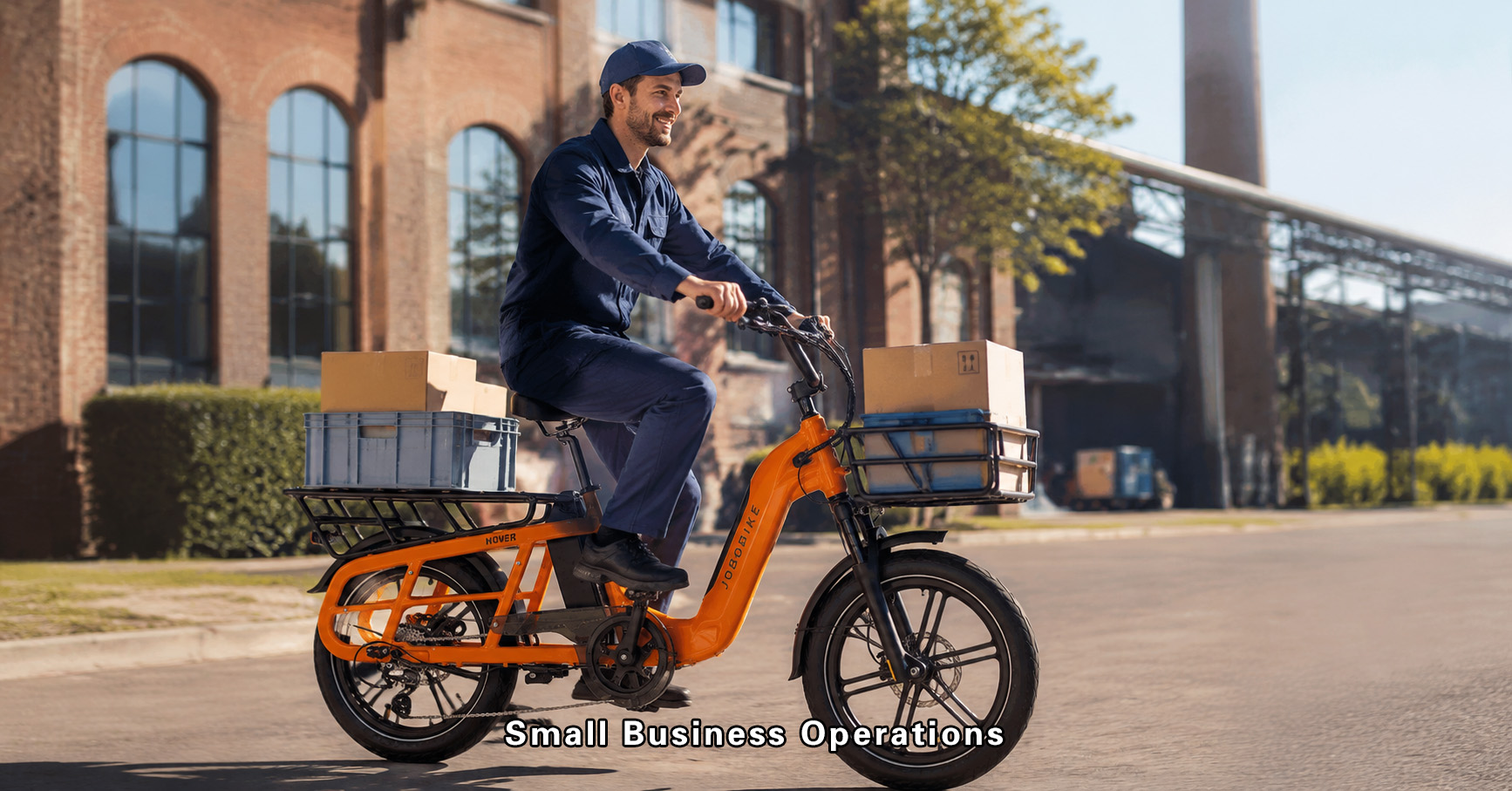
What a Cargo E-Bike Factory Does Differently
On a commuter line, the engineering targets are weight, comfort and cost. In a cargo e-bike factory, the targets are payload, duty cycle and service life, and those targets change what happens at every station:
- The frame is engineered for a rated load, not a rider. The front-loader's load system is rated at 130kg — 95kg of cargo plus a 35kg rider — and that number drives tube selection, weld placement and fixture design long before the bike reaches assembly.
- The battery is sized by the shift, not the trip. A commuter battery covers a commute; a cargo battery covers a working day, which is why dual-battery configurations exist at all.
- The assist is spec'd for gradients under load. A motor that feels adequate solo can feel absent with a full cargo box on a hill, so motor matching starts from loaded duty cycles.
- Every cargo interface is a structural point. Box mounts, rack mounts and footrest boards are load paths into the frame, not accessories.
A cargo e-bike factory therefore runs its own fixtures, its own test loads and its own inspection points for cargo builds. At JOBO the underlying system is shared — the same 6061 aluminum supply, the same Samsung and LG cell channels, the same ISO 9001 process controls — but cargo platforms get dedicated treatment at each of the five stations below.
Station 1: Frames — 6061 Alloy Cut for the Load
Frame production is where a cargo program becomes physical. All three cargo platforms ride on 6061 aluminum alloy — a precipitation-hardened, magnesium-silicon alloy whose weldability makes it the working standard for load-bearing e-bike frames. In cargo duty, the frame shop reinforces the areas the load travels through: the head tube and downtube on the front-loader, the extended rear stays on the long-tail, and the rack-mount region on the configurable TDN50 platform.
Fork choice is a load decision, not a comfort checkbox. The JB-TDN47Z front-loader runs a rigid integrated fork — no suspension — because a front cargo box needs steering that stays predictable with 95kg sitting in the rider's sightline; suspension flex under a loaded box is a handling liability. The long-tail and the TDN50 platform take suspension forks instead, trading some stiffness for rider comfort on longer delivery routes. Wheel pairing follows the same logic: the front-loader's 20-inch front and 26-inch rear wheels keep the cargo platform's center of gravity low, while the long-tail's 20×3.0 tires add footprint and stability for rear loads. That is the frame station's job in a cargo e-bike factory: turning a rated load into geometry, tube sections and welds.
Station 2: Powertrain — Motor Matching and Dual-Battery Wiring
The powertrain station is where the cargo e-bike factory earns its keep, because cargo duty cycles punish mismatches. All three platforms in the current quotation run 48V 500W brushless motors — enough torque to move a loaded vehicle off the line repeatedly without overspec'ing the electrical system — and the whole 48V architecture (battery, controller, 2A or 3A charger) is matched as one package per build.
In a cargo e-bike factory, battery architecture is the bigger differentiator. The JB-TDN79Z long-tail carries two 48V 15Ah packs in dual bays for a 120km operating range — a full delivery shift without a mid-route charge. The TDN50 platform is quoted in two versions off the same chassis: single-battery and dual-battery. On the line, the difference is a second bay, a different wiring loom and a controller configuration, which is exactly how a factory with flexible fixtures serves two duty cycles from one platform. Cells come from Samsung or LG configurations depending on the program.
The long-tail and TDN50 builds also take torque sensors at this station: pedal-force sensing that scales assistance to effort, which matters when the same bike carries an empty rack on the return leg and a full one outbound.
Station 3: Cargo Interfaces — Boxes, Boards and Racks
Cargo interfaces are where a cargo e-bike factory differs most visibly from a commuter line: the hardware the customer touches is treated as structural assembly. The front-loader's front platform carries a box with a child-seat configuration — the load sits low, ahead of the rider, inside the sightline, which is why this layout dominates urban delivery and tradesman use. The mount points are engineered with the frame, not drilled afterwards.
The TDN50 platform shows how configurable cargo hardware stays one vehicle: optional passenger footrest boards and rear-rack wooden boards convert the same chassis between a family carrier and a utility rack bike, with no frame change. The long-tail's extended rear rack accepts panniers, boxes or child seats over its 120km range. Branding rides on the same station: LCD boot screens carry your logo, frames take your color, and cargo boxes take your livery — a working vehicle that carries the brand through the city all day.
Station 4: Testing and Compliance on the Cargo Line
Cargo bikes leave the cargo e-bike factory only after they have been tested the way they will be worked: loaded. Brake performance is verified with rated load on board, power assistance is checked under weight, and dual-battery builds get wiring and charging-path checks across both bays before sign-off.
Behind the assembly area of the cargo e-bike factory, JOBO's test laboratory runs frame and fork durability, brake and electrical safety verification on the platforms, with 40+ engineers and 107 patents behind the development side of the house. Compliance is handled per destination market: the long-tail platform is EN 15194 certified for EPAC-market programs, and every cargo build is locked against the destination market's rules before mass production starts. For brands buying through the cargo manufacturer category page, that compliance trail is part of what a cargo e-bike factory — as opposed to a trading desk — brings to the program.
Station 5: Packing — The Last Station on the Cargo E-Bike Factory Floor
Cargo bikes are the biggest boxes on any e-bike line, and in a cargo e-bike factory packing is planned like a station, not an afterthought. The front-loader packs at 250×71×82cm; the long-tail at 168×33×85cm. Those dimensions drive container planning, and for European programs the packing station has a second destination: JOBO's 10,000 m² assembly site in Poland, which shortens delivery and service lines into the EU alongside the 50,000 m² Jinhua plant.
Three Cargo Platforms, One Factory
|
|
Front-loader (JB-TDN47Z) |
Long-tail (JB-TDN79Z) |
Configurable (TDN50) |
|
Layout |
Front box in rider's sightline |
Extended rear rack |
Rack with board/footrest options |
|
Motor |
48V 500W brushless |
48V 500W brushless |
48V 500W brushless |
|
Battery |
48V 15Ah (Samsung/LG cells), 50km |
2 × 48V 15Ah, 120km |
48V 15Ah, single or dual |
|
Sensor |
Speed sensor |
Torque sensor |
Torque sensor |
|
Fork |
Rigid integrated |
Suspension |
Suspension |
|
Brakes |
Hydraulic disc |
Hydraulic disc (GEMMA) |
Hydraulic disc (TEKTRO E3520) |
|
Tires |
20×2.125 + 26×1.95 |
20×3.0 |
20×3.0 |
|
Packing |
250×71×82cm |
168×33×85cm |
Per configuration |
|
Best mission |
Urban delivery, child seat |
Shift-length routes |
Family or utility, one platform |
Three architectures, one engineering source, one compliance trail, one parts channel — one cargo e-bike factory behind every build, at 300,000 units of annual capacity with exports to 80+ countries since 2014, the same system that stands behind the folding and city platform guides we have published earlier. If you are still deciding which architecture fits your market, the cargo architecture guide works backwards from the load; this article covered how each architecture gets built once you have chosen it.
FAQ
What does a cargo e-bike factory do differently from a standard e-bike factory?
It engineers the load into the vehicle from the first station of the line: frames cut and welded for rated payloads, powertrains matched to loaded duty cycles, cargo interfaces treated as structural assemblies, and finished bikes tested while loaded. A commuter line optimizes weight and comfort; a cargo line optimizes payload, duty cycle and service life.
Why do cargo e-bike frames use 6061 aluminum?
Because 6061 is a precipitation-hardened aluminum alloy with good weldability — the properties a load-bearing frame needs when tube sections must be joined into reinforced cargo structures. All three of JOBO's cargo platforms ride on 6061 frames.
Can one cargo e-bike factory supply front-loader, long-tail and configurable platforms?
Yes. JOBO builds the JB-TDN47Z front-loader, the JB-TDN79Z dual-battery long-tail and the single/dual-battery TDN50 platform in the same cargo e-bike factory in Jinhua, which keeps one engineering source, one compliance trail and one parts channel behind every cargo program.
How does a cargo e-bike factory build both single-battery and dual-battery cargo bikes?
On the same chassis. The TDN50 platform is quoted in both versions: the line difference is a second battery bay, a different wiring loom and a controller configuration, so two duty cycles come out of one platform without a frame change.
What testing happens before a cargo e-bike ships?
Loaded brake and assist verification, electrical and wiring checks — across both bays on dual-battery builds — plus frame, fork and brake durability work in the test laboratory. The long-tail platform is EN 15194 certified, and every build is locked to destination-market rules before mass production.
Where are JOBO's cargo e-bikes built?
In the 50,000 m² Jinhua plant in China, with a 10,000 m² assembly site in Poland serving European programs — the same two-site system behind the rest of the JOBO range.
Tour the Factory With Your Cargo Program
Bring the load profile — cargo weight, route, duty cycle, destination market — and walk it through the five stations of our cargo e-bike factory with the JOBO team. Request the specification sheets for the JB-TDN47Z front-loader, the JB-TDN79Z long-tail and the TDN50 single/dual-battery platform, and a station-by-station build plan for your market.

Contact JOBO: info@jobobikes.com · +86 198 8586 5520. Use the contact page to provide your project details and request the appropriate commercial response.