A cargo e-bike program starts with the load, not the bike. What the vehicle carries decides where the cargo sits, how many wheels it needs, how much torque pulls it away from a stop, and how much battery a shift requires. That is the working method of a custom cargo e-bike manufacturer: engineer backwards from the mission. JOBO's cargo family demonstrates the approach in three architectures — a front-loader with the cargo in the rider's sightline, a long-tail with twin batteries for delivery routes, and a three-wheeled cargo tricycle with a differential motor for the heaviest duty — all built in the same Jinhua factory, with a second assembly site in Poland, inside a full-range lineup that also covers city, folding, mountain and motorcycle platforms.
Start With the Load: The Cargo Brief
Every serious cargo program opens with the same five questions, and a custom cargo e-bike program turns the answers directly into specification:
- What does a loaded shift look like? Parcel boxes, tools, groceries, passengers or mixed — the cargo's shape and weight set the layout.
- Where does the cargo sit? In front (visible, quick access), behind the rider (flexible, low-cost) or between three wheels (stable at standstill).
- What does the route demand? Gradients, stop frequency and daily distance decide motor torque and battery architecture.
- Who services it? Fleet duty means battery swap schedules, brake wear and component standardization.
- What does the market allow? Speed class and certification follow the destination market's rules.
Answer those five and your custom cargo e-bike stops being a guess — the three JOBO architectures below become assignments.
Three Architectures, Three Missions
Three JOBO platforms map onto the three load profiles a custom cargo e-bike brand is asked to serve.
The Front-Loader: Cargo in the Rider's Sightline
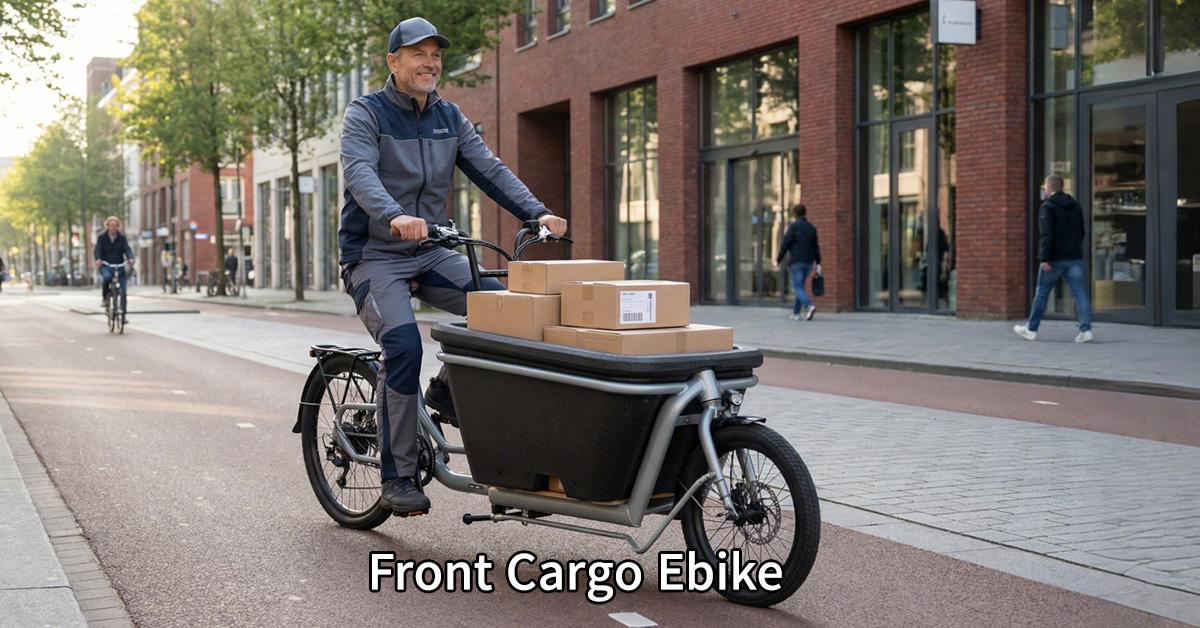
The JOBO Front Cargo E-Bike (JB-TDN47Z) is the most direct custom cargo e-bike layout: the load sits up front and low, with a 48V 500W motor, a 48V 15Ah LG battery, and a loading system rated at 130kg (95kg cargo + 35kg rider) on a low step-through 6061 aluminum frame. The small 20-inch front wheel with a 26-inch rear keeps the cargo platform's center of gravity low, so the bike stays predictable when fully loaded through tight streets. The rider sees the cargo — the reason front-loader layouts dominate urban delivery and tradesman use.
- Motor: 48V 500W
- Battery: 48V 15Ah LG, 50km range
- Load system: 130kg (95 cargo + 35 rider)
- Layout: front platform, low step-through, 20″ front / 26″ rear wheels
- Stopping: Tektro mechanical disc, Shimano 7-speed
The Long-Tail: Range for Delivery Routes
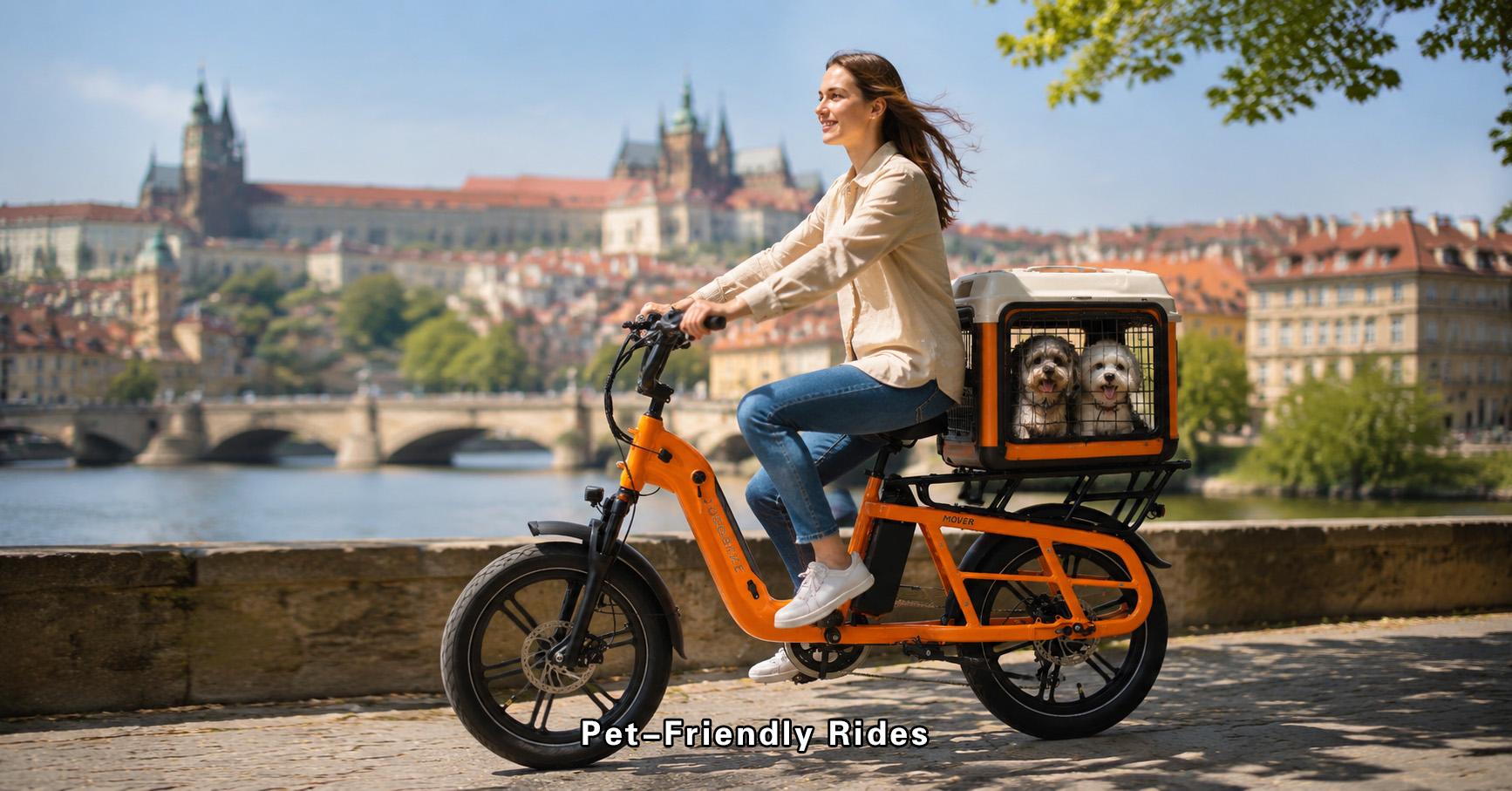
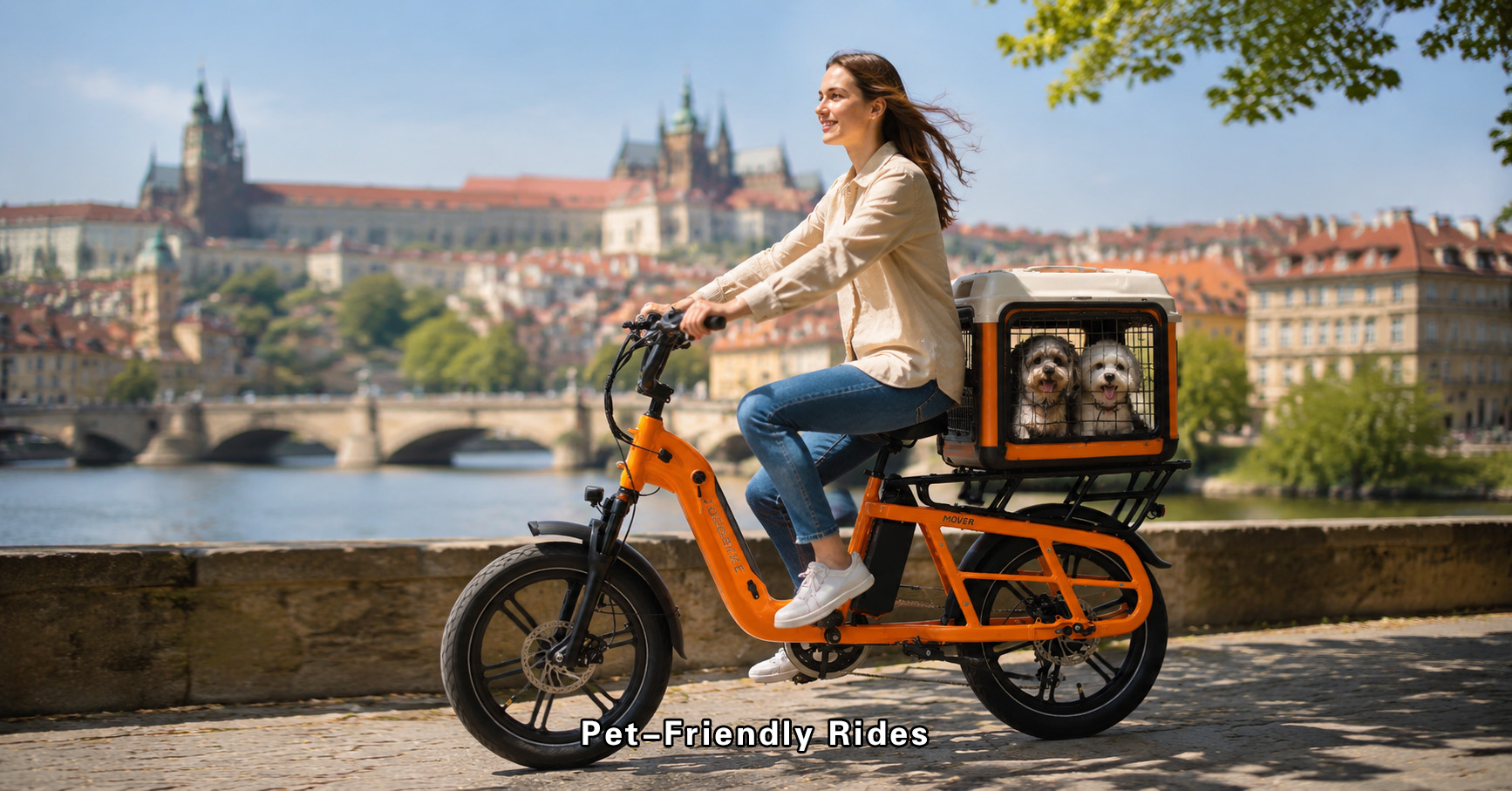
The JOBO Long Tail Electric Bike (JB-TDN79Z) carries behind the rider on an extended rack, and its headline specification is operational, not cosmetic: a dual-battery system (2 × 48V 15Ah, LG or Samsung cell configurations) delivering 120km of range — a full delivery shift without a mid-route charge. A 48V 350W hub motor with torque sensor, Shimano 8-speed, hydraulic disc brakes and 20×3.0 CST reflective tires make it the flexible custom cargo e-bike: goods on panniers today, a child seat and groceries tomorrow.
- Motor: 48V 350W hub, torque sensor
- Battery: 2 × 48V 15Ah (dual bays), 120km range
- Layout: extended rear rack, 20×3.0″ tires
- Stopping: hydraulic disc, Shimano 8-speed
The Cargo Tricycle: Stability at Standstill
The JOBO Cargo Electric Tricycle (JB-TDT18L) is the heavy-duty end of the custom cargo e-bike range. A 48V 1000W brushless differential motor drives the rear wheels, fed by a 48V 52.5Ah lithium battery refilled by a 48V 20A charger in 110–220V markets. Three wheels mean the vehicle stands upright loaded — no kickstand dance with 100kg of cargo — and the hydraulic braking system includes a parking brake for loading on grades. Modular cargo configurations (open bed, box, custom builds) let the same chassis serve municipal, agricultural and last-mile duty, and the LCD color display with USB carries your logo on its boot screen.
- Motor: 48V 1000W brushless differential
- Battery: 48V 52.5Ah lithium, 48V 20A charger
- Layout: three wheels, modular cargo configurations
- Stopping: hydraulic brake with parking brake system, 7-speed
Architecture Comparison
|
|
Front-loader (JB-TDN47Z) |
Long-tail (JB-TDN79Z) |
Cargo trike (JB-TDT18L) |
|
Load position |
Front, in sightline |
Rear, extended rack |
Between rear wheels, modular |
|
Wheels |
2 (20″/26″) |
2 (20×3.0″) |
3 (2.5-17 rim, 6P tire) |
|
Motor |
48V 500W |
48V 350W hub |
48V 1000W differential |
|
Battery / range |
48V 15Ah LG / 50km |
2 × 48V 15Ah / 120km |
48V 52.5Ah / heavy-duty duty cycle |
|
Braking |
Tektro mechanical disc |
Hydraulic disc |
Hydraulic + parking brake |
|
Best mission |
Urban delivery, tradesman |
Shift-length delivery routes |
Heaviest loads, standstill stability |
How the Load Sets the Specification
The engineering chain behind every custom cargo e-bike runs in one direction — from the load down:
- Payload sets frame and brakes. A 95kg cargo rating is not marketing; it is a frame stiffness target, a fork rating and a brake spec. The front-loader's rating appears on its compliance paperwork, not just its brochure.
- Route sets motor and battery. Stop-start gradients need torque off the line (500W front-loader); long flat shifts need capacity (dual-battery long-tail); heavy duty cycles need both (1000W differential trike). A custom cargo e-bike program matches the powertrain to your route profile, not to a spec-sheet race.
- Duty cycle sets charging. The trike's 20A charger and the long-tail's second battery bay exist because fleet vehicles charge between shifts, not overnight. Battery architecture is scheduling hardware.
- Fleet operation sets the electronics. For shared and rental cargo fleets, the same custom cargo e-bike platform accepts IoT integration — GPS positioning, geofencing, remote lock control — under your own backend, the white-label approach JOBO applies across its fleet platforms.
- Your brand sets the surface. Display boot screens, frame color, cargo box livery: on a working vehicle, branding travels through the city all day.
One Factory Behind Every Architecture
Front-loader, long-tail and tricycle roll out of the same engineering system: a 50,000 m² plant in Jinhua plus a 10,000 m² site in Poland, 300,000 units of annual capacity across the full JOBO range, 107 patents, an R&D team of 40+ engineers, and ISO 9001 / CE / EN15194 certification with exports to 80+ countries since 2014. Cargo is one branch of that catalog — the same B-end program structure behind every custom cargo e-bike order also covers the folding family and the city commuter lineup in our earlier guides.
FAQ
How much weight can a cargo e-bike carry?
It depends on the architecture. JOBO's front-loader is rated for a 130kg load system (95kg cargo + 35kg rider); the long-tail carries flexible rack loads over its 120km range; the cargo tricycle is configured per mission with modular beds and boxes for the heaviest duty. A custom cargo e-bike program fixes the rating from your load profile before anything else.
Front-loader or long-tail — which layout should a delivery brand choose?
Front-loader if couriers load and unload constantly and need the cargo in sight at stops; long-tail if the priority is route length and load flexibility. The long-tail's dual batteries cover a full shift, while the front-loader's low center of gravity wins in dense stop-start traffic.
Why does the cargo tricycle use a differential motor?
Because it drives two rear wheels. A differential lets them turn at different speeds in corners — the same principle as a car axle — so a loaded trike tracks predictably instead of scrubbing tires. Combined with the parking brake, it is what makes three-wheel cargo duty-safe at standstill.
Why would a cargo e-bike need two batteries?
Shift length. One 48V 15Ah pack covers urban delivery; the long-tail's twin bays double capacity to 120km so a full route runs on one charge — or one bay runs while the second swaps at the depot. Battery architecture is a scheduling decision as much as an engineering one.
Can one manufacturer supply all three cargo architectures plus other categories?
Yes — that is the point of a full-range custom cargo e-bike manufacturer: three cargo layouts from one engineering source, one compliance trail, one parts list, and the same factory's city, folding and other platforms behind them.
Spec Your Cargo Program With JOBO
Bring the load profile — cargo type, weight, route, duty cycle — and leave with an architecture. Talk to the JOBO team about a custom cargo e-bike program: request the specification sheets for the JB-TDN47Z front-loader, JB-TDN79Z long-tail and JB-TDT18L cargo tricycle, and a mission-to-architecture plan for your market.