From Traffic to Terrain: Designing City E-Bikes That Actually Fit Urban Life
Urban riding is unpredictable.
One minute, you're navigating tight bike lanes in traffic; the next, you're hopping a curb to avoid a parked car. Then comes a cobblestone patch, a steep ramp to a bridge, or a puddle-soaked shortcut through a side street.
This is city riding—and it's why designing a truly urban-capable e-bike takes more than a slim frame and decent range.
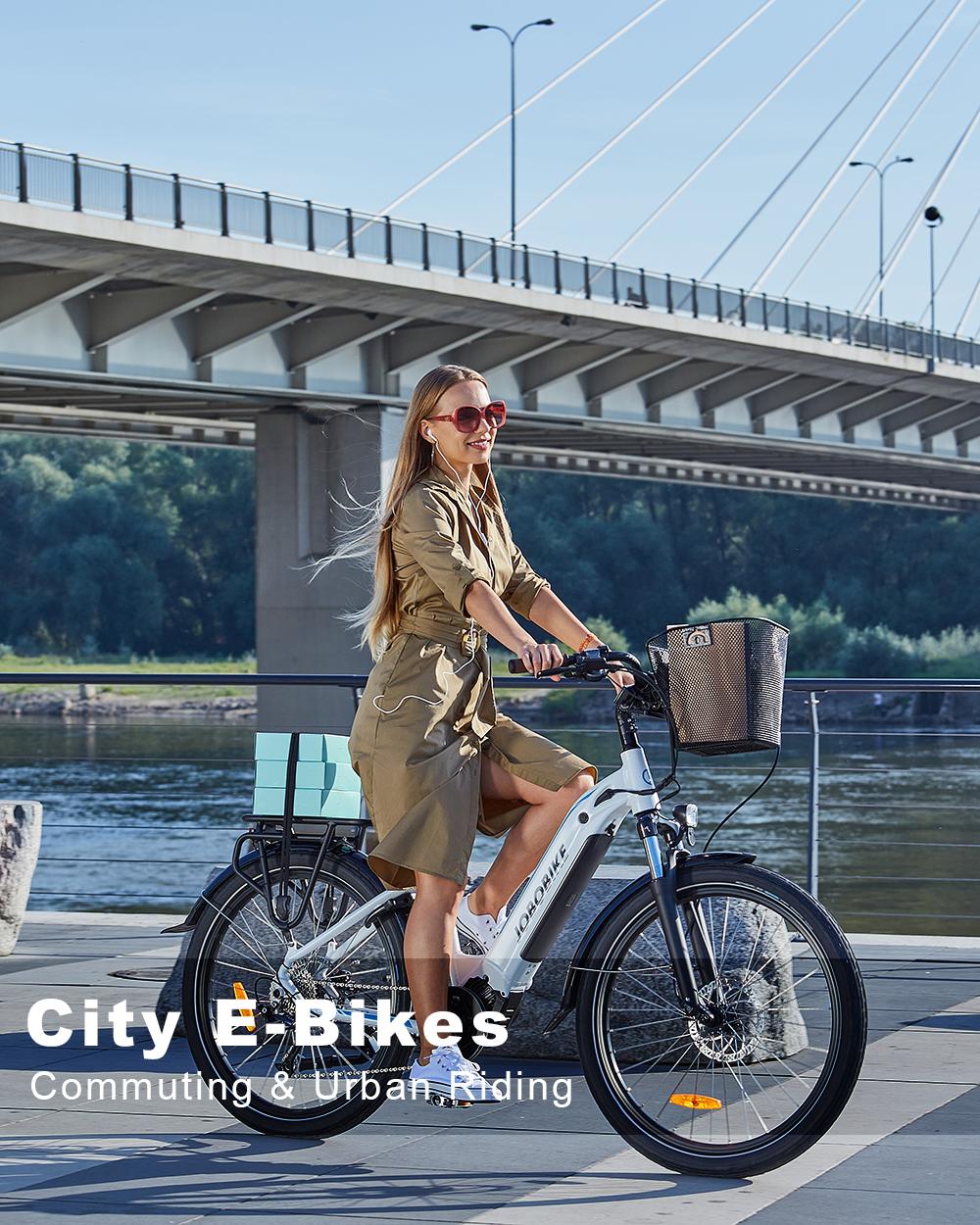
At Jobo, we manufacture city e-bikes that aren’t just good-looking—they’re designed for the chaos and rhythm of real-life commuting.
What Makes a City E-Bike Truly Urban-Ready?
1. Geometry That Matches the Ride
Forget aggressive road bike posture or heavy cruiser setups. In urban environments, riders need:
-
Upright posture for visibility
-
Shorter wheelbase for tight turns
-
Stable center of gravity for sudden stops or off-path detours
That’s why every Jobo city e-bike is designed with commuter geometry as the baseline—not adapted from mountain or hybrid frames.
2. Pedal Assist Tuned for Stop-and-Go
Unlike long-distance riders, city cyclists are constantly starting and stopping. If assist levels aren’t smooth, they’ll feel unsafe or get fatigued.
At Jobo, we use:
-
Torque + cadence sensor combinations
-
Progressive assist algorithms
-
Firmware calibrated for low-speed stability
This ensures that even in dense traffic or crowded crosswalks, the bike responds naturally—not abruptly.
3. Frame and Forks Built for Imperfect Surfaces
City terrain isn’t smooth asphalt. It’s cracked pavement, rain grates, paver blocks, bridge seams, and more.
Jobo’s city frames use:
-
Mid-weight aluminum alloys (strength without bulk)
-
Suspension fork options for comfort
-
Anti-vibration design around grips, seatposts, and cranks
-
Sealed bottom brackets and IP-rated wiring for rainy commutes
4. Battery Range That Matches Daily Life
Urban riders don’t need 100km—but they need reliable, recharge-efficient performance for 15–35km per day, often with traffic drain and cold weather impact.
That’s why Jobo offers:
-
Removable batteries for apartment storage
-
Quick recharge (3–4 hours full)
-
Smart BMS to optimize partial-cycle charging
Built for Operators and Retailers Too
Whether you’re a mobility operator, lifestyle brand, or retailer launching a city e-bike product, design matters just as much as compliance or price.
Jobo’s OEM service allows:
-
Frame + paint customization
-
Accessory integration (fenders, racks, locks)
-
City-specific safety upgrades (integrated lights, brake cutoffs)
-
Certification support (CE, EN15194)
This helps ensure your city e-bike line actually performs in the city, not just in marketing photos.
FAQ: Real Questions Urban OEM Buyers Ask
Q1: Can we offer different assist profiles for different cities?
Yes. We can pre-program torque/cadence sensitivity and top assist speeds per delivery market.
Q2: Do you support high-step and step-through frames on the same platform?
Absolutely. Jobo offers platform variants for male/female/unisex posture and ease of mount/dismount.
Q3: Can you integrate smart lock or GPS systems for sharing applications?
Yes. We work with smart mobility hardware vendors to embed locks, SIMs, or trackers during production.
Bikes That Match the City, Not Just the Market
Designing a great city e-bike isn’t about specs—it’s about how the bike moves, stops, turns, and survives real urban days.
With Jobo’s OEM production and city-first design logic, you get a product built for:
-
Dense commuter routes
-
Weather variability
-
Urban infrastructure
-
Rider comfort
Explore our OEM city bike platforms
Talk to our product team about designing the right frame, motor, and ride feel for your city bike project.