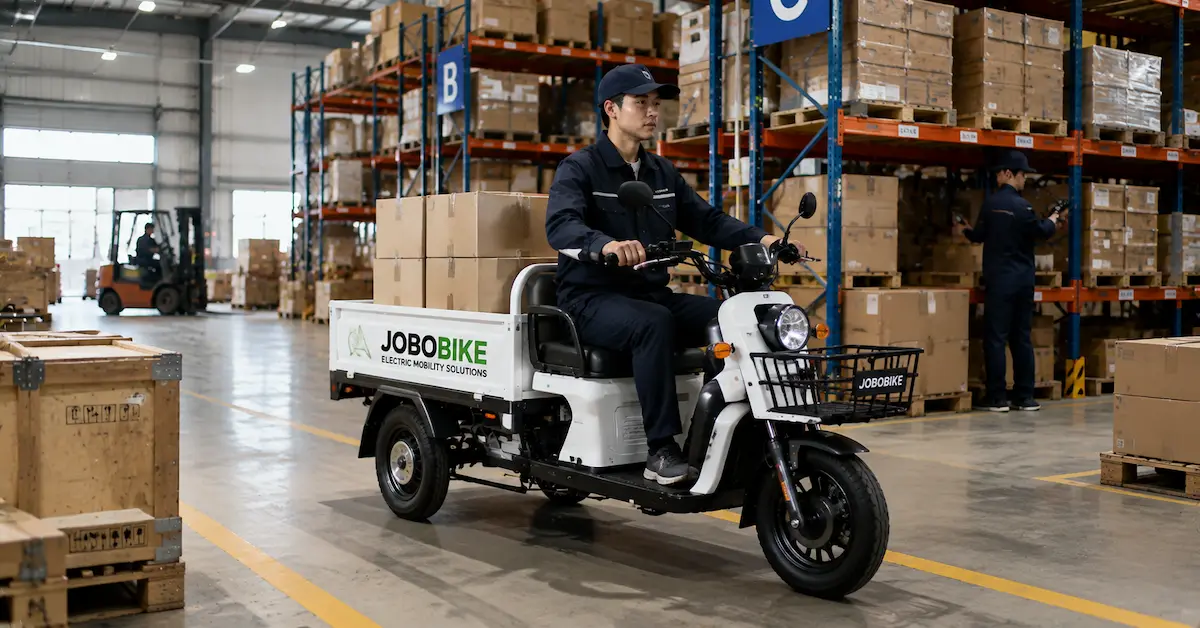
Modern warehouses and manufacturing facilities require faster, safer, and more efficient ways to move materials, tools, and equipment. As internal logistics become more complex, businesses are looking for transportation solutions that can improve productivity while reducing operating costs.
Electric trikes have become a practical option for warehouse transportation because they provide:
- Stable three-wheel operation
- Strong cargo capacity
- Easy maneuverability
- Lower maintenance costs
- Quiet operation
- Flexible indoor and outdoor use
For companies planning internal mobility solutions, choosing the right electric trikes for warehouse transport is essential.
A professional supplier should understand warehouse requirements and provide products designed for:
- Frequent daily operation
- Heavy loads
- Limited working spaces
- Long service life
- Simple maintenance
JOBOBIKE provides electric mobility solutions for global partners, including electric tricycles, cargo electric bikes, commercial mobility products, and customized OEM solutions.
Explore JOBOBIKE products:
https://www.joboev.com/products
What Are Electric Trikes for Warehouse Transport?
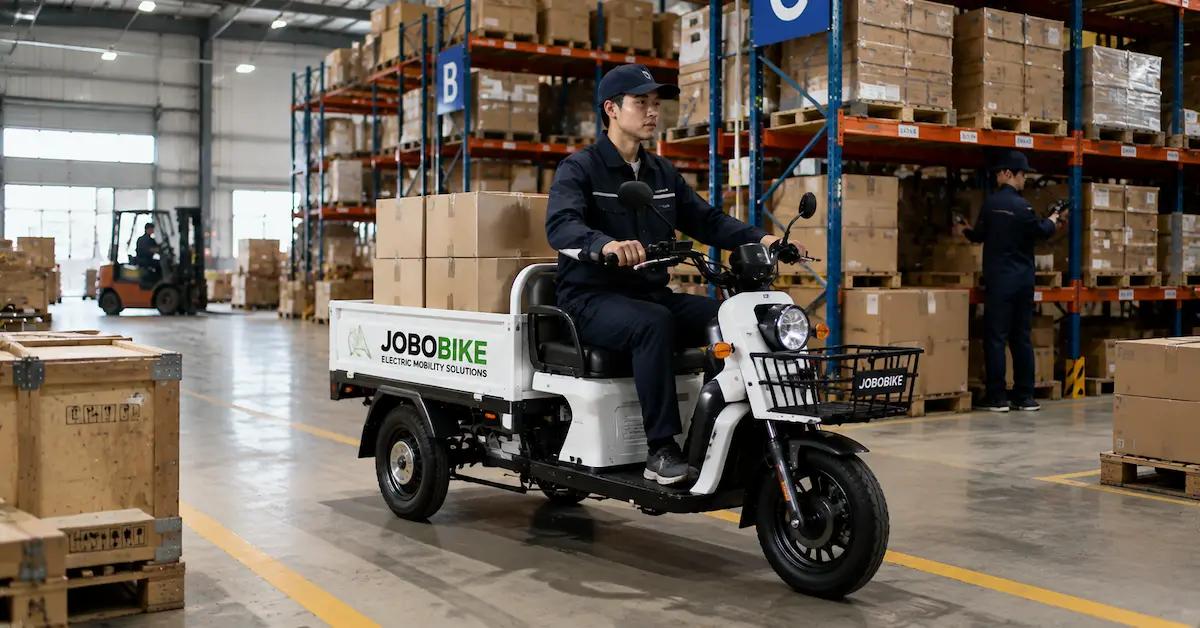
Electric trikes for warehouse transport are three-wheel electric vehicles designed to move materials, tools, components, and equipment inside commercial facilities.
Unlike consumer electric bicycles, warehouse-focused electric trikes are designed around operational efficiency.
Typical features include:
- Reinforced frame structures
- Large cargo platforms
- Stable three-wheel design
- High-load capability
- Long-lasting batteries
- Easy-access controls
Common applications include:
- Moving components between production areas
- Transporting tools for maintenance teams
- Delivering packages inside warehouses
- Supporting factory logistics
- Carrying supplies across industrial parks
Electric Trikes vs Traditional Warehouse Transport Equipment
| Traditional Equipment | Electric Trikes |
|---|---|
| Larger operating space required | Compact operation |
| Higher energy consumption | Lower operating cost |
| More complex operation | Easy driving |
| Limited flexibility | Suitable for short routes |
For many internal transportation tasks, electric trikes provide a flexible alternative to larger vehicles.
Benefits of Electric Trikes in Warehouse Operations
Improve Internal Logistics Efficiency
Warehouses often require employees to move frequently between:
- Storage areas
- Production lines
- Loading zones
- Maintenance areas
Walking long distances reduces productivity.
Electric trikes help employees:
- Move faster
- Carry more materials
- Reduce physical effort
- Improve workflow efficiency
Reduce Operating Costs
Compared with fuel-powered vehicles, electric trikes offer:
- Lower energy costs
- Less maintenance
- Fewer moving parts
- Reduced operating expenses
For large facilities, small efficiency improvements can create significant savings over time.
Improve Workplace Mobility
Warehouse environments often include:
- Narrow pathways
- Multiple working zones
- Frequent short-distance transportation
Electric trikes provide:
- Better flexibility
- Easy turning
- Stable operation
- Simple user training
Types of Electric Trikes for Warehouse Applications
Different warehouse operations require different configurations.
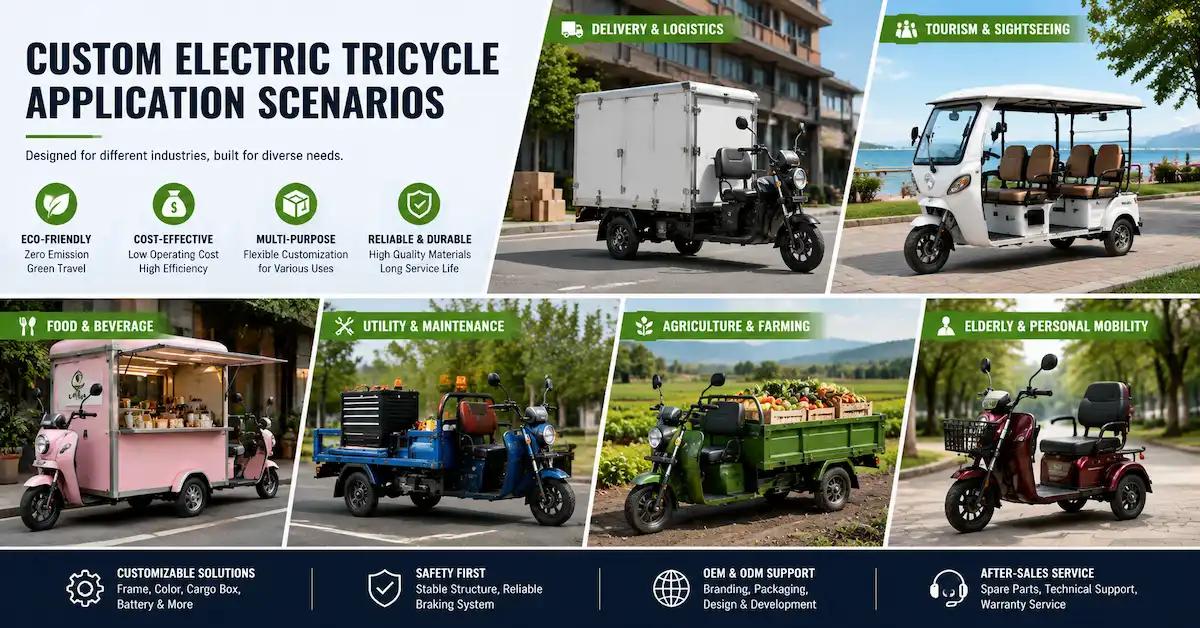
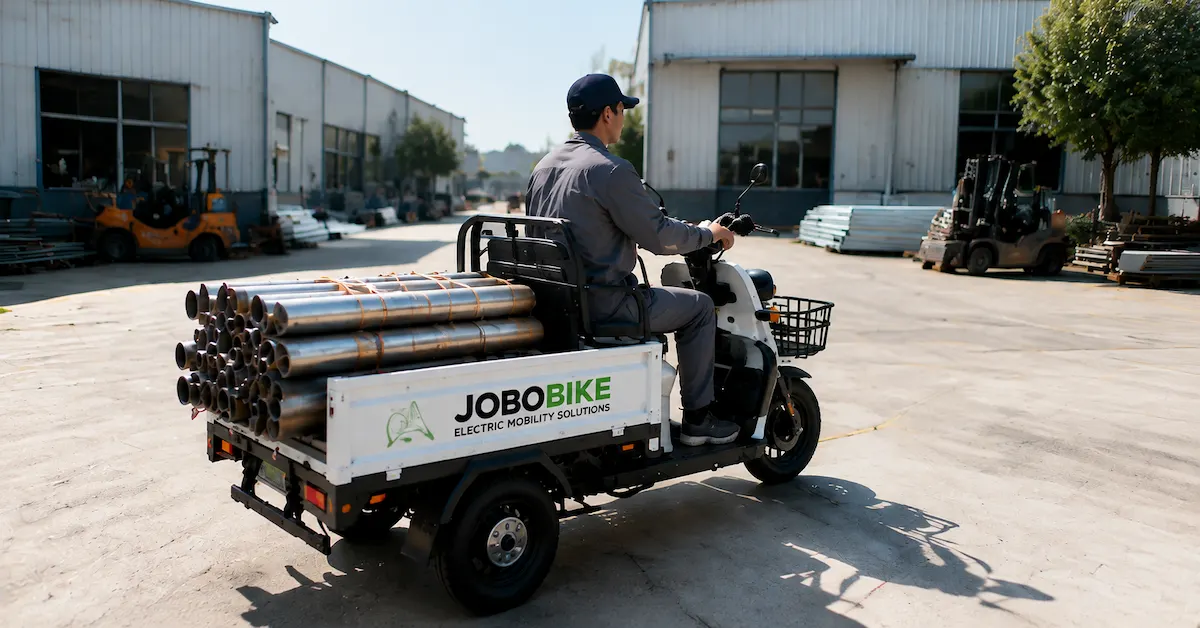
Cargo Electric Trikes
Cargo electric trikes are suitable for transporting:
- Materials
- Components
- Packages
- Tools
Key features include:
- Large cargo area
- Strong frame
- High load capacity
- Custom storage solutions
They are commonly used in:
- Warehouses
- Factories
- Distribution centers
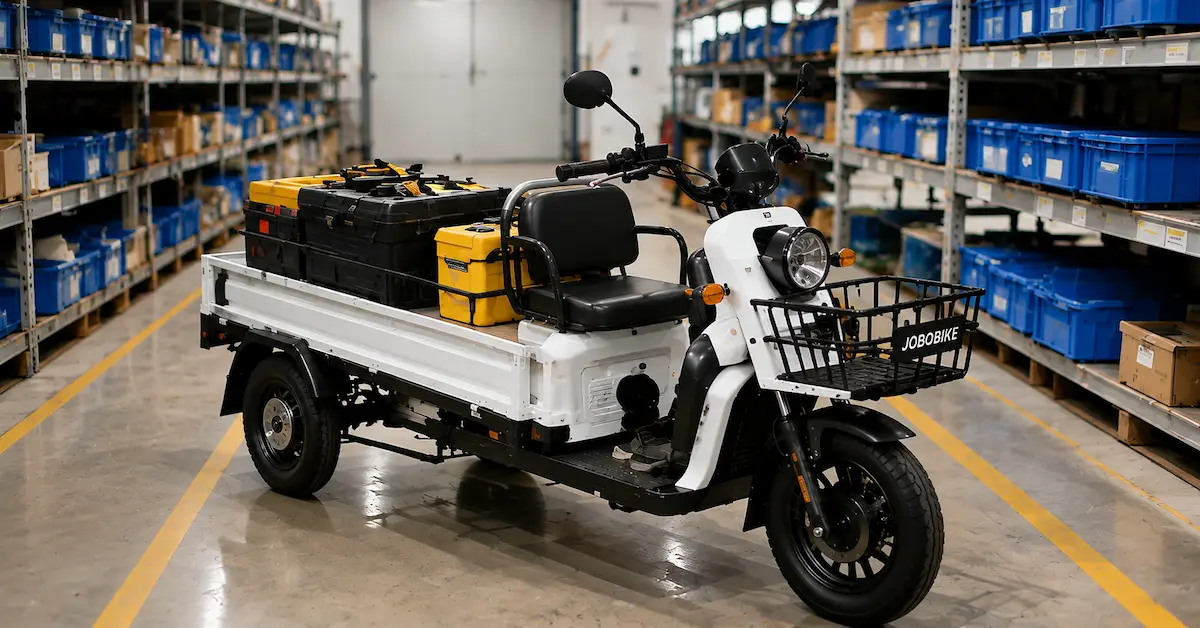
Utility Electric Trikes
Utility electric trikes support maintenance and service operations.
Applications include:
- Equipment inspection
- Facility maintenance
- Technical services
Possible configurations:
- Tool boxes
- Storage racks
- Equipment holders
Platform Electric Trikes
Platform models are designed for larger transportation tasks.
Features include:
- Open loading area
- Easy loading and unloading
- Flexible cargo arrangement
They are suitable for:
- Industrial parks
- Manufacturing facilities
- Logistics centers
Key Features to Evaluate Before Buying Warehouse Electric Trikes
A suitable warehouse electric trike should match the actual working environment.
Load Capacity
Businesses should evaluate:
- Maximum payload
- Cargo size
- Transportation frequency
- Operating distance
A professional supplier should recommend configurations based on real usage instead of only providing standard specifications.
Battery Performance
Battery selection affects daily operation.
Important factors include:
- Working hours
- Charging frequency
- Battery lifespan
- Replacement availability
For warehouse applications, reliable battery performance helps avoid unnecessary downtime.
Stable Three-Wheel Structure
The three-wheel design provides advantages including:
- Better balance
- Safer loading
- Easier operation
- Improved low-speed stability
This is especially useful when transporting heavier materials.
Compact Maneuverability
Warehouses often require vehicles that can operate in limited spaces.
Important design factors include:
- Turning radius
- Vehicle size
- Driver visibility
- Control simplicity
How to Select Electric Trikes for Warehouse Transport
Before purchasing, companies should evaluate their operational requirements.
Analyze Transportation Needs
Consider:
- What materials need to be moved?
- How much weight is transported?
- How far are the routes?
- How frequently are vehicles used?
Select Suitable Configurations
Examples:
Small warehouse:
- Compact utility trike
Large factory:
- Heavy-duty cargo trike
Industrial park:
- Platform electric trike
Test Before Bulk Purchase
Sample testing helps evaluate:
- Driving experience
- Load performance
- Battery range
- Maintenance requirements
Plan Fleet Deployment
A complete plan should include:
- Number of vehicles
- Charging locations
- Maintenance process
- Spare parts
OEM and Custom Electric Trike Solutions
Many industrial companies require products customized for their specific operations.
A professional electric trike supplier can provide:
Cargo Customization
Including:
- Cargo platforms
- Storage boxes
- Tool compartments
- Special racks
Vehicle Configuration
Including:
- Battery options
- Motor systems
- Tires
- Brakes
- Lighting
Branding Customization
Including:
- Company logo
- Vehicle colors
- Identification labels
- Fleet appearance
Quality Requirements for Industrial Electric Trikes
Industrial transportation vehicles require reliable quality control.
Frame Testing
Manufacturers should inspect:
- Material quality
- Welding strength
- Structural durability
- Load performance
Electrical Testing
Important checks include:
- Battery operation
- Motor performance
- Controller functions
- Charging safety
Real Operation Testing
Professional suppliers should evaluate:
- Heavy loads
- Frequent operation
- Different working environments
Final Inspection
Before delivery, products should be checked for:
- Appearance
- Functions
- Accessories
- Packaging
How to Choose a Reliable Electric Trike Supplier
Before cooperation, buyers should evaluate:
Manufacturing Capability
Check:
- Factory experience
- Production capacity
- Engineering ability
- Supply stability
Commercial Application Experience
A supplier with industrial experience better understands:
- Load requirements
- Maintenance needs
- Fleet operation
Customization Ability
Evaluate:
- OEM support
- Product development
- Special configurations
After-Sales Support
Confirm:
- Spare parts
- Technical support
- Warranty service
Common Mistakes When Buying Warehouse Electric Trikes
Choosing Consumer Models
Consumer electric vehicles may not support:
- Heavy loads
- Continuous operation
- Industrial environments
Ignoring Load Requirements
Incorrect configuration may cause:
- Reduced performance
- Increased wear
- Safety risks
Poor Battery Planning
Insufficient battery capacity can affect:
- Working efficiency
- Daily operations
- Productivity
Lack of Maintenance Planning
Businesses should prepare:
- Replacement parts
- Service procedures
- Technical support
Why Choose JOBOBIKE for Warehouse Electric Mobility Solutions?
JOBOBIKE supports businesses, distributors, and commercial operators with customized electric mobility solutions.
Capabilities include:
- OEM and ODM development
- Electric tricycle manufacturing
- Commercial mobility solutions
- Quality control
- Global supply support
JOBOBIKE solutions support:
- Warehouse transportation
- Factory logistics
- Industrial mobility
- Commercial applications
- Fleet projects
Learn more about JOBOBIKE:
https://www.joboev.com/about-us
Contact JOBOBIKE for commercial projects:
https://www.joboev.com/contact-us
FAQ
What are electric trikes for warehouse transport?
Electric trikes for warehouse transport are three-wheel electric vehicles designed for moving materials, tools, and supplies inside warehouses, factories, and industrial facilities.
Why use electric trikes instead of traditional warehouse vehicles?
Electric trikes provide flexible operation, lower energy costs, easier maintenance, and better performance in short-distance internal transportation.
What industries use warehouse electric trikes?
Common users include:
- Warehouses
- Factories
- Distribution centers
- Industrial parks
- Logistics companies
How much weight can warehouse electric trikes carry?
Load capacity depends on frame design, motor system, battery configuration, and cargo structure. Buyers should confirm requirements with suppliers.
Can electric trikes be customized for warehouses?
Yes. Suppliers can customize cargo platforms, storage systems, batteries, motors, and accessories.
Are electric trikes suitable for indoor use?
Many models are suitable for indoor and outdoor transportation depending on facility conditions and operational requirements.
How do businesses maintain electric trikes?
Maintenance usually includes:
- Battery checks
- Brake inspection
- Tire replacement
- Electrical system checks
Can JOBOBIKE provide OEM industrial electric trikes?
Yes. JOBOBIKE supports OEM and ODM projects for commercial mobility applications.
What should companies consider before purchasing?
Important factors include:
- Load requirements
- Operating environment
- Battery range
- Maintenance support
- Supplier experience
How can I request a quotation?
Provide your application requirements, quantity, load needs, and customization expectations through the JOBOBIKE contact page.
Conclusion
Choosing the right electric trikes for warehouse transport helps businesses improve internal logistics efficiency while reducing transportation costs.
A professional supplier should provide:
- Durable vehicle design
- Reliable performance
- OEM customization
- Quality control
- Long-term support
As warehouses and factories continue improving internal mobility systems, electric trikes provide a practical solution for material movement, maintenance operations, and industrial transportation.
JOBOBIKE supports global partners with customized electric mobility solutions from product development to production delivery.
Start your warehouse mobility project: