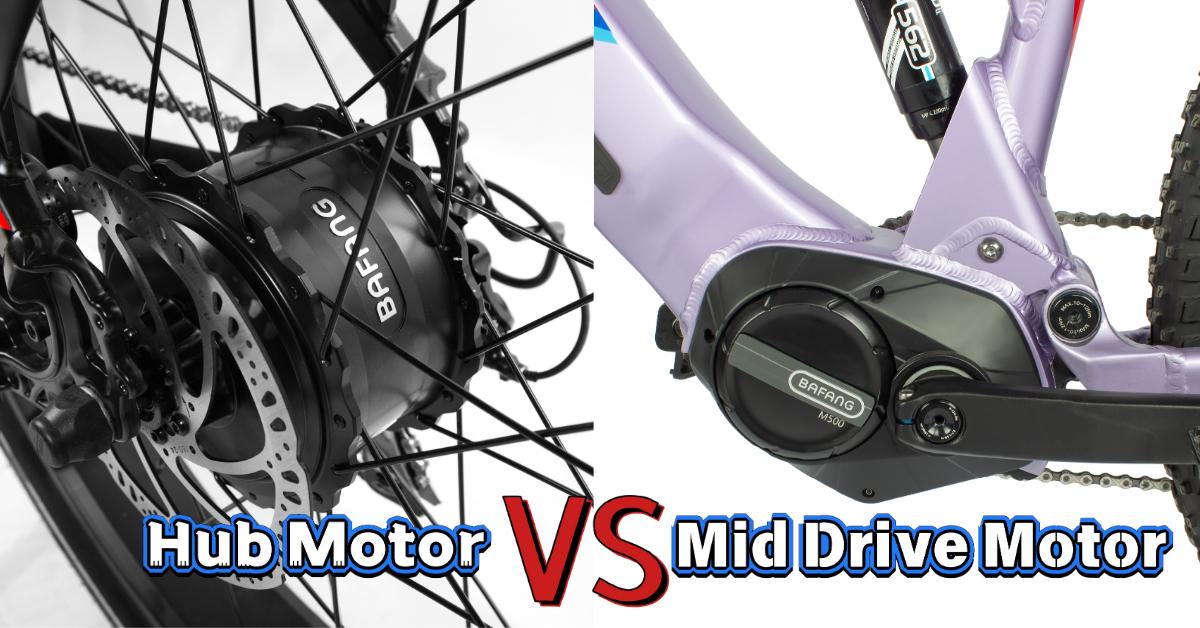
When you’re preparing to buy your first—or next—electric bike, two terms are impossible to avoid: mid-drive vs hub motor e-bike. These motors are the heart of every e-bike, yet they work in fundamentally different ways.
The choice between them directly affects how your e-bike feels on the road, how well it climbs hills, how far it can go on a single charge, and even how much maintenance it requires.
In this guide, we break down the differences between mid-drive and hub motors in a clear, practical way—so you can confidently choose the e-bike motor that best fits your riding style and needs.
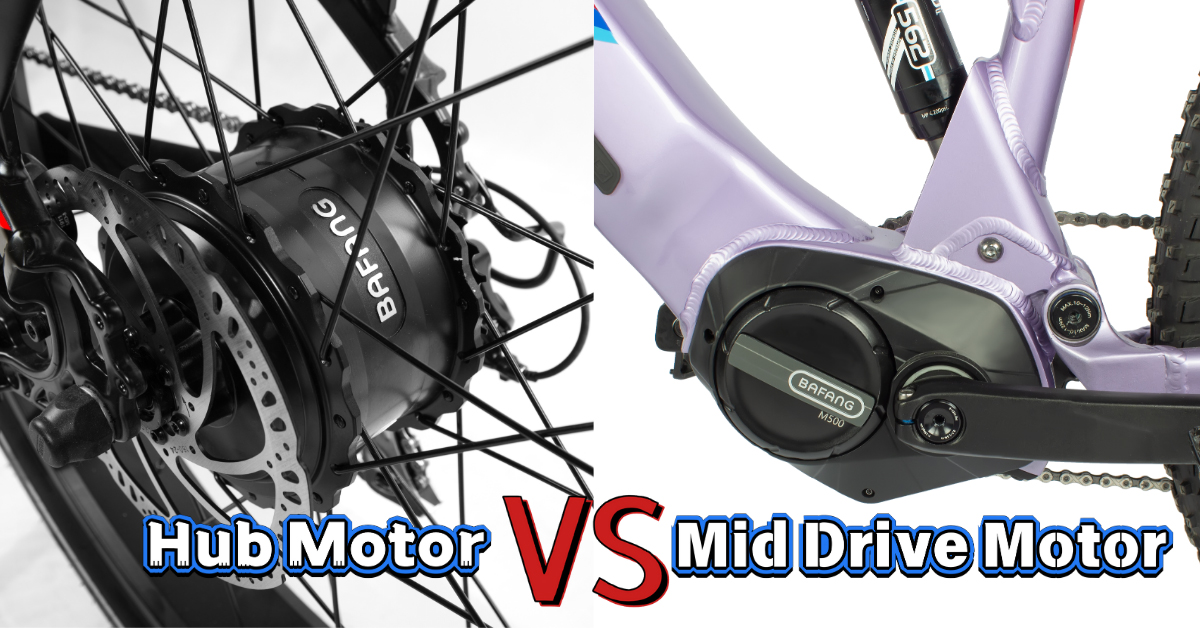
What Is a Hub Motor?
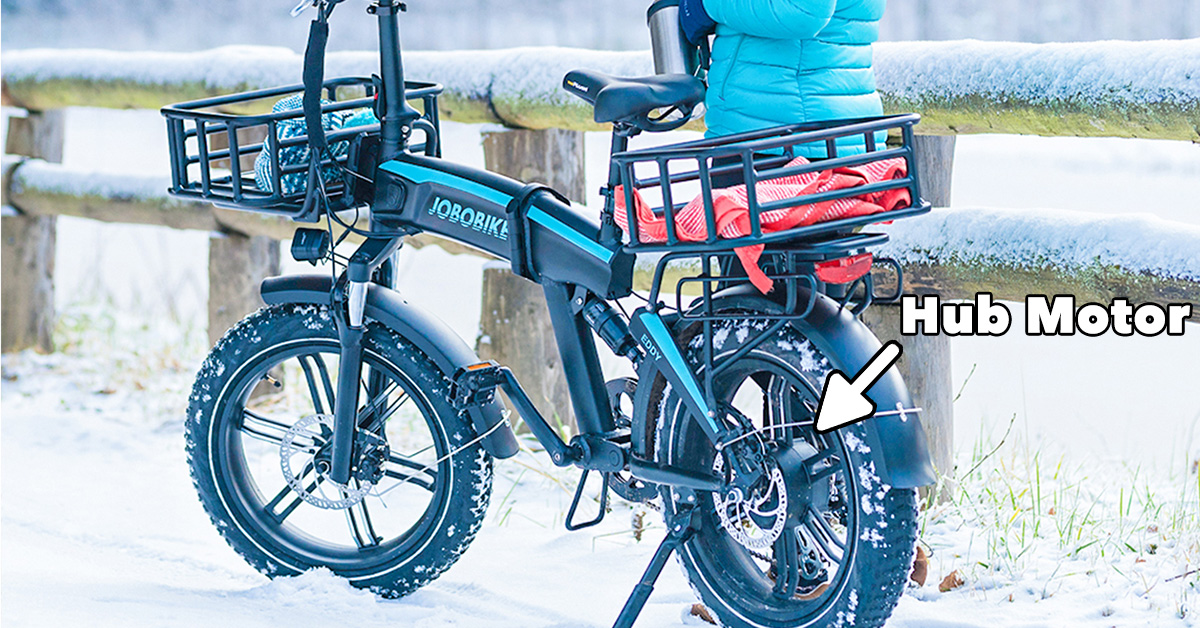
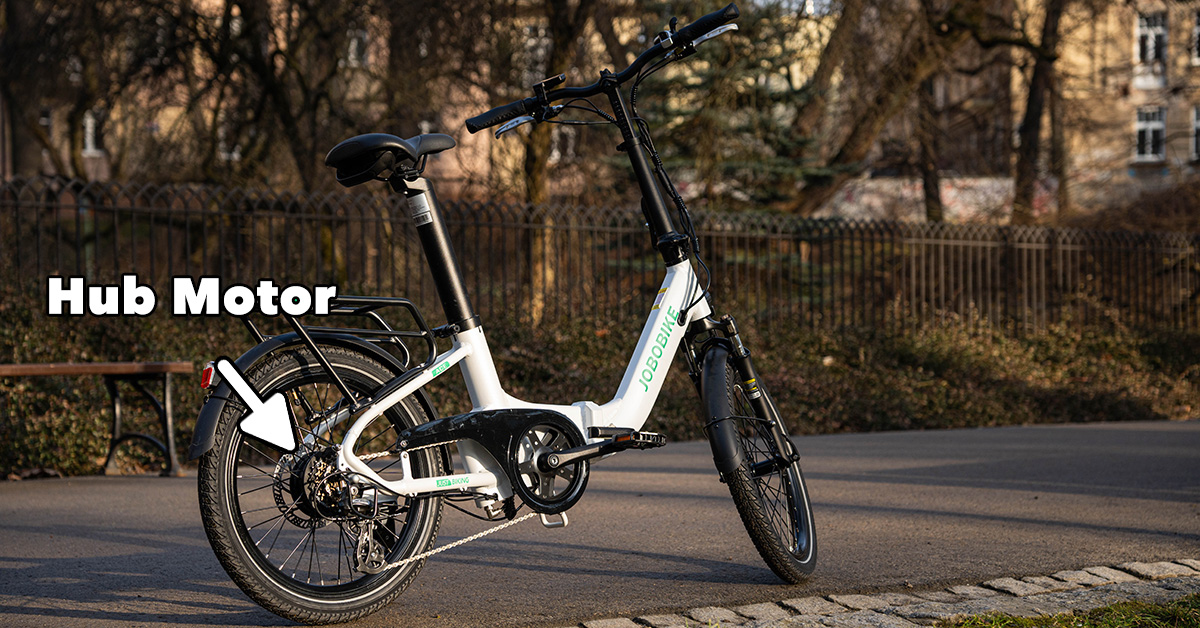
A hub motor is an electric motor built directly into the hub of the front or rear wheel. Instead of powering the drivetrain, it drives the wheel itself.
Think of it like this: a hub motor feels as if someone is gently pushing or pulling you forward, helping the wheel rotate without relying on the bike’s gears.
Types of Hub Motors
Front Hub Motor
Front hub motors are mounted in the front wheel.
Advantages
-
Simple structure and easy integration
-
Does not interfere with the chain or drivetrain
Disadvantages
-
Reduced traction on steep hills or wet roads
-
Can affect steering feel, especially at higher speeds
Rear Hub Motor
Rear hub motors are installed in the back wheel.
Advantages
-
Better traction and more natural riding feel
-
Improved stability compared to front hub motors
Disadvantages
-
Rear wheel removal is more complicated
-
Weight is concentrated at the back of the bike
What Is a Mid-Drive Motor?
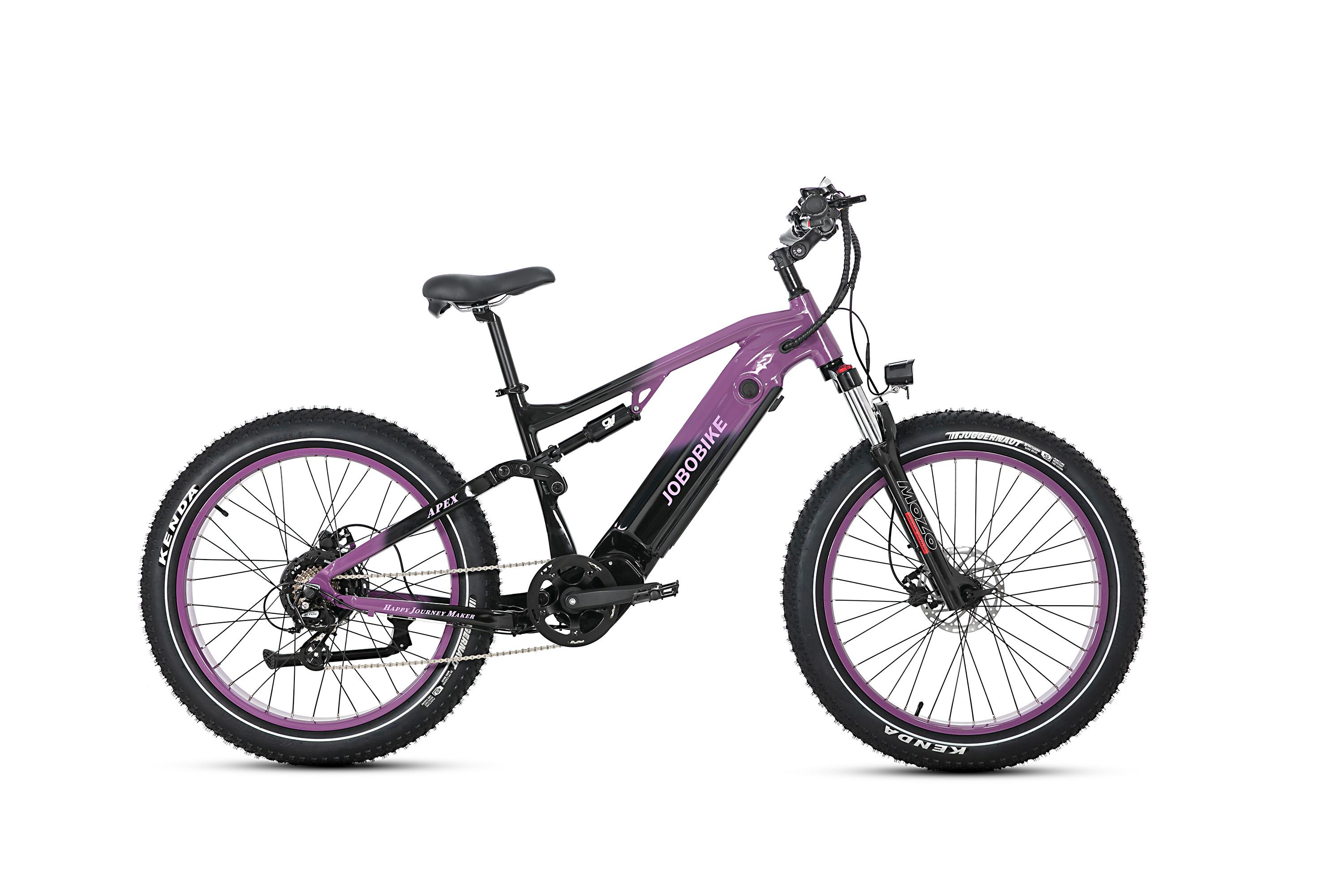
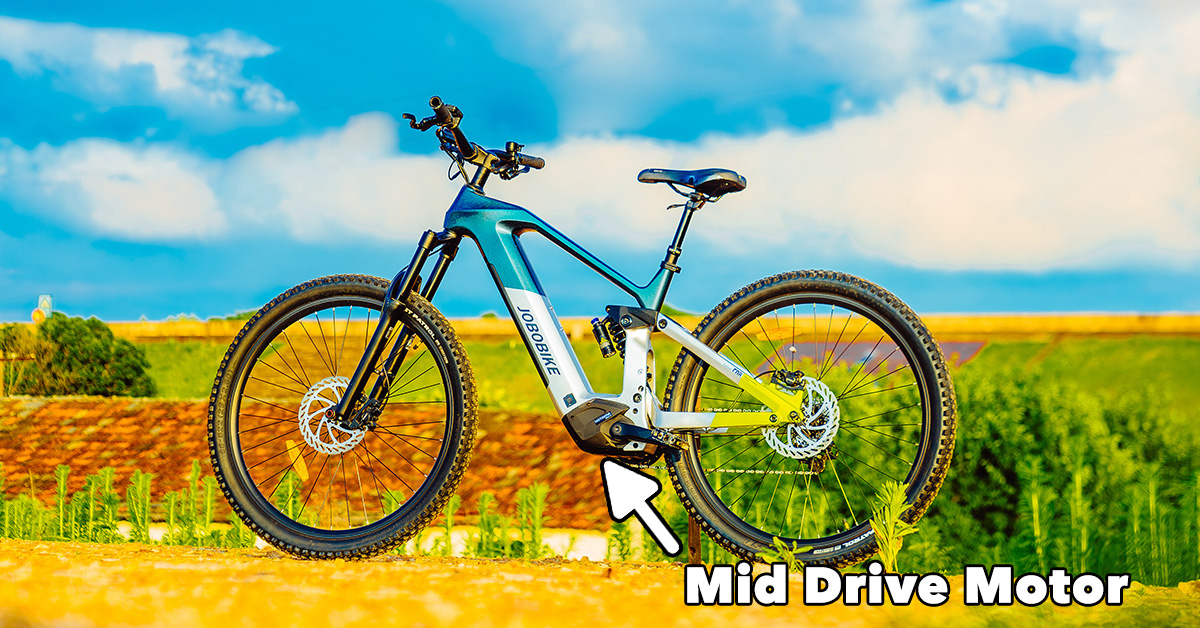
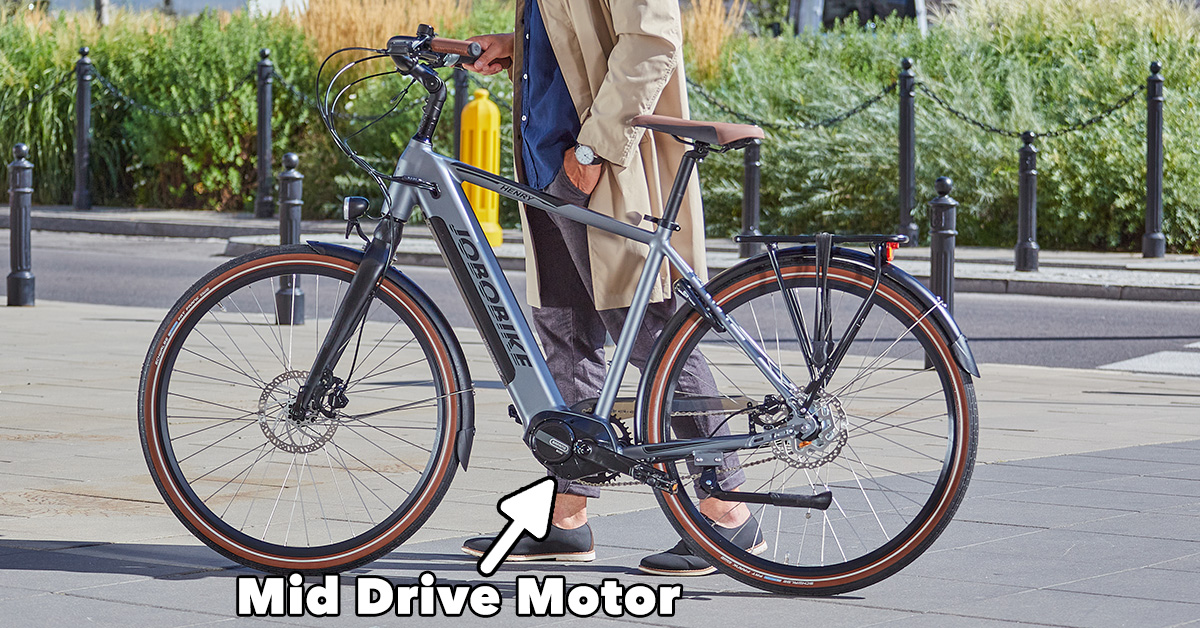
A mid-drive motor is mounted at the bike’s bottom bracket, near the pedals and crankset. Instead of driving a wheel directly, it adds power through the chain.
A simple way to imagine it: a mid-drive motor gives you “super legs.” It amplifies your pedaling force and uses the bike’s gears just like a human rider does.
The Key Advantage of Mid-Drive Motors
The defining difference is that mid-drive motors can use the bike’s gearing system. This allows the motor to stay in its most efficient RPM range, regardless of speed or terrain.
Mid-Drive vs. Hub Motor: 7 Key Differences
① Riding Feel
Mid-Drive Motor
Delivers a very natural and smooth riding experience. With a torque sensor, the motor responds instantly to how hard you pedal—push harder, and the motor gives more assistance. The result feels intuitive and connected.
Hub Motor
Feels more like being pushed or pulled. Most hub motors use a cadence sensor, which activates assistance once pedaling starts. Response is slightly delayed and can feel more abrupt.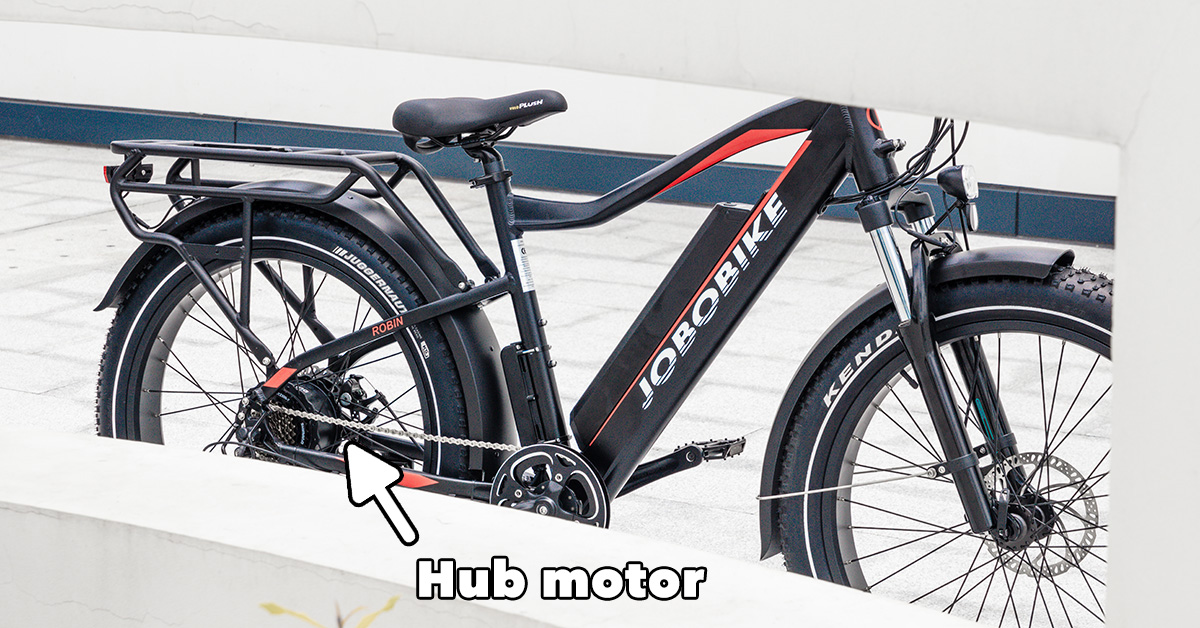
② Climbing Performance
Mid-Drive Motor
Excellent on hills. By shifting into a low gear, the motor can multiply torque efficiently—similar to using first gear in a car on a steep climb.
Hub Motor
Adequate for mild slopes, but less efficient on steep hills. At low speeds, motor efficiency drops and heat buildup can occur.
③ Efficiency & Range
Mid-Drive Motor
Generally more efficient. Because it works with the bike’s gears, it operates closer to optimal efficiency, often resulting in longer range per charge.
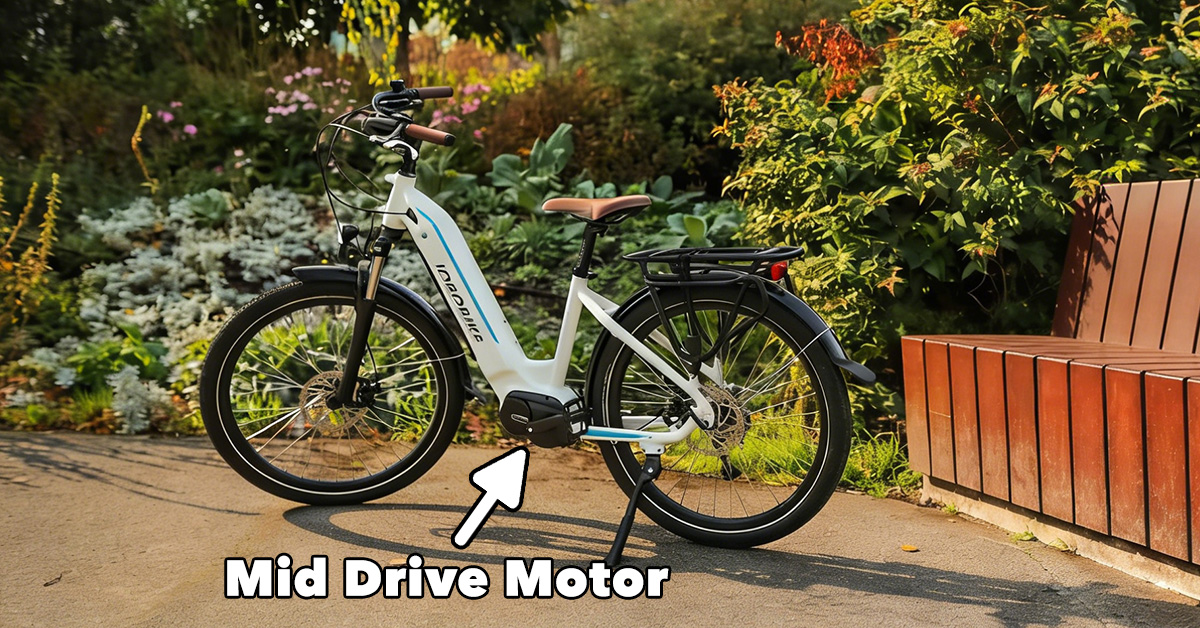
Hub Motor
Efficient on flat terrain, but range can decrease in stop-and-go traffic or hilly environments.
④ Weight Distribution & Handling
Mid-Drive Motor
Weight is centralized and low, creating excellent balance and control. This makes mid-drive systems ideal for mountain bikes and performance-focused e-bikes.
Hub Motor
Weight is concentrated in one wheel, which can affect handling, especially when cornering or riding on uneven terrain.
⑤ Maintenance & Wear
Mid-Drive Motor
Wheel changes are as easy as on a regular bike. However, because power passes through the drivetrain, chains and cassettes wear faster and should be high-quality, e-bike-rated components.
Hub Motor
Minimal drivetrain wear. However, fixing a flat tire involves disconnecting motor cables, which adds complexity.
⑥ Cost & Price
Mid-Drive Motor
More complex and technologically advanced. Typically found on mid- to high-end e-bikes, with higher overall cost.
Hub Motor
Mature technology with lower production cost. Common on entry-level and commuter e-bikes.
⑦ Bike Design & Compatibility
Mid-Drive Motor
Requires a specially designed frame and cannot be easily retrofitted onto a standard bicycle.
Hub Motor
Highly adaptable and often used in conversion kits to turn traditional bikes into e-bikes.
Which E-Bike Motor Should You Choose?
Choose a Hub Motor If…
-
Your riding is mainly urban commuting on flat terrain
-
You want a budget-friendly e-bike with good value
-
You prefer effortless riding, possibly with a throttle
Choose a Mid-Drive Motor If…
-
You value a natural, bike-like riding experience
-
You ride hills, mountains, or uneven terrain
-
You want the best handling and performance
-
You’re considering an eMTB or premium touring e-bike
Conclusion: There Is No “Best” Motor—Only the Right One
There is no universally “better” e-bike motor.
Hub motors are reliable, affordable, and ideal for everyday commuting.
Mid-drive motors represent the peak of performance, efficiency, and riding feel.
The right choice depends on how—and where—you plan to ride.

Contact & OEM Support
-
📞 Phone: +86 198 8486 5520
-
📧 Email: info@jobobikes.com / sale09@jobobikes.com
-
🌐 Website: https://www.joboev.com
Frequently Asked Questions (FAQ)
Q1: Can a mid-drive motor use a throttle?
A: In most cases, no. Mid-drive systems are designed around pedal assistance rather than direct motor control.
Q2: Is changing a tire on a hub motor e-bike difficult?
A: Not difficult, but it does require disconnecting motor cables, making it slightly more involved than a standard bike.
Q3: Does a mid-drive motor wear out the chain faster?
A: Yes, but using e-bike-rated chains and regular maintenance significantly reduces wear.