How Do You Choose a Reliable Step Through Electric Bike Supplier?
A reliable step through electric bike supplier should prove that its low-entry frame is engineered for the intended rider and load, that the electrical and mechanical systems work together, and that the approved specification can be repeated in production. For a brand or importer, the essential evidence is a defined bill of materials (BOM), a testable sample, model-specific compliance documents, controlled quality procedures and a workable spare-parts plan—not an attractive product photograph or an isolated factory-price quotation.
The best buying sequence is straightforward: define the customer and destination market; choose a frame and powertrain concept; compare suppliers against identical specifications; test a production-representative sample; then agree on the BOM, acceptance limits, delivery terms and service responsibilities. A factory with convenient OEM and ODM options can help, but only if its engineering decisions are documented.
This guide addresses the commercial question behind searches for a wholesale step-through e-bike factory or private-label city e-bike manufacturer: Which partner can supply a model that sells well, remains serviceable and does not become a costly warranty problem? It is written for purchasing teams rather than for individual riders comparing weekend bikes.
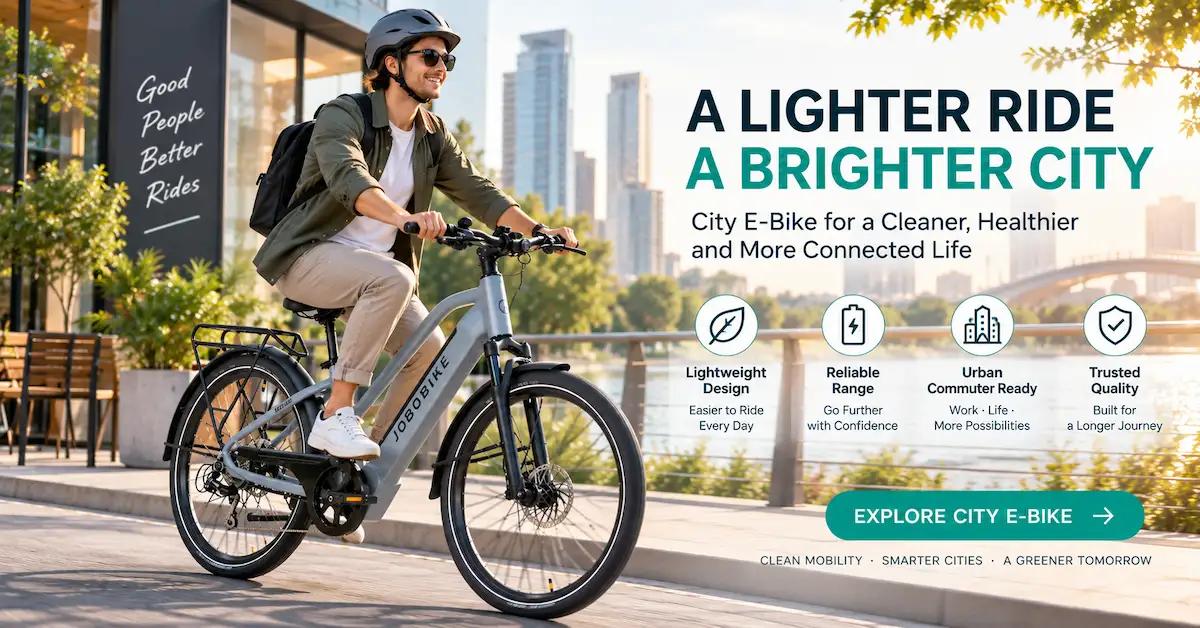
JOBO's custom city e-bike category and OEM/ODM services provide two useful starting points for teams developing this type of program. The discussion below explains what to confirm before requesting a final quotation.
EXPLORE STEP-THROUGH CITY E-BIKES →
Why Step-Through Frame Design Deserves Its Own Sourcing Checklist
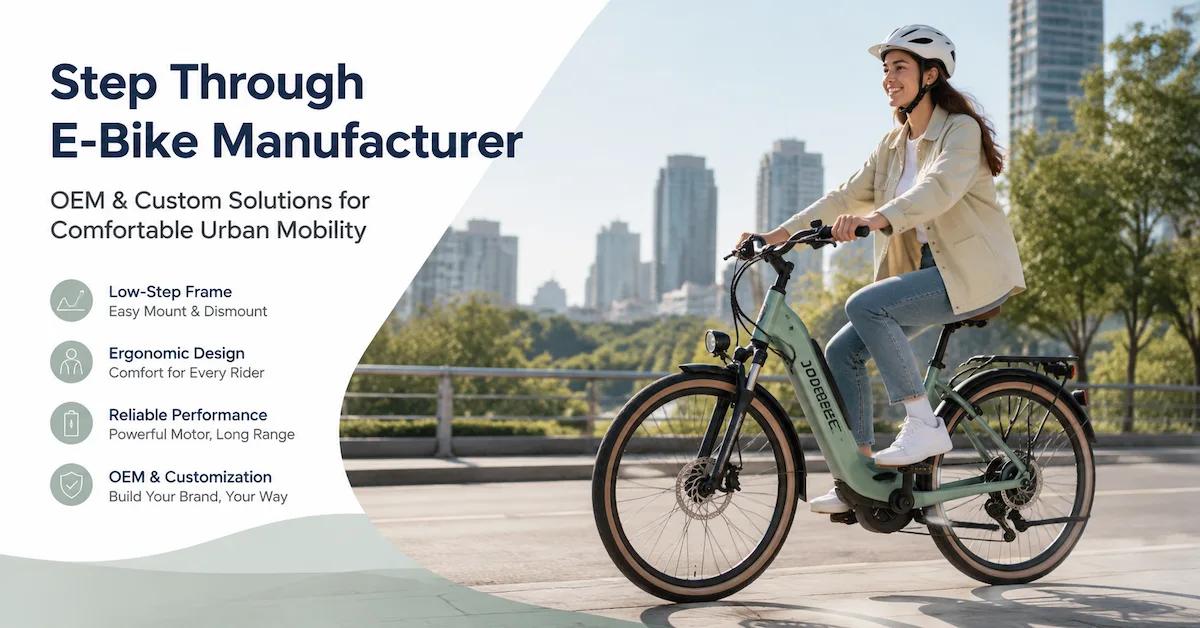
A conventional diamond frame has a top tube connecting the head-tube area to the seat-tube region. A step-through design lowers or removes that high crossing member, leaving a more accessible passage for mounting and dismounting. This can be useful for riders in office clothing, riders who stop frequently, customers with limited hip movement, and rental guests unfamiliar with e-bikes. It can also simplify the experience of getting on a bike while carrying a shoulder bag or working around a rear rack.
However, low entry is a geometry feature, not proof of universal accessibility. A high saddle, wide down tube, excessive bicycle weight, awkward battery position or poor low-speed balance can still make a model difficult for some users. Suppliers should demonstrate the complete bicycle with riders representing the intended size and ability range.
The engineering trade-off is equally important. Removing a high top tube changes the frame's load paths and stiffness characteristics. A heavy battery, powerful drive unit, rear luggage rack or cargo accessory can magnify the demand on the remaining structure. A credible step-through manufacturer should be able to explain how the frame geometry, tube profiles, joining process and reinforcement locations were selected, and what testing supports the finished design.
The buyer therefore needs two parallel assessments. The first asks whether the bicycle is approachable and comfortable. The second asks whether the structure and production process are capable of supporting the promised service life. Neither can be replaced by the other.
Who Actually Buys Wholesale Step-Through Electric Bikes?
A single step-through model rarely makes equal sense for every channel. Before negotiating specifications or minimum quantities, identify the buying organization and the end-user conditions.
| B2B buyer | Intended application | Decision that matters most |
|---|---|---|
| Urban e-bike brand | Daily commuting and lifestyle retail | Fit, ride feel, recognizable styling, consistent quality |
| Importer or regional distributor | Dealer-based product range | Target-market documents, repeat supply, parts availability |
| Private-label retailer | Differentiated store or online brand | Colors, packaging, assembly experience, predictable BOM |
| Hotel or resort group | Short leisure trips by many guest types | Low-step access, intuitive controls, easy inspections |
| Corporate or campus operator | Repeated short journeys | Robust components, charging policy, fleet maintenance |
| Rental or shared-mobility business | High-turnover use by multiple riders | Anti-tamper details, easy battery service, traceability |
| Urban utility fleet | Staff travel and light equipment movement | Rack limits, braking, tire durability, total ownership cost |
An online brand may value a clean frame silhouette and high-quality unboxing experience. A resort buyer may care more about safe mounting, clear instructions and a low learning curve. A municipal or shared fleet may put spare parts and service intervals above cosmetic differentiation.
This segmentation prevents a common sourcing error: building one expensive, heavily equipped bicycle and expecting every buyer segment to accept the price and weight. Step-through geometry broadens possibilities, but the finished configuration must still match a specific job.
For a closer look at the rider-side design rationale, see JOBO's existing article about step-through accessibility in urban e-bike design. This supplier guide concentrates on the engineering and procurement decisions that follow.
Define the Riding Environment Before Selecting Components
Everyday urban commuting
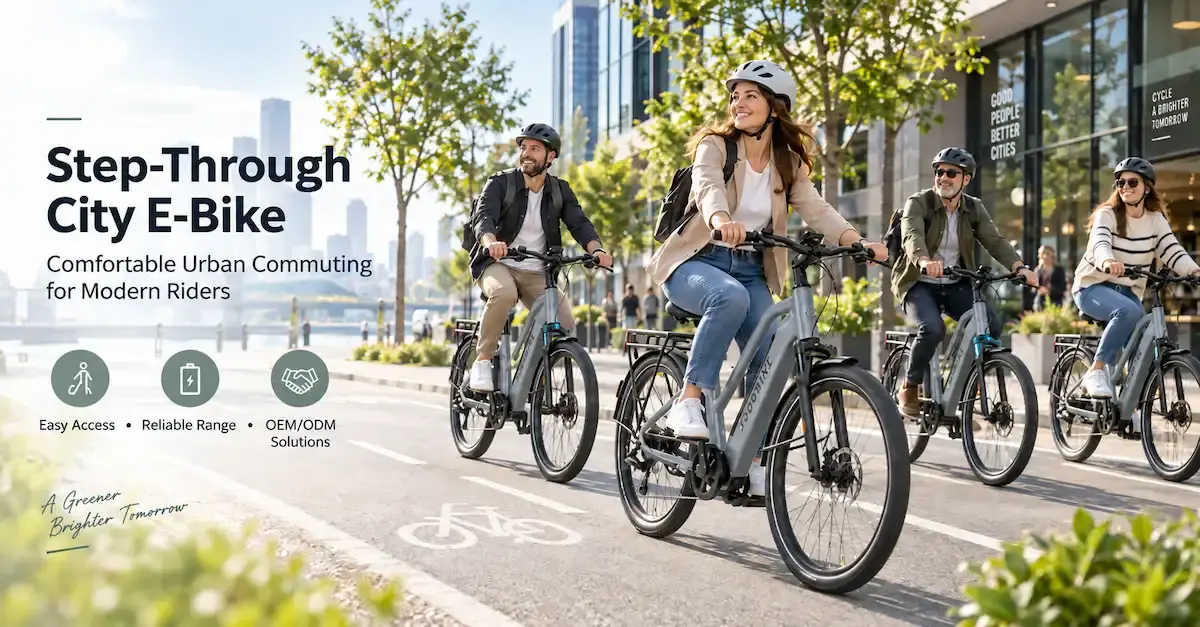
A commuter product must cope with traffic signals, wet streets, frequent parking and repeated charging. The priorities may include an upright yet efficient position, predictable pedal assistance, practical lighting, fenders, a stable kickstand and puncture-resistant tires. An integrated display can add value, but only when riders find it easy to use.
Do not specify the largest available battery automatically. Start with typical round-trip distance, elevation, rider weight and charging opportunities. The supplier should explain how those assumptions translate into battery capacity and range-testing conditions.
Hotels, tourism and leisure rental
Rental bikes are used by people who may never have ridden that model before. A low-step frame can make the first interaction less intimidating, but a good rental specification must also address saddle-adjustment range, brake-lever reach, simple assistance settings and clear battery indications.
Buyers should test mounting and slow-speed steering with more than one rider. They should also request easily replaceable controls and a documented start-of-day inspection procedure. A model with impressive specifications but confusing controls is a poor rental asset.
Campus and workplace mobility
Campus and corporate programs often involve short trips, several riders per bicycle and centralized parking. Consistency becomes more valuable than optional premium features. Consider identical chargers, common replacement batteries where technically compatible, standardized locks and a parts list that technicians can manage without stocking dozens of unique items.
For fleets, ask whether the frame supports the proposed lock and GPS hardware without compromising routing, waterproofing or structural integrity. Smart features must be specified and validated rather than assumed to come with every city-bike platform.
Neighborhood errands and light utility
Many buyers choose step-through bicycles because customers want to carry shopping, a work bag or small items. Here, the rear rack, basket interface, kickstand and bicycle handling under load deserve attention. A low entry does not mean unlimited carrying capacity. Request the manufacturer-approved total load and separate rack limit for the exact configuration; verify them before publishing retail claims.
Nine Technical Decisions That Determine Whether a Step-Through E-Bike Will Work
1. Frame geometry and actual step-over clearance
The headline 'step-through' describes a general frame type, not a universal dimension. Ask for the measured clear entry height, rider fit range, standover shape, saddle adjustment and frame drawing. Two bikes with similarly curved down tubes may feel very different when a rider mounts them.
Low-speed stability also depends on steering geometry, wheelbase, center of mass and component placement. Test the bicycle with the intended battery and accessories fitted. A showroom frame without a loaded rack does not represent the final product.
2. Structural stiffness, weld design and fatigue validation
Because the traditional upper load path is absent or reduced, low-step frames deserve careful review around the down tube, head tube, bottom bracket and seat-tube connections. Battery cutouts and integrated mounts can introduce further design constraints. Buyers should ask about material grade, tube profiles, welding fixtures, dimensional inspection and the fatigue or strength tests used for the chosen model.
A manufacturer that controls frame production can potentially adjust geometry and integration more directly. That capability is valuable, but a newly modified frame must still be tested. An existing certificate or test report should never be assumed to cover a materially different structure.
3. Motor system and assistance behavior
Hub-drive and mid-drive systems can both serve urban step-through bicycles. Their suitability depends on terrain, maintenance capability, cost, rider expectations and the legal vehicle category in the target market. Buyers should request an explicit motor model, nominal rating, control configuration and assistance cut-off behavior. The largest torque figure is not automatically the best outcome for a city rider.
A torque-sensor system typically adjusts assistance in response to pedaling effort, which can feel natural during stop-and-go commuting. A simpler cadence-based system may suit a value-oriented project. Rather than deciding by component names alone, compare start-up smoothness, hill response, noise and rider control on the same test route.
4. Battery capacity, placement and access
The battery affects weight distribution, range, charging convenience, service access and the appearance of the bicycle. Common questions include whether it is removable, how securely it locks into the frame, how technicians access connectors and whether replacement packs can be sourced years later.
Compare energy in watt-hours rather than amp-hours without context: nominal voltage multiplied by nominal amp-hours gives a useful energy reference. For example, a published 36 V, 15 Ah configuration is approximately 540 Wh nominal. That figure alone does not establish real-world distance; range varies with temperature, rider and luggage mass, hills, speed, tire pressure and assistance mode.
5. Brakes, wheels and tire suitability
An urban model may stop frequently in wet or gritty conditions. Braking hardware needs to be matched to the bicycle's allowable mass and intended routes, not selected solely to save cost. Confirm rotor or brake specification, service parts and the process used for assembly adjustment.
Wheel size and tire width affect handling, comfort, rolling resistance, clearance and packaging. Puncture protection can be more valuable to a fleet than saving a small amount of tire weight. Ask for an approved tire model and acceptable substitutes, not just a generic width.
6. Ergonomics for a varied rider population
The low frame is only part of fit. Handlebar reach, saddle height, crank clearance, brake-lever reach and the ability to place a foot down comfortably all influence user confidence. Dealers and rental operators should evaluate the adjustment range with realistic customers, rather than assuming one frame size fits everybody.
A particularly useful sample test is repeated mounting and dismounting while wearing normal commuting clothing and carrying a light bag. It reveals details that a catalog picture cannot.
7. Commuter equipment and rack integration
Fenders, lighting, chain protection, rack mounts and kickstands may appear secondary in a product render. In daily use, they become reasons customers like or dislike the bicycle. Require a final accessory list, mounting drawings where needed, approved rack capacity and evidence that cables do not rub against moving parts.
A rear rack can shift the center of mass when carrying bags. A kickstand should support the approved parked condition. Neither should be added late in the process without checking load effects and production fit.
8. Electrical routing, sealing and repairability
Hidden cables can give a premium appearance, but poor routing makes repairs difficult. Review connector locations, strain relief, water-exposure risks, controller access, battery removal, display replacement and the compatibility of chargers and replacement parts. Ask whether a dealer can perform common repairs without dismantling the entire frame.
For connected bicycles, clarify app ownership, firmware support, data access and the exact integration scope. A Bluetooth-capable display should not be marketed as a finished fleet-management system unless that system is actually included and tested.
9. Finished-bike weight and packaging
Step-through bikes are sometimes marketed as especially easy to handle, yet battery capacity, suspension, racks and accessories can make the finished bicycle heavy. Require weights with battery and all standard equipment, and measure the approved sample. Quote packed gross weight separately because cartons, protection and loose accessories affect freight and dealer handling.
The commercially correct target is not the lowest possible number. It is the lowest sensible weight at which the bicycle still meets its structural, range, equipment and warranty requirements. JOBO's previous lightweight city e-bike factory guide expands on this weight-versus-durability trade-off.
A Real Platform Reference: JOBO's Step-Through City Commuter
The JOBO City Commuter Electric Bike, model JB-TDB29Z, is a concrete starting point for buyers who want to evaluate an existing low-entry platform before requesting customization. Its public product page describes an integrated step-through frame, torque-sensor assistance, hydraulic disc brakes, an LCD display with Bluetooth connectivity and a Shimano eight-speed drivetrain.
| Published model item | JB-TDB29Z reference specification | What the buyer still needs to confirm |
|---|---|---|
| Frame | 6061 aluminum step-through design | Geometry, fit range, load rating, exact sample revision |
| Motor | 36 V / 350 W listed | Destination-market motor configuration and classification |
| Battery | 36 V / 15 Ah Samsung lithium | Pack identity, documentation, charging and spare-pack policy |
| Claimed distance | Approximately 60 km published | Test conditions and real duty-cycle range |
| Listed maximum speed | 25 km/h | Control setup and legal suitability in target country |
| Drivetrain | Shimano eight-speed | Exact component code and substitution rules |
| Brakes | Hydraulic disc | Brake model, service parts and validation plan |
| Front end / tire | Suspension fork; 27.5 × 2.35 tire listed | Wheel-size drawings, tire model and clearance |
| Interface | LCD display; Bluetooth app described | Firmware functions, languages and branding scope |
These are published reference figures, not an approved quotation or certification statement for every market. JOBO offers configuration options, so the final BOM, dimensions, range and compliance evidence must be confirmed against the model and revision ordered. In particular, motor ratings should not be treated as universally road-legal merely because a product page also lists a 25 km/h speed.
Another option is the JOBO Belt Drive City E-Bike, JB-TDB30Z. Its published platform uses a belt drive, torque sensor and hydraulic brakes, aimed at buyers who value clean operation and a lower routine drivetrain-maintenance burden. That may make sense for a premium urban line or certain fleets, but belt-related replacement costs, gearing, service training and compatible frame hardware still need review.
VIEW THE JB-TDB29Z PRODUCT PLATFORM →
How to Qualify a Step-Through Electric Bike Supplier Before Paying for Samples
A good supplier assessment tests the company's ability to explain and control the product, not merely to show a factory building. Use the same scorecard for every candidate so sales presentation quality does not overwhelm technical evidence.
| Evaluation area | Evidence to request | Practical warning sign |
|---|---|---|
| Frame engineering | Drawings, manufacturing route, relevant test records | Only cosmetic descriptions of the low-step frame |
| Product configuration | Model-specific BOM and options matrix | “Similar components” without approval rules |
| Prototype control | Sample revision and inspection record | No traceable link between sample and production |
| Quality systems | Incoming, in-process and final checkpoints | All quality claims depend on one final visual check |
| Compliance | Named documents for exact model and market | Generic certificate images without scope information |
| Production capacity | Current allocation and realistic schedule | Annual capacity presented as guaranteed project availability |
| OEM/ODM support | Engineering responsibilities, tooling and change control | Unclear ownership of drawings or sample revisions |
| Commercial terms | MOQ, tooling, Incoterms, payment and warranty scope | Low unit price hiding major excluded costs |
| After-sales | Spare-parts list, service workflow and traceability | No practical plan after the first shipment |
Treat the responses as evidence to verify, not as boxes to tick automatically. Ask suppliers to show one example of how they manage an approved component change. A strong answer should include the reason for substitution, the part specification, validation requirements, customer approval and traceability in finished units.
A supplier can be suitable for a small private-label pilot but less suitable for a proprietary, multi-year ODM platform. The scoring weights should reflect your business model. A rental fleet should place extra weight on maintenance and parts; a brand planning exclusive geometry should place extra weight on engineering and IP control.
Private Label, OEM or ODM: Choose the Right Cooperation Model
These terms are often mixed together in sales conversations. Buyers should define what each party is actually responsible for.
Private label usually starts with an existing product. The buyer may specify logos, decals, colors, manuals and packaging, while most engineering remains unchanged. It often suits market testing or a short launch timetable.
OEM normally means the manufacturer builds to an agreed buyer-facing specification. The project may use a proven frame platform but modify motor, battery, tires, brakes, display, accessories and branding. A controlled BOM and clear acceptance criteria are essential.
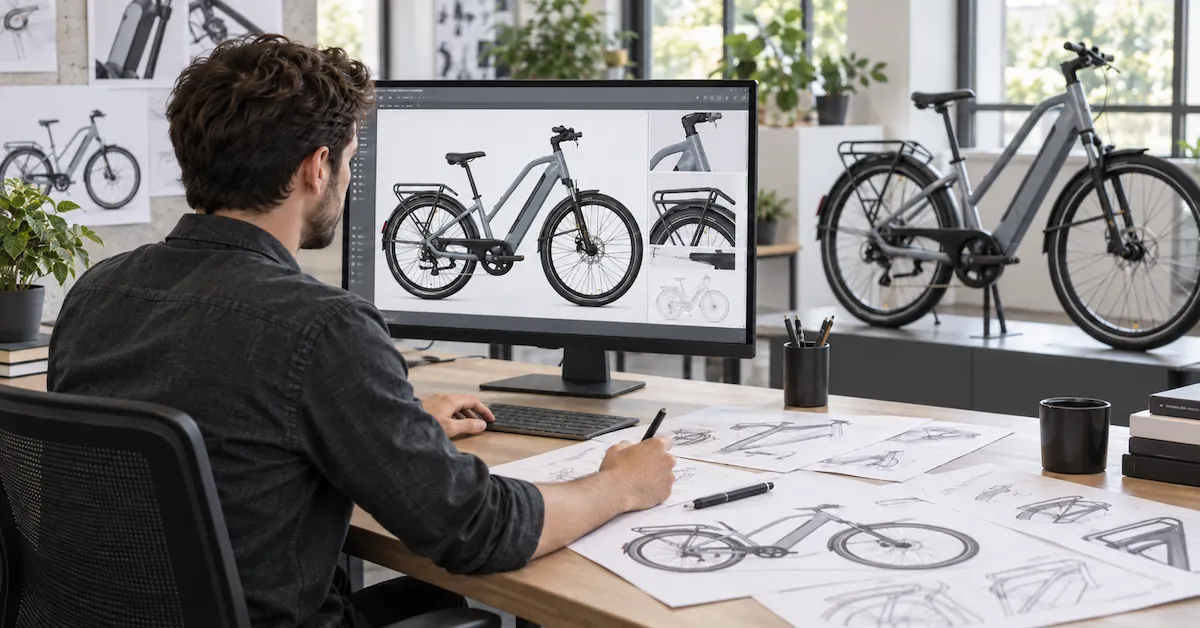
ODM involves more engineering participation, possibly including frame geometry, battery integration, unique mounting features, cable routing, industrial design or dedicated tooling. It offers greater potential differentiation and usually involves more development decisions, testing and commercial commitments.
For step-through programs, the critical boundary is frame change. A different paint color rarely creates the same technical work as a redesigned down tube or battery opening. Before approving an ODM proposal, confirm engineering milestones, drawing ownership, tooling costs, confidentiality, prototype revisions and responsibility for verification testing.
JOBO publishes an OEM/ODM program and describes NDA-based handling of proprietary design work on its company profile. The appropriate confidentiality and commercial terms still need to be written into the buyer's own agreement.
Why In-House Frame Production Can Matter More Than a Low Factory Price
A step-through frame is not just a tube arrangement; it is part of a complete production system. Frame alignment, weld repeatability, battery-mount accuracy and paint quality influence assembly time and finished-bike consistency. A low quoted price can disappear quickly if bikes arrive with fitment issues or dealers spend excessive time on adjustments.
JOBO's China factory describes a 50,000 m² facility, three assembly lines, more than 300,000 units of stated annual capacity, 35-plus engineering personnel and integrated frame production, painting and assembly. These figures provide context for supplier due diligence, but a buyer must still confirm available capacity for a particular model and production window.
JOBO's frame factory information describes CNC-related machining, robotic welding, dimensional correction, heat treatment and finishing. When evaluating any factory offering similar capabilities, request a manufacturing process flow and ask where measurement records are generated. Do not assume an automated process is automatically a validated one.
For low-step frames, the practical questions are especially specific. What fixture controls the head-tube alignment? How are welds and the battery opening inspected? What is done if a frame falls outside tolerance? Which finish checks occur before assembly? How are design changes communicated to the line?
This is also why ownership of the golden sample matters. A properly documented sample provides a shared reference for the buyer, engineering department, procurement team, production line and final inspector.
Compliance Is a Model-and-Market Question, Not a Factory Badge
A step-through electric bike can fall under different road-use and product requirements depending on the destination and the actual drive configuration. Regulatory expectations for pedal assistance, motor rating, speed, throttle behavior, battery systems, labeling and documentation are not interchangeable across countries.
For European pedal-assist projects, buyers will commonly examine the applicable EN 15194 requirements and the broader product compliance obligations relevant to the market. A higher-powered configuration listed on a global product page should not be presumed to qualify as an ordinary EU EPAC. North American buyers likewise need to investigate relevant federal, state, provincial and local rules, along with any required product or battery-system standards.
The correct supplier request is precise: identify the intended vehicle class, model code, motor and controller settings, battery pack, charger, frame revision, destination, standard versions and document holder. Then ask for readable reports and declarations that correspond to that specific combination.
JOBO's certifications and patents page shows product and management-system materials, including EN 15194-related documents and ISO certificates. Its published guidance also advises buyers to verify the model scope, holder, standard edition and validity of the actual documents. That is the sensible approach for every step-through supplier.
For shipment planning, request appropriate battery transport documentation, packaging instructions and the commercial documentation needed for your destination. Confirmation should come before the shipping window, not after the bikes have been packed.
REVIEW JOBO CERTIFICATION INFORMATION →
Sample Approval: What Buyers Should Test Beyond the First Ride
A sample should represent the bike customers will receive, including the standard rack, lights, tires, battery and accessories. Treat the process as design verification and commercial approval, not an informal test ride.
First, measure and record the configuration. Photograph the bicycle, identify the frame revision, record all component codes, verify finished weight, and check the relevant dimensions. Note the battery model and charger. If an item differs from the quotation, resolve it before subjective riding feedback begins.
Second, evaluate mounting and fit. Invite testers within the intended rider range. Observe step-over movement, saddle adjustment, brake reach, steering and low-speed confidence. A product that works only for a tall, experienced tester may not suit a broad urban retail audience.
Third, ride representative routes. Include starts and stops, moderate inclines, uneven pavement and the weather conditions that can safely be tested. Compare assistance engagement, braking, rattles and rider posture. Record distance and test assumptions rather than treating the dashboard's remaining-range estimate as proof of endurance.
Fourth, inspect service access. Remove and refit the battery. Check display replacement, connector access, brake servicing, wheel removal and rack installation. The dealer's maintenance experience is part of the product's true cost.
Fifth, review packaging and documentation. Confirm that the bicycle can travel without common transit damage and that assembly instructions, labels and spare parts are suitable for the intended channel. E-commerce sellers should assess first-time customer assembly separately from dealer assembly.
After corrections, approve a golden sample and a signed revision-controlled specification. Specify when deviations are allowed, who approves them and what requires new testing. Do not let the supplier replace an unavailable motor, tire, brake or battery with an unreviewed 'equivalent.'
Controlling Quality From Incoming Components to Final Shipment
For a wholesale order, quality control must protect repeatability. A great pre-production sample means little if subsequent batches use different cells, cable lengths or brake components without consent.
A workable control plan separates four areas:
- Incoming quality control (IQC): verify critical purchased components, supplier identity, dimensions and required documentation.
- In-process quality control (IPQC): monitor frame alignment, welding-related checkpoints, assembly torque, wiring and functional operations.
- Final quality control (FQC): check each completed bicycle against appearance, function, configuration and packing criteria defined for the order.
- Quality assurance (QA): review nonconformities, corrective actions, traceability and the release evidence needed for shipment.
JOBO describes ISO 9001-related process control, SOP-based production and inspection resources through its manufacturing pages. For a specific order, buyers should request the actual inspection checklist and sampling rules. Factory-wide statements do not replace an agreed acceptance plan.
Traceability also matters. If a battery, controller or brake issue appears in the field, the brand needs a way to identify which production units may be affected. Ask how serial numbers, critical component batches and service claims are connected. A practical warranty workflow depends on that information.
Compare Landed Cost and Lifetime Service Cost, Not Unit Price Alone
An inexpensive quote can create a costly product line if batteries are difficult to replace, spare parts are not standardized or claims require complete-bike returns. Procurement teams should evaluate a step-through program across its commercial life.
A useful planning formula is:
Estimated program cost per sellable bike = purchase cost + allocated tooling and testing + freight and import costs + local preparation + expected warranty/service costs.
This is a decision framework rather than a JOBO price quotation. Each term should be calculated with the buyer's actual assumptions and contract. Do not insert invented percentages for returns, duties, savings or warranty failure rates.
Ask suppliers to separate the unit quote from tooling, samples, certification work, packaging upgrades, accessories, spares, destination charges and replacement batteries. Confirm Incoterms and responsibility for damage or missing parts. Comparing quotations becomes meaningful only when these inclusions are aligned.
Then consider parts commonality. A city fleet using the same tire, brake pads, display and charging hardware across several models may reduce inventory complexity. A premium belt-drive line may lower some routine maintenance tasks but require different service components and training. The right choice depends on the operating model, not on generic 'low maintenance' claims.
A Production Workflow Buyers Can Actually Manage
A manufacturer should take the project through clear approval gates. JOBO's product pages describe a practical eight-stage OEM/ODM sequence; the following interpretation is useful for a step-through program:
- Requirements and market brief: confirm the destination, rider profile, use, price position, compliance requirements and forecast.
- Configuration and BOM review: choose the base model and document motor, battery, brakes, tires, controls, accessories and alternatives.
- Engineering and industrial design: refine geometry, brand appearance, electrical integration, mounting points and manufacturability.
- Prototype build: produce a traceable sample representing the intended retail or fleet specification.
- Testing and compliance review: verify mechanical, electrical, braking, load and destination-market requirements appropriate to the model.
- Sample approval and production lock: sign off the golden sample, BOM, drawings, colors, manuals, labels and carton.
- Controlled mass production: monitor the agreed inspection points and approve any proposed deviation before it enters the line.
- Final inspection and delivery: check the order against release criteria, packing, documentation, shipping terms and spare-parts arrangements.
A buyer should assign an owner and expected output to each gate. For example, the BOM review should produce a revision-controlled component list; sample approval should produce a signed acceptance record; final inspection should produce agreed evidence before dispatch.
These controls may feel slower than ordering from a catalog, but they prevent the far more expensive confusion that arises when different teams believe different specifications were approved.
How JOBO's China and Poland Operations Fit an EU Sourcing Plan
Some buyers need both factory-level customization and regional support. JOBO states that its China operation handles engineering and manufacturing, while its Poland facility supports European assembly, distribution, technical assistance and parts-related services. The current European factory page describes a 10,000 m² site, two assembly lines and more than 50 local personnel.
These are relevant capabilities for brands planning European inventory or dealer support, particularly when local availability shortens service response. However, buyers must confirm whether the intended step-through configuration is actually stocked or assembled in Europe, the applicable lead time, country coverage and final commercial terms.
Do not assume local assembly automatically changes origin, customs classification or anti-dumping treatment for every project. Those questions depend on facts and applicable rules and should be checked with qualified trade advisers. The value of a European operation can also include logistics and technical support even when no tariff benefit applies.
A High-Quality RFQ That Produces Comparable Supplier Offers
The fastest path to a useful quotation is a concise but structured request. Buyers can adapt the following content for a first contact:
| RFQ field | Information to provide |
|---|---|
| Company and channel | Brand, distributor, retailer, rental or fleet operator |
| Destination | Country, expected vehicle category, known compliance needs |
| Target rider | Size range, comfort requirements, mounting accessibility |
| Use case | Commute distance, gradient, road surface, daily frequency |
| Step-through frame | Desired clearance, geometry or reference platform |
| Drive system | Hub/mid-drive preference, rated configuration, sensor |
| Battery | Nominal voltage, target Wh, removability, charging plan |
| Riding hardware | Brakes, tire size, fork, gear system, lights and rack |
| Branding | Color, logo, decal location, display and documentation needs |
| Quality evidence | Test plan, certificate copies, sample and inspection criteria |
| Commercial | Trial quantity, annual forecast, target date, delivery terms |
| After-sales | Spare parts, warranty process and technical support expectations |
If you do not know an answer, state the requirement rather than inventing a component. For instance, 'comfortable on a 12% local hill with a typical adult rider' is a useful engineering input; 'must use the biggest motor' is not.
Attach competitor references only to communicate desired features, not to demand a copy of someone else's protected design. If proprietary geometry is involved, discuss confidentiality and intellectual-property ownership before exchanging detailed CAD files.
Once two or three suppliers reply, normalize their offers in one comparison sheet. Do not advance a proposal to tooling or sample payment while the motor, battery, brake, load limit or regulatory scope remains ambiguous.
REQUEST A CUSTOM STEP-THROUGH E-BIKE QUOTE →
Frequently Asked Questions About Step-Through Electric Bike Suppliers
1. What is a step-through electric bike supplier?
It is a business that provides electric bicycles with low-entry frame geometry, either as standard wholesale products or through private-label, OEM or ODM manufacturing. For serious B2B purchasing, confirm whether the company is a trader, assembler or manufacturer controlling engineering, samples, quality and parts supply.
2. Are step-through e-bikes only designed for older riders?
No. A low-entry frame can benefit commuters in everyday clothing, rental guests, workers making frequent stops and anyone preferring easier mounting. It is not automatically suitable for every mobility limitation, so actual fit and accessibility should be tested with representative users.
3. What should an importer check before selecting a supplier?
Check target-market compliance scope, frame validation, exact BOM, repeat-production controls, sample approval, shipping terms and replacement-parts availability. A low quotation without those details is not a complete sourcing offer.
4. Can a step-through electric bike be customized for a private-label brand?
Often yes. Typical changes include color, decals, logo, battery, motor, drivetrain, display, lights, racks, manual and packaging. Structural changes to the low-entry frame may require a deeper ODM project and fresh engineering validation. JOBO's OEM/ODM page outlines its service scope.
5. Is a step-through frame weaker than a traditional frame?
Not necessarily. The structure carries forces differently because the high top tube is reduced or absent. A properly engineered low-entry frame can be suited to its intended use, but buyers should ask for relevant design and test evidence instead of relying on the frame shape alone.
6. Which is better for a city e-bike: a hub motor or mid-drive?
Neither wins in every application. Compare ride feel, gradients, service resources, cost and the destination market's rules. A mid-drive may appeal to some hillier commuter programs, while a hub-drive may suit another price and maintenance strategy. Test complete bicycles under comparable conditions.
7. Does a 36 V 15 Ah battery guarantee a particular range?
No. That rating implies roughly 540 Wh nominal energy, but actual riding range also depends on assistance, speed, weather, route, rider mass and tire setup. Published distance claims should be compared using disclosed test conditions.
8. What certifications should I request for an OEM step-through e-bike?
Request the documents relevant to the exact bicycle configuration and target market, including the applicable bicycle, electrical and battery requirements. Check the holder, model scope, standard version, dates and reports. Do not treat a factory's ISO certificate as proof that every individual bicycle variant is market-approved.
9. What is the minimum order quantity for custom step-through e-bikes?
MOQ depends on the selected platform, component sourcing, branding scope, tooling and production plan. Ask for separate thresholds for standard wholesale, private label, configured OEM and original ODM. Do not rely on a single generic minimum across all specifications.
10. How should I start a step-through electric bike OEM project with JOBO?
Start with a target country, rider/use profile, preferred frame and powertrain, expected quantity, packaging needs and sample schedule. Review the JB-TDB29Z commuter platform as an initial reference, then submit the brief through JOBO Contact Us for a project-specific configuration discussion.
Conclusion
The right step through electric bike supplier is the one that can prove rider fit, low-entry frame integrity, controlled component selection, model-specific compliance and repeatable manufacturing—not simply offer the lowest bicycle price. Before issuing a purchase order, approve a production-representative sample, lock the BOM, agree on inspection evidence and plan replacement parts. To develop a branded commuter or fleet model, review JOBO's city e-bike platforms and send your RFQ to the JOBO team for a configuration and sourcing discussion.