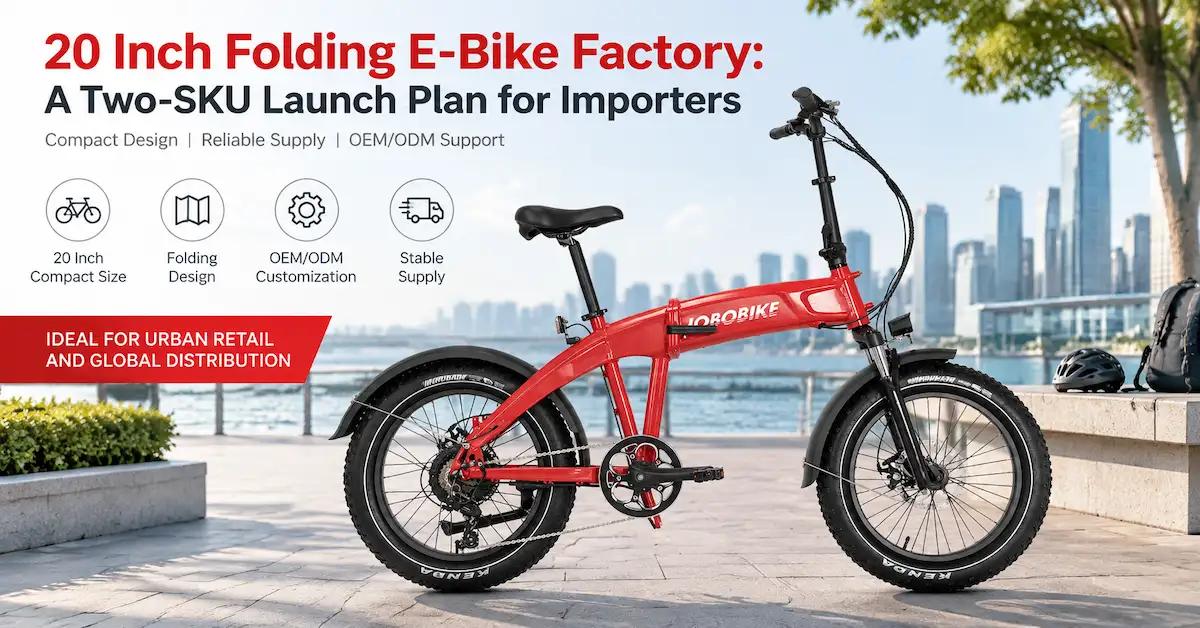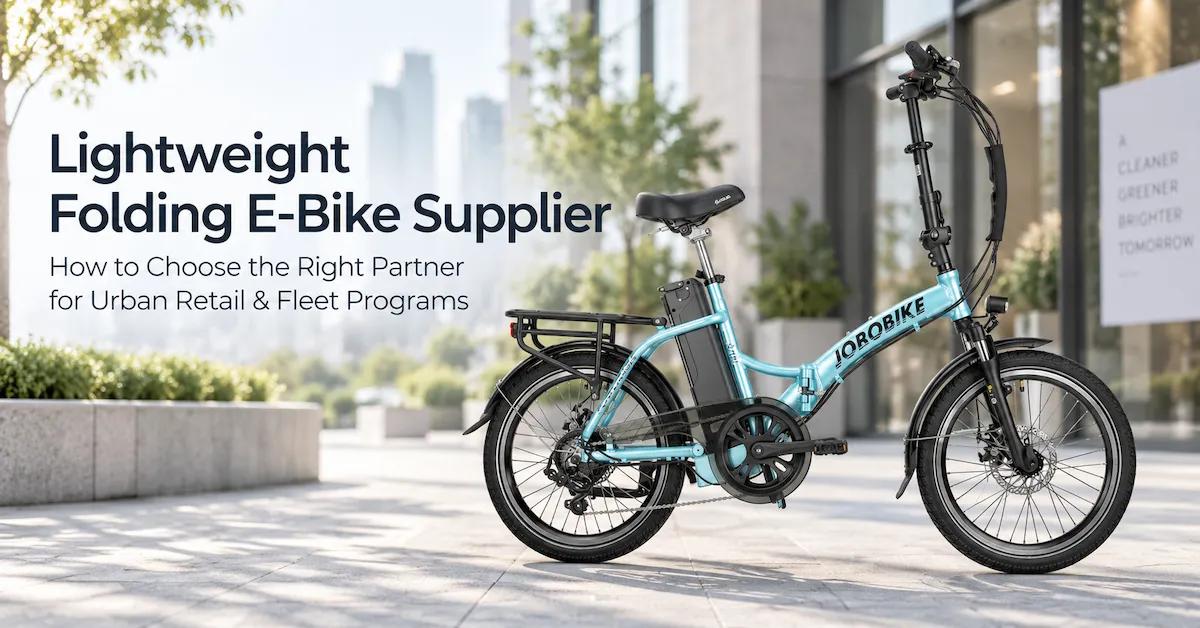
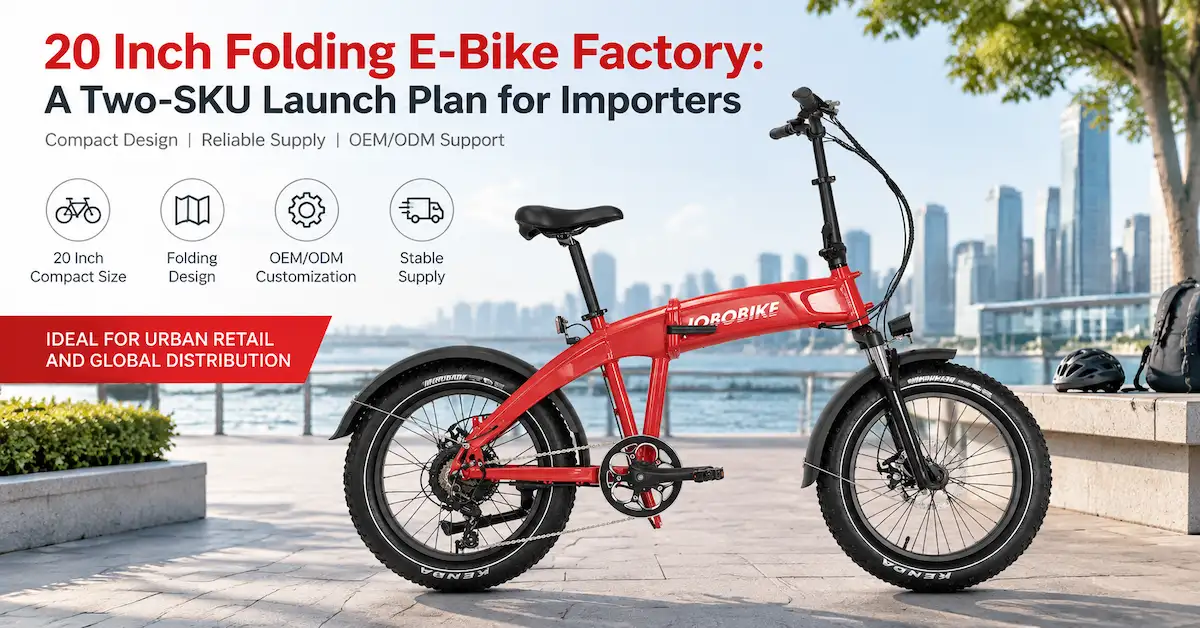
Ask a 20 inch folding e-bike factory to quote a defined launch: who will buy the bicycle, where it will be sold and what your team must support after delivery. This guide puts two possibilities on the purchasing desk. One uses 20 × 2.125-inch tires for an urban offer; the other uses 20 × 4.0-inch tires for a leisure offer. We work through the JOBO specifications, battery calculations and packed dimensions below so you can decide which belongs in your first shipment.
This guide uses named JOBO models and their published specifications to turn that decision into a practical purchasing brief. You will find battery-energy calculations, a packaging comparison, sample acceptance questions and an RFQ template. Where an order-specific figure is unavailable, such as MOQ, production lead time or folded dimensions, the next step is identified explicitly. Nothing in the comparison substitutes for an approved sample, a destination-market compliance review or a signed quotation.
Already preparing a launch? Send your destination country, preferred model, first-order quantity, battery choice and required warehouse arrival date. Ask JOBO for a configuration-specific quotation, sample proposal and packaging details.
1. What should a 20 inch folding e-bike factory know about your launch?
Start with the rider, sales channel and storage problem. Consider two questions a dealer could hear: “Can I get this upstairs after work?” and “Can I take it with me on an RV trip?” The first conversation may turn on lifting and apartment access. The second needs measurements of the vehicle's storage opening and a discussion of the intended routes. A shared wheel diameter answers neither question.
Write a short launch brief before requesting quotations. Identify the destination country, expected riding surfaces, typical rider needs, selling channel and the service support you can provide. An established bicycle dealer may accept a setup procedure that would generate customer-service tickets in a direct-to-consumer business. A campsite operator may value replaceable common parts more than a distinctive display. These are purchasing decisions, not details to leave until the carton artwork is approved.
Build two candidate roles, then decide whether both deserve stock
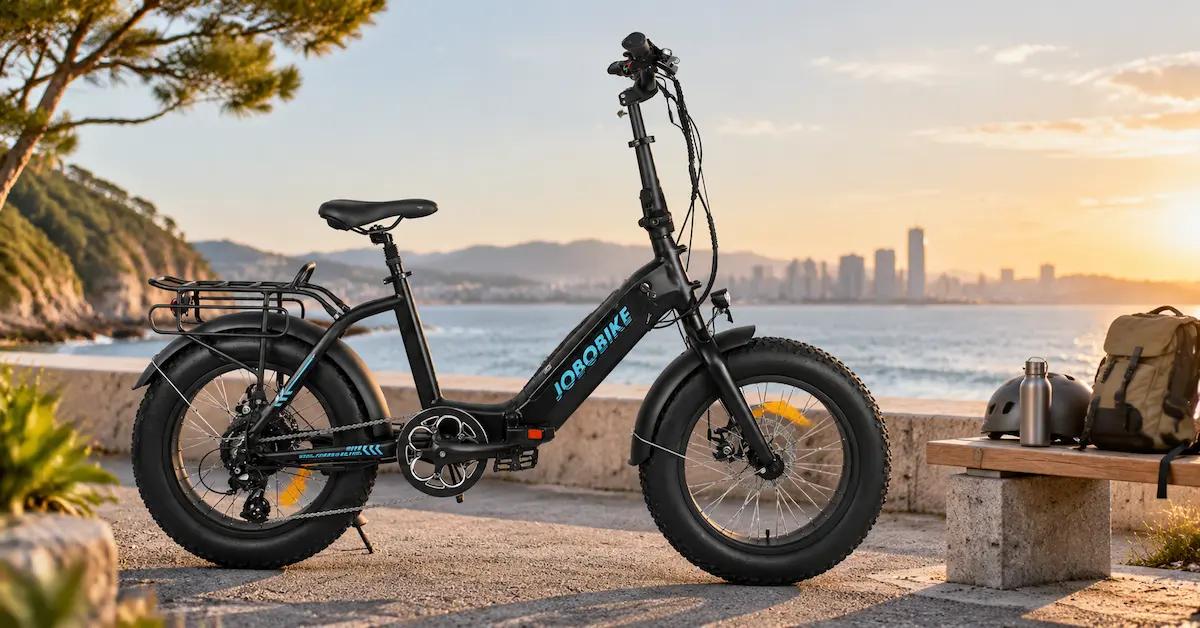
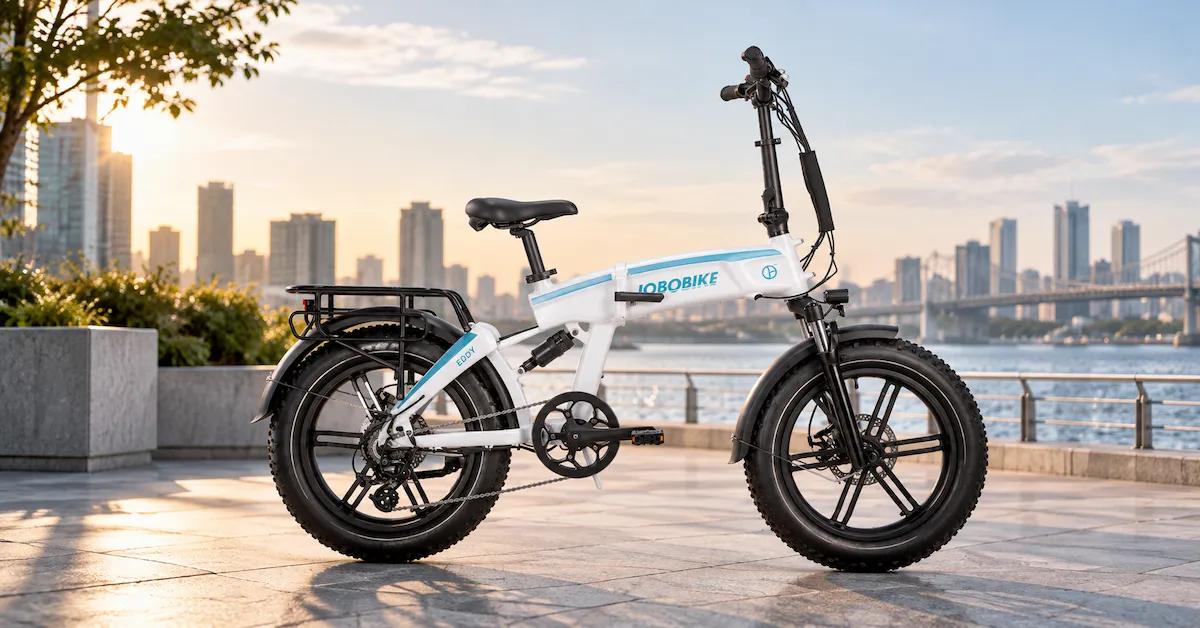
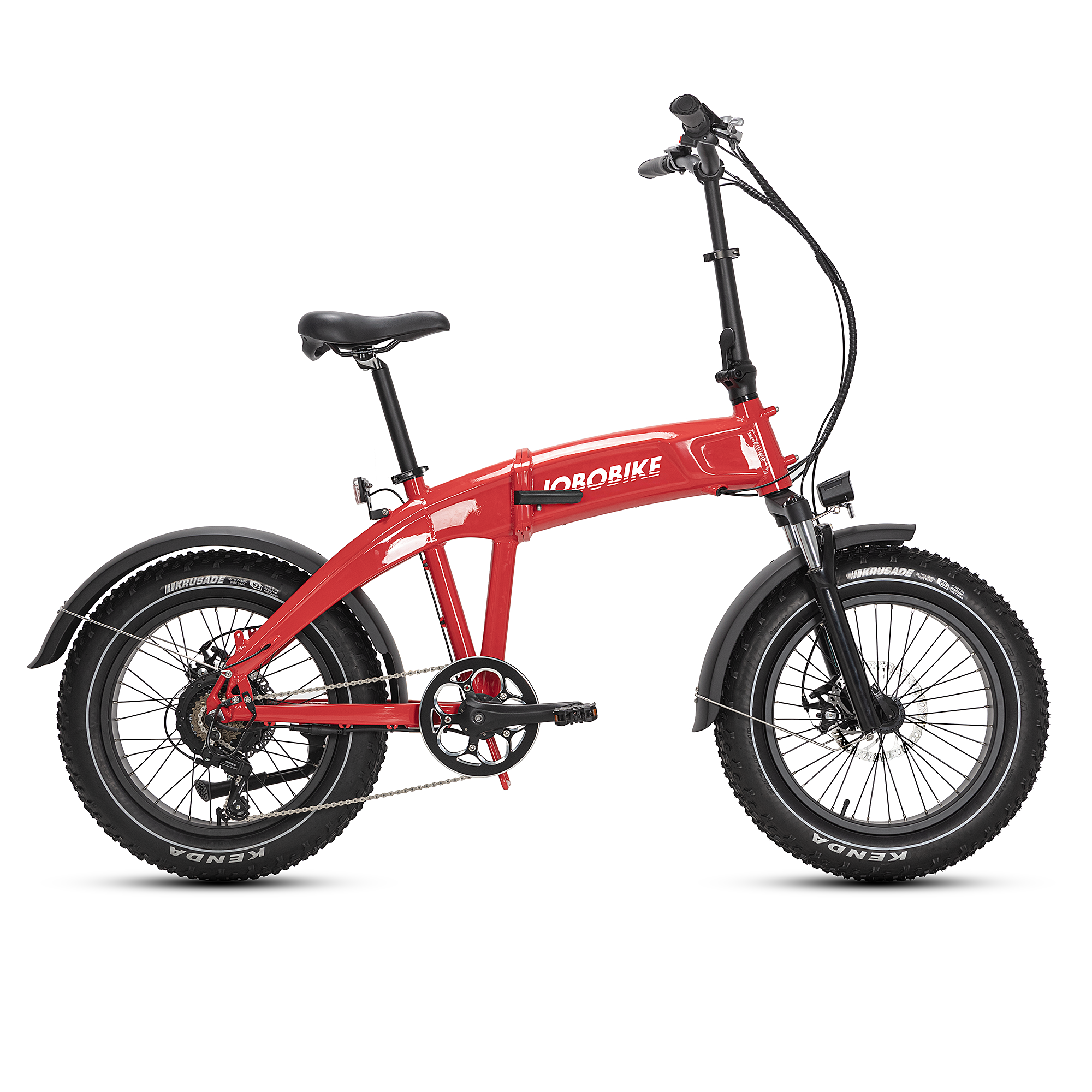
Put JOBO's JB-TDN40Z on the urban shortlist. The catalog pairs its 20 × 2.125-inch tires with a 36 V 250 W motor; the 36 V 10 Ah battery sits in the seat-tube assembly. Beside it, put JB-TDN46Z-FS on the leisure shortlist: 20 × 4.0-inch tires, a 48 V 250 W Bafang motor and a choice of published battery capacities. Treat both as candidates to evaluate. The destination market and intended riders still determine what you can order and claim.
Give each candidate a job in the range. The urban bicycle might address compact home storage and regular paved-road use. The wider-tire bicycle might address leisure buyers who prefer that format and accept its storage and handling implications. Avoid assigning labels such as “lightweight,” “all terrain” or “long range” until the selected sample and its supporting evidence justify them. A memorable retail label is useful only when customer expectations match the delivered bicycle.
You may finish this exercise with one model. That is a sensible outcome when the second bicycle would compete for the same sale while adding another set of parts to the service shelf. Ask dealers for the objections they need to answer. A request for easier handling deserves a handling comparison; a request for a different riding position deserves a fit review. Use those answers to decide whether a second SKU earns its place.
State the commercial assumptions separately from facts
An illustrative launch brief could say: “We sell through bicycle dealers, want an urban folding model and a leisure folding model, and need both available before our seasonal campaign.” That is a planning scenario, not a JOBO customer case study. Add your own order quantities, target retail position and service arrangements. The factory can then identify which requirements fit existing platforms and which require development, different components or additional documentation.
When contacting a 20 inch folding electric bike manufacturer, attach the brief to the product link. “Quote this model for this market with these options” produces a more useful discussion than “send your best price.” It also gives both parties a reference when a later change affects cost, timing or the product's intended use.
2. Compare actual models before comparing supplier promises
A model number and a configuration revision should appear on every comparable quotation. JOBO's published folding range includes different motors, battery formats and tire widths. The table below keeps those products separate. It summarizes selected public specifications, checked against the website knowledge base on September 23, 2026; it is not a frozen production BOM or a current stock list.
| Model and source | Published motor | Published battery choices | Tire format | Procurement question |
|---|---|---|---|---|
| JB-TDN40Z | XOFO, 36 V 250 W | 36 V 10 Ah; seat-tube format | CST 20 × 2.125 | Which brake and assistance-sensor option is included? |
| JB-TDN11Z | XOFO, 36 V 250 W | 36 V 13 Ah or 36 V 10.4 Ah | 20 × 2.125 | Does the quoted packed size match the selected accessories? |
| JB-TDN46Z-F | 48 V 500 W | 48 V 11.6 Ah lithium or 48 V 14 Ah LG option | KENDA 20 × 4.0 | Which destination-market configuration and documents apply? |
| JB-TDN46Z-FS | Bafang, 48 V 250 W | 48 V 11.6 Ah lithium or 48 V 14 Ah LG option | KENDA 20 × 4.0 | Confirm the FS model and its own approved component list. |
| JB-TDN49L | ANANDA, 36 V 250 W crank drive | 36 V 10.5 Ah LG | KENDA 20 × 2.125 | Does your service network support this drive layout? |
The shared “20 inch” description hides meaningful differences. JB-TDN46Z-F and JB-TDN46Z-FS have similar names, yet their published motor ratings differ. Copying the 250 W specification into an order for the 500 W model would create a material error. Keep the complete suffix in the RFQ, sample label, artwork approval and purchase order. A product photo is not an adequate replacement for that identification.
Separate standard equipment, alternatives and unanswered questions
The JB-TDN40Z page lists mechanical or hydraulic Tektro brake alternatives and speed- or torque-sensor alternatives. Those choices need a decision; they should not be merged into an imaginary specification containing every desirable feature. Ask for one base configuration and individually priced alternatives. Request the relevant component references so that your technical reviewer can understand what changes between offers.
On the JB-TDN46Z-F page, “hydraulic” describes the suspension fork. The brake entry says front and rear Tektro disc brakes. That wording alone does not establish hydraulic brake actuation. This is an example of why careful buyers read the actual specification field instead of transferring an adjective from one component to another. If brake type matters to your positioning, name it explicitly in the quotation request.
A useful comparison sheet has four columns: requested specification, supplier response, evidence reference and open question. Leave the last column visible during negotiation. A blank folded dimension, an unconfirmed charger reference or an unclear battery option is easier to resolve before a deposit than after your sales team has published a product page.
Your 20 inch folding e-bike supplier should receive the same comparison structure used by your purchasing team. That makes substitutions and exclusions visible. It also reduces the risk of comparing one offer with a larger battery and premium brakes against another offer with a different configuration, then treating the price difference as a factory-efficiency difference.
3. How much battery capacity are you actually buying?
Compare nominal watt-hours before comparing advertised range. Amp-hours alone are not enough when voltages differ. Nominal battery energy is calculated as voltage multiplied by amp-hours. This gives a useful specification comparison, but it is not a measurement of usable energy, charging losses or road range.
| Battery option | Calculation | Nominal energy | Example model reference |
|---|---|---|---|
| 36V 10Ah | 36 × 10 | 360 Wh | JB-TDN40Z |
| 36 V 10.5 Ah | 36 × 10.5 | 378 Wh | JB-TDN49L |
| 36 V 13 Ah | 36 × 13 | 468 Wh | JB-TDN11Z option |
| 48V 11.6Ah | 48 × 11.6 | 556.8 Wh | JB-TDN46Z-F / FS option |
| 48V 14Ah | 48 × 14 | 672 Wh | JB-TDN46Z-F / FS option |
The 672 Wh option contains approximately 20.7% more nominal energy than the 556.8 Wh option. That calculation is useful when discussing the price and positioning of two battery choices on a comparable platform. It does not establish a 20.7% range improvement: delivered performance also depends on the complete system and the conditions under which it is used.
The public product pages contain different range descriptions. Those figures should not be used to declare that one model is more efficient than another without comparable test conditions. Request the rider and luggage mass, route profile, ambient temperature, tire pressure, assistance setting, average speed and endpoint used in a range test. Also ask whether the tested battery was new and which exact capacity was installed.
Make the battery choice a service decision as well as a sales decision
A larger capacity can strengthen a product offer, but an additional battery family can complicate storage, spare stock and customer support. For each SKU, request the pack reference, charger reference, connector details and the approved replacement procedure. Ask whether the two candidate bicycles share any of these parts; never infer compatibility from a similar-looking casing or an identical nominal voltage.
For JB-TDN40Z, the seat-tube battery format creates specific practical questions. Have a representative user demonstrate removal, carrying, reinstallation and locking using the supplied instructions. Check the sequence around saddle adjustment and storage. Record whether the procedure is understandable to a first-time owner, because your customer service team will have to explain it remotely.
Ask the factory to describe the supplied charging instructions and identify the charger in the documentation package. Do not substitute an unapproved charger during sample evaluation. Your launch materials should explain the manufacturer's actual instructions clearly, including the approved charging setup and relevant care requirements, rather than inventing a convenient routine for a lifestyle photograph.
For a 20 inch electric folding bike wholesale quotation, request the battery options as separate line items under the same defined model. Then compare unit cost, nominal energy, documentation, replacement availability and any packaging changes together. This makes the higher-capacity decision concrete without turning an unsupported range headline into your main selling claim.
4. Does “folding” solve your customer's actual storage problem?
Ask for measured folded dimensions, the folding sequence and handling evidence for the exact sample. A hinge in the frame does not tell you whether the bicycle fits your customer's storage space or can be lifted comfortably. Wheel size also does not determine the finished folded envelope. Handlebar position, pedals, rack, fenders and the chosen accessories all matter.
For apartment customers, define the storage space that your sales claim describes. If a retailer wants to demonstrate the bicycle under a counter, measure that location. If an RV dealer wants a storage-compartment demonstration, use the opening dimensions as well as the internal space. A product can fit inside an enclosure yet be awkward to move through its door. Record the bicycle's orientation and any components that must be adjusted or removed.
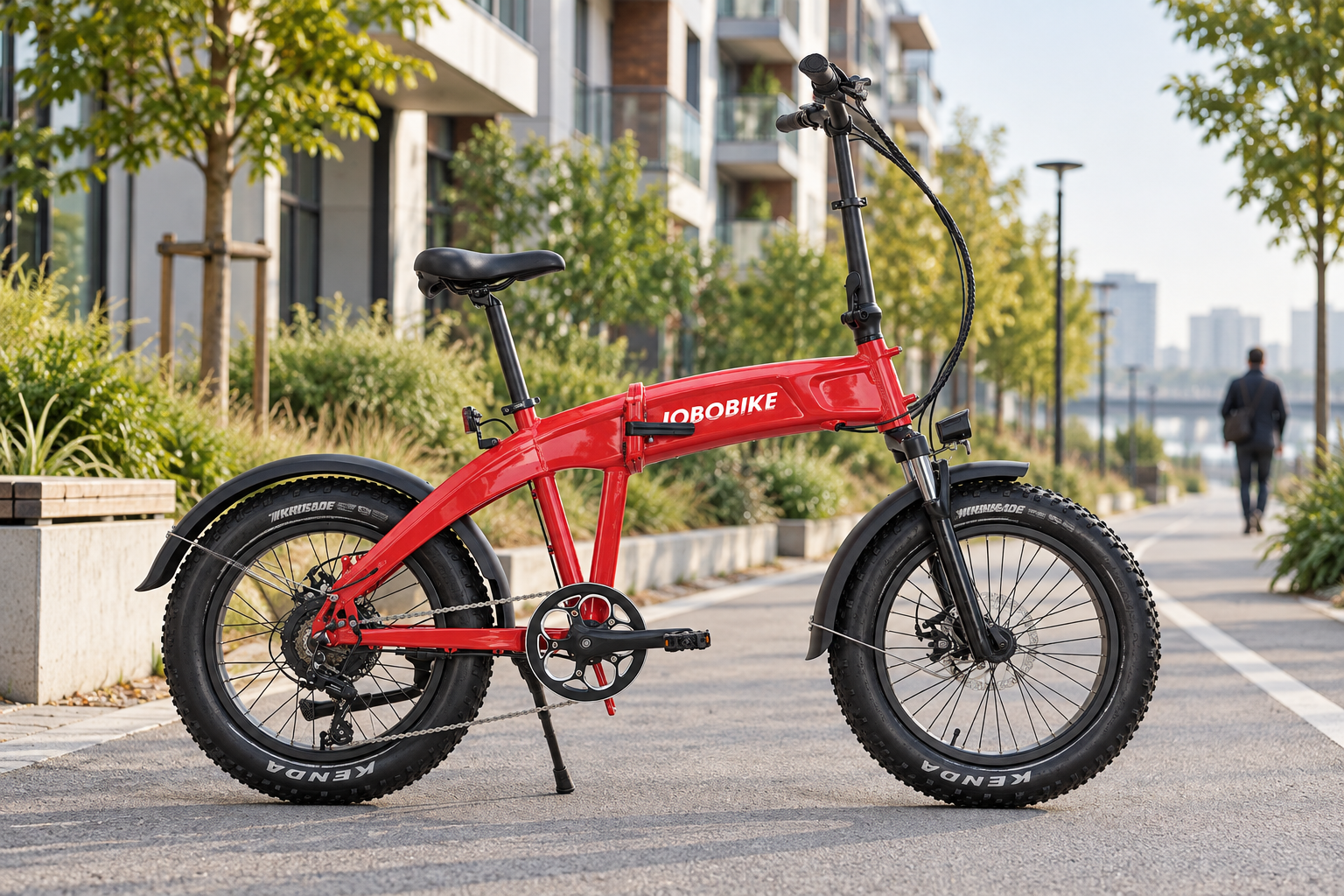
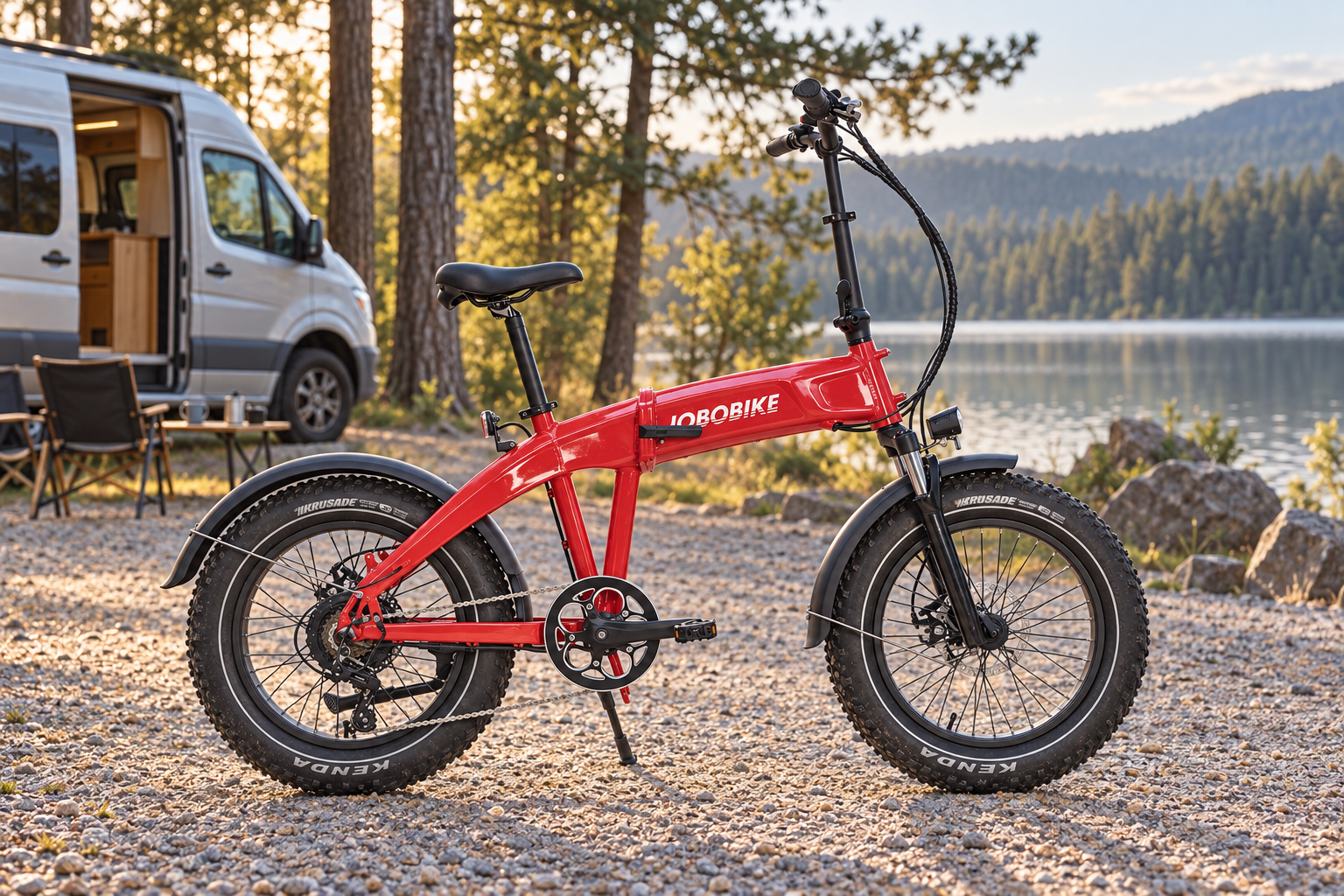
Request photographs or a short video showing the same identified sample fully open, partway through the fold and fully folded beside a measuring reference. Have the factory state whether the battery remains installed. Do not use a staged image of an unfolded bicycle next to a vehicle as proof that it fits inside the vehicle. The two application illustrations in this article show intended contexts; they are not storage, carrying or performance tests.
Evaluate lifting separately from rolling and riding
JOBO publishes a 22 kg net weight for JB-TDN40Z and a 24 kg net weight for JB-TDN11Z. These are product-page figures, not measurements made for this article. Put the configured sample on a scale and record what is fitted, including the battery and accessories. Then review the handling task your customer actually faces. Moving a bicycle along a hallway tells you very little about lifting it onto a storage platform. Base your sales description on the task you have checked.
For your handling review, ask a user to move the bicycle through a doorway, position it for storage, unfold it and prepare it for use according to the instructions. Observe where the person grips it and whether cables or accessories interfere. Do not encourage unsafe lifting, improvised folding methods or modifications. The purpose is to identify instruction and product questions for the manufacturer, not to invent an alternative operating procedure.
Include rider fit in the sample brief
Ask for the supported rider-height guidance, saddle adjustment limits, handlebar adjustment instructions and load limits for the selected configuration. The wheel diameter alone is not a rider-fit specification. Check that any adjustment marks and warnings are visible and understandable in the language supplied to your market. Where a rack is fitted, obtain its own stated load limit instead of assuming that the bicycle's total load rating applies to the rack.
A compact folding e-bike factory inquiry becomes much stronger when “compact” is defined as a measured requirement. Give the factory the target storage opening, maximum acceptable handling mass and the accessories you intend to sell. If an existing model cannot meet those requirements together, finding that out early is a successful sourcing result.
5. What do the carton dimensions do to your launch economics?
Compare packed volume and complete landed-cost assumptions, not just the ex-factory bicycle price. Two 20-inch folding bicycles can occupy very different shipping and warehouse space. The following calculation uses the published cartons for two named JOBO models. It does not apply those dimensions to other products, including the similarly named JB-TDN46Z-F.
| Model | Published carton | Calculation in meters | Calculated volume per carton |
|---|---|---|---|
| JB-TDN11Z | 145 × 26 × 68 cm | 1.45 × 0.26 × 0.68 | 0.25636 m³ |
| JB-TDN46Z-FS | 160 × 32 × 88 cm | 1.60 × 0.32 × 0.88 | 0.45056 m³ |
For these two published cartons, the JB-TDN46Z-FS volume is approximately 75.8% greater. That is a geometric comparison, not a freight quotation or a general rule about fat-tire bicycles. Actual logistics cost depends on the booked service, routing, cargo conditions, packing arrangement and other charges. Request a forwarder quotation using the confirmed packed dimensions, gross weight and relevant battery documentation for the actual shipment.
As an illustrative planning calculation, 100 cartons at 0.25636 m³ total 25.636 m³ before any allowance for pallets, unusable space or loading constraints. One hundred cartons at 0.45056 m³ total 45.056 m³ on the same basis. These are arithmetic totals only. They are not promised container capacities, approved loading plans or recommendations to order 100 units.
Check the packed condition before promising easy assembly
Ask which parts are fitted, removed, rotated or secured for shipping. Request the assembly instructions and a photo sequence of the carton being opened. A smaller carton may change the amount of work required at the destination. Your dealer network may handle that work efficiently; a direct customer may need clearer instructions or professional assistance. Price the process that your channel will actually use.
Check where the charger, keys, tools, manuals and loose accessories are secured. Ask how the frame finish, display, brake components and protruding parts are protected in the approved packing design. Request the packaging test or shipment-validation evidence available for that design, including what configuration was packed. This is a request for evidence, not a claim that the pictured packaging has passed a particular test.
Use one landed-cost worksheet for both candidates
Create separate rows for bicycle cost, selected options, branded packaging, inspection, transport, destination handling, applicable taxes or duties, local assembly, spare parts and expected support provision. Have your broker or relevant specialist determine the destination-specific import treatment. Record the quotation currency, named delivery term and place, validity date and exclusions. Without those fields, two apparently similar totals may describe different responsibilities.
Keep uncertain inputs visible as estimates. A negotiated unit price does not make an unconfirmed delivery charge disappear. For the first shipment, ask your logistics partner to review the actual packing information before you commit to a retail promotion. The useful output is a cost range with stated assumptions and a list of unresolved items, followed by an updated calculation when those items are confirmed.
6. Which OEM changes help a new brand, and which add avoidable complexity?
Start by separating visual customization from changes to the functional configuration. A logo, color scheme and carton design can establish a recognizable range. A different battery, motor, controller, fork or brake can change much more: fit, documentation, sample requirements, service parts and the basis of existing approvals may all need review. Ask the factory to classify each requested change rather than treating customization as one undifferentiated fee.
JOBO describes OEM and ODM services and publishes folding models with different component choices. Its OEM/ODM overview is a starting point for the discussion; model-specific feasibility should appear in the project response. A buyer approaching an OEM folding e-bike factory should send a marked-up requirement sheet that distinguishes essential requirements from preferences.
Limit the first order to changes with a clear commercial purpose
For every requested change, finish this sentence: “Our target buyer needs this because…” A color may be necessary for a retail program. A different assistance sensor may support a desired ride experience. A new rack may be required for a particular accessory. If no one can explain the customer or service benefit, postpone the option until the basic offer has been evaluated.
That does not mean every launch should use an unchanged catalog bicycle. It means development should answer an identified need. Ask the factory to quote the baseline and the changed configuration separately, including any sample work, tooling, documentation review and quantity conditions. A small visible change can still have a component minimum or a production implication that deserves a separate decision.
Use shared parts only where compatibility is confirmed
Two models may share a brand identity without sharing a battery, charger, brake pad, display or cable. Make a proposed common-parts list and ask the factory to confirm each part by reference. Forcing every part to be common can undermine the reason for offering different models. The goal is a serviceable range, not a spreadsheet with identical entries.
When evaluating a custom folding e-bike manufacturer, ask how changes are recorded after sample approval. Your order should identify the approved BOM revision, finish reference, artwork revision, instruction version and packaging design. A substitution should trigger the agreed review process before production, especially where it affects fit, performance, servicing or supporting documents.
For a private label folding electric bike project, review the owner's manual and product labels as carefully as the logo. Confirm the legal manufacturer and importer information required for your destination with your compliance adviser, and agree who supplies and approves each item. Branding is complete only when the bicycle, carton, documentation and after-sales records identify the same approved product.
Need a baseline and a branded version priced side by side? Send the JOBO model number, destination country, essential component choices and your logo/packaging requirements. Ask for separately identified options and the documents available for each configuration.
7. What factory evidence should support the quotation?
Request evidence tied to the proposed model and order scope. JOBO is presented on this website as Jinhua JOBO Technology Co., Ltd., an electric-bicycle OEM/ODM business with manufacturing operations in Jinhua, Zhejiang, China, and operations in Poland. The website describes frame manufacturing, finishing, assembly and quality-control capabilities. A company profile helps identify the supplier; your project still needs its own configuration and document checks.
The China factory page, frame manufacturing page and QC laboratory page provide company-published manufacturing context. They describe activities including frame processing, welding, finishing and inspection. Treat those pages as first-party capability information. Ask for the process and inspection records relevant to your chosen folding model instead of assuming that every listed machine or test applies to every order.
Turn a material description into a traceable question
The five models compared here list 6061 aluminum-alloy frames. That is a useful material identification, but it does not by itself establish the complete frame manufacturing specification or the performance of a finished bicycle. Ask what material verification, process controls and inspection records are available for the approved frame. If your project requires a particular finish or corrosion-related validation, define the requirement and request the appropriate supporting evidence.
For a folding design, ask how the factory identifies the hinge and latch components, verifies assembly and records final inspection. Request the manufacturer's operating and adjustment instructions. Your technical reviewer should determine the acceptance criteria; this article does not invent torque values, fatigue-cycle results or maintenance intervals. Specific, traceable records are more useful than an impressive number without a test method or a sample reference.
| Evidence | What the buyer should match | Question to resolve |
|---|---|---|
| Product specification and BOM | Model, revision and selected options | Does it describe the exact quoted bicycle? |
| Sample photos and measurements | Identified sample, accessories and battery | Are folded size and handling claims supported? |
| Relevant test reports | Sample identity, method, date and tested configuration | Does the report cover the product being ordered? |
| Certificates, where applicable | Issuer, scope, model references and validity | Can the document be verified and used for this project? |
| Packaging specification | Carton, protection, gross weight and packed condition | Does the shipment plan use the approved pack? |
| Inspection and traceability plan | Incoming, assembly and final checks | How will an identified issue be isolated and resolved? |
| Warranty and spare-parts proposal | Components, process, responsibilities and availability | Can your team support customers after delivery? |
Read electrical-safety documents at the system level
UL Solutions' explanation of UL 2849 describes an evaluation of the e-bike electrical system, including the interaction of the drive, battery and charger systems. Its stated scope also distinguishes electrical and fire-safety evaluation from the rider's ability to maintain control. A battery document should therefore not be presented as proof of every aspect of a complete bicycle's safety.
In a release dated December 20, 2022, the U.S. Consumer Product Safety Commission called on manufacturers and importers to follow applicable UL safety standards for battery-powered products and identified UL 2849 for e-bikes. That historical guidance explains why importers ask detailed electrical-system questions. It is not a complete statement of current requirements in every jurisdiction.
Before approving a product for sale, have the responsible destination-market specialist establish the applicable requirements and review the actual model documents. This article does not claim that any model in the comparison holds a particular UL certification. JOBO's certifications and patents page can support an initial document request, but the issuer, scope, model identity and validity need their own verification.
Ask your folding electric bike OEM supplier to list documents already available, documents requiring configuration review and any additional work proposed for the destination market. Keep that response attached to the RFQ. This prevents a general company credential from becoming an unsupported product claim in your retail listing.
8. What should your sample acceptance review actually produce?
The output should be a documented approval decision with unresolved items, not just “the bike looks good.” Agree the sample configuration and review plan before the sample is dispatched. Identify which checks your team can perform, which need a qualified bicycle technician and which require a competent laboratory or compliance specialist. Ordinary buyer inspection cannot replace formal product testing.
Begin with identity and documentation
Record the model number, sample identifier, date received and configuration revision. Photograph the bicycle, carton, labels and supplied accessories. Compare the delivered components against the agreed sample list. If a component differs, ask whether it is an approved sample substitution, a proposed production change or an error. Resolve that question before using the sample to create sales content.
Read the assembly and operating instructions as a new customer would. Check that the text corresponds to the actual display, battery, folding mechanism and supplied accessories. A manual that shows a different control panel can generate confusion even if the bicycle itself functions correctly. Note the corrections needed and ask for the revised version to be included in the production approval package.
Review the bicycle in the conditions your channel can support
Have a qualified person assemble and inspect the sample using the manufacturer's instructions. Keep the review within the product's stated limits. Confirm the agreed component identities and have any concerns about the folding mechanism, brakes, steering, wheels or electrical system referred to the appropriate specialist. Do not improvise destructive tests or copy unsourced acceptance thresholds from an online checklist.
For usability, document the ordinary tasks that matter to your launch: preparing the bicycle for use, operating the controls, removing the battery where supported, folding, unfolding and storing it. Use the same task list for both candidate models. The notes should explain the observation, its commercial consequence and the follow-up requested. “Battery removal instructions need a clearer second step” is actionable; “premium feel” is not a reproducible acceptance criterion.
Use one issue log rather than a chain of informal messages
Give each issue an identifier, photo or video reference, description, responsible person and resolution status. Separate a cosmetic preference from a functional concern or a document mismatch. Ask the factory to respond with a proposed action and the configuration or document revision affected. When a change is made, decide whether it needs a new physical review or can be verified through the agreed evidence.
The retained reference sample and the signed specification should describe the same product. Keep photographs of the approved finish and markings, together with the packaging and accessory list. If you approve one bicycle but order another battery or brake configuration, record exactly what has and has not been evaluated. “Sample approved” is too broad when the production order contains material differences.
Make pre-shipment inspection a separate milestone
A satisfactory sample establishes a reference; it does not inspect every production bicycle. Agree the pre-shipment inspection scope, sampling approach, defect definitions and response to nonconformities with competent parties before production. Request the relevant production records and identify how shipped units are traceable. The acceptance plan should fit the order and risk assessment rather than use a copied pass threshold without explanation.
Finally, decide who has authority to close open issues. Sales, purchasing and technical reviewers may see the same finding differently. A short approval matrix prevents a deadline from silently turning an unresolved technical question into an accepted condition. This is particularly valuable when a branded launch involves a factory, importer, distributor and external inspection partner.
9. How should MOQ, lead time and replenishment be agreed?
Request order-specific terms for the selected configuration. There is no verified universal MOQ or production lead time in this article for all JOBO folding models. Quantity requirements can differ between an existing configuration, a branded finish, a particular component choice and a more substantial development project. Ask for the minimum and conditions for each option you are considering.
For a two-model launch, separate the order total from the quantity per model, color and battery option. A total quantity may look sufficient while a specific component or finish still has a separate condition. Ask whether mixed models or colors can be combined, what affects pricing and whether a sample or trial order is available for the proposed project. Record the answer in the quotation instead of borrowing a minimum stated on another product page.
Work backward from warehouse availability
Your required date should identify the event you need: goods ready at the factory, vessel departure, arrival at the destination port or stock available in your warehouse. These are different milestones. Give the factory and forwarder the actual commercial deadline, then ask them to identify the assumptions and dependencies in their respective schedules.
Build a project timeline with specification confirmation, quotation acceptance, component planning, sample review, artwork approval, production, inspection and shipment. Ask when the production lead-time clock starts and which buyer approvals must be completed first. A quoted duration without a defined starting condition can be misunderstood by both parties.
Do not schedule a launch around an optimistic shipping estimate alone. Your own receiving, assembly, product photography, dealer training and stock allocation also consume time. Put those activities on the same plan and assign owners. If a change occurs after sample approval, request an updated schedule and cost impact before assuming that the original deadline still applies.
Design replenishment before ordering the first batch
Ask which configuration elements can be repeated consistently and how revisions will be communicated. A successful first shipment can create a new problem if the next batch arrives with an unfamiliar display or a changed spare part. Establish how the factory will identify an approved replacement and how your team will update manuals, listings and service records when a change is accepted.
For the commercial plan, define the information you will review after launch: inquiries by model, dealer feedback, returns, service cases and stock movement. Those are your future operating measurements, not results claimed in this article. Use them to decide whether to expand the second SKU, consolidate options or request a revised configuration. The first order should make the second decision more informed.
10. What belongs in the after-sales plan before the first shipment?
A service plan needs identified parts, diagnostic information and agreed responsibilities. Buyers often spend considerable effort comparing batteries and motors while leaving warranty handling to a short email promise. Ask how a claim is opened, which information is required, who reviews it, what remedies are available and how the relevant costs are allocated under the agreed terms.
Request an exploded parts reference or equivalent service identification material where available. At minimum, obtain the part references and compatibility information your technicians need for the selected model. A photograph of a brake pad, display or hinge component is helpful, but it should connect to an identifiable approved part rather than become the sole ordering method.
Choose the initial spare-parts package from the actual configuration
Ask JOBO to propose an initial service package and explain the basis for it. Review the proposal with the people who will maintain the bicycles. The appropriate mix depends on your order, market, service arrangement and model; this article does not invent a failure rate or prescribe a universal spare-parts percentage.
Separate routine wear items from model-specific components and electrical-system parts. Confirm storage, handling and replacement requirements with the manufacturer. Ask which parts can be sourced through approved local channels and which need factory support. If two models use different components, make that visible in the stock records before a technician has to guess during a repair.
Make customer support easy to route
Prepare a simple intake form with the bicycle identifier, model, purchase record, symptom description and appropriate photos. Avoid asking customers to open electrical components or perform unsafe diagnosis. The support process should help your qualified service team and the manufacturer identify the issue using the approved procedures.
Agree the contact route and response expectations for the business relationship. If support or parts will involve JOBO's Poland operations, confirm the exact service scope, stock availability and commercial arrangements for your project. The existence of a European operation is useful company context; it is not proof that every part for every model is locally stocked.
Before launch, give the sales team a short list of claims they can support and questions they should route to technical staff. This protects the customer experience as well as the business. Clear answers about battery options, folded dimensions, permitted use, warranty process and assembly requirements can prevent a purchase based on the wrong expectation.
11. Copy this RFQ checklist for a useful factory response
A qualified RFQ identifies the business, destination, product, quantity and decisions that remain open. You do not need to know every technical answer before contacting the factory. You do need to show which requirements are fixed and where you want a recommendation. The table below can be copied into an email or used to prepare your contact-form message.
| Field | What to provide | What to request from JOBO |
|---|---|---|
| Company and sales channel | Company name, website, importer/distributor/brand role, dealer or direct sales | Appropriate project contact and cooperation scope |
| Destination market | Country and intended sales regions | Configuration proposal and available market-related documents for review |
| Use case | Urban storage, leisure travel or another defined application | Recommended model candidates and unresolved suitability questions |
| Model selection | Complete model numbers and product links | Separate base specifications with revision references |
| Quantity | Sample requirement, first order per SKU and indicative repeat-order plan | MOQ, trial-order conditions and quantity-based quotation options |
| Motor and assistance | Desired configuration and intended product category | Exact components and destination-market review requirements |
| Battery | Preferred voltage/capacity or options to compare | Pack and charger references, nominal energy and supporting documents |
| Branding | Logo, color, labeling, manual and packaging requirements | Feasibility, approval process and separately identified charges |
| Handling and fit | Storage opening, weight expectations and rider requirements | Measured folded size, sample weight and applicable fit/load guidance |
| Quality and documents | Required review, testing and inspection scope | Available evidence, gaps and proposed actions |
| Logistics | Destination, preferred quotation basis and receiving arrangement | Packed size, gross weight, packed condition and proposed delivery terms |
| Timing | Required warehouse availability and planned launch | Sample, production and dispatch milestones with dependencies |
| After-sales | Local service capability and spare-parts needs | Warranty process, service information and spare-parts proposal |
A concise message you can adapt
We are [company], a [brand/importer/distributor] selling in [country] through [channel]. We are evaluating JOBO [model number] for [use case] and [second model, if needed] for [second use case].
Please quote [quantity] per model with [battery choice], [essential component choices] and [branding requirements]. Our required warehouse availability is [date]. Please identify the quotation basis, validity, MOQ and any separate conditions for colors or options.
We would also like a sample proposal, measured folded dimensions, the approved component list, packed dimensions and weight, available configuration-specific documents, and a warranty/spare-parts proposal. Please show open technical questions and alternatives separately so that our team can review them.
If your project is still at the concept stage, say so. Give an estimated quantity range and explain what must happen before you can approve an order. A transparent development inquiry is more useful than a precise-looking volume that has no commercial basis. The factory can then distinguish a sample discussion from a ready-to-order quotation.
Compare the replies on evidence and completeness
When responses arrive, first check whether each supplier has quoted the same requirements. Mark missing items and separate optional upgrades from the base price. Then review the supporting information: identified components, sample process, configuration-specific documents, packaging, delivery assumptions and service terms. A prompt answer is helpful, but speed alone does not resolve those questions.
For the two-SKU decision, write a one-paragraph reason to stock each model. Explain the customer it serves, the sales objection it solves and the service arrangement it requires. If the second paragraph repeats the first with a different tire size, revisit the range plan. Your first order should be understandable to the dealer, the warehouse and the support team as well as the purchasing manager.
12. Frequently asked questions from folding e-bike buyers
Should an importer launch with one folding model or two?
Launch with two only when the models address distinct customers or selling situations and your business can support the extra stock and parts. A narrow-tire urban candidate and a wider-tire leisure candidate create a useful comparison, but they do not automatically justify two purchase orders. Evaluate samples, dealer feedback, handling requirements and landed-cost assumptions before choosing the range.
Are JB-TDN46Z-F and JB-TDN46Z-FS the same bicycle?
Do not treat them as interchangeable. The public JB-TDN46Z-F specification lists a 48 V 500 W motor, while JB-TDN46Z-FS lists a 48 V 250 W Bafang motor. Keep the full model suffix and the approved configuration revision on your quotation and order. Other similarities do not remove the need to verify the selected product.
Is a 20-inch folding electric bike necessarily lightweight?
No. Wheel diameter and a folding frame do not establish carrying weight. The public pages list different net weights for different JOBO models, including 22 kg for JB-TDN40Z and 24 kg for JB-TDN11Z. Confirm the weight of the configured sample and what is included before using a carrying or lightweight claim in retail content.
Does the 48 V 14 Ah battery guarantee more range than every 36 V battery?
No universal range conclusion follows from those labels alone. A 48 V 14 Ah battery has 672 Wh of calculated nominal energy, while a 36 V 10 Ah battery has 360 Wh. That compares nominal energy, not the consumption of different bicycles under different conditions. Request comparable range-test conditions for any performance claim you intend to publish.
Can the folding bikes be branded for our company?
JOBO describes OEM/ODM and branding services, and the JB-TDN46Z-F product information discusses customization such as logos, colors and packaging. Ask for the options and quantity conditions available for your exact model. Changes to functional components need their own configuration review; a branding request should not be assumed to include an unapproved engineering change.
What is the minimum order quantity?
Request the MOQ for the chosen model, configuration, color and branding scope. This guide does not assert a single minimum across JOBO's folding range. Provide your sample requirement and initial quantity per SKU, then ask whether trial orders or mixed configurations are available and what conditions apply.
How long will a custom order take?
The relevant lead time must come from the project quotation and schedule. It depends on the approved scope and its dependencies, including components, samples, artwork, production and inspection. State your required warehouse arrival date and ask for separate readiness and dispatch milestones. Do not confuse factory production time with the complete time needed to launch in your market.
Does a certificate on a factory website cover our final branded bicycle?
Not automatically. Ask the responsible reviewer to match the document's scope, issuer, model references and configuration to the actual product. Branding and component changes may require additional review. A company credential or an unrelated battery document should not be used as an unsupported claim that every aspect of the finished bicycle has been certified.
Can we use the scene pictures as real customer case studies?
No. The urban and RV images in this article are AI-created application illustrations based on a JOBO product image. They are clearly labeled for that purpose. A real case study needs permission, an identifiable project context and verified facts; these illustrations provide none of those claims.
What information will make our first inquiry more useful?
Include your company, destination country, sales channel, model numbers, first-order quantity, preferred battery, branding scope and required delivery milestone. Add the questions you still need help answering. That allows JOBO to propose a defined configuration and explain the evidence, sample work and commercial terms needed to move the project forward.
Source notes and the next purchasing step
This guide is published under the JOBO organization name. Its product comparisons use the five linked JOBO product pages and company-published manufacturing information reviewed on September 23, 2026. The watt-hour and carton-volume figures identified as calculations were derived from those published inputs. They are not new laboratory measurements, shipment quotations or customer performance results.
Product specifications and available options can change. Ask for a dated, configuration-specific proposal before making a purchase decision. For supplier identity and manufacturing context, review About JOBO and the factory links above. The UL Solutions and CPSC links explain the limited points cited in the evidence section; a qualified reviewer should determine your project's destination-market requirements.
If you are shortlisting a 20 inch folding e-bike factory, the next useful step is a documented comparison of the models that fit your business. Send JOBO a clear brief and ask for the base configuration, alternatives, samples, packaging information and supporting documents. Those details give your team something concrete to evaluate before committing to stock.
Contact JOBO: info@jobobikes.com · +86 198 8586 5520. Use the contact page to provide your project details and request the appropriate commercial response.
Get a folding e-bike proposal built around your market
Share your destination country, preferred JOBO model, quantity per SKU, battery choice and required arrival date. Request a configuration-specific quote, sample plan and the documents your purchasing team needs to review.