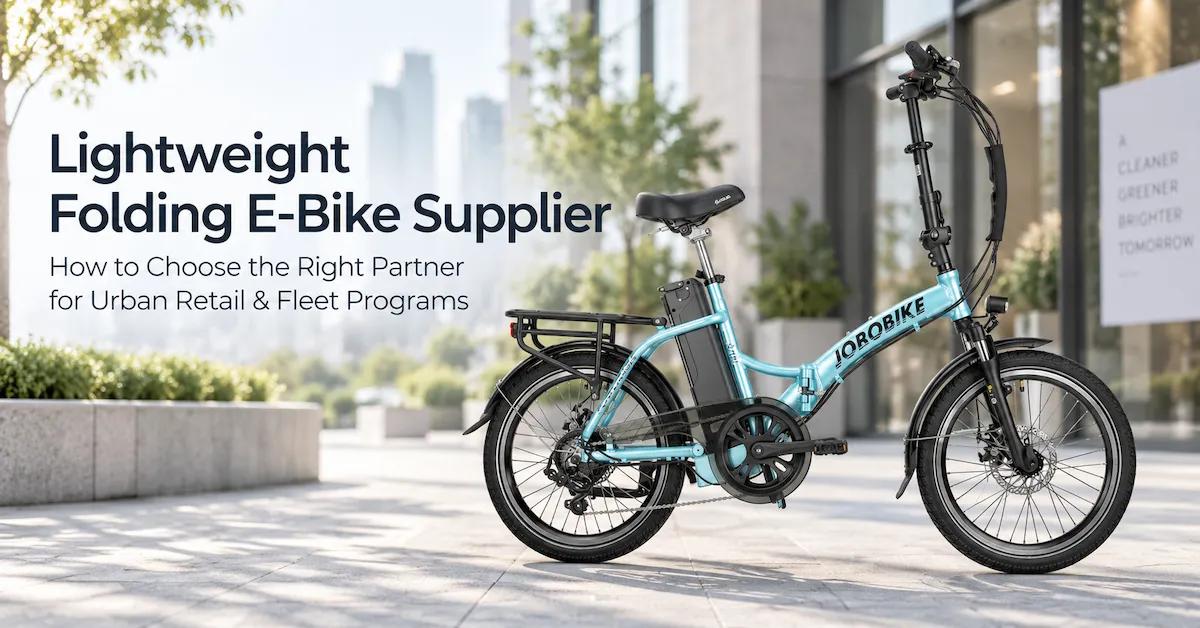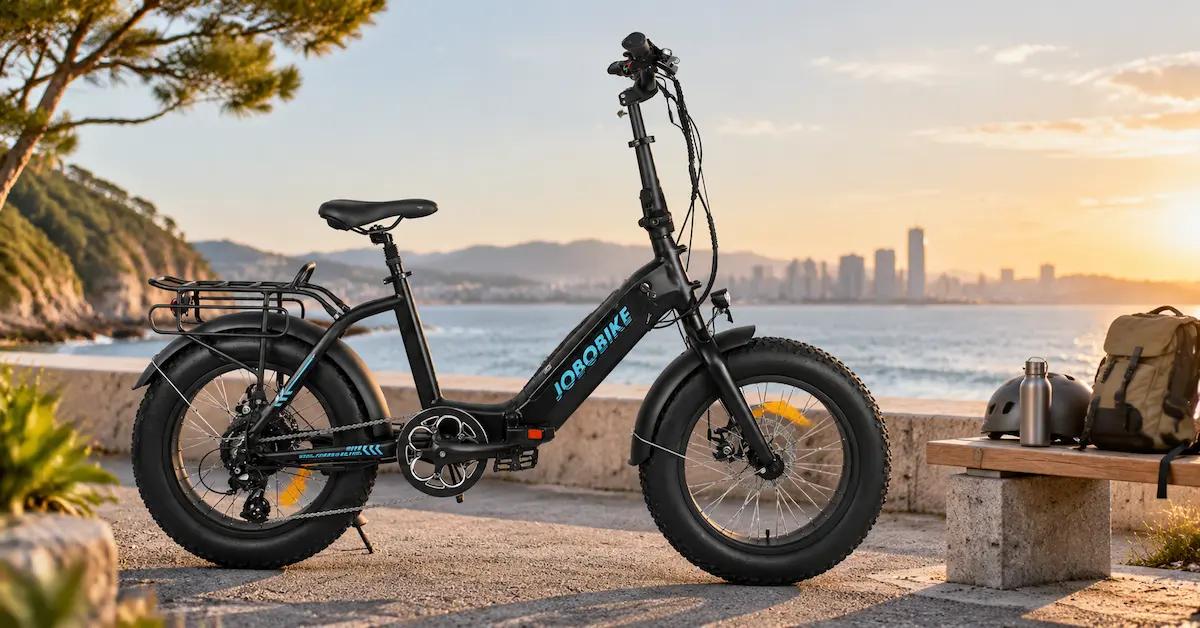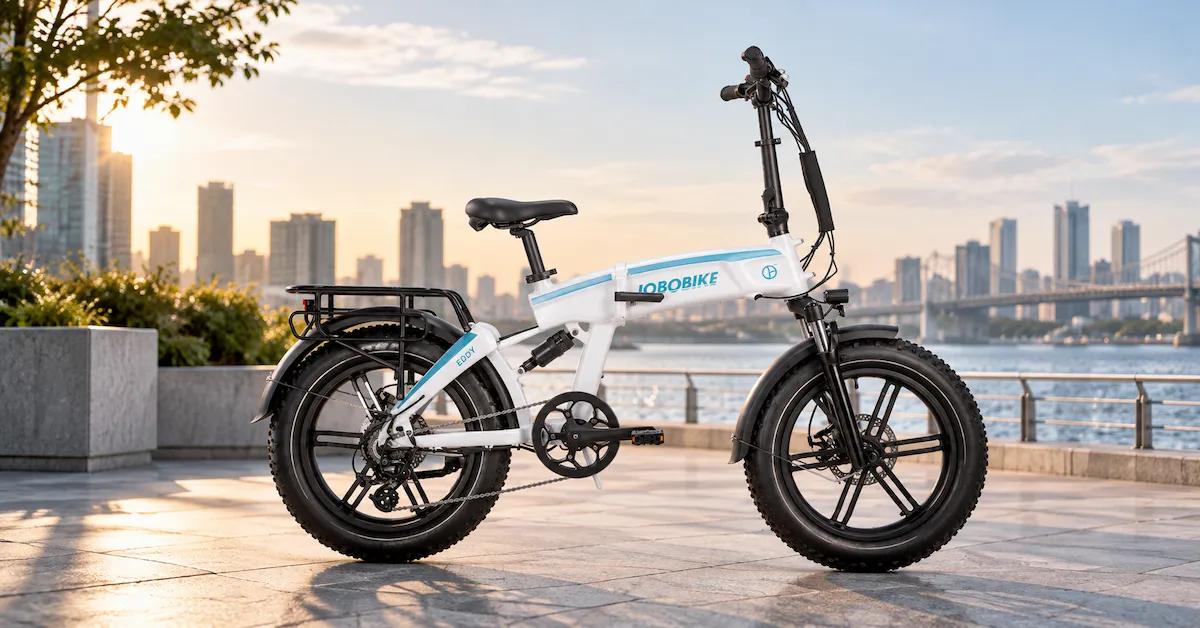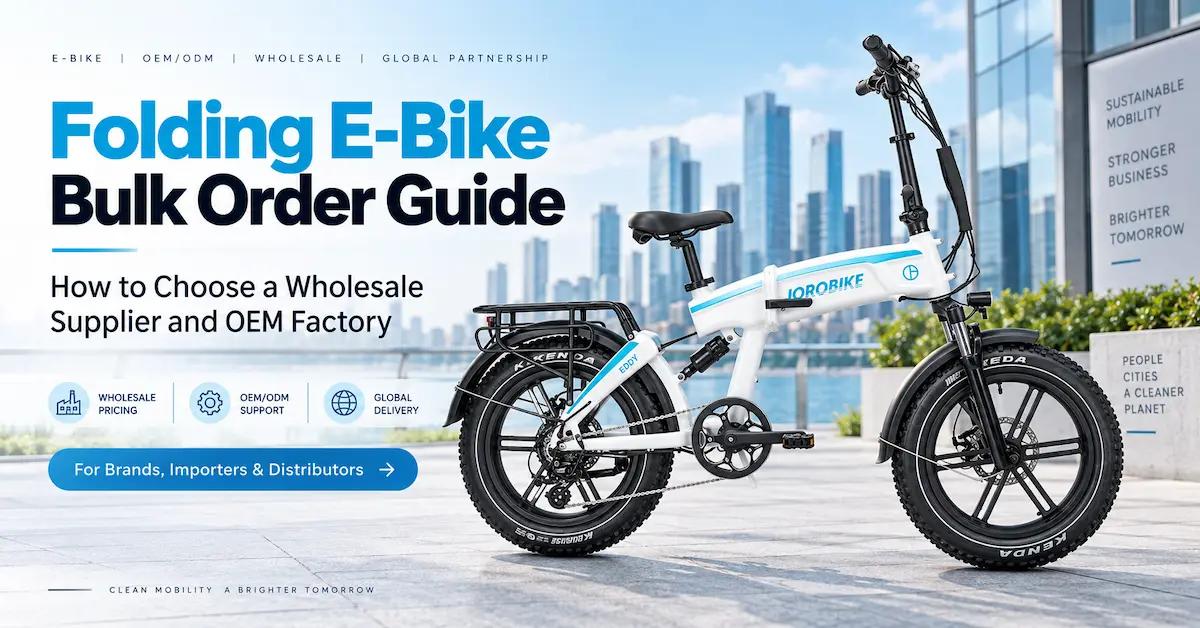
A folding e-bike can look simple in a product photograph. In a bulk order, however, the hinge, battery mount, wheel standard, cable routing, brake specification and packaging method all become commercial decisions. A retailer may need a light commuter that fits under a desk. A rental operator may need a reinforced folding platform that survives repeated adjustment. A private-label brand may need a distinctive frame, a stable bill of materials and a supplier that can keep the same specification through several seasons.
That is why a folding e-bike bulk order should begin with a use case and an acceptance plan, not with a single attractive image or the lowest unit price. This guide explains how to compare a folding electric bike wholesale supplier, evaluate a bulk folding e-bike manufacturer, and build a realistic path from first brief to repeat shipment. It uses JOBO's published folding-bike range and manufacturing capabilities as practical examples, while separating factory claims from specifications that still need project confirmation.
Request a Folding E-Bike Bulk Quote
1. Why folding e-bikes are attractive for bulk buyers
Folding models solve a space problem that standard bicycles cannot always solve. They can move from a train platform to an office, fit into a camper, be stored in a small apartment, or be stacked more efficiently in a service room. For a business, this flexibility can influence the whole operating model. A property manager can store more units in the same room. A rental company can move a mixed fleet in a van. A dealer can show several wheel sizes without filling an entire showroom.
The commercial value is not simply that the bike folds. The commercial value is the combination of compact storage, ride stability when open, a repeatable folding action, protected cables, a secure battery interface and components that local technicians can service. A folding frame that is difficult to lock, rattles after a few weeks or requires an unusual spare part can create more cost than its compact size saves.
| Buyer objective | What to check | Why it matters in a bulk order |
|---|---|---|
| Urban commuting | Folded footprint, carry points, assist feel, lights and mudguard options | Determines daily convenience and return rates |
| Rental or shared use | Hinge durability, simple controls, standard parts, tracking and inspection access | Controls uptime and technician time |
| Private label retail | Frame identity, color, packaging, manuals, software language and warranty process | Creates a recognizable product instead of a generic listing |
| Travel and leisure | Weight, folded size, tire width, range and trailer or rack compatibility | Defines whether the product works in real transport situations |
2. Define the buyer and the environment before requesting a quote
The first document sent to a supplier should describe the rider and the environment in which the bike will work. “Folding e-bike” is a category, not a complete specification. A commuter riding on smooth cycle lanes does not need the same hinge reinforcement, tire volume or brake heat capacity as a rental bike used on cobblestones and steep streets.
Record the target rider height range, expected payload, daily distance, maximum gradient, surface type, weather exposure, charging location and storage method. If the bike will be carried upstairs, weight becomes a primary requirement. If it will be placed on a bus or train, folded dimensions and exposed controls deserve more attention. If it will be used by many riders, the supplier should explain how the folding mechanism is inspected and adjusted.
Regulatory classification must be part of the same conversation. Motor rating, maximum assisted speed, throttle behavior, lighting, reflectors, battery documentation and labeling can vary by market. A high-power folding platform may not be treated as an ordinary pedal-assist bicycle in every country. Ask the OEM folding electric bike supplier to map the chosen configuration to the target market instead of assuming that a certificate for one model covers every variation.
3. How to compare a folding electric bike wholesale supplier
A wholesale supplier can be a trading company, an assembler, a design house or a factory with internal engineering. Those models can all work, but the buyer should know which one is being evaluated. For a first small test order, a trading company may offer convenience. For a private-label program, a factory with direct control of the frame, paint, assembly and testing usually gives better control of changes.
Use the following questions in the first supplier call:
- Which folding platforms already exist, and which parts can be customized?
- Does the supplier own or directly control the frame tooling, welding and coating?
- What is the approved sample process, and how is the production sample stored?
- Which components are fixed in the BOM and which substitutions are allowed?
- Can the supplier provide frame fatigue, brake, battery and complete-bike test records?
- How are serial numbers, battery batches and warranty claims traced?
- What is the realistic lead time for samples, first production and repeat orders?
- Which documents are supplied for the destination market?
JOBO presents itself as a China-based OEM and ODM manufacturer with a Poland assembly and distribution base. Its China factory page describes a 50,000 m² operation, three assembly lines, in-house frame production, automated painting, 35+ engineers and ISO9001/5S processes. These statements are useful starting evidence, but a buyer should still request current capacity allocation, the actual quality plan and the exact production location for the chosen model.

4. Folding platform choices: wheel size, motor and battery
The right folding platform is a set of trade-offs. Smaller wheels can reduce folded size and make the bike easier to maneuver indoors. Larger wheels can roll more smoothly over cracks and uneven pavement. Fat tires add comfort and grip but increase rolling resistance, weight and storage volume. There is no universally best configuration; there is only a configuration that fits the route and the buyer.
| Configuration direction | Strengths | Trade-offs to explain to customers |
|---|---|---|
| Compact 20-inch commuter | Easy storage, agile steering, strong multi-modal story | Less rollover comfort than a larger wheel on broken roads |
| 20-inch fat-tire folder | Extra grip and cushioning for gravel, wet streets and leisure use | Heavier and wider when folded; higher tire and motor load |
| Mid-drive folding bike | Natural climbing feel, central mass and efficient gearing | Higher system cost and more demanding integration |
| Hub-motor folding bike | Simple architecture, predictable sourcing and easy service | Weight at the wheel and different hill performance under load |
| Dual-battery platform | Longer operating window for delivery or touring | More weight, charging logistics and battery documentation |
JOBO's published folding category includes 20 Inch Electric Bike, Adult Folding Electric Bike, Fast Electric Folding Bike, Fat Tire Electric Folding Bike, Lightweight Foldable E Bike, Long Range Folding E Bike and Mid Drive Folding Ebike. Product pages show examples ranging from a 36V250W commuter platform to a 48V750W mid-drive folding configuration. Treat those as platform examples rather than a promise that every stock unit has the same motor, battery or speed.
5. Frame and hinge engineering: the point that deserves the most attention
For a folding bike, the frame is both a riding structure and a moving product interface. The hinge must hold alignment under pedaling, braking, curb impacts and repeated folding. The locking action should be clear enough for a first-time user, while the open frame must not feel loose. The battery, cables and display should remain protected when the frame is folded and unfolded.
A serious folding e-bike factory China should be able to discuss tube geometry, hinge material, locking tolerances, welding sequence, heat treatment, alignment inspection and fatigue validation. JOBO's frame factory describes CNC tube cutting, drilling and bending, grinding, washing, robotic welding, T4/T6 heat treatment, correction and measurement, coating and final testing. The page also describes internal cable routing, integrated battery down-tubes and folding-frame development. Ask for the actual drawing revision, hinge inspection points and test cycles for your model.
Do not accept “aluminum frame” as a complete technical answer. Ask whether the frame is 6061, 7005 or another alloy; whether the heat treatment follows the welding operation; which areas are reinforced; and how the frame is checked after correction. Ask how the hinge is protected from water, grit and accidental partial locking. These details are useful blog topics because they explain why two bikes with the same wheel size can have very different long-term behavior.
6. Battery, charging and range: make the promise testable
Range claims are easy to misunderstand. A 48V15Ah battery stores approximately 720Wh before system losses, but real-world distance depends on rider mass, cargo, wind, temperature, tire pressure, gradient, assist level and stop-start traffic. A bulk buyer should request the test conditions behind every range figure and should define a conservative customer-facing range rather than repeating the most optimistic number.
For a folding platform, battery placement also affects folded balance and protection. An integrated down-tube battery can create a clean appearance and a lower center of gravity, while a removable external battery may be easier to swap or charge. Decide whether the fleet needs one battery per bike, a spare-battery rotation, a locked charging cabinet or a take-home charging model.
- Confirm nominal voltage, rated capacity, cell supplier, BMS and charger specification.
- Ask for transport documentation, safety data and target-market battery requirements.
- Define charging temperature, storage state of charge and long-term storage instructions.
- For a fleet, record battery serial numbers and replacement thresholds.
- Ask how thermal shock, charging and functional tests are recorded for each batch.
7. Brakes, tires and serviceability for a bulk program
Folding bikes often carry more equipment in a smaller envelope. That makes service access important. A dealer should be able to reach the brake caliper, controller, wiring connectors and hinge adjustment points without dismantling half the bicycle. Rental operators should be able to replace tires, pads, cables and displays using a controlled spare-parts list.
Mechanical disc brakes can be straightforward to service in a broad dealer network. Hydraulic discs can offer stronger feel and better control under load, but require compatible tools and bleeding procedures. Wide tires may improve comfort and grip, but they need correct pressure and fender clearance. Include these choices in the specification and in the service manual, not only in a sales image.
8. Quality control: what a dependable bulk folding e-bike manufacturer should show
Quality is not one final inspection. It is a chain of decisions that starts with the incoming component and ends with a traceable shipment. JOBO's QC Labs page describes IQC for incoming materials, IPQC for in-process control using SPC, FQC for finished-bike functional, cosmetic and regulatory checks, and QA for audits and CAPA. The page also lists frame fatigue, jitter, brake fatigue, complete-bike, battery thermal-shock and motor dynamometer equipment.
For your own project, turn those capabilities into an agreed control plan. Identify the critical-to-quality characteristics: hinge alignment, lock engagement, weld appearance, battery fit, brake stopping behavior, display functions, folded dimensions and carton protection. Define the sample size, measurement tool, acceptance limit, reaction plan and record owner. A factory may have excellent equipment, but the buyer still needs to define what “pass” means for this model.
| Control stage | Example folding-bike check | Document to request |
|---|---|---|
| IQC | Battery, hinge hardware, tire, brake and charger incoming inspection | Supplier inspection record and batch traceability |
| IPQC | Weld, alignment, hinge torque, cable routing and torque-controlled fasteners | Process checklist and SPC trend |
| FQC | Fold/unfold function, assist levels, braking, lights, display and cosmetic finish | Final inspection report and serial-number list |
| QA | Audit, nonconformance review, CAPA and change approval | Corrective-action report and change log |
9. Building a private-label folding e-bike program
A private label folding e-bike manufacturer should help the buyer create a consistent ownership experience, not just print a logo on a frame. Prepare a brand kit that covers logo placement, paint references, reflectors, display language, packaging, charger label, manual, warranty card, QR code, app name and spare-parts packaging. Keep the brand requirements separate from the technical BOM so that a paint change does not accidentally alter a safety-critical component.
Start with one approved sample. Photograph the folded and unfolded positions, measure the key dimensions, record the serial numbers of the battery and display, and sign the sample with both parties. When a component changes, compare it against the approved sample and document the reason. This simple discipline prevents a common bulk-order problem: the first shipment matches the marketing photograph, while the next shipment quietly uses a different fork, controller or battery casing.
NDA and design confidentiality are especially important when the frame geometry is custom. Ask who owns the CAD files, whether tooling is exclusive, how subcontractors are controlled and what happens when the project ends. A supplier that is comfortable discussing confidentiality is easier to trust with a design that gives your brand a real market difference.
10. MOQ, pricing and lead time: compare the complete landed decision
Unit price is only one line in a folding e-bike bulk order. Add tooling, sample freight, packaging, battery transport, inspection, payment terms, spare parts, warranty reserve, import costs, warehouse handling and local assembly. Ask the supplier to separate one-time engineering costs from recurring unit costs. For a new brand, a slightly higher sample budget may reduce the risk of a much larger first production mistake.
Lead time also needs a clear start point. “Thirty days” may mean after deposit, after artwork approval, after battery availability or after the approved sample. Ask for milestones: drawing freeze, component purchase, frame completion, paint completion, assembly, QC release and dispatch. A Poland-based assembly option can be relevant for European stock or local support, but the buyer should confirm whether it applies to the selected folding model, whether the unit is genuinely in stock and which delivery promise is contractual.which delivery promise is contractual.

Ask About EU Folding E-Bike Assembly
11. A practical nine-step workflow for your next order
- Write the application brief. State rider, payload, route, climate, storage and sales channel.
- Choose the platform. Compare wheel size, tire width, hub or mid-drive, battery position and folded footprint.
- Request a line-by-line specification. Include every safety and service component, not only the headline motor.
- Review factory evidence. Examine frame capability, testing equipment, certifications and the actual team responsible.
- Build the prototype. Test folding action, carrying, riding, charging and service access with real users.
- Run validation. Include frame fatigue, brake, battery, complete-bike and environmental checks that match the use case.
- Approve the sample and freeze the BOM. Define the reference unit, substitutions and change-control rules.
- Plan production and delivery. Align capacity, packaging, documents, spare parts and stock location.
- Measure the first batch. Record defects, warranty signals, rider feedback and improvement actions before the reorder.
12. Questions to ask before signing the purchase order
- Which exact model code and revision appear on the purchase order?
- Which battery, motor, controller, fork, brake and display brands are approved?
- What are the folded dimensions and weight with and without the battery?
- What load, speed and range conditions support the published performance?
- Which tests are performed on the frame, hinge, battery and complete bike?
- What happens if a component becomes unavailable?
- Who supplies CE, EN15194, EMC, RoHS, battery and transport documentation where applicable?
- How many spare parts are included, and how can the dealer reorder them?
- What is the warranty response time and who pays for diagnostic shipping?
- What data, drawings and tooling remain confidential?
13. Make the first shipment a learning shipment
The first commercial shipment should have a clear learning objective. That does not mean accepting avoidable defects. It means deciding in advance which observations will improve the next order. A commuter brand may measure how many riders can fold the bike without reading the manual. A rental operator may record hinge adjustments, brake-pad wear and battery charging time after a defined number of rides. A delivery company may compare the planned route, actual payload and remaining battery percentage at the end of each shift.
Share the results with the supplier in a structured report. Include the model code, production batch, serial number, riding conditions, photographs and the requested corrective action. Separate a safety issue from a cosmetic preference and a design change from a manufacturing defect. This helps the factory prioritize work and gives your team a defensible record when deciding whether to reorder, revise the platform or introduce another wheel and battery option.
For a private-label program, the customer experience is part of the product. Review the carton opening sequence, the amount of assembly required, the clarity of the folding instructions, charger labeling, QR codes, service contact details and the availability of replacement hinges or cables. A technically capable OEM folding electric bike supplier should be willing to review these details because they affect warranty cost and dealer confidence as much as the motor or frame.
Finally, keep a version-controlled content pack. The product page, dealer sheet, manual, certificate list, photos and advertising claims should all refer to the same approved configuration. When the battery, fork, display or tire changes, update the pack before the next shipment. This practice protects the buyer from mismatched claims and helps the bulk folding e-bike manufacturer keep production, inspection and documentation aligned.
Conclusion: choose a folding e-bike partner that can repeat the result
The best folding e-bike bulk order is not the one with the most dramatic specification. It is the one that can be specified clearly, tested honestly, produced consistently and supported after delivery. A good supplier helps you connect rider needs to frame geometry, battery strategy, brake selection, service parts and compliance documents. It also makes change control visible, so your second production run does not become a different product by accident.
JOBO's public range covers compact, fat-tire, long-range and mid-drive folding platforms, while its published capabilities include in-house frame manufacturing, automated painting, China scale production, QC laboratories and Poland-based European assembly. For a serious program, use those capabilities as the beginning of a technical conversation. Send the target market, annual quantity, use case, desired folded dimensions and preferred component level. The faster both sides can turn those details into an approved sample and a frozen BOM, the more predictable the final wholesale result becomes.