Quick Answer
A realistic folding electric bike wholesale price cannot be selected from a product photo alone. The quote normally depends on the frame, wheel and tire format, motor, battery, controller, brakes, display, packaging, order volume, branding, testing, Incoterms, and destination. Buyers should compare the complete landed-cost model, not only the ex-factory number. A reliable supplier should also show repeatable production, a test process, model-specific compliance documents, a clear sample path, and service support after delivery. JOBO's public product and factory pages describe folding platforms, OEM/ODM customization, in-house frame work, China production, and European assembly support; a project quote still needs a detailed RFQ.
Introduction: Why Folding E-Bike Pricing Is a Business Decision
Dealers often search for a single number when they type folding electric bike wholesale price into Google. That is understandable. A buying team has a target retail price, a launch date, and a limited budget. The problem is that a folding electric bike is not one standardized product. A compact 36V commuter model, a 48V fat-tire bike, and a mid-drive platform may all be called a folding e-bike while serving different customers and carrying very different costs.
For an urban retailer, the hinge, folded footprint, carrying weight, removable battery, and low-step geometry may matter more than peak motor output. For a rental operator, the priorities may shift to frame durability, battery replacement, service access, and spare parts. A private-label brand may care about the same hardware but also need a specific paint color, logo placement, packaging, firmware language, and compliance file. A quote that looks cheap at the beginning can become expensive once returns, warranty labor, slow-moving inventory, and missing documents appear.
This is why a distributor should treat price as a decision model. The right question is not simply, “What is the unit price?” It is, “What will this configuration cost to buy, land, sell, support, and reorder at the quality level my market expects?” The sections below turn that question into a practical sourcing process.
What Is a Folding Electric Bike Wholesale Price?
A folding electric bike wholesale price is the supplier's charge for a defined e-bike configuration at a defined commercial term and order quantity. The definition matters because EXW, FOB, CIF, DDP, and a warehouse price are not interchangeable. A supplier can quote the same bike at different numbers depending on whether the buyer collects it at the factory, receives it at a port, or receives it in a local distribution warehouse.
The price is usually built from several layers:
- Product hardware: frame, hinge and latch, fork, wheels, tires, drivetrain, brakes, motor, battery, controller, display, lights, charger, and accessories.
- Manufacturing work: cutting, welding, heat treatment, painting, assembly, inspection, test riding, and final packing.
- Commercial configuration: logo, color, labels, packaging, manuals, language, software settings, and spare-parts package.
- Project cost: samples, tooling, engineering, testing, certification review, and development changes.
- Trade and logistics cost: inland transport, export documents, freight, insurance, duty, brokerage, warehousing, and local delivery.
In other words, “wholesale” describes the buying relationship, not a universal specification. A useful RFQ names the exact model, the required components, the destination, the order size, and the chosen Incoterm.
What Drives Folding Electric Bike Wholesale Price?
1. Frame and folding mechanism
The folding joint is a structural part, not a decorative feature. A secure hinge, latch, alignment system, and reinforced tube area require more engineering than a basic rigid frame. The supplier should explain how repeated folding is validated and how the frame is checked for play, cracking, misalignment, and weld quality. JOBO's folding frame page describes precision aluminum frames, secure locking structures, compact folded footprints, and durability validation for OEM mobility brands. Those are useful questions to carry into a quote review, even when a buyer is comparing several factories.
2. Wheel size, tire format, and ride position
Small wheels can reduce folded length, while 20-inch wheels often offer a more familiar ride for commuters. Fat tires add material, rolling resistance, and shipping volume, but they may create a stronger value proposition for gravel, beach, rental, and mixed-surface use. Stem height, saddle travel, handlebar width, and center of gravity also influence how comfortable the bike feels after it is unfolded. JOBO's product range includes compact urban folding platforms, wide-tire folding models, and long-range or mid-drive options, which shows why a dealer should define the intended application before comparing numbers.
3. Motor and battery system
A 36V city system and a 48V high-torque system will not carry the same bill of materials. Battery cell brand, capacity, enclosure, removable design, charger, controller, wiring, and battery management system all affect price and service risk. A large battery can support longer rides, yet it may increase weight and transport restrictions. A buyer should ask whether the quoted capacity is nominal or usable, which cell supplier is used, how replacement batteries are priced, and whether the controller and display are matched to the motor.
4. Brakes, suspension, and contact points
Mechanical disc brakes, hydraulic brakes, suspension forks, lighting, racks, baskets, mudguards, and comfort saddles are often treated as small options. Across a 100-unit or 1,000-unit order, they are not small. They also influence a retailer's positioning. A delivery-oriented model may justify a stronger fork, rack, and brake package. A lightweight commuter may be better served by a simpler configuration that is easier to carry upstairs.
5. Customization and order volume
Existing-platform OEM is usually faster and less expensive than deep ODM. Changing a logo and box is different from changing a hinge, redesigning a battery mount, or creating a new frame mold. This is why MOQ and development cost should be evaluated together. A low unit price on a large order may not be the best fit if the buyer is still testing demand. Conversely, a small trial order can carry a higher unit price but reduce inventory risk.
Illustrative Price Bands for Planning
The table below is a planning framework, not a JOBO price list or a binding quotation. The bands are intentionally broad because motor, battery, components, compliance, packaging, currency, and freight change the result. Use them to structure a conversation, then request a project-specific offer.
| Configuration family | Typical commercial position | Illustrative ex-factory planning band* | Best fit |
|---|---|---|---|
| Compact 36V urban folder | Lightweight, simple commuter equipment, removable or integrated battery | US$350-US$550 | Urban retail, e-commerce, last-mile commuting |
| 20-inch commuter folder | More familiar ride position, stronger daily-use equipment | US$450-US$700 | Dealers, city mobility brands, train-plus-bike programs |
| 48V fat-tire folder | Wide tires, higher-torque system, suspension and all-terrain positioning | US$550-US$900 | Outdoor retail, tourism rental, mixed-surface users |
| Mid-drive or premium folder | Higher-value drivetrain, battery, controls, and component package | US$800-US$1,300+ | Performance brands and premium commuter programs |
| Folding frame only | Frame, hinge, finish, and selected hardware without a complete bike | US$120-US$280+ | Assemblers and brands with their own system integration |
*Illustrative budgeting only. It is not an official JOBO quotation, and it excludes destination charges unless stated. Confirm the specification and Incoterm in writing.
For a real quote, send the supplier a one-page RFQ that states wheel size, motor type and rating, battery voltage and capacity, cell preference, brakes, fork, display, charger plug, color, logo, packaging, target market, annual volume, trial quantity, destination, and desired delivery term. A supplier who responds with a complete BOM is easier to compare than one who responds with a single attractive number.
How to Estimate Folding E-Bike Distributor Cost
Many buyers use the phrase folding e-bike distributor cost to mean the unit price on the supplier's invoice. In practice, the distributor cost should include every cost required to place a saleable bike in the channel. A simple model is:
Landed unit cost = supplier price + origin charges + international freight + insurance + duty and brokerage + destination handling + inspection + warranty reserve + allocated development cost.
Consider an illustrative 100-unit order. The supplier price is US$650 on an agreed factory term. Packaging and origin handling add US$30. Freight and insurance add US$72 per bike when the container is full. Import duty, brokerage, and local handling average US$93 in this example. A distributor also reserves US$25 for warranty parts and after-sales labor. The modeled landed cost becomes US$870 per unit before sales commission and marketing.
| Cost line | Illustrative amount | Why it belongs in the model |
|---|---|---|
| Supplier price | US$650 | Defined model and configuration at the agreed Incoterm |
| Packaging and origin handling | US$30 | Carton, protection, export handling, and local movement |
| Freight and insurance | US$72 | Transport allocation changes with route, season, and volume |
| Duty, brokerage, destination handling | US$93 | Depends on tariff classification, origin, and destination rules |
| Warranty and service reserve | US$25 | Protects margin against replacement parts and technician time |
| Modeled landed cost | US$870 | Planning figure, not a supplier quote |
That model also exposes where a supplier can create value. A slightly higher product price may be reasonable if it reduces defect risk, arrives with complete documentation, uses a better battery system, or shortens the replenishment cycle. A lower ex-factory price may be false economy if the buyer needs to replace hinges, displays, chargers, or batteries after delivery.
Folding Electric Bike Supplier for Dealers: What to Check
A dealer-facing supplier has to support more than the first shipment. The buying team should assess five areas before signing a purchase order.
Product fit
Ask who the bike is designed for. A short commute, a mixed train journey, a rental loop, and an outdoor trail are different use cases. Check folded dimensions, weight, hinge access, battery removal, wheel and tire format, rider fit, and the availability of racks or baskets. JOBO's official folding product pages describe compact urban models, all-terrain fat-tire models, and mid-drive models with features such as quick-fold mechanisms, integrated batteries, suspension, LCD displays, and trailer compatibility. Use those pages as a starting point, then request the exact technical sheet for the model you are considering.
Factory capability
A folding electric bike supplier for dealers should show how it keeps quality consistent when the order repeats. JOBO's factory pages describe China production with in-house frame work, automatic painting, and high-speed assembly, plus a Poland facility for EU assembly and support. A buyer should still ask for current capacity, production slots, sample approval procedure, batch records, and change-control rules. Claims such as “up to” capacity should be treated as a ceiling to verify, not as a guaranteed monthly allocation.
Compliance and documentation
Do not accept a generic “CE available” statement as a substitute for a model-specific file. Request the declaration, applicable test reports, battery documents, charger details, manuals, labels, and serial-number traceability that match the actual configuration. JOBO's public pages reference EN15194, CE, ISO9001, and TÜV-related work, while its QC Labs page describes IQC, IPQC, FQC, QA, fatigue, battery, brake, motor, and complete-bike testing. Those are valuable signals; the purchasing file must still identify the exact model and market.
After-sales support
Ask how a dealer orders a replacement display, battery, charger, hinge part, brake component, or controller. Clarify the warranty period, response time, remote diagnosis, spare-parts pricing, and the procedure for a batch issue. Folding bikes have more moving hardware than rigid city bikes, so service readiness affects the real margin.
Communication
Good communication sounds unglamorous, but it prevents expensive mistakes. The supplier should confirm drawings, color references, component substitutions, packaging artwork, sample comments, and shipping marks in writing. The best partner is not necessarily the company with the fastest first reply; it is the company that leaves a usable paper trail.
OEM Folding E-Bike Price: Existing Platform or New Development?
The phrase OEM folding e-bike price can hide two very different projects. In an existing-platform project, the buyer selects a proven frame and changes brand elements, color, packaging, or a limited set of components. In a deeper ODM project, the buyer may change the frame geometry, hinge, battery enclosure, motor integration, display, and testing plan. The second route can create a more defensible product, but it needs development time and budget.
| Project route | Typical changes | Price and timing effect | When it makes sense |
|---|---|---|---|
| Stock or catalog model | Standard configuration, limited accessory choice | Lowest development burden; fastest sample path | Demand testing and fast launch |
| Private-label OEM | Logo, paint, labels, packaging, manuals | Moderate setup and artwork work; core tooling already exists | Retail brand launch with controlled risk |
| Component customization | Motor, battery, fork, brakes, display, racks, or tires | Higher BOM and validation work; may change certification scope | Market-specific performance or price point |
| Deep ODM | New frame, hinge, geometry, battery integration, and tooling | Engineering, samples, testing, tooling, and longer lead time | Distinctive platform with long-term volume potential |
JOBO's folding frame page highlights secure folding structures and aluminum frame development, while its product pages present several ready platforms for urban, fat-tire, long-range, and mid-drive applications. For many first-time distributors, a sensible sequence is to validate one existing platform, collect customer feedback, and then fund deeper changes after demand is visible.
Bulk Folding E-Bike Pricing: Why MOQ Changes the Quote
When buyers compare bulk folding e-bike pricing, they should separate production volume from customization volume. A 500-unit order with one color and one battery may be operationally simpler than a 500-unit order split across five colors, three motor packages, and four destination labels. Complexity creates picking, testing, packing, documentation, and spare-parts work.
Ask the supplier for three numbers instead of one: trial MOQ, standard repeat MOQ, and custom-development MOQ. Also ask whether the MOQ applies per model, per color, per battery, or per production batch. A small trial can be commercially useful if it lets a dealer measure conversion and returns, but the unit price and freight allocation may be higher. A large first order can lower the unit cost while increasing inventory exposure.
JOBO's public blog content notes that MOQ depends on customization level and that existing models, color changes, private label work, new frame design, and full ODM have different requirements. Treat such statements as a framework for discussion rather than a universal promise. Put the selected route, quantity, and approval milestones into the quotation.

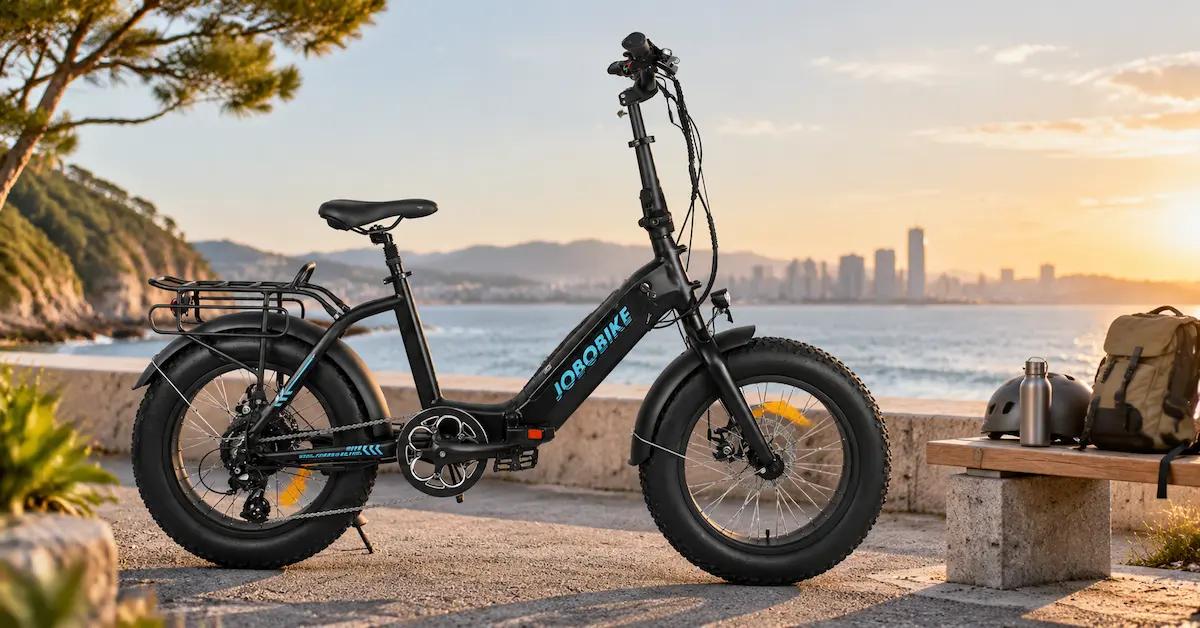
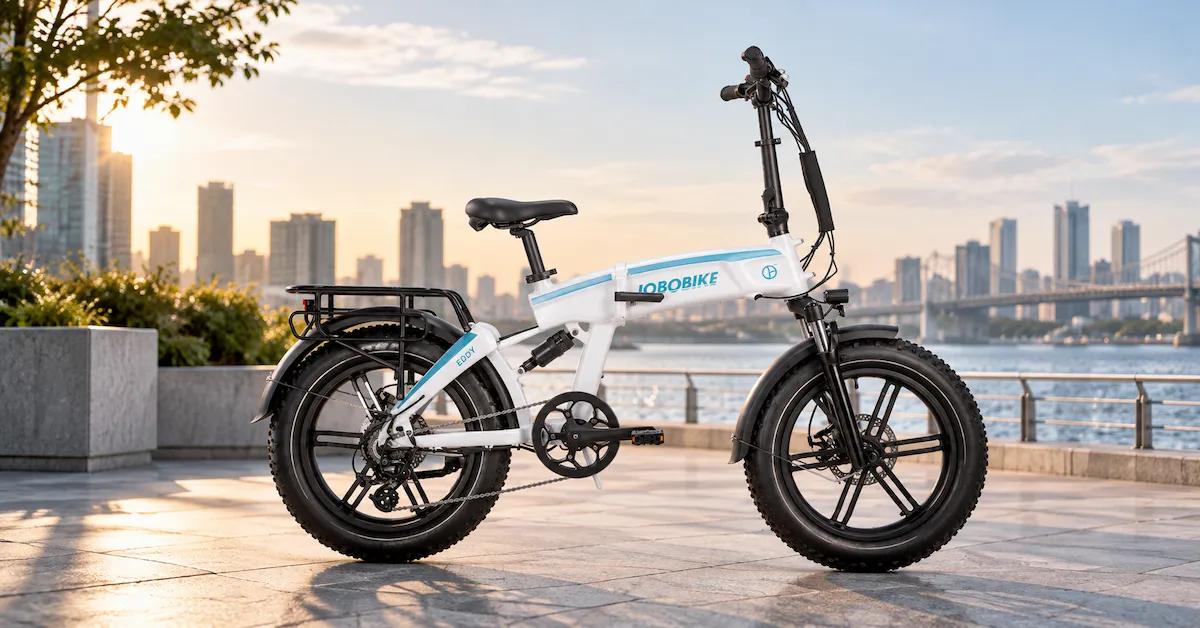
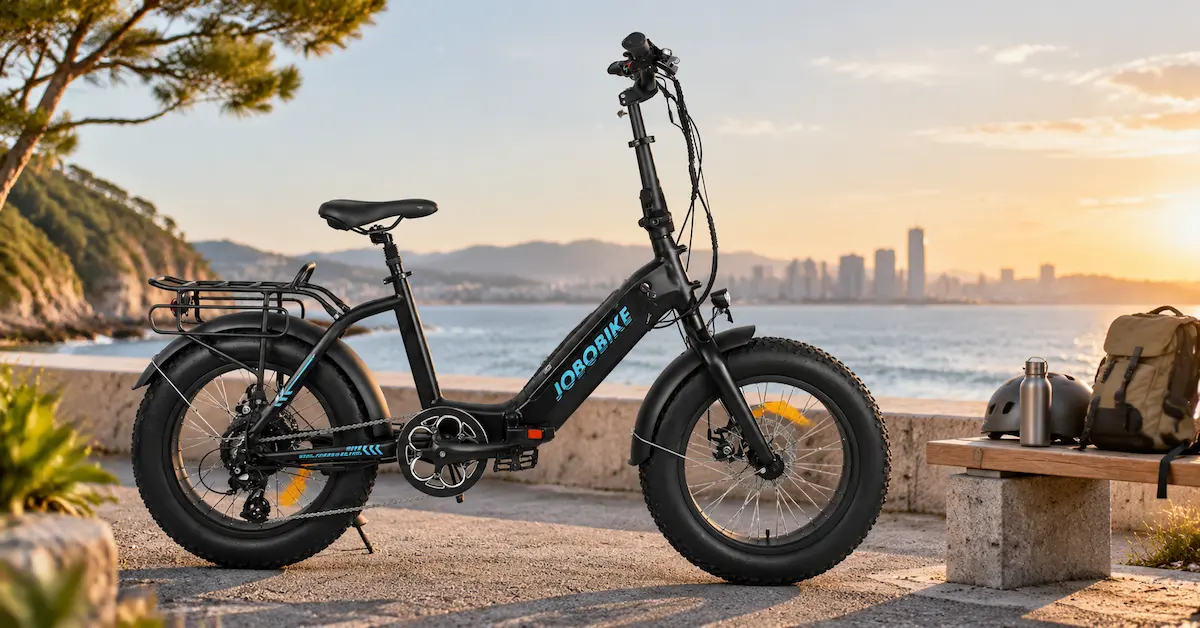
JOBO electric folding bike platform for compact urban mobility programs. Image source: official product page.
Folding E-Bike Wholesale Supplier: How to Compare Quotes
When you compare a folding e-bike wholesale supplier, compare the commercial system behind the product rather than the unit number alone. The supplier should be able to connect its model, components, production process, documents, and after-sales plan to your actual sales channel.
A quote comparison sheet prevents a common mistake: ranking suppliers by the first line in the PDF. Use the same column headings for every supplier and mark unknown items as “not quoted.” The following checklist is intentionally practical.
| Comparison field | Question for the supplier | Red flag |
|---|---|---|
| Model identity | What is the exact model, revision, SKU, and included configuration? | Marketing name only; no revision control |
| Frame and hinge | What material, latch system, inspection, and fatigue validation apply? | No clear hinge specification or spare parts |
| Battery | What cell, capacity, BMS, charger, warranty, and replacement price apply? | Capacity stated without cell or test information |
| Motor and controls | What is the nominal rating, controller, display, assistance mode, and firmware? | Power claim without configuration detail |
| Compliance | Which documents match this SKU and target market? | Certificate shown for another model |
| Commercial term | Is the quote EXW, FOB, CIF, DDP, or local warehouse stock? | Freight and duty responsibility is unclear |
| Production | What is the sample, approval, production, and replenishment schedule? | One vague lead-time number |
| Support | How are warranty cases, spare parts, and technical questions handled? | No named process after shipment |
JOBO's official product catalog, China factory page, European factory page, and QC Labs page provide useful public context for this comparison. A serious buyer should request the current sales quotation and technical documents for the chosen model before making a final decision.
Private Label Folding Electric Bike Cost
Brand owners searching for private label folding electric bike cost should budget beyond the logo. A credible private-label launch may include artwork, paint sample approval, carton design, manuals, labels, app or display language, photography, sample freight, inspection, spare parts, and a marketing batch. The setup can be modest for a proven platform, but it grows when the brand asks for a new hinge, new battery housing, or a market-specific electrical configuration.
One useful way to control cost is to create a “must-have, good-to-have, later” list. Must-have items may include the brand identity, legal labels, battery and charger requirements, and the wheel or frame size that defines the product. Good-to-have items may include a special rack, upgraded saddle, or a second color. Later items may include a new frame mold, smart connectivity, or a second motor option. This keeps the first order commercially focused.
JOBO's public product pages show examples of platforms that can be positioned for urban commuting, all-terrain riding, long-range use, and mid-drive performance. The right private-label choice depends on the dealer's customer, price ladder, service network, and expected repeat order, not on the longest feature list.
Electric Bike Distributor Margin Analysis
Good product selection is only half of the commercial decision. An electric bike distributor margin analysis should show gross margin at more than one stage. The distributor may sell to dealers, while a dealer sells to riders. Both parties need enough room for selling expense, warranty handling, promotions, payment fees, and inventory risk.
Using the earlier illustrative landed cost of US$870, imagine the distributor sells to a dealer at US$1,080. The distributor's gross margin is US$210, or 19.4% of the selling price. If the dealer sells the bike at US$1,599, the dealer's gross margin before retail operating expense is US$519, or 32.5% of the retail price. The percentages are not promises; they simply show why a low supplier price does not automatically create a healthy channel.
| Margin step | Illustrative amount | Formula | What it tells the buyer |
|---|---|---|---|
| Modeled landed cost | US$870 | All-in cost before selling expense | Real distributor cost, not just factory price |
| Distributor sell-in price | US$1,080 | US$1,080 - US$870 = US$210 gross profit | Room for sales commission, finance, and warranty admin |
| Distributor gross margin | 19.4% | US$210 / US$1,080 | Check whether the channel can fund growth |
| Suggested retail example | US$1,599 | US$1,599 - US$1,080 = US$519 gross profit | Dealer room before rent, staff, ads, and discounts |
| Dealer gross margin | 32.5% | US$519 / US$1,599 | Compare with the category's real selling expense |
Run at least three sensitivity cases: freight rises by 20%, the exchange rate moves against you, and the warranty reserve doubles. If the model breaks under a modest change, the buying price or retail positioning needs another look. Also calculate cash tied up in inventory. A bike that produces a theoretical margin but sits for nine months may be less attractive than a slightly more expensive configuration that turns quickly.
Quality, Testing, and the Cost of a Returned Folding E-Bike
Folding products make quality visible. A hinge that develops play, a cable that rubs during folding, a latch that does not align, or a battery that is difficult to remove can generate support tickets even when the bike looks excellent in a photo. The economic cost includes two-way freight, inspection time, replacement parts, technician labor, marketplace penalties, and lost customer trust.
JOBO's QC Labs page describes testing for frame fatigue, front-to-back jitter, disc-brake fatigue, complete-bike performance, battery thermal shock, and motor output. It also describes an IQC/IPQC/FQC/QA structure, SPC process monitoring, CAPA, and batch traceability. When evaluating a supplier, ask which of these checks are applied to the selected folding model, how often samples are taken, and whether the buyer can receive the test report or batch record.
For a dealer, the most useful quality discussion is practical: What fails most often? Which parts are stocked? How is a hinge adjusted? What is the average response time? Can the supplier ship a display or charger separately? These questions may feel less exciting than a new color, but they protect the margin that the pricing spreadsheet predicts.
China Production and European Assembly: When Location Changes Value
Location is part of the commercial offer, but it should not be reduced to a slogan. JOBO's company and factory pages describe a China base for frame production, painting, engineering, and large-scale assembly, together with a Poland facility for EU assembly, local support, and distribution. The Poland page also refers to 27 EU member states, in-stock delivery of 1-7 working days, and EN15194 and CE-related processes.
A European distributor should ask which operations happen in which location, where the inventory is held, what origin documentation is issued, which charges are included, and how warranty parts move. A Poland-based stock position may reduce replenishment time for an in-stock model. It does not automatically make every custom configuration locally available. A new OEM color, battery, or frame may still follow a China development and production path before European assembly or distribution.
Taxes, anti-dumping measures, and origin rules can change. Use the supplier's claim as a reason to request documents and a landed-cost calculation, not as a substitute for customs advice. The commercial value of a local base is strongest when the stock, service, documentation, and delivery promise are all specific to the SKU you plan to sell.
How to Write an RFQ That Produces a Useful Price
A buyer who wants a precise folding electric bike wholesale price should make the request easy to answer. Include the following:
- Target market and country of sale.
- Use case: urban commute, rental, tourism, delivery, mixed terrain, or another defined application.
- Preferred wheel size, tire format, frame material, folded dimensions, maximum rider load, and target bike weight.
- Motor type, nominal output, battery voltage, capacity, cell preference, removable or integrated battery, charger plug, and display.
- Brakes, fork, gearing, lighting, rack, basket, mudguards, kickstand, and other included accessories.
- Branding: logo method, paint colors, labels, manuals, packaging artwork, serial number, and barcode.
- Quantity: sample, trial order, first production order, annual estimate, and reorder cadence.
- Required documents: declaration, test reports, battery and charger files, manuals, and target-market labels.
- Commercial term: EXW, FOB, CIF, DDP, or European warehouse delivery, with the named destination.
- Approval gates: drawing, sample, pilot batch, inspection, and final shipment.
Ask for the supplier's response in the same structure. This makes it easier to identify a missing component, an assumed substitution, or a cost that was left outside the quote. It also gives the sales and engineering teams a single reference when the project changes.
JOBO Folding E-Bike Platforms to Review
JOBO's public product catalog gives buyers several starting points rather than one universal folding model:
- JB-TDN40Z electric folding bike: an ultra-light frame, quick-fold design, integrated seatpost battery, Bluetooth smart LCD, and low-step urban format.
- JB-TDN11Z small folding e-bike: a compact 6061 alloy platform aimed at short commutes, last-mile connections, storage, and multi-modal travel.
- JB-TDN49Z-F fat-tire folding bike: a wide-tire platform described with a high-torque motor, 48V 10.5Ah LG battery, and all-terrain positioning.
- JB-TDN52L-F mid-drive folding e-bike: a 48V system described with a long-range LG battery, Shimano NEXUS 3 internal gear, Bafang LCD, and trailer compatibility.
- TDN46Z-FS folding frame: a frame-only route for brands that want to integrate their own motor, battery, or assembly plan.
These descriptions come from official product pages. Treat every specification as model-specific and confirm the latest revision, availability, and market documentation before publishing a product sheet or promising a dealer.

Frequently Asked Questions
How much does a folding electric bike cost wholesale?
There is no single market-wide price. A planning range may be roughly US$350-US$550 for a compact 36V urban model, US$450-US$700 for a 20-inch commuter configuration, US$550-US$900 for a fat-tire 48V platform, and US$800-US$1,300 or more for a premium or mid-drive model. These are illustrative budgeting bands, not JOBO quotations. The exact price depends on the model, battery, components, order quantity, customization, Incoterm, destination, and documentation.
What affects OEM folding e-bike price most?
The largest drivers are usually the frame and hinge, motor and battery system, wheel and tire format, component package, order quantity, tooling, testing, packaging, and shipping term. A logo-only private-label project is very different from a new frame and battery integration project.
What is a sensible first order for a distributor?
Start with a configuration that matches one clear customer and can be serviced easily. Use a sample or small pilot to test fit, range, folding behavior, packaging, returns, and retail conversion. Ask the supplier to quote the pilot and the repeat order separately so the future cost path is visible.
Should dealers choose a low-cost folding e-bike?
Only when the low price still leaves room for the required brakes, battery, hinge validation, documentation, and support. The cheapest unit can be the most expensive choice if it produces returns or cannot be replenished consistently. Compare landed cost and expected service cost, not the first invoice line.
Does European assembly guarantee lower duty?
No automatic guarantee should be assumed. Origin, substantial transformation, product classification, applicable measures, and current customs rules matter. JOBO's Poland factory page describes EU assembly and anti-dumping duty advantages; a buyer should request current origin and customs documentation for the exact SKU and obtain independent advice where necessary.
How can I request a folding e-bike quote from JOBO?
Prepare an RFQ with the model or use case, motor and battery requirements, branding, quantity, destination, target documents, and preferred Incoterm. Then contact JOBO through the official contact page, where the public contact details include info@jobobikes.com and +86 198 8586 5520.
Need a Folding E-Bike Quote for Your Market?
Send JOBO your target application, configuration, quantity, destination, and branding requirements. The team can confirm the suitable platform, sample route, OEM options, documentation, and project-based pricing.
Request Folding E-Bike PricingBrowse JOBO folding e-bike platforms or review JOBO's manufacturing capabilities.