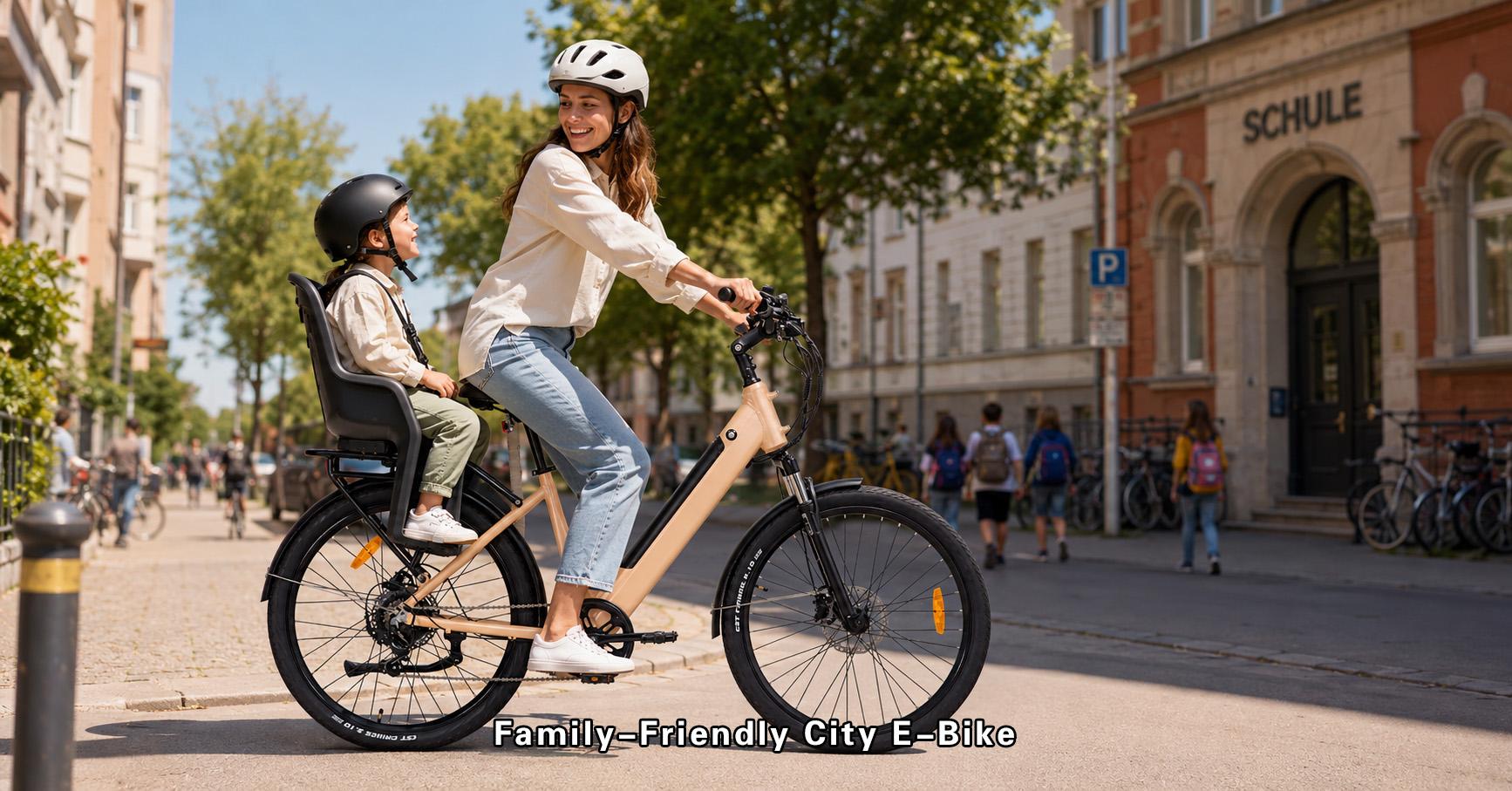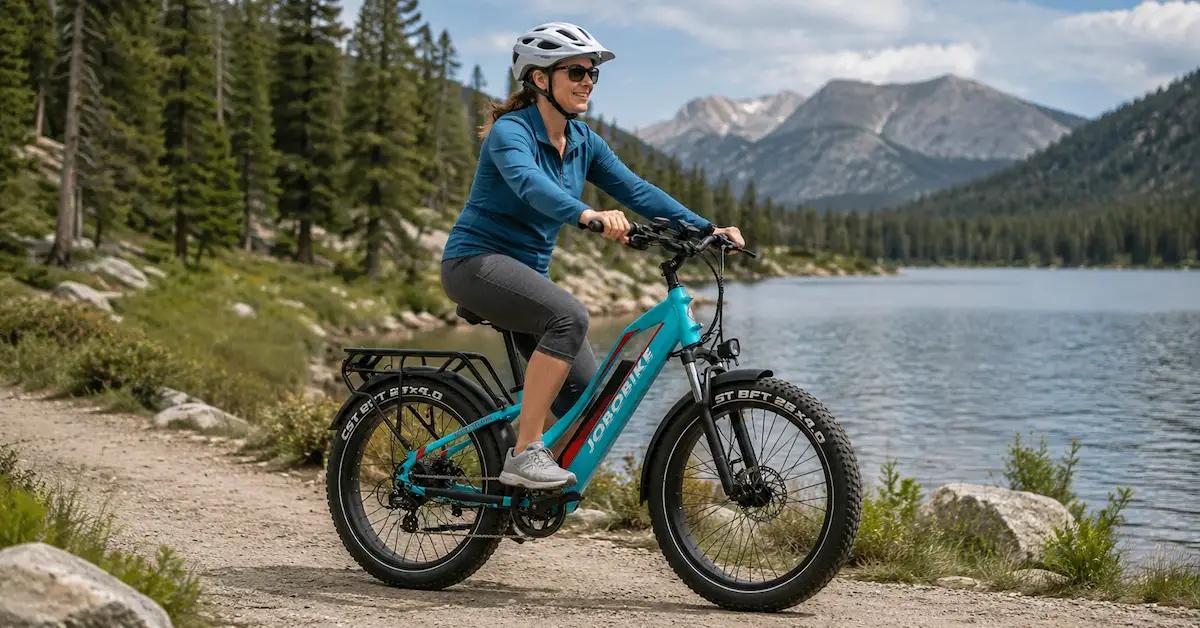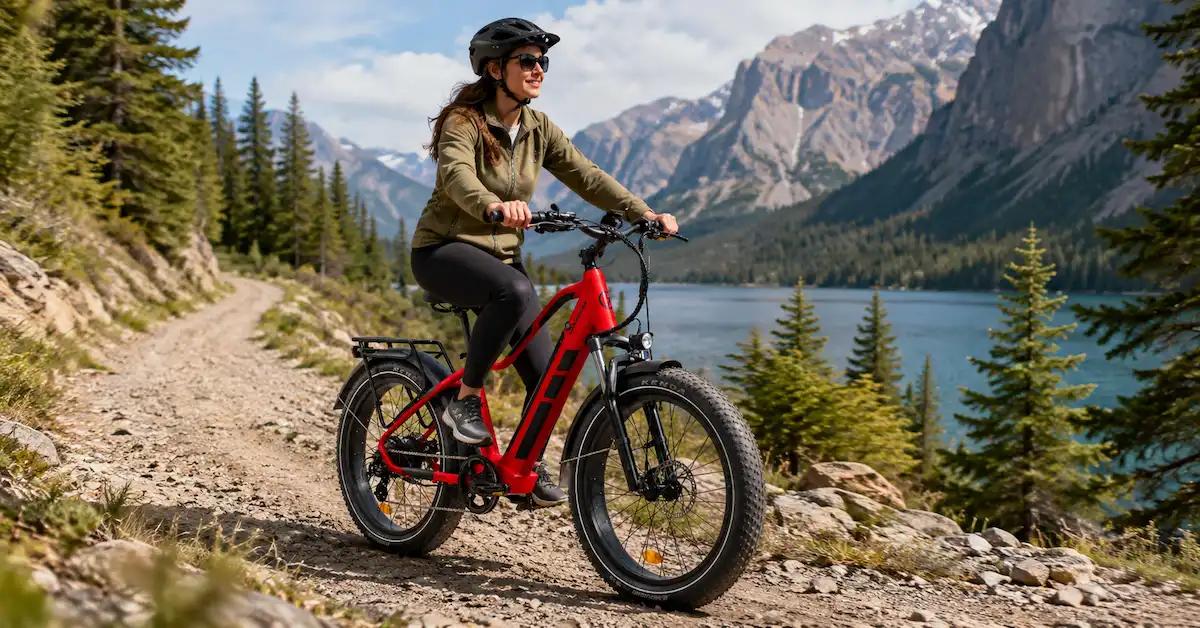
What Should an All Terrain E-Bike Manufacturer Actually Provide?
A professional all terrain e-bike manufacturer should provide more than a bicycle with wide tires and a high-output motor.
For B2B sourcing, an all-terrain e-bike should be engineered as a complete system capable of handling the target combination of:
pavement + gravel + dirt + sand + loose surfaces + uneven trails
without creating unnecessary weight, cost, battery consumption, or maintenance.
The most important sourcing question is therefore not:
“Does this bike have fat tires?”
It is:
“Has the manufacturer matched the frame, motor, battery, tires, suspension, braking, and drivetrain to the terrain my customers will actually ride?”
That difference determines whether an all-terrain e-bike becomes a commercially successful product or simply an expensive specification sheet.
The B2B Buying Answer
For brands and distributors sourcing all-terrain electric bikes, evaluate these seven systems together:
Terrain → Tires → Motor → Battery → Frame → Suspension → Brakes
Then evaluate whether the manufacturer can reproduce that configuration consistently through:
Prototype → Validation → Approved Specification → Mass Production → QC → Repeat Orders
A strong supplier should be able to explain why each component was selected for your intended market instead of simply recommending the highest available specification.
What Does “All Terrain” Really Mean?
The term all terrain e-bike can be misleading if buyers interpret it as “one bike performs perfectly everywhere.”
No electric bicycle is optimized equally for every surface.
A bike designed primarily for deep sand may require different tires, gearing, motor behavior, and energy capacity from one designed for gravel roads and forest tracks.
For procurement purposes, “all terrain” should mean:
A platform engineered to remain stable, controllable, and practical across several defined surface types.
Before contacting a manufacturer, buyers should identify the approximate riding mix.
For example:
- 50% paved roads
- 25% gravel
- 15% dirt trails
- 10% loose sand
That information is much more useful for engineering than simply requesting an “all terrain bike.”
Who Typically Buys All-Terrain E-Bikes in Bulk?
The keyword all terrain e-bike manufacturer has strong commercial and supplier-evaluation intent.
E-Bike Brands
Brands may use an all-terrain model to create a broader outdoor or adventure product line.
They often need:
- private-label branding;
- custom colors;
- motor choices;
- battery options;
- tire configurations;
- frame changes;
- accessories;
- packaging.
Distributors and Importers
Distributors usually care about more than performance.
They also need:
- stable specifications;
- repeat-order availability;
- target-market compliance;
- manageable spare parts;
- reasonable warranty risk;
- clear product positioning.
Resort and Tourism Operators
All-terrain e-bikes may be suitable for businesses whose routes combine:
- resort roads;
- coastal paths;
- gravel;
- countryside trails;
- firm off-road surfaces.
For these customers, durability and maintenance may matter more than extreme performance.
Adventure Rental Fleets
Rental operators expose bikes to frequent use by riders with different skill levels.
Their priorities may include:
- stable handling;
- predictable motor assistance;
- durable tires;
- easy battery charging;
- simple inspections;
- standardized spare parts.
Outdoor Mobility Projects
Large properties, parks, recreation operators, and similar businesses may need a bike that can move between paved and unpaved areas without changing vehicle type.
Who May Not Need an All-Terrain E-Bike?
A buyer should also know when not to choose this category.
An all-terrain platform may add unnecessary cost when customers ride almost entirely on:
- smooth urban roads;
- short commuter routes;
- indoor campuses;
- paved bike paths.
Fat tires, larger batteries, stronger motors, and suspension generally add:
- weight;
- cost;
- rolling resistance;
- maintenance;
- shipping volume.
If the application is 95% pavement, a city or commuter e-bike may create a better commercial product.
A supplier willing to recommend a simpler bike when appropriate is often more valuable than one that automatically sells the highest specification.
Start With Terrain Before Choosing Specifications
A practical sourcing matrix can look like this:
| Target Terrain | Tire Priority | Motor Priority | Suspension Priority | Main B2B Concern |
|---|---|---|---|---|
| Pavement + gravel | Efficiency + grip | Moderate | Comfort | Weight and range |
| Gravel + dirt | Traction | Medium-high | Important | Control |
| Forest trails | Grip + durability | High | Important | Frame and braking |
| Sand / loose ground | Wide footprint | High | Moderate | Energy consumption |
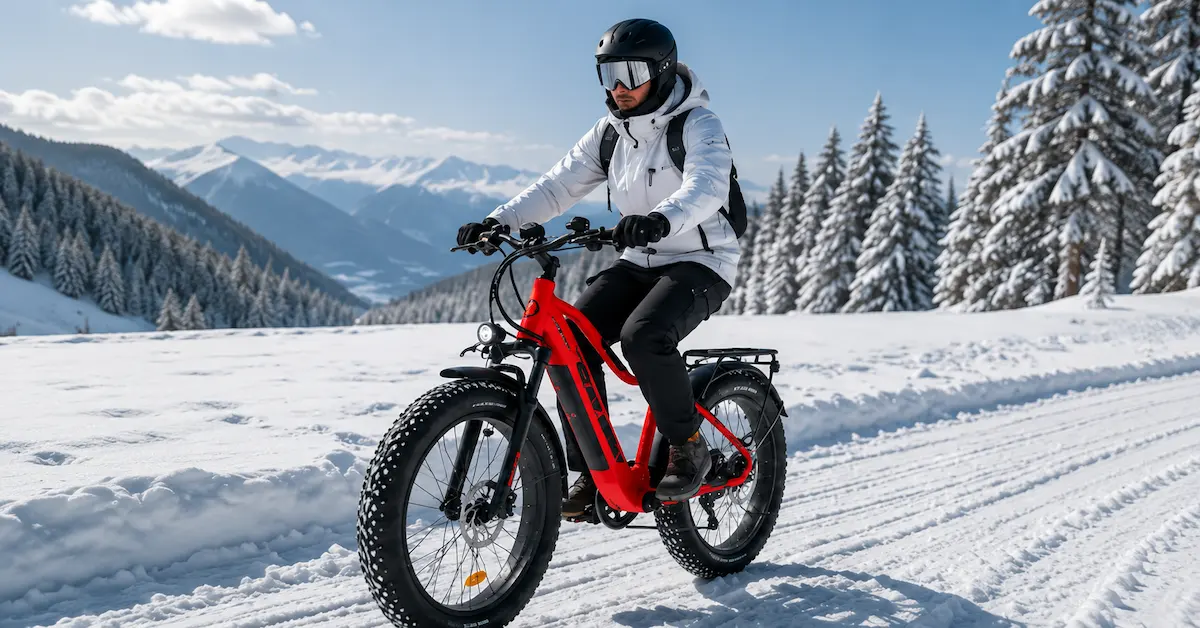
| Snow / soft surfaces | Wide tire + tread | High | Moderate | Traction |
| Mixed adventure routes | Balanced | Application-specific | Important | Overall versatility |
The first mistake many sourcing teams make is selecting components before defining this table.
Why Tire Selection Is So Important
Tires are the point where the entire e-bike meets the terrain.
For all-terrain projects, buyers should evaluate:
- tire width;
- tread pattern;
- puncture protection;
- rolling resistance;
- replacement availability;
- rim compatibility.
Fat Tires
Wide tires can provide a larger contact area and improved stability on loose or uneven surfaces.
They can be useful for:
- sand;
- gravel;
- loose dirt;
- snow;
- rough roads.
However, wider tires also typically increase:
- weight;
- rolling resistance;
- energy demand.
This is why an all-terrain electric bike should not automatically use the widest possible tire.
Motor Selection Should Follow the Surface
Motor output becomes more important when rolling resistance and gradient increase.
Loose sand, climbing, mud, and rough trails generally require more assistance than flat pavement.
But buyers should not select the largest motor simply because it creates a stronger marketing number.
Instead evaluate:
- hill gradient;
- total bike weight;
- rider weight;
- tire resistance;
- desired acceleration;
- legal requirements;
- battery capacity.
The goal is usable torque and controllable assistance rather than maximum output.
Hub Motor or Mid-Drive for an All-Terrain Project?
Both architectures can work depending on positioning.
Hub-Drive Platform
A hub motor can provide a practical solution for:
- recreational all-terrain models;
- fat-tire bikes;
- price-sensitive outdoor products;
- mixed-road applications.
It can also simplify certain OEM configurations.
Mid-Drive Platform
A mid-drive system may be more suitable for:
- steep climbing;
- technical trails;
- performance-oriented products;
- advanced e-MTB positioning.
The manufacturer should determine architecture from terrain, rider expectations, price positioning, and service strategy.
Battery Capacity Must Match Terrain Resistance
A battery that delivers acceptable range on pavement may perform very differently on soft terrain.
Actual energy consumption changes with:
- hills;
- sand;
- mud;
- low tire pressure;
- rider weight;
- wind;
- temperature;
- assist level;
- repeated acceleration.
That means B2B buyers should avoid treating maximum published range as the only procurement metric.
The better question is:
“What usable range can this configuration provide in our intended terrain mix with an appropriate reserve?”
A Practical JOBO All-Terrain Platform
JOBO currently offers an all-terrain electric bike platform designed around multi-surface outdoor riding.
Its published configuration includes:
| Specification | Current JOBO Platform |
|---|---|
| Frame | 26-inch 6061 aluminum alloy |
| Motor | 48V 750W |
| Battery | 48V 14Ah |
| Tire | 26 × 4.0 inch |
| Suspension | Front suspension |
| Published Range | 40–60 km |
| Application | Dirt, gravel, rock, pavement and loose surfaces |
JOBO describes this platform as supporting OEM customization of motor output, battery capacity, frame configuration, tire selection, colors, and branding.
View the JOBO All Terrain Electric Bike
These specifications should be treated as a starting platform, not a universal recommendation.
Different markets may require different power, speed, battery, tires, brakes, or compliance configurations.
All-Terrain vs Fat-Tire vs Mountain E-Bike
These categories overlap, but they are not identical.
| Platform | Main Priority | Typical Surface | B2B Advantage | Main Trade-Off |
|---|---|---|---|---|
| All-Terrain E-Bike | Versatility | Mixed surfaces | Broad market appeal | Must balance many requirements |
| Fat-Tire E-Bike | Traction/stability | Loose terrain | Strong outdoor positioning | Weight and rolling resistance |
| Mountain E-Bike | Trail performance | Hills/trails | Performance segment | Higher component demands |
| City E-Bike | Efficiency | Pavement | Lower complexity | Limited rough-terrain ability |
| Folding Fat-Tire E-Bike | Versatility + storage | Mixed recreational | Compact positioning | More structural complexity |
This distinction matters when distributors build product ranges.
Selling several models with nearly identical purposes can create inventory without improving market coverage.
Why Frame Engineering Matters
An all-terrain frame experiences more varied loads than a conventional urban bike.
It may face:
- vibration;
- bumps;
- lateral loads;
- heavy riders;
- repeated impacts;
- additional motor forces.
Frame design should therefore consider:
- tube geometry;
- welding;
- motor mounting;
- battery placement;
- wheel clearance;
- rack mounts;
- cable routing.
JOBO operates a dedicated in-house frame factory covering CNC cutting, robotic welding, heat treatment, dimensional correction, coating, and final testing.
This is especially relevant for deeper OEM or ODM projects requiring:
- custom geometry;
- different battery placement;
- new tire clearance;
- motor integration;
- accessory mounting points.
Explore JOBO Frame Manufacturing
Suspension Must Match the Actual Riding Level
Suspension is another area where specification inflation can increase cost without creating enough customer value.
Front Suspension
Often suitable for:
- gravel;
- mixed roads;
- recreational trails;
- moderate off-road use.
It can improve comfort while keeping product complexity manageable.
Full Suspension
More relevant for:
- technical trails;
- aggressive mountain riding;
- repeated rough terrain;
- higher-performance positioning.
The buyer should determine whether the end customer will actually benefit from rear suspension before paying for the added complexity.
Braking Is a System Decision
All-terrain bikes may experience:
- loose surfaces;
- wet roads;
- hills;
- additional bike weight;
- larger tires.
Brake selection should therefore follow:
bike weight + rider weight + terrain + speed + intended use
rather than simply selecting the most expensive option.
Buyers should also ask about:
- brake-pad availability;
- rotor specification;
- service procedures;
- replacement parts.
For distributors, serviceability can be as important as initial braking performance.
What Should an All-Terrain Prototype Be Tested For?
Bulk production should not begin immediately after the first assembled sample looks correct.
Multi-Surface Ride Testing
Evaluate the prototype on surfaces similar to the final market:
- pavement;
- gravel;
- dirt;
- climbing;
- loose ground where relevant.
Motor Response
Check:
- hill starts;
- acceleration;
- low-speed control;
- sustained load.
Tire Behavior
Evaluate:
- grip;
- steering;
- rolling resistance;
- rider confidence.
Suspension
Check whether suspension improves control without creating excessive movement or instability.
Battery Performance
Test realistic riding conditions rather than relying only on theoretical calculations.
Braking
Evaluate controlled stopping under realistic total load.
Frame and Electrical Integration
Inspect:
- weld areas;
- battery retention;
- motor mounting;
- cables;
- connectors;
- accessory interfaces.
This prototype stage is where inexpensive corrections should happen.
Finding the same problem after hundreds of bicycles have been produced is far more costly.
How JOBO Approaches Quality Control
For an OEM buyer, the question should not simply be:
“Do you perform QC?”
It should be:
“What is checked before, during, and after production?”
JOBO describes its quality workflow as:
IQC → IPQC → FQC → QA
Its QC laboratory includes frame fatigue, brake, battery, complete-bike, wheel, motor, and environmental testing capabilities.
For an all-terrain product, this matters because vibration, terrain changes, and higher loads expose weak integration faster than casual paved-road use.
How to Evaluate an All Terrain E-Bike Manufacturer
A professional sourcing audit should cover more than catalogue variety.
Engineering Capability
Can the supplier explain how:
- tire size;
- motor;
- battery;
- frame;
- suspension;
- brakes;
work together?
Prototype Capability
Can the supplier develop and revise samples before bulk production?
Frame Manufacturing
Can frame design be adjusted when tire clearance, motor mounting, or battery integration changes?
Quality Control
Are incoming components, production processes,and finished bikes checked systematically?
Repeatability
Can the approved specification be reproduced across future batches?
Spare Parts
Can the supplier support essential service components after delivery?
Compliance
Can the configuration be adjusted to meet the requirements of the destination market?
These questions reveal far more about a factory than a low quotation alone.
OEM and ODM Options for All-Terrain E-Bikes
Customization should be based on market positioning rather than adding features randomly.
Power System
Possible adjustments may include:
- motor specification;
- battery capacity;
- assistance settings;
- display functions.
Frame
OEM/ODM projects may involve:
- geometry;
- tire clearance;
- battery integration;
- mounting points;
- frame finish.
Ride Components
Buyers can define:
- tires;
- suspension;
- braking;
- drivetrain;
- saddle;
- handlebar.
Utility Accessories
Depending on application:
- rack;
- fenders;
- lights;
- baskets;
- kickstand.
Branding
Private-label projects can include:
- frame color;
- logos;
- decals;
- model name;
- packaging;
- manuals.
The most profitable customization is usually the customization customers will actually notice or benefit from.
What Determines the Cost of an All-Terrain E-Bike?
A lower unit quotation does not necessarily create a lower landed or lifecycle cost.
Important cost drivers include:
- motor specification;
- battery capacity;
- frame material;
- tire size;
- suspension;
- braking;
- drivetrain;
- customization;
- tooling;
- testing;
- certification;
- packaging;
- order volume.
Buyers should compare quotations against the same approved specification.
Otherwise, two prices that appear comparable may represent very different products.
MOQ and Lead Time Should Be Quoted by Project
There is no responsible universal MOQ or lead time for every all-terrain e-bike.
An existing platform with:
- custom color;
- logo;
- selected components;
will generally be a different project from:
- new frame geometry;
- custom tooling;
- new battery integration;
- deep ODM development.
That is why buyers should send a detailed RFQ before asking the factory to confirm MOQ or production schedule.
How to Reduce Sourcing Risk Before Mass Production
A strong procurement process follows:
Application Definition → Specification → Prototype → Testing → Revision → Approved Sample → BOM Freeze → Mass Production → Final QC
Three points deserve special attention.
Freeze the BOM
The final motor, battery, tires, brakes, drivetrain, accessories, and key components should be confirmed before mass production.
Control Component Changes
Substitutions should not be made without buyer approval when they change performance or service requirements.
Keep an Approved Reference Sample
The final approved sample provides a physical benchmark for production and inspection.
This helps distributors reduce disputes over later batches.
Why Manufacturing Scale Matters for Growing Brands
JOBO's China manufacturing base combines in-house frame production, automated painting, engineering resources, and three assembly lines.The current company page states a 50,000 m² facility, annual capacity of up to 300,000 e-bikes, and a 35+ engineer R&D team.
For a B2B buyer, scale becomes relevant when a successful model develops from:
sample → first commercial order → seasonal repeat order → product family
A supplier must be able to maintain specification control while volume increases.
Learn About JOBO Manufacturing
Compliance Must Be Confirmed for the Exact Configuration
This is particularly important for all-terrain e-bikes because different markets can treat:
- motor power;
- maximum assistance speed;
- throttle functions;
- product classification;
differently.
JOBO publishes information about its certification portfolio and states that multiple models have completed relevant international certifications.
However, buyers should always verify certification against the exact motor, battery, speed, frame, and target-market configuration being ordered.
A certificate associated with one version should not automatically be assumed to apply to every customized version.
What Should You Send JOBO for an Accurate Quote?
A high-quality RFQ should contain enough information for engineering and sales teams to recommend a configuration.
Instead of sending:
“Please quote your best all-terrain e-bike.”
send:
- Destination country
- Buyer type
- First-order quantity
- Expected annual volume
- Target retail or wholesale segment
- Expected rider type
- Percentage of pavement/gravel/dirt/sand
- Typical hill conditions
- Preferred tire size
- Motor requirement
- Battery requirement
- Suspension requirement
- Brake requirement
- Accessories
- Branding requirements
- Certification requirements
- Target delivery date
This changes the conversation from price shopping to product engineering.
And that generally produces a more useful quotation.
Why Work With JOBO as an All Terrain E-Bike Manufacturer?
JOBO combines several capabilities relevant to brands developing multi-surface electric bikes:
- Dedicated all-terrain platforms
- Fat-tire electric bike development
- In-house aluminum frame manufacturing
- OEM/ODM engineering
- Prototype development
- Motor and battery configuration
- Custom colors and branding
- Structured QC
- Complete-bike testing
- Scalable manufacturing
For buyers, the main advantage is not simply having access to another catalogue model.
It is the ability to start from:
market + rider + terrain + price position
and then develop the appropriate bike around those requirements.
JOBO's current product portfolio includes a dedicated 26×4.0-inch all-terrain platform designed for mixed surfaces, while its frame manufacturing and QC resources support deeper customization when an existing platform does not fully match the project.
If you are developing an all-terrain product line, provide JOBO with your target country, terrain mix, motor requirement, battery target, expected order quantity, annual forecast, retail positioning, and customization requirements.
That information allows the team to evaluate whether you need:
Standard Platform → Customized OEM Platform → New ODM Development
instead of simply quoting one generic bicycle.
FAQ
What is an all-terrain e-bike?
An all-terrain e-bike is designed to operate across several surface types such as pavement, gravel, dirt, and selected loose terrain.The exact capability depends on tires, motor, frame, suspension, braking, and configuration.
What tire size is best for an all-terrain electric bike?
There is no universal best size. Wider tires can improve traction on loose surfaces, while narrower tires may improve efficiency. The correct choice depends on the target terrain.
Are fat tires necessary for an all-terrain e-bike?
Not always. They can be useful for sand, snow, gravel, and loose terrain, but they also add weight and rolling resistance. Buyers should choose them according to the application.
How much motor power does an all-terrain e-bike need?
Motor requirements depend on hills, surface resistance, total weight, rider expectations, and target-market regulations. More power is not automatically better.
What battery capacity should I choose?
Battery capacity should be based on real route distance, terrain resistance, motor configuration, rider weight, and the desired range reserve.
Should an all-terrain e-bike have full suspension?
Not necessarily.Front suspension may be sufficient for mixed recreational riding, while full suspension is more relevant to technical trails and higher-performance applications.
Can JOBO customize all-terrain electric bikes?
Yes. JOBO supports OEM/ODM projects involving frames, motors, batteries, tires, suspension, brakes, colors, graphics, accessories, and packaging.
Can JOBO develop a custom all-terrain frame?
JOBO operates an in-house frame manufacturing facility and supports custom frame engineering for OEM/ODM projects.
What should I test before ordering all-terrain e-bikes in bulk?
Evaluate handling, climbing, motor delivery, braking, tire grip, battery performance, suspension, frame integrity, and electrical integration under terrain similar to the intended market.
How do I request an all-terrain e-bike quotation from JOBO?
Provide the destination market, quantity, annual forecast, terrain mix, rider profile, desired motor and battery configuration, tires, suspension, branding, compliance requirements, and delivery target.
Conclusion
Selecting an all terrain e-bike manufacturer should not begin with:
“Which factory offers the biggest motor and widest tires?”
The more valuable sourcing question is:
“Which manufacturer can engineer a repeatable e-bike platform around the exact surfaces my customers will ride?”
A commercially successful all-terrain electric bike requires the correct balance of:
terrain capability + traction + controllable power + battery reserve + frame durability + suspension + braking + maintenance + QC + OEM flexibility
Over-specifying the bike increases cost and complexity.
Under-specifying it increases performance problems, warranty risk, and customer dissatisfaction.
JOBO combines dedicated all-terrain electric bike platforms, in-house frame manufacturing, engineering, prototype development, quality testing, and OEM/ODM production.
For your next project, send JOBO the terrain percentages, destination market, order volume, target retail segment, motor/battery requirements, and customization scope.
That gives the manufacturing team enough information to recommend a product that is not simply labeled “all terrain,” but is actually engineered for the market you intend to sell into.