How Can an OEM Buyer Tell Whether a Low Step E-Bike Factory Is Production-Ready?
A low step e-bike factory should be judged by its ability to manufacture an accessible frame consistently, not by how low the frame appears in a product image. The factory must be able to turn a defined rider-entry dimension, structural design, motor and battery configuration, approved bill of materials (BOM), and market-specific requirements into repeatable bicycles. A credible supplier should show how those decisions are engineered, measured, tested, approved and maintained from prototype through shipment.
For a purchasing manager, four questions matter before the first deposit: Can the frame support the intended duty? Can the factory repeat the approved geometry? Can the complete bicycle be validated for the destination market? Can spare parts and specification control support repeat orders? Those are manufacturing questions, not simply product-selection questions.
This article focuses on the factory floor: frame design release, aluminum processing, welding, heat treatment where applicable, finishing, electrical integration, inspection and change control. If you are still comparing general supplier types and wholesale purchase options, JOBO's existing step-through electric bike supplier guide addresses that broader sourcing decision. Here, we go deeper into the evidence an OEM buyer should request from the factory itself.
JOBO's OEM and ODM manufacturing services, frame factory, and city e-bike platforms provide concrete reference points for this evaluation.
Low Step, Step-Through and Mid-Step: Define the Geometry Before Quoting
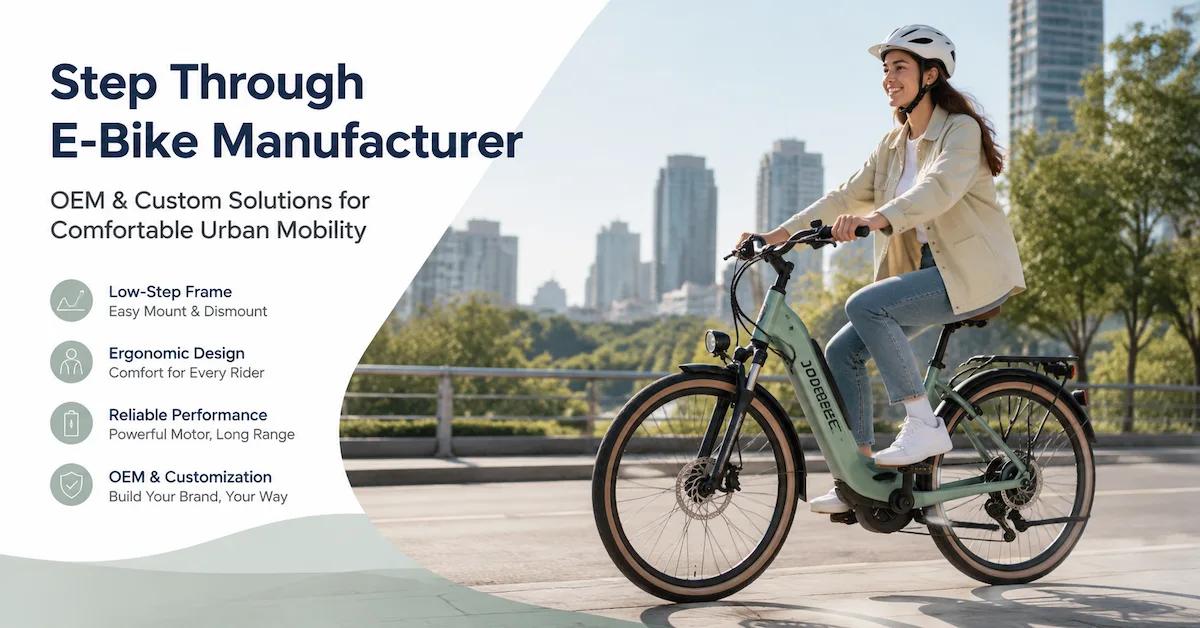
The terms low step, step-through, and mid-step are sometimes used interchangeably in catalogs. They are not precise engineering specifications. The feature buyers actually need to purchase is rider-entry geometry, measured against an agreed drawing and finished bicycle configuration.
A low-step design reduces the obstacle the rider crosses when mounting. A mid-step frame may retain a higher structural member, making it more appropriate for some performance or styling requirements. A conventional high-step diamond frame uses a prominent top tube. None of those labels proves that every rider can mount the bicycle comfortably.
The factory should define the measurement points. For example, an OEM brief can request the minimum clear crossing height above the ground, the opening width through which the rider moves, and the relationship between the opening and crank or handlebar positions. Geometry should be reviewed alongside the saddle-height range and expected rider sizes. A measured entry height means little unless the bicycle also feels manageable at rest and at low speed.
The frame's silhouette can also hide practical limitations. A thick down tube may reduce available foot space. An integrated battery may change where a rider stands beside the bicycle. A rear rack or front basket can influence balance during mounting. Ask to test a production-representative sample with all standard accessories installed rather than a bare prototype frame.
For a city commuter or rental application, the sourcing document should therefore contain three separate requirements: the entry geometry, the rider-fit range, and the bicycle's allowable load configuration. Each needs its own evidence and acceptance method.
Why a Low-Entry Frame Requires Specific Structural Engineering
A low-entry frame carries riding loads through a different path from a traditional diamond frame. When a high top tube is lowered or removed, the remaining tubes and joints must resist pedaling forces, road impacts, steering inputs, braking and any accessory load without unwanted movement or fatigue. A frame that looks elegant on a white background may still require careful reinforcement around the head tube, down tube, bottom bracket and seat-tube junction.
This does not mean a low-step bicycle is inherently unsafe or weaker. It means the structural design should be validated for the particular configuration. Tube shape, wall thickness, alloy temper, welded-joint geometry and battery-opening placement all influence performance. A wider tube is not automatically stronger in every relevant direction; engineers must evaluate the actual load paths and production constraints.
Ask the factory whether the low-entry frame is a validated existing platform, a cosmetic variation, or a new structure requiring additional engineering. That distinction controls cost, timing, tooling and test responsibility. If the buyer requests a lower step height after prototype approval, it should be treated as a potentially significant design revision, not an insignificant styling edit.
An especially important interface is the battery. Cutting an opening in the down tube changes the structure as well as the electrical packaging. Its edges, lock, mounts and connector cavity need appropriate access, clearance, sealing and validation. Similar attention applies to welded rack fittings, child-seat compatibility claims and any proposed cargo mounting points. A factory should not promise a new weight or load rating simply because a stronger-looking tube has been selected.
Who Needs Factory-Level Customization—and Who Should Keep an Existing Platform?
Not every low-step buyer needs an original frame. The correct level of customization depends on the commercial use case and the buyer's ability to manage technical approval.
| Buyer and program | Most important requirement | Sensible development route |
|---|---|---|
| Established city e-bike brand | Distinct ride feel, rider fit and brand identity | Configured OEM or selective ODM changes |
| Importer launching a commuter range | Predictable documents, pricing and delivery | Validated city platform with controlled BOM |
| Private-label e-commerce seller | Stable unboxing, packaging and low returns | Existing frame plus branding and service planning |
| Hotel or tourism rental buyer | Easy mounting, intuitive operation and fast maintenance | Proven low-entry fleet configuration |
| Campus or company mobility operator | Shared-user fit, dependable brakes and standard parts | Standardized platform with fleet options |
| Urban utility or delivery company | Mounting frequency, rack load and uptime | Application-specific frame and load validation |
| New bicycle brand with limited volume | Market testing without excessive tooling expense | Private label before proprietary frame investment |
A useful rule is to customize features the buyer's customer will value or the operator will measure. New paint, a branded display and a service-friendly rack may contribute more commercial value than unique frame tooling on the first order. Conversely, a company serving an unusually broad rider-fit range may genuinely need a revised frame opening and geometry.
JOBO's city e-bike collection includes commuter, step-thru and belt-drive directions. Rather than start from a blank CAD file, buyers can ask which existing platform comes closest to the intended market. Only the gap between that platform and the product brief should drive a new engineering scope.
What to Audit at an Aluminum Low Step E-Bike Frame Factory
A useful factory visit follows the material from drawing to finished frame. Marketing phrases such as “precision manufacturing” mean little unless the buyer can see which dimensions are controlled, where defects are caught, and how nonconforming parts are handled.
1. Drawing release and material identity
The process starts with the correct revision of the frame drawing, tube specification and manufacturing instructions. Request the alloy description and evidence that purchased material corresponds to the approved requirement. JOBO's published frame manufacturing information identifies 6061 aluminum alloy among its production materials, but the precise material condition and requirements for a selected frame still need to be confirmed in the project documentation.
The buyer should also ask who controls drawing revisions. If a tube profile changes, procurement, cutting, welding, inspection and testing teams must all use the same released version. A factory that cannot explain document control may struggle when a buyer requests multiple colors, frame sizes or country-specific variants.
2. Cutting, drilling and bending
Tube processing affects downstream alignment. A cut too short, a misplaced mounting hole or a bent part outside tolerance can create hidden stress during assembly. Review equipment capability, gauges, first-piece approval and inspection records for dimensions critical to the head tube, bottom bracket, battery opening and rack mounts.
JOBO describes CNC-related cutting and precision processing at its dedicated frame manufacturing facility. The relevant purchasing question is not whether the machine is automated, but whether the factory can demonstrate accepted parts from that machine against the approved drawing.
3. Welding and fixture control
Welding quality is both a structural and a process issue. Look at how tubes are located in fixtures, how operators or robots follow approved procedures, and how weld appearance and alignment are checked. Visible uniformity can be informative, but a smooth-looking weld is not a substitute for structural validation.
For low-entry frames, investigate the joints that connect the principal load path: head tube, down tube, bottom bracket and seat-tube region. Ask what happens when a weld is rejected and who authorizes rework. If the frame design changes, fixtures and inspection criteria may need updating too.
4. Heat treatment and dimensional correction
JOBO's frame process description includes T4/T6 heat-treatment stages and correction or measurement work. Whether a given frame needs a particular thermal treatment, sequence or acceptance criterion depends on its alloy, design and manufacturing route; buyers should not assume every model receives an identical cycle.
After welding and applicable processing, dimensional checks should establish whether the frame is suitable for assembly. The buyer can request inspection of head-tube alignment, rear axle position, brake mounts, wheel clearance and critical battery fit interfaces. A correction process needs documented limits, not uncontrolled bending until components fit.
5. Preparation, coating and finish inspection
Surface preparation, paint or powder coating, curing and final appearance checks influence corrosion protection and the retail presentation. Color approval should refer to a physical standard or agreed sample, especially where several batches must match. Confirm how the finish is checked near welds, cable openings, dropout areas and battery-contact zones.
A factory may offer many paint colors, but each additional variant can affect scheduling and changeover. Ask how the supplier groups colors and protects previously finished frames from damage during storage and assembly. A showroom sample with a flawless finish is not enough; the buyer needs a repeatable process and an agreed cosmetic acceptance standard.
A Process-Control Map for Low-Step Frame Production
The next table turns a factory tour into an evidence-based audit. The “buyer evidence” column contains recommended requests; it does not claim that every named document is already published by JOBO.
| Manufacturing stage | Main low-step risk | Evidence an OEM buyer should request |
|---|---|---|
| Design release | Wrong frame revision or unclear opening dimensions | Signed drawing, revision number and datum scheme |
| Material receipt | Wrong tube/alloy specification | Material traceability and incoming checks |
| Tube cutting/bending | Dimensional drift before welding | First-piece report and critical-dimension log |
| Welding | Alignment loss, joint variability | Fixture plan, process controls and weld inspection |
| Applicable thermal treatment | Incorrect approved processing route | Model-specific route and verification record |
| Frame correction/measurement | Misaligned interfaces hidden by assembly | Geometry inspection and nonconformance rules |
| Coating | Poor adhesion or finish inconsistency | Approved color sample and coating inspection criteria |
| Battery/motor assembly | Electrical or physical interface mismatch | Approved part numbers and functional verification |
| Complete-bike testing | Unvalidated configuration changes | Relevant test reports and acceptance records |
| Packing and dispatch | Damage or wrong specification shipped | Final inspection, carton approval and traceability |
Ask the factory to walk through a recent manufacturing record with proprietary details removed where needed. An effective audit should reveal whether the team recognizes upstream causes of defects rather than relying entirely on final inspection to find problems after the cost has already been incurred.
Battery and Motor Integration: Design the Entire Bicycle, Not Just the Frame
A low-entry bicycle often combines a substantial battery with a frame that already has fewer traditional triangulation members. Placement influences stiffness, handling, removal convenience and service work. A centrally positioned pack can help distribute mass, but it must not compromise the frame opening or leave connectors vulnerable to impacts and water.
For OEM buyers, battery architecture should answer more than “How many amp-hours?” Confirm the nominal voltage, watt-hour rating, removable or fixed design, mounting arrangement, charger compatibility, thermal considerations, service-access method and replacement policy. Ask which battery and charger documentation will accompany the exact destination-market configuration.
A nominal 36 V, 15 Ah pack stores approximately 540 Wh of energy by simple multiplication. That number is useful for comparing published battery capacities, but it is not a guaranteed range. Daily distance still depends on assistance setting, terrain, rider mass, stops, ambient temperature, tire pressure and riding style. A factory should describe the conditions behind any range claim and should not promise the same result for a loaded delivery model and an unladen city commuter.
Motor selection brings another set of trade-offs. Hub and mid-drive architectures differ in packaging, load distribution, drivetrain interaction and maintenance. The correct decision depends on the rider, route and applicable market classification. Smooth start-up behavior, predictable cut-off and sensible controls may matter more to a rental fleet than the highest advertised torque figure.
Inspect the control system as a whole: motor, sensor, display, controller, cables, lights and battery must be compatible and documented. A changed display or controller may require renewed functional and compliance review. “Equivalent” electronics are not acceptable substitutions unless the buyer knows what was changed and approves it.
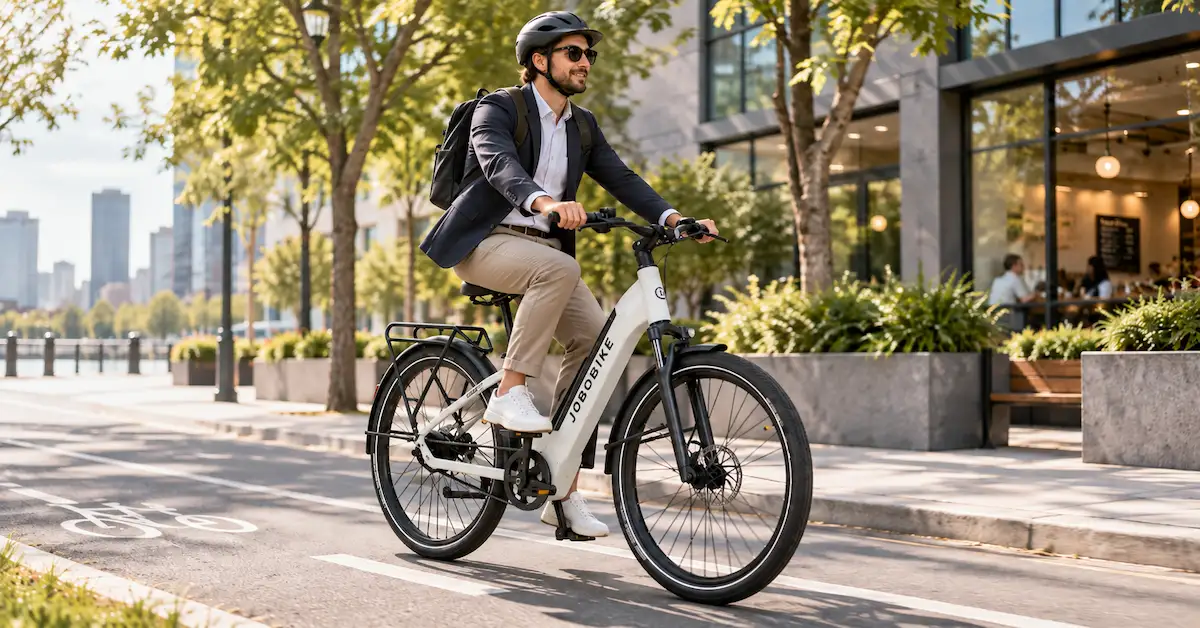
Rider Access Must Be Tested With the Finished Bicycle
The phrase “easy to mount” is a valuable product promise but not a universal guarantee. A professional factory should help the buyer translate the claim into measurable design and user-testing requirements.
A practical rider-access review can include:
- Measure clear step-over height and the width of the access opening using agreed datums.
- Confirm the supported rider fit range, including minimum and maximum saddle heights.
- Observe mounting and dismounting with the production battery, fenders, rack and tires installed.
- Test walking alongside the bicycle, parking it and handling it at very low speed.
- Evaluate brake reach, handlebar reach and visibility of the display for representative users.
- Repeat the exercise when a basket or authorized rack load is part of the proposed retail configuration.
These steps are especially useful for shared mobility, hospitality and corporate programs, in which one bicycle may serve riders with different body proportions and levels of experience. They also prevent brands from treating low-entry geometry as an unsupported medical or accessibility claim.
A rider who feels secure getting on the bike may still dislike it if assistance engages abruptly or the rear rack makes parking awkward. The complete user experience should be documented before the factory freezes the BOM.
A Reference Product for Evaluating JOBO's Low-Step Capabilities
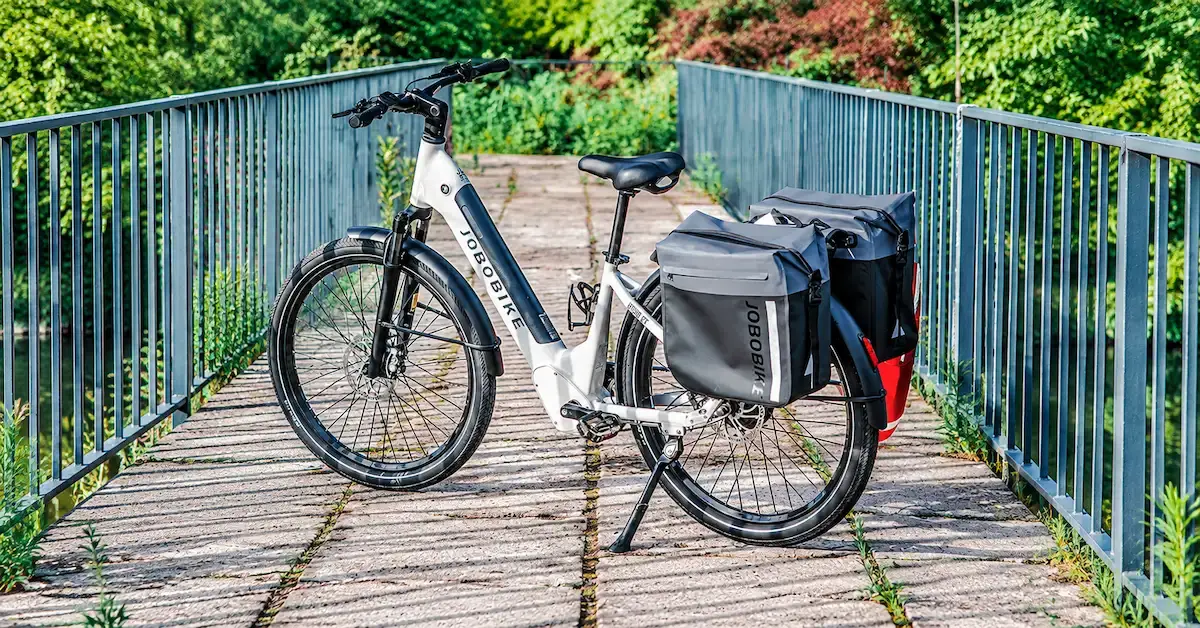
The JOBO City Commuter Electric Bike, JB-TDB29Z, is a relevant starting point because the product page specifically describes an integrated step-through frame. It includes a torque sensor, hydraulic disc brakes, Shimano eight-speed transmission and LCD display with Bluetooth-related functions. It illustrates the difference between selecting a real platform and commissioning a new frame from scratch.
| Published reference item | JB-TDB29Z page information | Procurement interpretation |
|---|---|---|
| Frame | 6061 aluminum, step-through platform | Confirm drawing, opening and load assumptions |
| Motor | 36 V / 350 W published | Check rated configuration and destination-market requirements |
| Battery | 36 V / 15 Ah Samsung | Verify pack specification, charger and service plan |
| Listed speed | 25 km/h | Confirm assist cut-off and local legal classification |
| Published range | Approximately 60 km | Request test conditions; do not treat as a warranty |
| Drivetrain | Shimano eight-speed | Lock actual model and substitution policy |
| Brakes | Hydraulic disc | Confirm specific components and test records |
| Sensor / display | Torque sensor, LCD / Bluetooth | Confirm firmware, app scope and serviceability |
| Tires and wheel listing | 27.5 x 2.35 tires in specification | Reconcile final wheel size with project drawing |
A useful detail illustrates why page review is not enough: the model description refers to a 26-inch commuter, while its listed frame and tire specifications mention 27.5-inch dimensions. Buyers should ask JOBO to confirm the wheel size of the exact quoted configuration rather than guessing which label controls production. This is not a reason to reject a platform; it is an example of the practical value of drawing and BOM verification.
For buyers considering a different drivetrain direction, JOBO also publishes the JB-TDB30Z belt-drive city bike. Its published belt drive, torque sensor and hydraulic brake specification makes it useful for discussing maintenance priorities. However, the buyer should independently confirm the frame entry geometry before treating that alternative as a low-step model. A product in the city category is not automatically proof of a particular step-over height.
Which Platform Strategy Fits Your Project?
| Development direction | Main advantage | Main question to resolve | Typical fit |
|---|---|---|---|
| Existing validated low-entry commuter platform | Less original structural work | Does actual entry and ride geometry meet target users? | Importer, dealer brand, first launch |
| Existing platform with OEM equipment changes | Greater market differentiation | Which changes affect testing, cost and BOM stability? | Established brand, regional distributor |
| Belt-drive city platform assessment | Different drivetrain service profile | Does the available frame geometry satisfy low-entry needs? | Premium city or service-focused programs |
| Original low-step ODM frame | Maximum control over frame architecture | Who funds tooling and validates the new structure? | Brand with distinctive geometry or volume |
| Low-entry cargo/utility development | Frequent stop-and-go mounting for work | What are the verified loads and vehicle classification? | Commercial fleet or delivery operator |
This is a commercial comparison, not a claim that JOBO has pre-approved every variant. It is often more economical to begin with a proven frame and invest in the components riders actually notice. A truly new low-step architecture becomes justified when fit, structure, integration or brand identity cannot be achieved through a controlled platform change.
From RFQ to Mass Production: The Eight Approval Gates
A well-organized project needs decision gates that prevent uncontrolled revisions from reaching the assembly line. The following model adapts JOBO's published OEM/ODM process into buyer-facing deliverables; the records shown are recommended project outputs that must be agreed with the factory.
Gate 1 — Market and rider brief
Identify the destination country, product category, buyer channel, intended rider, terrain, desired entry geometry, load, selling price and expected quantity. Determine whether the program is an ordinary commuter bicycle, a rental platform or a higher-load utility product. A factory cannot responsibly determine compliance and structure without that context.
Gate 2 — Platform and BOM selection
Select an existing frame direction or approve an ODM scope. Record the motor, battery, brakes, tires, wheel size, drive system, lighting, rack, display, charger and any optional parts. Require part-level descriptions for critical components. A label such as “hydraulic disc brakes” alone is not a complete purchasing specification.
Gate 3 — Engineering release
Approve the frame drawing, rider-entry measurements, mounting interfaces, structural validation plan and electrical packaging. Define what a change would trigger: another sample, dimensional inspection, renewed testing or a new quotation. Agree ownership of tooling, drawings and confidentiality where applicable.
Gate 4 — Prototype construction
Build a representative bicycle, not simply a concept display. Inspect the low-step opening, battery fit, cable routing, wheel clearance, saddle adjustment and accessory installation. Record deviations from the drawing. A prototype should expose errors while correcting them is still manageable.
Gate 5 — Test and compliance review
Determine which structural, braking, electrical and functional assessments apply to the precise vehicle configuration and target market. Review evidence from the correct models and component revisions. Do not confuse an ISO management certificate with a product approval.
Gate 6 — Golden-sample and packaging approval
Approve a production-representative sample along with the signed BOM, color reference, graphics, user manual, labels, packaging and inspection standard. The sample should remain identifiable by revision. If a tire, battery or controller changes later, the impact must be assessed before the replacement enters production.
Gate 7 — Controlled production
Production teams follow released documents and record incoming, in-process and final checks. Buyer-specific acceptance criteria should state what is measured, how often, which limits apply and who releases nonconforming units. Where inspection is sampled, the sampling plan should be agreed in advance.
Gate 8 — Shipment release and repeat-order support
Check the production lot against the approved configuration, verify packing and shipping documentation, and agree a spare-parts list. Establish the escalation route for warranty claims and the method for linking an affected bicycle to its production batch. Repeat orders should use deliberate revision control, not memory of the previous shipment.
A Factory QA Plan for Low-Step Models
JOBO's website describes ISO 9001-related management processes and multi-stage quality oversight. As in any OEM program, the buyer should request the actual project plan rather than presuming that every quality metric on a corporate page applies to one frame design.
At incoming inspection, focus on tube and frame components, batteries, controllers, brakes and other items whose failure could compromise performance or compliance. At in-process inspection, focus on frame dimensions, weld-associated checks, component identity, torque operations, wiring and function. At final inspection, focus on the approved model, ride-critical operations, cosmetic quality, labels and packing. Quality assurance should then review exceptions, corrective action and traceability over time.
The production acceptance plan should also distinguish critical, major and minor defects. What constitutes a critical defect depends on the project and product standard; suppliers should not invent arbitrary thresholds. A branded scratch, a shifted battery lock and a braking fault cannot be treated as interchangeable issues.
For example, a professional buyer can ask how a factory responds if a set of frames drifts outside the approved battery-mount dimensions. Does it stop the process? Does it quarantine affected units? How is the cause corrected? How does the buyer know whether completed bicycles are affected? Those answers show more about quality maturity than a long list of testing-machine names.
Compliance: Do Not Treat “25 km/h” as Sufficient Evidence
Market entry depends on the final bicycle, not merely on the factory's marketing description. In the European regulatory framework, one important distinction concerns pedal cycles with a maximum continuous rated auxiliary motor power of 250 W, assistance that stops when pedaling stops, and progressive assistance reduction with cut-off before 25 km/h, as described in Regulation (EU) No 168/2013's relevant exclusion. The precise regulatory route and product obligations must be assessed for the actual design.
The published EN 15194:2017+A1:2023 specification concerns electrically power assisted cycles within its stated scope; buyers should check the applicable edition, risk assessment, documentation and whether the chosen commercial or hire use falls within that scope. It is inaccurate to say a bicycle becomes compliant merely because its display shows 25 km/h. Motor classification, control behavior, vehicle use and test evidence still matter.
This is particularly relevant to global JOBO reference pages that may list 350 W or other configurations. Those figures may support different markets or vehicle categories. Do not infer that the published JB-TDB29Z specification is automatically an ordinary EU 250 W EPAC. Request a target-market configuration and readable evidence for that exact model.
JOBO's certifications and patents information specifically advises checking document holder, model reference, standard edition and validity. A proper file review also separates complete-bicycle documentation from battery information and management-system certifications. This protects the importer and gives the brand a stronger technical basis for its own product descriptions.
For markets outside Europe, ask a local qualified adviser which vehicle classification, electrical requirements, battery transport records, labeling and road-use rules apply. A generic “CE available” claim should not replace destination-specific verification.
What Production Capacity Can—and Cannot—Tell You
A large factory may offer broader resources for repeat orders, but headline annual capacity is not the same as free space on an assembly line next month. JOBO's OEM/ODM page states a 50,000 m² manufacturing workshop and capacity of approximately 300,000 electric bicycles annually, while the company's China factory information explains its integrated production approach. These are useful signals of operating scale, not a confirmed slot for any individual buyer.
A purchase plan needs a separate lead-time breakdown: engineering review, sampling, tooling if needed, component procurement, paint scheduling, assembly, testing, packing and transit. The factory should identify which stages can overlap and which depend on external suppliers or customer approval. Ask for different estimates for a standard color and an original frame with unique fixtures.
Capacity claims also need practical context. Three assembly lines do not mean all three can assemble the buyer's exact bike on any chosen date. A new battery pack, branded display or uncommon tire can determine the critical path. MOQ similarly depends on customization scope, component minimums and production economics. Avoid publishing a generic MOQ or delivery promise unless it has been confirmed for that configuration.
For EU-market planning, JOBO describes a Poland assembly and distribution operation, with local service and inventory-related delivery options. The published 1–7 workday window is explicitly tied to stock availability, not a guarantee for newly developed ODM bikes. Customs, origin and anti-dumping treatment also require project-specific legal analysis; European assembly should not be marketed as a universal tax exemption.
Calculate the Real Cost of a Low-Step OEM Program
Two factories can quote similar unit prices while supplying different engineering, component, packaging and after-sales scopes. A purchasing team should calculate the total commercial exposure rather than choose the cheapest line item.
A useful decision model is:
Program cost per saleable bicycle = agreed unit price + allocated tooling and verification + transport and import expenses + local preparation + anticipated service and warranty provision.
The formula does not specify a market price or suggest that any warranty percentage is guaranteed. Buyers should use their own contract assumptions, logistics quotations and historical service data where available. The purpose is to make hidden costs visible before signing.
Request separate treatment of frame tooling, sample revisions, special finishes, branding setup, chargers, spare batteries, spare-parts kits, manuals and destination labels. Confirm Incoterms and who pays when a shipment is delayed for incomplete paperwork or when a rejected component needs replacement.
Low-entry product positioning can improve commercial appeal, but it does not justify uncontrolled complexity. If a proprietary frame requires a large engineering budget and the expected first order is small, an existing platform may be financially safer. A clear launch plan should connect additional engineering cost to an identifiable market requirement rather than an aesthetic preference alone.
How to Build an Effective Low-Step E-Bike Factory RFQ
The factory should receive enough information to propose an actionable specification. Use the following as a practical first-round brief; “not yet decided” is an acceptable answer where engineering advice is required.
| RFQ item | What to provide or request |
|---|---|
| Business model | Brand, importer, e-commerce, dealer chain, hospitality or fleet |
| Destination | Countries and relevant road-use or product classification |
| Target rider | Fit range, mounting use case and accessibility-related observations |
| Low-step frame | Entry dimension, frame sizes, reference platform or new geometry |
| Usage | Commute distance, grades, surfaces, daily frequency and loads |
| Motor and control | Intended power category, assistance type, sensor and cut-off behavior |
| Battery | Nominal energy, removal, charger, replacement and location |
| Equipment | Brakes, drivetrain, tires, fenders, lights, racks and locks |
| Branding | Colors, logo, display, manual, carton and labels |
| Factory proof | Drawing revision, process route, test scope and QC plan |
| Commercial volume | Trial quantity, forecast, sample and delivery window |
| After-sales | Critical spare parts, repair information and traceability |
Send the same brief to each shortlisted factory. Ask respondents to identify deviations, assumptions and the information still required for a binding quotation. A low initial quote that conceals an undefined battery or frame revision is less useful than a higher quote with transparent technical scope.
If you already have a concept drawing, supply views showing the intended entry geometry and major components. If you are starting from an existing platform, name the reference model and clearly list what should change. In both situations, the buyer should ask who owns new engineering files and which prototype milestones require approval.
Common Low-Step Manufacturing Mistakes Buyers Can Prevent
Approving the frame from a rendering. A computer illustration cannot demonstrate real rider access, battery removal or frame stiffness. Require a physical sample and measured geometry.
Using a general certificate for a changed vehicle. The test evidence must match the appropriate frame, motor, battery and market configuration. Record the revision and ask whether modifications affect the scope.
Ignoring the rack and other final accessories. A frame may pass a bare-bicycle review but behave differently with a specified rear load. The complete load case belongs in the engineering brief and validation plan.
Treating the lightest frame as the best frame. Over-aggressive weight reduction can shift costs into testing, repairs and warranty. Optimize around the intended duty and target price.
Leaving substitutions to the purchasing department. A different connector, brake rotor or pack can create unexpected compatibility risks. Require an approved-alternative list and written deviation procedure.
Ordering without spare-parts planning. Confirm replaceable battery, display, controller, brakes and mechanical wear items before bulk shipment. Dealer service needs to be possible without excessive delays.
Mixing prototype and production dimensions. A sample may be hand-fitted during development. Mass production needs drawings, fixtures, measurements and acceptance limits that can repeat the outcome.
Assuming EU stock covers an unapproved model. Regional operations can improve responsiveness, but inventory, compliance documents and specific delivery arrangements must be confirmed for the ordered configuration.
Frequently Asked Questions About Low Step E-Bike Factories
1. What does a low step e-bike factory manufacture?
A low step e-bike factory produces electric bicycles or frames with reduced rider-entry height. Depending on its scope, it may design and fabricate aluminum frames, integrate batteries and motors, assemble complete bicycles, test the finished configuration and support OEM/ODM branding. Buyers should verify which steps are actually controlled in-house.
2. Is “low step” the same as “step-through”?
The labels overlap in common marketing, but neither supplies an engineering measurement. Specify the agreed clear entry dimension, frame geometry, rider-fit range and finished-bike features before approving a design. A mid-step and a deep step-through can offer very different access.
3. Can a low-step frame be as durable as a high-step bicycle?
A properly engineered low-entry frame can be designed for its stated loads and use. It carries forces differently, so tube geometry, joints, material processing and validation must fit that structure. Do not compare durability from photographs or tube diameter alone; request model-specific evidence.
4. What materials do OEM low-entry frames use?
Aluminum alloys are common in mass-produced city e-bikes. JOBO's published frame platform information includes 6061 aluminum. The appropriate alloy condition, processing, weld quality, weight and fatigue requirements must be verified for the chosen frame rather than assumed for an entire category.
5. What is the benefit of a factory with its own frame production?
Direct control of frame processing may support closer coordination among engineering, fixtures, welding, finishing and assembly teams. It can also simplify revisions. However, the buyer should still inspect actual process records, test evidence and quality controls; ownership of equipment alone does not guarantee performance.
6. Can JOBO customize a low-step city e-bike for my brand?
JOBO describes OEM and ODM services covering product selection, appearance, component configuration and development support. A buyer can start with the JB-TDB29Z city commuter as a low-entry reference and then discuss which requested changes are technically and commercially feasible.
7. What should be tested before low-step e-bike mass production?
The project should verify relevant structural behavior, braking, electrical operation, rider fit, accessory loads, finish, packaging and destination-market requirements. The exact standard, test method and acceptance criteria depend on the model and vehicle category. Sign off a production-representative golden sample and controlled BOM.
8. Does EN 15194 automatically apply to every JOBO city e-bike?
No. EN 15194 has a specific EPAC scope, and the actual motor/control configuration, intended use and destination requirements must be verified. A product page listing 350 W or 25 km/h does not by itself prove EU ordinary pedal-assist classification. Request the model-specific compliance package.
9. What are the MOQ and lead time for an OEM low-step model?
They depend on the base platform, chosen components, tooling, paint, samples, forecast and production schedule. Published factory capacity is not a guaranteed slot for one project. Ask for separate quotations for standard private label, configured OEM and original-frame ODM work.
10. What should I send to receive a meaningful factory quotation?
Provide the market, expected buyer, frame-entry goal, usage, rider size, load, motor/battery target, equipment, branding, quantity and timeline. Include reference photos or technical drawings if available. JOBO's contact team can use that information to discuss model selection, sample work and manufacturing feasibility.
Conclusion
A credible low step e-bike factory must do more than supply an attractive easy-entry frame. OEM buyers should verify measured geometry, structural processing, battery integration, controlled welding and finishing, model-specific tests, repeatable assembly and a serviceable final BOM. The most efficient program often begins with a validated platform and adds only the changes the market genuinely needs. For a project-specific review, explore JOBO's low-entry city e-bike models and request an OEM/ODM manufacturing discussion with your frame, market and volume requirements.