Introduction
When choosing an electric bike for daily commuting and errands, many riders find themselves torn between two popular options: the cargo e-bike and the regular electric bike. Both offer pedal-assisted convenience and eco-friendly transportation, but they serve distinctly different purposes. Whether you are a parent juggling school runs, a small business owner making deliveries, or a city commuter navigating urban streets, understanding the key differences will help you make the right investment. This guide breaks down the practical considerations—from carrying capacity and motor power to storage and cost—so you can decide which e-bike truly fits your daily routine.
What Is a Cargo E-Bike?
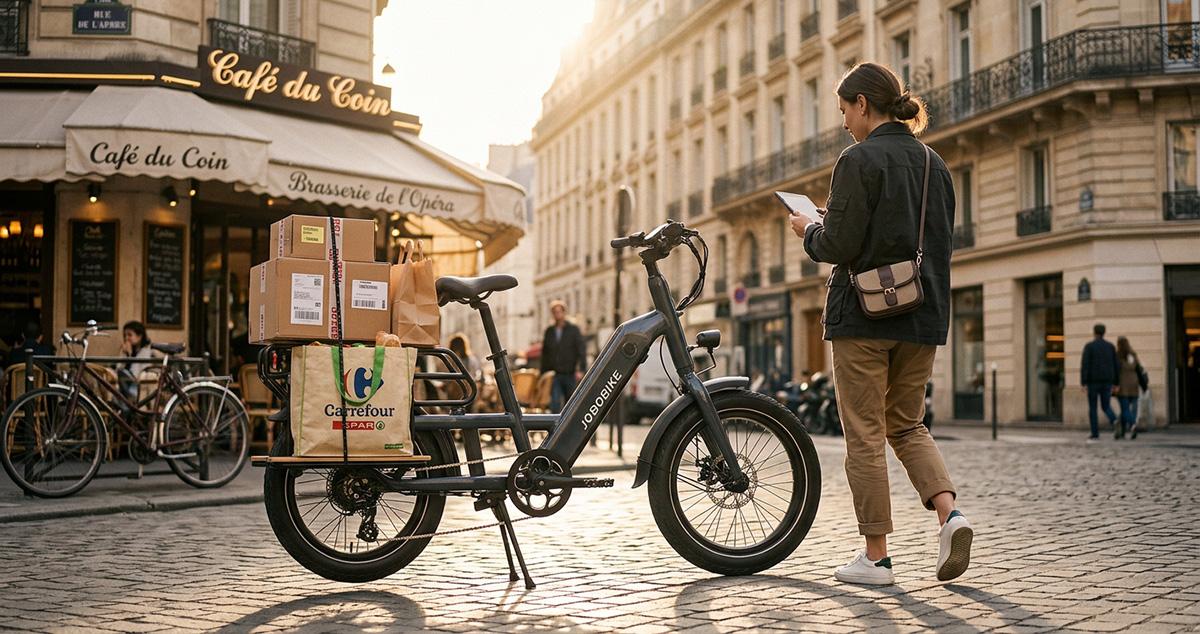
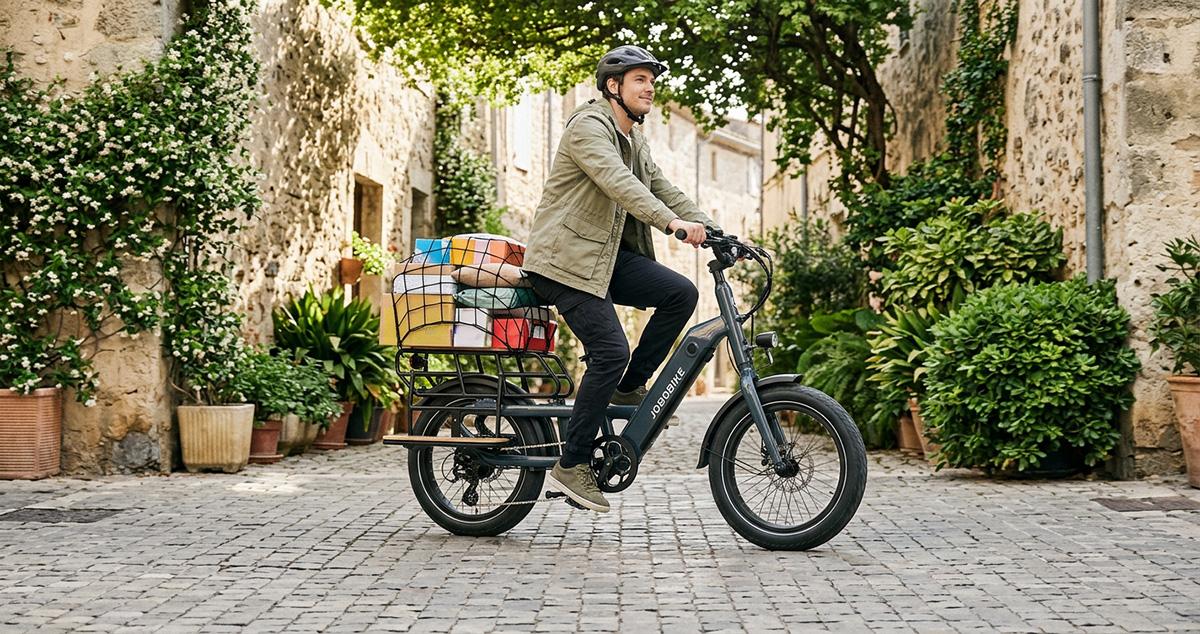
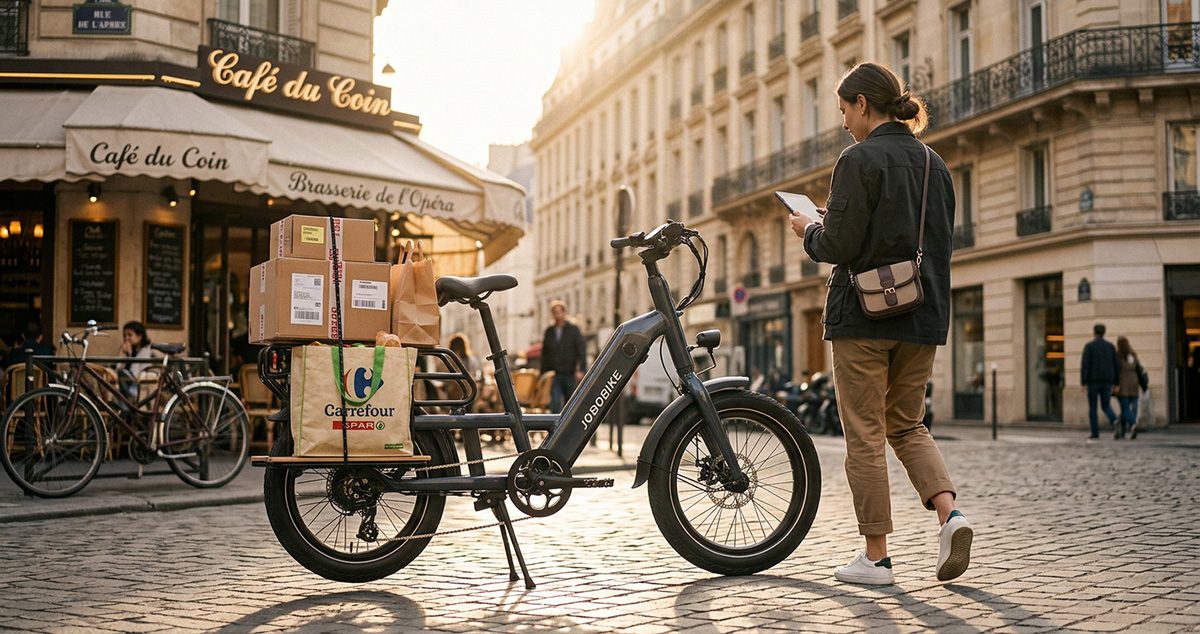
A cargo e-bike is a heavy-duty electric bicycle specifically engineered to transport large loads, children, or commercial goods. Unlike standard e-bikes, cargo models feature extended frames, reinforced racks, and powerful mid-drive or hub motors capable of handling extra weight without sacrificing stability. They often come with long-tail or front-loading designs, integrated footrests, and safety features like running boards and child seats.
At JOBO, our cargo e-bike lineup is built with 48V 750W TBS geared hub motors and 6061 aluminum alloy frames to support payloads up to 200 kg, making them ideal for families and delivery businesses alike. The intelligent 5-level pedal assist and twist throttle give riders full control over power delivery, whether hauling groceries uphill or cruising flat streets with kids on board.
What Is a Regular Electric Bike?
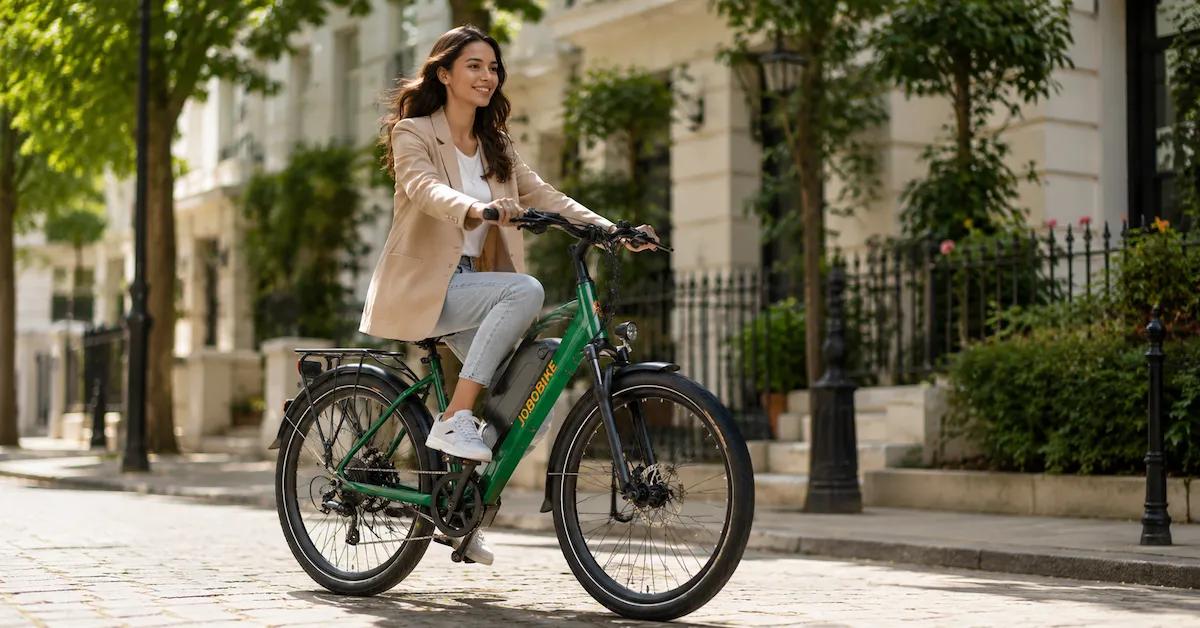
A regular electric bike—often called a commuter or city e-bike—prioritizes agility, speed, and lightweight design. These models typically feature standard step-through or diamond frames, moderate-capacity batteries (e.g., 48V 13Ah–17.5Ah), and motors ranging from 250W to 750W. They are optimized for solo riders covering 20–50 km daily, offering a balance of portability and performance.
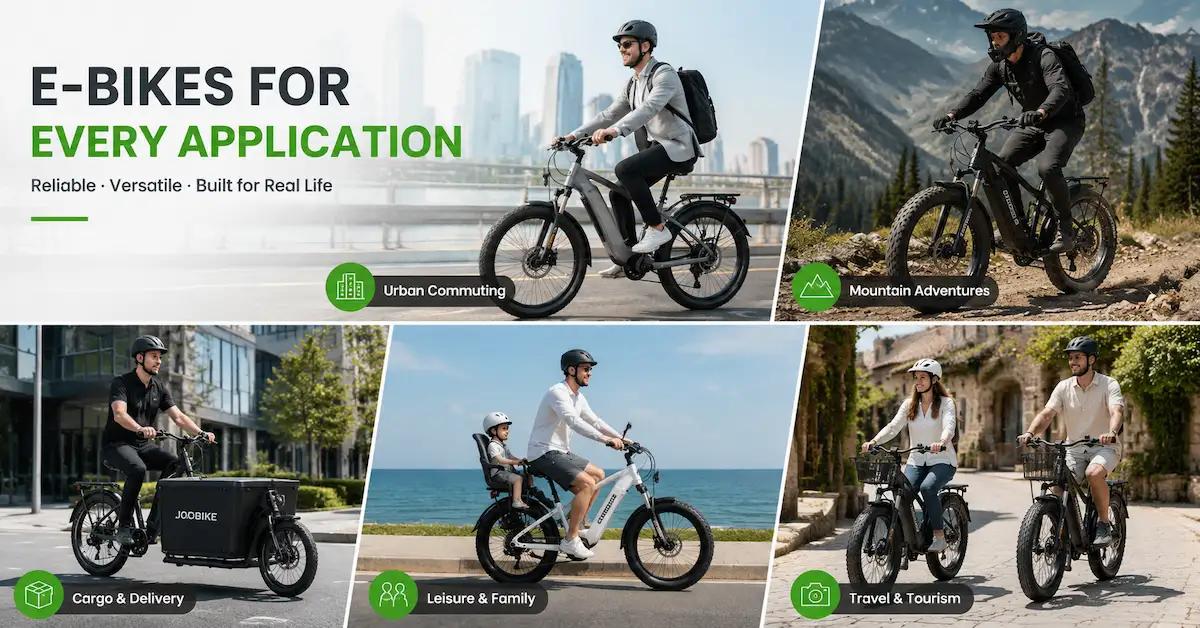
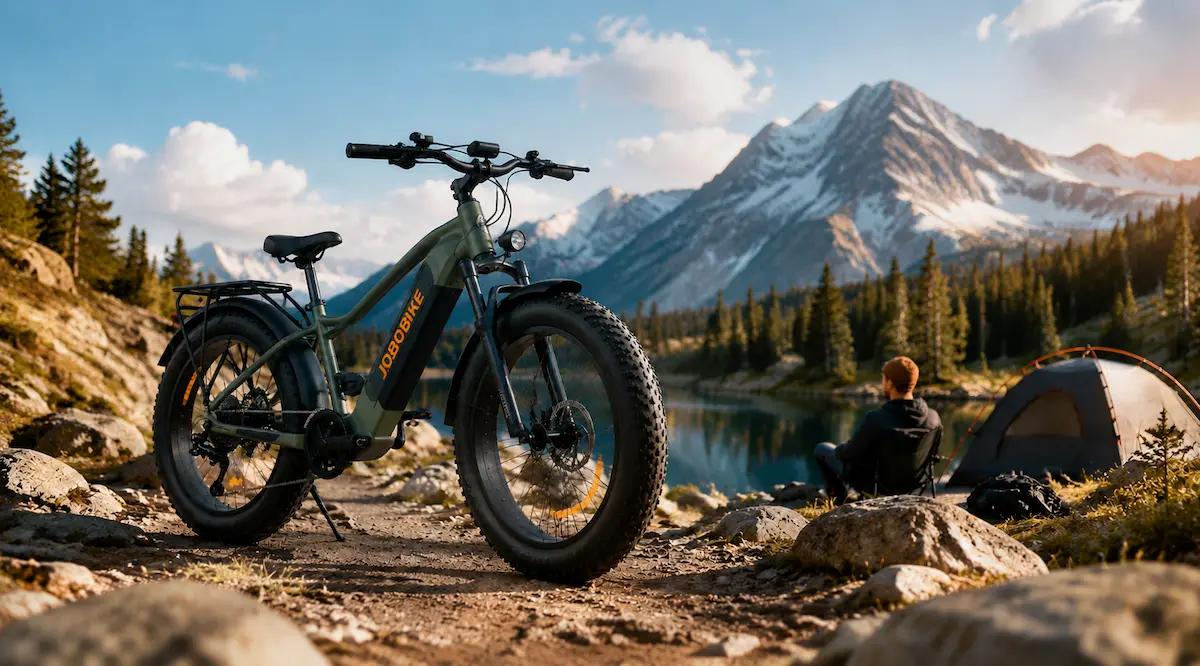
JOBO’s regular electric bikes, including our folding and mountain models, are designed for quick urban commuting and recreational weekend rides, with emphasis on maneuverability and compact storage. While they share the same 48V system architecture, they differ in frame geometry and load-rated components.
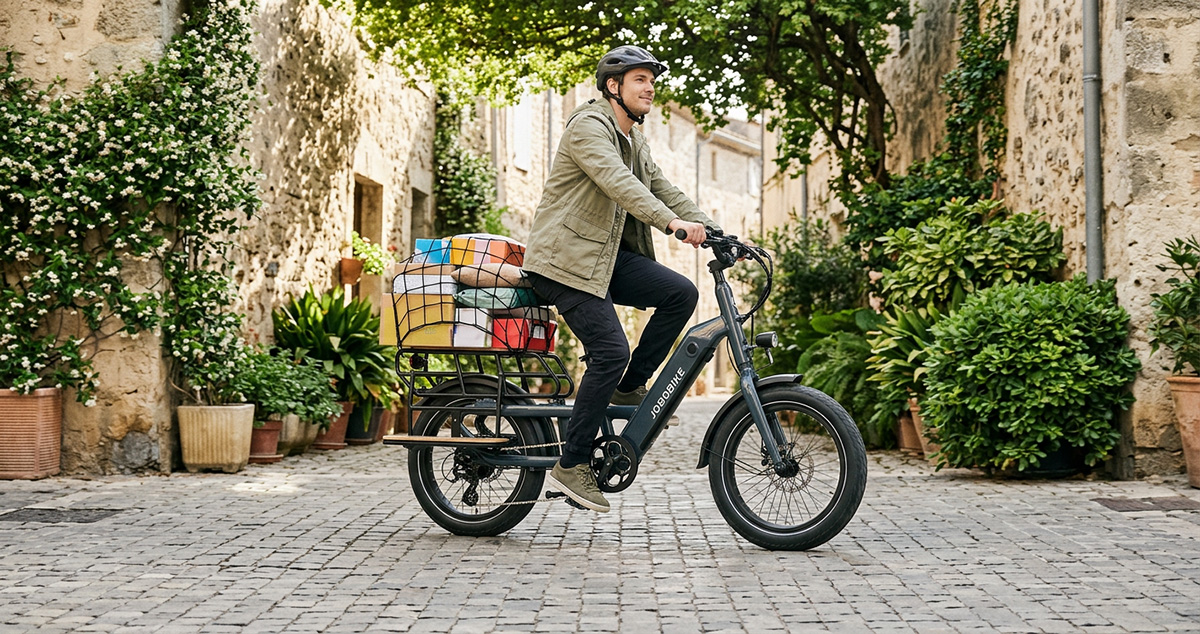
Cargo E-Bike vs Regular Electric Bike: Head-to-Head Comparison
| Feature | Cargo E-Bike | Regular Electric Bike |
|---|---|---|
| Primary Use | Hauling cargo, kids, groceries, business deliveries | Solo commuting, fitness, leisure riding |
| Frame Design | Extended wheelbase, reinforced 6061 aluminum alloy, integrated racks | Standard or compact frame, minimal accessories |
| Motor Power | 48V 750W TBS geared hub motor (high torque for heavy loads) | 250W–750W standard hub or mid-drive |
| Battery Capacity | 48V 17.5Ah Samsung (840Wh) for extended range under load | 48V 13Ah–17.5Ah (624Wh–840Wh) |
| Payload Capacity | 200 kg total (rider + cargo) | 100 kg–120 kg total |
| Range | 40–70 km depending on load, terrain, and assist level | 50–100 km on standard assist levels |
| Tires | 26x4.0 CST all-terrain with reflective patches and puncture-proof layer | 20x4.0, 26x2.1, or 27.5x2.4 standard tires |
| Brakes | Tektro mechanical disc brakes (reliable, easy to maintain) | Mechanical or hydraulic disc brakes |
| Drivetrain | Shimano 7-speed freewheel with KMC chain | 7–21 speed Shimano systems |
| Suspension | Aluminum alloy integrated front suspension fork | Front suspension or rigid fork options |
| Lighting | 50 LUX headlight + integrated tail light | Standard LED lights |
| Throttle & Assist | Twist throttle + intelligent 5-level pedal assist | Thumb/twist throttle + 3–5 level assist |
| Charger | 48V 3A (faster charging for large battery) | 48V 2A–3A |
| Weight | 34.9 kg net weight (heavier, stable under load) | 22–30 kg |
| Storage & Parking | Requires larger space, single-leg aluminum kickstand | Fits standard bike racks, easier to carry upstairs |
| Safety Features | Reflective tire patches, wide tires, low center of gravity, child guards | Standard lights, reflective strips, disc brakes |
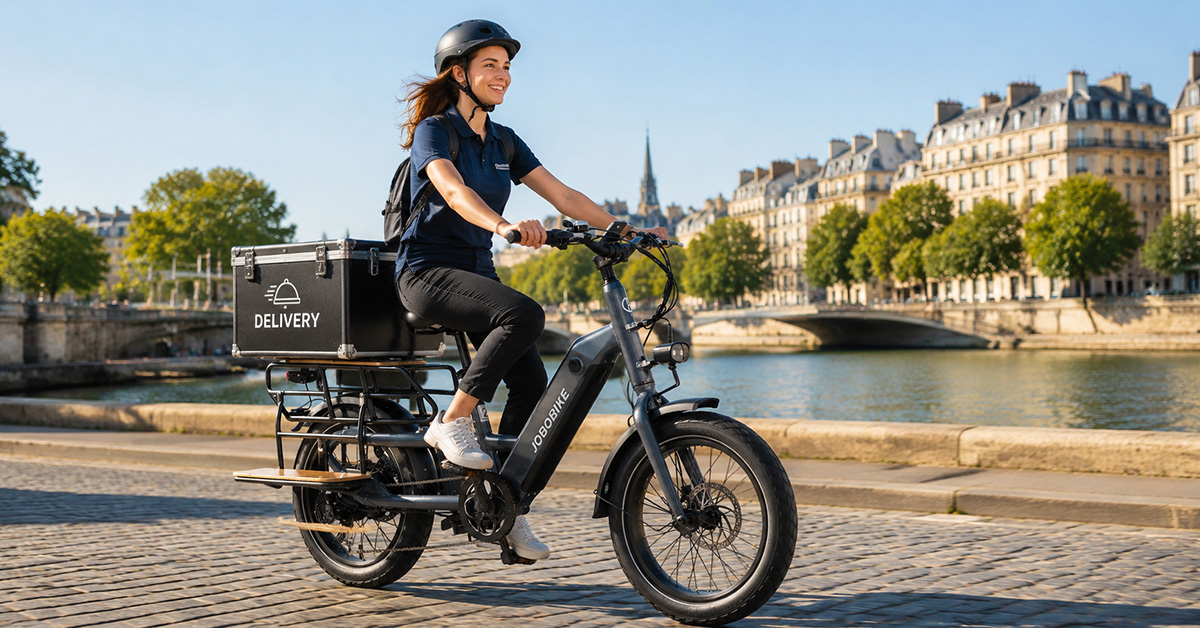
Deep Dive: JOBO Cargo E-Bike Technical Advantages
Built for Heavy Loads: 200 kg Payload Capacity
The 200 kg total payload capacity is the defining feature that separates cargo e-bikes from regular models. This is achieved through:
-
6061 aluminum alloy frame: Aircraft-grade material with reinforced welds and thicker tubing at stress points
-
12-gauge stainless steel spokes: Extra-thick spokes prevent wheel deformation under heavy loads
-
Alloy Star Circle 36H rims: 36-hole construction distributes weight more evenly than standard 32H rims
-
Single support parking stand: Heavy-duty kickstand prevents tipping when loading/unloading cargo
Power That Matches the Weight: 48V 750W TBS Geared Hub Motor
The TBS geared hub motor delivers high torque at low RPM, essential for accelerating from a standstill with 100+ kg of extra weight. Unlike direct-drive motors, geared hubs provide:
-
Better hill-climbing ability under load
-
Smaller physical size for the same power output
-
Freewheeling efficiency when pedaling unassisted
Combined with the intelligent 5-level pedal assist and twist throttle, riders can modulate power precisely—using low assist for flat solo rides and maximum assist for loaded hill starts.
Samsung Battery: Reliable Energy for Demanding Routes
The 48V 17.5Ah Samsung battery (840Wh) provides:
-
Real-world range of 40–70 km depending on load, terrain, and assist level
-
Consistent voltage output under high discharge rates
-
Long cycle life (800+ charge cycles to 80% capacity)
For reference: a 90 kg rider with 50 kg of cargo using Level 3 assist on mixed terrain can expect approximately 50 km of range. The same rider on a regular e-bike with no cargo might achieve 70–80 km on Level 2 assist.
All-Terrain Confidence: 26x4.0 CST Fat Tires
The 26x4.0 CST all-terrain tires with reflective patches and puncture-proof layer offer:
-
Stability: Wide contact patch prevents sinking on soft surfaces (sand, snow, gravel)
-
Safety: Reflective sidewalls increase nighttime visibility by 30% compared to standard tires
-
Durability: Puncture-proof layer reduces flat tire incidents by approximately 60%
-
Comfort: Low tire pressure absorption smooths out potholes and curb impacts
This tire specification is particularly valuable for cargo applications where a flat tire with 200 kg total weight creates a serious logistical problem.
Control and Safety Systems
-
Tektro mechanical disc brakes: Provide consistent stopping power in wet/dry conditions and are easier to field-service than hydraulic systems—critical for delivery fleets
-
Speed sensor: Delivers smooth, proportional pedal assist without jerky engagement
-
50 LUX headlight + integrated tail light: Meets German StVZO road lighting standards for urban night riding
-
Mountain-type pedals: Aggressive grip pattern prevents foot slippage when riding with heavy loads
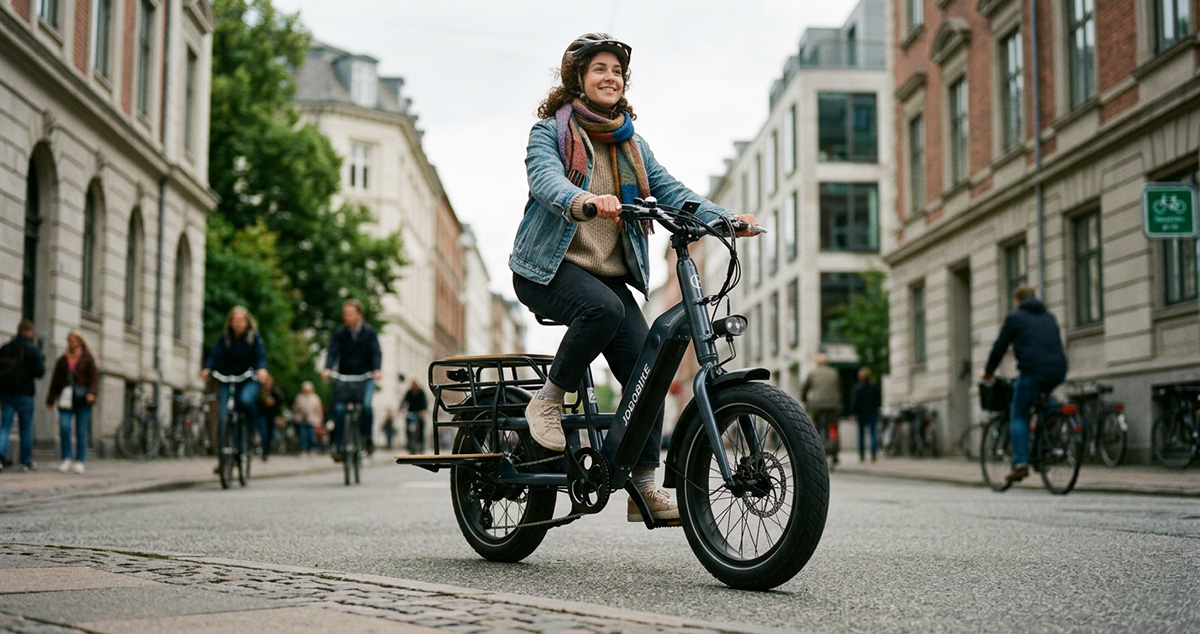
Which One Is Better for Daily Use? It Depends on Your Lifestyle
Choose a Cargo E-Bike (Like the JOBO 200kg Model) If You:
-
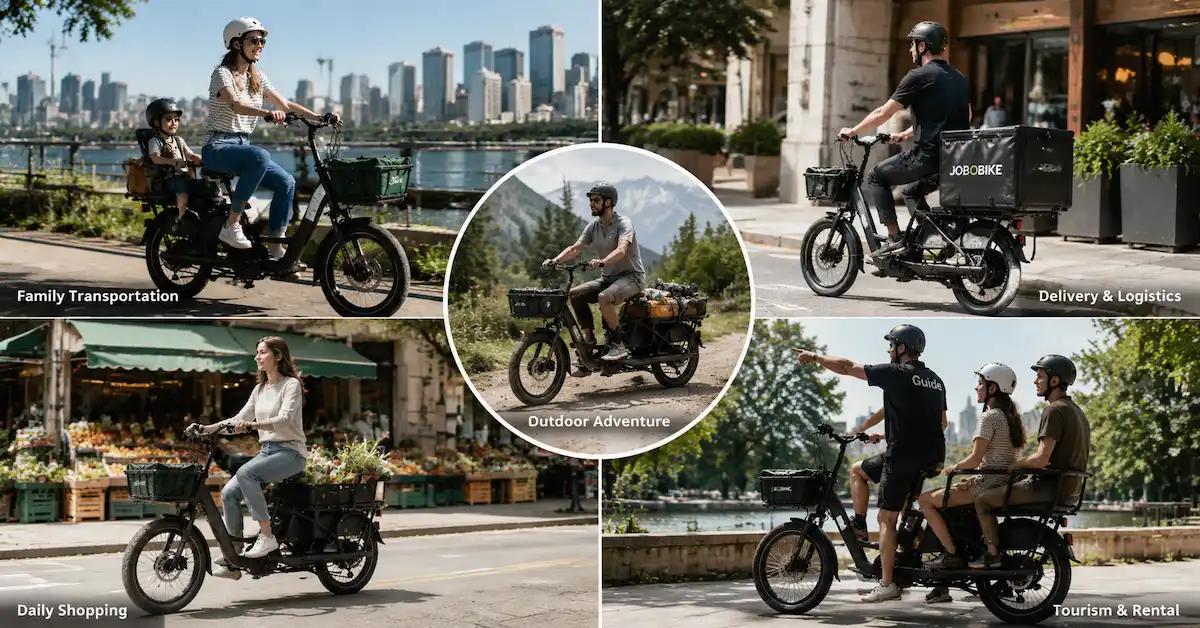
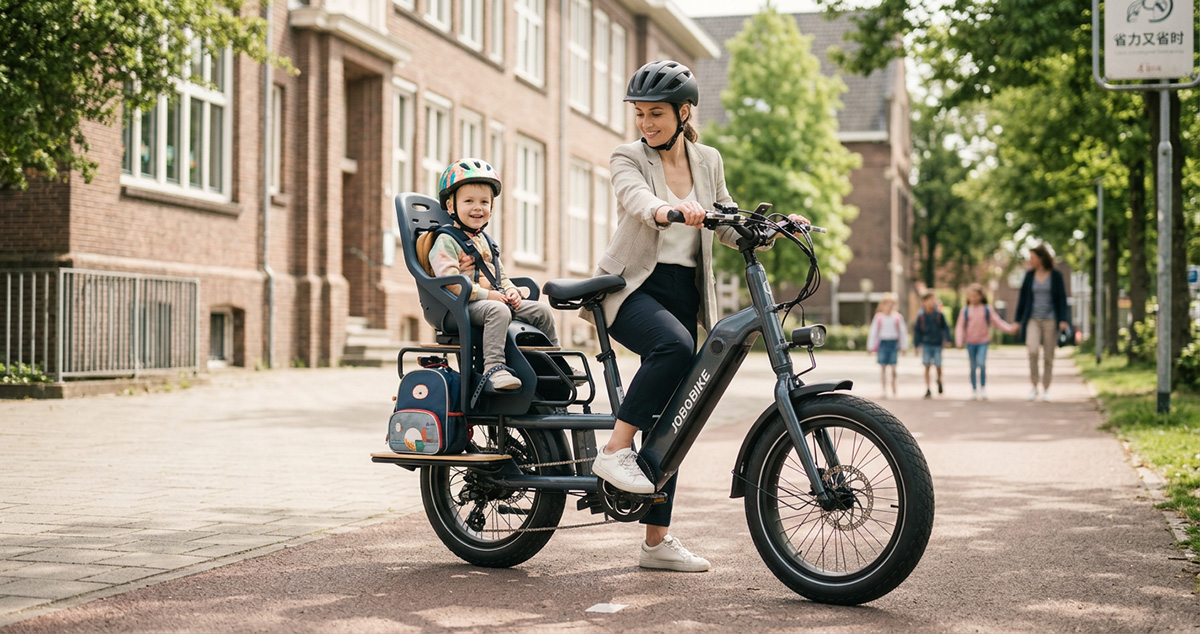
Transport children or pets regularly — The 200 kg capacity accommodates two child seats plus groceries. The low step-over height and stable geometry reduce tip-over risk.
-
Run a delivery business or carry heavy tools — From restaurant deliveries to mobile repair services, the high payload capacity and Samsung battery endurance pay for themselves in productivity.
-
Do large grocery shopping or move bulky items — Skip the car for weekly errands; the 26x4.0 tires handle parking lot curbs and loading ramps with ease.
-
Live in areas with snow, sand, or unpaved roads — The fat tires and 750W motor maintain traction where regular bikes struggle.
-
Need all-weather reliability — Puncture-proof tires and mechanical disc brakes minimize downtime in adverse conditions.
Choose a Regular Electric Bike If You:
-
Commute solo through congested traffic — Narrower frames and 22–28 kg weight make filtering through cars and tight spaces effortless.
-
Need to carry the bike upstairs or store in small apartments — Folding e-bike options collapse to fit closets or office corners.
-
Prioritize maximum range for recreational riding — Without heavy cargo, the same 840Wh battery can deliver 80–100 km on eco assist.
-
Are budget-conscious — Lower upfront cost and lighter components reduce maintenance expenses.
-
Primarily ride on paved roads — Standard 26x2.1 or 27.5x2.4 tires offer lower rolling resistance and better efficiency on asphalt.
Real-World Daily Scenarios
| Scenario | Best Choice | Why |
|---|---|---|
| Urban parent with two kids + school bags | Cargo E-Bike | 200 kg capacity, stable geometry, and integrated lights for early morning/late afternoon rides. |
| College student crossing campus | Regular E-Bike | 34.9 kg cargo bike is impractical to carry into dorms; 25 kg regular bike fits elevators and stairwells. |
| Food delivery rider (60+ orders/day) | Cargo E-Bike | Thermal bags, large payloads, and puncture-proof tires prevent mid-shift breakdowns. |
| Retiree riding to the park on bike paths | Regular E-Bike | Step-through comfort and lighter weight suit leisure pacing; 200 kg capacity is unnecessary. |
| Weekend grocery + gym bag + dry cleaning | Cargo E-Bike | One trip replaces three, saving 45+ minutes. The 50 LUX headlight extends usable hours into evening. |
| Commuter with 30 km round trip, no cargo | Regular E-Bike | Lighter weight improves efficiency; standard tires roll faster on pavement. |
| Rural rider on gravel/dirt roads | Cargo E-Bike | 4.0" tires and 750W motor handle loose surfaces; 200 kg capacity accommodates farm tools or harvest boxes. |
Key Considerations Before Buying
1. Motor Torque and Load Matching
The 48V 750W TBS geared hub motor produces approximately 80 Nm of torque, sufficient to move 200 kg total weight up 10% grades at 15 km/h. Regular e-bike motors (250W–500W) generate 40–60 Nm and will overheat or trigger thermal protection when consistently loaded beyond 120 kg.
Rule of thumb: If your typical ride includes (rider weight + cargo) exceeding 130 kg, or frequent hill climbing with 80+ kg loads, the 750W cargo configuration is necessary, not optional.
2. Battery Range Under Real Load
Manufacturers often list maximum range under ideal conditions (light rider, flat terrain, minimal assist). For the JOBO cargo e-bike:
| Conditions | Estimated Range |
|---|---|
| 70 kg rider, no cargo, Level 2 assist, flat | 70–80 km |
| 90 kg rider, 50 kg cargo, Level 3 assist, mixed | 45–55 km |
| 100 kg rider, 80 kg cargo, Level 5 assist, hilly | 30–40 km |
The 48V 3A charger replenishes the 17.5Ah battery in approximately 6 hours from empty—practical for overnight charging between delivery shifts.
3. Maintenance and Durability
The reinforced frame and heavy-duty components of cargo e-bikes withstand more abuse but require attention:
-
12-gauge spokes: Check tension monthly if carrying 150+ kg regularly
-
Mechanical disc brakes: Pad replacement every 2,000–3,000 km under heavy load (vs. 4,000+ km for light use)
-
KMC chain and Shimano 7-speed freewheel: Clean and lubricate every 500 km; replace freewheel at 5,000 km under heavy load
-
Puncture-proof tires: Inspect tread quarterly; replace at 8,000–10,000 km
Regular e-bikes experience roughly 40% less component stress, extending service intervals proportionally.
4. Physical Handling and Storage
At 34.9 kg net weight with dimensions of 153 x 31 x 85 cm in carton, the cargo e-bike requires:
-
Ground-floor parking or an elevator (not practical for 4th-floor walk-ups)
-
A reinforced wall mount or floor stand (standard hooks may fail)
-
180 cm of length clearance for the extended frame
Regular e-bikes at 22–28 kg fit standard bike racks and can be carried short distances by most adults.
5. Local Regulations
Some regions classify 750W e-bikes as Class 2 or Class 3 rather than standard Class 1 (250W, pedal-assist only). Verify:
-
Maximum motor power limits (EU: typically 250W nominal; US: 750W allowed in most states)
-
Throttle legality (some EU countries restrict or prohibit twist throttles)
-
Speed limits (25 km/h EU, 20 mph US Class 2, 28 mph US Class 3)
-
Registration or insurance requirements for commercial use
Conclusion: The Right Tool for the Right Job
There is no universal "better" option—only the better fit for your daily demands. If your routine involves moving people, goods, or equipment across variable terrain, a cargo e-bike with 200 kg payload capacity, 48V 750W motor, and puncture-proof 26x4.0 tires transforms your bike from a personal vehicle into a versatile utility machine. If your priority is agile solo commuting, fitness, and minimal storage hassle, a regular electric bike delivers unmatched convenience and value.
The JOBO cargo e-bike specification detailed above represents a purpose-built solution for riders who refuse to compromise on capacity, reliability, or all-terrain capability. The Samsung battery, Tektro mechanical disc brakes, and Shimano 7-speed drivetrain are not premium upgrades—they are baseline requirements for safe, efficient heavy-load transportation.
At JOBO, we manufacture both categories with ISO-certified quality, offering OEM and ODM customization for businesses and direct-to-consumer models for individual riders. Whether you need a family cargo hauler or a sleek city commuter, our European warehouse in Poland and US distribution network ensure fast delivery and local support.
Ready to upgrade your daily ride? Explore JOBO's full range of cargo and regular electric bikes, or contact our team for personalized recommendations based on your route, load, and budget.
Frequently Asked Questions
Q: Can a regular electric bike be converted into a cargo bike?
A: While you can add rear racks and panniers, regular e-bike frames and motors are not rated for cargo-level payloads. The 6061 aluminum alloy frame and 12-gauge spokes on dedicated cargo models are engineered for 200 kg; converting a standard bike risks frame fatigue, spoke breakage, and motor burnout. For heavy daily hauling, invest in a purpose-built cargo e-bike.
Q: Are cargo e-bikes difficult to ride?
A: Initially, the 34.9 kg weight and longer wheelbase require adjustment, especially at low speeds or tight corners. However, the low center of gravity actually improves stability once loaded, and the intelligent 5-level pedal assist smooths out acceleration. Most riders adapt within 3–5 rides. The twist throttle is particularly helpful for starting from a standstill with heavy cargo.
Q: Do cargo e-bikes require special licenses?
A: In most EU countries, pedal-assist e-bikes under 250W nominal power are classified as bicycles. The 750W configuration may require registration as a speed pedelec or L1e-B vehicle depending on local law. In the US, 750W e-bikes with throttles typically fall under Class 2 (20 mph limit) and do not require a motorcycle license in most states. Always check your local e-bike classification laws before purchasing.
Q: How long does the Samsung 48V 17.5Ah battery last?
A: With proper care (avoiding deep discharge, storing at 50% charge in extreme temperatures), the Samsung battery maintains 80% capacity after 800+ charge cycles. For a daily commuter riding 40 km per day and charging every 2 days, this translates to approximately 4–5 years of service life. The 48V 3A charger completes a full charge in about 6 hours.
Q: Can I use the cargo e-bike for daily commuting without cargo?
A: Absolutely, though you will be carrying the extra 8–12 kg of frame weight compared to a regular e-bike. The 26x4.0 tires have higher rolling resistance on pavement, reducing unladen range by approximately 15% versus a standard tire model. If your routine is mixed—some days solo, some days hauling 50+ kg—the versatility of the cargo platform often outweighs the efficiency penalty on light days.
Q: Are mechanical disc brakes sufficient for 200 kg loads?
A: Yes, when properly maintained. Tektro mechanical disc brakes provide consistent, predictable stopping power for loaded cargo bikes. The key advantage is serviceability: cables and pads can be replaced with basic tools in the field, unlike hydraulic systems that require bleeding. For commercial fleets or remote riders, this reliability factor often outweighs the slightly higher hand effort compared to hydraulics.
Q: What rider height fits the JOBO cargo e-bike?
A: The recommended rider height is 155 cm and above. The ∮33.9 x 350 mm seat post and custom-formed aluminum handlebars provide ample adjustment range. The leather comfort saddle and mountain-type pedals accommodate riders up to approximately 190 cm with the seat post at maximum extension.
About JOBO: JOBO is a leading electric bike manufacturer with a proprietary frame factory in China and European distribution via Poland. We specialize in cargo e-bikes, folding e-bikes, mountain e-bikes, and custom OEM/ODM solutions for global brands. All models meet UL and CE safety standards. Our 48V 750W cargo platform with Samsung battery, Tektro brakes, and CST puncture-proof tires represents our commitment to heavy-duty, daily-use reliability.
Contact: WhatsApp: +86 19884865613 | Email: info@jobobikes.com | Website: www.jobobikes.com