Urban delivery companies, logistics distributors, and private-label mobility brands increasingly need cargo electric bikes capable of transporting goods through busy streets, narrow access routes, and high-frequency delivery environments.
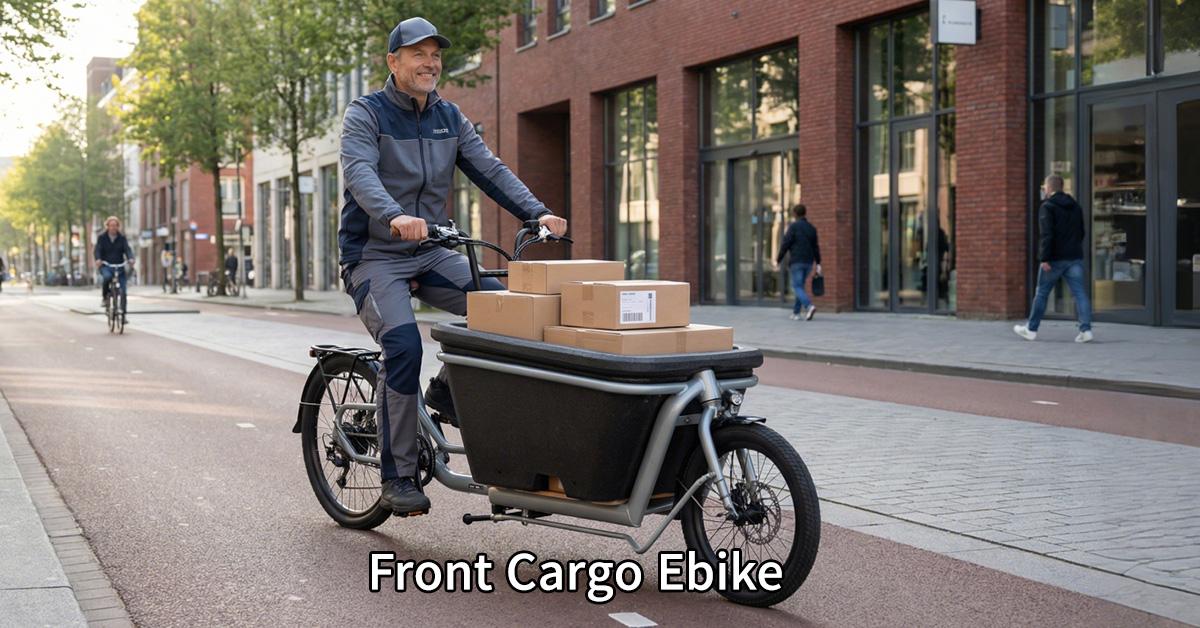
For many applications, a front-loading cargo bicycle offers a practical alternative to conventional rear-rack designs. Its cargo platform sits ahead of the rider, making the load visible during operation and allowing businesses to configure dedicated carrying areas for parcels, tools, groceries, or approved transport containers.
However, selecting a front load cargo e-bike manufacturer requires more than finding a bicycle with a spacious front deck.
Professional buyers must verify actual load ratings, steering and braking performance, frame construction, electrical specifications, destination-market requirements, and production consistency.
The JOBO JB-TDN47Z is a front-loading electric cargo bicycle platform designed for distributors, commercial fleet operators, and OEM/ODM brands.
Its published reference configuration includes a 48V 500W motor, 48V 15Ah LG battery, Shimano 7-speed drivetrain, 6061 aluminum alloy frame, and mechanical disc brakes.
This guide explains how to evaluate the JB-TDN47Z for practical commercial applications, prepare an appropriate OEM specification, and reduce purchasing risks before placing wholesale orders.
Quick Answer: How Do You Choose a Front Load Cargo E-Bike Manufacturer?
A reliable front load cargo e-bike manufacturer should provide verified front-platform load ratings, complete-vehicle weight limits, loaded braking data, frame test documentation, approved electrical configurations, and consistent OEM production specifications.
For the JOBO JB-TDN47Z, buyers should confirm the published 130 kg loading figure, including how rider, cargo, accessories, and bicycle weight are accounted for.
They should also evaluate actual deck dimensions, steering behavior under load, battery range, and compliance requirements for the destination market.
Before placing a bulk order, request an approved bill of materials (BOM), production-representative samples, relevant test records, and an after-sales parts plan.
Explore the JOBO JB-TDN47Z Front Load Cargo E-Bike.
1. Which Businesses Benefit From Front Load Cargo E-Bikes?
Front-loading cargo electric bikes can serve businesses that regularly move goods across relatively short routes.
Unlike a conventional bicycle with a small front basket, a purpose-designed front cargo platform may offer a larger dedicated space for transporting approved goods.
The suitability of the bicycle depends on its design, legal classification, actual load rating, and operating environment.
Typical commercial applications
| B2B customer | Common application | Main purchasing priority |
|---|---|---|
| Urban courier companies | Parcel collection and local distribution | Cargo security and loaded handling |
| Grocery delivery operators | Food and household goods | Container compatibility and stability |
| Retail distribution businesses | Transfers between nearby shops | Practical loading and unloading |
| Property maintenance teams | Tools and service materials | Cargo mounting and durability |
| Hospitality operators | Internal property supply transport | Ease of use and maintenance |
| Private-label cargo bike brands | Branded utility product development | OEM configuration and quality consistency |
The platform may be worth considering where routes involve repeated stops and moderate transport distances.
For oversized freight, particularly heavy goods, difficult terrain, or passenger transport, buyers should evaluate whether another cargo bicycle architecture is more appropriate.
The correct platform is the one that meets the approved transport task—not simply the one with the largest-looking deck.
2. JOBO JB-TDN47Z: Technical Specifications for Wholesale Buyers
The JB-TDN47Z is presented as a front-load cargo electric bike with a low step-through frame and a dedicated front carrying structure.
The following table summarizes its public reference specifications.
JB-TDN47Z technical overview
| Specification | Published reference | Procurement consideration |
|---|---|---|
| Product model | JB-TDN47Z | Confirm latest production revision |
| Motor | 48V 500W | Verify rated output and destination-market classification |
| Battery | 48V 15Ah LG | Confirm battery pack, BMS, charger, and documentation |
| Display | LCD | Confirm functions and replacement availability |
| Maximum speed | 25 km/h | Verify motor assistance cut-off behavior |
| Advertised range | 50 km | Request test conditions |
| Frame | 6061 aluminum alloy | Review structural design and testing |
| Wheel layout | Front/rear wheel sizes described as 20/26 inches in JOBO materials | Confirm complete wheel and tire specifications |
| Transmission | Shimano 7-speed | Verify exact drivetrain components |
| Brakes | Mechanical disc brakes in product specifications | Confirm final brake BOM |
| Fork | Integrated fork | Confirm construction and geometry |
| Tires | 20×2.125 and 26×2.125 inches appear in configuration details | Verify front/rear installation |
| Loading capacity | 130 kg, with an unexplained 95+35 breakdown | Require written load definitions |
| Cargo platform | Front-positioned loading deck | Confirm usable dimensions and approved attachments |
These are publicly listed reference details, not independent performance measurements. The final technical specification must identify the approved production configuration.
Why buyers should verify the complete system
Motor output, wheel size, battery capacity, and cargo structure interact.
For example, the vehicle's braking and steering behavior must be evaluated with the intended load, not simply an unloaded demonstration bicycle.
Similarly, an advertised 50 km range should not be used as a guaranteed distance for a heavily loaded urban delivery route.
An effective procurement specification describes how the complete bicycle must perform.
3. What Does the JB-TDN47Z's 130 kg Loading Figure Actually Mean?
The published loading figure is one of the most important technical details to clarify.
JOBO's product description refers to carrying up to 130 kg of goods.
However, the product's detailed specification section describes a loading capacity of 130 kg (95+35) without clearly defining the components.
Those descriptions cannot safely be treated as equivalent.
Five load ratings to verify
| Load measurement | Required clarification |
|---|---|
| Maximum permissible total mass | Maximum allowed weight of the complete loaded vehicle |
| Rider weight allowance | Approved rider mass |
| Front cargo platform rating | Maximum load on the front deck |
| Accessory or cargo-box rating | Permissible load of installed equipment |
| Maximum vehicle configuration | Approved combined loading arrangement |
The weight of the bicycle and battery may need to be included when calculating permissible total mass.
Buyers should therefore request the manufacturer's actual loading definitions rather than interpreting the 130 kg headline as the front-deck rating.
What should the manufacturer provide?
Request a current specification sheet identifying the exact load limits, a load-distribution diagram, approved cargo mounting points, relevant structural test documentation, and instructions for the intended application.
If the manufacturer offers alternative reinforced platforms, ask whether the load rating changes and which additional testing is required.
Procurement rule: Never advertise a 130 kg front cargo capacity unless the approved technical documentation specifically supports that claim.
This distinction is particularly important for importers, who may be responsible for product information supplied to their customers.
4. How Does Front-Load Geometry Affect Cargo Handling?
One of the main design advantages of a front-loading cargo bicycle is the rider's ability to see the carrying area.
This arrangement may help operators monitor cargo positioning and access goods during delivery stops.
However, cargo visibility does not automatically ensure safe handling.
Cargo deck dimensions
Buyers should obtain the usable platform length, width, height, and any boundaries that restrict accessory installation.
The size and shape of a cargo box may affect steering clearance, rider visibility, and vehicle maneuverability.
Load position
Where a cargo platform positions its load relatively low, the resulting mass distribution may support more manageable handling than a higher placement in certain conditions.
The actual outcome depends on the complete geometry and the weight and location of the load.
Securing goods
Cargo should be restrained using approved mounting arrangements.
Retail buyers should specify tie-down locations, cargo-box attachment requirements, access procedures, and permissible load dimensions.
Steering and cornering
Front-loading arrangements may behave differently from conventional bicycles, especially at low speeds.
A representative sample should be tested for turning, starting, maneuvering through narrow routes, and stopping with the intended load.
A low center of gravity is a potentially useful design characteristic, but it is not a substitute for actual loaded stability testing.
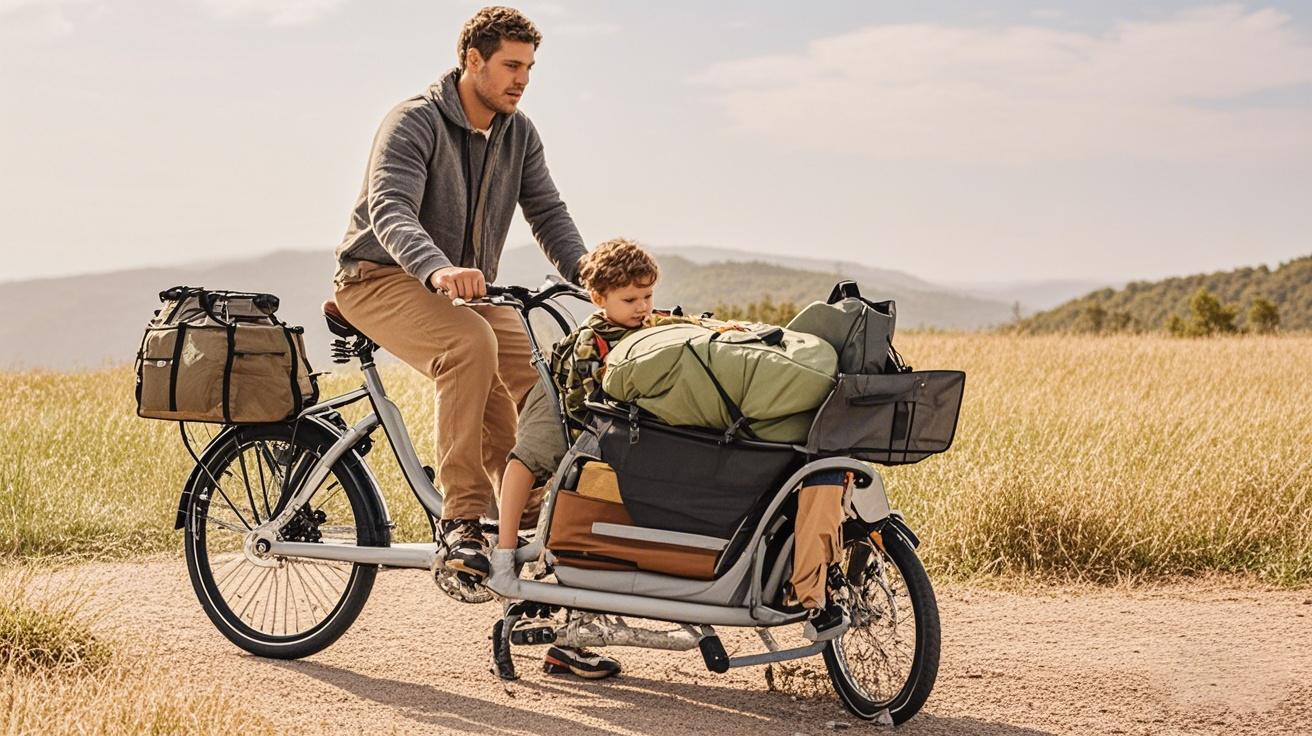
5. Front Load Versus Long-Tail Cargo E-Bikes: Which Should Buyers Choose?
Cargo bicycle manufacturers offer different carrying layouts because commercial applications vary.
A front-load platform is not necessarily better than a rear-carrying design for every business.
Cargo architecture comparison
| Feature | Front-load cargo e-bike | Long-tail cargo e-bike | Cargo tricycle |
|---|---|---|---|
| Primary load location | Ahead of the rider | Behind the rider | Depends on configuration |
| Cargo visibility | Generally direct | Often less direct | Design dependent |
| Frame layout | Dedicated front carrying structure | Extended rear structure | Multiple-wheel architecture |
| Loading requirements | Front platform dimensions | Rear rack length and mounting | Cargo platform and track width |
| Maneuvering | Requires familiarization with front-load geometry | More similar to conventional bicycle handling | Different multiwheel handling |
| Typical buying priority | Front cargo accessibility | Rear carrying flexibility | Specialized platform requirements |
The JB-TDN47Z is most relevant to buyers specifically seeking a front-loading layout.
Businesses carrying large insulated boxes, tools, or standardized containers should compare the dimensions and loading procedures of different platforms before selecting an OEM design.
JOBO's electric bike product catalogue provides additional models for comparison.
6. Can the 48V 15Ah Battery Support Commercial Delivery Routes?
The JB-TDN47Z reference configuration includes a 48V 15Ah LG battery.
Its nominal energy can be calculated as:
48V × 15Ah = 720Wh
This calculation does not establish the amount of energy available during every operating condition or the vehicle's actual range.
Why real-world range changes
Battery consumption depends on cargo weight, rider mass, stop frequency, gradients, assistance settings, weather, tire pressure, and battery condition.
A fleet performing frequent stop-and-go deliveries may consume more energy than a lightly loaded bicycle on a steady route.
The published 50 km figure should therefore be considered a reference claim requiring defined test conditions.
What should a fleet buyer measure?
Record the distance traveled per shift, number of stops, typical cargo load, battery state before and after operation, charging requirements, and energy consumption.
If an alternative battery system is proposed, ask JOBO to confirm the electrical design, additional weight, charger compatibility, and final performance requirements.
The objective is predictable route completion, not simply the largest available battery.
7. How Do European Standards Affect Front Load Cargo E-Bike Procurement?
European buyers should distinguish three questions: the vehicle's mechanical safety, its electric assistance system, and the legal classification under which it will be sold and used.
These are related but not identical.
Carrier-cycle mechanical requirements
The European carrier-cycle standard series includes EN 17860.
The Swedish Institute for Standards identifies SS-EN 17860-2:2024+A1:2026 for lightweight single-track carrier cycles.
Its scope covers defined categories of single-track carrier cycles, including mechanical aspects of their design and testing.
For buyers, this provides a relevant reference when discussing load-bearing structures, mechanical performance, and product testing.
However, a standard's scope is not a load-capacity certificate for a particular model.
The manufacturer must provide relevant evidence for the actual bicycle configuration.
Electric assistance requirements
The Belgian standards body NBN publishes the scope of EN 15194:2017+A1:2023 for electrically power-assisted cycles.
That standard addresses a defined EPAC category involving a maximum continuous rated motor power of 0.25 kW and assistance that cuts off at 25 km/h.
The JB-TDN47Z's published 500W motor specification should not be assumed to qualify automatically for that category.
Example: United Kingdom
The UK government's electric bike rules require an electrically assisted pedal cycle to have a motor with a maximum continuous rated output no greater than 250W and electric assistance that does not propel the bicycle above 15.5 mph.
A bicycle outside those requirements may fall under different motor-vehicle rules.
What should EU and UK importers request?
Ask JOBO to identify the exact motor rating, assistance cut-off, controller configuration, applicable standards, declaration and technical documentation, required markings, and intended vehicle category.
If a market-specific configuration is proposed, obtain engineering confirmation and relevant documentation for that version.
Referencing EN 15194 or EN 17860 does not establish that JB-TDN47Z is certified to either standard.
These sources help buyers understand what to request and verify.
8. Why Loaded Braking Performance Matters
A front-loading cargo bicycle may regularly operate with different cargo weights.
This changes the demands placed on braking components and vehicle control.
The JB-TDN47Z product specification lists mechanical disc brakes, while another JOBO publication describes a hydraulic-disc configuration.
The final brake type should therefore be defined in the approved BOM.
Important braking considerations
Buyers should review the exact brake component models, rotor specifications, recommended service procedures, and relevant loaded braking results.
Testing should reflect the intended permissible operating mass and applicable road conditions.
Mechanical versus hydraulic disc brakes
| Factor | Mechanical disc brake | Hydraulic disc brake |
|---|---|---|
| Actuation | Cable-operated | Hydraulic |
| Adjustment | Cable and component servicing | Hydraulic system procedures |
| Replacement parts | Compatible cables, pads and rotors | Compatible hydraulic parts, pads and rotors |
| Main purchasing question | Can the fleet maintain the approved system? | Can the fleet maintain the approved system? |
Neither configuration should be chosen from its label alone.
Performance depends on the actual components, installation, load, conditions, and maintenance.
For fleet procurement, the strongest choice is a validated system that local service teams can maintain consistently.
9. What Quality-Control Evidence Should a Manufacturer Provide?
An experienced front load cargo e-bike manufacturer should be able to explain how critical components and complete bicycles are inspected.
This matters because cargo platforms, brakes, electrical systems, and steering components affect the vehicle's suitability for commercial service.
JOBO publishes information about its quality-control laboratory, including frame fatigue testing, brake-related test equipment, complete-bike evaluation, and battery testing.
Buyers can review JOBO's QC laboratory and testing capabilities.
Recommended OEM quality-control checklist
| Inspection area | Purchasing requirement |
|---|---|
| Frame and welding | Approved structure and inspection criteria |
| Cargo platform | Load and mounting verification |
| Steering system | Correct installation and relevant functional testing |
| Braking system | Approved components and loaded performance |
| Motor and controller | Match signed electrical specification |
| Battery and charger | Compatibility and required documentation |
| Wheels and tires | Correct components and assembly |
| Final inspection | Match approved sample and BOM |
| Packaging | Transport protection and required accessories |
Factory testing equipment demonstrates testing capability; it does not establish that every possible OEM configuration has passed every applicable standard.
Buyers should request reports identifying the exact model, configuration, test method, and results.
10. OEM/ODM Customization: What Can Be Developed for the JB-TDN47Z?
OEM customization can help distributors and private-label brands develop products for different commercial environments.
JOBO describes customization options involving frame design, battery configuration, motor selection, braking systems, cargo structures, display functions, and branding.
Potential customization options
| Area | Buyer objective | Approval requirement |
|---|---|---|
| Front cargo deck | Fit approved boxes or equipment | Dimensions, mounts and load testing |
| Frame and geometry | Match specific riding requirements | Structural engineering review |
| Motor | Meet target-market requirements | Electrical and regulatory validation |
| Battery | Match route duty cycle | Compatibility and performance verification |
| Brakes | Support intended operating conditions | Approved component testing |
| Display | Fleet information or connected options | Hardware and software compatibility |
| Tires | Suit local road conditions | Load and clearance checks |
| Branding | Private-label identity | Color, graphics and artwork approval |
| Packaging | Improve wholesale distribution | Packing and transport validation |
Changes to the cargo structure, frame geometry, or electrical system may require more engineering work than cosmetic customization.
The manufacturer and buyer should agree on drawings, components, prototype testing, and production acceptance criteria before finalizing the order.
11. What Role Can JOBO's Poland Facility Play in European Sourcing?
JOBO also describes an assembly facility in Poland as part of its European operations.
For importers and regional distributors, this may create options for discussing European assembly, logistics, after-sales services, and replenishment.
However, the availability of a European facility does not guarantee that every JB-TDN47Z order will be assembled there.
Nor does it automatically establish shorter lead times, a particular customs origin, or exemption from import duties.
Questions European distributors should ask
Confirm whether the required configuration is available for assembly in Poland, which manufacturing stages occur at each location, the applicable delivery terms, expected lead time, production capacity, service-parts availability, and import documentation.
Buyers can review JOBO's European factory information and request a written supply plan for their specific project.
For repeat orders, the most valuable arrangement is one that provides consistent specifications, clear commercial responsibilities, and reliable replacement-parts support.
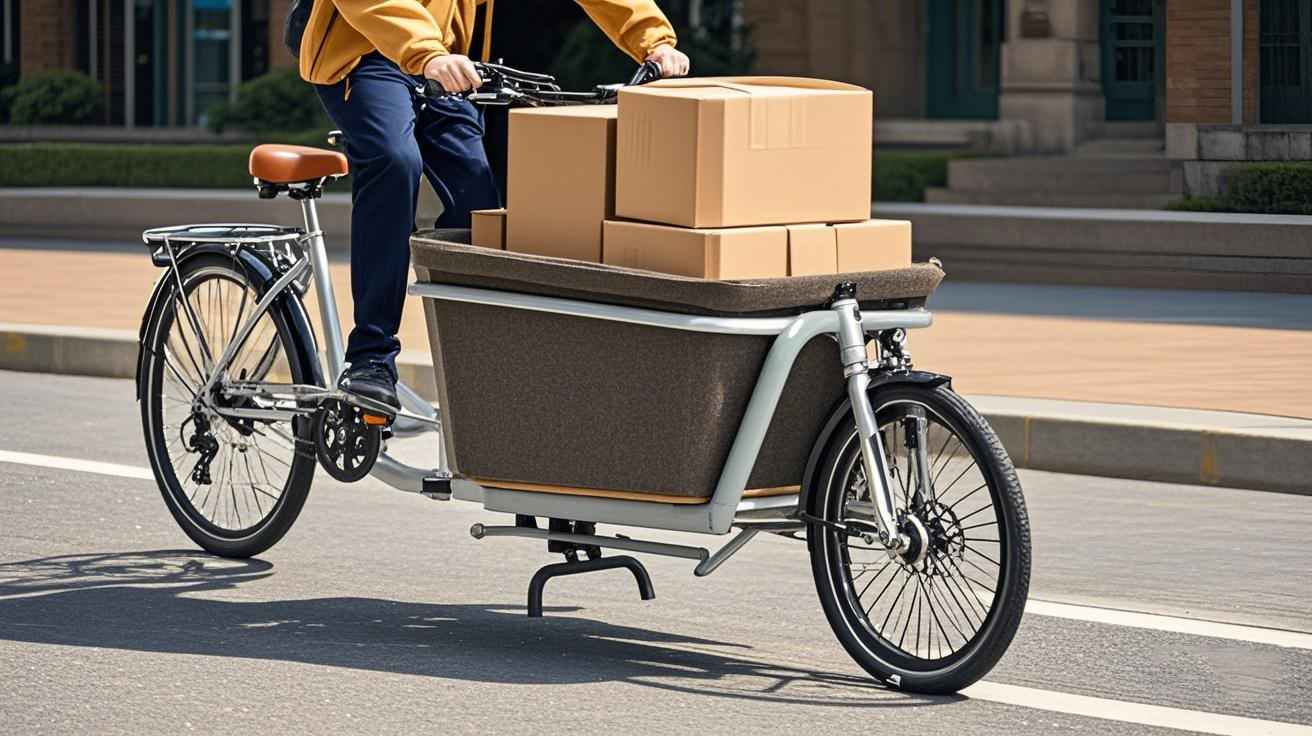
12. How Should Fleet Buyers Test a Front Load Cargo E-Bike Before Bulk Purchasing?
A representative pilot helps fleet operators identify problems before committing to larger orders.
For the JB-TDN47Z, sample testing should focus on the front cargo platform, loaded handling, braking, battery requirements, and maintenance.
Suggested pilot procedure
Step 1: Define the operating route. Record distances, gradients, stops, road conditions, and intended cargo.
Step 2: Approve the sample BOM. Confirm the frame, cargo deck, motor, battery, brakes, wheels, and accessories.
Step 3: Test loading procedures. Evaluate the approved cargo system, securing method, loading time, and parked stability.
Step 4: Test loaded operation. Record handling, steering, braking, and energy consumption within approved limits.
Step 5: Inspect components. Check fasteners, cargo mounts, brakes, wheels, drivetrain, and electrical connections.
Step 6: Finalize production approval. Resolve issues and lock the accepted configuration before bulk manufacturing.
Fleet pilot scorecard
| Metric | What to measure |
|---|---|
| Cargo loading time | Time to load and secure approved goods |
| Loaded handling | Steering and maneuvering observations |
| Route energy use | Energy consumption per kilometer |
| Braking | Relevant loaded braking results |
| Maintenance | Service tasks and replacement parts |
| Downtime | Cause and duration |
| Rider feedback | Ergonomics, control and usability |
| Component consistency | Match to the approved BOM |
The pilot should produce evidence that can be used to compare suppliers and approve production—not just positive impressions from a short demonstration.
13. Prepare a JB-TDN47Z Wholesale RFQ
A detailed request for quotation gives JOBO the information needed to assess the buyer's application and propose an appropriate configuration.
Front-load cargo e-bike RFQ checklist
| RFQ field | Required information |
|---|---|
| Business type | Importer, distributor, fleet operator or brand |
| Destination market | Country and vehicle classification |
| Intended use | Courier, grocery, retail or equipment transport |
| Cargo load | Actual weight and dimensions |
| Cargo deck | Required usable dimensions and mounting layout |
| Load ratings | Total mass, rider allowance and platform limit |
| Motor | Required rated power and assistance configuration |
| Battery | Capacity, charger and duty-cycle requirements |
| Brakes | Approved components and testing expectations |
| Standards | Applicable mechanical and electrical requirements |
| OEM branding | Colors, logos and packaging |
| Quantity | Sample order, initial batch and reorder forecast |
| Quality control | Inspection and sample acceptance requirements |
| Commercial terms | MOQ, Incoterms, price and production schedule |
| After-sales | Spare parts, warranty and service documentation |
Suggested inquiry to JOBO
We are a cargo bicycle importer, distributor, or urban logistics operator serving [target market].
We are evaluating the JB-TDN47Z front load cargo e-bike for [intended application], with a typical cargo weight of [weight] and daily operating distance of [distance].
Please provide the latest technical datasheet, front cargo deck dimensions, maximum permissible total mass, rider weight allowance, approved cargo platform capacity, final motor and brake specifications, battery configuration, and applicable testing documentation.
We would also like information about market-specific configurations, OEM customization, sample testing, MOQ, pricing, available production locations, replacement parts, and the expected order schedule.
Our estimated initial order is [quantity] units, subject to sample approval and commercial evaluation.
Request JB-TDN47Z Wholesale Pricing and OEM Configuration Support.
14. Frequently Asked Questions
1. What is a front load cargo e-bike?
A front load cargo e-bike is an electrically assisted bicycle with a dedicated carrying area positioned ahead of the rider. It is designed to transport goods within its approved load and operating limits.
2. What is the JOBO JB-TDN47Z designed for?
JOBO positions the JB-TDN47Z as a front-loading cargo platform for distributors, brands, and commercial fleet operators. Specific applications should be validated using the actual cargo and route requirements.
3. Can the JB-TDN47Z carry 130 kg of goods?
The product description advertises 130 kg, but the detailed specification also gives a 95+35 breakdown without a clear consistent definition. Buyers should request written confirmation of the exact front-platform, rider, and total load limits before making claims.
4. What motor does the JB-TDN47Z use?
Its reference configuration lists a 48V 500W motor. The final rated power and permitted operating configuration depend on the destination market and approved production specification.
5. What battery is included?
The published reference configuration lists a 48V 15Ah LG battery. Confirm the actual pack model, charger, battery-management system, and any available alternatives.
6. Is the JB-TDN47Z suitable for the European market?
European buyers should confirm the vehicle's legal category, motor configuration, mechanical requirements, and applicable conformity documentation. A 500W product listing does not automatically establish EPAC eligibility.
7. What is the advertised range of the JB-TDN47Z?
The public specification lists 50 km. Actual loaded range depends on cargo weight, route conditions, assistance settings, battery condition, and other factors.
8. Does JOBO offer OEM customization for front load cargo bikes?
JOBO describes OEM/ODM services involving cargo structures, electrical configurations, branding, and manufacturing. Specific options require engineering and commercial confirmation.
9. Can the JB-TDN47Z be assembled in Poland?
JOBO describes an assembly facility in Poland. Whether a particular JB-TDN47Z order can be assembled there must be confirmed in the buyer's production and supply agreement.
10. How can distributors order the JB-TDN47Z wholesale?
Contact JOBO with the target market, intended cargo application, load requirements, technical preferences, sample needs, and projected quantity. Request current specifications and a written quotation before committing to a bulk order.
Conclusion
Choosing a front load cargo e-bike manufacturer is a decision about engineering suitability, commercial reliability, and long-term product support.
For urban logistics companies, importers, and private-label brands, the most important questions involve verified cargo capacity, load distribution, steering behavior, braking performance, battery requirements, and destination-market compatibility.
The JOBO JB-TDN47Z provides a relevant platform for businesses exploring front-loading electric cargo bicycles, with a published 48V electrical system, 6061 aluminum alloy frame, Shimano 7-speed drivetrain, and configurable front carrying structure.
However, its 130 kg loading description must be clarified before it is used as a commercial specification. Buyers should also confirm the final brake system, motor classification, cargo deck dimensions, and applicable product documentation.
A dependable purchasing process combines a clearly defined application, approved technical drawings, representative pilot testing, controlled production specifications, and a practical after-sales parts plan.
For distributors planning a new cargo electric bicycle range, these steps help turn an attractive product concept into a more reliable wholesale purchasing decision.
Looking for a front load cargo e-bike manufacturer for your next B2B project?
Share your target market, cargo weight, preferred front-deck dimensions, operating routes, and expected purchasing quantity to begin evaluating a suitable configuration.