What Should You Expect From a High Torque E-MTB Supplier?
A high torque e-MTB supplier should provide more than a powerful motor specification. For a trail-ready electric mountain bike, torque must work as part of a complete system that includes the frame, drivetrain, battery, suspension, brakes, tires, electrical integration, and manufacturing controls.
For B2B buyers, the critical question is therefore not:
“Which bike has the largest torque number?”
The better question is:
“Can the supplier convert high torque into a controllable, durable, compliant, and repeatable e-MTB platform for my target market?”
That distinction matters because additional torque increases mechanical and electrical loads throughout the bike.
A successful OEM e-MTB project should therefore be evaluated as a complete vehicle system, rather than as a motor specification alone.
Quick Buying Answer
For brands and distributors sourcing high-performance e-MTBs, evaluate these areas together:
- Torque delivery and motor behavior
- Motor-to-frame integration
- Frame strength and geometry
- Suspension design
- Braking performance
- Battery and controller matching
- Tire and drivetrain suitability
- Prototype validation
- QC and production consistency
- OEM/ODM customization capability
- Spare-parts and repeat-order support
- Target-market compliance
If a supplier focuses only on wattage and torque but cannot explain how these systems are matched, the project carries greater sourcing risk.
Who Usually Needs a High-Torque E-MTB?
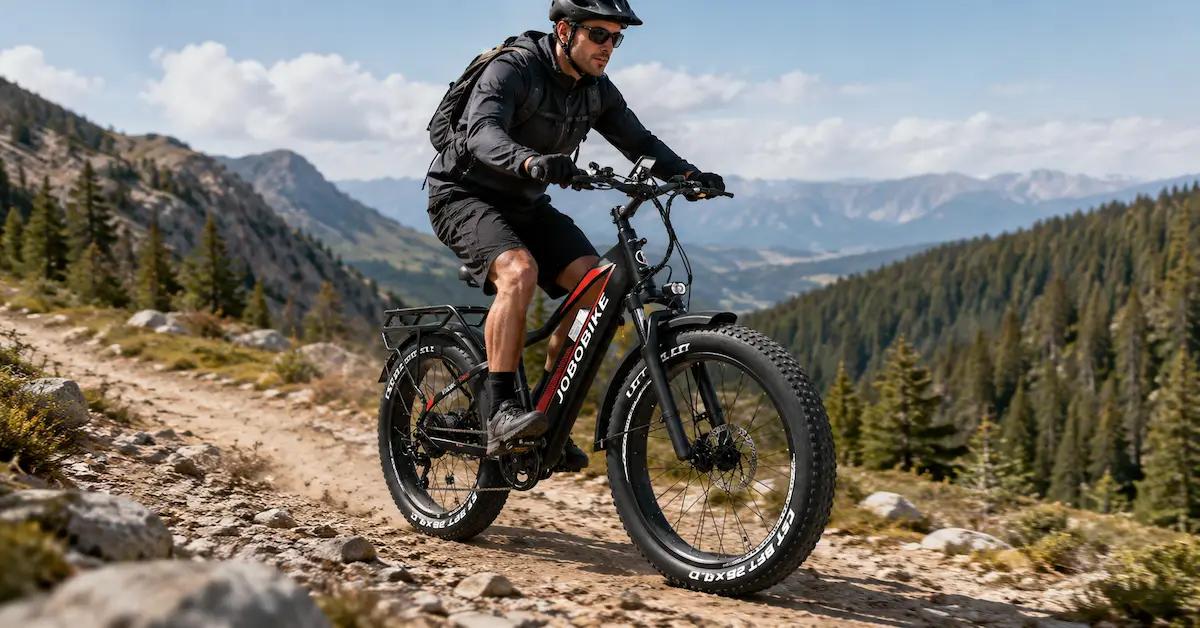
High-torque electric mountain bikes are primarily relevant to businesses targeting demanding recreational or commercial riding environments.
E-MTB Brands
Performance-focused brands may need differentiated platforms for:
- Trail riding
- Steep climbing
- All-mountain use
- Technical terrain
- Adventure riding
These buyers typically require more control over frame geometry, motor integration, suspension, braking, battery capacity, and brand appearance.
Importers and Distributors
Distributors need a product that is attractive on specification sheets but also practical to sell and support.
Their priorities often include:
- Stable batch quality
- Market-appropriate performance
- Spare-parts availability
- Repeat production
- Suitable compliance documentation
- Competitive product positioning
Outdoor Rental and Adventure Operators
Commercial fleets may expose e-MTBs to:
- Repeated climbs
- Different rider weights
- Rough terrain
- High daily utilization
- Frequent charging
For these buyers, reliability and serviceability can be more important than maximum headline performance.
Private-Label E-Bike Companies
A private-label buyer may want to create a differentiated e-MTB through:
- Frame design
- Torque level
- Motor configuration
- Battery capacity
- Wheel size
- Suspension
- Color
- Graphics
- Component specification
This makes engineering and OEM capability particularly important.
When High Torque Is Actually Useful
High torque provides the most value at lower riding speeds and under heavy load.
Typical situations include:
Steep Climbs
When an e-MTB climbs steep terrain, stronger rotational force can improve low-speed assistance and reduce the amount of rider effort needed to maintain momentum.
Technical Trail Sections
Rocks, roots, tight corners, and repeated elevation changes require controlled power delivery rather than simple top speed.
Heavier Riders or Higher System Loads
Higher total system weight creates greater demand during starts and climbs.
All-Mountain and Adventure Riding
Long climbing sections and mixed terrain can make torque delivery an important part of the riding experience.
However, high torque is not automatically desirable for every market.
For flat recreational riding or lightweight urban use, a lower-output system may be more economical and easier to service.
Torque and Motor Power Are Not the Same Thing
Motor power and torque describe different characteristics.
Power, normally expressed in watts, describes how quickly energy can be delivered.
Torque, normally expressed in N·m, describes rotational force.
For an electric mountain bike, torque has a particularly noticeable effect during:
- Low-speed climbing
- Hill starts
- Acceleration
- Technical riding
- Heavy-load operation
This is why buyers should request both motor-power and torque information when comparing e-MTB configurations.
More importantly, they should ask how the torque is delivered.
An aggressive power curve may look impressive but be difficult for inexperienced riders to control.
A well-tuned system should provide predictable assistance that matches the intended terrain and user profile.
What Torque Level Should an OEM Buyer Choose?
There is no universal torque figure that is ideal for every e-MTB.
| E-MTB Positioning | Torque Requirement | Purchasing Priority |
|---|---|---|
| Recreational MTB | Moderate | Smooth assistance, cost, weight |
| Trail E-MTB | Medium to High | Climbing and control |
| Premium Trail E-MTB | High | Torque delivery, geometry,suspension |
| All-Mountain E-MTB | High | Frame strength, braking, traction |
| Heavy-Duty Off-Road E-Bike | High to Very High | Full-system durability |
| Commercial Adventure Fleet | Application-specific | Reliability and serviceability |
A professional high torque e-MTB supplier should first understand your target rider and terrain before recommending the motor configuration.
Mid-Drive or Hub Drive: Which Is Better for an E-MTB?
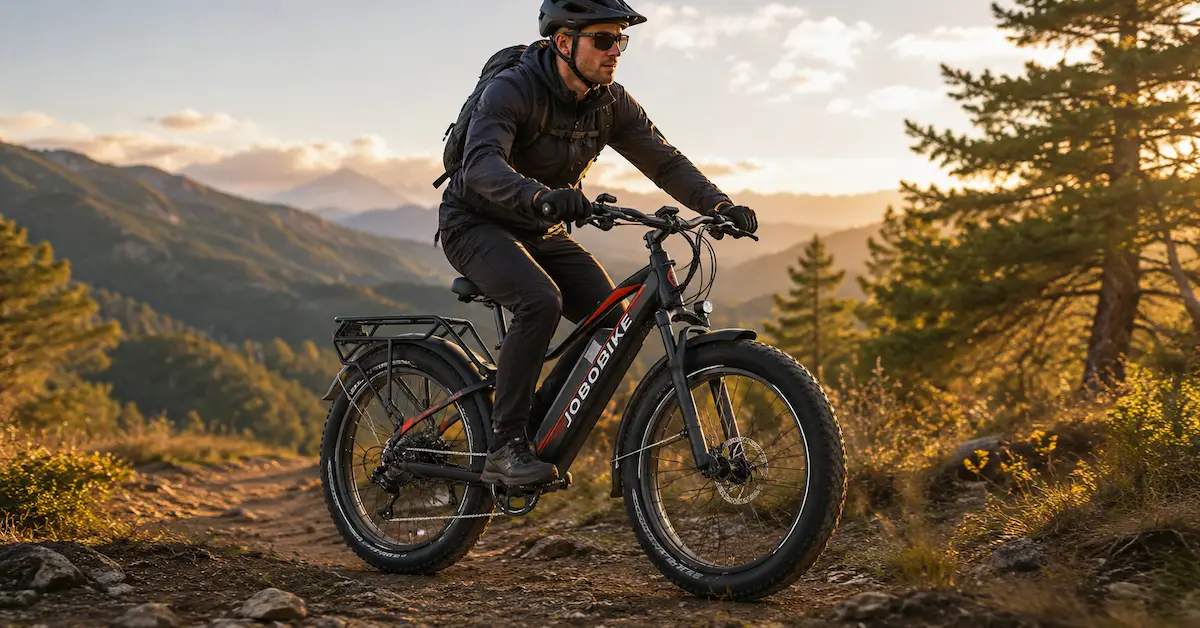
Both systems can be used, but they create different product characteristics.
Mid-Drive E-MTB
A mid-drive motor is positioned around the crank area.
It is often selected for performance-oriented mountain-bike projects because it can provide:
- Centralized weight distribution
- Strong climbing characteristics
- More natural assistance
- Better use of drivetrain gearing
For technical trail or all-mountain products, this architecture can be particularly attractive.
Hub-Drive Off-Road E-Bike
A hub-drive system can provide:
- Simpler integration
- Different cost options
- Straightforward production
- High output for selected off-road applications
It may be suitable for fat-tire and recreational off-road products.
The correct choice depends on:
terrain + price target + rider profile + maintenance strategy + market requirements
rather than a simple rule that one system is always better.
Why Frame Engineering Matters More as Torque Increases
A motor does not operate independently from the frame.
Higher torque increases loads in areas such as:
- Motor mounting points
- Bottom-bracket region
- Chainstays
- Dropouts
- Suspension pivots
- Rear triangle
- Battery mounting structure
For OEM buyers, this makes frame engineering one of the most important supplier-selection criteria.
JOBO operates an in-house e-bike frame manufacturing facility that supports frame processing, welding, finishing, structural development, and inspection.
This capability is particularly relevant when an OEM project needs:
- Modified motor mounting
- Different battery integration
- Customized geometry
- Suspension changes
- Reinforced load areas
- New accessory mounting points
A supplier that controls frame development can respond more effectively when the powertrain requires structural modifications.
Suspension Is Part of High-Torque Performance
Torque alone does not guarantee traction.
If the rear wheel repeatedly loses contact with rough terrain, additional torque may simply create wheel spin.
Suspension helps the tire remain connected to the surface.
For trail and all-mountain projects, buyers should evaluate:
- Front suspension travel
- Rear suspension architecture
- Shock positioning
- Pivot design
- Frame clearance
- Tire clearance
- Wheel tracking
Full-suspension platforms normally involve greater cost and engineering complexity, but they can provide better control on demanding terrain.
Braking Must Match the Complete E-MTB
A high-performance e-MTB also needs braking capability matched to:
- Total vehicle weight
- Rider weight
- Terrain
- Expected speed
- Downhill use
- Repeated braking
Hydraulic disc brakes are commonly suitable for performance-focused e-MTB projects because they can provide strong, controlled braking.
However, buyers should also evaluate:
- Rotor specification
- Brake-pad availability
- Heat management
- Replacement parts
- Service requirements
High torque without appropriate braking creates an unbalanced product.
Battery and Motor Must Be Engineered as a System
A larger battery is not automatically a better battery configuration.
For high-torque e-MTBs, the battery should be evaluated together with:
- Motor demand
- Controller settings
- Terrain
- Climbing duration
- Assist levels
- Tire resistance
- Total weight
OEM buyers should ask:
Can the battery, controller, and motor deliver the required performance consistently under the intended riding conditions?
This is more important than simply comparing nominal capacity.
A JOBO High-Torque E-MTB Configuration Example
JOBO offers high-output off-road electric bike platforms for brands and distributors targeting demanding riding environments.
One selected JOBO configuration includes:
| Item | Example Configuration |
|---|---|
| Motor | 48V 1000W mid-drive |
| Maximum Torque | Up to 160 N·m |
| Battery | 48V 20Ah |
| Frame | 6061 aluminum alloy |
| Suspension | Full suspension |
| Tire | 26 × 4.0 inch |
| Brakes | Hydraulic disc brakes |
| Drivetrain | Multi-speed |
| Application | Trail / off-road / all-terrain |
This configuration illustrates an important point:
160 N·m is not valuable by itself.
The motor needs to work together with:
- Frame reinforcement
- Full suspension
- Hydraulic braking
- Wide tires
- Battery capacity
- Appropriate drivetrain
You can explore JOBO's electric mountain bike range and off-road electric bike range.
High-Torque E-MTB vs Standard E-MTB
| Factor | Standard E-MTB | High-Torque E-MTB |
|---|---|---|
| Climbing Assistance | Moderate | Stronger |
| Technical Terrain | General | More demanding use |
| Mechanical Load | Lower | Higher |
| Battery Demand | Lower | Potentially higher |
| Frame Requirement | Standard | Greater structural attention |
| Brake Requirement | Moderate | More demanding |
| Development Cost | Lower | Often higher |
| OEM Engineering Need | Moderate | Higher |
| Best Market | General recreation | Trail / all-mountain / off-road |
For buyers, this comparison also explains why a higher-torque bike often costs more than a standard platform.
The additional cost is not necessarily limited to the motor.
It may involve upgrades to the frame, battery, suspension, brakes, wheels, drivetrain, testing, and production controls.
What Should Be Tested Before Bulk Production?
A high-performance prototype should be tested as a complete bike before specification approval.
Climbing Performance
Evaluate:
- Hill starts
- Sustained climbs
- Low-speed control
- Acceleration under load
Torque Delivery
Check whether assistance feels:
- Smooth
- Predictable
- Controllable
- Consistent
Frame Performance
Inspect:
- Motor mounting
- Welding areas
- Suspension pivots
- Rear triangle
- Battery attachment
Suspension Behavior
Evaluate the bike on terrain similar to its intended use.
Braking
Test braking under realistic total weight and downhill conditions.
Electrical Integration
Check:
- Battery retention
- Cable routing
- Connectors
- Controller communication
- Display operation
Thermal Performance
Sustained climbing can place greater load on the motor, controller, and battery.
Testing should therefore include longer high-load operation rather than only short acceleration tests.
Why QC Becomes More Important on High-Performance E-MTBs
The more demanding the product, the less tolerance there is for inconsistent manufacturing.
JOBO uses a structured quality workflow covering:
IQC → IPQC → FQC → QA
Its quality capabilities include evaluation of:
- Frames
- Braking systems
- Batteries
- Motors
- Wheels
- Complete bikes
- Structural durability
Buyers can review JOBO's QC Labs for more information.
For B2B buyers, the most useful supplier questions are not simply:
“Do you have QC?”
Instead ask:
- Is the approved prototype specification documented?
- Are incoming key components inspected?
- Are production changes controlled?
- Is the frame tested?
- Is every finished bike checked?
- Can production batches be traced?
- How are defects corrected before shipment?
These questions reveal much more about production reliability.
How to Evaluate a High Torque E-MTB Supplier
A useful supplier evaluation should cover five areas.
Engineering Capability
Check whether the factory can support:
- Frame development
- Motor integration
- Battery integration
- Geometry adjustment
- Prototype improvement
Manufacturing Control
Evaluate:
- In-house frame capability
- Assembly capability
- Production processes
- Quality documentation
Prototype Development
Ask whether the factory can move through:
Requirement → Engineering → Prototype → Testing → Revision → Approval
Mass-Production Consistency
The challenge is not producing one good sample.
The challenge is reproducing the approved bike across 50, 100, 500, or more units.
Long-Term Supply
Evaluate whether the supplier can support:
- Repeat orders
- Replacement parts
- Specification updates
- New models
- Future capacity growth
OEM Customization for High-Torque E-MTB Projects
OEM customization can include much more than a logo.
Frame Customization
Possible areas include:
- Geometry
- Motor mounting
- Battery location
- Suspension layout
- Color and finish
Power System
Buyers may discuss:
- Motor output
- Torque target
- Assist behavior
- Battery capacity
- Controller configuration
Ride Components
Projects can be configured around:
- Fork
- Rear suspension
- Wheel size
- Tires
- Brakes
- Drivetrain
Branding
Options may include:
- Logo
- Frame graphics
- Model name
- Packaging
- Manuals
The correct OEM strategy starts from the target market rather than maximizing specification values.
MOQ, Lead Time, and Development Cost
There is no responsible universal MOQ or production time for every high-torque e-MTB project.
The commercial requirement depends on factors such as:
- Existing frame vs new frame
- Standard vs customized motor integration
- Battery configuration
- Component availability
- Custom color
- Branding
- Prototype development
- Testing requirements
- Packaging
- Order quantity
A project based on an existing JOBO platform may require less development than a completely new ODM frame and power-system integration project.
Buyers should therefore request a project-specific quotation.
How to Reduce OEM Purchasing Risk
Before committing to mass production, a buyer should use a staged development process:
Requirements → Configuration → Prototype → Real-World Testing → Specification Approval → Bulk Production → Final QC
Avoid skipping prototype validation just to shorten the project timeline.
For a performance e-MTB, fixing a problem during prototype testing is normally far easier than correcting it after mass production.
What Information Should You Send JOBO for an Accurate Quote?
Instead of sending:
“Please send your best high-torque e-MTB price.”
provide:
- Destination market
- Target buyer group
- First-order quantity
- Estimated annual demand
- Intended terrain
- Target torque range
- Motor preference
- Battery requirement
- Wheel and tire size
- Suspension requirement
- Brake requirement
- Frame customization needs
- Branding needs
- Expected launch date
This allows JOBO to evaluate whether an existing platform, modified OEM model, or deeper ODM development is the more suitable route.
Why Choose JOBO as a High Torque E-MTB Supplier?
JOBO combines product development and manufacturing capabilities that are relevant to high-performance e-MTB projects.
JOBO supports:
- In-house frame manufacturing
- Frame customization
- High-torque motor integration
- Full-suspension platforms
- Prototype development
- Complete-bike testing
- OEM/ODM customization
- Scalable production
- International project support
JOBO's China production base includes frame production, coating, assembly, engineering, and QC resources, allowing the company to support projects from product development through mass manufacturing.
Explore JOBO electric bike products.
For high-torque e-MTB projects, the recommended cooperation process is:
Requirement Confirmation → Model/Platform Selection → Specification Development → Prototype → Testing & Adjustment → Production Approval → Mass Production → QC → Shipment
If you are developing an all-mountain, trail, fat-tire, or performance electric mountain bike line, contact JOBO with your target terrain, market, torque requirement, quantity, and customization needs.
FAQ
What is a high-torque e-MTB?
A high-torque e-MTB is an electric mountain bike designed to provide strong rotational assistance during climbing, acceleration, and demanding off-road riding.
How much torque does an electric mountain bike need?
There is no universal figure. The correct level depends on terrain, total weight, rider profile, gearing, application, and market positioning.
Is torque more important than motor wattage?
They describe different characteristics. For mountain-bike buyers, torque is particularly relevant to climbing and low-speed assistance, while wattage describes power output.
Is a mid-drive system suitable for high-torque e-MTBs?
Yes. Mid-drive systems can be particularly suitable for performance-oriented trail and climbing applications because of their centralized position and drivetrain integration.
Why does a high-torque e-MTB need a stronger frame?
Higher drivetrain forces can increase stress around the motor mount, chainstays, dropouts, suspension pivots, and other structural areas.
Does a high-torque e-MTB need full suspension?
Not always. Full suspension is more relevant for demanding trail and all-mountain applications. Hardtail configurations may be sufficient for less technical terrain.
What braking system should an OEM e-MTB use?
Brake selection should match total weight, speed, terrain, and downhill requirements. Performance-oriented e-MTBs commonly require stronger hydraulic braking configurations.
Can JOBO customize an electric mountain bike frame?
Yes. JOBO operates an in-house frame manufacturing facility and supports OEM/ODM frame development and product customization.
Can JOBO provide high-torque e-MTB prototypes before production?
Prototype development can be included in customized OEM/ODM projects so the configuration can be evaluated before bulk production.
What should buyers test on an e-MTB prototype?
Buyers should evaluate climbing, torque delivery, frame behavior, suspension, braking, battery performance, electrical integration, and overall ride characteristics.
What affects the MOQ for a custom high-torque e-MTB?
MOQ can depend on the frame, customization level, motor and battery configuration, color, components, packaging, and development requirements.
How do I request a high-torque e-MTB quotation from JOBO?
Provide the target market, terrain, order quantity, torque requirement, motor type, battery configuration, suspension, wheels, branding requirements, and expected launch schedule.
Conclusion
Choosing the right high torque e-MTB supplier is not simply about finding the largest motor or highest torque number.
For a reliable trail-ready product, buyers need to evaluate the complete vehicle:
- Torque delivery
- Frame engineering
- Motor integration
- Battery matching
- Suspension
- Braking
- Tires and drivetrain
- Prototype validation
- QC
- Mass-production consistency
- OEM/ODM support
For brands and distributors targeting trail, all-mountain, adventure, or high-performance off-road markets, these factors directly affect product reliability, customer experience, after-sales cost, and long-term brand reputation.
JOBO combines in-house frame manufacturing, e-MTB engineering, prototype development, quality control, and scalable OEM/ODM production.
Rather than requesting only a catalogue and unit price, send JOBO your target rider, terrain, torque target, destination market, first-order quantity, annual forecast, and customization requirements. This allows the team to recommend a more technically appropriate and commercially viable high-torque e-MTB solution.