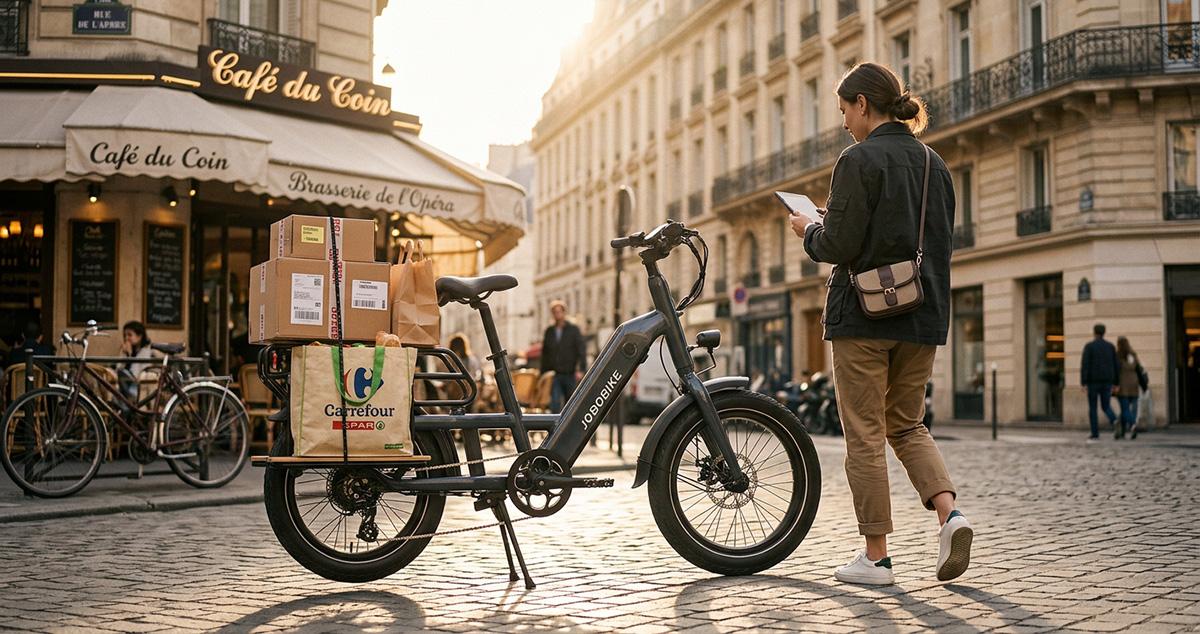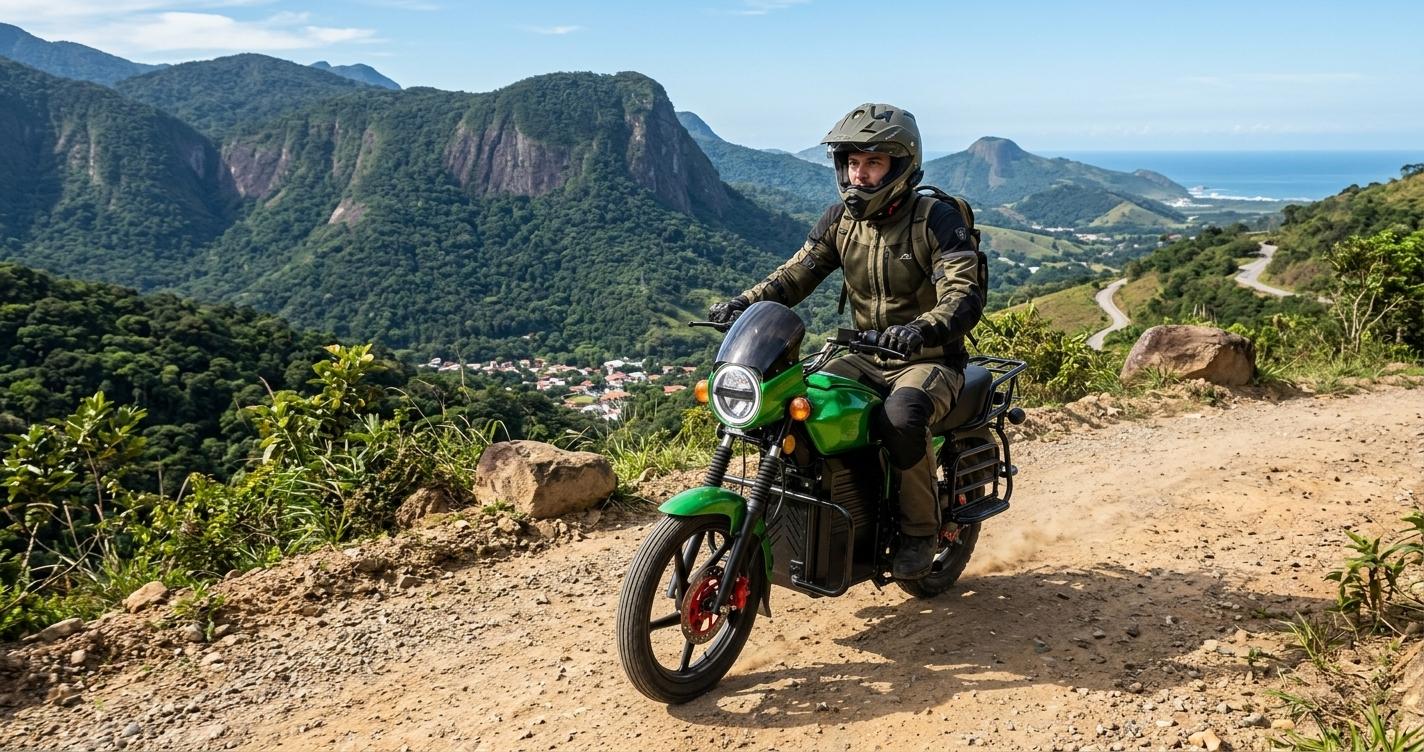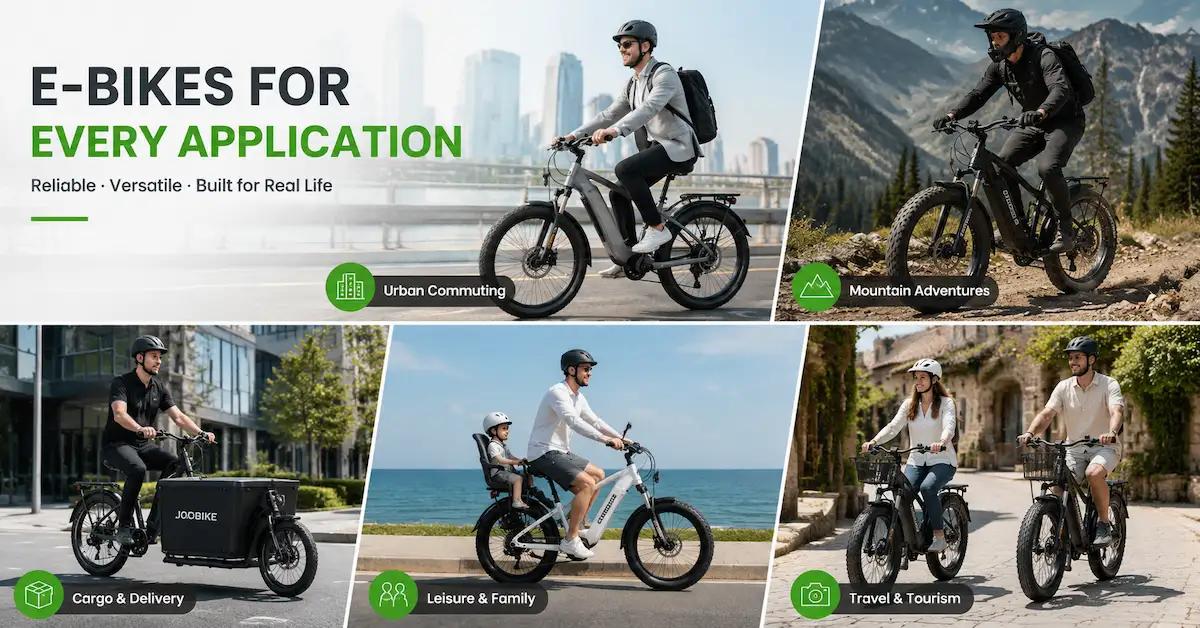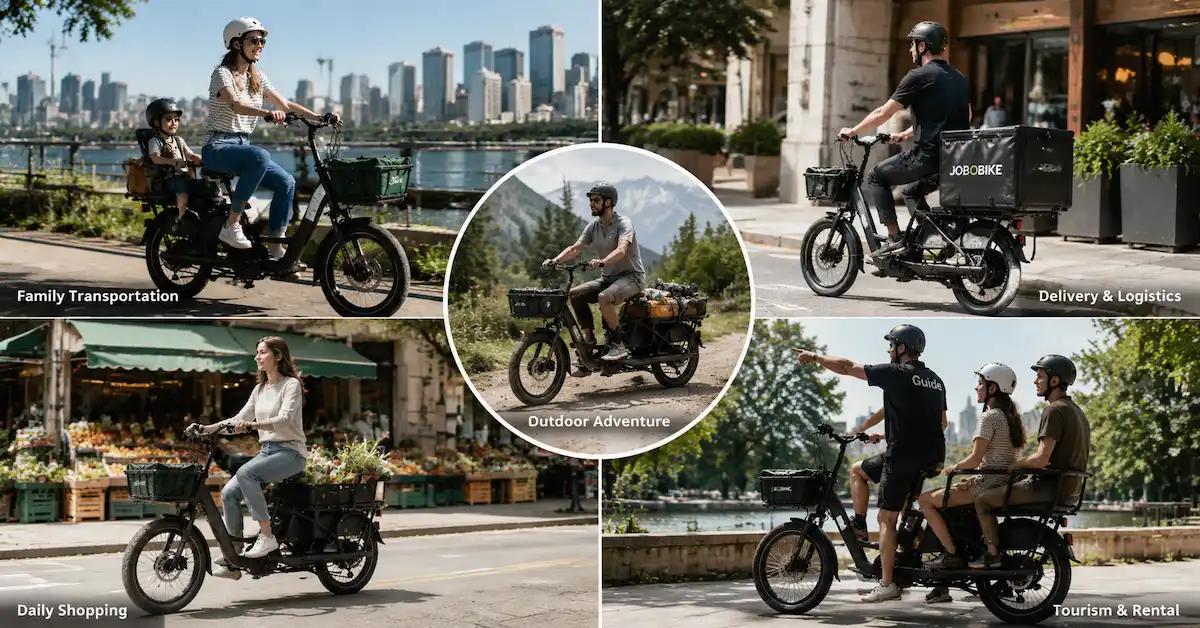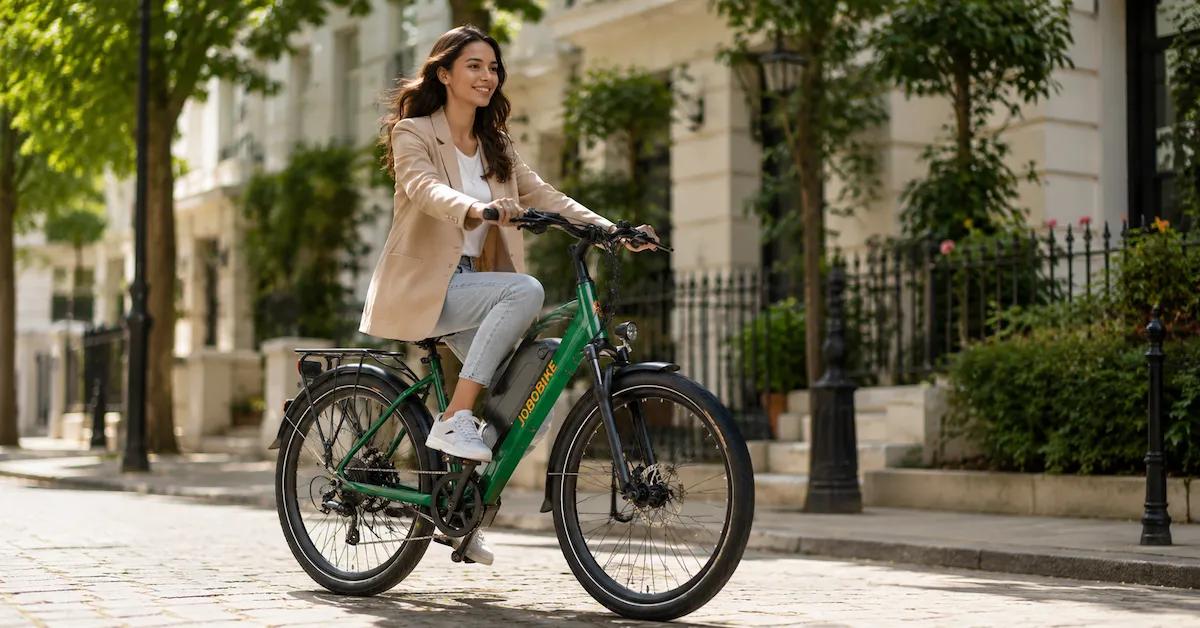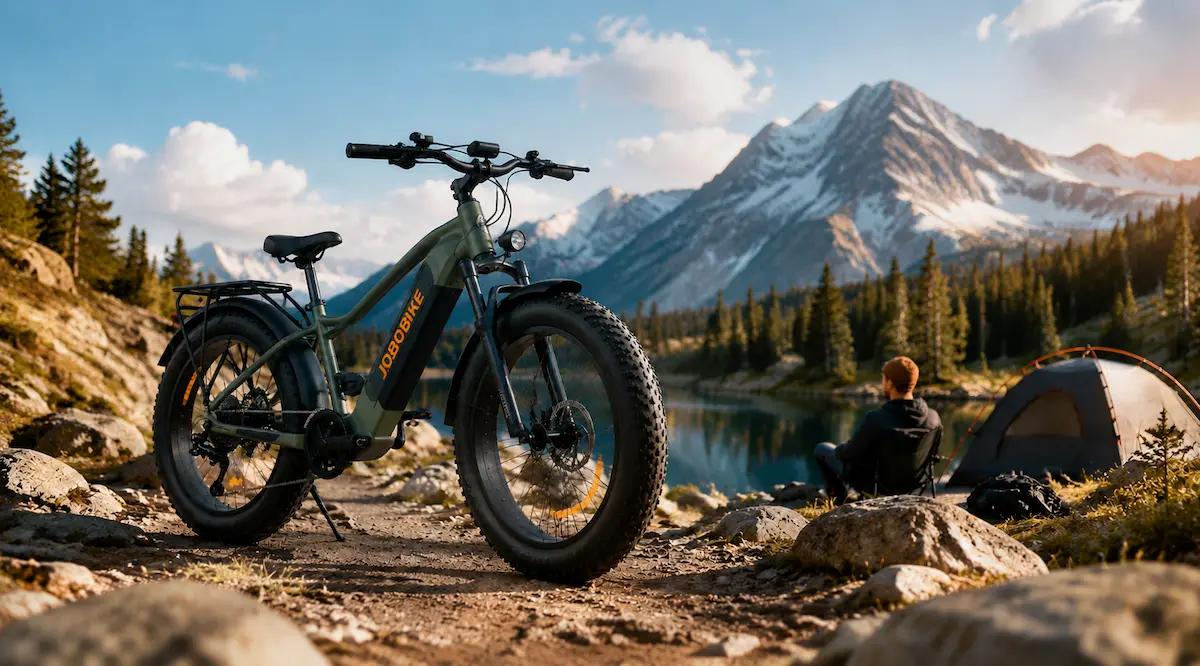
Choosing an electric bicycle manufacturer is a key decision for global buyers who want to build a stable and profitable e-bike business. For importers, distributors, private label brands, e-commerce sellers, and mobility companies, the right manufacturer can provide more than just products. A professional factory can support model selection, OEM customization, technical configuration, quality control, packaging, spare parts, and long-term production planning.
Many electric bicycles may look similar in photos, but the real difference is inside the frame, battery, motor, controller, brake system, wiring, tires, packaging, and after-sales support. A low quotation may seem attractive at the beginning, but poor quality can lead to customer complaints, warranty costs, delayed sales, and damaged brand reputation.
Joboev provides multiple electric mobility products for global B2B buyers, including city electric bikes, folding electric bikes, cargo electric bikes, electric mountain bikes, off-road electric bikes, shared electric bikes, electric tricycles, electric motorcycles, kid electric bikes, and e-bike frames. Buyers can explore the product range here: https://www.joboev.com/products
This guide explains how to choose a reliable electric bicycle manufacturer for OEM, wholesale, private label, and distributor projects.
Quick Answer: What Makes a Good Electric Bicycle Manufacturer?
A good electric bicycle manufacturer should offer stable product quality, clear technical specifications, flexible OEM/ODM customization, reliable production capacity, strict quality control, export-ready packaging, spare parts support, and professional communication.
For B2B buyers, the best manufacturer is not always the cheapest one. The best factory is the partner that can help you sell consistently, reduce sourcing risk, and build long-term market value.
1. Why Electric Bicycle Manufacturer Selection Matters
The electric bicycle market is competitive, and buyers need products that can stand out in both performance and reliability. A professional manufacturer helps buyers solve several important problems:
- How to choose the right e-bike model for the target market
- How to control battery, motor, and frame quality
- How to customize logo, color, packaging, and specifications
- How to reduce warranty and after-sales risks
- How to prepare for repeat orders
- How to build a complete electric bicycle product line
For brand owners and distributors, the manufacturer is not just a supplier. It is part of the long-term business foundation.
Buyers can learn more about Joboev’s company background here: https://www.joboev.com/about-us
2. Who Should Work Directly with an Electric Bicycle Manufacturer?
Working directly with a manufacturer is suitable for buyers who need stable supply, customization, and long-term cooperation.
Importers
Importers need bulk pricing, export packaging, shipment coordination, and stable product availability.
Distributors
Distributors need multiple product categories, repeat supply, spare parts, and models that local dealers can sell confidently.
Brand Owners
Brand owners need private label branding, logo customization, color options, packaging design, and consistent product quality.
Online Sellers
E-commerce buyers need attractive models, strong packaging, clear specifications, and reliable after-sales parts to reduce return rates.
Delivery and Logistics Buyers
Commercial buyers need cargo e-bikes, electric tricycles, strong rear racks, reliable brakes, and long-range battery options.
Shared Mobility Operators
Fleet buyers need durable frames, easy-maintenance structures, and long-term spare parts support.
Not Ideal For
Factory cooperation is usually not suitable for single-unit personal buyers or customers who only want the lowest price without considering quality and after-sales support.
3. Main Product Categories a Manufacturer Should Offer
A strong electric bicycle manufacturer should provide multiple product categories so buyers can build a flexible product portfolio.
| Product Category | Main Features | Best For |
|---|---|---|
| City Electric Bike | Comfortable riding position, practical accessories | Urban commuting and retail markets |
| Folding Electric Bike | Compact frame, easy storage, portable design | Commuters, apartment users, online sellers |
| Cargo Electric Bike | Strong rack, high load capacity | Delivery, logistics, business users |
| Electric Mountain Bike | Suspension, stronger motor options, durable tires | Outdoor sports and recreational markets |
| Off-Road Electric Bike | Rugged frame, fat tires, strong traction | Trails, farms, rough roads |
| Shared Electric Bike | Durable structure, easy maintenance | Rental, campus, tourism, fleet projects |
| Electric Tricycle | Stable three-wheel design, utility function | Delivery, elderly mobility, local transport |
| E-Bike Frame | Frame development and deeper customization | OEM projects and component buyers |
For new buyers, a practical product mix may include one city e-bike, one folding e-bike, one cargo e-bike, and one mountain e-bike. This allows buyers to test different customer groups without creating too much inventory pressure.
4. Matching Electric Bicycle Models to Market Needs
A reliable manufacturer should help buyers choose products based on real market demand, not only appearance.
Urban Commuting Market
City electric bikes and folding electric bikes are suitable for daily transportation, short-distance travel, and lifestyle customers. Buyers should focus on comfort, range, weight, and easy maintenance.
Commercial Delivery Market
Cargo electric bikes and electric tricycles are better for food delivery, parcel delivery, and local business transport. Buyers should check load capacity, rear rack structure, brakes, frame strength, and battery range.
Outdoor and Sport Market
Electric mountain bikes and off-road electric bikes are suitable for outdoor retailers, sports brands, and recreational users. Key factors include motor torque, suspension, tire traction, waterproof design, and frame durability.
Rental and Shared Mobility Market
Shared electric bikes require stronger durability than normal retail models. Buyers should focus on easy repair, simple structure, stable components, and long-term spare parts supply.
5. Technical Specifications Buyers Should Confirm
Before placing a bulk order, buyers should request a complete specification sheet. This helps compare suppliers accurately.
| Component | Common Options | Why It Matters |
| Motor | 250W, 350W, 500W, 750W, 1000W | Affects torque, speed, and climbing ability |
| Battery | 36V, 48V, 52V lithium battery | Affects range, weight, cost, and safety |
| Frame Material | Aluminum alloy or steel | Affects durability, weight, and price |
| Brake System | Mechanical disc or hydraulic disc | Affects safety and riding control |
| Tire Size | 20", 24", 26", 27.5", 29", fat tire | Affects comfort and terrain use |
| Display | LED or LCD | Affects user experience |
| PAS System | Multi-level pedal assist | Affects riding comfort and battery use |
| Load Capacity | Model-dependent | Important for cargo and delivery bikes |
| Lighting System | Front and rear lights | Important for commuting safety |
| Packaging | Export carton, foam, pallet option | Reduces shipping damage risk |
Two electric bicycles can look almost the same, but their quality and performance may be very different. Buyers should compare real specifications, not only product photos.
6. OEM and ODM Customization Capability
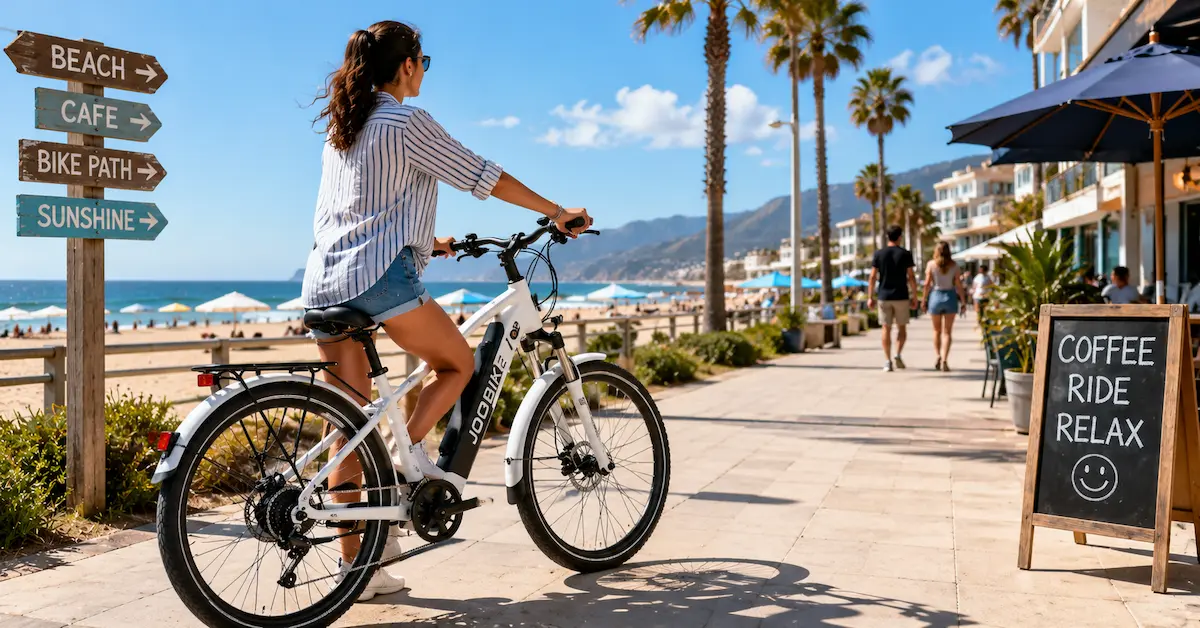
OEM/ODM capability is one of the main reasons global buyers choose to work directly with an electric bicycle manufacturer.
Common customization options include:
- Frame logo
- Battery logo
- Custom frame color
- Model name
- Display branding
- Carton design
- User manual
- Product label
- Saddle and handlebar options
- Tire type
- Brake system
- Battery capacity
- Motor power
- Rear rack, basket, or cargo box
- Spare parts package
For private label brands, customization helps create a unique product identity. Instead of selling generic models, buyers can build a product line that matches their target market and pricing strategy.
7. Electric Bicycle Manufacturing Process
A professional manufacturer should have a clear production process from inquiry to shipment.
Step 1: Requirement Discussion
The buyer shares target market, product type, order quantity, budget range, branding requirements, and technical preferences.
Step 2: Model Recommendation
The factory recommends suitable models based on application scenario and market positioning.
Step 3: Specification Confirmation
Both sides confirm battery, motor, frame, brakes, tires, display, color, logo, packaging, and accessories.
Step 4: Sample Production
The factory prepares a sample for buyer review.
Step 5: Sample Testing and Adjustment
The buyer checks appearance, riding comfort, component quality, logo placement, and packaging.
Step 6: Bulk Production
After sample approval, the factory starts mass production according to confirmed specifications.
Step 7: Quality Inspection
The manufacturer checks battery, motor, brakes, wiring, lights, display, frame, tires, and final assembly.
Step 8: Packing and Shipment
The products are packed for export. Manuals, accessories, labels, and spare parts should be checked before shipment.
This process helps reduce misunderstandings and improves order control.
8. Quality Control: The Key to Long-Term Cooperation
Quality control is one of the most important parts of electric bicycle manufacturing. For distributors and brand owners, quality problems after shipment can become warranty claims, negative reviews, and lost repeat orders.
Important QC checks include:
- Frame welding and surface finish
- Logo placement and color accuracy
- Battery charging and discharging test
- Motor performance test
- Controller and wiring inspection
- Brake function test
- Display and PAS system test
- Tire and wheel alignment
- Lighting system check
- Road riding test
- Packaging protection check
A good manufacturer should maintain consistency from sample to bulk production. Buyers should confirm key components in writing before mass production starts.
9. Packaging and Export Support
Electric bicycles are large products with electrical components, so packaging quality matters. Good export packaging can reduce shipping damage and customer complaints.
Export packaging may include:
- Strong outer carton
- Foam or protective filling
- Battery protection
- Wheel and frame protection
- Accessory box
- User manual
- Product labels
- Pallet option for bulk orders
- Spare parts packaging
For e-commerce sellers and distributors, packaging also affects customer experience. A damaged carton or missing accessory can reduce buyer confidence even if the bike itself is functional.
10. Lead Time and Production Planning
Lead time affects product launches, seasonal sales, dealer supply, and inventory planning. Buyers should confirm the schedule before placing an order.
| Stage | Estimated Time |
| Requirement discussion | 1–3 days |
| Specification confirmation | 3–7 days |
| Sample production | 7–20 days |
| Sample review and adjustment | 3–10 days |
| Bulk production | 25–45 days |
| Packaging and shipment preparation | 3–7 days |
Actual lead time depends on model complexity, component availability, order quantity, and customization level. Buyers should start early before peak season to avoid production and shipping pressure.
11. Cost Factors in Electric Bicycle Manufacturing
The final price of an electric bicycle depends on many details.
Main cost factors include:
- Battery capacity and cell quality
- Motor power
- Frame material
- Brake system
- Suspension system
- Tire size and tire quality
- Display and controller
- Lighting and accessories
- Logo customization
- Frame color
- Packaging design
- Order quantity
- Spare parts package
- Testing or documentation requirements
A very low quotation may hide lower-grade components, weak packaging, or poor after-sales support. Buyers should compare total value, not only unit price.
12. Common Mistakes Buyers Should Avoid
Mistake 1: Choosing Only by Price
The cheapest option may increase warranty costs and customer complaints later.
Mistake 2: Skipping Sample Approval
Samples help confirm product quality, riding comfort, branding, and packaging before bulk production.
Mistake 3: Not Confirming Components
Battery, motor, controller, brakes, tires, display, and packaging should be confirmed clearly before production.
Mistake 4: Ignoring Spare Parts
Spare parts are important for distributors, dealers, and after-sales service.
Mistake 5: Ordering Too Many Models at Once
A focused product line is easier to manage, sell, and support.
Mistake 6: Ignoring Local Market Needs
Product selection should match road conditions, customer habits, climate, pricing level, and legal requirements.
More product and sourcing guides can be published under Joboev’s blog section: https://www.joboev.com/blog
13. Manufacturer Evaluation Checklist
Before choosing an electric bicycle manufacturer, buyers can use this checklist.
| Evaluation Item | What to Check |
| Product Range | Does the factory offer the e-bike categories you need? |
| OEM Support | Can logo, color, packaging, and specs be customized? |
| Technical Clarity | Are specifications complete and transparent? |
| Sample Process | Can samples be confirmed before bulk orders? |
| Quality Control | Are inspection steps clearly explained? |
| Packaging | Is export packaging strong enough? |
| Lead Time | Is the production schedule realistic? |
| Spare Parts | Can the factory support after-sales replacement parts? |
| Communication | Are replies clear and professional? |
| Long-Term Support | Can the factory support repeat orders and upgrades? |
A reliable manufacturer should make sourcing clearer, safer, and more efficient.
14. Why Choose Joboev as Your Electric Bicycle Manufacturer?
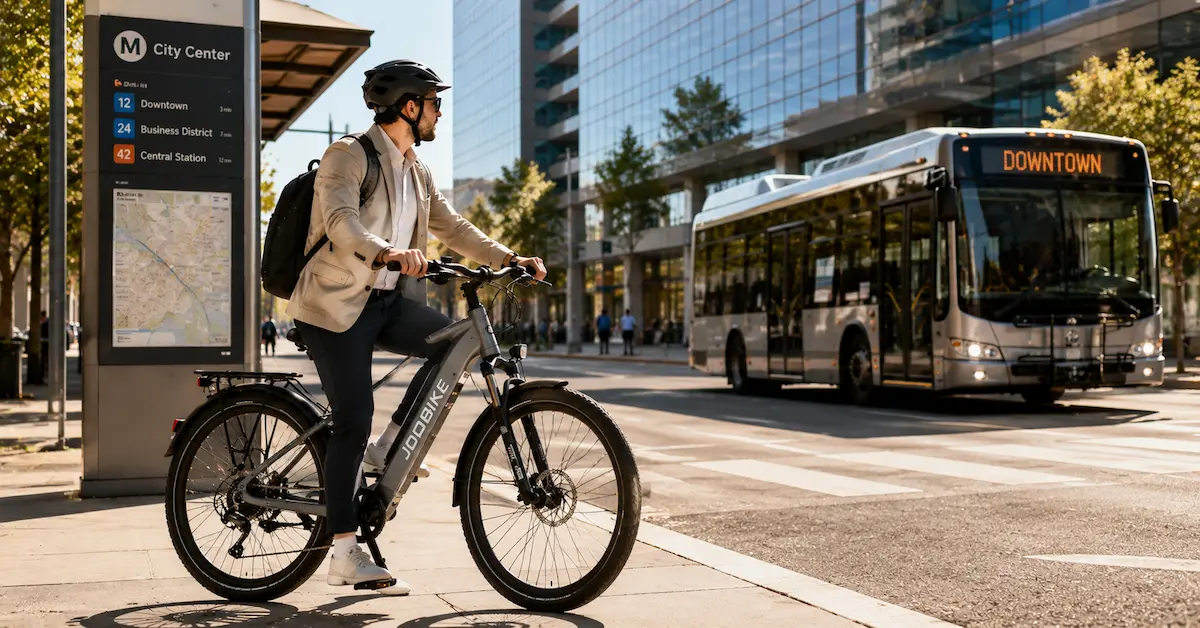
Joboev supports different electric mobility products for global B2B buyers, including city electric bikes, folding electric bikes, cargo electric bikes, electric mountain bikes, off-road electric bikes, shared electric bikes, electric tricycles, electric motorcycles, kid electric bikes, and e-bike frames.
For importers, distributors, and brand owners, this product structure helps support different business goals:
- Build a commuter e-bike product line
- Launch private label electric bicycles
- Source cargo e-bikes for delivery markets
- Develop mountain and off-road e-bike models
- Support distributor product portfolios
- Plan repeat orders and product upgrades
Instead of sourcing every model from a different supplier, buyers can discuss multiple electric bicycle categories through one cooperation channel.
To explore available models, visit: https://www.joboev.com/products
To discuss OEM, wholesale, or bulk electric bicycle cooperation, contact Joboev here: https://www.joboev.com/contact-us
FAQ
1. What does an electric bicycle manufacturer do?
An electric bicycle manufacturer produces e-bikes for wholesale, OEM, private label, distributor, and custom projects. A factory may support model selection, component configuration, branding, quality control, and bulk production.
2. How do I choose a reliable electric bicycle manufacturer?
Check product range, OEM capability, technical specifications, sample process, quality control, packaging, lead time, spare parts, and communication efficiency.
3. Can an electric bicycle manufacturer customize my brand?
Yes. Many manufacturers support logo customization, frame color, packaging, user manual, model name, battery options, motor configuration, and accessories.
4. What electric bicycle models are best for bulk orders?
City electric bikes, folding electric bikes, cargo electric bikes, and electric mountain bikes are common choices because they match clear market segments.
5. What is the difference between an electric bicycle manufacturer and a trading company?
A manufacturer focuses on production and technical control, while a trading company may source from multiple factories. Buyers should confirm production capability before ordering.
6. How long does electric bicycle production take?
Production time depends on model, order quantity, customization level, and component availability. Sample and bulk production timelines should be confirmed before ordering.
7. Can I order private label electric bicycles?
Yes. Private label electric bicycles can include custom logos, colors, packaging, manuals, labels, and selected technical configurations.
8. Why is battery quality important?
The battery affects range, safety, weight, cost, and customer satisfaction. Buyers should confirm battery specifications and testing before bulk production.
9. Can manufacturers provide spare parts?
A reliable manufacturer should support spare parts such as batteries, chargers, displays, controllers, brakes, tires, lights, and accessories.
10. How can I contact Joboev for electric bicycle manufacturing cooperation?
You can send your target market, preferred models, quantity, customization needs, and shipping requirements through the contact page: https://www.joboev.com/contact-us
Conclusion: The Right Electric Bicycle Manufacturer Supports Long-Term Growth
Choosing an electric bicycle manufacturer is a long-term business decision. A reliable factory should provide suitable models, stable quality, clear specifications, OEM customization, strong packaging, realistic lead time, spare parts support, and responsive communication.
For brand owners and distributors, the goal is not only to complete one shipment. The real goal is to build a product line that customers trust and dealers can sell with confidence.
Explore Joboev electric bicycle products here: https://www.joboev.com/products
Start your sourcing or OEM project here: https://www.joboev.com/contact-us