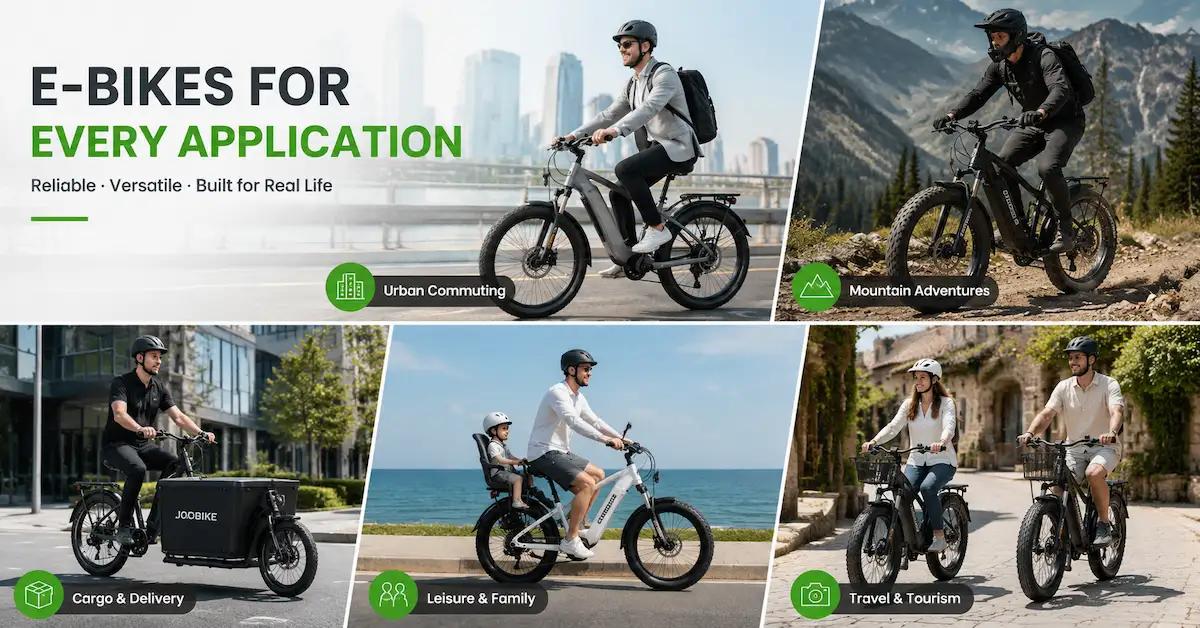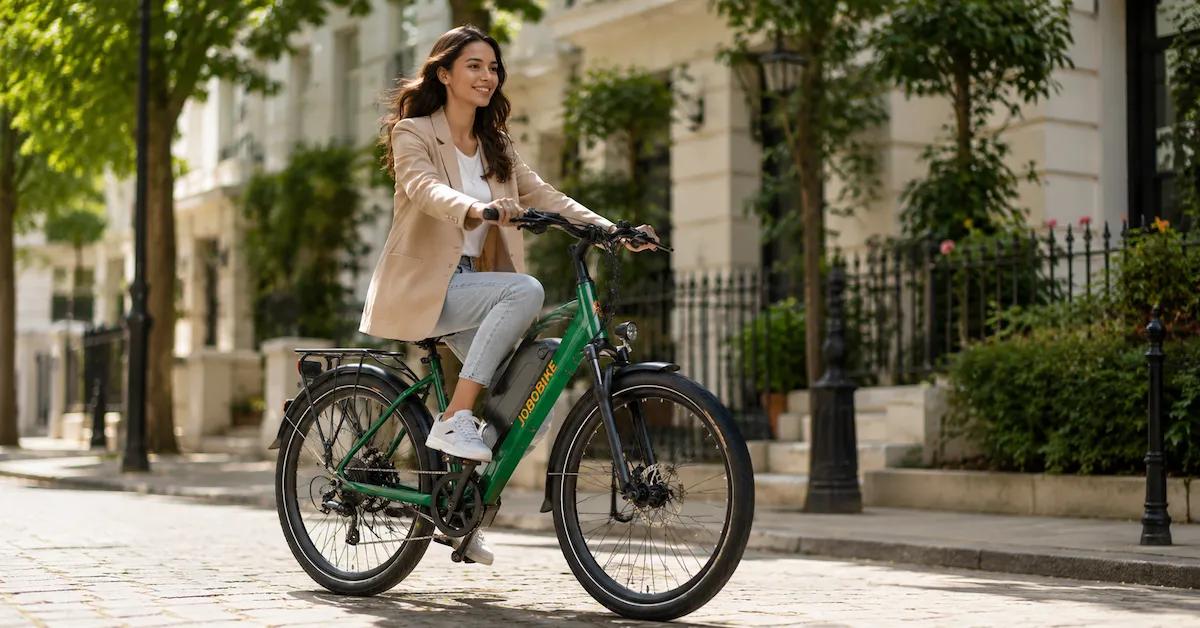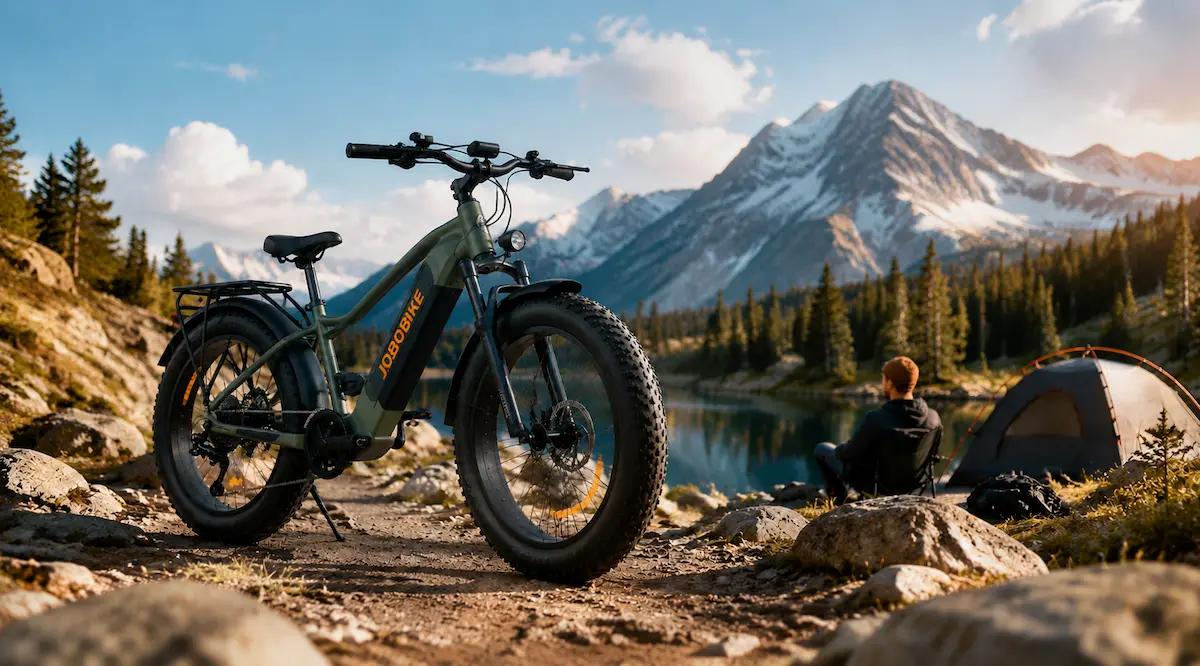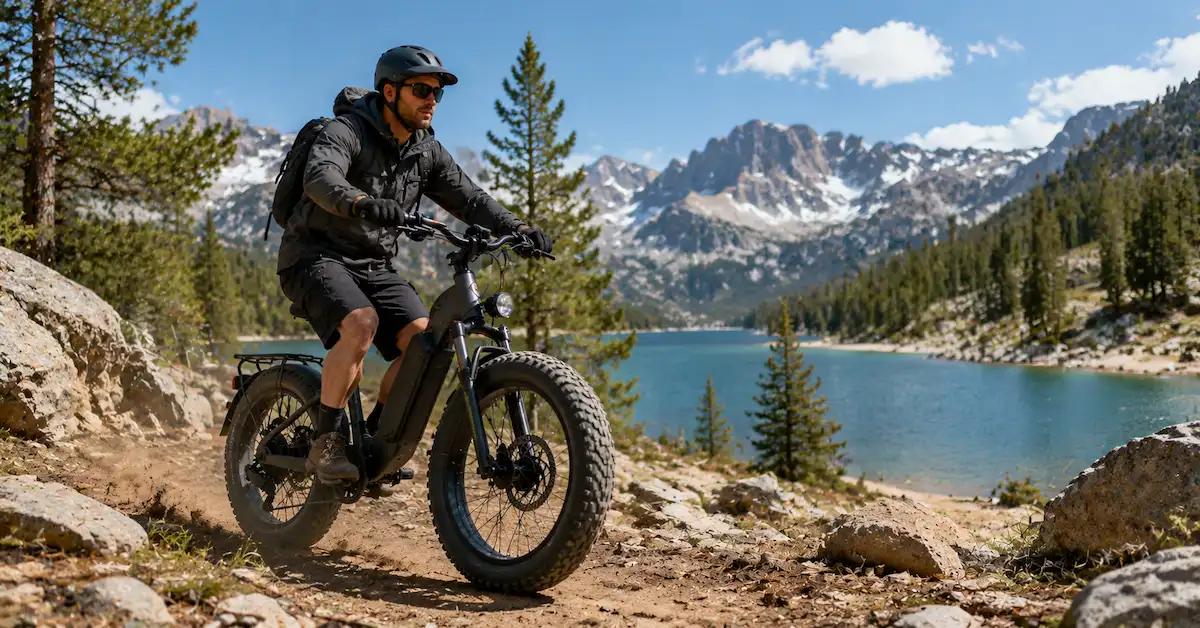
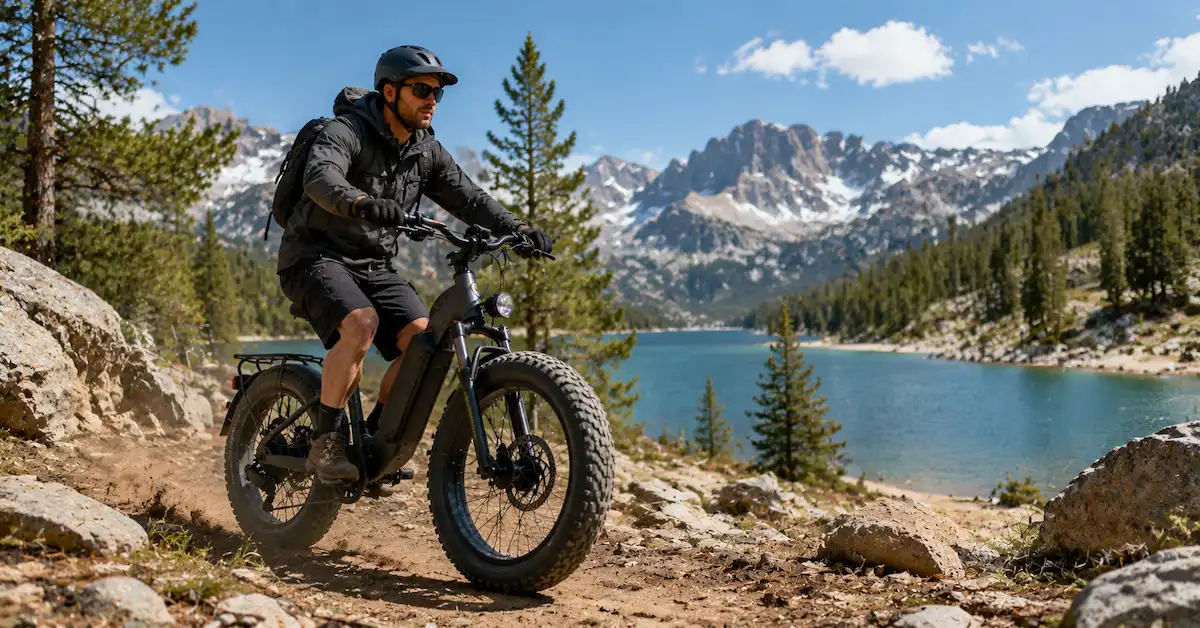
Fat tire electric bikes have become one of the fastest-growing categories in the global e-bike market. With wider tires, stronger stability, and better adaptability across different surfaces, fat tire e-bikes are widely used for outdoor recreation, commuting, adventure riding, tourism, rental fleets, and commercial mobility.
However, selecting the right fat tire e-bike manufacturer requires more than choosing a bike with large tires.
A professional manufacturer must understand how different systems work together:
- Frame structure
- Tire selection
- Motor torque
- Battery capacity
- Suspension system
- Brake performance
- Electrical integration
- Manufacturing consistency
- OEM customization
For distributors, importers, and brands, the factory behind the product directly affects reliability, customer satisfaction, warranty costs, and long-term market growth.
JOBOBIKE provides electric mobility solutions for global buyers, including fat tire e-bikes, mountain e-bikes, city electric bikes, cargo bikes, folding models, shared bikes, and customized electric bicycle platforms.
Explore JOBOBIKE products:
https://www.joboev.com/products
What Is a Fat Tire E-Bike?
A fat tire e-bike is an electric bicycle equipped with wider tires, typically designed to improve:
- Stability
- Comfort
- Traction
- Off-road capability
- Riding confidence
Compared with standard electric bikes, fat tire models are designed for more challenging environments.
Common applications include:
- Mountain trails
- Beaches
- Snow areas
- Gravel roads
- Camping routes
- Urban commuting
- Adventure tourism
- Rental operations
The wider contact area helps riders maintain control on uneven surfaces while providing a smoother riding experience.
For commercial buyers, fat tire e-bikes also offer strong visual appeal, making them attractive for outdoor brands, rental companies, and lifestyle markets.
Why Choose a Specialized Fat Tire E-Bike Manufacturer?
Fat tire e-bikes require different engineering compared with regular commuter models.
A specialized manufacturer understands:
Frame Requirements
Wide tires and higher loads require:
- Stronger frame structures
- Increased clearance
- Reinforced welding points
- Balanced weight distribution
Motor Requirements
Fat tire bikes are often heavier because of:
- Larger tires
- Stronger frames
- Larger batteries
- Suspension systems
The motor must provide sufficient torque for:
- Hills
- Loose surfaces
- Heavy riders
- Outdoor conditions
Battery Requirements
Outdoor riders often expect longer range.
Battery selection should consider:
- Riding distance
- Terrain
- Assistance level
- Weather conditions
- Rider weight
A professional factory designs these systems together instead of selecting components independently.
Main Applications of Fat Tire Electric Bikes
Outdoor Adventure Market
Adventure riders use fat tire e-bikes for:
- Mountain trails
- Forest roads
- Camping trips
- Exploration routes
Important product features include:
- Suspension forks
- High-torque motors
- Durable frames
- Large batteries
- Hydraulic brakes
Beach and Coastal Riding
Fat tires provide better performance on:
- Sand
- Gravel
- Coastal paths
Manufacturers should consider:
- Corrosion resistance
- Tire width
- Frame protection
- Component durability
Urban Lifestyle Market
Many consumers choose fat tire e-bikes because of their appearance and comfort.
Urban applications include:
- Daily commuting
- Weekend riding
- City exploration
- Leisure transportation
Rental and Tourism Businesses
Tour operators and rental companies often choose fat tire models because they are:
- Easy to operate
- Comfortable for different riders
- Suitable for multiple environments
- Visually attractive
Rental-focused manufacturers should consider:
- Durable components
- Simple maintenance
- Spare parts availability
- Fleet customization
How a Fat Tire E-Bike Manufacturer Designs the Product
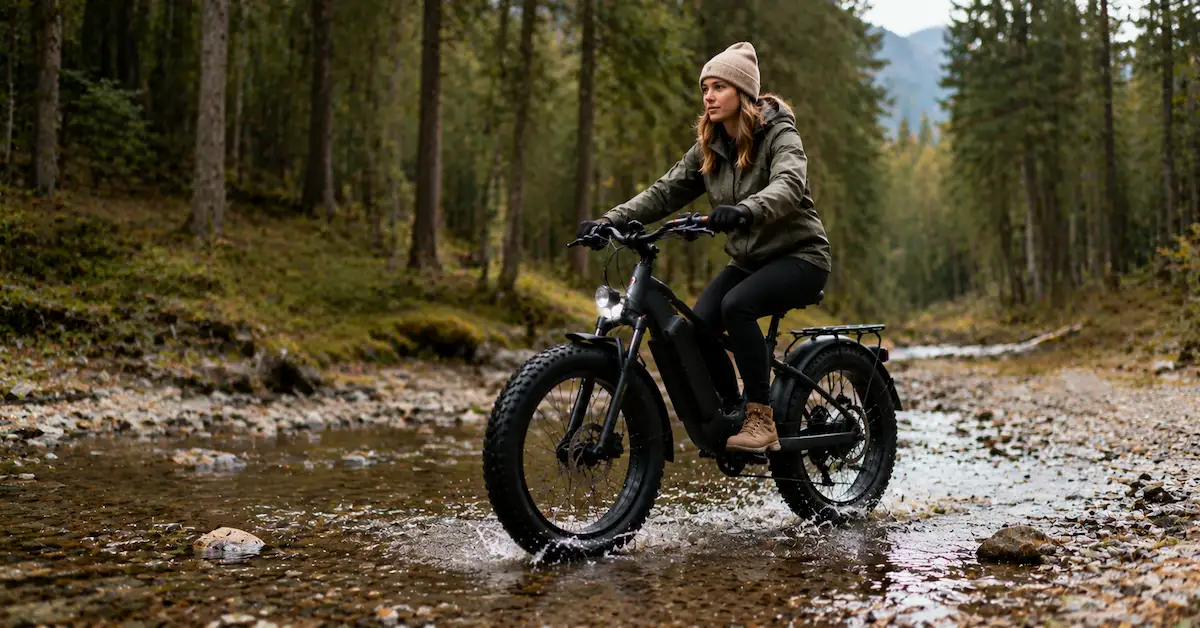
A professional development process usually includes several stages.
Market Research and Product Planning
The manufacturer evaluates:
- Target customers
- Riding environment
- Price positioning
- Competition
- Expected sales channels
For example:
An adventure brand may prioritize performance.
A rental company may prioritize durability.
A commuter brand may prioritize comfort and practicality.
Frame Engineering
The frame is one of the most important parts of a fat tire e-bike.
Engineers evaluate:
- Tire clearance
- Wheel size
- Battery placement
- Riding geometry
- Weight distribution
- Cargo compatibility
A good frame design improves:
- Stability
- Handling
- Comfort
- Safety
Component Selection
A professional fat tire e-bike manufacturer selects components based on the intended market.
| Component | Key Considerations |
|---|---|
| Motor | Torque, efficiency, terrain |
| Battery | Range, charging, lifespan |
| Tires | Grip, durability, comfort |
| Brakes | Safety under higher weight |
| Suspension | Comfort and control |
| Display | User experience |
| Controller | Electrical stability |
Prototype Development
Before mass production, prototypes should be tested for:
- Riding comfort
- Motor response
- Brake performance
- Tire handling
- Battery range
- Frame strength
Prototype testing helps identify issues before large production orders.
Key Manufacturing Processes for Fat Tire E-Bikes
Frame Production
Frame manufacturing may include:
- Tube cutting
- CNC processing
- Welding
- Alignment checking
- Surface treatment
- Painting
Quality frame production ensures:
- Correct geometry
- Strong welds
- Consistent batches
Electrical System Assembly
The electrical system includes:
- Motor
- Battery
- Controller
- Display
- Sensors
- Wiring
The manufacturer must ensure:
- Correct connections
- Waterproof protection
- Stable performance
- Easy maintenance
Complete Bike Assembly
Assembly includes:
- Frame preparation
- Fork installation
- Wheel installation
- Electrical connection
- Brake adjustment
- Gear setup
- Display installation
- Final inspection
Quality Control Standards
A reliable fat tire e-bike manufacturer should have multiple inspection stages.
Incoming Component Inspection
Check:
- Frame quality
- Battery specifications
- Motor models
- Brake components
- Tire quality
Production Inspection
Verify:
- Welding
- Wiring
- Assembly accuracy
- Component installation
Finished Product Testing
Test:
- Motor operation
- Battery charging
- Display functions
- Brake performance
- Riding stability
- Noise
Packaging Inspection
Confirm:
- Bike protection
- Accessories
- Charger
- Manuals
- Export packaging
OEM and Private Label Fat Tire E-Bike Manufacturing
Many brands choose OEM production to create differentiated products.
A manufacturer can support:
Branding Customization
Including:
- Frame logo
- Battery label
- Packaging
- User manual
- Model name
Technical Customization
Including:
- Motor power
- Battery capacity
- Tire size
- Suspension
- Brake system
- Accessories
Appearance Customization
Including:
- Frame colors
- Graphics
- Saddle
- Handlebar style
- Accessories
OEM flexibility allows brands to create products that match specific markets.
How to Evaluate a Fat Tire E-Bike Factory
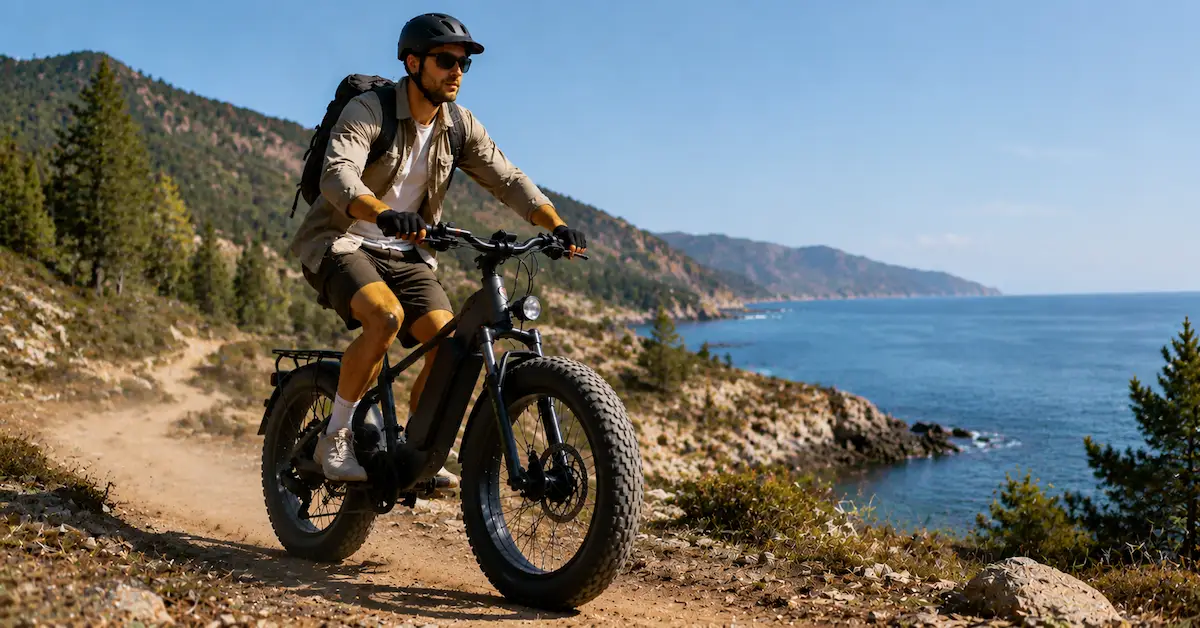
Before selecting a supplier, buyers should review:
Manufacturing Capability
Questions:
- Does the company manufacture directly?
- How many production lines are available?
- Can it support repeat orders?
Engineering Ability
Check:
- Product development experience
- Prototype capability
- Customization support
Quality Management
Confirm:
- Inspection process
- Testing equipment
- Production records
Export Experience
Evaluate:
- Documentation support
- Packaging experience
- International communication
Common Mistakes When Buying Fat Tire E-Bikes
Choosing Only by Price
Lower prices may mean:
- Lower-quality batteries
- Basic components
- Limited testing
- Weak after-sales support
Ignoring Application Requirements
A beach bike, mountain bike, and rental bike require different configurations.
Not Testing Samples
Samples reveal:
- Comfort issues
- Performance problems
- Component quality
Ignoring Spare Parts
Long-term business requires:
- Battery support
- Charger availability
- Controller replacement
- Brake parts
Why Choose JOBOBIKE as Your Fat Tire E-Bike Manufacturer?
JOBOBIKE supports international buyers with electric bicycle manufacturing solutions.
Capabilities include:
- OEM and ODM development
- Fat tire e-bike platforms
- Custom configurations
- Product branding
- Quality control
- Global supply support
JOBOBIKE products are designed for:
- Outdoor markets
- Urban lifestyle users
- Rental businesses
- Commercial applications
- Private-label brands
For companies searching for a reliable fat tire e-bike manufacturer, JOBOBIKE provides support from product selection and customization to bulk production.
Learn more:
https://www.joboev.com/about-us
Contact JOBOBIKE:
https://www.joboev.com/contact-us
FAQ
What is a fat tire e-bike manufacturer?
A fat tire e-bike manufacturer designs and produces electric bicycles with wider tires for outdoor, commuting, rental, and commercial applications.
Why are fat tire e-bikes popular?
They provide better stability, comfort, and traction on different surfaces including gravel, sand, trails, and urban roads.
Can fat tire e-bikes be customized?
Yes. Manufacturers can customize motors, batteries, colors, logos, accessories, packaging, and technical specifications.
What motor is suitable for a fat tire e-bike?
The ideal motor depends on terrain, rider weight, battery size, and intended application. High torque is often important for outdoor riding.
Are fat tire e-bikes suitable for business use?
Yes. They are commonly used for rentals, tourism, outdoor services, and lifestyle transportation businesses.
How do I choose a reliable fat tire e-bike factory?
Evaluate manufacturing capability, engineering experience, quality control, OEM support, and export experience.
What should buyers check before bulk orders?
Check samples, specifications, components, production capability, inspection procedures, packaging, and spare parts support.
Can JOBOBIKE provide private-label fat tire e-bikes?
JOBOBIKE can support OEM and ODM projects including branding, customization, accessories, and market-specific configurations.
How long does production usually take?
Production time depends on customization level, quantity, components, and production scheduling.
How can I request a quotation?
Provide your target market, model requirements, quantity, customization needs, and delivery expectations through JOBOBIKE contact channels.
Conclusion
Choosing the right fat tire e-bike manufacturer is essential for building a reliable and competitive electric bike business.
A professional manufacturer should provide:
- Strong engineering
- Reliable components
- Stable production
- OEM customization
- Quality testing
- Long-term support
Fat tire e-bikes continue to expand into outdoor recreation, commuting, tourism, and commercial applications in 2026.
Working with an experienced manufacturing partner helps brands and distributors develop products that deliver better performance, lower operational risks, and stronger market opportunities.
JOBOBIKE provides complete fat tire e-bike manufacturing solutions for global partners.
Start your project:
https://www.joboev.com/contact-us