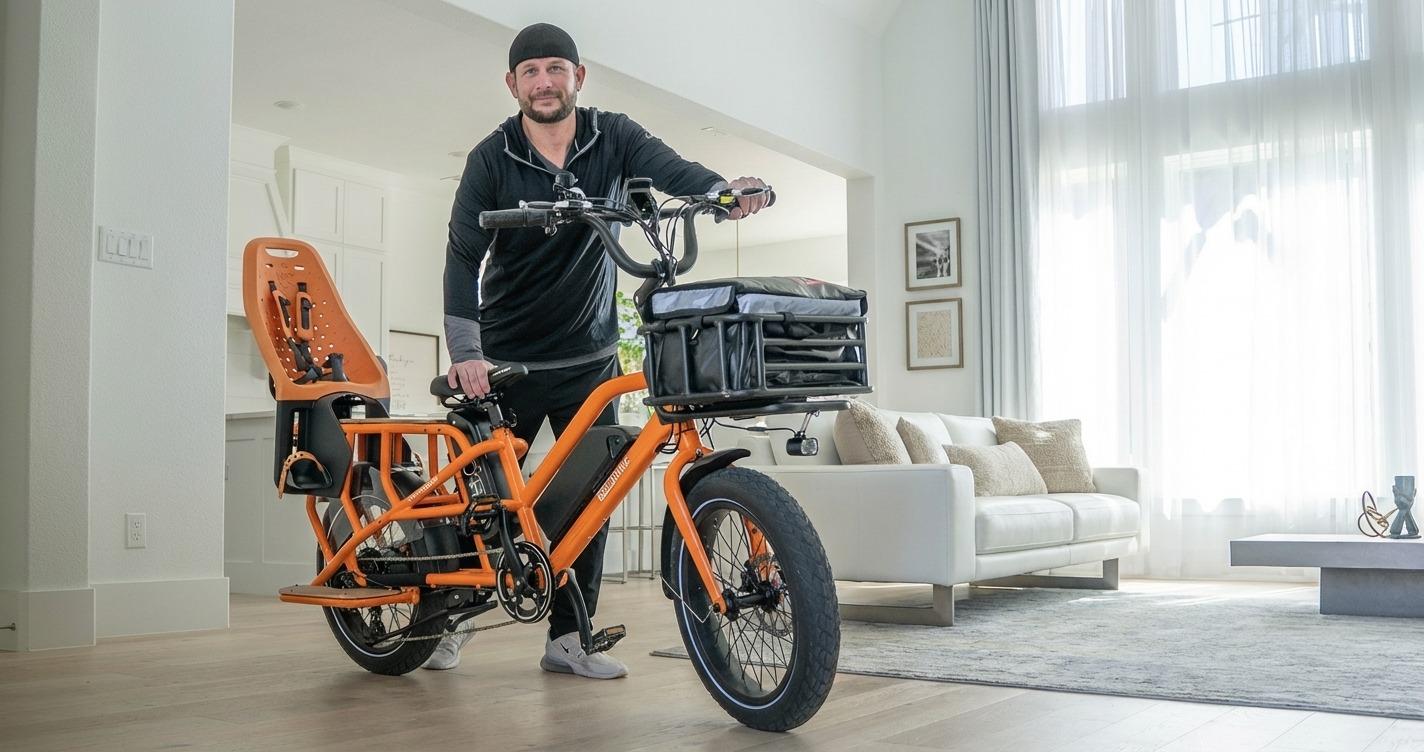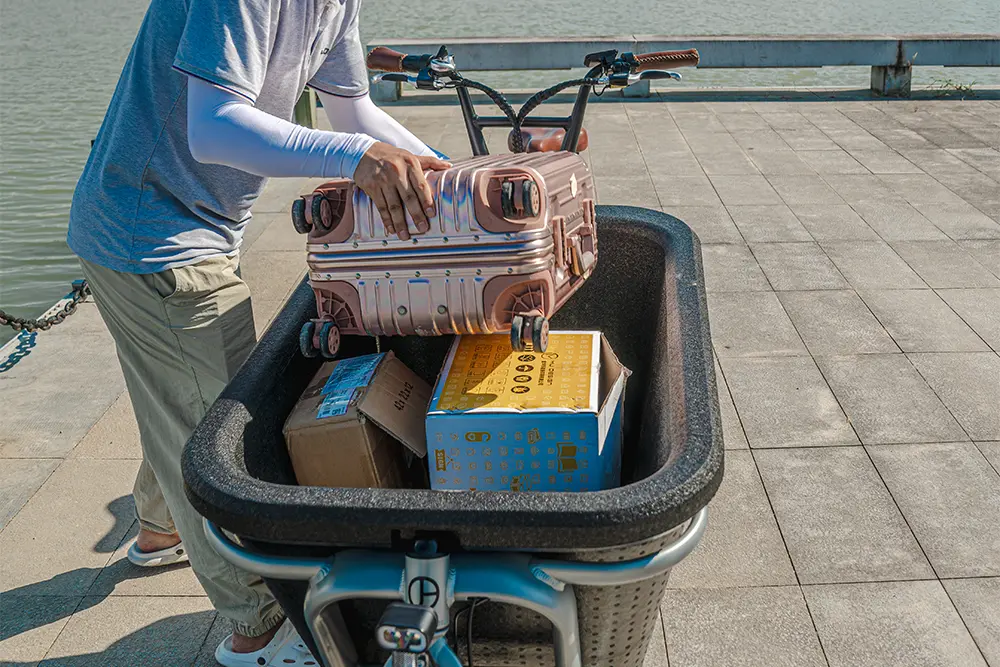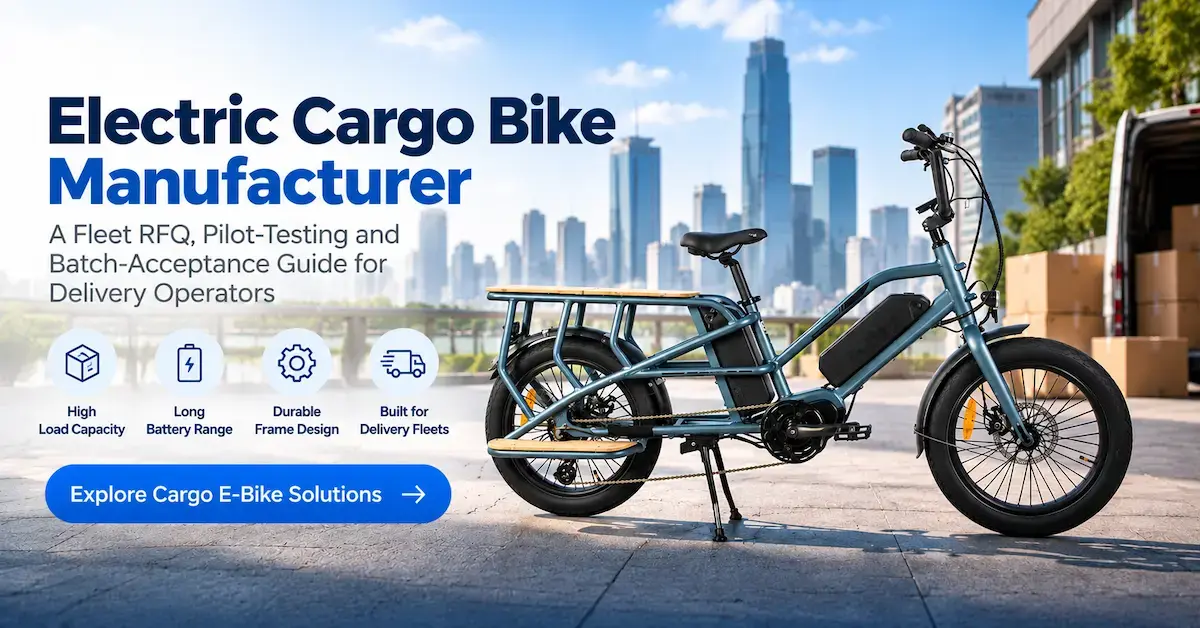
For electric bicycle distributors, delivery operators, and private-label mobility brands, launching a successful long-tail cargo bike range requires more than selecting a frame and adding an extended rear rack.
The challenge is developing a product that meets real carrying requirements, maintains dependable battery performance, supports different accessories, and can be reordered without unexpected component changes.
This is particularly important when a brand plans to sell multiple configurations based on one cargo bicycle platform.
A reliable long tail cargo e-bike manufacturer should help buyers establish an approved rear-deck design, suitable electrical configuration, consistent bill of materials (BOM), documented quality controls, and long-term replacement-parts arrangements.
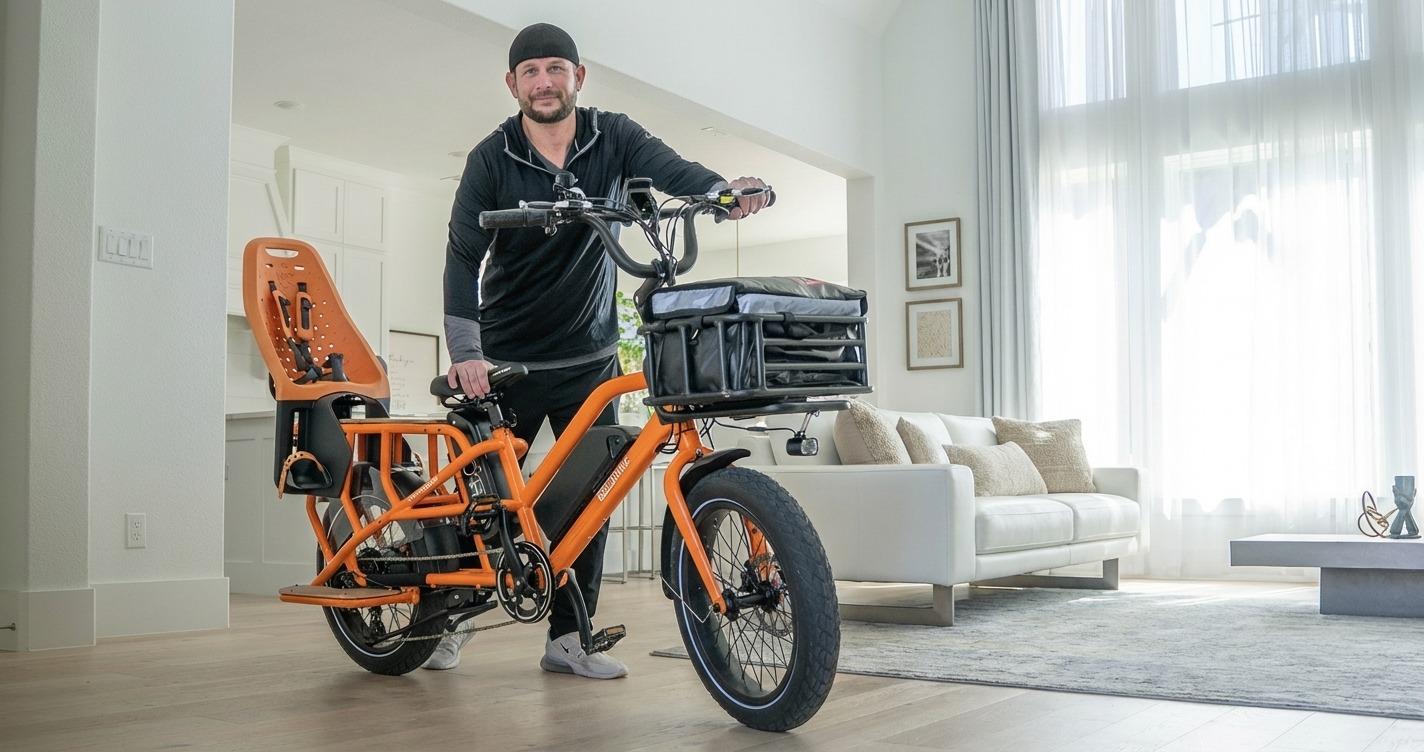
The JOBO JB-TDN79Z provides a relevant platform for this approach.
Its current published configuration includes a 48V 500W brushless motor, two 48V 15Ah batteries, torque sensor, hydraulic disc brakes, Shimano 7-speed drivetrain, suspension fork, and 20×3.0-inch tires.
The extended rear cargo area is designed for utility-oriented applications, while OEM customization allows buyers to discuss cargo equipment, component selection, branding, and packaging.
This guide explains how to turn the JB-TDN79Z from a product reference into a repeatable wholesale program.
Quick Answer: What Should Buyers Check When Choosing a Long Tail Cargo E-Bike Manufacturer?
Choose a long tail cargo e-bike manufacturer that can verify rear-deck load limits, battery-system compatibility, torque-sensor performance, loaded braking, and production consistency.
For the JB-TDN79Z, buyers should confirm the exact 48V motor configuration, two-battery arrangement, cargo-rack specifications, and drivetrain version before approving a sample.
They should also establish an OEM process covering sample validation, signed BOMs, component substitutions, batch inspections, and spare-parts support.
The most suitable supplier is not simply the one offering the lowest initial price. It is the one capable of producing the approved configuration consistently across future orders.
View the JOBO JB-TDN79Z Long Tail Cargo E-Bike.
1. Why Are Long-Tail Cargo E-Bikes Attractive to B2B Buyers?
A long-tail cargo e-bike extends the carrying structure behind the rider, providing additional space for approved accessories and goods.
Compared with a conventional city e-bike, this architecture creates opportunities for businesses that need greater utility without necessarily switching to a three-wheel cargo vehicle.
Potential wholesale markets
| Buyer type | Primary application | Purchasing priority |
|---|---|---|
| Cargo e-bike distributors | Retail and commercial product ranges | Consistent specifications and margins |
| Courier fleet operators | Parcel and equipment transport | Rear load management and battery availability |
| Property maintenance companies | Tools and service materials | Rack durability and easy servicing |
| Outdoor hospitality operators | Internal supply transportation | Maneuverability and maintenance |
| Private-label brands | Branded cargo bicycle programs | Customization and repeat-order quality |
| Family mobility retailers | Household utility and approved accessories | Defined load limits and accessory compatibility |
Long-tail designs may be suitable for operations requiring flexible rear-mounted cargo arrangements.
However, they are not automatically appropriate for oversized packages, unusually heavy loads, or passenger transportation.
The bicycle must be approved for its intended carrying arrangement.
A successful cargo product line begins with the customer's actual carrying needs, not with the largest-looking rear deck.
2. JOBO JB-TDN79Z: Technical Specifications and Version Control
JOBO identifies the JB-TDN79Z as a long-tail cargo electric bike platform for commercial and private-label applications.
The latest supplied product information provides the following reference configuration.
JB-TDN79Z technical overview
| Component | Supplied specification | What buyers should verify |
|---|---|---|
| Model | JB-TDN79Z | Current production revision |
| Motor | 48V 500W brushless | Exact motor model and rated output |
| Battery | 2 × 48V 15Ah LG | Pack specifications and approved wiring |
| Display | LCD | Functions and replacement availability |
| Maximum speed | 25 km/h | Actual assistance cut-off and legal category |
| Advertised range | 120 km | Test conditions and battery arrangement |
| Frame | 6061 aluminum alloy | Geometry, loading limits, structural testing |
| Wheels | 20-inch format | Complete wheel specifications |
| Transmission | Shimano 7-speed | Exact drivetrain components |
| Brakes | Hydraulic disc brakes | Component brand, rotor size, test results |
| Fork | Suspension fork | Approved model and load requirements |
| Tires | 20×3.0 inches | Tire rating and replacement availability |
| Sensor | Torque sensor | Calibration and assistance behavior |
| Rear cargo area | Extended long-tail deck | Deck dimensions and approved load rating |
This table uses the supplied product configuration. Older JOBO materials describe a 48V 350W motor and Shimano 8-speed drivetrain. Buyers must establish which version applies to their quotation.
Why component versions matter
Two bicycles may share the same model name while using different motors, gear systems, batteries, or controllers.
For an OEM distributor, those differences affect service documentation, spare-parts inventory, technical support, and sometimes market eligibility.
A written BOM should therefore identify component manufacturers, model numbers, approved alternatives, and relevant firmware versions.
This specification becomes the reference for sample approval and subsequent production batches.
3. How Should an Extended Rear Deck Be Configured?
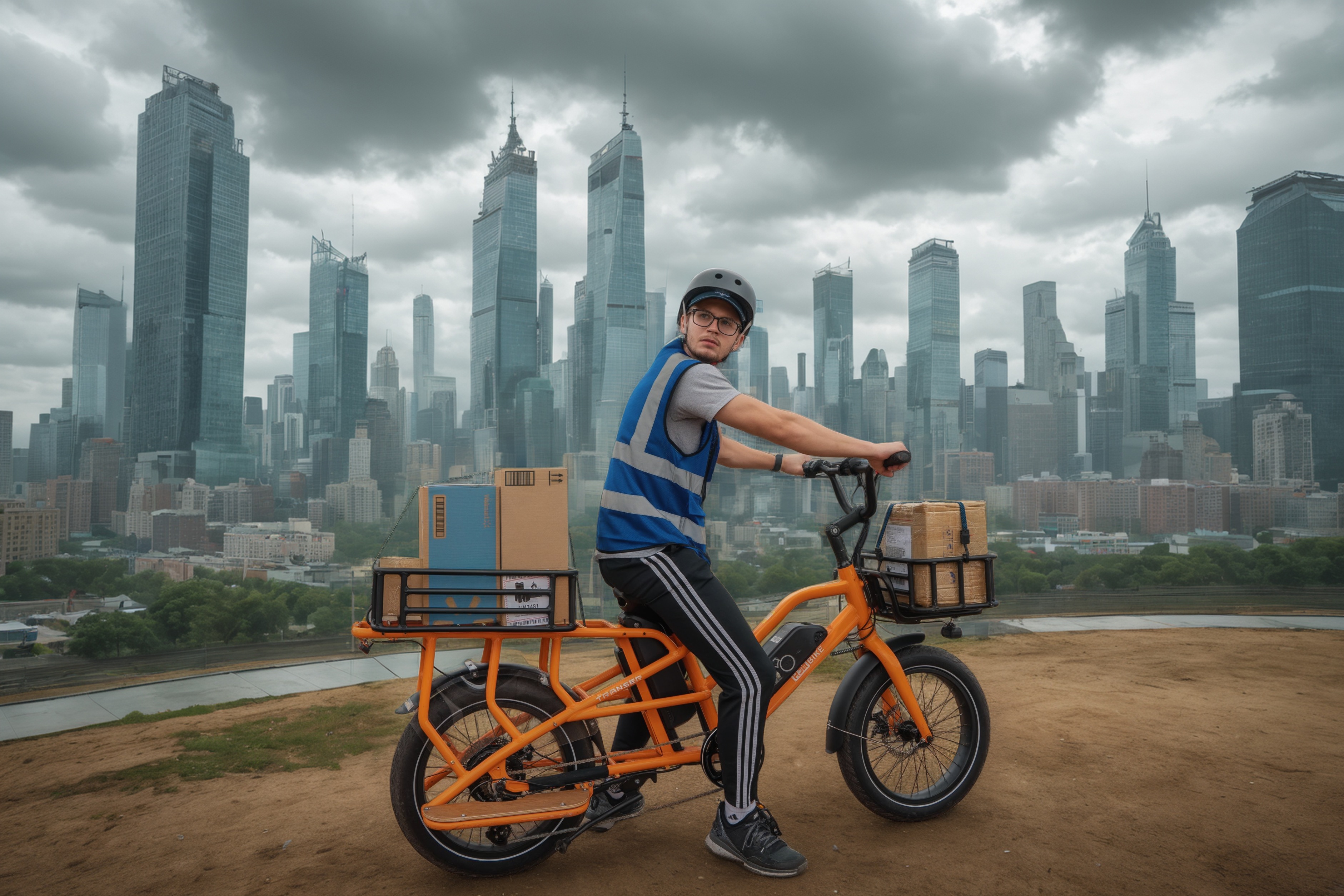
The extended rear deck is the main reason to choose the JB-TDN79Z architecture.
It allows buyers to discuss different carrying arrangements based on their intended customers.
However, the manufacturer must confirm the structural limits before any accessory is advertised as compatible.
Potential rear-deck configurations
| Configuration concept | Intended application | Required verification |
|---|---|---|
| Cargo crate | General goods and supplies | Mounting, dimensions, load limits |
| Delivery box | Courier and delivery applications | Attachment strength and clearance |
| Side panniers | Small equipment and shopping | Symmetrical loading and wheel clearance |
| Tool case mounts | Maintenance and service fleets | Approved fasteners and vibration resistance |
| Passenger accessories | Only specifically approved applications | Passenger rating and complete accessory validation |
These are possible development concepts, not confirmation that every arrangement is approved for the standard JB-TDN79Z.
Questions to ask about the rear deck
What is the maximum permissible total vehicle mass?
What are the separate rider and rear-deck load limits?
How much of the allowable load can be positioned behind the rear axle?
Which mounting points and fasteners are approved?
Are accessories tested as part of the complete bicycle?
These questions should be answered in the technical specification.
Why load distribution matters
Rear-mounted cargo changes weight distribution and can affect steering, braking, and handling.
The effect depends on cargo mass, position, frame geometry, and road conditions.
Buyers should test the complete bicycle with the intended mounted equipment, not simply an empty rear rack.
For brands selling multiple cargo accessories, each approved combination should be clearly documented.
4. Can the Long-Tail Platform Support Child Seats or Passengers?
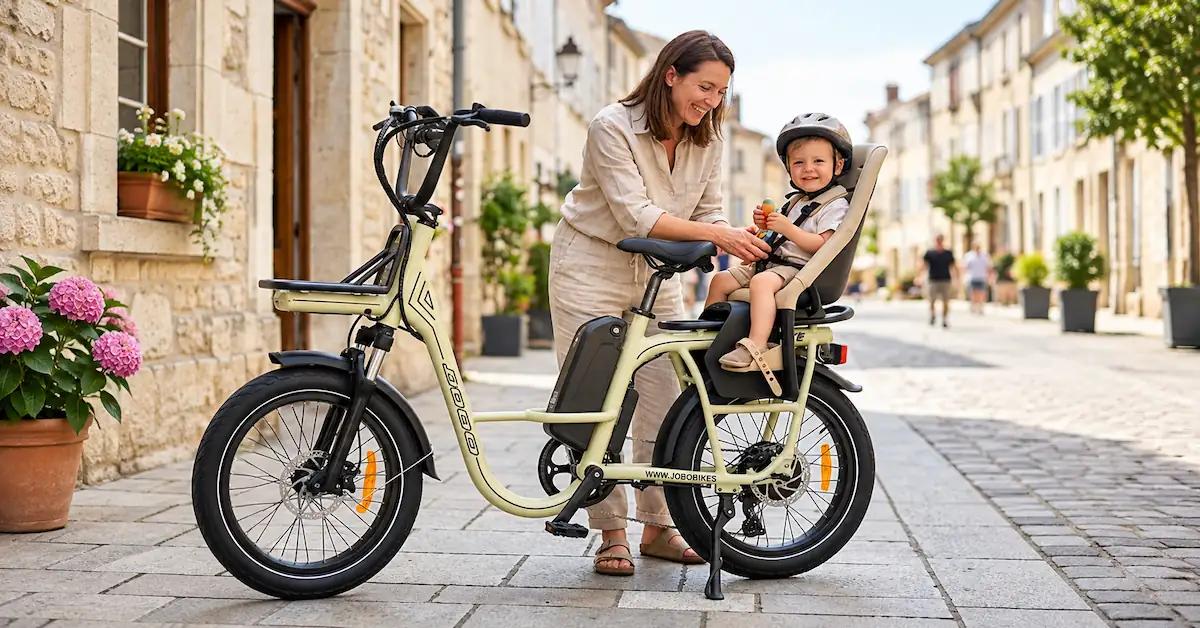
The JB-TDN79Z product description mentions child seats as a potential rear-deck application.
However, the ability to physically install a child seat does not establish that the bicycle is approved for carrying a child.
Passenger suitability requires specific evidence.
Required information for passenger-related configurations
Buyers should request the permissible passenger load, approved seating systems, mounting instructions, relevant protection components, and applicable testing documentation.
Requirements may include compatible foot support, wheel protection, restraints, and other features depending on the intended arrangement and market.
For European carrier-cycle projects, the Swedish Institute for Standards publishes EN 17860-2:2024+A1:2026, covering mechanical aspects of lightweight single-track carrier cycles.
The EN 17860 series provides a relevant technical framework for evaluating carrier-cycle requirements, with different parts addressing different aspects.
Its applicability depends on the product classification and intended use.
Mentioning this standard does not mean the JB-TDN79Z has been tested or certified to it.
Retailers should not market the model as an approved child-carrying bicycle until the specific passenger arrangement is documented and validated.
5. How Does the Dual-Battery System Affect Fleet Operations?
The JB-TDN79Z's published dual-battery configuration is one of its principal differentiating features.
The supplied specification describes two nominal 48V 15Ah battery packs.
Understanding nominal battery energy
A single pack provides approximately:
48V × 15Ah = 720Wh
Two equivalent packs provide a combined nominal energy of:
720Wh × 2 = 1,440Wh
This assumes both packs have the stated nominal ratings and are included in the approved configuration.
The calculation does not guarantee a particular usable energy capacity or riding distance.
Dual-battery operating considerations
| Factor | Buyer should evaluate |
|---|---|
| Battery quantity | Whether both packs are included in the quotation |
| Electrical integration | Approved wiring and battery-management arrangement |
| Charging | Compatible chargers and procedures |
| Battery identification | Pack model and replacement compatibility |
| Additional weight | Effect on complete bicycle mass |
| Range | Performance under realistic routes and loads |
| Maintenance | Replacement and fault diagnosis |
| Spare packs | Availability and approved use |
Can the JB-TDN79Z actually travel 120 km?
The supplied product materials advertise 120 km.
However, actual range depends on total mass, gradients, assistance settings, rider effort, stop frequency, weather, and battery condition.
Fleet operators should establish the test conditions behind the advertised figure.
For more reliable purchasing decisions, measure energy consumption over representative routes and calculate operating reserves based on recorded data.
Charging safety
The U.S. Consumer Product Safety Commission's micromobility battery charging guidance recommends approved chargers and replacement batteries, following manufacturer instructions, and remaining present during charging.
For dual-battery cargo bikes, this reinforces the importance of a documented charging procedure and compatible electrical components.
A dual-battery system should be treated as an integrated electrical design, not simply as two interchangeable battery packs.
6. Why Does the Torque Sensor Matter?
The JB-TDN79Z is described as using a torque sensor.
Unlike a basic cadence-only assistance system, a torque-sensing arrangement responds to pedal force according to the controller's programmed assistance behavior.
This can provide a more proportional response to rider effort.
For cargo applications, the relevant question is how the system behaves when the bicycle is loaded.
What should be tested?
Evaluate low-speed starts, gradual acceleration, assistance transitions, climbing where permitted, and the response when the rider reduces pedal effort.
Test both representative cargo conditions and an unloaded return journey.
The objective is controllable assistance appropriate to the operator's routes.
Why should OEM buyers verify sensor calibration?
Assistance behavior may depend on the exact motor, controller, sensor, firmware, and selected settings.
If these components change between production batches, the riding experience may also change.
A manufacturer's sample approval process should therefore include an agreed electrical configuration and functional acceptance criteria.
For a multi-season OEM program, consistency is more useful than an unsupported claim that a sensor delivers a particular riding experience.

7. Evaluate Hydraulic Brakes, Tires and Suspension as One System
The reference JB-TDN79Z specification includes hydraulic disc brakes, 20×3.0-inch tires, and a suspension fork.
These components should be evaluated together with the frame and approved cargo loads.
Hydraulic disc brakes
A hydraulic braking system requires compatible components and proper servicing.
Buyers should request the approved brake model, rotor dimensions, service procedures, and applicable loaded braking evidence.
20×3.0-inch tires
The tire configuration may suit a range of approved urban and utility applications.
However, tire width alone does not establish suitability for every gravel, wet, or winter condition.
Confirm the exact tire construction, load rating, pressure requirements, and replacement availability.
Suspension fork
The suspension fork should be specified by manufacturer and model, with the relevant intended-use and loading information.
A cargo bicycle can experience different front-end loads depending on the rider, geometry, and operating conditions.
The strongest technical specification treats the bicycle as a complete system rather than a list of premium components.
8. Build Two Distinct Retail Configurations Without Losing BOM Control
A long-tail platform may allow a brand to target several customer groups.
However, adding too many component combinations can complicate production and after-sales support.
A better approach is to define a small number of approved configurations.
Illustrative OEM product-line concepts
| Product-line concept | Utility Cargo | Fleet-Ready Long Tail |
|---|---|---|
| Starting platform | JB-TDN79Z | JB-TDN79Z |
| Intended buyer | Retail utility customers | Commercial operators |
| Rear deck | Approved crate or pannier arrangement | Approved delivery equipment |
| Battery | Confirm suitable factory configuration | Evaluate published twin-pack setup |
| Controls | Approved standard configuration | Route-tested assistance settings |
| Accessories | Household carrying equipment | Fleet identification and cargo fittings |
| Main priority | Retail usability | Repeatable operation and servicing |
These are planning concepts, not confirmed JOBO stock variants.
Any proposed single-battery alternative or component modification must be approved by the manufacturer.
Why limit the number of variations?
A smaller assortment can simplify employee training, replacement-parts inventory, packaging, technical manuals, and warranty administration.
It also makes repeat purchasing easier.
A distributor can expand its assortment after collecting reliable sales and service information from the initial configurations.
9. What Quality-Control Records Support Repeat Orders?
Batch consistency is especially important for contract manufacturing.
A distributor may approve one sample, then place additional orders over several selling seasons.
If components change without clear documentation, spare parts and customer support become more complicated.
JOBO describes integrated manufacturing and quality-control activities involving frame production, assembly, and testing.
Buyers can review JOBO's quality-control laboratory.
Recommended quality-control checkpoints
| Production stage | Buyer acceptance requirement |
|---|---|
| Incoming inspection | Components match approved BOM |
| Frame fabrication | Approved geometry and structural criteria |
| Rear-deck assembly | Correct mounting points and fasteners |
| Electrical installation | Battery, controller, sensor and wiring compatibility |
| Brake assembly | Approved components and adjustment |
| Functional testing | Motor assistance, controls and electrical functions |
| Final inspection | Matches approved production sample |
| Packaging | Correct accessories, documents and protection |
Establish a change-control procedure
The manufacturer and buyer should agree on how engineering changes are communicated.
For example, replacing a motor, sensor, controller, battery, brake assembly, or load-bearing component should trigger an appropriate review.
The process should identify the proposed change, affected product batches, required testing, buyer approval, and updated service documentation.
Maintain serial-number traceability
A practical OEM program should connect each bicycle's identification number to its relevant production records.
This helps buyers investigate warranty claims and identify which components were installed in a particular batch.
A repeatable product line is one in which the approved specification can be identified, reproduced, and serviced—not simply reordered by model name.
10. How Should Buyers Evaluate JOBO's Contract Manufacturing Services?
A contract manufacturing relationship should cover engineering, sample approval, production controls, logistics, and after-sales support.
JOBO publishes OEM/ODM capabilities and describes production operations in China together with a European assembly presence in Poland.
Explore JOBO OEM/ODM Manufacturing Services.
Questions for a contract manufacturing partner
Can the supplier provide a current model-specific BOM?
Which components can be customized without changing the approved platform?
How are structural and electrical modifications validated?
What is the sample approval procedure?
How are replacement parts managed across multiple production batches?
Can the supplier provide agreed inspection documentation?
Which manufacturing and assembly locations will handle the order?
European assembly and import considerations
JOBO describes a Poland-based assembly facility for European programs.
However, buyers should not assume that assembly in Poland automatically eliminates EU anti-dumping duties or establishes a particular product origin.
The European Commission's Implementing Regulation (EU) 2025/120 addresses anti-dumping duties on electric bicycles originating in China.
The treatment of a specific shipment depends on its actual origin, supply chain, classification, applicable trade measures, and customs rules.
European importers should obtain the required documentation and professional customs advice before calculating landed costs.
Likewise, references to ISO 9001 processes or EN 15194-related testing should not be treated as proof that every JB-TDN79Z configuration has a particular certification.
Request current documentation for the exact product and destination market.
11. How Can Distributors Improve Wholesale Reorder Economics?
A successful first order should establish information that improves subsequent purchasing decisions.
Distributors should track demand by configuration, warranty issues, replacement-parts consumption, and customer feedback.
Recommended reorder metrics
| Metric | Purchasing value |
|---|---|
| Sales by configuration | Identifies models worth replenishing |
| Average inventory age | Highlights slow-moving stock |
| Battery-related service cases | Supports battery and charger planning |
| Brake and tire replacements | Improves spare-parts forecasts |
| Warranty claim rate | Identifies quality concerns |
| Reorder lead time | Supports stock planning |
| Component changes | Protects compatibility |
| Customer returns | Identifies product-fit problems |
When comparing wholesale quotations, account for the complete cost of the product.
This includes accessories, branding, shipping, inspection, assembly, documentation, and expected after-sales support.
A lower factory price can become less attractive if it creates more complex service requirements.
For a long tail cargo e-bike manufacturer, the ability to maintain a consistent product configuration across repeat orders is a meaningful commercial advantage.
12. Prepare a JB-TDN79Z OEM Request for Quotation
A well-defined RFQ helps JOBO recommend a suitable configuration and provide commercial information relevant to the buyer's project.
Wholesale RFQ checklist
| RFQ item | Information required |
|---|---|
| Company type | Distributor, brand, retailer or fleet operator |
| Destination market | Country and legal vehicle category |
| Application | Utility cargo, commercial fleet or approved passenger use |
| Model | JB-TDN79Z |
| Rear-deck requirements | Dimensions, cargo type and approved load |
| Motor | Required rated output and configuration |
| Battery | Confirm dual 48V 15Ah arrangement |
| Sensor | Torque sensor and required assistance behavior |
| Brakes | Approved hydraulic brake specification |
| Tires and fork | Exact components and operating conditions |
| Branding | Color, graphics and packaging |
| Quantity | Samples, first order and forecast |
| Documentation | BOM, relevant testing and market requirements |
| After-sales | Warranty and replacement-parts arrangements |
| Commercial terms | MOQ, pricing, Incoterms and production schedule |
Suggested inquiry to JOBO
We are an electric cargo bicycle distributor or private-label brand serving [target market].
We are evaluating the JOBO JB-TDN79Z long-tail cargo e-bike for [intended application].
Our planned rear cargo arrangement is [description], with a typical load of [weight] and an expected daily distance of [distance].
Please confirm the latest motor and drivetrain specifications, dual-battery arrangement, approved rear-deck load, maximum permissible total mass, torque-sensor configuration, braking system, and applicable technical documentation.
We would also like to discuss OEM branding, accessory customization, representative samples, MOQ, pricing, production schedule, batch consistency, and replacement-parts support.
Our projected initial order is [quantity] units, with possible repeat orders subject to sample approval and market demand.
Request a JB-TDN79Z OEM and Wholesale Quotation.
13. Frequently Asked Questions
1. What is a long-tail cargo e-bike?
A long-tail cargo e-bike is an electrically assisted bicycle with an extended rear carrying structure designed to accommodate approved cargo equipment or other specifically validated accessories.
2. What is the JOBO JB-TDN79Z designed for?
JOBO positions the JB-TDN79Z as a long-tail cargo platform for distributors, fleet operators, and private-label brands requiring an extended rear carrying area and a dual-battery configuration.
3. Does the JB-TDN79Z use a 500W or 350W motor?
The latest supplied product information lists a 48V 500W brushless motor, while older JOBO materials describe 48V 350W. Buyers should confirm the current approved configuration before purchasing.
4. Does the JB-TDN79Z have two batteries?
The supplied reference configuration identifies two 48V 15Ah battery packs. The final quotation should confirm their inclusion, battery specifications, charging system, and electrical integration.
5. Can the JB-TDN79Z travel 120 km?
JOBO advertises 120 km, but this is not a guaranteed range for every rider, cargo load, terrain, or assistance setting. Buyers should request test conditions and validate performance.
6. What is the rear-deck load capacity?
The supplied product information does not establish a verified rear-deck load rating. Buyers must request separate rack, rider, and complete-vehicle loading limits.
7. Can the long-tail cargo e-bike carry children?
Only if the exact bicycle and passenger accessories are approved for that use. A long rear deck alone does not establish child-seat or passenger compatibility.
8. What benefits does a torque sensor offer?
A torque sensor enables assistance behavior based on measured pedal force. Actual riding performance depends on the motor, controller, calibration, and approved configuration.
9. Can JOBO provide private-label long-tail cargo e-bikes?
JOBO describes OEM/ODM services covering branding, component selection, engineering, production, and quality control. Available changes, MOQ, and validation requirements must be confirmed for the project.
10. How can distributors order the JB-TDN79Z wholesale?
Submit the target market, rear-deck requirements, preferred components, expected quantity, sample needs, and commercial requirements to JOBO. Request the current BOM and written quotation before placing an order.
Conclusion
Building a profitable and reliable long-tail cargo bicycle range requires more than an attractive product specification.
For distributors, OEM brands, and fleet buyers, the most important decisions involve approved rear-deck loads, battery-system integration, motor and sensor behavior, component consistency, production testing, and future replacement-parts availability.
The JOBO JB-TDN79Z provides a relevant starting platform through its extended rear cargo structure, published dual 48V 15Ah battery system, torque sensor, hydraulic disc brakes, and configurable OEM manufacturing approach.
However, buyers must confirm the final motor, drivetrain, load ratings, and destination-market requirements rather than relying on historical or mixed product descriptions.
A strong OEM purchasing program should establish the exact configuration before sample approval, maintain the same specification across production batches, and support future reorders with documented components and service arrangements.
For businesses seeking a dependable long tail cargo e-bike manufacturer, these practices can help transform an initial product launch into a more consistent wholesale supply relationship.
Planning to launch or expand a long-tail cargo e-bike product line?
Contact JOBO for JB-TDN79Z Specifications, OEM Customization, Samples and Wholesale Pricing.
Share your target market, rear-deck requirements, desired battery configuration, expected order quantity, and purchasing schedule to begin evaluating a suitable production program.