What Should an Off Road Fat Tire E-Bike Factory Actually Provide?
An off road fat tire e-bike factory should do more than install oversized tires and a powerful motor on an existing bicycle.
Off-road riding changes the entire engineering requirement.
Gravel creates vibration. Sand increases rolling resistance. Rocky trails put repeated loads through the wheels and frame. Long climbs increase motor and battery demand. Loose terrain also makes predictable power delivery and braking more important than headline performance.
For a B2B buyer, the better question is therefore not:
“How powerful is this bike?”
It is:
“Can the factory build an off-road platform that performs reliably on our target terrain and reproduce the same approved configuration in bulk production?”
That requires motor and battery matching, frame engineering, tire selection, suspension, braking, prototype testing, quality control, and specification management.
JOBO maintains a dedicated range of products for this application. Buyers can first review the JOBO Off-Road Electric Bike range before deciding whether an existing platform or a deeper OEM/ODM project is more suitable.
Quick Answer for B2B Buyers
A good fat-tire off-road project should begin with the intended terrain, rider, performance level, price segment, and destination market.
Only after these are defined should the factory select the motor, battery, tires, suspension, brakes, frame, and drivetrain.
This sequence matters because a bike developed mainly around a large motor specification may become unnecessarily heavy, expensive, difficult to service, or poorly matched to the customer's actual riding conditions.
The strongest OEM specification is not the one with the most features. It is the one where every major component solves a real customer or operating need.
Who Typically Needs an Off-Road Fat-Tire E-Bike?
The search term off road fat tire e-bike factory has strong commercial intent. Buyers using it are often already comparing factories, product platforms, samples, and OEM options.
Private-label e-bike brands usually want a proven base platform that can be differentiated through frame color, graphics, motor configuration, battery capacity, suspension, accessories, packaging, and other market-specific changes.
Importers and distributors have another concern: the product must remain practical after it reaches the market. They therefore need to consider repeat-order consistency, spare parts, maintenance, certification, warranty exposure, and whether later batches will remain consistent with the approved sample.
Rental and adventure operators have an even more operational view. Their bicycles may be used repeatedly by riders with different skill levels, so simple inspection, predictable power, durable tires, braking performance, battery handling, and serviceability can matter more than maximum specifications.
“Off Road” Should Be Defined Before You Ask for a Quote
One of the easiest ways for an OEM project to go wrong is for the buyer and factory to use the phrase off road while imagining completely different conditions.
A coastal operator may mean firm sand and gravel.
A recreational retailer may mean countryside paths and forest tracks.
A performance-oriented outdoor brand may mean repeated climbing and rocky trails.
Those products should not automatically use the same specification.
| Target Surface | Main Engineering Priority | Common Purchasing Risk |
|---|---|---|
| Gravel roads | Stability and vibration control | Tire wear, loose hardware |
| Forest trails | Grip and suspension | Roots, mud,repeated impacts |
| Sand | Tire footprint and usable torque | High energy consumption |
| Snow | Traction and battery reserve | Cold-weather range |
| Rocky routes | Frame, wheels and suspension | Impact loads |
| Mixed road/off-road | Balanced efficiency | Over-specification |
A short terrain breakdown such as 40% gravel, 30% dirt, 20% pavement, 10% sand gives an engineering team far more useful information than simply requesting a rugged e-bike.
Why Fat Tires Work Off Road
Fat tires increase the contact area between the bike and the riding surface.
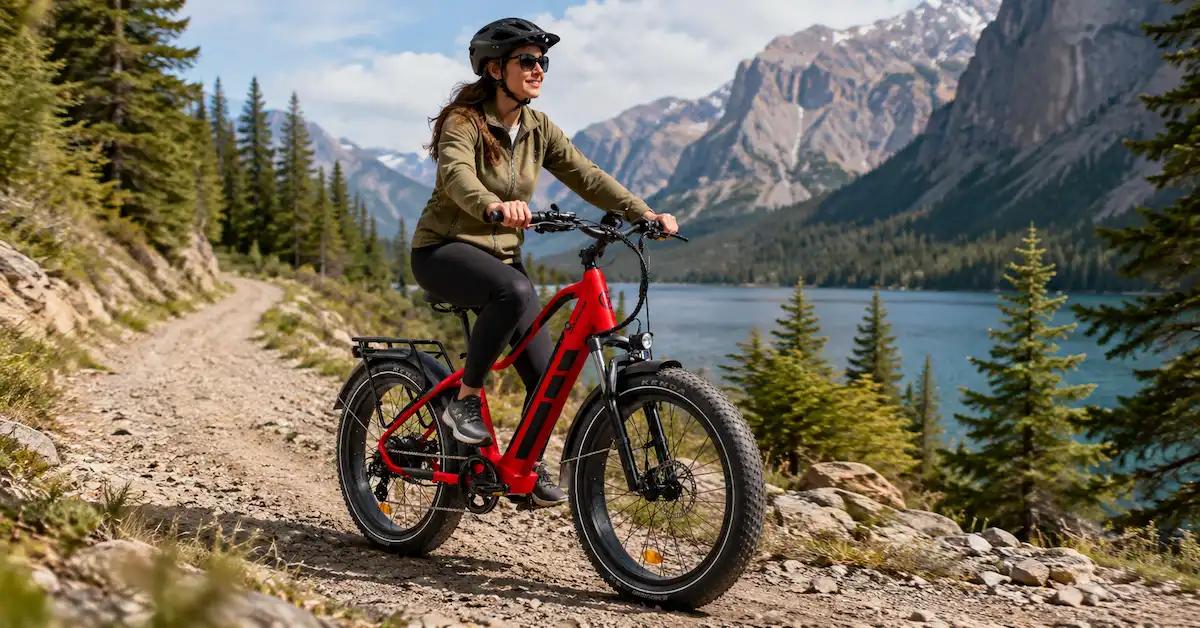
That can improve stability and traction on loose ground such as gravel, soft dirt, sand, and snow. The larger air volume can also add some cushioning over uneven surfaces.
There is a trade-off.
A wider tire normally adds weight and rolling resistance. The motor has to overcome that resistance, which can affect battery consumption. Fat-tire bikes also occupy more shipping and storage space.
For B2B sourcing, this means the right question is not:
“Can you offer the widest tire?”
It is:
“What tire width gives our riders enough traction without adding unnecessary weight and energy demand?”
20×4.0 Fat Tires: Where Do They Fit?
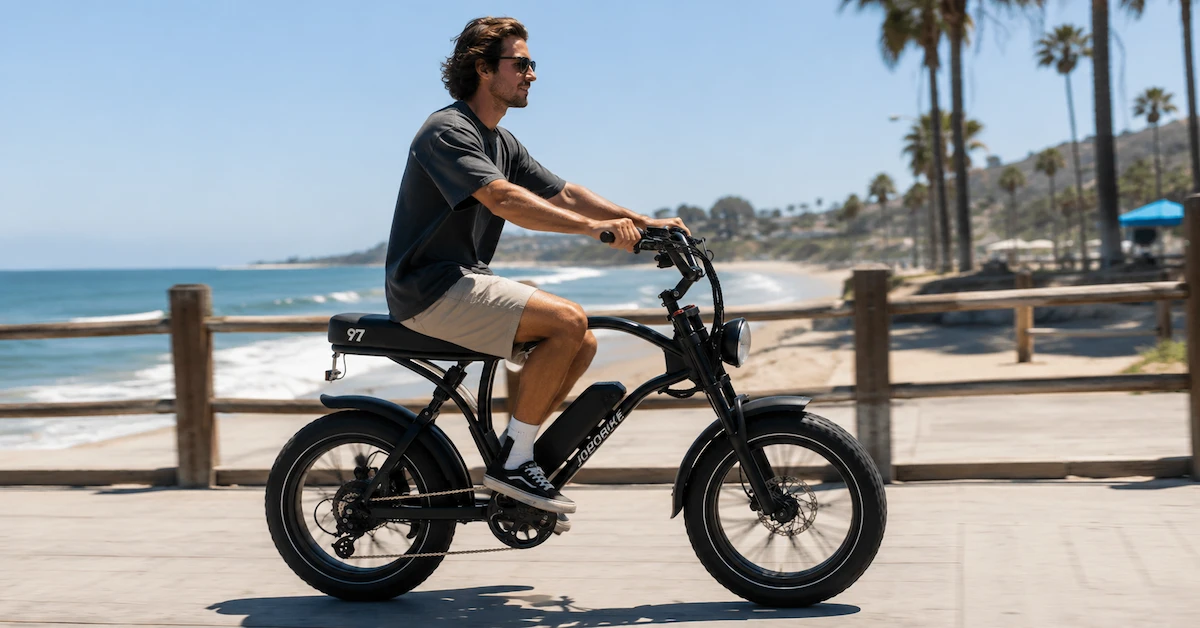
Compact 20×4.0-inch fat-tire platforms can be attractive for recreational outdoor markets because they combine a large tire footprint with relatively compact bike dimensions.
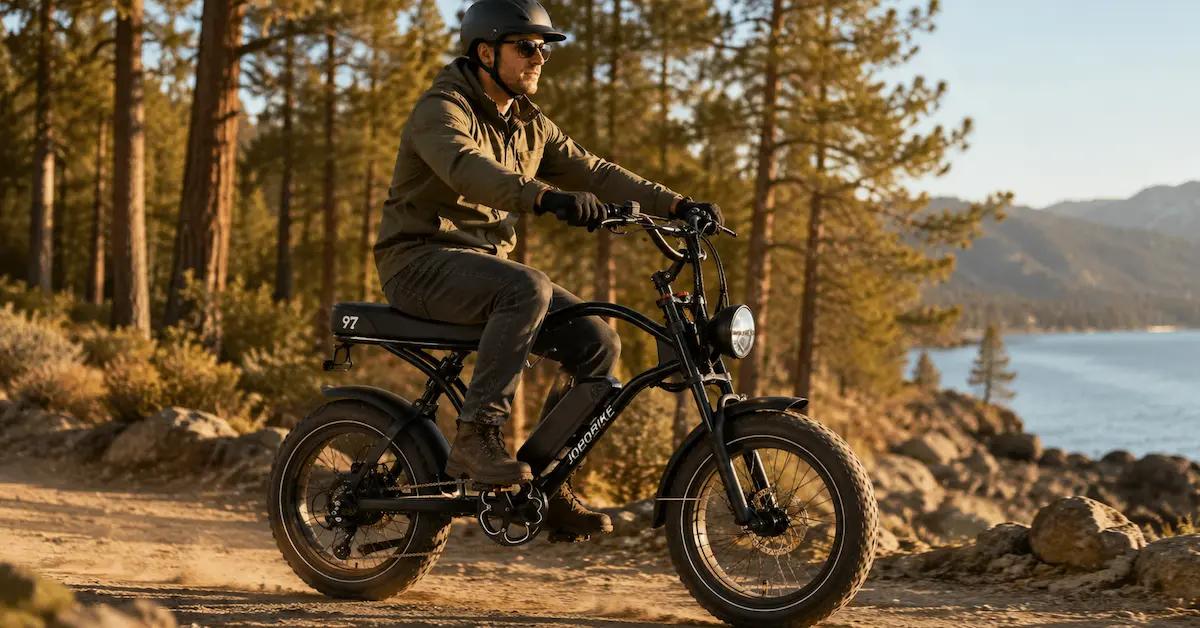
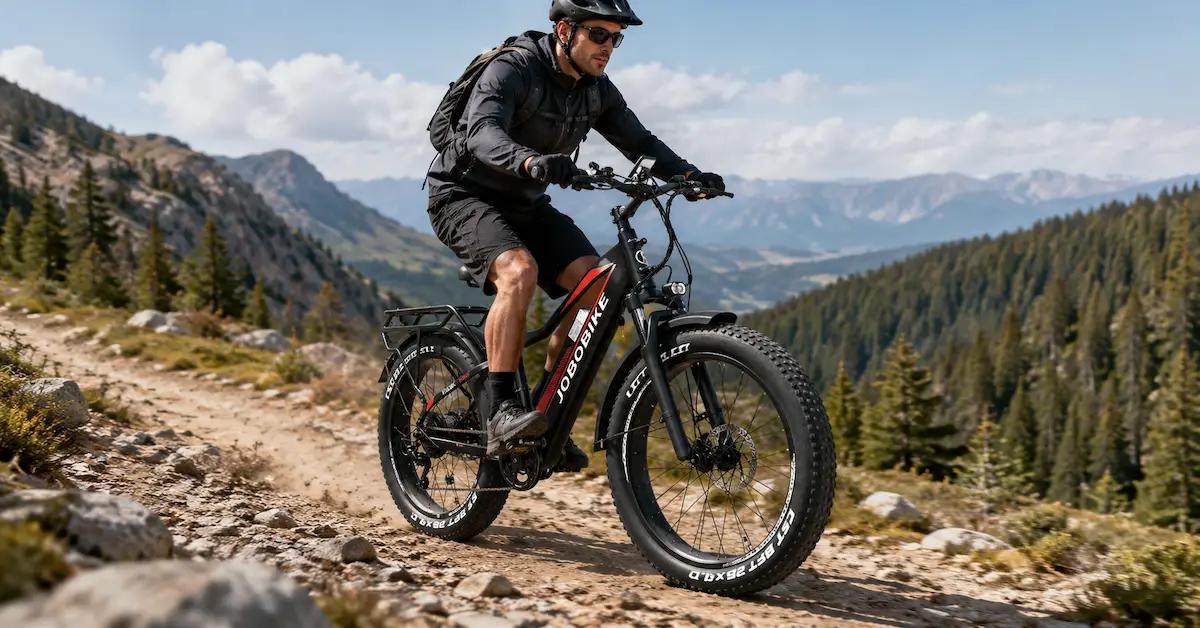
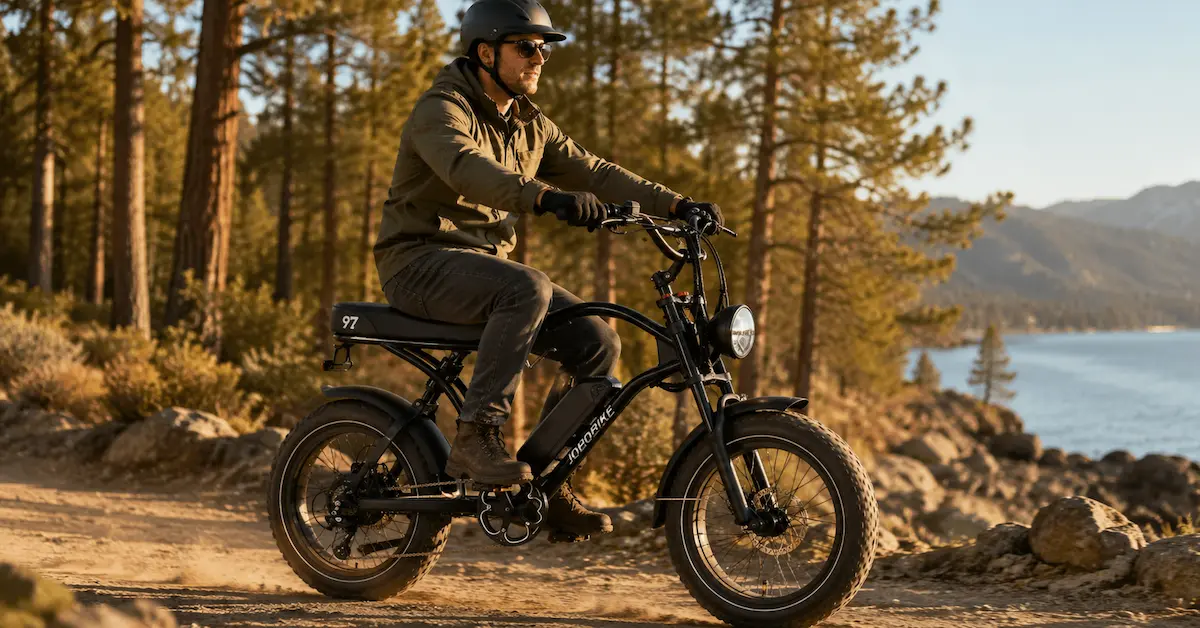
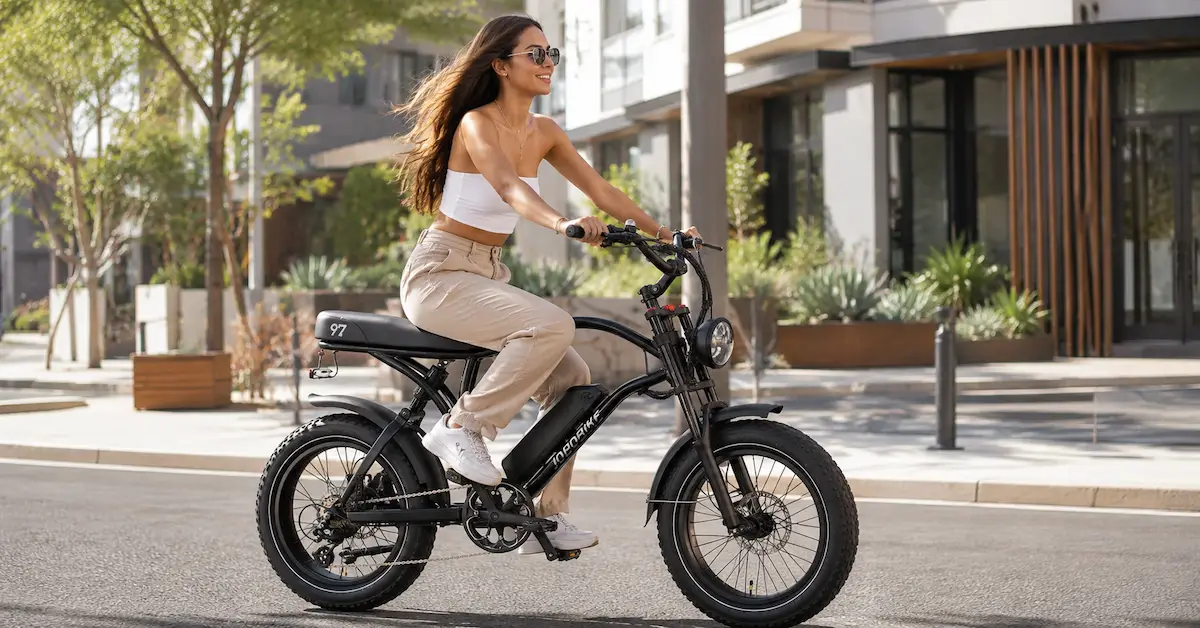
JOBO's current JB-TDN23Z-F off-road platform is built around this concept. The published configuration includes a 20-inch 6061 aluminum-alloy frame, 20×4.0-inch fat tires, 48V750W motor, 48V25Ah battery, 80 N·m maximum torque, hydraulic disc braking, and a suspension-oriented off-road setup.JOBO lists a reference riding distance of approximately 65 km for the model.
Buyers evaluating this type of platform can review the JOBO Off-Road Electric Bicycle.
These specifications should be treated as a starting platform rather than a universal recommendation. Motor output, battery capacity, speed settings, accessories, and other details should still be matched to the destination market and intended use.
When a 26×4.0 Platform Makes More Sense
A larger 26×4.0-inch all-terrain platform may make more sense when the product is intended for larger riders, longer mixed-terrain routes, or a more traditional bicycle feel.
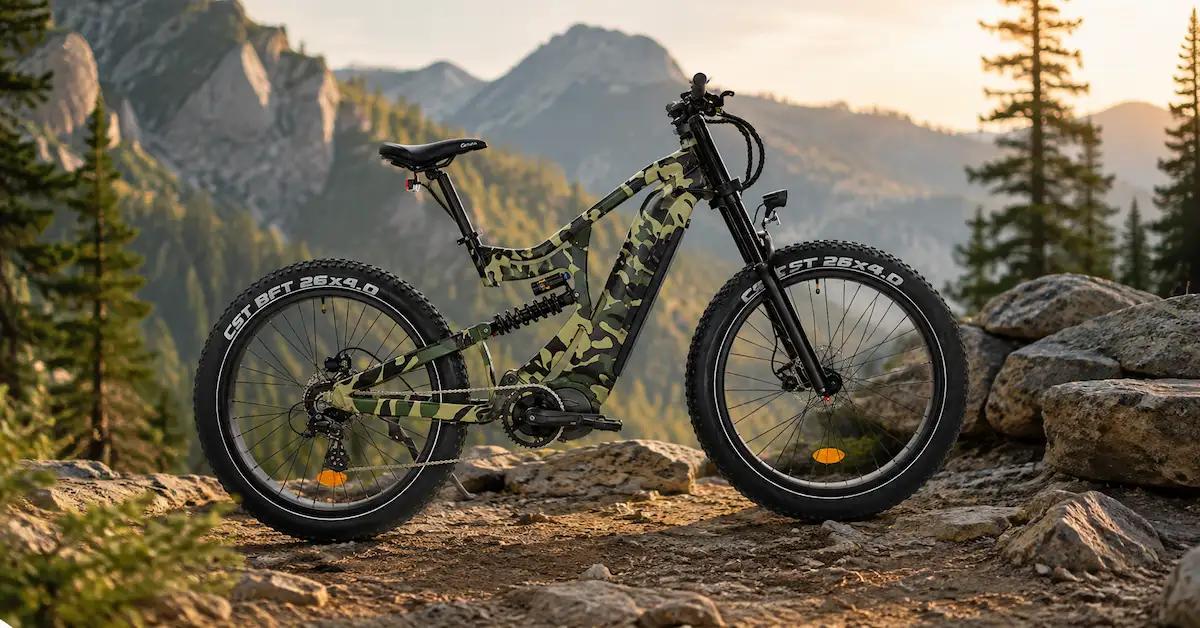
JOBO also produces a 26-inch all-terrain platform with 26×4.0-inch tires, a 750W configuration option, front suspension, and a 48V14Ah battery configuration. Its product positioning covers dirt, gravel, rocks, pavement, sand, mud, and snow.
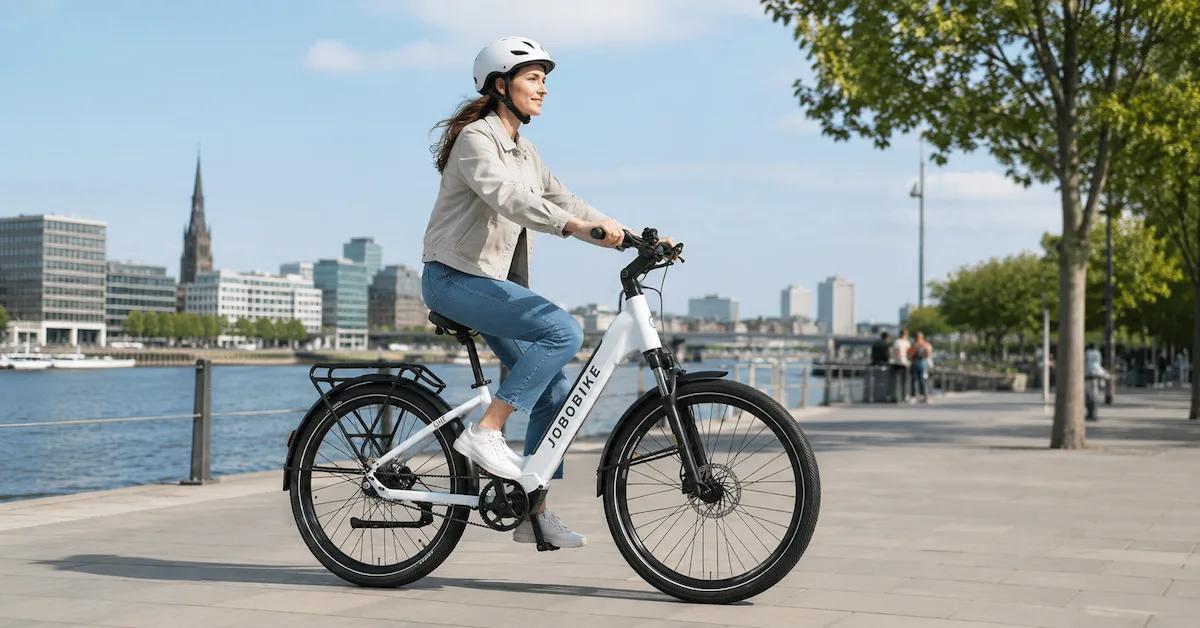
For projects sitting between recreational fat-tire riding and broader mixed-terrain use, buyers can compare it with the JOBO All Terrain Electric Bike.
The decision between 20-inch and 26-inch platforms should therefore consider rider fit, packaging, terrain, handling, market positioning, and expected trip length—not wheel diameter alone.
Motor Power Should Follow the Workload
Motor wattage attracts attention because it is easy to compare.
It does not tell the entire story.
An off-road motor needs to operate together with the bike's weight, rider weight, terrain resistance, tire size, controller settings, battery, and gearing.
Soft surfaces and steep climbs may justify stronger output.
A recreational product used mainly on gravel and easy trails may not need the same configuration.
For OEM buyers, the useful discussion is therefore:
How much usable assistance does this rider need on this terrain?
not simply:
What is the highest wattage available?
The correct answer may also change depending on the legal classification of the bike in the destination market.
Torque Should Be Controllable
Strong torque can help when starting uphill, riding through resistant terrain, or carrying a heavier total load.
But peak torque alone does not determine ride quality.
On loose gravel, wet tracks, or sand, abrupt power delivery can reduce rider confidence. Prototype testing should therefore look at low-speed response, hill starts, acceleration, assist transitions, and wheel spin.
JOBO's current JB-TDN23Z-F platform lists up to 80 N·m of torque, but the important purchasing point is that the motor must operate as part of the full bike system.
For buyers comparing more performance-focused mountain products, JOBO also maintains technical content around E-MTB sourcing and trail performance.
Battery Capacity Should Be Matched to the Worst Normal Route
A published range number should not be treated as a guaranteed operating distance.
Sand, climbing, loose surfaces, cold weather, rider weight, tire pressure, wind, and repeated acceleration all affect energy consumption.
A better B2B question is:
Can this battery complete the longest normal customer route with a reasonable reserve?
This becomes especially important for rental and tour fleets.
A rental operator should also think about charging windows, spare batteries, the number of rides per day, and how quickly staff can identify a bike that is not ready for another rental.
Battery capacity is therefore an operational decision, not merely a sales specification.
Suspension Should Match the Riding Level
Full suspension looks attractive on an off-road specification sheet, but not every customer needs the same setup.
Front suspension can be sufficient for gravel, countryside riding, recreational trails, and moderate uneven terrain.
A more complete suspension system becomes more valuable when the bike regularly encounters rough tracks, repeated impacts, or more demanding off-road conditions.
The JB-TDN23Z-F is positioned by JOBO as an off-road platform with a suspension system intended to absorb trail impacts.
Buyers should still test the actual production sample under their expected riding conditions before approving bulk production.
Brakes Need to Be Specified for the Complete Bike
Fat-tire electric bikes are often heavier than conventional bicycles.
Add a larger battery, higher rider weight, luggage, downhill routes, and loose terrain, and braking demands increase further.
Brake selection should therefore consider:
bike weight + rider load + terrain + speed + expected descent
rather than being selected independently.
Serviceability matters too.
A distributor or rental operator should know how quickly brake wear items can be replaced and whether the service network can maintain the selected system.
Frame Engineering Becomes More Important Off Road
The frame carries the loads generated by the rider, motor, battery, suspension, wheels, and terrain.
Repeated vibration and impact can expose weak mounting points quickly.
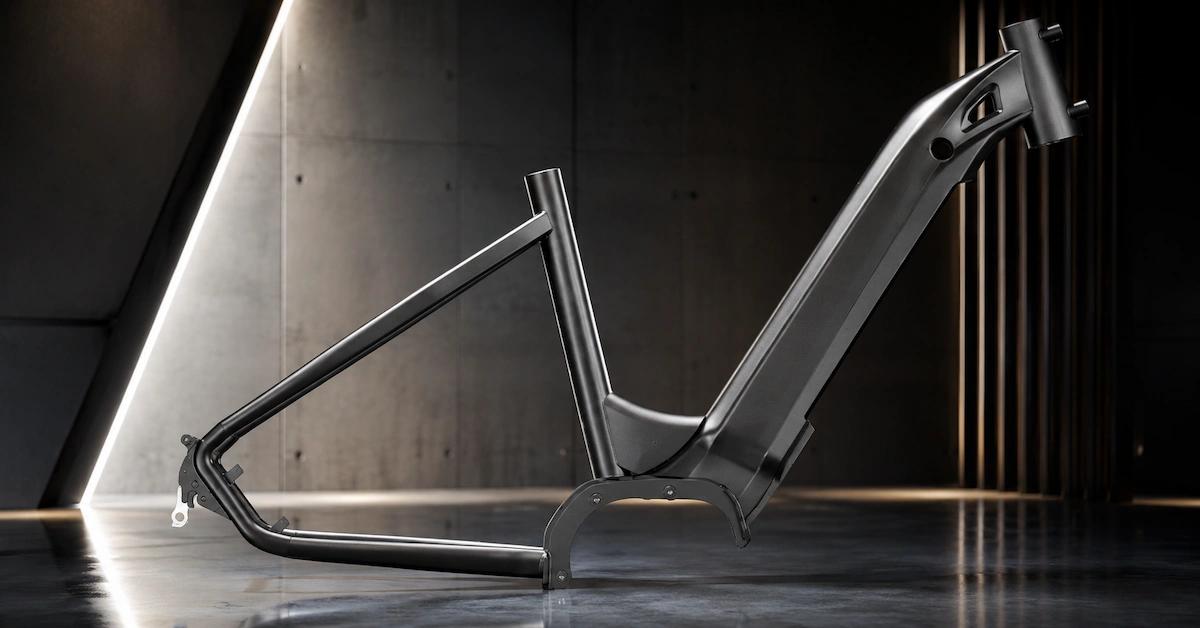
Engineering attention should therefore extend to the head tube, battery mounting, motor area, dropouts, chainstays, suspension points, and accessory mounts.
JOBO operates its own frame manufacturing facility with CNC processing, welding, heat treatment, coating, dimensional inspection, and structural quality control.
For projects requiring custom geometry, tire clearance, battery integration, or structural changes, buyers can review JOBO's in-house E-Bike Frame Factory.
This is particularly relevant when an OEM project moves beyond colors and decals into genuine product engineering.
What Should You Test Before Approving the Sample?
An attractive sample photographed in a studio is not enough for an off-road project.
The bicycle should be ridden on terrain close to its intended use.
Test sustained climbing rather than only short acceleration. Ride the same rough section repeatedly. Check braking under realistic weight. Inspect battery retention after vibration. Look for cable movement, rack or fender interference, loose fasteners, abnormal noises, and wheel issues.
After testing, inspect the frame, suspension hardware, brake system, battery mount, wheels, connectors, and drivetrain rather than relying only on the rider's impression.
This stage can reveal relatively inexpensive problems before they become expensive production problems.
How Should an Off-Road E-Bike Factory Control Quality?
As product demands increase, quality control needs to start earlier than final inspection.
JOBO describes its quality workflow as:
IQC → IPQC → FQC → QA
Its QC laboratory covers structural fatigue, brake testing, battery thermal evaluation, complete-bike testing, impact testing, wheel endurance, environmental simulation, and batch traceability.
Buyers evaluating manufacturing controls can review the JOBO Professional QC Labs.
For procurement teams, the useful questions are whether incoming key components are inspected, whether process deviations are documented, whether the approved sample becomes a production reference, whether final batches are traceable, and how nonconforming parts are handled.
Those answers are more meaningful than a simple “we have QC.”
Standard Platform, OEM Modification, or ODM Development?
Not every buyer needs a completely new bike.
A mature existing model can be the fastest route for a new market if the product architecture already fits the target customer.
A configured OEM project may change motor settings, battery, paint, branding, components, accessories, or packaging.
Deeper ODM development may require changes to geometry, frame architecture, mounting points, battery integration, or tooling.
| Development Route | Typical Changes | Relative Complexity |
|---|---|---|
| Private label | Logo, color, packaging | Low |
| Configured OEM | Motor, battery, tires,brakes | Medium |
| Modified platform | Frame or mounting changes | Medium-high |
| New ODM development | New product architecture | High |
Brands unfamiliar with this process can also review JOBO's Electric Bicycle OEM Development Guide before preparing a project brief.
What Does MOQ Really Depend On?
MOQ should be discussed only after the customization scope is clear.
JOBO's current JB-TDN23Z-F product page states that OEM orders for that platform typically start from 50 units, while sampling or pilot options may be discussed according to the project.
That does not mean every custom e-bike project has the same MOQ.
A standard platform with new branding is fundamentally different from a new-frame ODM program.
MOQ, sample requirements, tooling, and lead time can change according to component selection, paint, packaging, certification, quantity, and engineering work.
Compliance Should Be Checked Against the Exact Configuration
Off-road e-bike projects often involve different power, speed, and control configurations.
That makes model-level compliance especially important.
JOBO publishes certification information covering its international manufacturing and product-certification system.
Buyers can review JOBO Certifications & Patents, but the documentation applicable to the exact bike configuration should still be confirmed before the purchase order.
Changing motor power, speed, electrical systems, or other major specifications can affect the documentation required in the destination market.
Repeat Production Is Where a Factory Proves Its Value
A factory may be able to produce one excellent sample.
For a B2B buyer, the harder question is whether the same approved bike can be reproduced six months later.
That includes consistency in frame dimensions, motor settings, battery specification, brakes, tires, paint, controls, accessories, and packaging.
JOBO's China manufacturing base integrates frame manufacturing, automated painting, and three assembly lines in a facility of approximately 50,000 m². The company also describes structured R&D and QC resources supporting OEM production.
Buyers planning repeat or scaled orders can review JOBO's China E-Bike Factory.
How to Reduce OEM Purchasing Risk
A practical project sequence is:
Use Case → Specification → Prototype → Terrain Testing → Revision → Approved Sample → BOM Freeze → Production → QC → Shipment
The approved BOM should clearly define the frame, motor, battery, brakes, tires, suspension, drivetrain, electrical system, accessories, finish, decals, and packaging.
If a key component must change later, the substitution should be reviewed before production rather than discovered after delivery.
That matters because specification consistency directly affects service parts, warranty handling, product listings, and repeat orders.
What Should You Send JOBO for an Accurate Quote?
Sending only “please quote your best fat-tire e-bike” usually leads to a generic response.
For a useful factory proposal, provide:
- Destination country
- Buyer type
- First-order quantity
- Expected annual volume
- Target retail or wholesale segment
- Typical rider profile
- Main terrain and approximate percentages
- Hill conditions
- Preferred wheel and tire size
- Motor and battery requirements
- Suspension and brake expectations
- Required accessories
- Branding and packaging scope
- Compliance requirements
- Target launch or delivery date
With this information,JOBO can evaluate whether an existing off-road platform,configured OEM product, or deeper ODM project is commercially appropriate.
Why Choose JOBO as an Off Road Fat Tire E-Bike Factory?
For B2B buyers, JOBO's value is not limited to one product model.
The company combines off-road and all-terrain e-bike platforms with frame manufacturing, engineering, OEM/ODM customization, prototype development, QC, assembly, and scalable production. JOBO's website currently positions the business around OEM and custom e-bike manufacturing for global brands, distributors, and mobility operators.
You can first browse the wider JOBO Electric Bike Product Range and then compare the dedicated Off-Road Electric Bike Collection.
For an off-road fat-tire project, the most productive conversation is not:
“What is your cheapest model?”
It is:
“Here is our customer, terrain, market, quantity, target price level, and required performance. Which platform should we develop?”
That gives the factory enough information to recommend a configuration based on the actual business case.
For a project quotation, buyers can contact the JOBO OEM team through the JOBO Contact Page. The site provides direct company contact details and a project inquiry form.
FAQ
What is an off-road fat-tire e-bike?
An off-road fat-tire e-bike combines electric assistance with wider tires and a frame/component configuration intended for loose or uneven terrain such as gravel, dirt, sand, snow, and recreational trails.
Why are 4.0-inch tires common on off-road electric bikes?
Their larger footprint can improve stability and traction on loose ground. The trade-off is additional weight and rolling resistance, so they should be selected according to the actual terrain.
Is 20×4.0 or 26×4.0 better for an OEM project?
Neither is universally better. A 20-inch platform can provide compact proportions and approachable handling, while a 26-inch platform can suit larger riders and longer mixed-terrain routes.
How much motor power should an off-road fat-tire bike have?
It depends on rider weight, terrain, gradient, tire resistance, battery capacity, target performance, and local regulations. The factory should specify the motor after understanding the application.
Does an off-road fat-tire e-bike need full suspension?
Not always. Moderate recreational routes may only require front suspension, while rougher or more demanding trails may justify a more advanced suspension setup.
How should an OEM sample be tested?
Use realistic terrain and rider load.Test climbing, acceleration, braking, tire grip, suspension, battery performance, vibration, hardware retention, and electrical integration before production approval.
Can JOBO customize off-road electric bikes?
Yes. JOBO's current off-road platform supports OEM customization, including branding, frame color, decals, packaging, accessories, and market-specific configuration changes.
Can JOBO manufacture custom e-bike frames?
Yes. JOBO operates an in-house frame manufacturing facility supporting OEM and ODM frame development.
What is the MOQ for the JOBO JB-TDN23Z-F?
The current product page states a typical MOQ of 50 units for customized OEM orders, with sampling or pilot arrangements available for discussion according to the project.
What quality-control capabilities should buyers evaluate?
Look at incoming inspection, process QC, finished-bike inspection, structural testing, battery evaluation, braking, wheel endurance, traceability, and corrective-action processes.
Should compliance be checked before or after customization?
It should be considered during specification development and confirmed again for the final production configuration before ordering.
How can I start an off-road e-bike OEM project with JOBO?
Prepare your destination market, terrain, rider type, quantity, annual forecast, motor/battery requirements, branding scope, compliance needs, and target date, then send the project through the JOBO OEM Inquiry Page.
Conclusion
Choosing an off road fat tire e-bike factory should not come down to the largest motor, widest tire, or lowest quotation.
A successful product has to work as a system.
The tires need to match the terrain. The motor and battery need to handle the expected workload. Suspension and braking must match the riding level. The frame needs to tolerate repeated loads. The factory must then reproduce the approved configuration consistently in mass production.
For B2B buyers, the stronger sourcing framework is:
terrain fit + system matching + prototype validation + frame capability + QC + OEM flexibility + repeat-order consistency
JOBO provides existing off-road platforms alongside in-house frame manufacturing, testing, OEM/ODM engineering, and scalable electric-bike production.
If you are planning a private-label or OEM fat-tire off-road product, send JOBO your market, terrain mix, target customer, first-order quantity, annual forecast, performance requirements, and customization scope.
That gives the factory enough information to recommend a product built around your business case rather than simply sending another catalogue specification.