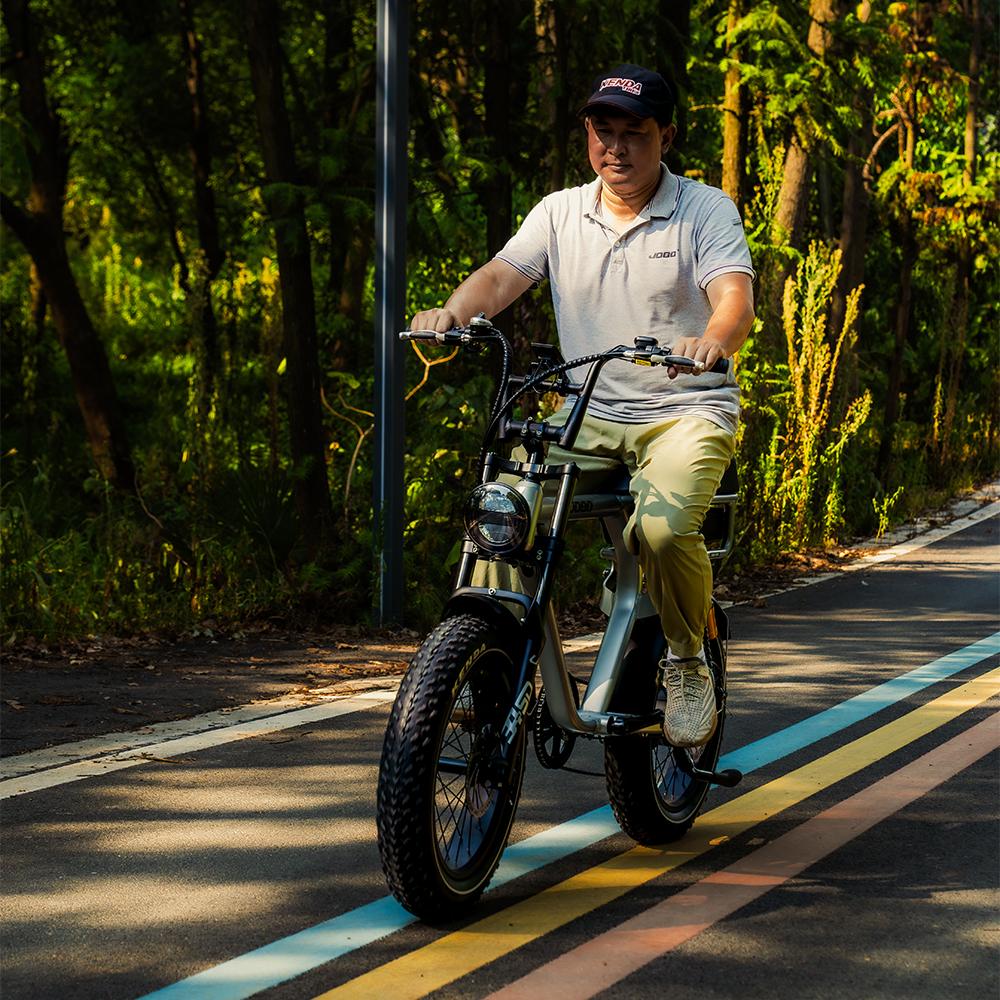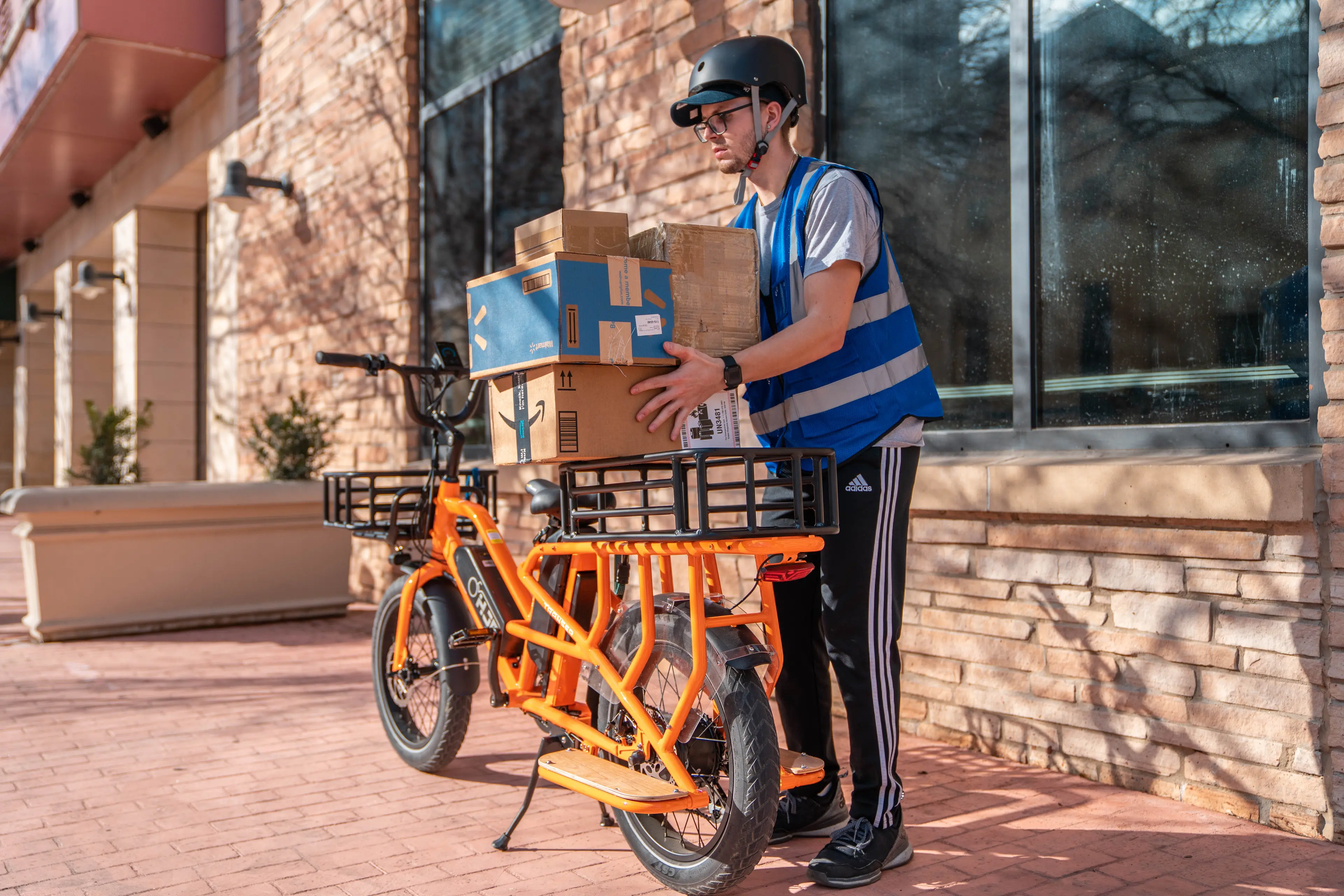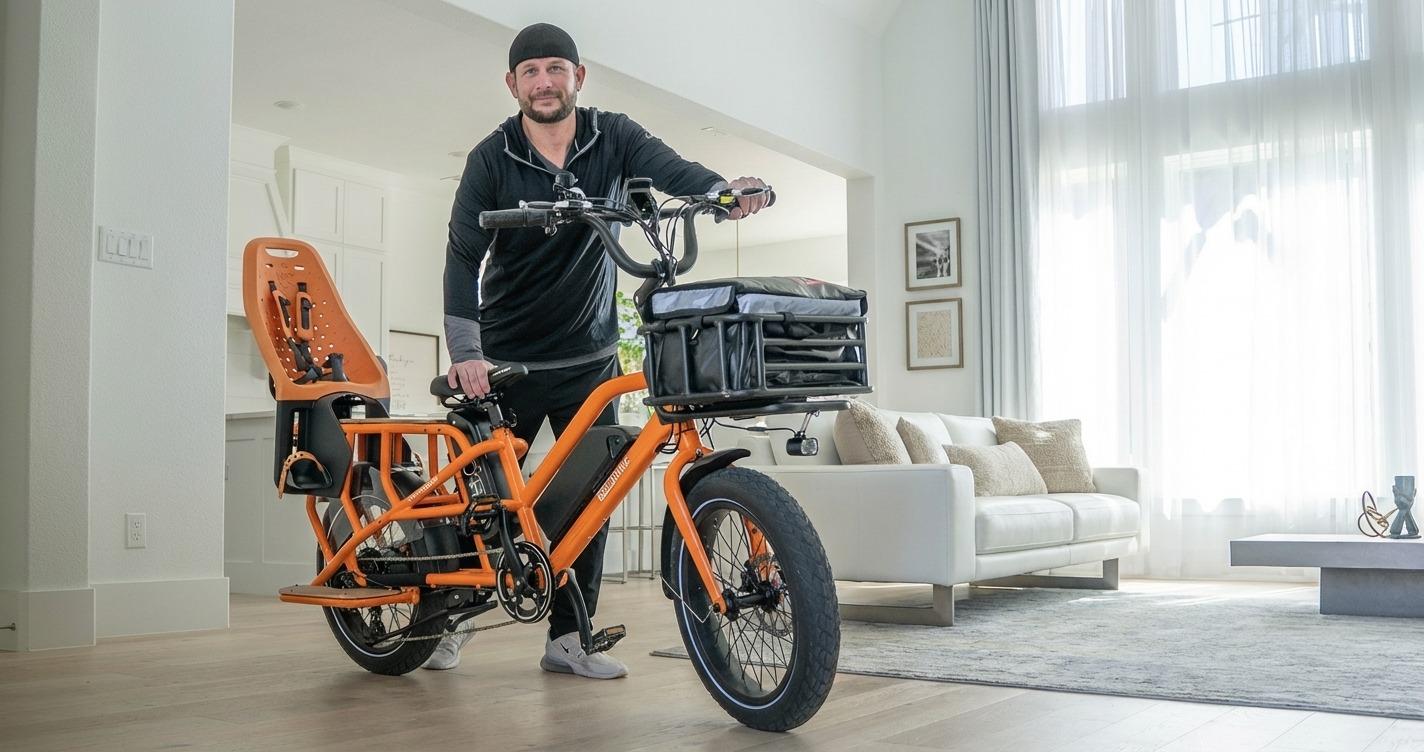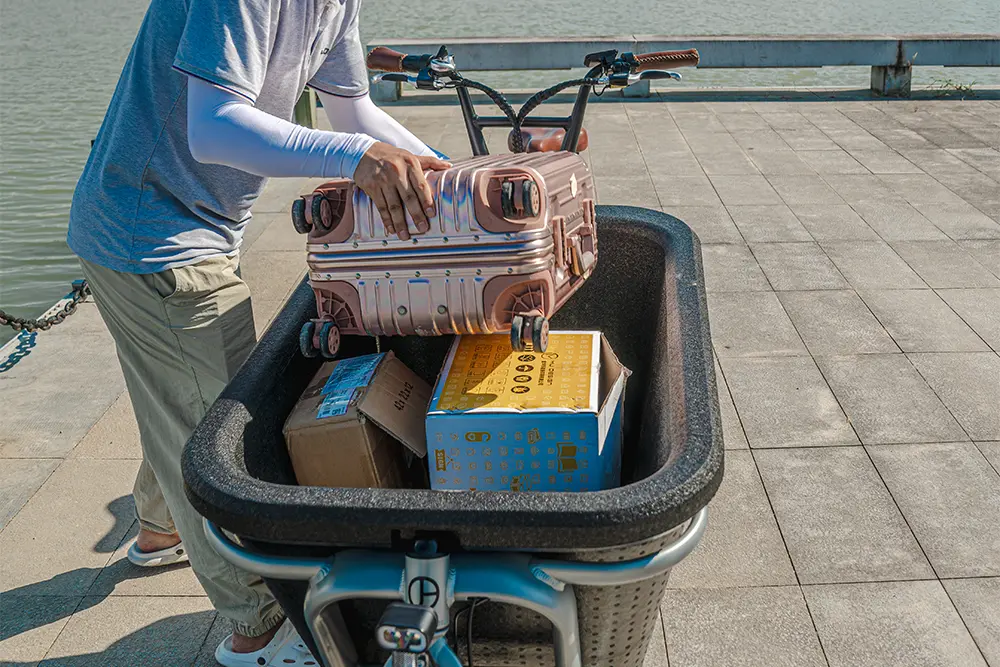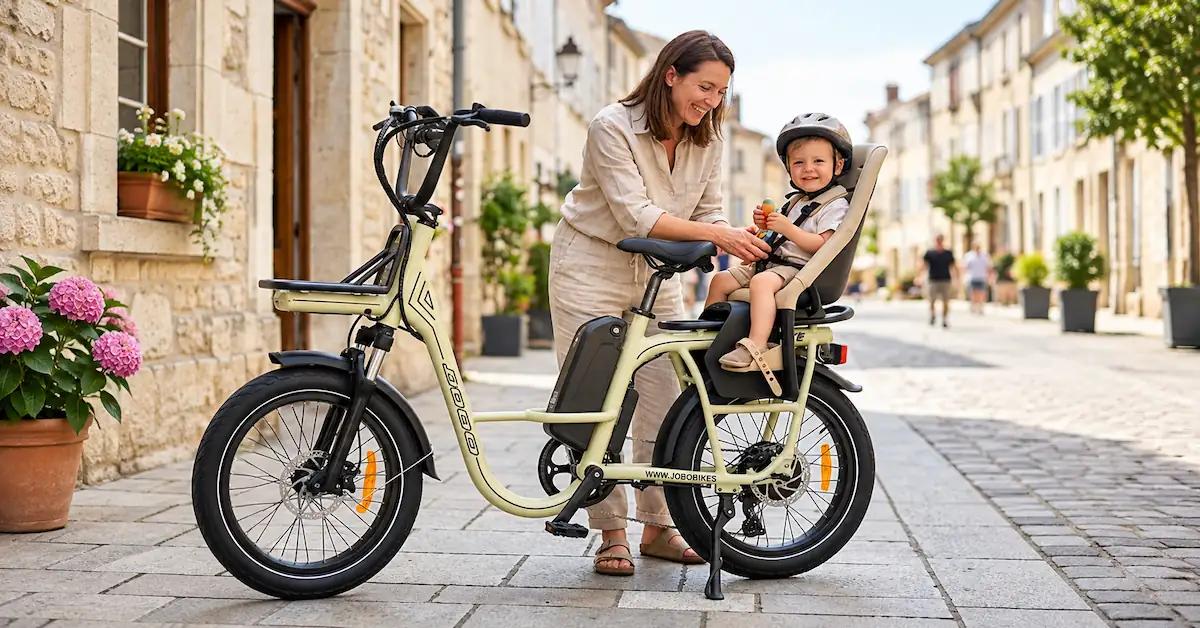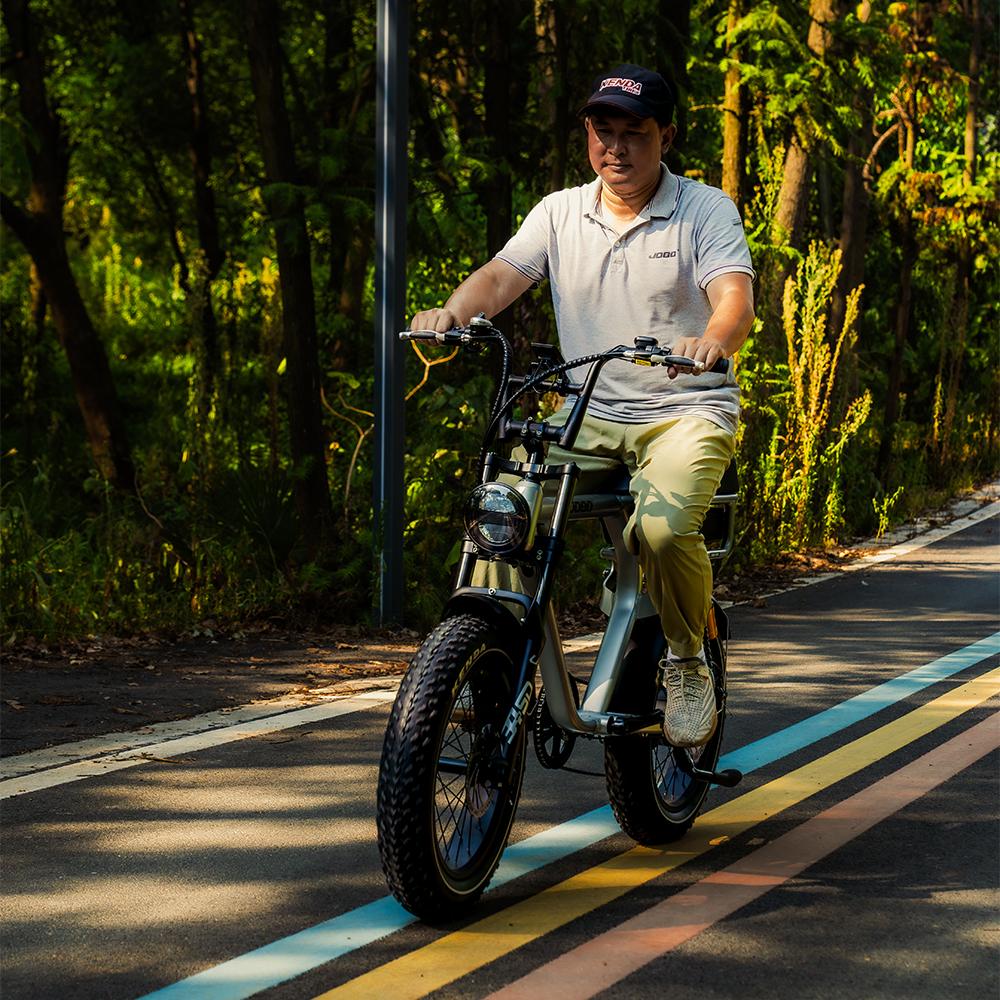
A 20-inch steel fat tire e-bike combines a compact wheel format, wide tires, and a reinforced frame concept that may appeal to customers seeking everyday mobility and recreational riding on varied surfaces.
For electric bike distributors, however, attractive product features are only part of the purchasing decision.
The complete bicycle must deliver an appropriate balance of ride comfort, frame durability, battery performance, maintenance requirements, and market-specific compliance.
These requirements become particularly important when a product includes front and rear suspension. Additional suspension components introduce more mechanical interfaces, which must be evaluated for correct assembly, durability, adjustment, and long-term servicing.
The JOBO JB-TDN96ZF provides a useful example of this product category.
Its published reference configuration includes a 500W rear motor, 48V 15Ah lithium battery, steel frame with rear suspension, suspension fork, 20×4.0-inch tires, Shimano 7-speed drivetrain, front and rear disc brakes, and a 5/9 PAS LCD display.
JOBO also describes an optional dual-battery arrangement and OEM customization options.
This guide explains how brands, importers, and wholesale distributors can evaluate the JB-TDN96ZF, identify relevant product specifications, assess mechanical and electrical risks, and develop a more dependable purchasing program.
Quick Answer: What Should Buyers Check Before Ordering a 20-Inch Steel Fat Tire E-Bike?
Buyers should evaluate a 20-inch steel fat tire e-bike by checking frame and suspension construction, 20×4.0-inch tire specifications, battery capacity, braking performance, rider weight limits, and model-specific quality-control records.
For the JOBO JB-TDN96ZF, confirm the 500W rear-motor configuration, standard 48V 15Ah battery, optional dual-battery system, and intended riding environments.
A representative sample should be inspected and tested before wholesale production. The final approved bill of materials (BOM) should also define the suspension components, tire model, motor configuration, and after-sales parts.
Explore the JOBO JB-TDN96ZF 20-Inch Steel Fat Tire E-Bike.
1. Who Should Consider the JB-TDN96ZF for Wholesale Distribution?
The JB-TDN96ZF is positioned for riders who value wider tires, a comfortable riding posture, and suspension assistance during everyday journeys.
Its potential retail appeal extends beyond a single application.
However, distributors should avoid describing it as suitable for every off-road environment.
Potential customer segments
| Customer segment | Typical application | Retail purchasing priority |
|---|---|---|
| Urban recreational riders | Leisure rides and local travel | Comfort and ease of operation |
| Weekend explorers | Approved gravel and park routes | Tire suitability and suspension |
| Suburban commuters | Daily travel on variable pavement | Reliability and serviceability |
| Outdoor lifestyle retailers | Recreational product collections | Differentiated product positioning |
| Electric bike rental operators | Controlled leisure routes | Maintenance and component consistency |
| Private-label brands | OEM fat tire e-bike product lines | Branding, specifications, and quality control |
The model may be suitable for a product line targeting recreational mobility rather than high-performance mountain biking.
For technical trails, jumps, aggressive downhill use, or unusually demanding operating conditions, buyers should request specific intended-use approval and validation.
A wide tire and dual-suspension system do not automatically make an electric bicycle suitable for every off-road activity.
The manufacturer should clearly define the intended riding conditions for each production configuration.
2. JB-TDN96ZF Technical Specifications: What Is Included?
A reliable wholesale purchasing decision begins with a clear technical specification.
The following details are based on JOBO's published JB-TDN96ZF reference configuration.
JB-TDN96ZF specification overview
| Component | Published specification | Buyer verification |
|---|---|---|
| Product model | JB-TDN96ZF | Latest production revision |
| Motor | 500W rear motor | Rated output and manufacturer |
| Battery | 48V 15Ah lithium | Cell specification, BMS, and charger |
| Battery option | Optional dual-battery configuration | Capacity, mounting, and electrical integration |
| Display | 5/9 PAS LCD | Assistance settings and display model |
| Maximum speed | 25 km/h | Destination-market configuration |
| Advertised range | 80 km | Battery arrangement and test conditions |
| Frame | 20-inch steel frame | Frame dimensions, weight, and structural tests |
| Rear suspension | Rear shock arrangement | Shock model, geometry, and service parts |
| Front fork | Steel suspension fork | Fork specification and test information |
| Tires | 20×4.0 inches | Load rating, tread, and inflation requirements |
| Drivetrain | Shimano 7-speed | Exact component models |
| Brakes | Front and rear disc brakes | Brake type, component models, and testing |
| Throttle | Thumb throttle | Market-specific eligibility |
| Lighting | Front and rear LEDs | Performance and applicable requirements |
| Rims | Aluminum alloy double-wall rims | Rim specification and compatibility |
This table reflects the published reference configuration. It does not establish independently measured performance or confirm that optional equipment is included with every bicycle.
What remains to be confirmed?
Important purchasing details not established by the supplied information include complete bicycle weight, maximum permissible total mass, suspension travel, rear shock specifications, exact brake type, and the test conditions behind the advertised 80 km range.
Buyers should request these details before approving a product listing or committing to a bulk order.
3. Steel Frame Versus Aluminum Frame: Which Is Better for This E-Bike Category?
Steel and aluminum are both established bicycle frame materials.
Neither material automatically produces a safer or more durable electric bicycle.
Actual performance depends on frame geometry, tube dimensions, welding, manufacturing controls, fatigue validation, and the intended operating loads.
Material comparison for wholesale buyers
| Evaluation factor | Steel frame | Aluminum alloy frame |
|---|---|---|
| Density | Higher material density | Lower material density |
| Structural design | Depends on selected steel and tube geometry | Depends on alloy, geometry, and construction |
| Corrosion protection | Requires appropriate coating and protection | Also requires suitable surface treatment |
| Repair considerations | Depend on the specific frame and approved repair procedures | Depend on alloy, treatment, and approved procedures |
| Complete-bike weight | Requires actual measurement | Requires actual measurement |
| Manufacturing QC | Welds, dimensions, coatings, fatigue | Welds, dimensions, treatment, fatigue |
Why does the JB-TDN96ZF use a steel frame?
The product uses a steel-frame architecture with rear suspension.
This provides a structural platform for its suspension design, but the published material does not establish a specific frame weight or comparative durability advantage.
For distributors, the important questions are whether the frame meets the intended strength requirements, whether the welded joints are consistent, and whether the coating is appropriate for the sales environment.
What should buyers request?
Ask for frame material identification, production drawings, key dimensional tolerances, welding inspection requirements, coating specifications, and relevant structural test reports.
A steel frame may also require careful attention to exposed fasteners, coating damage, and moisture-prone interfaces during long-term service.
The best sourcing decision should rely on validated engineering—not generalized claims that one material is always stronger.
4. How Does Dual Suspension Affect Riding Comfort?
The JB-TDN96ZF includes a suspension fork and a rear suspension arrangement.
This distinguishes it from a rigid-frame fat tire e-bike or a front-suspension-only model.
The purpose of suspension is to allow controlled movement that helps the wheel assembly respond to surface irregularities.
However, actual comfort and control depend on suspension design, spring characteristics, damping, geometry, rider weight, and adjustment.
Front suspension considerations
The front fork responds to forces transmitted through the front wheel.
Buyers should verify its construction, travel, compatible tire size, adjustment requirements, and approved operating conditions.
Rear suspension considerations
The rear suspension introduces additional components and mechanical interfaces.
These may include a shock absorber, mounting hardware, pivots, bushings, and other parts depending on the specific design.
For wholesalers, each additional component has implications for servicing and replacement-parts availability.
Suspension comparison
| Configuration | Main characteristics | Procurement consideration |
|---|---|---|
| Rigid frame and fork | No suspension movement | Tire characteristics and rider comfort |
| Front suspension only | Front wheel suspension | Fork durability and maintenance |
| Front and rear suspension | Suspension at both ends | Shock setup, pivots, frame testing, and service parts |
A dual-suspension design may offer comfort benefits on suitable uneven routes, but it can also increase weight, maintenance complexity, and production cost.
For the JB-TDN96ZF, buyers should request the exact suspension specification and test representative bicycles under intended rider conditions.
5. What Can 20×4.0-Inch Fat Tires Actually Deliver?
The JB-TDN96ZF uses 20×4.0-inch tires in its published standard build.
This relatively wide tire format creates a distinct riding and visual profile.
It may be appropriate for certain paved, firm gravel, and recreational surfaces when the bicycle and tires are approved for those conditions.
However, tire width alone does not determine traction or terrain suitability.
Surface-based evaluation
| Riding surface | Main evaluation requirement |
|---|---|
| Urban pavement | Rolling performance and handling |
| Rough paved paths | Tire pressure and suspension response |
| Firm gravel | Tread, grip, and braking |
| Packed dirt | Traction and rider control |
| Wet surfaces | Tire compound and braking behavior |
| Loose sand or mud | Specific terrain validation |
| Technical mountain trails | Manufacturer-approved intended use |
Why tire pressure matters
Tire pressure affects rolling behavior, deformation, comfort, and handling.
The correct pressure depends on the tire's approved range, rider and vehicle mass, and operating conditions.
Buyers should not promote unusually low tire pressure as a universal solution for soft terrain.
What should distributors confirm?
Request the tire manufacturer's model, approved load, inflation range, rim compatibility, and availability of equivalent replacement tires.
JOBO describes tire customization options involving size, tread, puncture protection, and reflective sidewalls.
These choices should be evaluated as complete wheel-and-tire configurations rather than isolated upgrades.
6. Can the 48V 15Ah Battery Deliver the Advertised 80 km Range?
The standard JB-TDN96ZF reference includes a nominal 48V 15Ah lithium battery.
Its nominal energy is:
48V × 15Ah = 720Wh
The product also lists an advertised driving distance of 80 km.
However, the published description does not establish the precise riding conditions or battery arrangement used to obtain that figure.
Why real-world range varies
Battery consumption changes with rider weight, assistance level, throttle use, gradients, wind, surface conditions, tire pressure, temperature, and battery condition.
An electric bicycle used frequently on rough paths may not achieve the same distance as one tested under less demanding conditions.
For wholesale evaluation, the appropriate method is to test representative routes and record actual energy consumption.
Single-battery versus optional dual-battery configuration
| Feature | Standard battery reference | Optional dual-battery concept |
|---|---|---|
| Battery | 48V 15Ah | Final pack quantity and capacity require confirmation |
| Nominal energy | Approximately 720Wh | Depends on approved pack specifications |
| Bicycle weight | Requires measurement | May increase with additional battery equipment |
| Charging | Approved standard charging setup | Confirm charger and electrical integration |
| Range | Route-dependent | Requires separate testing |
| Procurement priority | Basic product validation | Additional electrical and mechanical validation |
The optional dual-battery arrangement should not be assumed to double the vehicle's range.
Additional capacity must be evaluated alongside energy consumption, system losses, battery management, and operating conditions.
Why electrical safety documentation matters
The U.S. Consumer Product Safety Commission has emphasized the relevance of ANSI/CAN/UL 2849 to reducing risks associated with e-bike electrical systems.
Its official statement on micromobility electrical safety standards highlights the importance of appropriate electrical-system safety evaluation.
For B2B buyers, this supports requesting documentation covering the actual battery, charger, controller, and complete electrical configuration.
It does not establish that the JB-TDN96ZF is certified to UL 2849.
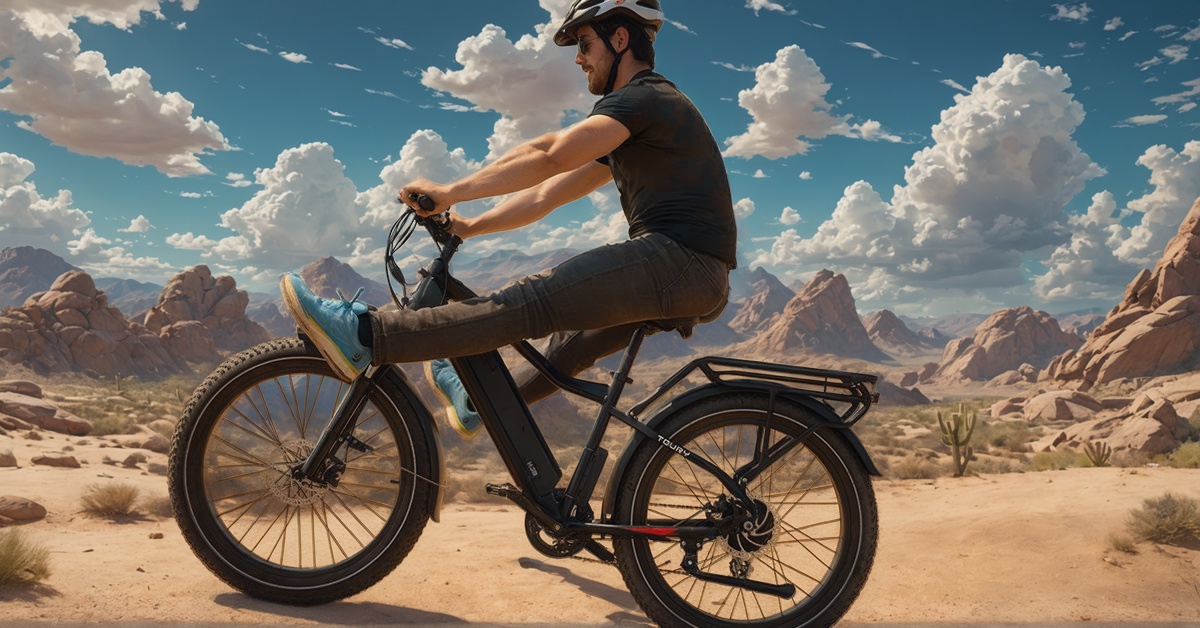
7. Does the 500W Motor Meet European and UK E-Bike Requirements?
Market suitability is one of the most important technical questions for international electric bike distributors.
The JB-TDN96ZF product lists a 500W rear motor, thumb throttle, and maximum speed of 25 km/h.
These details do not automatically establish the vehicle's legal classification in a particular country.
United Kingdom example
The UK government's EAPC standards and legal requirements specify that an electrically assisted pedal cycle must have a motor with a maximum continuous rated output not exceeding 250W and electrical assistance that cuts off at 15.5 mph.
The classification also involves requirements relating to the vehicle and how its electric assistance operates.
The published 500W figure must therefore be clarified: buyers need to know whether it describes continuous rated output or another power measurement.
If the motor's continuous rating exceeds the applicable limit, the vehicle cannot simply be marketed as a standard UK EAPC.
Questions for market-specific sourcing
Before importing or listing the bicycle, confirm the continuous rated motor output, assistance cut-off, throttle behavior, electrical configuration, labeling, and applicable documentation.
JOBO describes motor and drivetrain customization options for different markets.
Any proposed compliant version should be separately evaluated and documented.
Do not assume that limiting the displayed maximum speed automatically makes an otherwise noncompliant motor configuration legal.
8. How Can Distributors Build a Differentiated OEM Product Range?
A useful private-label program should provide clear differences between available products.
The JB-TDN96ZF can serve as a reference for discussing several purchasing concepts.
The following comparison represents possible OEM planning directions, not confirmed factory-stock packages.
OEM configuration planning
| Purchasing concept | Recreational Retail | Extended-Range Concept | Market-Specific OEM |
|---|---|---|---|
| Starting platform | JB-TDN96ZF | JB-TDN96ZF | JB-TDN96ZF |
| Frame | Reference steel design | Approved steel design | Engineering review if modified |
| Suspension | Reference dual suspension | Reference or validated alternative | Application-specific validation |
| Tires | 20×4.0 inches | Approved tire configuration | Target-market specification |
| Battery | Standard 48V 15Ah | Evaluate optional dual battery | Market-approved electrical system |
| Motor | Reference 500W | Approved configuration | Required legal rating |
| Branding | Retail color and logo | Distinct appearance | Private-label identity |
| Main priority | Showroom appeal | Battery suitability | Market eligibility and documentation |
OEM customization priorities
JOBO describes customization opportunities involving frame geometry, motor selection, battery systems, tires, suspension components, display options, lighting, and branding.
However, not all modifications have the same engineering implications.
Changing graphics is different from redesigning suspension mounting points or installing a second battery.
Buyers should require appropriate review, representative sample approval, and updated documentation for safety-relevant changes.
Explore JOBO OEM & ODM Electric Bike Manufacturing.
9. What Quality-Control Tests Matter for a Steel Dual-Suspension E-Bike?
Quality control is an important differentiator when selecting an OEM electric bike manufacturer.
For a steel-frame dual-suspension model, the inspection program should include the frame, suspension, braking system, electrical components, wheels, and complete bicycle.
JOBO describes testing capabilities covering frame fatigue, brake-mount fatigue, complete-bike performance, battery evaluation, and production inspections.
Review JOBO's Quality-Control Laboratory.
Frame and fork testing
The International Organization for Standardization publishes ISO 4210-6:2023 — Frame and Fork Test Methods.
This standard specifies frame and fork test methods used in the ISO 4210 bicycle safety framework.
For a dual-suspension product, frame and fork evaluation is particularly relevant because the bicycle contains multiple structural and load-transmitting components.
The applicability of a particular standard depends on the product category and intended use.
Mentioning ISO 4210-6 does not establish that the JB-TDN96ZF has passed its requirements.
Recommended inspection checklist
| Inspection area | What buyers should verify |
|---|---|
| Steel frame | Weld quality, dimensions, coating, structural integrity |
| Rear suspension | Shock mounting, pivots, fasteners, movement |
| Front suspension | Fork condition, installation, compatibility |
| Tires and rims | Correct models, fit, pressure, and assembly |
| Motor | Approved model, wiring, and functional behavior |
| Battery | Retention, connectors, charger compatibility |
| Brakes | Component specification and adjustment |
| Drivetrain | Gear shifting and chain condition |
| Display and controls | PAS settings, throttle behavior, electrical functions |
| Lighting | Front and rear operation |
| Final assembly | Match to approved sample and BOM |
| Packaging | Protection, accessories, manuals, labeling |
Why sample approval is critical
A showroom sample may demonstrate the product's appearance and handling, but buyers still need to establish that production units will use the same approved configuration.
The manufacturer and distributor should agree on component specifications, permitted substitutions, inspection procedures, and relevant acceptance criteria.
These records help reduce uncertainty across repeated wholesale orders.
10. How Should B2B Buyers Evaluate Wholesale Costs?
The factory unit price is only one part of the purchasing decision.
A dual-suspension fat tire e-bike may require different service parts and preparation procedures from a simpler commuter model.
For retailers, these differences should be included in the product's commercial planning.
Wholesale cost checklist
| Cost category | Purchasing consideration |
|---|---|
| Bicycle price | Exact approved components |
| Battery | Standard pack and optional configurations |
| Suspension parts | Service and replacement availability |
| Tires | Replacement sizes and supply |
| Brakes | Routine maintenance and parts |
| OEM branding | Painting, graphics, packaging |
| Sample development | Prototype and testing costs |
| Freight | Carton size, weight, and shipping terms |
| Retail preparation | Assembly, inspection, adjustment |
| Warranty | Coverage and claim procedures |
| Repeat orders | Component consistency and supply terms |
Why after-sales parts influence margins
A retailer may lose valuable service time if compatible suspension components, electrical parts, or tires are difficult to obtain.
For a private-label program, confirm whether replacement shocks, pivot hardware, brake parts, displays, chargers, and batteries can be ordered separately.
Component consistency can simplify repairs and help protect the customer experience.
The most commercially attractive bicycle is not always the lowest-priced one. It is the model that provides a workable combination of retail positioning, serviceability, and total cost.
11. Prepare a JB-TDN96ZF Wholesale RFQ
A detailed request for quotation helps the manufacturer identify the most appropriate configuration.
OEM purchasing checklist
| RFQ item | Required information |
|---|---|
| Destination market | Country and electric bike classification |
| Buyer type | Retailer, importer, private-label brand, rental operator |
| Product model | JB-TDN96ZF |
| Intended riding | Urban, leisure, permitted gravel or recreational routes |
| Frame | Steel frame specification and rider fit |
| Suspension | Front fork and rear shock requirements |
| Tires | 20×4.0-inch specification and approved alternatives |
| Motor | Rated output and assistance configuration |
| Battery | Standard or optional dual-battery arrangement |
| Brakes | Exact components and service requirements |
| Display | PAS levels, controls, throttle requirements |
| Branding | Color, logo, packaging |
| Documentation | Applicable tests and market requirements |
| Purchase quantity | Sample, initial order, future forecast |
| Commercial terms | MOQ, quotation, lead time, Incoterms |
| After-sales | Warranty and replacement parts |
Sample inquiry to JOBO
We are an electric bicycle importer, retailer, or private-label brand serving [target market].
We are interested in the JOBO JB-TDN96ZF 20-inch steel fat tire electric bike for [recreational riding / urban mobility / rental operations].
Please provide the latest technical specification, including the steel frame details, complete bicycle weight, maximum permissible total mass, front fork and rear shock models, 20×4.0-inch tire specifications, 500W rear motor rating, and 48V 15Ah battery configuration.
We would also like to confirm the optional dual-battery system, advertised range test conditions, available market-specific motor configurations, applicable testing documentation, sample availability, OEM branding options, MOQ, pricing, production schedule, and replacement-parts support.
Our expected initial order is [quantity] units, with future orders subject to sample approval and market demand.
Request JB-TDN96ZF Specifications, Samples and Wholesale Pricing.
12. Frequently Asked Questions
1. What is a 20-inch steel fat tire e-bike?
It is an electric bicycle using a steel-frame design and relatively wide tires fitted to 20-inch wheels. Actual handling, comfort, strength, and terrain suitability depend on the complete bicycle configuration.
2. What is the JOBO JB-TDN96ZF designed for?
JOBO positions the JB-TDN96ZF for urban riding, recreational cruising, gravel paths, and light off-road applications. Buyers should confirm its approved intended use before marketing it for more demanding conditions.
3. Does the JB-TDN96ZF have front and rear suspension?
Yes. The published product configuration includes a front suspension fork and rear suspension. Buyers should request the exact components, travel information, and relevant testing records.
4. What motor does the JB-TDN96ZF use?
The published reference configuration includes a 500W rear motor. Its continuous rated output and suitability for the destination market must be confirmed.
5. What battery comes with the JB-TDN96ZF?
The standard product information lists a 48V 15Ah lithium battery. JOBO also describes optional dual-battery configurations, which require separate confirmation.
6. Can the JB-TDN96ZF travel 80 km on one charge?
JOBO advertises an 80 km driving distance. Actual results depend on the battery arrangement, rider weight, assistance settings, terrain, tire pressure, and other riding conditions.
7. Are 20×4.0-inch fat tires suitable for gravel?
They may be suitable for certain gravel routes, depending on tread, pressure, surface conditions, and the bicycle's intended-use limits. Tire width alone does not guarantee traction.
8. Is a steel frame better than an aluminum frame?
Neither material is universally better. Frame performance depends on engineering, construction, testing, weight requirements, corrosion protection, and the intended application.
9. Can JOBO customize the JB-TDN96ZF for private-label brands?
JOBO offers OEM/ODM services involving branding, component selection, and product development. Specific options, quantities, testing requirements, and commercial terms must be confirmed.
10. How can I order JB-TDN96ZF electric bikes wholesale?
Contact JOBO with your destination market, target customer group, desired configuration, sample requirements, and expected quantity. Request the current BOM and technical documentation before approving a bulk purchase.
Conclusion
Selecting a 20-inch steel fat tire e-bike for wholesale distribution requires a balanced evaluation of frame construction, suspension performance, tire compatibility, electrical configuration, and after-sales support.
The JOBO JB-TDN96ZF provides a relevant platform for brands and distributors seeking a steel-frame recreational electric bicycle with front and rear suspension, 20×4.0-inch tires, a 500W rear motor reference, and a 48V 15Ah battery.
However, buyers should confirm complete-bike weight, rider load limits, suspension specifications, battery options, real-world range, and destination-market eligibility before finalizing a purchasing program.
A reliable OEM project should also include production-representative sample testing, a signed bill of materials, documented quality controls, and replacement-parts arrangements.
For importers and private-label brands, these steps can help turn a differentiated electric bicycle design into a more dependable and commercially manageable wholesale product range.
Looking for a steel-frame dual-suspension fat tire e-bike for your next B2B project?
Contact JOBO for JB-TDN96ZF OEM Customization, Samples and Wholesale Pricing.
Share your target market, expected purchase quantity, preferred components, and product positioning to begin evaluating a suitable configuration.