Electric bicycle distributors often face a difficult product-planning decision: should they introduce separate models for cargo transportation, everyday commuting, and passenger-oriented utility riding, or develop several configurations around one versatile platform?
The second approach can simplify sourcing, production coordination, and replacement-parts management. However, using a shared frame does not mean every configuration automatically has the same load ratings, safety approvals, or market eligibility.
For brands working with a utility cargo e-bike manufacturer, the commercial opportunity lies in balancing platform commonality with application-specific engineering.
The JOBO JB-TDN50Z provides a relevant starting point. This utility electric bike platform combines a 20-inch aluminum alloy frame, 48V electrical architecture, torque-sensor assistance, and a rear carrying structure designed for different accessory arrangements.
JOBO describes single- and dual-battery configurations, OEM branding, and customizable equipment for utility applications.
This guide explains how distributors, retailers, and private-label brands can evaluate the JB-TDN50Z, develop distinct product configurations, verify the relevant technical requirements, and build a repeatable wholesale supply program.
Quick Answer: Can One Utility Cargo E-Bike Platform Support Three Retail Product Lines?
Yes. A utility cargo e-bike manufacturer may use one underlying platform to develop separate cargo utility, urban commuter, and passenger-oriented configurations.
However, each version needs an approved component specification, defined load limits, appropriate accessories, and relevant market documentation.
The JOBO JB-TDN50Z is a potential platform for this strategy because it supports different rear equipment and battery configurations.
Buyers should not assume that a cargo rack automatically permits passenger transport, that every battery option delivers the same range, or that one certification covers every variant.
1. Why Develop Multiple E-Bike SKUs from One Platform?
A distributor selling electric bicycles to several customer groups may need products with different functions but overlapping technical requirements.
For example, a property maintenance customer may want a practical bicycle for carrying tools. An urban retailer may prefer a simpler commuter configuration. Another distributor may investigate a passenger-oriented model for a market where that use can be appropriately validated.
Creating an entirely different bicycle for each application can increase development and procurement complexity.
A shared platform may reduce some of that complexity.
Potential advantages for OEM brands
| Business consideration | Potential shared-platform advantage |
|---|---|
| Frame sourcing | Fewer independent frame designs to manage |
| Electrical components | Opportunities to standardize compatible parts |
| Replacement parts | Reduced variation across supported models |
| Staff training | Familiarity with common service procedures |
| Production planning | More consistent manufacturing references |
| Inventory control | Shared components across approved variants |
| Brand identity | Consistent visual language across the range |
These benefits are possible, not automatic.
If one configuration requires major frame modifications, a different electrical system, or additional structural testing, the savings may be smaller than expected.
The objective is to share components where engineering permits while maintaining accurate documentation for each finished product.
2. JOBO JB-TDN50Z Technical Specifications: What Must Be Verified?
The JB-TDN50Z is marketed as a utility cargo electric bicycle suitable for OEM and private-label development.
Its published information provides a useful reference, but some specifications differ between the product graphic and other JOBO materials.
JB-TDN50Z specification review
| Component | Published information | Buyer verification |
|---|---|---|
| Model | JB-TDN50Z | Current production revision |
| Motor | 48V 500W; dual-motor wording also appears | Motor quantity, model and rated output |
| Battery | 48V 15Ah; single/dual options described | Number of packs and total capacity |
| Display | LCD | Display model and available functions |
| Advertised maximum speed | 38 km/h | Actual assistance cut-off and legal category |
| Advertised distance | 90 km | Battery configuration and test conditions |
| Frame | 6061 aluminum alloy | Geometry and structural ratings |
| Wheel size | 20-inch | Final wheel specification |
| Drivetrain | Shimano 7-speed | Exact components |
| Brakes | Mechanical in graphic; TEKTRO hydraulic in other descriptions | Final brake system |
| Fork | Suspension | Model and intended-use rating |
| Tires | 20×3.0 inches | Manufacturer, load rating and clearance |
| Assistance | Torque sensor described | Sensor model and controller calibration |
| Rear equipment | Rack and passenger footboard options | Accessory-specific approval |
The table summarizes published references, not an independently verified production build. The final signed bill of materials must resolve specification differences.
Why these differences matter
A single motor and a dual-motor arrangement are not equivalent technical products.
Likewise, mechanical and hydraulic braking systems may require different parts, service procedures, and validation.
If a buyer orders a private-label model based only on a promotional specification graphic, they risk receiving a configuration that differs from their sales materials.
The solution is straightforward: establish one approved technical specification for each SKU before production.
Explore JOBO's Electric Bike Product Range.
3. Three Product Strategies for the JB-TDN50Z
The JB-TDN50Z can be evaluated as a common starting platform for three different commercial concepts.
These are proposed OEM product-line strategies, not confirmation that all versions are already available or approved for sale.
Configuration comparison
| Product strategy | Utility Cargo SKU | Urban Commuter SKU | Passenger-Oriented SKU |
|---|---|---|---|
| Primary customer | Businesses and utility riders | Everyday city riders | Buyers seeking approved passenger use |
| Rear equipment | Approved cargo rack or box | Standard utility rack | Validated seating and protection system |
| Battery | Match carrying workload | Match commuter distance | Match approved loaded operation |
| Brakes | Verify cargo-loaded performance | Verify commuter requirements | Verify passenger-loaded performance |
| Rider ergonomics | Frequent stops and loading | Daily comfort and fit | Rider control with passenger arrangement |
| Main sales value | Practical goods transportation | Versatile urban mobility | Specifically approved passenger capability |
| Main validation | Cargo loads and mounts | Riding performance and market rules | Passenger safety and applicable standards |
A. Utility Cargo Configuration
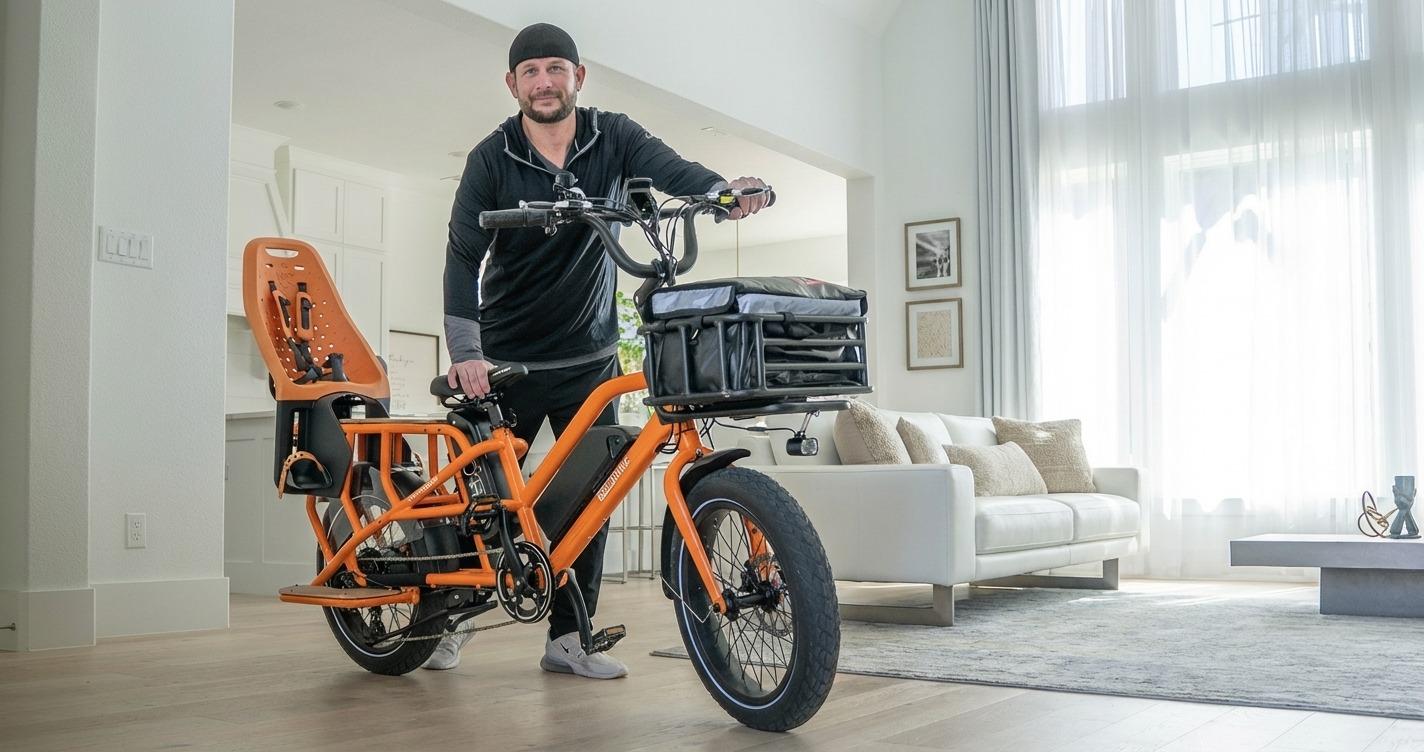
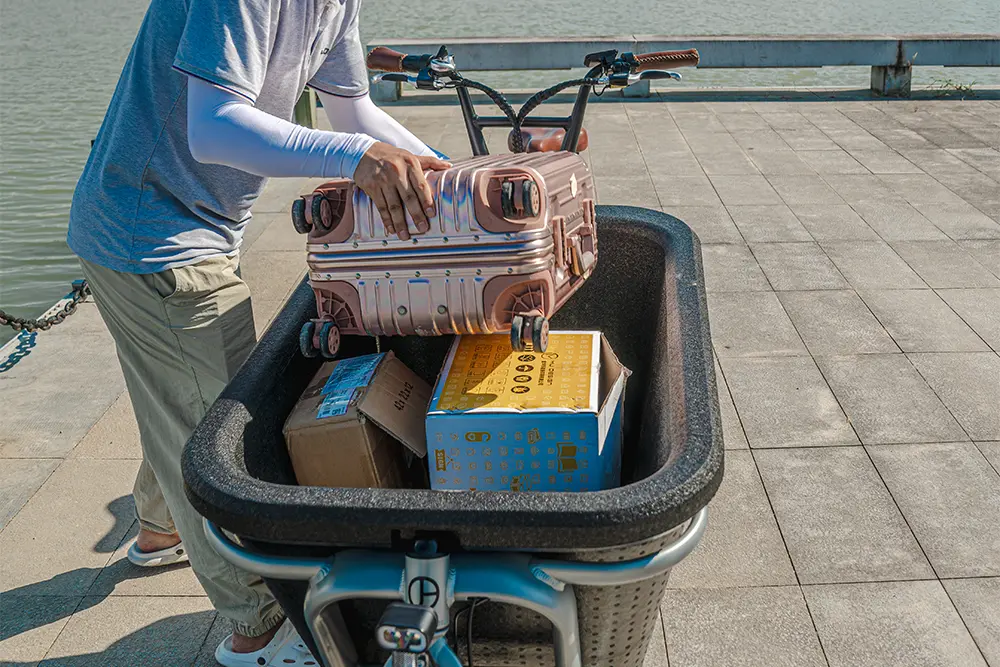
This version targets customers who transport tools, shopping, maintenance equipment, or approved delivery containers.
The buyer's main questions concern rack capacity, accessory attachment, cargo dimensions, battery endurance, and loaded handling.
Potential sales channels include equipment distributors, commercial mobility businesses, and retailers serving utility riders.
B. Urban Commuter Configuration
A commuter-oriented version may use the same approved platform with a simpler equipment package.
Its purchasing priorities may include comfortable rider fit, practical range, everyday serviceability, and attractive retail positioning.
This configuration should not claim passenger capacity merely because it shares a frame with a proposed passenger version.
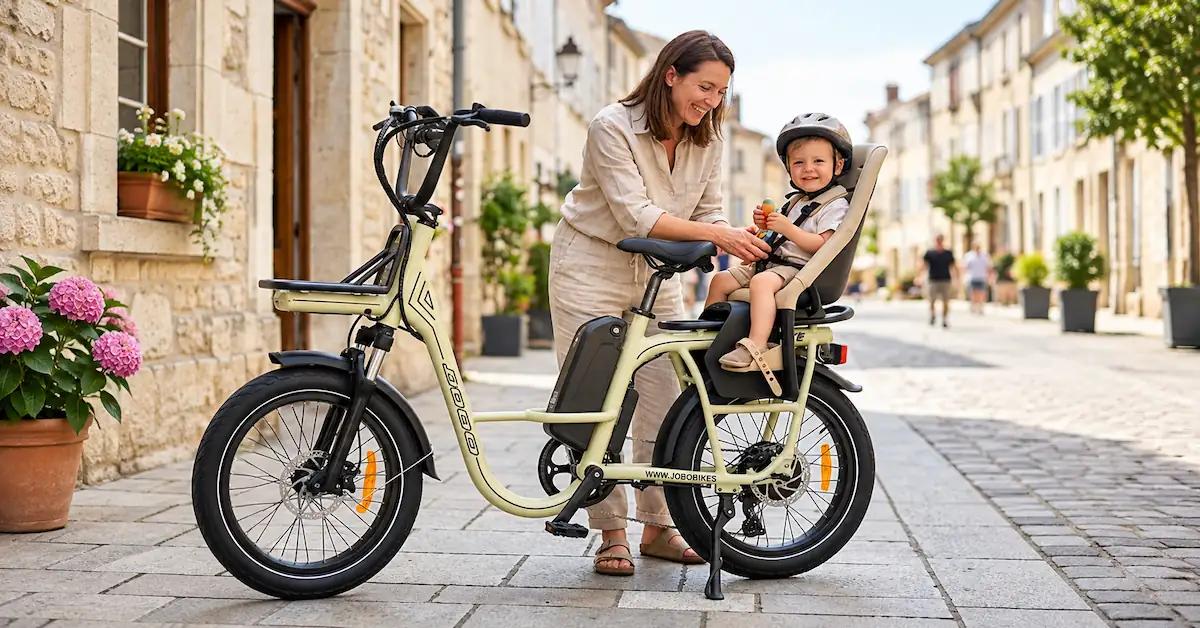
C. Passenger-Oriented Configuration
A passenger-oriented version requires the most careful validation.
The rear structure, seating arrangement, restraints or protective features where applicable, and permissible loads must be approved for the intended use.
A footboard or extended rack is not proof that the bicycle is suitable for carrying another person.
Recommended strategy: Develop the cargo and commuter specifications first, then pursue passenger positioning only when the required engineering and documentation are available.
4. How Should Cargo and Passenger Load Ratings Be Defined?
One of the biggest risks in multi-purpose cargo e-bike sourcing is treating different types of loads as interchangeable.
A rack approved for carrying shopping bags is not necessarily approved for carrying a passenger.
Similarly, a bicycle's maximum permissible total mass is not the same as the maximum load permitted on its rear rack.
Load ratings buyers should request
| Load rating | Purpose |
|---|---|
| Maximum permissible total mass | Overall loading limit for the complete bicycle system |
| Maximum rider mass | Approved rider weight |
| Rear cargo rack rating | Permitted rear goods load |
| Front accessory rating | Permitted front load, if applicable |
| Passenger rating | Approved passenger arrangement, if any |
| Accessory-specific limit | Load allowance for a particular seat, rack or carrier |
The final load calculation must account for the bicycle, battery, rider, cargo, passengers where approved, and installed accessories according to the manufacturer's definitions.
Why a footboard does not establish passenger approval
The JB-TDN50Z product description identifies a rear structure with a passenger footboard.
A footboard may form part of a passenger arrangement, but it cannot independently establish whether the complete bicycle is approved for transporting a second rider.
For European passenger-transport concepts, the Swedish Institute for Standards publishes SS-EN 17860-6:2025 — Carrier Cycles, Part 6: Passenger Transport.
Its scope addresses passenger transportation on defined carrier cycles. It specifically distinguishes passenger transport from children carried in child seats tested under EN 14344:2022.
For importers, this distinction helps determine which technical documentation should be requested.
The cited standard does not establish that the JB-TDN50Z has been tested or certified to it.
5. Single Battery Versus Dual Battery: Build Around Actual Usage
The product materials list a 48V 15Ah battery and describe dual-battery configurations.
Other JOBO technical references indicate that the TDN50 platform can be developed with single- or twin-pack arrangements.
Buyers should therefore distinguish the base electrical architecture from the battery configuration included in their quotation.
Understanding battery capacity
One nominal 48V 15Ah battery provides approximately:
48V × 15Ah = 720Wh
If the approved system uses two such battery packs, their combined nominal energy would be:
720Wh × 2 = 1,440Wh
These figures do not establish the usable energy or guaranteed range of a particular bicycle.
Battery strategy by application
| Purchasing requirement | Single battery | Approved dual battery |
|---|---|---|
| Shorter daily routes | May be sufficient | May add unnecessary cost and weight |
| Extended utility journeys | Requires range validation | May provide additional nominal energy |
| Electrical integration | Simpler configuration | Requires approved dual-pack management |
| Complete-bike weight | Generally lower | Additional battery weight |
| Spare-parts planning | One defined battery package | More complex pack management |
| Charging | Approved charging arrangement | Confirm procedures for both packs |
Is the advertised 90 km range realistic?
JOBO publishes a 90 km driving-distance figure for the JB-TDN50Z.
However, buyers should confirm the battery setup and operating conditions used to obtain it.
Actual range depends on rider and cargo weight, gradients, tire pressure, assistance settings, stop frequency, weather, and battery condition.
A distributor should not advertise 90 km as a guaranteed loaded range without supporting measurements.
For a commercial or utility configuration, representative route testing provides more useful purchasing information than an isolated maximum-distance claim.
6. Why Motor, Sensor and Brake Configuration Must Be Locked Together
The JB-TDN50Z's 48V electrical system and torque-sensor assistance provide a starting point for technical selection.
However, the complete powertrain configuration determines how the bicycle behaves.
Motor configuration
Because the published material includes both a 500W motor description and dual-motor terminology, the buyer should request a motor layout drawing and exact component model.
If a dual-motor version is proposed, it must be treated as a distinct engineering configuration unless the manufacturer establishes otherwise.
Torque-sensor assistance
A torque sensor responds to measured pedaling force according to the controller's programmed assistance characteristics.
This may help create more proportional assistance behavior when the bicycle moves between different approved carrying conditions.
Buyers should test low-speed starts, assistance transitions, climbing, and rider control using the intended configuration.
Mechanical versus hydraulic brakes
The product graphic lists mechanical disc brakes, while other JOBO materials describe TEKTRO hydraulic brakes.
The selected brake system must be defined in the final BOM.
For each version, request the exact components, service procedures, replacement-parts information, and relevant loaded braking verification.
The strongest OEM specification is not a collection of attractive component descriptions. It is a complete system whose parts have been selected and validated together.

7. Which JB-TDN50Z Configurations Can Be Sold in the UK or Europe?
Different destination markets can require different motor outputs, assistance limits, labeling, and product documentation.
The supplied JB-TDN50Z product information lists a 500W motor and a maximum speed of 38 km/h.
These figures should not be assumed to qualify automatically for all European electrically assisted bicycle categories.
United Kingdom example
According to the UK Government's electric bike rules, an electrically assisted pedal cycle must have a maximum continuous rated motor output of no more than 250W and must stop providing motor assistance above 15.5 mph.
A vehicle outside that classification may be subject to different motor-vehicle requirements.
What this means for OEM buyers
Before requesting a market-specific JB-TDN50Z configuration, distributors should confirm:
-
Continuous rated motor output.
-
Assistance cut-off speed.
-
Throttle functionality, if fitted.
-
Required marking and identification.
-
Relevant mechanical and electrical requirements.
-
Applicable conformity and technical documentation.
-
Whether the proposed cargo or passenger arrangement changes the assessment.
A market-specific motor or controller option should not be represented as compliant until the actual configuration has been reviewed.
A product advertised internationally is not automatically approved for every destination.
8. How Can OEM Brands Control Three SKUs Without Creating Three Supply Chains?
Platform standardization can offer commercial value when shared and unique parts are clearly separated.
The first step is establishing a common technical baseline.
Shared-platform BOM strategy
| Component group | Standardization opportunity | Configuration-specific control |
|---|---|---|
| Frame | Common approved frame architecture | Structural changes require review |
| Wheels and tires | Potential shared components | Validate load and application |
| Battery | Common compatible pack family | Single/dual integration must be approved |
| Motor/controller | Possible shared electrical platform | Market-specific output and settings |
| Brakes | Common approved component family | Loaded performance may require differences |
| Rear rack | Shared mounting architecture | Different cargo/passenger accessory approvals |
| Branding | Common paint and graphics process | Model-specific identification |
| Packaging | Similar manufacturing workflow | Distinct accessories and instructions |
Do not confuse platform sharing with identical finished products
If the cargo, commuter, and passenger versions use different approved components or operating limits, each should receive its own SKU, final BOM, instructions, and relevant records.
Retail pages should describe genuine configuration differences rather than publishing three nearly identical listings for the same bicycle.
This approach supports clearer customer expectations and more useful SEO content.
Establish an engineering change procedure
The supplier should notify the buyer before substituting safety-relevant components.
Changes to the frame, rear structure, motor, battery, controller, braking system, or passenger equipment may require additional review and sample approval.
For repeat orders, the signed specification should be the controlling document.
Explore JOBO OEM & ODM Electric Bike Manufacturing.
9. What Quality-Control Evidence Should Distributors Request?
A multi-configuration product program depends on consistent manufacturing.
If components change between batches without clear records, after-sales service becomes more complicated.
JOBO describes frame testing, complete-bike testing, battery evaluation, incoming inspection, and in-process quality-control activities.
These capabilities provide a useful starting point for supplier assessment.
Review JOBO's Quality-Control Laboratory.
Recommended inspection checkpoints
| Stage | Required verification |
|---|---|
| Incoming components | Match approved component specifications |
| Frame and rack assembly | Correct geometry, welds and mounting |
| Battery installation | Pack retention, connectors and wiring |
| Motor and sensor | Approved configuration and functional behavior |
| Braking | Correct components and setup |
| Cargo equipment | Approved attachments and load limits |
| Passenger equipment | Separate validation where applicable |
| Final assembly | Consistent with the signed BOM |
| Packaging | Correct manual, accessories and labels |
Why serial-number traceability matters
A product identifier should help the manufacturer and distributor determine which components and production records apply to a particular bicycle.
This becomes valuable during warranty claims, spare-parts ordering, and corrective-action investigations.
Buyers should also request the inspection and test records relevant to each version.
A factory's general quality-control capability does not establish that every proposed SKU has the same certification status.
10. What Can JOBO's China and Poland Operations Offer Distributors?
JOBO describes manufacturing activities in Jinhua, China, and assembly operations in Poland serving European programs.
For B2B buyers, these operations may create options for component sourcing, regional assembly, stock planning, and after-sales coordination.
However, the commercial benefit depends on the exact supply arrangement.
European procurement considerations
Buyers should clarify which manufacturing or assembly stages take place in each country, whether the specific JB-TDN50Z configuration is available through the Poland operation, and what shipping and service arrangements apply.
Do Polish assembly operations automatically remove EU anti-dumping duties?
No such general conclusion should be made.
The European Commission's January 2025 announcement on extended duties for electric bicycles from China confirms the continuation of anti-dumping and countervailing measures.
The actual treatment of a shipment depends on its origin, classification, production circumstances, applicable trade rules, and supporting documentation.
A Poland assembly arrangement should therefore be evaluated using written supply-chain information and appropriate customs advice.
Do not assume that completing or finishing an electric bicycle in Poland automatically changes its customs origin or eliminates applicable duties.
Similarly, references to ISO 9001 or EN 15194 in company materials should be supported by current, applicable records rather than interpreted as certification of every possible JB-TDN50Z variant.
11. Compare Wholesale Economics Across Three Product Configurations
A shared-platform strategy is only commercially useful when it creates a manageable assortment and sustainable margins.
A distributor should compare total landed cost, not merely the factory bicycle price.
Multi-SKU cost-planning framework
| Cost factor | Cargo SKU | Commuter SKU | Passenger SKU |
|---|---|---|---|
| Base bicycle | Required | Required | Required |
| Cargo equipment | Application-specific | Basic rack if approved | Depends on approved design |
| Passenger equipment | Not required | Not required | Additional approved system |
| Battery | Duty-cycle selection | Commuter selection | Loaded-use validation |
| Engineering | Cargo mounting | Standard setup | Potential additional validation |
| Documentation | Cargo-specific | Commuter-specific | Passenger-specific |
| Retail preparation | Cargo checks | General bicycle setup | Passenger system inspection |
| Replacement parts | Cargo fittings | Common components | Passenger accessories |
A shared frame does not eliminate the costs of developing different products.
However, common approved components may reduce the number of spare parts, supplier relationships, and service procedures a distributor needs to manage.
Measure real demand before adding variants
Retailers can begin with a limited selection and record sales, customer inquiries, returns, and maintenance requirements.
If cargo customers consistently request greater carrying capacity, that information should guide the next approved configuration.
If commuter customers rarely use the additional utility equipment, a simpler version may offer better value.
The purpose of platform planning is to match inventory to demonstrated demand rather than offer every imaginable configuration immediately.
12. How Should Buyers Validate the JB-TDN50Z Before a Bulk Order?
A representative sample should be evaluated under the exact configuration the buyer intends to purchase.
One sample cannot automatically validate all three proposed SKUs.
Suggested sample-approval process
Step 1: Define the target customer. Specify whether the product is intended for goods transport, commuting, or approved passenger use.
Step 2: Confirm the BOM. Establish the motor, battery arrangement, brakes, frame, rear equipment, tires, controls, and accessories.
Step 3: Review load limits. Obtain the maximum permissible total mass and relevant rider, cargo, and passenger ratings.
Step 4: Test representative operation. Evaluate handling, braking, assistance, energy consumption, and accessory performance under approved conditions.
Step 5: Verify documentation. Match the actual sample to its manuals, labels, test records, and intended sales market.
Step 6: Approve the production standard. Lock the sample specification, record revisions, and establish quality-control acceptance criteria.
Useful pilot metrics
| Metric | Purchasing value |
|---|---|
| Energy consumption | Battery configuration planning |
| Loaded handling | Cargo or passenger suitability |
| Braking performance | Complete-bike safety evaluation |
| Accessory installation | Retail preparation and compatibility |
| Maintenance requirements | After-sales cost planning |
| Component failures | Corrective-action requirements |
| Customer demonstrations | Market-fit feedback |
| Parts compatibility | Reorder and service consistency |
The objective is to produce repeatable evidence for the purchasing decision, not simply complete a short demonstration ride.
13. JB-TDN50Z OEM Wholesale RFQ Checklist
A detailed request for quotation helps the manufacturer identify the intended configuration and commercial requirements.
| RFQ field | Information to provide |
|---|---|
| Target market | Country, sales channel, vehicle category |
| Buyer type | Distributor, OEM brand, fleet operator |
| Primary application | Cargo, commuter or approved passenger use |
| Model | JB-TDN50Z |
| Motor | Exact motor quantity, rated output and controller |
| Battery | Single/dual configuration and capacity |
| Brake system | Confirm mechanical or hydraulic configuration |
| Rear equipment | Rack, cargo deck or approved passenger fittings |
| Load requirements | Rider, cargo, total mass and passenger limits |
| Speed and range | Required approved configuration and test method |
| Branding | Color, logo, labels and packaging |
| Quantity | Samples, initial production and annual forecast |
| Documentation | BOM, test reports and market-specific records |
| After-sales | Spare parts, warranty and technical support |
| Commercial terms | MOQ, quotation, Incoterms and schedule |
Suggested inquiry to JOBO
We are an electric bicycle distributor or private-label brand serving [target market] and are evaluating the JOBO JB-TDN50Z utility cargo e-bike platform.
Our goal is to develop [cargo utility / urban commuter / approved passenger] configurations for our target customers.
Please confirm the latest motor arrangement, available single- and dual-battery systems, final brake specifications, frame and rear-rack load ratings, and relevant destination-market documentation.
We would also like to review the available OEM customization options, differences between proposed SKUs, sample requirements, MOQ, component BOM, quality-control procedures, pricing, production schedule, and replacement-parts support.
Our estimated first order is [quantity] units, with potential repeat orders following sample approval and market evaluation.
Request a JB-TDN50Z OEM and Wholesale Quotation.
14. Frequently Asked Questions
1. What is a utility cargo e-bike?
A utility cargo e-bike is an electric bicycle designed to support practical transportation tasks, such as carrying approved goods and accessories. Its actual capabilities depend on the frame, load ratings, electrical system, and equipment configuration.
2. What makes the JOBO JB-TDN50Z a multi-purpose platform?
JOBO describes the JB-TDN50Z as a configurable platform with alternative rear equipment and battery arrangements. This may support different OEM product concepts, subject to engineering and approval.
3. Does the JB-TDN50Z have one motor or two motors?
The supplied product graphic uses dual-motor wording, while other JOBO information describes a 48V 500W brushless motor. Buyers should confirm the exact motor quantity and layout before purchasing.
4. Is the JB-TDN50Z available with dual batteries?
JOBO describes single- and dual-battery configurations for the TDN50 platform. Buyers should confirm the number of packs, capacity per pack, and electrical integration included in the specific quotation.
5. Can the JB-TDN50Z travel 90 km?
The product graphic advertises 90 km. Actual range depends on the approved battery arrangement, rider and cargo weight, terrain, assistance settings, and operating conditions.
6. Can the JB-TDN50Z carry a second passenger?
Only if the specific bicycle and passenger equipment are approved for that use. A rear footboard or cargo rack does not independently establish passenger-carrying permission.
7. Does the JB-TDN50Z use hydraulic disc brakes?
Some JOBO materials describe TEKTRO hydraulic brakes, while the supplied specification graphic lists mechanical disc brakes. The final component specification must identify the brake system being purchased.
8. Can one frame support cargo, commuter, and passenger product lines?
Potentially, but each configuration needs appropriate engineering, load ratings, safety evaluation, and documentation. Sharing a frame does not automatically make the finished products interchangeable.
9. Can JOBO provide private-label utility cargo e-bikes?
JOBO offers OEM/ODM development and manufacturing services involving components, branding, sample approval, production, and quality control. Specific options and minimum quantities depend on the project.
10. How can distributors buy the JB-TDN50Z wholesale?
Provide JOBO with the destination market, target customer, intended application, preferred technical configuration, expected quantity, and relevant compliance requirements. Request the current BOM and representative samples before approving production.
Conclusion
Choosing a utility cargo e-bike manufacturer is not only a matter of finding a versatile bicycle design.
For distributors and private-label brands, the greater opportunity lies in developing a product range that shares suitable components while maintaining accurate specifications for each intended application.
The JOBO JB-TDN50Z provides a relevant platform for evaluating cargo utility, daily commuting, and separately approved passenger-oriented configurations.
Its 48V architecture, 20-inch frame format, rear equipment options, and single- or dual-battery development possibilities create a starting point for an OEM product program.
However, buyers must resolve the published differences involving motor quantity, battery arrangement, brake specification, and advertised performance before confirming an order.
A dependable sourcing strategy combines a signed BOM, verified load ratings, market-specific documentation, representative sample testing, controlled production, and long-term spare-parts planning.
For brands seeking a long-term OEM partnership, this approach can help turn a flexible electric bicycle platform into a more manageable and commercially sustainable product range.
Planning a multi-purpose utility cargo e-bike product line?
Contact JOBO to Discuss JB-TDN50Z Configurations, OEM Development, Samples and Wholesale Pricing.
Share your target market, intended use, preferred battery and accessory configuration, and projected order quantity to begin evaluating a suitable manufacturing solution.